Electric Wiring Residential – Respect It
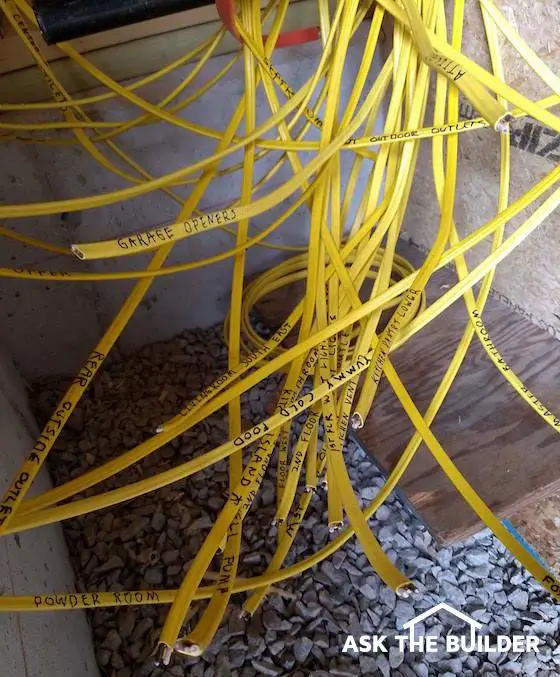
Electric Wiring Residential | You can use a simple Sharpie to label wires. These labels will help you label each circuit breaker correctly. Look at some of the labels! I wrote these on the circuits for my daughter's new home on Mt. Desert Island in Maine. If you're serious about DIY electrical wiring, read about it here. Copyright 2021 Tim Carter
Electrical Wiring Residential - There's a Learning Curve
DEAR TIM: I've a chance to take a $250 course on electric wiring residential. This home electrical wiring course covers how to change outlets, switches, light fixtures, rewiring circuits, etc. I'm terrified of electricity and use a stick to trip my circuit breakers.
Do you think this course will help me deal with my fear of electricity so I can be comfortable doing my own repairs thus saving me precious money? I already have curly hair, so there's no need for the low-budget perm. Should I sign up for the course and why? Elaine J., Baldwinville, MA
DEAR ELAINE: Get out your pen and checkbook. Fill out the registration form for this electrical wiring residential course. When you discover how to wire electric fixtures, outlets, and switches the safe way, you'll be beaming with confidence.
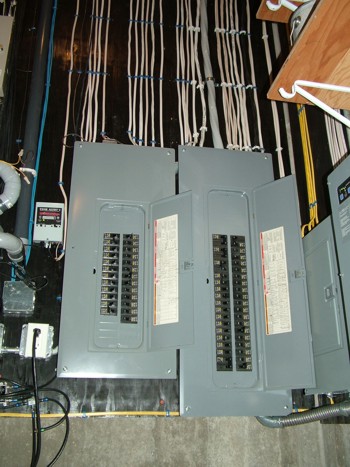
Electric panels, cables' and wires can be scary. (C) Copyright 2021 Tim Carter
CLICK or TAP HERE to get FREE BIDS from local electricians.
Can You Do Electric Wiring Quickly?
Basic electrical wiring is something you can learn very quickly if you have the desire. It sounds to me that you have this yearning for knowledge. Your fear of electrical wiring is based on ignorance of how it works. Think of how a vast majority of professionals work with it every day without getting hurt. This is possible for the respect they give to electricity. You'll gain that respect, but you'll also be wiring things at your home within a month after starting the course.
Should I Fear Electricity?
I understand your fear of electric wire. Many years ago when I was a wee remodeling contractor, I thought I knew it all about electrical wire. I was adding an additional light fixture to an existing one. I had been taught that the white wire in a circuit was the neutral and thus not dangerous. Was that ever bad advice.
Using this bad advice, I simply turned off the switch to the light. I then proceeded to take apart the white wires in the electrical box. As soon as I touched them, I was knocked to the ground. Because I failed to turn off the actual circuit breaker, I wasn't stopping the alternating current that was still passing through the white wires that were energized from other things on the same circuit. Let me tell you that once that happened, I was a quick study just as you plan to do.
Is Wiring Switches Important?
Wiring electrical switches should be a core part of the class as switches in the average home can get used frequently. They can wear out or need to be changed to spruce up the looks of a room. You'll discover that electric switch wiring is really simple.
How Can I Get Over My Fear of Electricity?
I totally appreciate the fear that you have for home electrical wiring. The electricity is invisible. You know it's there, but you can't see it. The class you'll take should teach you how to use a voltage tester that will allow you to always know if a wire is indeed hot or dangerous. Once you understand how the current flows from the panel to the outlets, switches and fixtures in your home, you'll develop confidence in working on the simple tasks in your home.
Will the Simple Course Transform Me into an Electrician?
But understand now that this simple course is not enough to turn you into a master electrician. It can take months or years of day-to-day interaction with electricity to gain a knowledge base that will allow you to do all the things in and around your home. Add to this the intricacies of the National Electric Code, which can be humbling, even for a professional electrician, and you see why there is much to be learned about electrical wiring.
Why are Ceiling Paddle Fans Hard To Wire?
If you are taught electric fan wiring, pay particular attention to that part that deals with ceiling paddle fans. These fixtures require a special electrical box that's designed to handle the weight and torque the fan exerts on the box up in the ceiling. Many a ceiling fan has dropped from a ceiling because a contractor or homeowner connected the fan to a box not designed to handle a fan.
How Do You Wire a Split Receptacle?
As you study electrical plug wiring, be sure you discover how to wire a split receptacle. This is one where one of the two receptacles is always hot, while the other one operates from a switch somewhere on a wall. These outlets are very simple to connect, however, they constantly perplex people.
What are the Principles of Electric Wiring Residential?
You need to discover the principles of electrical wiring. Some of them are:
- wire sizes
- loads
- circuit breakers
- grounding
- 3-way and 4-way switches
The biggest thing to overcome is the fear of knowing when the wires are safe to handle. A voltmeter is your ally in these situations. You can use this device to tell you if wires are carrying current, and if so, how much.
Remember, there is always a possibility that a circuit or outlet has been double fed. I had this happen to me years ago in a house. An outlet was mysteriously fed from two different circuits. Fortunately, I didn't get shocked too badly. The mistake I made was not using a voltmeter to check the circuit after I had turned off the circuit breaker.
Column 762

Tim built custom homes and did ultra-custom remodeling for 20+ years before launching his Ask the Builder media presence. He was selected as one of the Big 50 by Remodeling magazine in 1993. This award gave birth to Ask the Builder in October 1993. Tim also operates https://DrawPlumbingPlans.com. His @askthebuilder YouTube channel was the first home improvement channel on YouTube.