Roof Shingles
DEAR TIM: I need new roof shingles, but am paralyzed by fear of making the right choice of material and color for my home. Installing roof shingles doesn't seem that difficult, so I am considering doing the work myself. How do I select high-quality roof shingles? Should I install the new roof over the top of my existing asphalt roof shingles? What other tips can you share about residential roof shingles? Vickie E., St. James, MN
DEAR VICKIE: Many books have been written about roof shingles, so it is unthinkable that I can fully discuss all you have asked. But I am sure I can point you in the right direction so you have years of leak-free performance from the new high-quality roof shingles you will be purchasing.
Let's first get realistic about what is involved when installing roof shingles. It is dirty, back-breaking work. If the air temperature is above 70 F, then you will be hot up on the roof. As the air temperature approaches 90 F and above, it can become dangerously hot on the roof. Dehydration can make you fatigued, dizzy and more prone to cutting corners. On top of all of this, is the inherent danger of simply working up on a roof. Whether you intend to or not, you will obey the Law of Gravity, and it can be both painful and/or deadly.
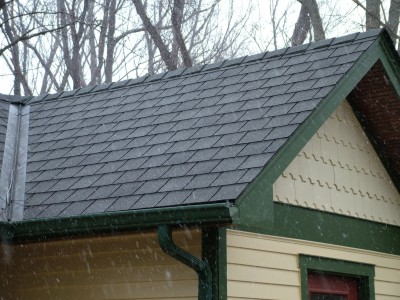
These asphalt roof shingles are made to look like slate. PHOTO CREDIT: Tim Carter
Can you do the work? The answer is maybe. I do not know your skills, and what tools you have. Did I face the same challenges when I did my first roofing job? You bet I did. For this reason, I say you should consider trying if your roof has a shallow pitch such that you can walk over it without fear of sliding off. The best thing you could do is to volunteer to reroof a neighbor's small shed to see if you have what it takes.
There are many different styles, textures and colors in asphalt shingles. There are almost as many different levels of quality. The price per square ( a square is enough material to cover 100 square feet) is an excellent barometer of quality. As the price goes up, so does the quality and the warranty. If you need help visualizing a color and texture, consider buying just one bundle of the roof shingles and lay them on the roof as if they were nailed. Then get down on the ground and look at them to see if you like the color and texture.
I urge you to purchase your roof shingles from a roofing wholesaler that sells roofing supplies to roofers. Visit these well-hidden businesses and talk with the manager. You can discover these oases of information by doing an Internet search or looking in the standby Yellow Pages under "Roofing Supplies". The manager or owner will give you a quick education on the levels of quality across the different shingles. It is best to visit these businesses in mid-morning or mid-afternoon when the roofers are at their job sites.
You can sometimes install a new asphalt roof on top of an existing one. There are building-code considerations, so always check with your local building department. Personally, I have discovered over the years that you get a better job if you strip off the existing roofing materials. This is miserable work, even with the best tools.
Read all of the written instructions you can get from the roof-shingle manufacturer. Instructions are often printed on the packs of shingles, but do additional research to locate photos or videos of roofing tips.
Keep in mind that a majority of roof leaks happen where the roof touches up against something that is not a roof. Examples are skylights, plumbing-vent pipes, exhaust fans, chimneys, walls that extend higher than roofs, etc. You need to expertly install flashings at these locations. Flashings are transitional roofing materials that connect roofs to things that are not a roof.
When you strip off the old roofing material, check the wood sheathing for damage. Be sure the wood is securely nailed to the rafters and there is no wood rot. Install heavy felt paper or a modern water membrane in place of traditional felt paper. Consider using the special membranes that stop water leaks caused by ice dams or wind-driven rain.
You can buy roof shingles that mimic slate or ones that look like wood cedar shakes. From a distance, they do a very good job of fooling the untrained eye. I have used the slate-look asphalt shingles on my Victorian Shed, and they really make it look fantastic.
If you live in a humid climate, be sure you consider buying roof shingles that contain copper in the colored ceramic granules. This copper is a natural biocide that kills the common roof algae that is responsible for the ugly black streaks you see on many residential roof shingles.
Top-quality roofers will install edge flashings as well as a base or sill flashings. These are very important pieces of metal that help keep water away from your wood roof sheathing. Attention to detail is very important when working with flashings. Discover how these work and you will have a roof that keeps you dry in all types of weather.
Column 715

Tim built custom homes and did ultra-custom remodeling for 20+ years before launching his Ask the Builder media presence. He was selected as one of the Big 50 by Remodeling magazine in 1993. This award gave birth to Ask the Builder in October 1993. Tim also operates https://DrawPlumbingPlans.com. His @askthebuilder YouTube channel was the first home improvement channel on YouTube.
I just purchased a 61-yr old Cape style home in Randolph, MA. The roof is multi shingled--2 layers of asphalt shingles. The top shingles are less than 8 yrs old. My HO insurance was just cancelled because shingles are lifting. Home inspector indicates lifting is caused by lack of appropriate venting. I am having 2 12" mushroom vents installed. The question my insurance co is asking is, with proper venting will the lifting shingles settle down?
Doubtful.....
I live in Florida and currently have a barrel tile roof - it needs either repairing or replacing. The house (and roof) was built in 1979. Should I do the repair and keep the tile roof or opt for a new shingle roof?
Joann, you need to schedule a 15-Minute call with me. There's simply too much to talk about and type.
I have an 8 yr old town house and today when my roof was being cleaned, it was noticed that a huge section of roof where the rooflines meet are not shingled. I had a leak this past winter.. could that be the cause and should i got after the builder for this?
Jen, you need to schedule a 15-Minute call with me. There's simply too much to talk about and type.