Inspection Report
DEAR TIM: What should I expect when I get the inspection report from my builder just before I take occupancy of my new home? How detailed are inspection reports? Friends tell me that I should have an independent inspector produce the home-inspection report. Is that the best way to go? Can you get an inspection-report sample before the walk through so you know what is going to be inspected? I’m afraid I’ll be saddled with a lemon if I don’t get a great inspection. Ashley T., Charlotte, NC
DEAR ASHLEY: I’m sure your builder is a great guy, but he’s the last person who should be performing the inspection on your new home. He’s a little too close to the situation, and has a vested interest in not disclosing defects that might cost him extra money. Your friends are spot on in telling you that you need an independent inspector to look at any number of things both inside and outside the home. Be aware that this independent inspector is not to be confused with the building inspector that works for your local county or city.
The building inspector that works for your local government produces a building-inspection report, but this report is often for his eyes only. He’s making sure that the house meets all building codes. This creates tremendous confusion with many homeowners because many believe that if their home passes the building inspection and is granted a Certificate of Occupancy, that all must be well. This isn’t true. Many government inspectors, and top-quality builders will tell you that the building code is a set of minimum standards. Passing the government-mandated building inspection is like getting a 70 percent on a test.
Purchase my Easy-to-Use Home Inspection Checklist Now. This Simple-To-Use Tool allows you to spot many defects before you have to hire a real inspector. You can then eliminate a house and move on to one with fewer defects.
You have nothing to lose. If my checklist doesn't work for you, I'll give you your money back. Oh, one more thing, it's an Instant Download! You can have the checklist in your hands just minutes from now!
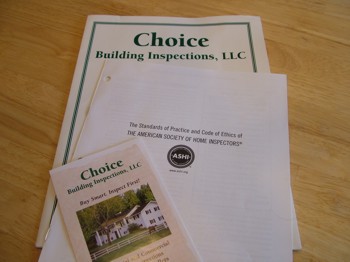
You want a real professional to hand you an inspection report when you hire him to discover defects in a new or existing home. PHOTO CREDIT: Tim Carter
You need to hire a certified home inspector, one that has the best credentials. There are any number of organizations that certify inspectors. The requirements to get certified run from filling out a form and mailing a check all the way to passing a written technical test, performing a minimum of 250 professional, fee-paid home inspections conducted in accordance with published standards of practice and a code of ethics. The best inspectors attend routine continuing education to stay up to date with the latest in home construction techniques, new materials and professional practices. You want an inspector that’s completed all the things I just mentioned.
It may be possible for you to get a copy of the inspection report form before hand, but you may want to take a virtual home inspection online. Some of the top home-inspection societies and associations have this on their websites.
The top inspectors will look at the exterior building materials and systems, the roofing and gutters if the house has them, attached or detached garages, porches and decks, all structural elements that are visible, plumbing, electrical, heating and cooling systems, etc. In other words, a top inspector will go over the home with a fine-toothed comb. A typical inspection lasts hours. Be prepared to spend a minimum of three hours while the inspector checks just about everything that operates.
Your fears of being stuck with a lemon are completely understood. Your builder may have a decent warranty, but you don’t want to have to invoke it if at all possible. You want to take possession of a home that should be hassle-free for many years. This is not an unrealistic expectation, but all too often homeowners sign documents at a closing with both patent and latent defects in the home. A great inspector will uncover many, if not all, of these before the closing.
Never close on a home with defects with just a verbal promise from the builder that the things will be taken care of at a later date in other inspections he does after you’ve lived in the home. If defects are identified in the home before the closing, you must have them fixed or have the bank set aside money in escrow account that is sufficient to fix the defects. Once the defects have been remedied, the bank can release this money to the builder. It’s best to have these terms in the original contract you have with the builder.
If you want the absolute best inspection on your new home, it’s really important to build into your contract with the builder that periodic inspections will happen at critical steps as set forth by the inspector you hire. Many builders will resist this condition, but don’t give in. You want your inspector to look at things as the house is being built, not just once after it’s complete.
What’s more, it’s imperative that you have great specifications and plans before you start to build the home. A great home inspector can offer some guidance here. You can also purchase detailed specifications online that exceed the minimum requirements as set forth by the building code or scribbled on a poor set of blueprints.
Remember that your builder is only obligated to do things the way they show on the plans, written specifications and whatever is in your contract. The vast majority of plans and specifications I see are completely inadequate. You really need to hire an inspector early in the process to help guide you through this complicated maze.
EXTRA NEWS from Tim Carter:
Purchase my Easy-to-Use Home Inspection Checklist Now. This Simple-To-Use Tool allows you to spot many defects before you have to hire a real inspector. You can then eliminate a house and move on to one with fewer defects.
You have nothing to lose. If my checklist doesn't work for you, I'll give you your money back. Oh, one more thing, it's an Instant Download! You can have the checklist in your hands just minutes from now!
Column 774

Tim built custom homes and did ultra-custom remodeling for 20+ years before launching his Ask the Builder media presence. He was selected as one of the Big 50 by Remodeling magazine in 1993. This award gave birth to Ask the Builder in October 1993. Tim also operates https://DrawPlumbingPlans.com. His @askthebuilder YouTube channel was the first home improvement channel on YouTube.