Stainless Steel Sink Care
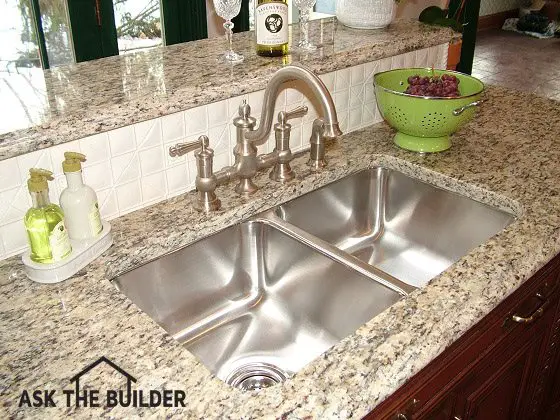
Stainless Steel Sink Care | This is my own undermount sink at my own home. My wife loved this countertop and sink. We sold the house and moved to New Hampshire. © 2017 Tim Carter
Stainless Steel Sink Care
Can you imagine how amazed Harry Brearley must have been the day he noticed that his scrap steel samples were not rusting? You see, back in 1913, he was working for the British Steel Corporation trying to develop hard steel for gun barrels. He had been experimenting by adding varying amounts of chromium to ordinary steel. Evidently it didn't take long to notice that the material had incredible corrosion resistance. Stainless steel was further enhanced by adding nickel as well.
How Many Types of Stainless Steel are There?
Stainless steel is by no means a simple compound. There are over 60 different types that are readily known and formulated! All have varying amounts of different chemical elements in them to impart different characteristics. However, chromium and nickel are by far the most important elements which give stainless steel its excellent reputation. Certain types of stainless steel may also contain smaller amounts of copper, aluminum, silicon, and molybdenum. These elements all produce different characteristics when mixed in varying amounts. However, for common household everyday use, stainless steel contains 18 percent or more chromium in content and approximately 9 percent nickel does quite well.
Is Stainless Steel The Ultimate Sink?
I don't know if there is a perfect sink for kitchen or bath purposes. All seem to have positive and negative qualities. Take my house for example. We happen to have a cast iron sink with a bright yellow porcelain finish. The sink is no doubt colorful. However, the porcelain finish is susceptible to chipping and scratches. Solid surface sinks can be chipped and harmed by hot objects. Stainless steel is virtually carefree, but yet it can be dented, scratched and harmed by certain chemicals. However, stainless steel is affordable, and probably the easiest of all choices to maintain.
Does the Metal Thickness Vary?
Stainless steel sinks are by no means all created equal. Some use steel which is nearly twice as thick as others. Of course, the thicker sink will cost more money. However, it may prove to be a better investment over the long run. Thicker sinks will resist denting. They also will flex less than their thinner counterparts. Thickness is measured by gauge. Residential sinks will range from 18 gauge (.047 - .052 inch) to 23 gauge (.027 - .029 inch).
Can You Make Stainless Sinks Quiet?
Some people object to the metallic sound which is produced when working with or in a stainless steel sink. Some manufacturers spray a thin insulating compound on the underside of sinks to control this noise.
You can retrofit or add additional insulation if you find noise to be an issue. Spray foam insulating compounds will often readily stick or adhere to the bottoms of stainless steel sinks. Once installed, you can foam the undersides of the sink to control noise. The foam will also insulate and keep washing water hotter for longer periods of time. Be sure to wear eye protection as the foam will drop into your eyes as you lay on your back.
Can Stainless Steel Corrode?
Stainless steel sinks can corrode. Chlorine bleach is a very aggressive chemical. It can and will corrode stainless steel. Remember, stainless steel is primarily steel, chromium, and nickel. Chemicals can and will discolor these materials. Certain acids, etc. will cause problems. Don't allow family members to perform chemistry experiments or other strange brew mixing operations in your new sink. Do these operations in the basement or some other sink!
Remember, many, many ordinary household cleaners contain chlorine bleach. Look on the label for the words chlorine bleach or sodium hypochlorite. These are the keywords!
Stainless Steel Do's and Don'ts
Do's
Rinse, Rinse, and Rinse Again ...
Rinse your sink well after each use. Rub the metal with a clean cloth or paper towel as the clean water is flowing. Simply spraying will not remove all residue or harmful deposits.
Perform Weekly Cleaning With Approved Cleaner
It is very helpful to clean the sink with an approved mild or ultra-mild abrasive cleaner on a weekly basis. This will help keep the sink look shiny and new. Remember to follow grain marks that are already present. Here's my favorite stainless steel cleaner:
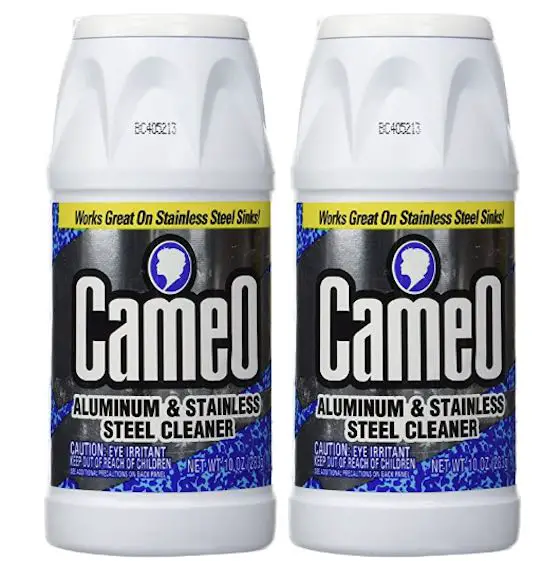
I've used this cleaner for years on my stainless steel. It's fantastic. CLICK or TAP HERE or the image to have it in your hands in days.
Dry the Sink after Rinsing
Unless pure distilled water flows from your faucet (usually this happens only in chemistry labs), there will be dissolved minerals and salts in your rinse water. When the rinse water evaporates, the minerals/salts are left behind. These are the same water spots you see on your car finish. If you dry your sink after rinsing, these spots will not form. If you have hard water deposits, try to use a little white vinegar to remove them. After removal, rinse and dry the sink.
Don'ts
Rubber Mats .... No Way!
Rubber mats cause big problems with stainless steel. They can trap harmful cleaning chemicals that will not be rinsed away. The water and cleaners is trapped between the rubber and the steel and never dries.
Scrubbing Across the Grain
Certain new sinks come with a factory grain or fine polish lines. Always scrub parallel to these marks.
Allowing Cleaners or Detergents to Dry on Surface
Cleaners and detergents can and do contain harmful chemicals that can corrode stainless steel. You can use them, but they must not be allowed to sit on the sink surface. In addition, do NOT fill the sink and allow a strong solution of chlorine bleach and water to sit in the sink. This chemical brew can cause problems. If you want to sanitize an object in a solution of chlorine bleach, use a bucket or other non-stainless steel sink.
Steel Wool Pads .... No Way!!
Never use steel wool to clean a stainless steel sink. Small steel fibers will be left behind which will rust. Always use a nylon or some other synthetic cleaning pad to scour the sink. These pads used in conjunction with approved abrasive cleaners will do anything that you might have attempted with steel wool.
Stainless Steel Sink Stain Troubleshooting Guide
Virtually every stain that occurs in a stainless steel sink is a result of operator error - that is, the homeowner or user has created the problem. High-quality stainless steel is very resistant to staining, but problems can happen. Here are some common problems:
Rust Marks / Rings in the Sink
Traditional orange/red rust marks in a high-quality stainless steel sink can almost always be traced to one of three sources - steel wool pads used for cleaning, tin-coated steel cans or cast iron pots left in the sink while wet, or iron deposits that actually are found within the water. The rust stains are not usually a part of the stainless steel, they are simple deposits on the surface of the sink. Scrubbing the stains with an abrasive cleaner along the grain lines of the finish will almost always immediately solve the problem.
Scratches
Unless your sink is made from diamonds, it is going to scratch. I found this out in my college course in geology. Stainless steel is hard but it can and will scratch. Unfortunately, some sinks come with a fine grain or brushed pattern. If a scratch goes across this grain is shows much more readily had there been no grain. Scratch removal can be very tough to accomplish. If there is a grain in your sink, you must remove while scrubbing in the same direction as the grain. Fine scratches can be removed with some buffing with ultra-fine abrasives and/or using a white 3M pad and Shiny Sinks or Inox Cream. Do not attack the sink surface or be too aggressive.
Pit Marks or Obvious Corrosion
Corrosion is a real threat. Your builder, plumber, or ceramic tile installer, or you may be responsible! Construction chemicals, solvents and household cleaners contain chlorides and acids which can react and damage stainless steel. Chlorine bleach (chloride!) or products that contain it (many ordinary household cleaners do!) can stain/corrode a stainless steel sink. Muriatic acid which may be used by a ceramic tile person to clean grout, etc. Plumbing PVC solvents etc. can possibly cause problems. If a dangerous chemical gets on the sink, wash it immediately with water. Rinse well and dry the sink with a towel or paper towels.
Standing Water in the Bottom of the Sink
High-quality sinks are formed so that the bottom surface is not level. It is pitched to the large drain hole. However, strainer baskets are installed by plumbers that sometimes have a thickness greater than the recessed ledge created for the strainer. This can cause a small backup of water. Be sure the strainer you pick is compatible with the sink.
Multicolored Stains or Residue on the Bottom of Sink
These problems are most commonly traced to minerals contained in your water. They can also be caused by salts from water softeners. Even cleaners can cause the problem, ones that have an oil base! These stains can be removed by using Shiny Sinks or Bar Keepers Friend in most cases. Rinse well and then dry the sink to see what happens.
Stainless Steel Sink Cleaners
Your grocery store will usually stock useful and approved stainless steel sink cleaners. Always, always get written information from your specific sink manufacturer to see what they recommend. Some sink manufacturers actually private label certain ultra-fine abrasives to clean and buff their sinks. Take the time to call your manufacturer before you try to become a metal finisher of your own right!
Many manufacturers approve the following cleaners. Once again, check your product literature to see what they recommend. If you do not know the manufacturer, experiment on a small section of the sink to see what happens. I always recommend the sidewall of the sink which is closest to your body. Why? Because you don't readily see that surface unless you bend over and look down at it.
Soft Scrub, Shiny Sinks, Bar Keepers Friend, Inox Cream, Cameo Stainless Steel Cleaner
Column B156

Tim built custom homes and did ultra-custom remodeling for 20+ years before launching his Ask the Builder media presence. He was selected as one of the Big 50 by Remodeling magazine in 1993. This award gave birth to Ask the Builder in October 1993. Tim also operates https://DrawPlumbingPlans.com. His @askthebuilder YouTube channel was the first home improvement channel on YouTube.
Lye chemical in drain cleaner appears to hav maybe eroded my stainless steel sink when I carelessly splashed while I poured it down the kitchen sink drain for cleaning purposes. Any tips for me to rectify this now streaky looking sink? Looks like it's cleaner or actually a shinier silver color in the splash streaks n blotches.. Shoot, I'm clueless. thanks!
You may try to use Cameo Stainless Steel Cleaner. Be sure to scrub in the direction of the grain of the sink. Look at how the sink was polished from the factory.
I have just taken delivery of a 1.5 bowl stainless steel sink which has a kind of 'orange peel' type surface which is supposed to be scratch proof and guarenteed for 10 years. It was marketed as 'silk' finish rather than 'polished'. The sink its self appears to be of a good quality and metal is not flimsy but thrown by the finish. Have not yet heard back from the suppliers (Cleanwater - trading as Sterling of Tewkesbury, Glou).
Can I please have your comments on this stlyle of surface. I am in quite a hard water area (Thames Water).
Tim, could you be more thorough, please? 😉
Just kidding of course. Great job!
Who makes a 16 ga. 18" x 18" x 6" (ADA) single bowl sink?
Very useful article. You mention insulation - the hot water in my stainless steel kitchen sink cools very quickly, (but heats the cupboard underneath REALLY quickly). Can you recommend a product to use, please?
Very simple fix, but can be messy. WEAR OLD CLOTHES and put on a shower cap over your hair!!!!
Use this:
http://amzn.to/2yTWFIF
Please use that link to buy it. That returns the favor of me helping you. 🙂
I like to use a liquid dishwasher soap to clean my stainless. A little bit goes a long ways. I removes any grease or food residue easily. It leaves a sort of water sheeting action behind it for a couple of days. Just like it does on stainless steel cookware.
Bartender's Friend is a great SS cleaner as well. It is the only product that would clean calcium/magnesium scale from my pitcher pump style oil rubbed bronze bathroom faucets.