Fiberglass – Common Questions
| Be sure to read the special Author's Note at the end of this column. It provides updated information on this topic. |
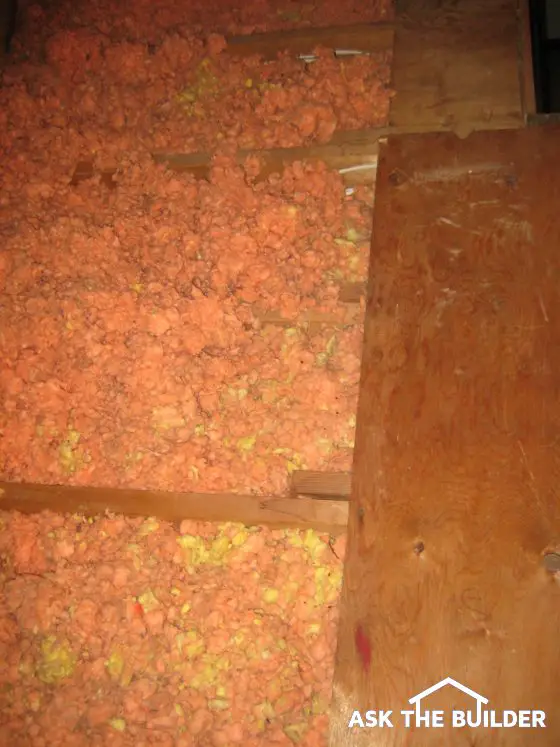 Fiberglass Insulation
Fiberglass insulation is a very hard thing to write about. I feel that just about everyone knows about this topic or how the product works. There just isn't any sizzle to the topic. I would hate to work for an advertising agency or public relations firm that had to write about this stuff on a weekly or monthly basis! What can you say about fiberglass to excite homeowners or contractors?
Common Questions
This fiberglass column and bulletin was born with a few basic questions on my part. I was wondering if flow-through ventilation for attics actually sucked air and heat from fiberglass attic insulation. I was told by the experts that batt insulation does not suffer from convective heat loss. Blown-in fiberglass, however, can suffer minimal heat loss in the very cold parts of the USA. Evidently this loss only begins to happen when attic temperatures drop below 32 degrees F.
I also wondered about the R-factors of batts vs. blown-in fiberglass. It didn't surprise me to find out that batts are better insulators. The primary reason for this is the tight tolerances found in the manufacturing process. Batts are uniform. The placement and quantity of the glass fibers can be controlled. This is not the case with blown-in fiberglass. The density of the material is controlled by the installer and settings in the machinery that blows the fiberglass.
Weight Problems
Fiberglass insulation is a very lightweight material. If you are blowing fiberglass and wish to obtain an R-factor of 49, you need to install a thickness of 20.5 inches. This thickness will produce a weight of .922 pounds per square foot if installed to the proper density.
This kind of weight will not overload average ceiling materials. The biggest concern you need to look for is proper installation of ceiling drywall. Many drywall hangers do not install the proper amount of nails or screws in ceilings. You need to install a minimum of five fasteners per four feet. This means one fastener at each edge and then spaced at one foot intervals. Make sure the screws, if used, do not tear through the drywall paper.
Fiberglass and Water
What happens if your roof leaks? Is your fiberglass attic insulation ruined? The answer is "No!" Fiberglass will retain its R-value after it dries. The moisture may cause a mildew problem, so it is imperative to accelerate the drying process.
Wall insulation that is saturated from flood waters must be removed. The flood waters contain massive amounts of bacteria which can foul the wall batts.
Is Fiberglass Corrosive?
Fiberglass does not contain any chemicals that will corrode metal pipes, truss plate connectors, exposed wires, etc. The dyes used to color the material are color fast and non-corrosive as well.
Routinely I am blessed to hear from professionals and industry experts who share in-depth and updated information about a topic. You'll absolutely want to read the letter I received from the President of NAIMA (North American Insulation Manufacturers Association). It really helps clarify some of the points I just touched on in the insulation columns.
Column B165

Tim built custom homes and did ultra-custom remodeling for 20+ years before launching his Ask the Builder media presence. He was selected as one of the Big 50 by Remodeling magazine in 1993. This award gave birth to Ask the Builder in October 1993. Tim also operates https://DrawPlumbingPlans.com. His @askthebuilder YouTube channel was the first home improvement channel on YouTube.