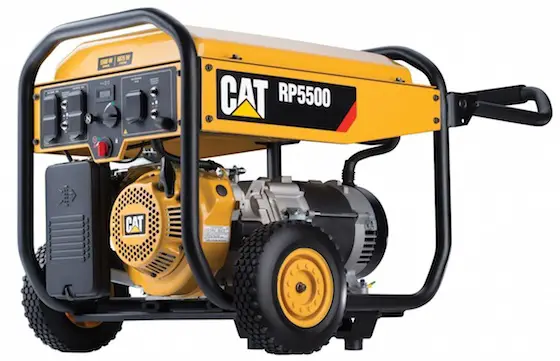
Common Wattage of Household Appliances

Follow Me on Twitter.

By Tim Carter
©1993-2010 Tim Carter

Summary: Household appliances use a lot of wattage. A portable electric generator must be sized correctly to power all these things. Here is a wattage table with common wattages for many appliances. The reactive load of these appliances is important when sizing your backup generator.

Related Articles:  portable generator consideration, portable generators, generator manufacturers

Lights That Go Dim in the Night

Have you ever noticed your living or family room lights dim for just a second or so when your refrigerator, AC or hvac unit or washing machine turns on? The dimming of the lights is caused by the reactive load of the major appliance that was starting up. Have you ever had to push a car? It takes a tremendous force to start it rolling. However, once it is rolling, the effort to keep it rolling is reduced. Electric motors and refrigeration compressors are no different.

The reactive loads can be double the running load! Wattage demand can soar! Unfortunately, you must account for this when sizing a generator. You will find out very quickly that if your power is interrupted, and you depend on a portable generator, the experience will remind you of a backpacking trip. You will have some fun, but for the most part your life will be miserable until the power is restored.

Portable electric generators are very nice. When I lost power for three days in a winter storm, my kids had fun for the first eight hours. You don't realize how much you depend on light bulbs, TV and even the toaster each day. It is also very depressing to go to bed at 7:30 p.m. when the sun goes down. Flashlights are no substitute for a table lamp. Buy as much generator as you can afford. You will never ever regret it!


You are going to be surprised in just a moment. Wait till you see how much electricity some common household appliances use on a regular basis. What's more important, machines or appliances that have a motor require a "push" to get them going. The extra electricity that is required to get the motor spinning or the compressor pumping can be significant. This extra electricity demand is called a reactive load. Once a motor is spinning, the load becomes an ordinary resistive load. Certain things in your house do not have reactive loads. Light bulbs, radios, electronic clocks and coffee makers are examples of things that do not have a reactive load.

When you decide to purchase a portable electric generator, you MUST size it keeping in mind the reactive loads of the things you will power. If you don't size your generator properly, it simply will not do the job. The generator will fail and/or your electrical appliances will suffer. Don't forget this important aspect of generator sizing.

The wattage draw of an appliance or tool is usually printed on a plate where you find model and serial number information. However, the manufacturer may make you do some math. Instead of watts being listed on the plate, you may find amps. Amps and watts are not the same thing, however, they are directly related to one another.

How Much Electricity Do Appliances Use? This chart from the U.S. Department of Energy's <em>Energy Savers - Tips on Saving Energy & Money at Home</em> booklet.
How Much Electricity Do Appliances Use? This chart from the U.S. Department of Energy's Energy Savers - Tips on Saving Energy & Money at Home booklet.
Here is how you can convert one to another. Just remember that Amps multiplied by Volts equals Watts. Here is an example. Let's say that you have a saw that draws 10 amps. The common voltage in the USA is 120. So, multiply 10 times 120 to get 1,200. The saw draws 1,200 watts while operating. Remember, though, it requires an extra 700 watts or so just to get going! Check out the values below. Look around at your appliances and do a quick load calculation. Imagine what you might want to have going in a power failure. You will get to 5,000 watts so fast it will make your head swim!

The following lists show appliances and tools you might find around your house or business. The first number after each name is the resistive Load. The second number that follows is the reactive load. The numbers listed are ordinary watts. Where there is no second number, there simply is no reactive load. An example of this is a light bulb. Once turned on, it is already at full power.

Wattage of Common Household Appliances/Tools
Appliances
Resistive Load
Reactive Load
Blender
375 watts 500 watts
Clock Radio
5 watts ---
Coffee Maker
1,700 watts ---
Computer - PC
300 watts ---
Cuisinart
450 watts 650 watts
Deep Fryer
1,800 watts ---
Electric Blanket
400 watts ---
Electric Curlers
300 watts ---
Frying Pan
1,250 watts ---
Hair Dryer
1,875 watts ---
Iron
1,200 watts ---
Light Bulbs
see marking on bulb  
Microwave
1,050-2,500 watts ---
Washing Machine
1,150 watts 2,200 watts
Water Heater
4,000 watts ---
TV - Color
300 watts ---
Common Tools
Resistive Load
Reactive Load
Air Compressor (1hp)
1,500 watts 4,500 watts
Cultivator
700 watts 1,400 watts
Freezer
800 watts 2,100 watts
Furnace Fan
875-1,200 watts 2,200 watts
Garage Door Opener (1/4 hp)
550 watts 1,000 watts
Grinder, Bench
1,400 watts 2,450 watts
Heater, Kerosene (90,000 BTU)
500 watts 725 watts
Sump Pump (1/3 hp)
800 watts 1,250 watts
Well Pump (1/2 hp)
150 watts 1,950 watts
Saw, Band
1,100 watts 1,350 watts
Table Saw (10 inch)
1,750 watts 4,250 watts


Comments:

Donna
15 Dec 2007, 11:53
please settle an ongoing "conversation" at my house.....which will use more electricity and therefore expense, leaving on the kitchen lights (5 @ 100 watt recessed can lighting) or leaving on an electric space heater (Cadet com-pak plus model c202). The heater has a dial thermostat that continually goes on and off all day and night - even when we are out. My husband says that it uses less energy when it maintains the rooms heat (via automatic on-off)than if the room gets really cold and we turn it on to warm the room when we need to. Obviously, I disagree, I think that every time it goes on it is costing me money. Yet he will yell when someone leaves the kitchen lights on. Please tell me about this. Thank you.
Brad
05 Feb 2008, 18:25
Donna,

You are confusing too many questions.

1) are 5 100w light bulbs more electricity than a space heater?
Probably not
2) it is better to leave the heater on all the time (with a thermostat) or turn it on only when you are in the room.

That depends on a few things. How often will you be in the room? How big is it compared to the capacity of the space heater?

Your husband is right in that getting a room back up to desireable temp uses more power than maintaining desireable temp, BUT only if the the room size is right in the middle of the space heater capacity.
AsktheBuilder
05 Feb 2008, 19:32
Donna,
This is really simple. You need to see what the wattage of the heater is. My guess is that it is at least 1,500 watts. This means if it is on continuously for an hour, it uses 1,500 watts. The light bulbs burning for an hour only use 1/3 the energy burning for the same time. So when the heater is on, it is absolutely using more juice than the light bulbs.
Jake
06 Feb 2008, 22:37
How many watts are used in a common refrigerator?
AsktheBuilder
07 Feb 2008, 20:57
Jake,
Wow! I can't believe that is missing from the table! We will add it. I would say off the cuff about 700 watts. That is a Guess, you need to look on the product label.
Joe
25 Feb 2008, 00:24
You need to add more important things you don't even have a toaster!
emmrie
03 Mar 2008, 09:30
How about the wattage for a one door refrigerator?
AsktheBuilder
08 Mar 2008, 10:39
Emmrie,
Look on the back of yours. There is a label that has the wattage.
Gayle Stewart
18 Mar 2008, 01:57
What is the wattage of each of the following:
A router(for a computer), an external hard drive, a cordless telephone, and a hub(that is stored with the servers in a computer room), and a medium sized server?
AsktheBuilder
20 Mar 2008, 11:48
Gayle,
I don't know. All you have to do is look at the plate on the device.

     View all comments
*Name:
Email:
Notify me about new comments on this page
Hide my email
*Text:
Security Image:

Visual CAPTCHA


Contact us to Advertise on this site.
Have a Suggestion?
Do it right, not over!

Ask the Builder Comment Help

Thanks for stopping by! The Comments Section of my AsktheBuilder.com website are a place for you to share stories about how you've solved a similar problem at your home or carry on a conversation with other visitors. I tried, at the beginning, to be part of the conversation, but there were too many questions being asked and it was impossible for me to keep up and get my regular work finished each day.

If you want to ask me a direct question, you should go to the Ask Tim page of this website.

Helpful Comment Tips: If you need help with a problem, please try these things now before you type in a comment. You could discover your answer in just minutes.
Don't show this alert again.