watch video

Cork Flooring Products

By Tim Carter
©1993-2009 Tim Carter

Summary: Cork flooring is spectacular, distinctive and affordable. Cork floor tile is environmentally friendly, comes in a variety of styles and muffles noise. Cork flooring is very durable, just check these locations. Some of the manufacturers of cork flooring are listed.

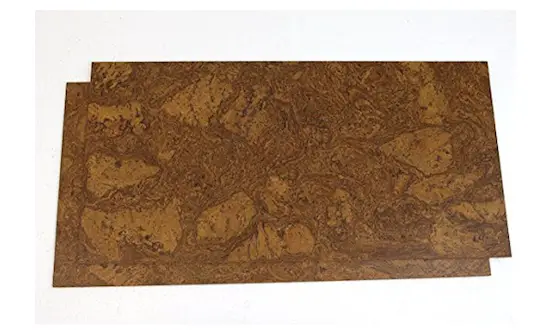
Cork flooring is simply spectacular. It is distinctive, yet affordable. Cork has been serving as an exemplary flooring material for well over 100 years. It was environmentally friendly long before the current eco-movement leaders were in their diapers. There are many positive attributes about this flooring material and few negatives. I feel that it offers a homeowner a most unusual choice when considering flooring.

What's In Style?

The popularity of cork flooring peaked in the late 1950's and early 1960's. As with colors (who can remember avocado and harvest gold appliances?), cork simply lost favor with designers and architects. It is most unfortunate as this flooring material is timeless. Perhaps the abundance of natural wood products within our own geographic borders contributed. Cork, you see, is only commercially grown in the Mediterranean countries. Quite possibly the best quality cork is harvested from cork trees in Portugal. Spain, France and some North African countries also grow and export cork. Cork trees simply have adapted to the balmy climate in this part of the world.

It appears to me that cork flooring is making a comeback. I consider it to be one of the most beautiful and durable flooring materials to have in a home. It is easy on your feet and ears. It can be refinished just like a wood floor. Better yet, it is a DIYer's dream material. It is quite possibly the easiest flooring material to install that I have ever worked with. If you install the traditional 12 inch by 12 inch tiles, all you need is a simple razor knife for cutting and a trowel to spread mastic. It doesn't get much easier than that.

Selecting a Cork Floor

Cork flooring is available unfinished or pre-finished. The prefinished cork comes with either an acrylic, urethane or wax finish.

The acrylic finish is actually an ultraviolet light cured process. It is very similar to the process that creates product labels that have that very high gloss finish you see. This finish can be installed quickly by automated machinery. It's only downfall is that it is a somewhat soft finish similar to wax. Scratches can be a problem if you tend not to vacuum regularly.

Urethane coated cork flooring probably offers the best finish. The urethane is no different than the material you might put on your hardwood floor. It is applied in controlled factory conditions. Urethanes and acrylic finishes allow you to simply screen the cork flooring as the finish wears. The screening process is just an ultra-light sanding. You then apply a maintenance coat of urethane to make the floors shine like glass.

Wax finishes are just that - wax. Wax is tough to maintain. You need to have a low speed (and sometimes a high speed) buffer on hand to polish and burnish the floor. I can't even imagine going to this kind of trouble in this day and age! It is beyond me as to why wax finished cork is even available! I do not recommend that you even consider it for household use. When I buy my cork flooring, I'm getting the prefinished urethane brand!

Density is Important

It shouldn't surprise you that all cork is not the same. Different trees produce cork of different densities. The lighter (less dense) the cork, the more easily it is damaged and the less wear and tear it can withstand. Density is measured in a given weight per cubic foot of material. Manufacturers will tell you what the density of their product is.

Cork that weighs 30 pounds or more per cubic foot is sufficiently dense to withstand many years of foot traffic.

Low quality cork that falls beneath this standard is being sold in some home improvement stores. It is sold in thin tiles and appears to be just like the good cork. I urge you to resist the temptation and avoid these products. Be sure the cork measures at least 3/16 inch thick or more.

Floating Floors

You can purchase cork flooring systems that float. This means that they are not attached to the flooring beneath them. These cork products usually contain a slice of high density fiberboard between two layers of cork. The high density fiberboard allows the cork to be milled so that pieces have tongues and grooves. The flooring pieces interlock with one another.

These cork products will rival any of the new plastic laminate products for ease of installation. If you have just moderate carpentry skills and can follow directions, you should be able to do a fine job of installing this type or any type of cork floor. I guarantee you that when your cork floor is installed it will be the subject of conversation among your friends and neighbors. Enjoy!


Installation Guidelines / Suggestions for Cork Plank Flooring

Several of the cork flooring manufacturers make a cork plank product similar in nature to the new plastic laminate flooring products that are sweeping the nation. These floors are not glued or nailed to the subfloor. They simply float above the floor. Each piece of flooring is glued to the adjacent pieces. This makes one giant piece of flooring. It is an innovative way of installing a floor. This method allows for expansion and contraction to easily take place without buckling the flooring.

Any Subfloor Will Do

The cork planks can be installed on concrete, plywood or OSB /manmade subflooring materials. All of them must be dry before installation. If you decide to install cork over a subfloor that contains radiant heating of any type, you MUST consult with the manufacturer. These heating systems can create problems if the installation is not done correctly.....Beware!

Concrete subfloors must be checked for water content. There is a fairly simple way to do this. Visit your local pharmacist and buy a 3 percent solution of phenophalen in alcohol. Chip out a quarter size piece of concrete about 1/8 inch deep in random locations. Apply 2 drops of the phenophalen in each chipped area. If the solution turns red, there is too much moisture! Dry the slab and retest periodically.

Acclimate the Material

Cork must be at the same temperature and humidity as the room where it will be laid. This means that you should have the heat or air conditioner running for at least 72 hours in the room. The cork should be unwrapped from any plastic so it can either heat up or cool down and acclimate to the room's humidity. Leave the cork in the room for three days as the heat or AC runs.

Find the Long Wall

You begin your installation in such a way that you can get out of the room at the end of the laying session or each day. That is common sense. You can't walk on flooring you just laid. The trick is to lay the floor parallel with the longest wall in the room. You want the floor to look square to the room. Cork must be allowed to expand and contract like many other flooring products. Because walls are rarely perfectly straight you should chalk a line for the first row. The line should be 1/2 inch plus the width of the planks away from the wall.

The floor planks are simply glued to one another per the manufacturer's instructions. Never tap a plank edge. You will damage the tongue or groove. Use a tapping block that has a protective tongue or groove cut into it. Wipe excess glue with two damp rags. A slight film will remain if you just wipe with a dry cloth. Rinse the rags regularly.


Cork Flooring Locations

There are thousands and thousands of locations all over the world that have cork flooring. I have taken the liberty to list several locations. Some may be familiar to you or a friend. Perhaps you live close to one of these places and can visit them to see how it really stands up to foot traffic. My own main library here in Cincinnati has it in their main branch. I believe it was installed nearly 35 years ago. When I go to the library to get books, it always looks to be in excellent condition. Remember, this is just a partial list. When you call the manufacturers, ask them if they know of locations near you! The dates (where shown) behind the names below indicate when the cork was installed.

First Congregational Church - Chicago, IL - 1890
Mayo Clinic & Plummer Bldg. - Rochester, MN - 1912 & 1940's
Manitoba Legislative Bldg - Canada - 1920
United Church of Hyde Park - Chicago, IL - 1924
University of Michigan, Law Library - Ann Arbor, MI - 1930
Toledo Museum of Art - Toledo, OH - 1931
Falling Water / Frank Lloyd Wright house - Western PA - 1937
National Archives Building
Historic Williamsburg
Stanford and Colgate College Chapels
Federal Court Building
Seattle Federal Courthouse - Seattle, WA - 1957

RECENT INSTALLATIONS OF CORK FLOORING:

878 Peachtree Condominiums - Atlanta, GA
A.P. Gianini Middle School - San Francisco, CA
Macy's Store - Stamford, CT
Sioux City Art Center - Sioux City, IA
Andy Warhol Museum - Pittsburgh, PA
Hackensack County Courthouse - Hackensack, NJ
Harvard University - Lowell House Library - Cambridge, MA
Lego Corporate Offices - Enfield, CT
New York Public Library - 5th Ave and 42nd Street
Saugerties High School Auditorium - Saugerties, NY


Manufacturers of Cork Flooring

The following list of manufacturers carry a wide assortment of cork flooring and other cork products. I STRONGLY urge you to call ALL of them and ask for their literature. Ask about local distribution near you while you are on the phone. You will be amazed at the information you will receive. Be sure to ask about product density. You want cork that weighs 30 pounds per cubic foot or more. Ask about the different finishes and how they will respond to the traffic you think you and your family will deliver to the wonderful cork flooring. To the best of my knowledge, all of these companies will ship directly to you if there is not a local distributor in your area. You WILL be able to get cork flooring no matter where you live. Good luck with your cork floor. Please let me know how it turns out. T.C.

  • Dodge - Regupol, Inc.
    P.O. Box 989
    715 Fountain Avenue
    Lancaster, Pennsylvania 17608-0989
    866-883-7780

  • Expanko Cork Co., Inc.
    1129 W. Lincoln Hwy.
    Coatesville, Pennsylvania 19320
    800-345-6202

  • Amorim Flooring North America
    7513 Connelley Drive Suite M
    Hanover, MD 21076
    800-828-2675

  • Natural Cork, Ltd. Co.
    1710 N. Leg Ct.
    Augusta, GA 30909
    800-404-2675

  • WE Cork Inc.
    16 Kingston Road
    Unit #6
    Exeter, NH 03833
    800-666-2675
Reviewed: November 2007


Comments:

NATASHA
20 Mar 2008, 23:37
I am interested in putting in a cork floor in my bathroom in Arizona...would that be adviseable???
Thanks!
AsktheBuilder
22 Mar 2008, 06:56
Natasha,
Sure, you can use cork in bathrooms so long as the water from tubs and showers stays inside the fixtures and does not slosh onto the floor. Use common sense. Pay attention to any cautions published by the cork manufacturer. The type you buy may not be approved for wet areas.
patti
18 Aug 2008, 17:10
My nephew wants to fashion a dartboard of an unusual shape. What is the best material to use? If cork what kind is best and where would I find it? Thank YOU.
KT
18 Nov 2008, 11:36
We had prefabricated wood floors in our basement that" bubbled" 11 months after installation and now we are trying to come up with an alternative. Will a cork floor work in a basement with moisture seeping thru concrete floors? (This assumes we install it w the floor dry first). The house has a good climate control in it but the concrete floor must still get damp some how.

     View all comments
*Name:
Email:
Notify me about new comments on this page
Hide my email
*Text:
Security Image:

Visual CAPTCHA


Contact us to Advertise on this site.
Have a Suggestion?

Ask the Builder Comment Help

Helpful Comment Tips: If you need help with a problem, please try these things now before you type in a comment. You could discover your answer in just minutes.
Don't show this alert again.