Whitewash Tips
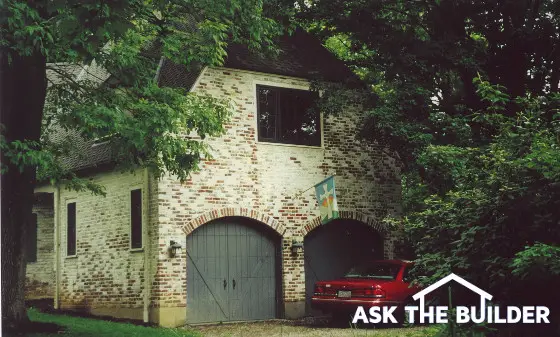
Whitewash Recipe | I took this photo over twenty years AFTER I put on the whitewash. It looks identical to when I applied it. You'd NEVER get paint to last that long. © 2017 Tim Carter
Whitewash Application Checklist
- Blend all materials first before adding water
- Slake the hydrated lime - Do NOT stop stirring!
- Mix a test batch
- Keep accurate records of material amounts
- CLICK HERE to Get Tim's FREE & FUNNY Newsletter!
Whitewash Application - It's Not Hard to Do
When I looked at the specifications for the room addition job years ago, I thought I was seeing things. The architect had actually specified a whitewash finish!
It made sense after you went to the job site to look at the original home. The house was built in the 1920's and looked like an English cottage.
It looked to me as if it was painted white and was simply in need of a new paint job but what I was looking at was a magnificent whitewash finish that was about 35 years old.
CLICK HERE to get FREE & FAST BIDS from local painters who can apply whitewash for you.
Whitewash Doesn't Peel
One of the things that amazed me was the fact that the finish on the house was not peeling. There were bare brick in places and some places where you could barely see through to the brick below but that was intentional.
The original painters had varied the thickness of the whitewash and actually left it off in places to simulate a faded or worn look. How clever of them!
My challenge was to duplicate this old look on a new room addition. I'll cut to the chase. I did it and if you were to drive up to the job site today you could not tell the difference between old and new. It took a few experimental attempts, but my painters and I got the job done.
This SoundCloud player as of January 23, 2022 is NOT ADA compliant. It has color contrast issues. I reached out to SoundCloud to have them repair it. It's their source code that creates the image below.

CLICK this image and listen to the third call on the podcast. I talk to Sandy about how she can use whitewash on her painted brick home. Copyright 2018 Tim Carter
What's in Whitewash?
Whitewash formulas and recipes can be somewhat different. CLICK HERE to see the secret whitewash recipe I used.
Some reference all sorts of different ingredients, but the most important two are hydrated lime and table salt.
Hydrated lime is a magic powder that does something special once mixed with water. When you add water to lime a chemical reaction begins. Millions of tiny crystals start to grow.
These crystals allow the lime or whitewash to tenaciously grab onto whatever it is applied to. It is not unlike the small briars that stick to your socks and pants when you walk through the woods. I've gone to all this trouble to write all about whitewash because I don't want this knowledge to transition from history to legend to myth.
There are other strange ingredients in different whitewash recipes. I can't tell you what they do or how they affect the final product since the whitewash I used only contained hydrated lime and salt.
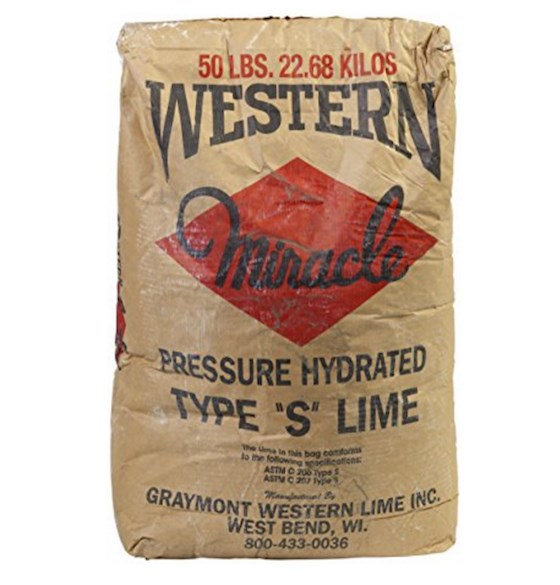
This is excellent hydrated lime. It's a fine white powder and it's going to look great on your home. CLICK THE IMAGE TO ORDER SOME RIGHT NOW.
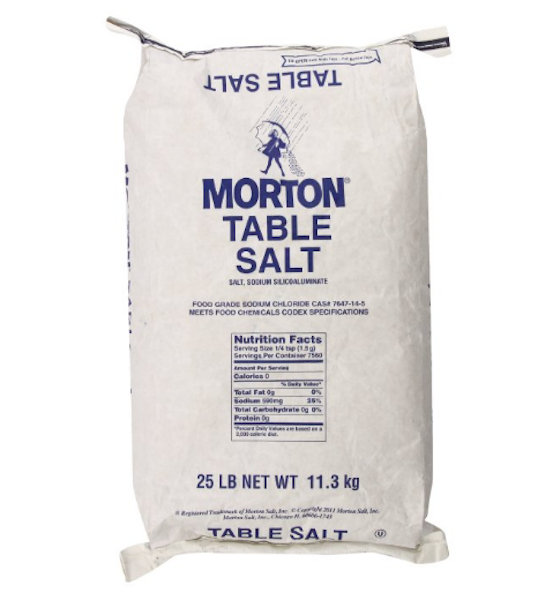
Here's a giant bag of salt. You may need two or three depending on how much whitewash you mix up. CLICK THE SALT BAG NOW TO ORDER IT.
Whitewash Installation Tips
Once you mix up whitewash you usually don't have to use it right away. In fact some of the recipes want you to let it sit overnight or for a day before you apply it.
It is also a great idea to make sure the surface you are applying it to is clean and damp. The lime crystals will penetrate deeper into the wood or the masonry if it's slightly wet.
The whitewash usually goes on blotchy. It looks like it is not covering well. But wait till the next day! If you put on a normal coat as you would paint, it dries a brilliant white.
The best thing to do is to experiment on small areas. See what you think about how white it turns out.
Add Color To Whitewash
Whitewash doesn't have to be white. You can make it look dirty by adding charcoal dust. You can make it look yellow by adding dry shake pigments.
There are all sorts of ways to color it. The key is to experiment!
When you work with dry pigments like you see in the photo below, it's mission critical to keep precise records of how you're mixing the batches.
Mix small batches and carefully note the concentrations. Always let it dry for several days to see the final color.
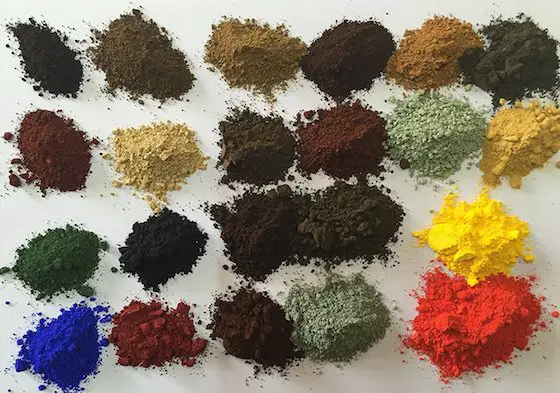
Here are just a few of the many many pigments available. You can blend different pigments to get different shades that you don't see here! CLICK THE IMAGE TO BUY ANY WHITEWASH PIGMENT YOU WANT.
Working with Colored Whitewash
Even if you go to great lengths to make sure you measure the lime, salt, pigments and anything else exactly, there's a chance you can get the shade off just a little bit. To minimize the chances of seeing this issue, always have enough of one mixed batch that will allow you to get to an outside or inside corner of where you're working.
A color issue halfway down or across a wall will be noticeable. But shadows at corners hide these imperfections.
Remember, the key to success with whitewash is experimentation. You want to try it on a test wall or some spot to get the feel and look of it. Wait till you see it!
Column B366

Tim built custom homes and did ultra-custom remodeling for 20+ years before launching his Ask the Builder media presence. He was selected as one of the Big 50 by Remodeling magazine in 1993. This award gave birth to Ask the Builder in October 1993. Tim also operates https://DrawPlumbingPlans.com. His @askthebuilder YouTube channel was the first home improvement channel on YouTube.
Dear Builder,
So what IS the recipe for the whitewash? I know you said to use hydrated Lime and water, but what else? Paint or Stain?
Our living room has solid oak walls with molding details. We love the craftsmanship and character, but the reddish oak color is very dark and dated. We want to lighten up the room which, already lacks natural light, using a whitewash technique- but substituting the "white" for a very very light subtle gray. We are hoping this will give our living room at instant update and brighten it up! Should we plan on sanding our walls at all?
Any advice you can give would be helpful.
Thank you!
The recipe is in my OTHER column on the site about whitewash. Use my search engine. Read ALL of my columns on the topic.
How do I apply it?
It appears that you brush it on, but do you rub some off? I don't see those instructions anywhere.
Anxious to try your recipe!
Thank you.
You brush it on like paint. You can wash some off to create the look you see in the photo above where there are bare brick.
Would this work on old stucco? I'm guessing I need to get all the old paint off.
Marj,
Yes, it works on old stucco. You don't have to get all the old paint off. Listen to the advice I have Sandy in my Podcast 3. She's the third call. I tell her how she can deal with paint that's not coming off her brick.
https://www.askthebuilder.com/podcast-3/
Can you use a sprayer to apply this to a cedar fence or does it have to be brushed on.
I'd only brush it on, or roll it.
I have a dog and numerous cats. I'm pulling out the carpets and want to apply paint/whitewash to the concrete floors. I want something that will withstand their messes and accidents. Can whitewash be sealed or would I be better using paint. I'm wanting that whitewashed look.
You can put three coats of water-based clear urethane over the cured whitewash so you get the look and the pets don't hurt the whitewash.
Great information! I would like to try this on my stone floors that are too yellow for my taste. Every other site says lime wash is a chalky and thus not suitable for floors. Your information seems to suggest otherwise. Can you advise if this would be a suitable treatment to tone down my floors (adding pigment)? Much appreciated.
Where do I say in my column that whitewash is not chalky? If you want to discuss how I'd apply it to floors and it look great, you have this option. FAR TOO MUCH TO TYPE: https://shop.askthebuilder.com/products/15-Minute-Phone-Conversation-with-Tim.html
How long will the mixture keep after it's mixed? We have two LARGE brick arches indoors and I'm afraid we won't be able to finish in one day. Thank you.