Ask the BuilderAsk the Builder
Ask the Builder's on:

Subscribe to askthebuilder's videos

Air Conditioning
Asphalt - Blacktop
Brick
Building Tips
Cabinets
Caulk
Ceilings
Ceramic Tile
Checklists
Chimneys
Concrete
Concrete Defects
Concrete Installation
Condensation
Countertops
Deck Construction
Deck Maintenance
Design
DIY
Doors
Drainage
Drywall - Plaster
DVDs
EBooks - EDocs
Electrical
Energy Savings
Engineered Wood
Fences
Fireplaces
Flooring
Foundation
Garage Doors
Glue
Hardware
Heating Design
Home Builders
Home Depot Stories
House Plans
Hurricanes
Insects
Inspections
Insulation
Interior Walls
Kitchen
Lighting
Lots
Miscellaneous
Mold
New Construction
Newsletters
Online Courses
Outdoor Projects
Painting - Staining
Patio
Payments
Plumbing Design
Plumbing Supplies
Projects
Radiant Barrier
Remodeling
Retaining Walls
Roofing
Rough Lumber
Screened Porches
Sheds
Siding
Specialty Accessories
Stone
Storage
Structural
Stucco - EIFS
Tools
Trim Lumber
Vapor Barrier
Ventilation
Videos
Walk Throughs
Wallpaper
Windows
Glossary


Insect Identification

By Tim Carter
©1993-2008 Tim Carter
Summary: Insect identification can put your mind at ease if you are worried about termites because the insects cause great damage. This is why people want to see what termites look like. People just like you desperately want to see termite photos. Termite identification is very important because you want to ensure that any termite control you purchase is targeted to the right insect.


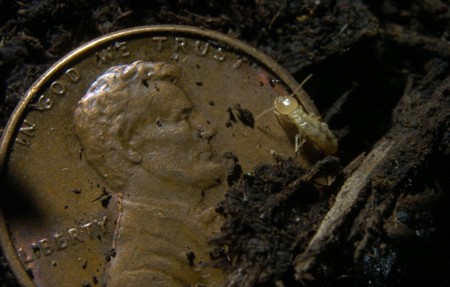
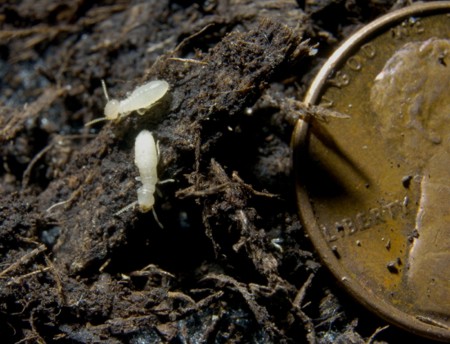
These termite pictures were taken by a very good friend of mine, Michael Keating. I helped him during the process as it took lots of patience to get these little guys to walk near the penny you see.

The penny is there for scale. Termites are not big. In fact, if you were to measure one, they might be half the length of an average grain of uncooked white rice.

The termites in these photos are of the eastern subterranean variety. This termite type is the most common type found east of the Mississippi River.

The body of the termite is really pretty fragile. They need moisture to keep their skin or shell nice and supple. If they dry out, they die pretty quickly. This is why wet soil around or under your home is a favorite place for them to thrive.

The termites in these photos are of the eastern subterranean variety. This termite type is the most common type found east of the Mississippi River.

The body of the termite is really pretty fragile. They need moisture to keep their skin or shell nice and supple. If they dry out, they die pretty quickly. This is why wet soil around or under your home is a favorite place for them to thrive.

As a termite colony matures, it sends out mature termites to form other colonies. These are the termites with wings. So if you see lots of winged insects, capture some, put them in a plastic zip-lock bag and put them in the refrigerator. Once they have stopped moving around, see if their body shape doesn't match what you see below.

If you suspect termite activity in your home and take apart some wood and see small white insects like in the following photos, they are probably termites. Don't panic, but do call a great exterminator who can inject new chemicals in the soil around your home that will kill the termites.


Comments

No comments yet

     View all comments
*Name:
Email:
Notify me about new comments on this page
Hide my email
*Text:
Security Image:

Visual CAPTCHA


Ask the Builder Comment Help

Helpful Comment Tips: If you need help with a problem, please try these things now before you type in a comment. You could discover your answer in just minutes.
  • Read ALL Comments Before Submitting One: If there are lots of comments that are already part of this column, there is a very good chance your question has already been answered by me or someone else.
  • Read Similar-Titled Columns First: The column above is almost always part of a two-or-three-part series. The answer to a question you may have is probably in a related column or in comments that are part of that column.
  • Read Columns in a Category: Take the time to read many columns in a category. The amount of information you will discover will amaze you.
  • SHARE a Story: Please share any tips or amusing tales of glory! Tell others what has worked for you. Maybe you have a disaster you want to discuss. Let's collaborate so we all learn together.
Don't show this alert again.