Handicap Ramps
DEAR TIM: After years of using a walker, my father's condition has worsened. He is now confined to a wheel chair. I have to have a ramp built so that he can get into and out of our home. I have seen many ramps but what are the necessary specifications to build one? How wide should they be? What is the slope? How do you calculate the slope? What is the best material to use for the ramp? Is this a do-it-yourself project? Becky D., Visalia, CA
DEAR BECKY: Years ago, I had a business partner who required a wheelchair. His sons built a circuitous ramp from his driveway up to the living level of his home. Although the ramp worked for him, I doubt it would meet the minimum specifications outlined in the Americans with Disabilities Act (ADA) for handicap ramps. Fortunately, for you and your dad, there is an enormous variety of handicap ramp systems available to you. Some are even factory-built and can be shipped to your home.
What is the code for a handicap ramp?
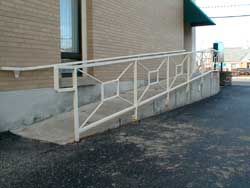
There are minimum specifications that have been developed for handicap ramps. These specifications are not mandated for ramps built at private homes, but they do work well for many people who are confined to wheel chairs. Certain aspects of the specifications can be fairly complicated if the ramp has lots of turns and has to climb a significant vertical distance. If your ramp is simply a straight shot from bottom to top, then the job is somewhat straightforward.
The most basic specifications for handicap ramps are as follows:
- the maximum slope of the ramp is one inch of rise for each linear foot of run
- the minimum clear inside width of the ramp between guardrails is 36 inches
- the maximum rise for any given ramp segment is 30 inches. After rising 30 inches in elevation, a flat rest platform must be provided before the ramp continues to climb
- flat landings must be at the top and bottom of all ramps
- landings should always be as wide as the ramp itself and a minimum of 60 inches in length
- handrails/guardrails must be on each side of the ramp. The top of the handrail must be at least 30 inches above the ramp and no more than 38 inches above the ramp measured vertically
Keep in mind that some of these specifications are minimum standards. In other words, if your father is very frail, a slope of one inch rise per one foot of run may be too steep for him. You may be forced to build a ramp that has a slope of one inch of rise for every 18 inches of run. The recommended specifications say a 36 inch width will work. In reality, you may find this to be too tight. You may want a 42 or even 48 inch wide ramp should you have the space.
What should the slope be for the ramp?
When calculating total slope for your ramp, you must determine the end point of the ramp. The total vertical rise of the ramp is not equal to the vertical distance or sum total of the stair risers of your current front or back steps. Keep in mind that the sidewalk leading up to a flight of steps might also be sloped. This additional vertical distance must be factored into your total rise. Be aware that there are all sorts of ramp designs that can work in very tight situations. Although a straight ramp is often the most desirable, you may find that your ramp will have several switchbacks with 180 degree turns. Every situation is a little different.
What type of ramp is the best?
A concrete ramp offers superior slip resistance if the final surface is finished with a wood or magnesium float. This creates a sandy surface that provides fantastic traction even in wet weather. But concrete ramps are a challenge to build. You can purchase factory-built ramps made from steel or aluminum. They meet all ADA standards. But if you live in a cold climate, they may ice up in certain weather conditions. Wood ramps are an affordable alternative, but they can get very slippery. Wood ramps must be kept clean or be covered with a slip resistant material such as rolled roofing, which has a slip resistant ceramic granular surface.
Is a handicap ramp a do-it-yourself project?
Unless you have significant building experience, ramp construction is not a do-it-yourself project. A project of this nature requires several skill sets. The best thing to do first is to have the ramp designed by a professional architect or other individual who can visit your home and make an assessment of what can and can't be done. Once you see the final plans of exactly how the ramp needs to be built, you will most certainly have a grasp of what it takes to do such a project. It is also a good idea to contact your local building and zoning department. You must make certain that your ramp will not be in violation of any ordinances or code requirements.

Tim built custom homes and did ultra-custom remodeling for 20+ years before launching his Ask the Builder media presence. He was selected as one of the Big 50 by Remodeling magazine in 1993. This award gave birth to Ask the Builder in October 1993. Tim also operates https://DrawPlumbingPlans.com. His @askthebuilder YouTube channel was the first home improvement channel on YouTube.