Is Chimney Dangerous
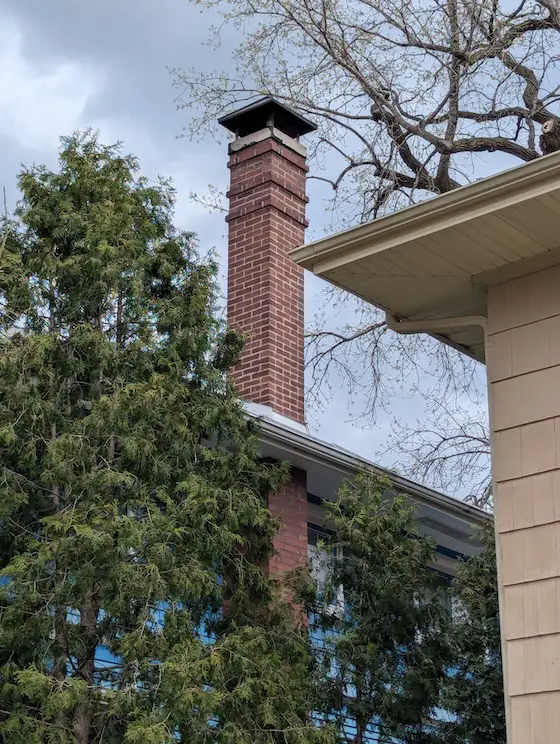
Is Chimney Dangerous? - This is an old chimney. The smoke, embers, and hot gases of over 1,000 blazing fires have exhausted up and out without setting his house on fire. It’s a miracle. Copyright 2026 Tim Carter
Is Chimney Dangerous? You Bet It Is
Each week, I receive quite a few emails from those who read this column. I treasure each one because they provide a window to view the real problems and challenges you face with your home. Some messages are small, some are medium, and others are extra-large. An older gentleman sent me one that was XXL. It was a pleasure to read. There are several teaching moments in his email that I’m about to share.
This man lives in a 123-year-old house in Oak Park, Illinois. It’s a grand home with a tall exterior brick chimney. He’s convinced the fireplace and chimney were afterthoughts and not original to the construction. It’s important to realize this homeowner has had about twenty blazing wood fires in the fireplace each of the fifty years he’s lived in this house. That’s about 1,000 fires, maybe more.
Gas Fireplace and Chimney
He also mentioned he felt the fireplace was intended for just gas logs. After looking at his photos, I’m in 100-percent agreement with this. It would be somewhat easy to verify this theory by looking for a small black-iron gas pipe in the basement that terminates in or near the underside of the fireplace.
Another clue to support the gas fireplace theory is the actual size of the chimney. The exterior of the chimney measures about 20 inches by 20 inches. He sent a photo taken by a chimney contractor looking down from above. This photo showed the inside dimensions of the chimney to be about 12 inches by 12 inches. I could see traces of a stucco finish on the inside of the chimney, but much of it has worn off in the 100 years or so the chimney has been in service.
The homeowner decided to obtain some quotes to repair loose bricks at the top of the chimney and to tuckpoint the mortar above the roofline. He also wanted a new metal chimney cap with mesh sides to stop birds from nesting in the chimney.
Chimney Contractor Advice
This is where the story gets interesting. All of the contractors told this homeowner that his chimney required a significant amount of work if he desired to continue to burn his 20+ fires per year. The man has become cynical as he’s grown older. He told me so in his own words, and he thinks the contractors were just trying to make a big job and profits out of nothing. He felt his chimney was safe because of the number of fires he’s had in it over the fifty years he’s lived in the house.
A Very Dangerous Chimney
I agree with the contractors. This man has been extremely fortunate that the Oak Park Fire Department hasn’t pulled up on a frosty winter’s night to extinguish a fire inside his exterior wall or attic. His current chimney is an extreme fire hazard, in my opinion.
For starters, the chimney lacks a flue liner. These vitrified clay products are designed to withstand the hot temperatures from wood-burning fires. These liners are thick and are designed to have minimal joints between the smoke chamber above the fireplace, extending to the top of the chimney. It’s best to use fire clay to seal the joints where one liner rests on top of another. Regular mortar used to bond bricks together is not rated for the hot flue temperatures and will fail in short order.
The photo taken by the contractor looking down inside this man’s chimney shows lots of missing brick mortar between the bricks. Keep in mind there’s only one brick thickness between the combustible wood framing of the house and the 400F flue gases, just 4 inches from bone-dry wall studs and sheathing.
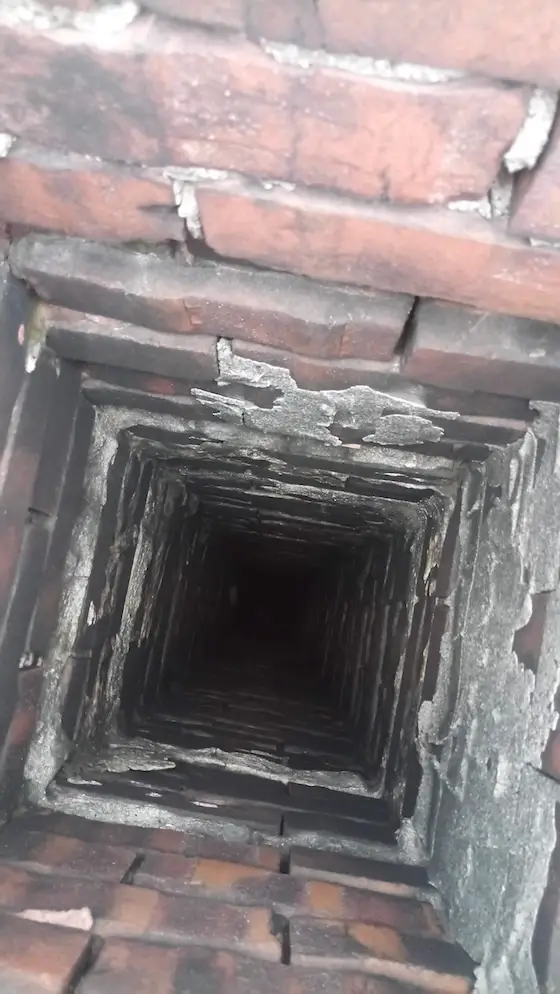
Here's the inside of the chimney. Note the missing mortar and the thin stucco coating applied by the original mason.
Years ago, I was tasked with moving an interior fireplace. The owner wanted it to be on an exterior wall as is the one that’s the subject of this column. This fireplace did have a proper code-approved clay flue liner surrounded by solid 4-inch concrete block. What I saw when I removed the drywall shocked me.
There were black tongues of soot extending from tiny cracks in the mortar between the solid concrete blocks. This soot and the hot flue gas had escaped from the flue liners. Wood furring strips nailed to the concrete block were next to the hot gases! I then discovered the flue liners had been set using regular brick mortar, not fire clay.
Let’s get back to the Oak Park house. There could be brick joints where 3 inches of mortar has worn away over the years. Now, just 1/2 inch of normal mortar may be the only thing between the dry wood and glowing tiny embers that are floating up the chimney. I can assure you this homeowner’s insurance company would cancel his policy if they knew the unsafe condition of this chimney.
If I were this homeowner, I’d rush to the Brick Industry Association (BIA) website. I’d download and read all of their free technical notes about fireplace and chimney construction. Pay close attention to the one about chimney crowns. I’d venture to say 99.9999 percent of all chimney crowns on residential homes are not built correctly. CLICK HERE to see all the BIA Technical Notes.
Your takeaways should be the following:
If you doubt what a chimney contractor is telling you, call your local fire department. Most have a fire-prevention officer. Allow him to share true stories about chimney fires. Ask him about the minimum construction standards that one should follow to prevent a fire from a wood-burning fireplace.
Rely on the technical notes from the BIA. They show you how to build fireplaces and chimneys that exceed the minimum building code requirements.
Chimneys servicing wood-burning fireplaces should, in my opinion, have a minimum of eight inches of solid masonry surrounding the properly sized clay flue liner.
This man might be able to install a suitable stainless-steel heavy-gauge pipe inside his existing chimney. The issue will be trying to make a safe connection between the pipe and the smoke chamber above his damper. This is not easy and must be done to ensure no flue gases or embers travel up the chimney on the outside of the stainless-steel pipe.
Column 1661

Tim built custom homes and did ultra-custom remodeling for 20+ years before launching his Ask the Builder media presence. He was selected as one of the Big 50 by Remodeling magazine in 1993. This award gave birth to Ask the Builder in October 1993. Tim also operates https://DrawPlumbingPlans.com. His @askthebuilder YouTube channel was the first home improvement channel on YouTube.