Honey Do List Examples
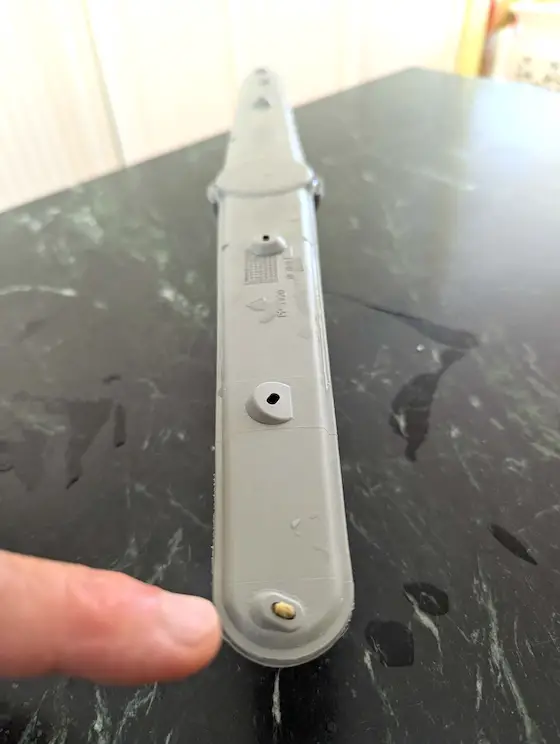
When was the last time you checked your upper and lower dishwasher spray arms for blockages? Mine had a lemon seed blocking one of the ports. Copyright 2026 Tim Carter
Honey Do List Examples - There are So Many!
The honey-do list at my home never seems to get smaller. Each time I complete a task, another one or two gets added to the list. Just last week I had to replace two ceiling light fixtures in a bathroom. The electronics in them went bad, and they started to blink on and off. My wife was not too happy about this unwanted light show.
You can do many, many of the things in your home that require periodic maintenance. You’ll end up saving thousands of dollars over time. You’ll also build your confidence to tackle projects that currently intimidate you. Remember, I’m a phone call away to coach you through hundreds of repairs.
Clogged Dishwasher Spray Arm
Let’s start with your dishwasher. Have you noticed dishes aren’t getting as clean as they once did? I had this happen to me last month. A rookie might have this happen if they don’t put the dishes in the machine correctly. I washed dishes professionally many, many moons ago, so I knew my problem was in one or both of the spinning spray arms.
These plastic arms come out with ease. You may have to pinch latches that are on the sides of the central shaft. I could see a blockage right away in the lower arm. A lemon seed was blocking the port at the end of the arm. There was other debris blocking two ports on the upper spray arm. I used a dental hygienist pick to pry out the seed and debris. Mine has a hooked end that snared the debris with ease.
While I was at it, I cleaned out the primary and secondary filters in the bottom of the dishwasher. The fine-mesh one can get clogged with grease. Your glassware starts to look cloudy when this happens. An appliance repair person or plumber might have charged $250 to do what I did in ten minutes.
Oil Garage Door Parts
When was the last time you oiled your garage door rollers? A garage door is the largest mechanical device in most homes. They’re heavy. Garages can be dirty and dusty places. The bearings in the rollers can take a beating. Squirting oil from a can or spraying from an aerosol can takes just minutes.
Be sure to place a piece of scrap cardboard under the metal track the rollers ride in. Close the door immediately after you oil the rollers. This forces any excess oil to drip onto the pieces of cardboard where the track touches the concrete. If you oil the rollers and open the door, the oil can drip all over the floor, on your car, or in your hair if you have any.
Oil Door Hinges
While you have that small can of oil out, it’s a great idea to oil the hinges of your most-used doors. I feel it’s best to do this by tapping the hinge pin up just 1/4 inch. The tip of the oil can can then reach the pin shaft. You just need one or two small drops for each hinge pin. Be sure to put another piece of cardboard to catch drips that may show up hours later. Place the cardboard under the lowest hinge and leave it there overnight. Tap the hinge pin back down after you’re finished.
Clean Dryer Vent - Prevent FIRES!
How about your dryer vent? When was the last time you checked to make sure your dryer vent pipe is not clogged with lint? You do remove the lint from the filter after each load, right? I found out friends of mine don’t do this. The husband said to his wife, “Honey, sometimes there’s enough lint in the filter to make a blanket!”
Many fire department captains will tell you that dryer fires are more common than you’d ever imagine. This task may only take you twenty minutes, and it could be life-saving at the same time.
Blow Dust from Smoke & CO Detectors
Did you know your smoke and carbon monoxide detectors can develop a pesky habit of false alarms? This is common when the sensor gets a coating of fine dust on it. This happened to my son and daughter in the middle of the night not too long ago.
My son has a battery-powered hand-held leaf blower. I told him to aim the nozzle about a foot from the detectors and blast them with air. He did this, and the false alarms stopped like a car with brand-new brakes.
When was the last time you removed the sediment and lime buildup from your faucet aerators? It’s easy to unscrew these from the end of your kitchen and lavatory faucets. Be sure the rubber or plastic washer comes out when you do this. Sometimes they stay nested in the end of the faucet.
Carefully clean the aerator. You may have to disassemble it to get all the sediment out. Lime and hard-water deposits can be removed by soaking all the parts in warm white vinegar for a few hours. You can get exceptional results using a 30-percent solution of concentrated white vinegar. This can be found at most home centers. This vinegar kills weeds in hours if you want to start working on your outdoor list!
Column 1672

Tim built custom homes and did ultra-custom remodeling for 20+ years before launching his Ask the Builder media presence. He was selected as one of the Big 50 by Remodeling magazine in 1993. This award gave birth to Ask the Builder in October 1993. Tim also operates https://DrawPlumbingPlans.com. His @askthebuilder YouTube channel was the first home improvement channel on YouTube.