Epoxy Garage Floor Coatings – Should I?
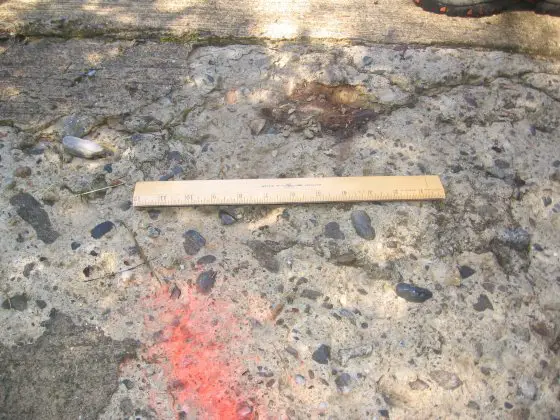
Epoxy Garage Floor Coating | This is badly spalled concrete. It’s not a candidate for an epoxy coating but one wonders if epoxy is the best choice in the first place. Copyright 2020 Tim Carter
"If you decide to apply one of the many magnificent epoxy coatings, you introduce a wildcard into the equation. There's a good chance the epoxy will fail and chip."
DEAR TIM: I’ve got problems with some of the concrete on the outside of my home as well as in my garage. There are lots of places where the top finish and layer of the concrete has eroded away. I think it’s called spalling. It’s worse in some areas than others. My biggest question is if I should transform my concrete garage floor by installing a fancy epoxy coating. They look marvelous in my opinion. What are the pros and cons of this? How would you repair all the other wretched concrete outdoors? Steve H., Sylvania, OH
There’s a really good chance you have unsightly concrete as Steve does. It’s somewhat common and if my incoming email is any indication, it’s a worsening and chronic problem for tens of thousands of homeowners and business owners.
Why Does Concrete Spall and Chip?
Let’s discuss first a few of the primary reasons why it happens to your concrete but other concrete nearby is immune to this damage. That should be your first clue that it’s probably a workmanship defect, and not something inherently wrong with the concrete itself.
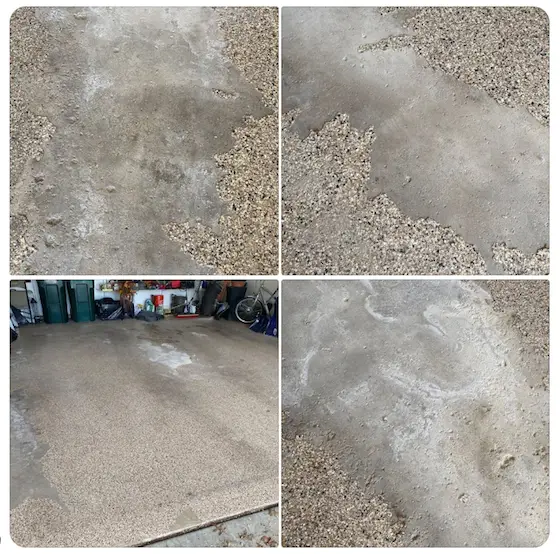
Before you get all dreamy-eyed about epoxy garage coatings, look at how they can #FAIL.
What is Concrete?
Concrete is simply artificial rock. Three of the four ingredients in basic concrete are or were rock at one point. The aggregate, or stones, are solid rock. The sand in concrete is thousands of small tiny pieces of rock in almost all cases. Some sand is crushed seashells, but this is rare. The Portland cement is powdered rock, primarily limestone and shale. The only ingredient that’s not rock is water. You need the water to ignite the chemical reaction that transforms the powdered Portland cement back into solid rock again.
Related Links:
SECRET Concrete Installation Tips
What are the Main Reasons Concrete Fails?
Here are just a few things that can go wrong with concrete that can cause spalling and the surface to flake off. First, the concrete can be mixed wrong with not enough Portland cement. Too much water can be added making it to watery. Water can be added during the finishing process that dilutes the amount of Portland cement in the top layer of the concrete. The concrete may not have been cured immediately after the finishing process ended.
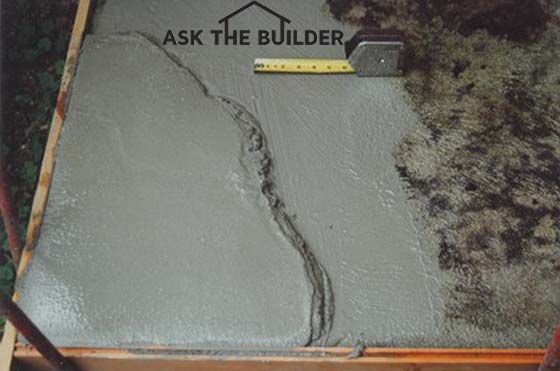
This is an example of the steps to a concrete overlay. Get the old concrete damp, coat it with some cement paint, then put on the stucco mixture of sand and Portland cement. SEE BELOW for the explanation about cement paint - and how important it is.
Do Deicing Salts Damage Concrete?
There’s a common misconception that deicing salts are responsible for ruining concrete and cause it to spall. The facts prove otherwise. What I mean is that you undoubtedly have seen lots of concrete sidewalks, floors, patios, etc. that have had years of deicing salt on them, yet there’s no spalling. Why is that?
The reason that concrete survived the deicing salts is it was mixed, placed, finished, and cured properly. Deicing salts can damage weak concrete just like the big bad wolf blew down the straw house made by the little piggy.
CLICK or TAP HERE to get FREE BIDS from LOCAL contractors who can do a concrete overlay or epoxy coating.
Concrete Can Be Maintenance-Free
Think about your concrete garage floor for a minute. Imagine it brand new and how good it looked. It’s maintenance-free for the most part, right? You just keep it clean with soap and water and it looks amazing for years.
Can Epoxy Garage Coatings Fail?
If you decide to apply one of the many magnificent epoxy coatings, you introduce a wildcard into the equation. There's a good chance the epoxy will fail and chip. You hope that the epoxy will hold and won’t peel in places.
This is a great name-brand epoxy garage coating. CLICK or TAP HERE or the image to have it on your garage in 48 hours.
You hope you’ll do everything right during the installation process, a process you’ve never done before I might add! You possibly create a new surface that requires more work to keep looking nice than your plain-vanilla concrete slab. On a personal note, I’d never install an epoxy finish because I don’t want more maintenance.
How Can I Repair My Spalled Concrete?
You can repair and resurface your spalled concrete in any number of ways. You can buy products that apply a very thin coating on the concrete. The larger pre-mixed bagged concrete manufacturers make these as well as some other specialty companies. These products do work but pay close attention to their limitations.
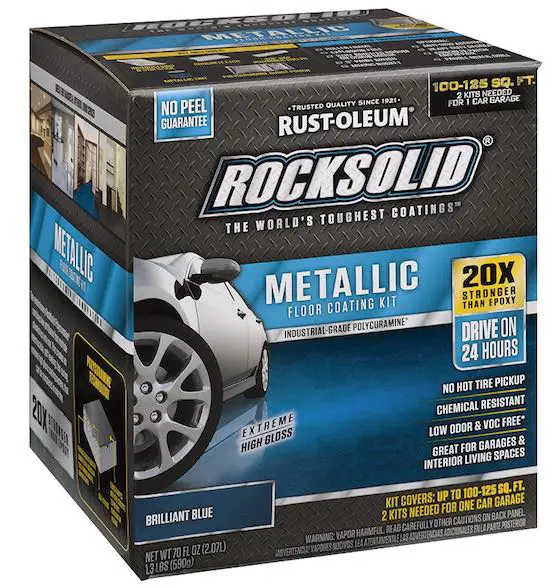
Here's another epoxy coating. If you want a cool metallic floor, you should CLICK or TAP HERE or the photo.
Deeply spalled concrete can be repaired with a concrete overlay. Think of this as just applying stucco to the concrete. You just mix up some sand, a little hydrated lime, and Portland cement and trowel this onto the concrete. To get this stucco to bond permanently to the spalled concrete, the old concrete must be clean and solid with all of the loose concrete chipped away.
Cement Paint is a Secrete Step
A very important step, taught to me by a very old and wise concrete mason decades ago, is to apply a very thin coat of cement paint to the old concrete before applying the stucco. You want to spritz the old concrete with a little water to make it damp before applying the Portland cement that you mixed with clean water to the consistency of regular paint. It’s important to immediately cover the wet cement paint with the stucco mix.
Realize concrete overlays can range in thickness from 1/8-inch all the way to 1 or 2 inches. As the overlay gets thicker, you need to increase the size of the sand being used. Once the overlay approaches 3/4-inch inch in thickness, you can introduce tiny pieces of pea gravel about the size of a pencil eraser.
CLICK or TAP HERE to get FREE BIDS from LOCAL contractors who can do a concrete overlay or epoxy coating.
Column 1349

Tim built custom homes and did ultra-custom remodeling for 20+ years before launching his Ask the Builder media presence. He was selected as one of the Big 50 by Remodeling magazine in 1993. This award gave birth to Ask the Builder in October 1993. Tim also operates https://DrawPlumbingPlans.com. His @askthebuilder YouTube channel was the first home improvement channel on YouTube.
Hey Tim - Thanks for sharing this info - helpful as always. You said "You possibly create a new surface that requires more work to keep looking nice than your plain-vanilla concrete slab. On a personal note, I’d never install an epoxy finish because I don’t want more maintenance." about these epoxy finishes. However, you didn't elaborate. Can you talk more about the extra maintenance? Is it just that if you don't get it applied right, it can peal, or is there more to it? Thanks! Scott
I hated our old oil stained floor so when I built a new home in Florida, I thought it would be great to have a pretty floor. So we painted our brand new garage floor with epoxy I believe it was Sherman Williams brand. It's been 4 years and their are some scratches, stains and a few gouges. Can we sand and reapply the same paint to just to the damages. Because I am not sanding the whole floor. Thanks for your advice.
Here in Colorado, they now use a Mag Chloride solution to deice the roads. Ever since then, I have seen my garage floor deteriorate/spall, and it's only the concrete underneath where the cars are parked. Everywhere else is fine. I've thought about epoxy, but like you, do not want the extra maintenance. I'm planning on resurfacing the concrete.
Tim - I have thoroughly researched all the various concrete floor coverings. I have a garage floor that had been painted. The concrete was in good condition. I found that all do it yourself kits sold to homeowners including the one you show above DO NOT hold up against hot tire pickup. Sooner or later the coating lifts where the tires roll over. A lot of them have various other short comings as well, too numerous to mention. Fortunately I researched this and talked to others BEFORE I proceeded to do it myself. I am a consummate do it yourselfer with over 50 years experience. This is the one job I will not do. Anyone attempting this must grind and shot peen the floor to properly profile it first. Homeowners typically use some muriatic acid as the sole prep. That's not nearly good enough. I had my floor done professionally with a 25 yr guarantee. They prepped it then did a vapor/bond coat, then epoxy coat with chips, the final coat is a polyaspartic top coat. Total cost was less than $6 per square ft. The vapor /bond coat is not usually done but I had a questionable amount of moisture in the floor and this stops all moisture transmission. That in itself made the entire venture worthwhile. I am now having the entire basement floor done before finishing it.
seems like a lot of work
I’m a do it yourselfer, but after reading how complex and painstaking this process is, I hired a local contractor who specializes in these coatings. They use polyurea, not epoxy, and they provide a fifteen year warranty. The floor is GORGEOUS now. We began with a very dull, ordinary 20 year-old garage, gave it a two-tone paint job, replaced the over head light with some super bright LED fixtures, added this coating, and now it’s absolutely spectacular. The contractor is a specialist and they were painstaking about thoroughly grinding the surface with a 700 pound grinder, then they ground out and patched every single crack, so there would be a perfect surface. I’m delighted that I made this improvement to my home and I love parking in my garage and working in my workshop. It really is too much for a DIY, not only because of the expensive tool rentals, backbreaking labor and material cost, but also because mixing the products and knowing the thicknesses to apply requires expertise that a first-timer isn’t going to have. I’d hate to do so much work and spend so much money, only to see it peel up after a year or two. I have a fifteen year warranty on this floor and not a worry in the world about it.
I have two newly epoxied garage floors, product was applied properly and the job looks good, however the installer did not use enough grit and now we have very slippery surfaces.
My question is can I simply apply another coat with grit over the new unused epoxy finished floor? Or will I have to sand and grind the epoxy off before reapplication?
Why would you need more maintenance with an epoxy floor vs. concrete? Wouldn't concrete absorb dirt, stains and such and thus need even more maintenance than epoxy that allows you to just wipe up any dirt or liquid? Also concrete dust was an issue with us before epoxy. Thanks.