Fresh-Air or Make Up Air Intake Vents
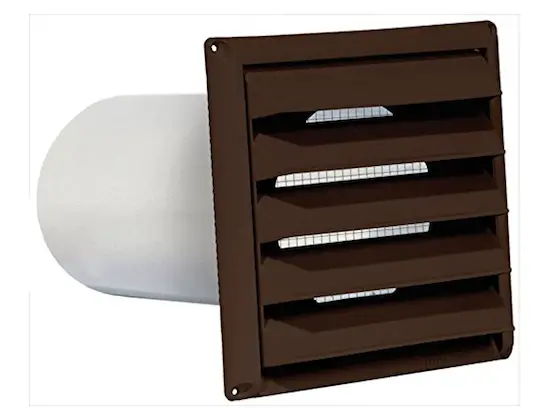
This fresh-air intake vent will do a great job. You may need several to get enough air indoors to satisfy all fuel-burning appliances. Pipe them with solid 4-inch metal pipe. The tips below are SO GOOD I decided to share them with my 31,000 subscribers who read my November 29, 2020 newsletter. CLICK THE IMAGE TO ORDER THIS VENT NOW.
Fresh Air Vent TIPS
- Fresh-air vents prevent dangerous backdrafting
- Fans, furnaces, water heaters, etc. need fresh or makeup air
- DIY friendly - cut a 4.25-inch hole in the side of your house
- WATCH my VIDEO Below!
- CLICK HERE to Get Tim's FREE & FUNNY Newsletter!
IMPORTANT TIP: Make-up air vent is the same thing as a fresh-air intake vent.
DEAR TIM: I've got both a fireplace and a free-standing wood heater spaced 15 feet apart from one another in my open kitchen and living area. The fireplace has a fresh air vent in the hearth.
I've only used the fireplace twice in fifteen years because when I start a fire in the fireplace, it pulls a sooty smell from the wood heater. Surprisingly, I do not get the smell when I use the wood heater.
I'd like to install gas logs in the fireplace. Will gas logs pull air from the wood heater and cause the same sooty smell? Jamie L., Gulfport, MS
Fresh Air Vent Needed for Fireplaces
DEAR JAMIE: I would be willing to bet money on my answer: Yes. Based upon your description, you are experiencing back drafting.
A fireplace consumes vast amounts of air each minute as the fuel burns. It can easily be 250 to 350 cubic feet of air per minute. The fresh air vent in the hearth may be blocked or it may not be able to supply enough air to satisfy the appetite of the fire.
The additional air to feed the fire must come from somewhere. Simple physics will tell you that the air will enter the room through the path of least resistance. In your case, it appears the air has decided to enter the room through the flue of the wood heater.
Dangerous Backdrafting
Back drafting is an enormous problem. It is a by-product of the constant push to make homes more energy efficient and air tight.
The trouble is, homes are equipped with things that blast air, and lots of it, out of the living space. Carbon monoxide, CO, is a real danger if you don't prevent backdrafting in your home.
Fans, Water Heaters & Central Vacs Need Fresh Air!
Have you ever stopped to think about what happens when you activate the switch for your bath fans, kitchen cooking ventilation fans and central vacuum cleaner? What happens when you turn on your clothes dryer? These devices exhaust air outdoors and in doing so create a partial vacuum in your home.
You need to make sure you have as much air coming into your house where you WANT IT TO COME IN as you have air leaving your home via all those things above you turn on!
All you need is a simple fresh-air vent that is cut into the sidewall of your home. Here's a dandy one:
Fresh-air Vent VIDEO:
Controlled Entry
If you do not have an air inlet to re-supply the exhausted air, the replacement air will leak in through windows, doors, chimneys, water heater and furnace exhaust piping, cracks in the house exterior, etc.
If several appliances are operating and the demand for air is great enough, exhaust gases from fuel burning appliances can be sucked backwards into your home. This can cause dangerous carbon monoxide to be pulled back into your home.
Modern Furnaces Have Built-In Fresh Air
Many modern furnaces and water heaters have built-in pathways for the air needed to burn the fuel. In fact, virtually every residential building code mandates that combustion air for fuel burning appliances be supplied to fuel-burning appliances.
But more air than combustion air is needed in the average home. For years, commercial and institutional building codes have required this extra ventilation or make-up air.
This air creates a healthier interior environment, insures that plenty of fresh air is entering the building and that dangerous back drafts are avoided. It is in your best interest to provide this ventilation or make-up air.
This thinking is not new by any means. There are companies that actually sell sophisticated air exchange devices that provide some or all of this needed ventilation or make-up air.
But I am not so sure that you need to invest in this equipment. If you do decide to investigate these appliances, be absolutely certain that you see a clear rate of return on your investment. In my opinion, there may be some more practical and far less-expensive solutions.
Fresh-Air Vents Are Easy to Install
There are many types of fresh-air vents. If you want to provide fresh air into your heating and air-conditioning system as is done on commercial jobs, you'll need more than one.
You'll pipe one, or more, close to the appliances that are burning fuel. This will supply the needed combustion air.
You'll pipe one, a simple 4-inch pipe is all that's needed, directly to the return air plenum very near your air handler or furnace. Any decent HVAC technician can do this.
Higher Fuel Bills With Fresh Air?
You may wonder if the introduction of cold or hot air into your home will cause your energy bills to rise significantly. In actuality, they may stay the same or drop.
The air that is consumed by the fans, clothes dryers, vacuums, fireplaces, fuel burning appliances, etc. is coming in anyway to offset the vacuum produced when these things operate. By installing a simple device to cause this air to enter in just one place instead of many different places, the thermostat that controls your furnace and air conditioner may actually cycle on fewer times each day.
Column 446

Tim built custom homes and did ultra-custom remodeling for 20+ years before launching his Ask the Builder media presence. He was selected as one of the Big 50 by Remodeling magazine in 1993. This award gave birth to Ask the Builder in October 1993. Tim also operates https://DrawPlumbingPlans.com. His @askthebuilder YouTube channel was the first home improvement channel on YouTube.
what type of door is best suited to go infront of our house gas heater as well as our gas water heater?
steel doesn't burn
Thanks for the tips. Very much appreciated. Thanks Jim
Hi Tim,
I need a couple of these fresh air supply vents. what brand are they & where can I buy them?
thanks'
travis
is there an answer to this, I've been looking all over and need to buy this for my furnace
I saw this today, http://ccbinnovations.com/ and I think their makeaup air system is very simple and cost effective.
I have a hole in the wall to the outside, a small copper pipe to link it to the outside air, I put metal mosquito mesh over to stop spider, mouse to come in, but it works as fresh air intake. A plumber wanted $550 to install a fresh air intake for the home but my is cheaper and work the same.
We have an vent in our kitchen that acts as an air intake because of our gas air heater. The trouble is that many times there is cold air blowing into our kitchen and house from this vent. Is there a better way to design this?
I live in a condo with wall to wall floor to ceiling windows in my bedroom which faces south and heats up very quickly. I have tried sun reflective alternatives (film, shades etc) to keep the sun from heating the room but nothing seems to work. When I wake in the morning at 7:30 or 8, my bedroom is already 74 or 75 degrees even though the thermostat in the bedroom is set to 70 and the overnight outside temperature is 30-40. (There are only 2 people sleeping in this room, and my little dog, and we are not that hot!) By about 11 am, it is usually 80 degrees or more, with the blinds totally closed the whole time, and even though outside is still 30-40.
I am beginning to suspect that this is not a sun problem but perhaps is an air flow problem. I tried installing a ceiling fan and using a floor standing fan in various spots in the room but all these did was move the hot air around. I can cool the room by opening the sliding glass door, but then the room gets very cold and the heating unit (in the wall which is right beside the sliding glass door) works overtime as the cold air blows on the thermostat, and I cannot control the air flow at all. So I turn the heating unit off until the room cools to the set temp (70) and then close the door, lower the blinds and turn the heating unit on again and guess what, it heats right back up! This is quite a process to go through daily with no good result.
I am thinking that maybe I can set something up to bring cold, outside air in through the only other window which opens in that window wall which is a small, 13x10 'crank-out' located right near the floor, but I don't know what to get to install or if it would help.
Do you have any suggestions for me?
Is there a word of advice about removing a wood burning fireplace in a 20 year old garden home? The fireplace has never been used. I do not have natural gas in the house and really need the wall space since I don't want to hang the TV over the mantle. And I have a supply of the new hardwood floor.
Do i need a plumber or who? To figure the fireplace issue in our house? Our kitchen sink has a horrible methane stink when our fireplace is on. Your column saved us!! But how do we fix this?
Hello
I have two fireplaces and gas furnace gas, water heater and gas dryer. I have major negative air pressure in my basement. Should I add a fresh air intake to my furnace room for combustion air and also add fresh air intake to my return air plenum? If so, can you recommend a vent to use and does it need to have a baffle to open and close? Thank you