Home Wiring for the Future
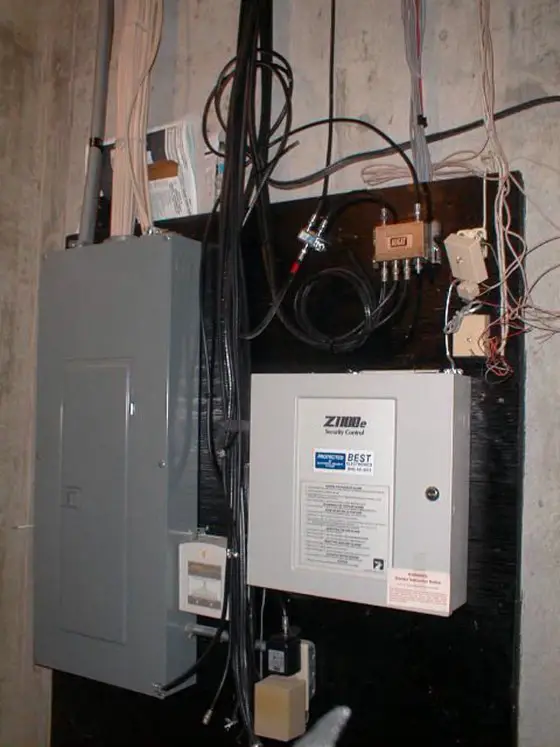
You should try to organize as much of your wiring as possible at one location. But be careful, it may be best to separate certain types of wiring to ensure there is no interference caused by the higher voltage wires.
DEAR TIM: I want my new home to be ready for all of the new technology that I feel is just around the corner. What is the best way to prepare a house for electronic technology? Are there special wires that need to be installed before the walls are covered up? Maybe there is no concern as all future appliances and communications will be wireless. What would you do if you were me? Becky P., Euless, TX
DEAR BECKY: I applaud you for your forward thinking! You will never regret getting your house ready for future advancements in home technology. All one has to do is simply look back ten years. Very few people were even remotely concerned about connecting different rooms of their house so that it would become a network. Networking home computers, sound systems, heating and air conditioning equipment, and intercoms are now the buzzwords of both new construction and those of us that live in existing homes.
A connected home is one that has excellent internal structured wiring that allows occupants to gain access to the Internet, telephone, cable TV, satellite TV, etc. in just about any room of the house, including outdoor patios, decks, and pools. The need for structured wiring is clear. Advancements in home entertainment allow high fidelity sound systems to be heard in multiple rooms at the same time. Home security systems can now be easily connected to personal computers and remote monitoring stations. Water, electric and gas utility meters can be read remotely. The list of appliances, house components, and personal communications devices that can be interconnected is growing daily.
Hard wiring solutions appear to be the direction that home technology is headed. Signals that travel through wire are often more reliable and can carry more data faster. They are certainly more secure, as some wireless signals can be captured, stored, and re-broadcast in your absence by pranksters or undesirables who are lurking just beyond your home.
You have certain options available when you wire your new home. The backbone of a connected home that contains structured wiring is a distribution panel that is nearly identical to a traditional electric service panel. This box can be located very near the electric service panel and should have excellent access to the exterior of your home so that service providers can feed their cables into the distribution panel. Certain boxes are made to accommodate multiple service providers.
The absolute minimum wiring you should extend from the distribution box to each bedroom, den, family room, kitchen, home office, etc. is a UTP CAT 5 cable that contains four pairs of twisted wire. This is the new standard wire used to feed telephone equipment. In addition, string a RG-6 coaxial cable to each room. Note that each room should be connected to the distribution box with its own separate cable. Do not loop one cable in between rooms in a series.
If you really want to prepare for the future extend two CAT5 or CAT5e cables into each room. Once this is completed, extend two RG-6 quad shielded coaxial cables into the rooms. This level of wiring will enable you to have a huge pipeline capable of carrying vast quantities of information to and from any activity center within your home. All of the cables have sleek outlet covers and connection plates that attach to walls in your home.
Even though you may wire each room adequately, there is always the possibility that a wiring standard may change in the future. Planning ahead for this possibility is simple. The trick is to install a minimum of three empty two-inch diameter plastic conduits from the distribution box area into the attic of your home. These conduits create pathways behind the walls that allow you to easily distribute future cables and wire. One of the conduits should be reserved for traditional high voltage wiring. Keep this conduit at least 4 feet away from the low voltage and communications wire conduits. This spacing will help minimize or eliminate electromagnetic interference created by high voltage wiring. The ends of the conduit need to be capped to prevent fire from spreading from one part of the house to another.
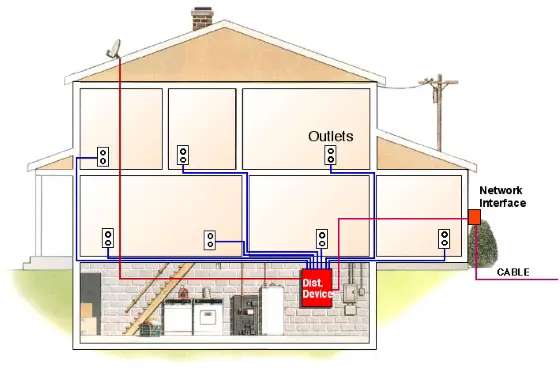
A structured-wiring panel should be in a convenient location.
Consider adding blank electrical rough-in boxes on exterior walls that have a plastic conduit that extends into an attic or basement. This flexibility will be genuinely appreciated by a future technician who needs to install a computer, modem, TV, or some yet-to-be-invented device on an outside wall. The cost to install the empty box and conduit will be a small fraction of what it will cost to restore the wall surface and baseboard after the frustrated technician works for hours to run the cable!
If you are looking for an great book for installing simple wall lights to running wire in new construction and in existing walls and ceilings, then Wiring a House is the book for you. With its wealth of practical know how this book, written by a master electrician, is sure to become an indispensable reference for anyone who wants a common sense guide to residential electricity. The black and white photos and illustrations featured in this book are clear, crisp and easy to understand. You must buy a copy of Wiring a House, a great hardback book published by Taunton Press.
If you are looking for a book with invaluable information on tools and materials, detailed instructions for how to repair or replace wiring in old buildings and bring them up to code then you need a copy of Old Electrical Wiring. This 400 plus page book tells you everything you could ever imagine about switch layouts, troubleshooting, and design change. It also has an extensive glossary of old wiring terms and slang. Packed with drawings and illustrations, including pictures of old devices, this practical book will tell you whether an old electrical system should be torn out or repaired. This book will really help you.
Here's a complete, full - color guide to all aspects of residential wiring and how to apply them to the wiring of a typical house. Electrical Wiring Residential, is another must have book. It's everything anyone could need to know, from wiring a lighting branch circuit, to installing a service entrance or swimming pool. Loaded with examples, wiring diagrams, spectacular photos and illustrations explaining all the new 1999 NEC requirements thoroughly. This book is easy to read and understand, yet has all the instructions and details needed to perform virtually any residential wiring job properly.
Column 303

Tim built custom homes and did ultra-custom remodeling for 20+ years before launching his Ask the Builder media presence. He was selected as one of the Big 50 by Remodeling magazine in 1993. This award gave birth to Ask the Builder in October 1993. Tim also operates https://DrawPlumbingPlans.com. His @askthebuilder YouTube channel was the first home improvement channel on YouTube.
Hi, Tim! I'm happy to have found my own question answered already on your website but can't tell offhand when this was written and wonder if an updated answer would be worthwhile. Based on the publication date of the first recommended book (2009) and that the others weren't found in my local library catalog, perhaps this question is worth answering again. In advance of a huge addition to our home, I'm curious about current LED lighting options and what other hard-wired things I should be considering as I figure out an electrical plan. Thanks!
Joan,
Not much has changed! I'm wiring as I type this my daughter's new home. Basically I've just followed all the advice of my own in all my past electrical columns. You should read all of them. I guess I could put together a little PDF file folks like you could buy for $9.95 that lists all the best practices and things you can do for ultra convenience.
My daughter came up with one I didn't think of. An outlet just 1 inch up off the finished floor under a seat in the mudroom. What could that be for??? That's where the magic Roomba vacuum cleaner's home base will be! Good luck. If you need detailed help and some tips, you can arrange a phone call with me:
https://shop.askthebuilder.com/products/15-Minute-Phone-Conversation-with-Tim.html
...ditto...what year was this written? Most all home tel/tv/internet will go wireless in the next decade. Of the 120 million U.S. homes with a television, more than 33 million have cut cable. That number is expected to grow to 55 million in the next two years. High speed wireless routers are both secure and very fast when properly configured. The notion of wiring every room with CAT5 and COAX seems a bit dated. Fiber optical cable to a central wireless hub inside your home, a modern wireless router, and wireless repeaters within the home make more sense. It’s quite possible in the next decade that most data services (tel/tv/internet) will be delivered wirelessly and remotely from hardware outside your home.