Long Lasting Concrete
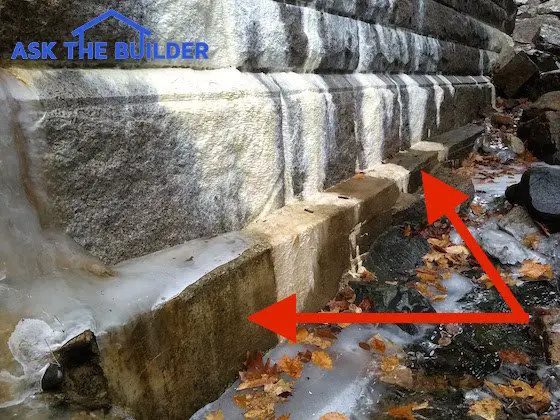
This is part of the exposed massive concrete footing for the Waterfall Bridge in Acadia National Park built by John D. Rockefeller Jr. in 1925. This photo was taken January 28, 2018 and the concrete looks to be in excellent shape. The concrete is exposed to freeze / thaw cycles and moving water in heavy stream flow. Copyright 2018 Tim Carter
Long lasting concrete is very easy to make. The best part is it's not that expensive to do.
Long Lasting Concrete Examples All Around
There's a great chance that within fifty miles of your home there's long lasting concrete that's close to one hundred years old. I'll bet it's in great shape. All you need to do to locate some is to find a railroad bridge near you.
Look at the concrete abutments and see if there isn't a date cast into the concrete. It was a common practice to put the date in the concrete.
Yet roadways, sidewalks, driveways etc. near you that may be less than twenty years old are spalling, cracking and generally in bad shape.
What's the difference? Why is newer concrete falling apart so fast?
Waterfall Bridge Concrete Footer Acadia National Park
I hiked to the stunning Waterfall Bridge on the morning of January 28, 2018 while in Acadia National Park.
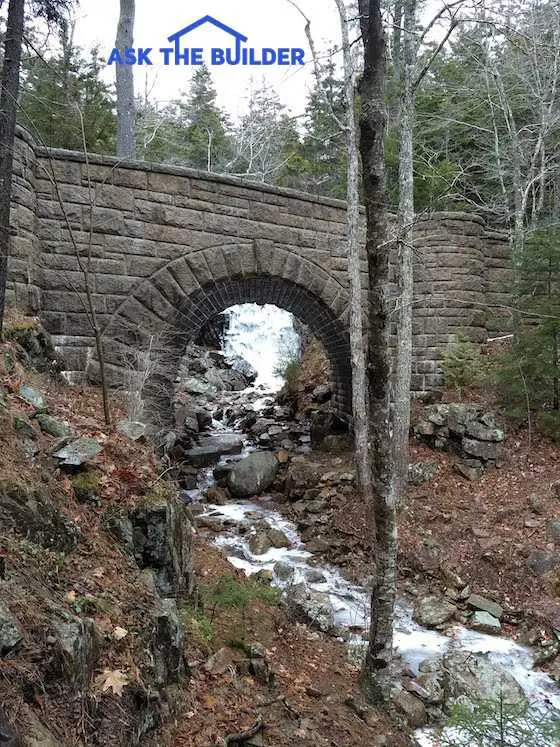
Here's Waterfall Bridge built by John D. Rockefeller, Jr. in 1925. The left bottom of the arch is where you can see the exposed concrete footer. Copyright 2018 Tim Carter
Two months prior, I had read Ann Rockefeller Roberts book about her grandfather's exploits of building the breathtaking carriage trails in Acadia National Park.
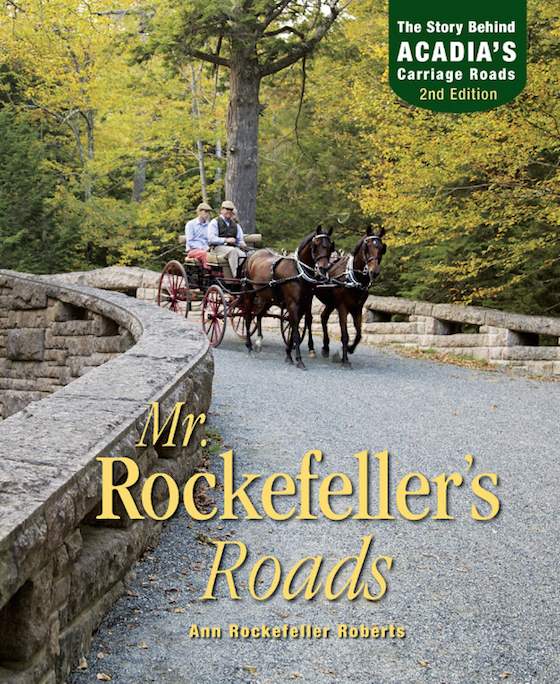
Here's a tiny section of the carriage trails on Mt. Desert Island. This is a great book. CLICK THE PHOTO NOW to have it delivered to your doorstep.
In her book Mr. Rockefeller's Roads, there's a rare photo of the construction of one of the bridges and it shows the giant cast concrete steps or footers that lie beneath the seventeen bridges in Acadia NP.
It's important to realize I had no idea that I'd be able to see any exposed concrete from the construction work. But there it was. The concrete you see in the above photo that supports the first row of granite stones was mixed and cast in 1925, ninety-three years ago!
It's in excellent shape.
The Secret to Long-Lasting Concrete - More Cement
I don't have access to the construction specifications for the concrete in Mr. Rockefeller's bridges. I suspect though that it was an eight or nine-bag mix.
Currently the Portland Cement Association suggests a six-bag mix, or 564 pounds, of cement in each cubic yard of concrete for exterior use. They say this will create a compressive strength of 4,000 pounds per square inch (PSI).
If you're mixing a small amount of concrete and using your own raw materials, here's an ancient formula that you'll see in many publications:
- 3 parts gravel
- 2 parts sand
- 1 part Portland cement
This recipe makes the standard mix that won't hold up like the concrete holding up the Waterfall Bridge above.
I recommend this recipe for long-lasting concrete:
- 3 parts gravel
- 2 parts sand (silica sand or volcanic sand if you can get it)
- 1.5 parts Portland cement
- 0.5 parts hydrated lime
I maintain that you just need to boost the amount of cement in concrete to increase its strength.
It's my opinion that the PCA has a dog in the fight. Their members may want you to replace your concrete more often than needed. After all, this could start a long-term trend that concrete is really a disposable product.
Perhaps it's not in their best interest for concrete to last 40, 60 or 100 years? This is all conjecture on my part, but Mr. Rockefeller's Waterfall Bridge footer is prima facie evidence that concrete can be made that lasts a very long time.
Hydrated Lime Is The Secret Additive
It would also help to add hydrated lime to the mix and use volcanic sand that has a high silica content.
The Romans made mortar and concrete well over 1,000 years ago that's extremely durable. They didn't have Portland cement. All they had was hydrated lime and they must have figured out on their own that mixing it with volcanic sand made for a very durable compound.
Silica is a primary component of granite and you already know how durable it is!
If you want to know how much hydrated lime to add to your concrete, just get this amazing book:
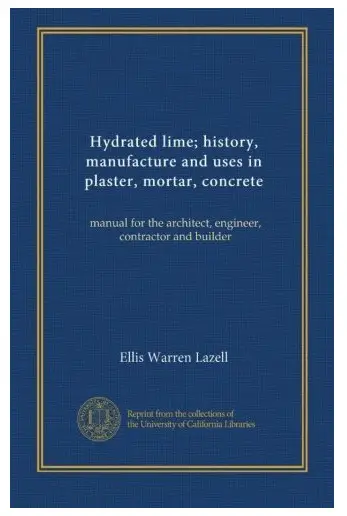
I own this book. It's contains magic formulas to help you make long lasting concrete and brick mortar. CLICK THE PHOTO now to have it delivered to your home.

Tim built custom homes and did ultra-custom remodeling for 20+ years before launching his Ask the Builder media presence. He was selected as one of the Big 50 by Remodeling magazine in 1993. This award gave birth to Ask the Builder in October 1993. Tim also operates https://DrawPlumbingPlans.com. His @askthebuilder YouTube channel was the first home improvement channel on YouTube.
Sir,
You define the concrete recipe in "parts." Are "parts" measured in weight or volume, and does it matter which you use??
I'm on your email list and really enjoy your mailings.
Thanks
Charlie
When you see the word PARTS in a recipe, it means VOLUME.
As a custom home builder I have routinely ordered 6000 psi mix for reinforced basement walls and foundations. As far as I know they only increase the percentage of portland cement. I do not think they use lime and am not sure what the lime specifically does. However the 6000 psi mix is more waterproof or less permeable to water. Further, I believe the addition of latex admixtures used by ceramic tile contractors boost the psi even higher and allows some flexibility to help prevent cracking.
Please tell us a little about UHPC (17,000 + psi) use in residential construction.
Dan, you probably can do a better job. Compile a list of URLs that best tell the story and put them in your next reply. 😉
Designing concrete to last 50 years allows a steady predictable stream of money to come in for each generation of "builders" (in quotes, cuz .. shame on them). Bearing in mind not just the unfathomable financial strain on individuals/cities, but worse: I know of at least 2 people in Montreal dead-by-falling-concrete. This is evil.
God bless your excellent work! Future is bright!