Build Stackable or Segmental Retaining Walls

retaining wall

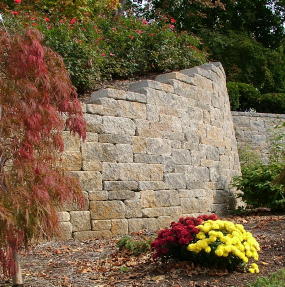
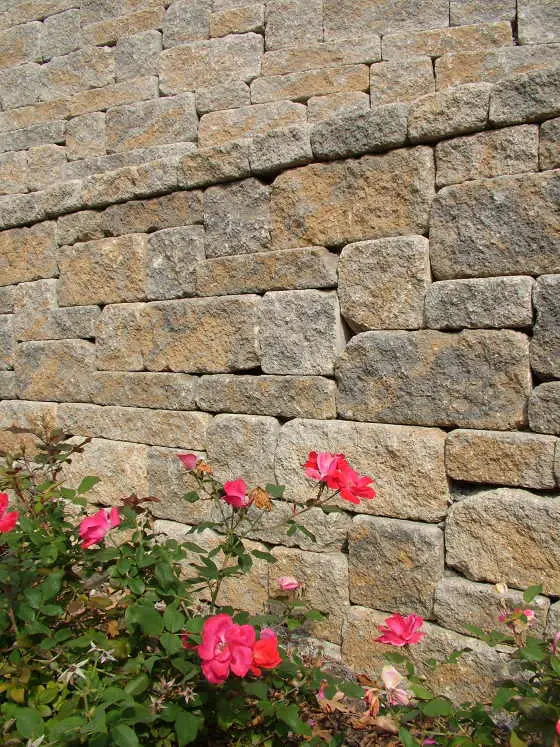
If you stand back from this mortarless retaining wall, it actually appears like rough cut stone. The manufacturer uses different pigments in the concrete mix and different sized stones to create the illusion.

DEAR TIM: I am trying to create a level play area for my children. My rear yard slopes away from my house. Building a 4 foot high retaining wall will correct my problem. I have seen new masonry walls that you simply stack one piece on another. Are these suitable? Can a single mom like me realistically do the job? What do you suggest? T. O.

DEAR T.O.: Your project is ideal for the new segmental retaining walls. A 4 foot wall height is a no-brainer. These new wall systems, which employ mortarless concrete technology, can actually exceed 25 feet in height! If you don't own some sturdy work boots and gloves, get out to the store this week. You are going to need them.

Segmental retaining walls have been used in this country for over 20 years. The technology is really quite old, just the materials are new. The Great Wall of China employs some of the same methods that are being used in many of the walls you see being built today.

There are many advantages to using a wall system like this. Time consuming and costly concrete footers are rarely required. A simple gravel base is often the substitute. The wall has built in flexibility. The individual masonry units are manufactured under ideal conditions. Each high-strength concrete block is uniformly shaped.

The design possibilities are virtually endless. Serpentine walls are a breeze. Many of the wall systems offer a simulated split-faced rock appearance. Some are available in different colors. Using different colored block you can easily create a design or a color stripe. There are accessory pieces that allow you to build steps, pillars, masonry light posts, and more.


Need to build a retaining wall? Build a sturdy, durable wall with my Retaining Walls Checklist. I offer a 100% Money Back Guarantee.


The wall you need to construct is a simple gravity wall. It relies solely on its own weight to resist the sliding and overturning forces exerted by the fill behind the wall. Wall heights in excess of 4 to 5 feet tall often must be engineered. The segmental wall systems will work, however you often must incorporate a special geogrid fabric into the wall and the compacted backfill soil behind the wall. Segmental retaining walls that support roadways or parking areas also require engineering attention.
You can make both gentle and tight curves with mortarless segmental retaining wall systems.

You can make both gentle and tight curves with mortarless segmental retaining wall systems.

Water must be allowed to drain freely behind and away from the walls. A perforated drain pipe along with gravel behind the wall helps improve drainage. Some of the wall systems actually use a light hollow block which is filled with free draining gravel. The gravel fill allows you to easily add weight to the gravity wall system. These particular blocks may be of interest to you should you wish to minimize visits to your chiropractor.
retaining wall

This is a closeup shot of the mortarless system. Excuse the pun, it rocks!

Each wall system comes with easy-to-follow instructions. Be sure to always start at the lowest end of the wall and work up slope. If your wall will abut an immovable object, such as a basement wall, try to start there as well. This will minimize cutting. Don't hesitate to ask for advice from the supplier. Ask if they have a three wheeled fork lift which will allow them to deliver the blocks and gravel to your rear yard. This will save you tons of labor and time, literally!


Column 128
Vinyl Fence

DEAR TIM: I've had it with my wood fence. Painting it is a huge investment of time. Besides, the paint only seems to last three years or so. I have seen vinyl fencing. Do you feel that vinyl fencing is suitable? Not too long ago, I saw one that didn't hold up very well. Is there a way to identify quality vinyl fencing? R. Y.

DEAR R.Y.: That poor quality vinyl fence you saw could have been one of the first ones made. Then again, it may have been made six months ago. There is a wide range of quality in some of the vinyl fence products. Some are fantastic, some are so - so.

The vinyl fence industry got it's start in the early 1980's from PVC pipe manufacturers. The early fence products didn't fare well in the sunlight. The pipe manufacturers forgot that their pipe is usually buried in the ground or in walls. Destructive ultraviolet (UV) light caused pipe grade PVC fencing to break down readily.

However, several manufacturers responded to these early failures. They developed new technology that now allows them to manufacture vinyl in two layers that are chemically bonded to one another. The process is called coextrusion. This process produces a thin top layer that contains ingredients, such as titanium dioxide, which slows the breakdown of the vinyl. The thicker bottom layer contains ingredients which enable the vinyl to remain pliable and crack resistant for many years.

The amount of titanium dioxide in the top layer is critical. The higher the amount the better. This ingredient actually absorbs and reflects the energy of the UV rays. Vinyl with lower amounts of titanium dioxide simply succumb to the UV rays at a faster rate.

Vinyl fencing products are available in a wide range of styles. The industry first targeted the agricultural market. Virtually every manufacturer has a post and rail fence. The more progressive companies developed a wide range of other styles for the residential market. These styles include picket, privacy, wrought iron look, and cross buck. Several manufacturers offer different colors and extremely realistic wood grained texture. Within six months, a variegated multicolored fence will be available. The look is virtually indistinguishable from real wood.

Vinyl fencing is pricey. Often it can cost up to twice as much as a similar wood fence. However, there is absolutely no maintenance once it is installed. Maintenance costs for wood fencing can cost as much as $0.70 per foot per year. When you figure you have to paint your fence every 2 - 3 years, a wood fence system can actually cost far more than a vinyl system in a short amount of time.

Installation of vinyl fencing is critical. It requires tighter tolerances and accurate placement of posts. Many of the fencing sections come preassembled so the posts must be spaced equally. Warranties are also a good way to identify a quality fencing product. Take your time to compare one with another. Some warranties are not only lifetime, but they are also transferable as well. Vinyl fences with strong warranties are a good bet.


Cement Stucco – Synthetic Stucco / EIFS

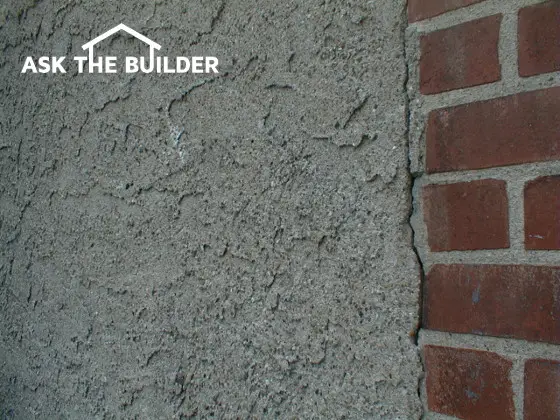
cement stucco finishDEAR TIM: I am considering using stucco for an upcoming building project. The time tested cement stucco seems to hold up fine. However, I have recently seen a newer synthetic stucco product used in residential construction. Are there any potential problems with either stucco method? What are the pros and cons to each system? T. R.

DEAR T. R.: The newer synthetic stucco you are referring to is EIFS (Exterior Insulation and Finish). It has been is use in the USA for approximately 25 years. The cement stucco system, on the other hand, is thousands of years old. It is definitely no spring chicken!

The system is durable. The reason lies in the fact that you are basically covering your house with a layer of rock. The cement stucco consists of sand, a small quantity of lime, Portland cement, and water. It is simply a fine grained concrete that is attached to your house using a waterproof barrier paper, galvanized wire mesh, and metal flashings. Flashings are handy devices that channel water to the exterior of a wall.

Cement stucco has numerous advantages. It can achieve compressive strengths in excess of 3,000 pounds per square inch. Ladders, baseballs, and rocks will rarely dent it. If you have a talented plasterer, you have unlimited surface texture possibilities. Furthermore, if you use time tested installation methods, you can create a weather tight barrier to wind driven rain, snow, and ice. Uncoated cement stucco allows water vapor to freely pass through it.

As for its disadvantages, cement stucco is a rigid material. If the wood framing beneath it shrinks or if the house foundation moves, the cement stucco will very likely crack. If you choose to use it on a new home, frame your house using wood sheathing, get it under roof, and let the lumber dry for 45 - 60 days before proceeding with the stucco installation. Quality control of the material is determined at the jobsite. The people who mix the ingredients and install it on the wall control the destiny of your stucco finish.

EIFS is a synthetic material. It is virtually impervious to water and water vapor. One coat and two coat systems are available. The outer surface layer usually contains long lasting acrylic polymers that are solid colored and extremely flexible. A wide variety of colors and textures are available. EIFS systems are almost always applied over an unbroken layer of expanded polystyrene insulation board. Lower fuel bills are a certainty when used in conjunction with standard fiberglass batt wall insulation.

In some ways EIFS is too good. It has been determined that EIFS stucco can actually act as a barrier. Manufacturers and installers of many of the EIFS systems have abandoned the waterproof barrier paper and flashing practices practiced for years by the cement stucco masons. Water gets behind many EIFS systems and can't get out. Numerous houses across the USA are suffering from serious structural wood rot. Certain EIFS systems severly inhibit the evaporation of trapped water.

An EIFS system is available that makes use of a special water management system. This concept acknowledges that water will get behind synthetic stucco. The water management system collects the water and diverts it back to the exterior of the home before it can cause rot damage. The system incorporates a special barrier paper, old fashioned metal flashings, cement board in place of foam board and a combination of a Portland cement basecoat topped with a textured polymer stucco material.

If you choose to use cement stucco and want it colored, use a masonry penetrating stain. Avoid film forming paints that may peel at a later date. If you choose to use EIFS, be sure that a waterproof barrier paper is used between the system and the wood structure. Check to make sure that flashings are used as well. The flashings must be in place at the bottom of the stucco, around windows and doors and any other place where the synthetic stucco abuts something that is not stucco. The flashings will direct water from behind the EIFS back to the exterior of the wall. Remember, EIFS systems can trap moisture. You must install an EIFS stucco finish so that it can easily liberate water that will get behind the attractive finish.

Read about Chris' dilemma in my November 22, 2009 AsktheBuilder Newsletter.

Author's Notes:

February 2002

A recent Virginia Circuit Court judge has just ruled that Dryvit's Outsulation is defective. He concludes "even if the Outsulation were perfectly applied according to Dryvit's specifications, instructions, and details, the patented Outsulation 'system' consisting of the method of application and the component parts, is intrinsically defective and thus, is not merchantable." This information was provided to me by the webmaster of another website called eifsfacts.org.

April 1997

Since I authored this column, there has been a major storm brewing concerning EIFS. One major producer of EIFS materials, USG Corporation, stopped marketing "barrier" EIFS in April of 1996. Instead, they developed a "Water-Managed Exterior Finish System". Other EIFS companies have modified their products and installation techniques to deal with water infiltration problems, drainage, and wood rot.

Maryland Casualty Insurance is not insuring EIFS houses. There is a possibility that other major insurance companies will take notice and either limit coverage or cancel policies on existing EIFS houses.

"Barrier" EIFS systems have been outlawed in North Carolina and Georgia.

Class action lawsuits have been filed in state and Federal courts against EIFS manufacturers. These are currently in litigation. On July 2, 1997 a Tacoma, Washington jury found that a major EIFS manufacturer was not guilty in a case filed by two homeowners. The jury felt the homeowners deserved compensation but not from the EIFS manufacturer. They commented that the manufacturer had provided a good quality product and adequate installation instructions for the EIFS system materials. This case may have an impact on the class action suits.

If you have an EIFS house I suggest that you check for moisture related problems. If you are thinking of purchasing a house coated with an EIFS system, I suggest that you proceed with extreme caution. You may be purchasing a house that has latent defects. Hire a professional home inspector who can prove to you that he/she has experience in dealing with EIFS inspections. Also consider contacting your local building department. Ask these officials if there have been reports of EIFS problems in your county/city/town.

If you are beginning to construct a home that will include EIFS, I suggest you get the full set of installation instructions from the manufacturer. You then must make daily inspections to insure that every aspect of the installation is being performed according to the manufacturer's guidelines.

Dishwashers and Electronics

DEAR TIM: A new dishwasher is in my future. While out shopping, I noticed a big difference in price. Also, it appears that computers have now invaded these appliances. How can sophisticated electronics help clean dishes? Are there quiet dishwashers? Is it possible for the average housewife to install a dishwasher? A. D.

DEAR A. D.: Yes, the microchip has infiltrated dishwashers. The microprocessors are connected to sensing devices. The electronic devices attempt to minimize the amount of energy and water that is used to clean your dishes. At this point in time, not all manufacturers are charting the same course. Some manufacturers feel the computerized machines may not do the job.

The electronic devices in the machines are very sophisticated. Some contain an electric eye which looks at how much dirt is in the circulating water lines. The dishwasher extends the cleaning cycle until it thinks the dishes are clean. Other machines have sensors that can detect the amount of dishwashing soap. If it thinks you goofed by not adding a sufficient amount, it raises the temperature of the wash water. Other sensors detect the washer arm rotation. If it is blocked by a fallen glass or plate, it adjusts the washer arm rotation.

Some models spy on your household habits. They memorize how many times you open and close the dishwasher door before running the machine. If hours pass, then it knows there is a good chance dried food will be present when it is time to go to work. The machine automatically increases the wash time and water temperature.

Some of these machines are pricey. They can approach $800 in cost. Energy savings may not pay for the difference in price from an non-electronic model. You must do the mathematics yourself to determine what the payback will be. Remember, price can often be a gauge of overall quality. If a machine contains inferior parts and less of them, it can often sell for less.

Noise is a major concern with most consumers who purchase dishwashers. Most manufacturers are going to great lengths to reduce unwanted noise. They do this by reducing vibrations. This can be achieved by increasing the sound deadening insulation in the door and around the tub. Precision electric motors and pumps are used that produce fewer vibrations. The extensive use of rubber mounting grommets can help. They isolate a vibrating pump or motor from the main body of the dishwasher.

Do you know how to turn off the circuit breaker that powers your dishwasher? Great! Get your adjustable opened end wrench, several screwdrivers, and some pipe dope. Take 30 minutes and carefully read the installation manual.

Turn off the electric power that feeds the dishwasher. Now, turn off the water line that supplies the machine. Remove the lower front panel to access all of the necessary, electric, water, and drain connections. Once you have disconnected these items, open the door to the dishwasher. You should see two screws that attach the dishwasher to the countertop. Remove these and the dishwasher should slide out. Now, install the new dishwasher and do everything I just said but only backwards. Be sure to check with your local plumbing department first. Some states have highly restrictive plumbing codes that will not allow homeowner installations.

Aluminum Gutters – Seamless or Traditional

DEAR TIM: We are getting ready to build a new home. I've been disappointed with the performance of aluminum gutters in the past. Have there been any advancements? What can you tell me about seamless aluminum gutters? Some of my friends in the southeast and southwest don't use gutters. Is this a wise practice? I. T.

DEAR I. T.: As you might expect, there have been improvements in aluminum gutter systems in the past decade. These changes have affected both traditional and the so called seamless gutters. By the way, seamless gutters often have seams when they turn corners. Don't be fooled!

Your existing home probably has lighter weight aluminum gutters attached to the gutter or fascia board using long spikes and ferrules. Ferrules are metal tubes that the spikes pass through. They prevent the spikes from being driven too deep. This method of attachment is old technology. Normal expansion and contraction of the aluminum gutter is inhibited. It is not uncommon for the spikes to eventually loosen from repeated stress cycles.

You can purchase heavy gauge traditional aluminum gutters that attach to your roof system using a variety of hidden hangers. These hangers allow the gutters to expand and contract freely. The gutters are available in lengths up to 37 feet. This permits a seamless look on most houses. Two sizes are available: 5 inch and 6 inch. The 6 inch gutter is used when large volumes of rain water call for a greater capacity.


In need of gutters? Pick out the right ones with my Gutter & Downspout Installation / Repair Checklist. I offer a 100% Money Back Guarantee.


The thickness of the aluminum used to make the gutter is important. Long lasting, rigid aluminum gutters are often made using aluminum that measures .032 inch thick. Thinner material can sometimes bend or dent when a ladder is set against it.

If you choose to install a seamless style aluminum gutter, attempt to locate a design that uses a hidden attachment clip. Avoid the use of old fashioned spikes and ferrules. Also ask about the weight bearing capacity of the system. Some traditional systems can support up to 50 pounds per lineal foot.

Be sure to ask about the exterior painted finish of the gutter material. There can be big differences. The flat aluminum coil stock used to make seamless gutters does not always have as good a finish as the factory formed traditional gutters. Be sure to read the warranty, especially if you are looking for a long lasting gutter.

Your gutterless friends may want to rethink their situation. Some parts of the country have well drained soil that allows rain water to quickly dissipate. Other parts of the country get small amounts of rainfall. In either case, gutters can help control erosion, wood rot on the lower portions of houses, and work in conjunction with an underground irrigation setup.

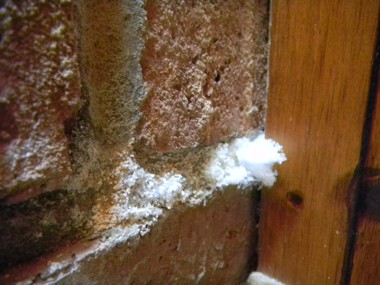
Efflorescence growing in the mortar of a brick fireplace. PHOTO CREDIT: Michael Hannum

Efflorescence growing in the mortar of a brick fireplace. PHOTO CREDIT: Michael Hannum

Houses that do not have gutters can sometimes suffer from erosion problems in heavy rains. In addition, the constant splashing of water against wood siding or stucco can lead to wood rot or efflorescence on stucco. Water collected in gutters can be directed to plants and other vegetation using inexpensive plastic drain pipe. Why use city water when Mother Nature does it for free!

Plaster Wall Restoration

DEAR TIM: My daughter purchased an older home with plaster walls. There are numerous cracks in the walls and ceiling. The plaster appears to be sound. Should she skim over the existing plaster? Will the cracks reappear? Should she use the ready mix compounds that are sold in the large buckets? Is this a DIY'r project we can tackle? N. A.

DEAR N. A.: Ahhhhhhhh! Your daughter is blessed to have old plaster in relatively good shape. It is, in my opinion, the premier wall finish material. Working as a team, you and your daughter will be able to restore the walls. It will take a moderate amount of effort. Hopefully, one or both of you has good hand eye coordination.

Let's talk first about the cracks in the plaster. My guess is that in many locations wall cracks extend from the corners of doorways, windows or arches. Ceiling cracks are often random in nature. You should be able to repair many of these cracks successfully. Some, however, may continue to plague you. Here is why.

Some of the wall cracks may be stress release points. Houses tend to develop joints much like our elbows and knees. Seasonal changes in humidity can cause a house to flex at these joints as the framing lumber behind the walls and ceilings expands and contracts. The only defense when dealing with these cracks is to attempt to maintain as constant a level of humidity as possible within the house. This is often tough to accomplish.

There are several ways you can tackle the crack repair process. One method I have used with great success is to treat the cracks like new drywall seams. You tape over them using an adhesive fiberglass mesh tape or a paper tape. Successive layers of joint and topping compound disguise the repair. A final skim coat over the entire wall fills dimples, hairline cracks, and other imperfections.

Another method is to apply large sheets of thin fiberglass mesh over the entire wall or ceiling. The entire surface is then skim coated with joint compounds which hide the cracks and the mesh.

The ready mixed joint compounds may not be the best material to use. They are simply buckets of glue and filler. You can buy dry powdered setting type joint compounds that mix readily with water. These compounds contain a mixture of glue, filler, and gypsum. The presence of gypsum allows them to harden much like concrete. Same day wall repairs from start to finish are possible with these magical materials.

The ready mixed joint compounds do not always bond firmly to old plaster. In addition, they produce a somewhat softer final surface which may scratch or ding more easily. The setting type joint compounds can be mixed with water and acrylic bonding liquids. This permits them to readily stick to the old plaster.

If you want to avoid dust storms during the final stages of your project, why not buff the walls with a rubber float? These tools are used to grout ceramic tile. If you slightly dampen the dried joint compound and glide the float over the wall surface, you can create a smooth finish that rivals that of the original master who installed the plaster.


Aromatic Cedar Closets and Products

aromatic cedar

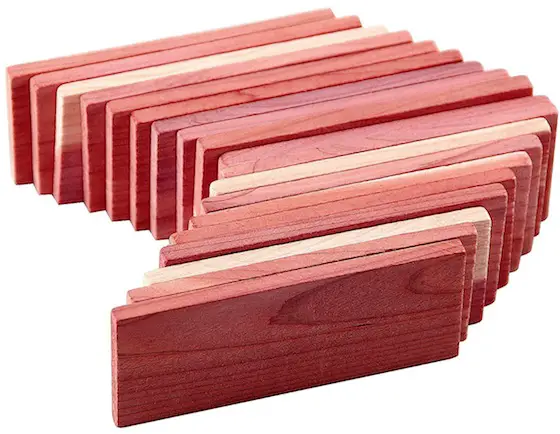
Aromatic Cedar | You can get long planks of aromatic cedar, blocks like this, or cedar flakeboard. CLICK or TAP HERE or the image to see it all.

Aromatic Cedar Closets - They're Dreamy

DEAR TIM: We're building a new house. I would like to reproduce an old fashioned cedar closet like the one in my parent's home. Can you just buy regular cedarwood or should I use those cedar flakeboard panels? Does the cedar wood really kill moths? Is there a way to restore the aroma in my parent's closet? Are there alternative products? C. E.

DEAR C. E.: Your question brings back memories of my mother's fragrant cedar chest. As a child, I would sneak into her room to lift the lid. The aromatic cedar aroma was intoxicating!

Related Links:

Cedar Closet Construction Tips

Restoring Aged Cedar - Bring Back the Pleasant Aroma!

When Did Cedar Closets Become Popular and What Causes the Aroma?

Cedar closets became very popular at the turn of the century as closets became a more standard feature in residential construction. Prior to that, clothes storage was usually achieved in free-standing armoires. The cedar aroma is produced by the evaporation of the natural oils contained in the cedar lumber.

What Species of Cedar Creates the Pleasant Aroma?

The aromatic cedar that creates the intoxicating aroma is Eastern Red Cedar. This cedar species is found predominately in and about the southern Appalachian Mountains. Aromatic cedar flakeboard is a good alternative should you decide not to use the red cedar planking to match your parent's closet. The flakeboard will produce the same strong aromatic scent as the solid wood planks.

Do not buy western red cedar. It will not produce a strong fragrance that is necessary to protect your clothing.

Why Should I have Cedar Closets in my Home?

The aromatic cedar can protect the investment you have made in your fine clothing. Adult moths like to make nests in fabrics, especially woolen ones. The adult moths do not damage or eat the fabric. The damage is done by their youngin's. Adult moths will not reproduce in an area permeated by a strong cedar aroma.

CLICK or TAP HERE to get FREE QUOTES from local handymen who can transform a closet into a CEDAR CLOSET in hours.

Should Cedar Closets Have Special Doors?

Tightly sealed cedar closets or chests will maintain a strong cedar scent for many years. You can extract top performance from your new cedar closet by doing several simple things. Make sure that your builder installs an inexpensive exterior door to your closet. These doors have excellent weather stripping which will minimize air infiltration. Caulk or fill any gaps between the drywall and floor before you install the cedar lining.

Why Do Cedar Closets Lose Their Aroma?

Your parent's cedar closet has lost its strong aroma because of air infiltration or dirt buildup. The cedar's red cast has probably turned to brown.

What Can Be Done to Restore the Pleasant Cedar Smell?

Sand the surface of the cedar with fine sandpaper to restore the cedar aroma. This will open the wood pores allowing the natural cedar oils to once again evaporate. In addition, you can purchase natural cedar oil extract. This oil is applied to the sanded cedar. It readily soaks into the bare wood revitalizing the cedar. Never, ever varnish, shellac, or seal cedar! This will stop the evaporation process immediately.

renew cedar oil

Renew Cedar Closet Smell | CLICK or TAP HERE to get fantastic cedar oil that will renew the smell in your cedar closet or chest.

Can You Create the Cedar Aroma in Drawers?

Aromatic cedar products are also available if you want to create the fragrance within an existing closet or a chest of drawers. You can purchase small aromatic cedar balls or blocks of wood to use in place of mothballs. In addition, you can purchase small bags of cedar shavings that look much like teabags. These can be placed in and around clothes. Finally, for those of us who have smelly shoes, you can even purchase cedar shoe trees to absorb offensive odors.

Can You Purchase Other Cedar Accessories?

Yes, you can buy

CLICK or TAP HERE for a full listing of all the Eastern Red Cedar products you can have in your home in just days.

CLICK or TAP HERE to get FREE QUOTES from local handymen who can transform a closet into a CEDAR CLOSET in hours.

Stamped and Colored Concrete

DEAR TIM: Our builder is trying to convince us to use colored stamped concrete for our front walk. I'm worried that the textured finish will not last. Is stamped concrete as good as regular concrete? What can be done to insure a long lasting job? Is it possible to colorize regular concrete after it is poured? D. A.

DEAR D. A.: I think I can significantly reduce your anxiety level about pattern stamped concrete. It is a fantastic technique to improve the visual characteristics of otherwise bland concrete. Concrete in and of itself is a premier building material. Adding color and texture to it simply enhances its appeal to me.

Pattern stamping is not really new. It has been done for years in one form or another. As a child, I would often see the name stamp of the concrete contractor who installed the sidewalks in my neighborhood. Steep concrete roadways were often stamped with horizontal lines to increase traction. The pattern stamped residential concrete your builder is using has been around for almost four decades.

The stamping processes available today can create over 90 different patterns. They include a wood boardwalk look, slate, cobblestone, brick, flagstone, ceramic tile, etc. When the installer blends different colors with the wet concrete the effect is dramatic. If you have visited theme parks or other attractions there is a good chance you have walked across stamped concrete thinking it was a natural stone product! Contractors who use newer molds and pattern stamps can create unbelievable results.


Want perfect concrete work? Find a pro by using my Concrete Work (Sidewalks, Driveways, Patios & Steps) Checklist. I offer a 100% Money Back Guarantee.


There is no reason why your front walk shouldn't last for many years. As long as your contractor follows all of the known industry standards for pouring concrete, your stamped walk should outlast you. I would suggest that you install 1/2 inch steel reinforcing bars on 24 inch centers in both directions of your walkway. Be sure this steel ends up in the middle of the 4 inch thick sidewalk. In addition, make sure that the concrete is ordered with a minimum compressive strength of 4,000 pounds per square inch. If you choose to install stamped concrete in your driveway, insist on a minimum thickness of 6 inches. Be sure the concrete is cured after it is installed.

Concrete shrinks when it dries. This shrinkage usually amounts to 1/16 inch for every ten feet you pour. This shrinkage produces internal stresses within the concrete. To prevent random cracking you must install control joints. These joints are saw cut lines often created the day after the pour. They should be cut to a minimum depth of one-fourth the thickness of the slab.

It is possible to colorize an existing slab. There are various chemical concrete stains that can be used. Often these contain muriatic acid and metallic salt compounds. The acid etches the concrete allowing the stain to penetrate. Because of differences in the texture and makeup of the existing concrete, it can be difficult to maintain uniform coloration. If you choose to stain existing concrete, you must pay close attention to manufacturer's instructions. Rich colors are possible, however, you will need to practice to achieve them on a consistent basis.

Screened Porches – Beating Bug Bites

DEAR TIM: The bugs are driving me crazy in my back yard. It is time for a screened enclosure. Is it possible to build an economical screened enclosure using readily available materials? What are your feelings concerning aluminum enclosures as opposed to wood? Do you think this is a project for an accomplished DIY'er? Do you have any tricks of the trade you will share? R.C.

DEAR R.C.: Every screened porch that I have built has relieved the bug agony you are now experiencing. This is a project, I believe, that can be successfully tackled by a serious DIY'er. You will need to have well thought out plans, proper zoning clearance, a building permit, and approximately 160 man/woman hours of time.

Screened porches

Think before you do anything. How many people will enjoy breezy mornings and evenings within this enclosure? Are you going to have a table and chairs? Use your existing living room or dining room as a possible template for sizing this new structure. To be on the safe side, set existing furniture out in your yard where the structure will be. Create a square or rectangular shape, measure, and start to draw!

After you have obtained permission from your governmental officials, it is time to build. Wooden screened porches often allow you to match the architectural details of older homes. This feature comes, however, with a price tag - sustained, periodic maintenance. Aluminum screened enclosures offer rapid erection capabilities, low maintenance, and numerous design possibilities. Aluminum structures, however, usually require professional installation services.

Building a screened enclosure is possible on a tight budget. There are several tricks you can use to accomplish this goal. Consider building the porch on top of a ground hugging wood deck instead of a concrete slab. Utilize ready made full panel screen doors for your walls. These doors can be installed side by side in between the support posts of the structure.

Use construction grade redwood for your support posts. This grade of lumber will give you many years of service if you prime and paint each post, including the top and bottom, before installation.

Construct a simple gable or hip roof for your porch. The rafters and roof sheathing will be visible from the inside of the porch. However, if you paint the underside of the roof a medium gray, it will look very acceptable. The angles created when building a hip roof will make for interesting conversation when your friends are sipping iced tea. Accept the challenge and try to construct this roof system.

There are several things you can do to minimize maintenance and maximize comfort. Prime and paint (stain) all wood BEFORE it is assembled. If you build the porch and then paint, numerous wood surfaces will be bare. Rain water will eventually locate this wood and cause paint failure and eventually rot. Be sure to plan ahead for the installation of electric outlets, overhead lights, and a paddle fan. Install these electric devices in accordance with the National Electric Code. Screened porches can become wet creating an increased shock hazard.

Creating a porch of your dreams requires an understanding of the elements, both in construction and climate. Better Homes and Gardens Porches and Sunrooms is a wonderful book to help you decide and plan a porch or sunroom that is right for you. In this book you will find chapter by chapter, evaluating and exploring you options, creating elements of style - porches and /or sunrooms, planning, and the basics of building. There is even a chapter on building taking you through the process point by point, including tips for choosing and working with building professionals.

House Wrap Will Save Money

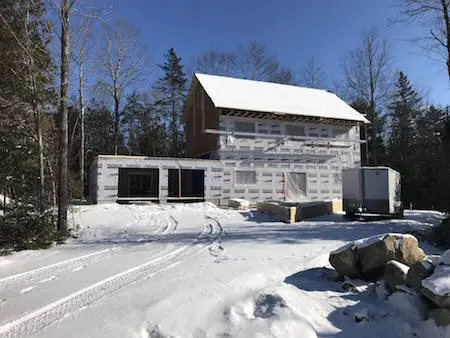
house wrapped

DEAR TIM: I would like to keep my energy costs to a minimum in my new home. Do you think it is worthwhile to have my builder install a whole house wrap air barrier product? Do they work? Are there other advantages in using them? Can you share some installation tricks? L. O.

DEAR L. O.: I have used the house wrap products on all of my jobs. They are an extremely important feature that is often left out of many new homes. They will save you money on your heating and cooling costs. In addition, these whole house wrap products will protect the structure of the house in the event of water infiltration.

The idea of wrapping houses is not new. Many of the older homes that I rehabilitated early in my construction career had been wrapped with tar paper. The tar paper functioned primarily as a water barrier on wood frame houses. It probably helped to limit the amount of air that infiltrated as well. For some reason the use of tar paper was abandoned by many builders after World War II.

The modern house wraps are actually air retarders. Air infiltration can be a huge drain on utility costs. Air leaks into and out of houses in between gaps that are usually found where exterior walls sit on foundations and wooden subfloors. Air can also leak where sheets of plywood or wall sheathing abut one another. An average house has between 70 and 200 square inches of air leaks.

The air infiltration products do not block the flow of air entirely. To do so would be a big mistake. Water vapor from the inside of your house needs to be able to find its way to the exterior air. If the vapor were to become trapped, it could easily begin to cause moisture related rot problems. These building products resemble some modern fabrics - they repel liquid water but allow liquid vapor to pass freely.

All houses that are framed with lumber need protection. Brick veneer is not water proof. Wood, vinyl, and aluminum siding can develop leaks. Construction details around doors and windows are sometimes sub-standard. The whole house wrap products, when installed properly, create a very effective waterproof skin. Water that gets behind the exterior finish material of your house flows down the wrap and exits just below the top of your foundation or slab.

Installation of the whole house products requires attention to detail. These products need to be installed just like the old tar paper - start from the bottom and let subsequent pieces overlap the lower ones. All seams must be sealed with a special adhesive tape sold by the manufacturer. The wrap needs to be in place before doors and windows are installed. In fact, it should be installed prior to the placement of the second top wall plate that sits immediately below the roof rafters. By sandwiching the wrap between the double top wall plate, you virtually eliminate the entry of any soffit down drafts behind the house wrap. Be sure the house wrap extends over the top of the foundation at least 1 inch.

Some house wrap products can hide the location of wall studs. If you use such a product, be sure to align the outer wall stud markings on the house wrap with the studs. If this is too much trouble, consider using a translucent house wrap. In either case, the bricklayers and siding installers will thank you.