Underlayment for Floors

DEAR TIM: In the very near future, I will be installing lots of new and different flooring materials in my home. Can I just remove the carpeting and install my flooring material over the existing subfloor or do I need to install an underlayment? Since I want my new floors to look as good as possible, what is the best thing to do? I am very concerned about the kitchen and bathroom areas since water seems to find its way through and under any finished flooring material. Jennifer M., Atlanta, GA

DEAR JENNIFER: You are very wise to think before you act with respect to all of your new flooring. It is my guess that the total cost of the new flooring will be substantial and the last thing you want is for it to fail or fail prematurely because it was installed improperly. Finished flooring, even carpeting, needs a solid foundation for it to perform well over time. All too often some builders and remodelers as well as poorly trained installers overlook the importance of floor underlayments. Most flooring failures or problems are traced to inadequate or poorly installed flooring underlayments.

For many years, wood based products have dominated the flooring underlayment industry. Plywood, oriented strand board, sawdust composites, cement board, etc. are widely available and are commonly the material used in both new home construction and remodeling jobs. The wood based underlayments can warp and swell when exposed to moisture. This can cause the finished flooring to buckle and fail even if the underlayment relaxes after it dries out.

Many consumers and tradespeople, unfortunately, assume lots of things about finished flooring such as ceramic tile, hardwood, laminate flooring, cork, sheet vinyl, vinyl tile, etc. They feel that if the sub-floor or underlayment looks and feels substantial then it is fine to proceed with the finished flooring. The truth of the matter is that it is far more complicated. Many finished flooring products have specific recommendations with respect to the type of material the finished flooring is placed upon. Even adhesive manufacturers are sensitive to the type of underlayment being used. For example, an adhesive may work well with the vinyl or ceramic tile, but who cares about that if it bonds poorly to the underlayment?

A new underlayment product has recently hit the marketplace that is very attractive to a wide bandwidth of the flooring industry. This product is a gypsum fiber panel that has many positive qualities. It is smooth, has superior water resistance, has higher impact resistance than traditional wood based products, can be cut with a utility razor knife, is made with 95 percent recycled materials and is competitively priced.

Keep in mind that many traditional wood based underlayments contain resins, adhesives, solvents or dyes that can sometimes seep through and into the finished flooring material. If this happens, your finished flooring can be ruined. The new gypsum fiber underlayment does not contain any of these problematic ingredients.

The new gypsum fiber product is available in two thicknesses: 1/4 and 3/8 inch. This variety allows you to create flush finish floor transitions when you change from one material to another. There is no reason why an angled transition threshold has to be used if you are installing finished flooring materials that are different thicknesses.

Many flooring problems happen in houses that are built over crawl spaces. All too often an underlayment will buckle or warp because of water vapor that escapes from the soil beneath the crawl space and then permeates the subfloor and underlayment. If you have a crawl space, be sure you cover the soil with a high performance vapor barrier before you install any underlayment or finished flooring material.

It is also very important to make sure that existing wood subfloors are dry before you install an underlayment. The moisture content of a wood subfloor should not exceed 15 percent. Use a moisture meter to test for moisture content. Be sure that the fasteners used to install the underlayment are driven correctly. The top of the fastener should be flush with the top of the underlayment or slightly below the surface. Above all, make sure that you are using an approved underlayment. Get written specifications from the finished flooring manufacturer and choose a product that is on the list.

Drain Water From Your Wetland Lot

! ! ! See Author's Notes at Bottom of Column ! ! !

DEAR TIM: I have a large fenced yard that is used as a corral for my two very large dogs. Spring rainfall turns the yard into a swamp and my dogs need a bath before they come indoors. What can I do to dry out the soil? To add insult to injury, water from the yard seeps into my basement. Is there a way to solve both problems at the same time? Meredith R., Des Moines, IA

DEAR MEREDITH: From the sound of it one might think you could saddle up and ride those dogs! I have seen similar dog runs that turn into a quagmire as the back and forth movement of the heavy animals churns the wet soil. Fortunately, there is a solution to both of your problems. I can promise a bone dry basement and faster draining dog pen soil, but I can't tell you that the dogs will be lily white after a series of rainy days.
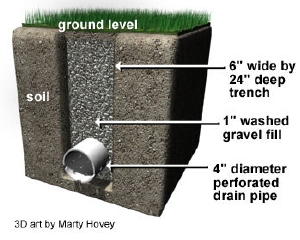
linear French drain

Remember, the holes in the perforated pipe point down. If they point up, they get clogged by pieces of gravel.

People all over the USA have problems with yard flooding. Sandy soils found in Florida, the high desert of California, and in the desert southwest are not immune from ponding after periods of heavy rain. You can effectively drain soil if you understand how water moves through it.

When rain falls from the sky it enters the topsoil. Topsoil consists of small pieces of soil, rock particles, organic matter, water and air. Topsoil thickness varies widely and those people who have clay soils know that the deeper you go into the soil, the more compact it is. In fact, some soils are so dense that they will readily hold water just as a bowl or pot.

As the rainwater enters the topsoil, it begins to fill the space in the soil that just moments before held air. In periods of heavy rainfall all or most of the air is expelled from the soil. Hundreds of thousands of gallons of water can be stored in the topsoil layer. This water begins to move under the force of gravity and the weight of the water within the soil. If the soil is sandy, the water may flow down deeply into the subsoil. But if the soil has a high clay content, the water actually begins to move sideways through the upper layers of the top soil. Clay subsoils typically have few air voids and these dense soils block the downward movement of water deep into the earth.

Water, as most things, desires to take the path of least resistance. As it moves sideways through most soils, you can intercept it and re-direct it to a low spot on your property. I have dried out many a lot and stopped thousands of basement leaks using a linear French drain.

This drain system consists of a 6 inch wide by 24 inch deep trench that works like a moat to protect your lot and home from subsurface water attack. A four inch perforated drain pipe is placed in the bottom of the trench. The pipe is then covered with one inch or slightly larger washed gravel to within one inch of the top of the trench. As the water passes sideways through the soil it contacts the gravel. The water decides that it is much easier to drop down through the gravel and into the perforated pipe rather than push its way through the soil.

The trick to trench placement is simple. You want the trench in a location so that it intercepts the water before it hits the house and/or the dog run area. If your yard is on a slope, you want the trench or trenches on the high side of your property. This way you collect all of the water flowing through the soil uphill from your lot.

The depth of the trench can remain a constant 24 inches as it passes by and around your house. If your lot is sloping, the constant trench depth will create a natural slope to the perforated pipe in the bottom of the trench. Once the trench system passes your home, you can start to make the grade at the bottom of the trench less or even level.

If the bottom of the trench becomes level and your ground is still sloping, the bottom of the trench will eventually surface. Ideally you want this to happen at the lowest part of your lot. The water collected by the trench system is discharged on top of the land only to re-enter the soil on its way to the nearest creek or brook.

Before you install this system be sure to check for underground utilities. Digging by hand or with a power ditching device can result in serious injury or death if you strike electric or natural gas lines. It is also a good idea to check with your local building department or municipal office with respect to storm water management regulations. Some areas may want you to pipe this water into a storm water retention basin.

Author's Notes:

October, 1999

Do you wonder if linear French drains really work? Read an e-mail I received from Pat Jones in Vienna, Virginia:

"A year ago last spring, I called your radio show from my home in Vienna, VA. I described my problem with water in my basement. It was very predictable, every time it rained 2" or more in 24 hours I would get water in my basement. Anyway, you advised me that a French drain would solve my problem.

"So I rented the ditch witch and got a bunch of friends, following your on-line tips we installed the drain. Your tip about the plywood to have the dirt flow onto was a great labor saver. We did have a lot of trouble with rocks and tree roots stalling the machine but in the end it was a job well done.

"Of course our work and your advice caused the drought in the Washington, DC area. We waited almost a year and a half before we got to really test the French drain. However when hurricane Floyd came through and gave us 4" in less than a day and the basement was high and dry I figured it was worth the drought. Now the neighbors are asking my advice, and I point them to your web page.

"When we talked you said to let you know how it worked out. It worked out great!!

Thank you very much,"

Patrick Jones

November, 2003

The straw layer mentioned in the column above is not necessary if you fill the entire trench with gravel to within one inch of the top. The reason is simple: Silt does not pass sideways through topsoil. The silt that turns stormwater runoff brown is eroded soil particles that are running in overland flow.

Silt particles get trapped and filtered in the upper layers of top soil. The vast amount of water captured by a linear French drain is water traveling sideways through soil. It is generally clear and free of silt. To prove this point, spring water and water taken from underground wells is almost always crystal clear. The silt was left behind at the surface as the water was entering the ground.

June, 2008

You may wonder if my advice is worth anything. Well, read what Jim Sanders wrote to me when he was at the end of his rope:

"Hi, I just wanted to write to give you the results of my "Trench Drain". I have had a wet crawlspace for 15 years. Water would fill the crawlspace at times, so we actually had to drill weepholes at the base so that it would enter the basement and eventually, the sump pump.

I have tried everything. Several contractors said that the only thing we could do was to bring the water into the house via drainage tile and let it enter the sump pump. That would work, but because I live on a 6' elevation, there is no reason that I should have water problems. It became like clockwork...when it rained, we would rush home from the lake or wherever we were vacationing so that we could be prepared to start the backup generator, in case the power failed. We even had our alarm company put a sump alarm on our system, so they could notify us if we had a power failure. Battery backup was not an option, because sometimes we loose power for days and during any rain, our sump would run every 7 minutes...just like clockwork.

I found your site and read the article on the trench or French drain. At first, it sounded a bit like "holistic healing" to me. I failed to understand why a 2 ft. deep trench, 4 ft. away from the house would do any good. How could this simple thing correct an extreme water problem that has plagued me for years, cracked my foundation, settled my garage floor and ruined almost every vacation?
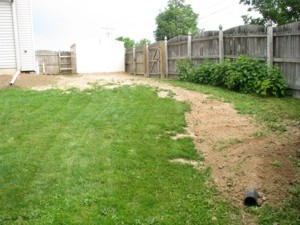
The Linear French Drain trench running from the house. PHOTO CREDIT: Jim Sanders

The Linear French Drain trench running from the house. PHOTO CREDIT: Jim Sanders

I decided "what the heck". I had to dig by hand using a trenching spade and a pick-axe, because the builder back-filled our property with brick and blacktop. It took quite a bit of time. Because the ground level varies so much on that side of the house, I was not able to achieve exactly 2 ft. deep. It varied from 18" to 30" in spots, but the slope was downhill. The trench is about 80 ft. long. At times, I thought about filling it all in, because I just didn't believe that it would work.

I stoned it, put tile in, and filled it with #1 round stone. I socked the pipe just for safety measure and I also used geotext fabric on top, so I could cover with dirt and grass. I also ordered some clay and pitched from the house to the drain.

After a short rain, water is running away from the house. PHOTO CREDIT: Jim Sanders

After a short rain, water is running away from the house. PHOTO CREDIT: Jim Sanders

Result? For the last month, we have had 7 or 8 torrential rains, the worst of which was last night. It rained so hard, that our lawn washed out in spots because of the high clay content. Our sump pump, that normally ran every 7 minutes during and after rain, has not turned on for 4 weeks. The silt at the bottom of the sump well is now dry and cracking. Our crawlspace has not shown a trace of water or even moisture.

Since I couldn't see correcting the foundation cracks or the garage floor settling and tilting until I corrected the problem's source, I waited to see if the trench drain worked first.

This week, I had a company come in and perform sort of a "mud-jacking" technique on the garage floor, which worked perfectly. Also, during the past few weeks, I parged the cracks in the foundation.
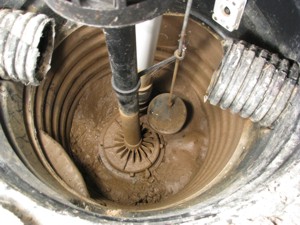
A dry sump pump. PHOTO CREDIT: Jim Sanders

A dry sump pump. PHOTO CREDIT: Jim Sanders

I just wanted you to know how this worked. I stressed for many years over this issue and the solution was nowhere near as difficult as I thought it would be.

As a side note, I went to the end of the drain tile during a hard rain to see what was happening. Water was running out of the drain tile in about the same exact volume that it previously ran out of the weepholes in my crawlspace. This winter will be interesting, because last year, the ground next to the house was so saturated that during a thaw, my sump would run constantly. I'm guessing that the ground between the trench and the house will probably be drier now going into this winter."

- Jim Sanders, Upstate area - New York

Column 407

Deck Cleaning Dilemma

deck cleaning

Deck Cleaning Dilemma


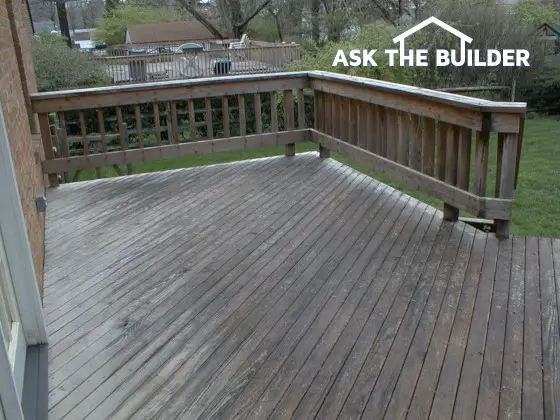
DEAR TIM: My older CCA treated lumber deck has me very concerned. Television reports and print articles have implied that CCA lumber has been banned by the Environmental Protection Agency (EPA). Can I safely clean and seal my existing deck or do I need to replace it with a different wood? What can I do to minimize any hazard that might be present with this chemically treated lumber product? What is the best way to clean and seal my wood deck? Cary G., Norfolk, VA

DEAR CARY: It is my guess that the television and print editors were either tired, over-zealous or asleep at their desks if you are accurately describing what you saw and read. The EPA released a statement on February 12, 2002 that among other things stated, "EPA has not concluded that CCA-treated wood poses unreasonable risks to the public for existing CCA-treated wood being used around or near their homes or from wood that remains available in stores. EPA does not believe there is any reason to remove or replace CCA-treated structures, including decks or playground equipment. EPA is not recommending that existing structures or surrounding soils be removed or replaced." That being said, I feel your existing decking is fine if you treat it with some respect.

The CCA chemical treatment of wood has been used since the 1940's. Copper, chromium, and arsenic are dissolved in water and then injected into the lumber under high pressure. The three chemicals act as a preservative and inhibit attack by insects and wood destroying fungi that typically would cause untreated wood to be destroyed or rot when subject to outdoor elements. During the past few years the general public has formed a perception that unsafe amounts of these chemicals are leaching from the treated wood.

The fact is that chemicals can leach from the wood. Remember, they are water soluble. This means that rain water or snow melt can soak into treated lumber and put the chemicals back into solution. This tainted water can then flow off or under the deck and possibly contaminate you, your children or your surrounding ground. Are there enough chemicals to be concerned about? I imagine it depends upon which study you believe. Currently the EPA feels that the lumber does not pose an "unreasonable" risk.

But stop and think of the dynamics of what is going on. Since we know the chemicals dissolve in water, you can minimize and possibly eliminate any risk if you stop water from entering the wood in the first place. This can be achieved successfully and easily if you treat the deck with a top quality synthetic resin water repellent. These products seem to work better than many popular deck sealants that contain natural oils. What's more, the natural oil products become food for algae and mildew as the mildewcides in the products wear off. In short order, many decks using natural oil sealers tend to turn black and green as the algae and mildew feast on the sealers. The synthetic resin sealers do not support mildew and algae growth.

EB015 Cleaning & Sealing Deck eBoo CoverDecks need to be very clean before you treat them. The use of pressure washers, in my opinion, has never been a good idea. The pressurized stream of water can erode the soft light colored spring wood that is found between the darker grains of summer wood in each piece of lumber. I am now concerned that pressure washers can inject water deep into the lumber and bring back with it some of the CCA chemicals. It is also my feeling that if you collected the water that is blasted from the deck by the pressure washer you would find it contains millions of tiny wood fibers that contain the CCA chemicals.

Quite possibly a safer way to clean wood decks is the use of oxygen bleach. This product is a non-toxic powder that dissolves in water. It is not harsh as is chlorine bleach. Oxygen bleach does not remove the color from wood. It does not kill surrounding vegetation as does chlorine bleach. Many off the shelf deck cleaning products contain chlorine bleach but they disguise it using the chemical name. Avoid products that contain sodium hypochlorite - the chemical name for chlorine bleach.

Once the oxygen bleach dissolves in water, you simply apply the solution to your deck. Keep the deck wet with the solution and stand back and watch as millions of tiny oxygen bubbles work to clean the wood. After a 10 or 15 minute wait, lightly brush the wood with a broom or scrub brush and then rinse with water using an ordinary low pressure garden hose. The results will be outstanding. You only need to wait several hours to seal the deck if you purchase a water based environmentally friendly synthetic resin deck sealer. Keep the deck sealed every two years and I think you can stop worrying.


Message from Tim Carter:

Years ago while researching a column about cleaning decks, I discovered the wonders of Oxygen Bleach. It is perhaps the 'greenest' cleaner I know of as it uses oxygen ions to break apart stains, dirt and odor molecules. There are no harsh chemicals, and it works on just about anything that is water washable.

I decided to create my own special blend using ingredients made in the USA. In fact, the raw materials in the active ingredient are food-grade quality registered with the FDA. I call my product Stain Solver. I urge you to use it to help with cleaning your deck or wood. You will be amazed at the results!

Column 408

Flagstone Patios

flagstone patio

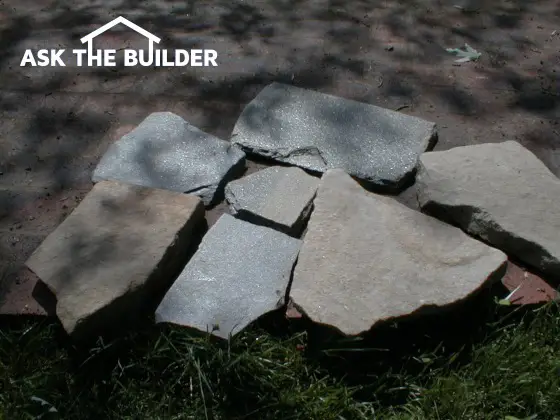
Be aware that flagstone comes in different thicknesses. It can range anywhere from 1.5 inches thick down to one-half inch thick. If you do not account for this when you start installing the product, your patio will have all sorts of humps and depressions as you struggle to install the material.

DEAR TIM: I want to dress up the look of our existing concrete patio. Is it possible to install flagstone or similar material directly over the concrete? What do you use to adhere the flagstone to the concrete? Can I enlarge the patio without fear of future cracking where old meets new? Kathy D., Batavia, IL

DEAR KATHY: Wow! What a gorgeous patio you will have. Flagstone can be installed directly on concrete. In fact, it is the only way I would do it if you desire an easy to maintain surface and one that stays flat for the entire time you intend to use it. Your biggest challenge will be getting used to working with flagstone. It is one of those natural building materials that can drive you crazy. But the insanity is worth it once you are finished.

To maintain the top of the patio in the same plane, you install different thicknesses of Portland cement mortar beneath each individual piece of flagstone. It is wise to get all of your material delivered at one time and sort through it until you find the thickest piece. This sole piece dictates the height above the current patio that you must reach as you install all of the pieces.

I prefer to install flagstone in a wet bed of Portland cement mortar. This is a simple blend of medium sand, regular Portland cement and clean water. Mixing two measures of sand to one measure of cement will yield a very rich blend that will permanently bond the flagstone to the existing concrete. If you desire an insurance policy to make sure the flagstone does not delaminate, apply a thin coat of wet cement paint on the concrete just before you place the mortar onto the concrete. The cement paint is simply pure Portland cement that is mixed with water until it resembles paint. Only mix as much mortar and paint as you can use in 2 hours.

There are two schools of thought with respect to the consistency of the mortar that you work with. Flagstone and many other natural stones absorb water slowly. Masons refer to this as suction. Low or poor suction means that the mortar does not firm up and the rock can swim or float on the wet mortar for a period of time. Some masons prefer to make the mortar damp so that the flagstone is very firm the moment it is set. I have found that there is indeed a happy medium.


Tens of thousands of buildings products and masonry tools for sale on eBay? These are not scam items, but first-class goods.

If you are getting ready to install a flagstone patio, surely you are interested in saving some extra money, right? Well, my very good friend Chuck Eglinton can show you how to do just that by purchasing the needed supplies and tools on eBay. Chuck is an eBay expert and helps people win hundreds of auctions each day. He knows the secrets!

He wrote this very cool step-by-step authoritative training manual to get you started on eBay. If you are an eBay user now, Chuck will show you how to save even more sweet moola. Chuck's training guide is an Instant Download Product and you can get it right now by clicking here.


Mortar that has a higher moisture content and is blended to the above specifications produces millions of tiny crystals that grow into the pores of the flagstone and concrete patio. These are the mechanical connections that lock the stone into place. Damp mortar might not yield as many crystals. The trick is to make up a small batch of mortar and practice. Trust me, you will know when it is too wet. I prefer my mortar to have the consistency of cake icing that just barely pours out of a mixing bowl.

Enlarging your patio is not a problem. You simply need to bond your existing patio with the new concrete base. I do this by drilling one half inch diameter holes in the middle of the edge of the existing patio. Drill the holes approximately four inches deep and drive twelve inch long one half inch diameter steel reinforcing rods into the holes. A four pound hammer does this very quickly.

Install long pieces of the same type of steel in the new slab. Place the steel on two foot centers both directions and support it with small pieces of stone so that the steel ends up in the middle of the concrete once it is poured. Be sure the long rods are tied to the dowel rod pins that have been driven into the existing patio. This steel will hold the concrete together in the event it cracks in the future.

Keep in mind that the shape of your new flagstone patio can vary a little bit. You do not have to extend the flagstone to the edges of your existing patio. Furthermore, the new patio section can be flared or curved. You can also add landscape features and fountains that overlap on to the existing patio. Curves always seem to add interest in the event your existing patio is a traditional square or rectangle.

Column 409

Wet Bars Require Some Thought

wet bar

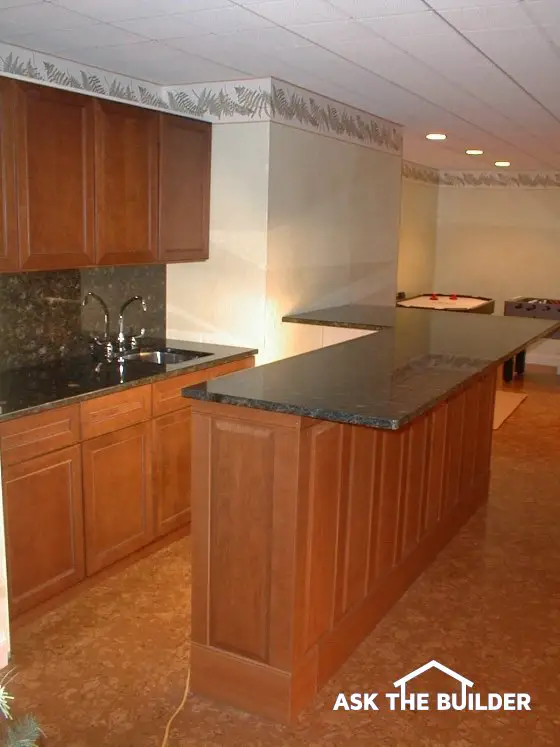
The short wall facing you at the end of the bar is very important. It keeps the bar from tipping over.

DEAR TIM: I want to build a traditional refreshment bar with a wet bar behind it. What are some good dimensions for a bar/wet bar? How do you make the bar stable so it does not tip over when people lean against it? What is a preferred bar height? Can you recommend some high performance surfaces for the face of the bar and the actual bar top? Randy C., Boulder, CO

DEAR RANDY: Timing is everything. It just so happens I just completed an identical project in my own home. My bar has been a labor of love and my family and I are very pleased with the final results. It is not hard to design and build a durable and functional wet bar. I believe the hardest part will be selecting the finish materials. There are simply many wonderful products from which to choose.

The dimensions of a typical bar are fairly standard. A finished bar height surface that works well for the average height person is 42 inches. The bar top should be at least 18 inches deep. 20 to 24 inches is better if you have the room. My bar ended up being 28 inches deep so that it would completely cover a rear shelf that is used to store bottles of soda, beer, glasses and supplies. Without the protection offered by the enlarged bar top, spilled drinks and food could easily contaminate these supplies.

The front overhang of the bar is very important. If you intend to use bar stools, the overhang should be 12 inches. This depth will allow people to sit comfortably and not have their knees scrape against the face of the bar. If you must have a smaller overhang, do not make it less than 10 inches.

Bar stability is very important. A simple straight bar wall is strong where it connects to an adjacent wall but becomes very unstable as you approach the end of the bar. Several inebriated friends leaning against a flimsy wet bar can indeed cause it to collapse. I have found that several things can be done to make a bar very stable.

If the bar is built on a concrete floor, a small 14 inch long return wall can be built at a 90 degree angle at the end of the long bar wall. Face the outside of this wood wall with 3/4 inch thick plywood. The plywood adds enormous lateral strength to the small wall. Use six inch long by one half inch diameter sleeve anchor bolts to attach the bottom wall plate to the concrete floor. This tiny wall prevents the end of the wall from moving.

If the bar is built on top of a wood floor joist system, the wall can be stiffened in a different manner. A 4x4 post can be bolted to the end of the wall. This post projects down through the floor into the floor joist cavity. If you are lucky the post will rest alongside a joist. Use long lag or through bolts to securely fasten the post to the joist. If the post falls between two joists, install solid blocking between the joists and fasten the post to the blocking.

You can use handsome paint grade or wood finish wainscoting to finish the front of the bar. I happened to use cherry wainscoting. Regular paneling, acrylic plastic block, stone, brick, salvaged barn siding, etc. or a mixture of these materials are all viable candidates. These materials can be attached to a standard 2x4 wall that forms the bar wall. The inside of the bar wall can be finished with regular drywall.

wet bar sink & backsplash

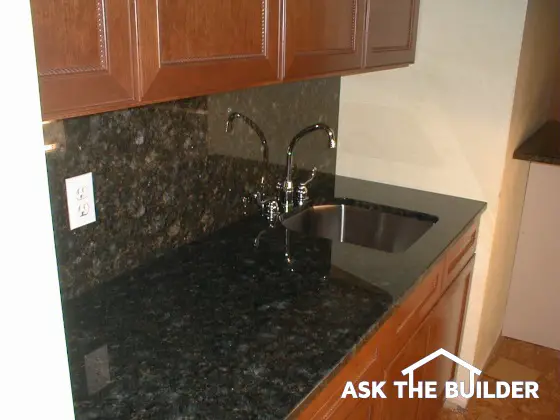
The granite backsplash is the only way to go. It adds a tremendous amount of character.

Granite was my choice for both the bar top, the wet bar top and the back splash behind the wet bar. This material is durable, gorgeous and has gotten many compliments. Other choices are solid surface materials, plastic laminate, tile, marble, etc. Keep in mind that the bar top must be securely fastened to the bar wall so that the top does not flip when people lean against it. I used a large piece of flat steel that I bolted to the wood bar walls. The granite was then epoxied to the steel. You can use plywood in lieu of steel depending upon which finish material you choose to use.

If you can add a wet bar behind the regular bar, be sure to incorporate as many base and wall cabinets as possible. The storage space they provide will come in handy if you happen to do lots of entertaining.

Column 410

Miracle Liquid Siding Products

The following comments are from homeowners who emailed me. They both speak volumes about some of these coating products:

"I was just wondering if you know of anything a consumer can do if they fall prey to having this siding put on their house? We had a beautiful cedar home that we wanted to have 'maintenance free' and save on our fuel costs, so we had it installed. As your May, 2002 article shows, it did absolutely NOTHING. We have been going around and around with them for a year and a half. I even got the Better Business Bureau involved, but there is only so much they can do. The company that we actually used to apply the siding is now NO longer selling it. So, it's apparent to me that it isn't working, they are aware of it, and I want my money back. I would appreciate it if you have any insight. Thanks," Kim M., Concord, NC, October 24, 2002


"Thank you for the article about liquid stucco. I almost fell into this trap and paid $9600 for nothing. It sounded way to good to be true and the guy even showed me the space shuttle picture and the same photo is on his brochure. I wonder if he can get in trouble for that? They also claim to have painted all the big light houses of the North and the Lincoln tunnel. Do you think that is true? I'm sure glad I didn't give him the deposit. He said if I give a deposit today that he will lower the price $1000. That made me think! Thanks again," Jimmy, June 14, 2004


Please read additional emails at the bottom of this page. They are from other consumers and people who own liquid-spray-on coating franchises.


DEAR TIM: Several companies are advertising liquid siding and liquid stucco coating that can be sprayed on my home. The companies claim enormous energy savings and that the product will never peel, blister or chip. Are these claims realistic? This product seems too good to be true. Darryl McC., Louisville, Ky.

DEAR DARRYL: Over the past few months, you and many other readers have sent me letters and e-mails concerning these exterior coating products. Fortunately, you and the others are smart enough to hesitate and ask. I am fearful that many other consumers have possibly trusted the ads or sales pitches and have become victims.

Numerous companies, I have discovered, are advertising and selling these products. All the products seem to involve a two-or three-coat system applied by spray equipment, and many are offered in hundreds of colors. The ads and sales brochures say that the materials can be applied over wood, brick, stucco, aluminum siding, concrete block, vinyl, etc.

Miracle Liquid Siding ads

Miracle Liquid Siding Ads

The ads sure make these products sound great, but the buyer better beware. Let's start with many of the ads' claims that these exterior coating products can save you money on heating-- a claim that in the case of one liquid siding company has received a stern rebuke from the Federal Trade Commission.

I, like the FTC, am deeply troubled by the super-insulating claims. Some companies even say their thin coatings contain ceramic microspheres that provide insulating properties similar to the heat shield tiles on the Space Shuttle. Whatever the intergalactic claims, though, it is highly doubtful you will see a noticeable savings in your energy bill should you coat your home with these products.

Heat loss and heat gain through the painted surfaces of a home account for a minority of energy consumption. Air infiltration and energy loss through windows and doors, attic spaces, slabs, basement walls and floors account for the lion's share of your energy bills. These products do nothing to stop the flow of energy at these locations.

On April 3, the FTC issued a report dealing with Kryton Coatings International Inc., which claimed that its "Multi-Gard" liquid coating could save consumers up to 40 percent on their energy bills.

The FTC's report noted, "Dealers of 'Multi-Gard' liquid siding have agreed to settle Federal Trade Commission charges that ads claiming their product provided consumers with an insulation value of R-20 were unsubstantiated and violated federal law." (The R-value of 20 refers to resistance to heat loss.) The report went to say that "the FTC alleged that the companies did not have a reasonable basis for making the claims."

If the insulation claims are invalid, you may wonder what else contained in the advertisements are either not true or lacking key information. Personally, I have other specific problems with these liquid coating products.

For instance, in addition to all of the other advertising statements, these companies claim that their products have superior bonding properties. These properties, the companies say, allow the exterior coating to stay attached to a surface for a very long time with very little fear of peeling, blistering or chipping.

That claim, however, is sound only if the liquid spray product is applied to a fresh, clean surface that has no previous coating. But many existing homes have been painted with traditional paints. Each layer of paint in addition to this new coating forms an adhesive chain. When the weakest link in this chain fails, all of the coatings applied to this weak link- including the miracle-liquid-siding/ceramic coating - can peel and fall away from your home.

A big, hidden danger with these products is their ability to trap and hold liquid water. Water can get behind wood siding, brick, stucco, etc. that is covered with a plastic or plastic-like coating. If it is not allowed to escape quickly, this liquid water can spell serious trouble for any house that has wood framing, wood by-product sheathing, wood or wood by-product siding, etc. Once the water contacts these materials, it can fuel the growth of fungi that can rot the wood framing members, and mold that may possibly cause health problems.

Many of the products claim "perm ratings" slightly greater than ordinary house paint. The perm rating is a scientific measurement of a product's ability to allow water vapor to pass through it. The higher the perm rating value, the better your house breathes. These products tend to have perm ratings of 20 or so. Many standard air and water infiltration barriers that are beneath siding, brick and stucco have a perm rating of 80 or more. The exterior finish of a home should have a perm rating of 100 or more so that water vapor can escape readily to the atmosphere.

What's the future of these exterior coating products? It's hard to say, but you can bet that they're paying attention to the FTC statement concerning Kryton. Don't be surprised if they start to tone down their ads with respect to energy savings or promote other aspects of the product that may get your attention.

Be very careful of these products, especially when the sales pitches talk about long life and extended warranties. These claims mean nothing if you intend to change the color of your home in the future or the company goes out of business.

Having a maintenance-free home is desirable, no doubt, but be very careful of products that can't do what they say or may actually create hidden damage to your home.


Author's Notes:

Here are additional emails from consumers and people who actually own businesses that apply the products:

"I just read your article on Miracle Liquid Coatings to replace house paints. Thanks SO MUCH! I just had a sales rep from one of these companies come out (Liquid Siding of Florida) to give me an estimate. Our session was cut short (as I will soon explain), but I thought I would pass on several statements that he made.

First, he said that traditional house paint has had lead and mercury removed, seriously limiting the lifespan of paint. In fact, he said that in Florida, latex house paint will only last 3 years! Second, he claimed that his product would last 25+ years. The only reason that they can't claim longer longevity is because they've only been using this type of product for 25 years. Third, and this is what caused our session to be terminated, he said that it was company policy to create a bid and make the presentation only if BOTH homeowner's (i.e. my spouse and I) were present! I've encountered this tactic before and I refuse to do business with such organizations." Steve Hall


"I am a Liquid Siding dealer in North Carolina and I was researching the internet for information regarding the product I sell and apply. After reading your article, I am a little concerned about some of the information that you are providing your readers.

I am not going to deny the fact that Kryton did have an issue with the FTC as that is true. The issue on that controversy though was not whether or not Liquid Siding did act as a thermal barrier or not. The issue at hand was controversy over the actual technology that was involved. Kryton advertised an R-factor which as you know is a resistance factor. The FTC determined that Kryton could not advertise an R-factor because the thermal coat in the 4- part system does not work on a resistance factor but on a reflective factor.

Also, the thought about applying the coating on previously painted surfaces is unfortunately incorrect. Kryton manufactures a product called Spray and Shine and is used in the first step in the application process. We put Spray and Shine on the substrate first and let it set for 20 minutes. This allows the pores of the substrate to open up and at the same time loosens the dirt and kills any mildew or mold and its spores within the substrate. We then pressure clean the surface and set the house to dry for a few days until the moisture content is below 15% before we apply the surface conditioner.

If you would like independent lab reports from some of the top researchers in the nation please let me know and I will have them mailed to you promptly. I am not trying to attack you maliciously in anyway, I am just trying correct information regarding our product.

When Kryton first started selling dealerships they unfortunately sold a few territories to people that had difficulties sustaining their business. Liquid Siding dealers however, are the only dealers in the permanent coating industry that has seen sustained growth for 5 straight years. We are currently number 7 out of 500 in Qualified Remodeler magazine doing over 22 million dollars worth of business last year. This year we are poised to surpass that number again."

Best Regards,
Joseph LaRochelle


Here is another email received from Pam Carter, TN.

"Dear Tim,

We had liquid ceramic siding applied to our cedar siding in 2003. It has been peeling for several years and the company that did the work is no longer in business (surprise). We would like to REMOVE the liquid ceramic paint from the cedar but are afraid of completely ruining it by scraping or using chemicals not meant for this type of product. Also,our home was built in 1984 and the cedar used was not of very good quality.

We used all of our savings to have this done and have not been able to replace the money yet, so we cannnot afford regular siding. Is there anything you can suggest for us to do as our home is becoming a real eye-sore in our neighborhood? We would appreciate any input you can give us.

Thank you for being there for us.

Sincerely," - Pam Carter


Create a Utility Screened Porch

DEAR TIM: I have a wood deck that receives intense sunshine during the middle and late part of the afternoon. Mosquitoes and flies that call my backyard home also pester us constantly when we are on the deck. I would love to solve both problems at once but still maintain the open feeling of the deck. What would you do if you were suffering as I am? Helplessly hoping I remain, Paul S., St. Louis, MO

DEAR PAUL: Several years ago, I solved a similar problem for a woman who had the most splendid patio surrounded by a garden. She was sensitive to the sun and hated to be bothered by bugs. But, she wanted lots of light and an unobstructed view of the garden in the spring and fall when the sun and bugs were not a problem. The solution, that I devised, was a screened-in porch structure that had easily removable screens. My customer was able to transform the screened-in porch to an open air pavilion within a matter of minutes.

screened-in porch - curved screen panels

This is a very neat screened-in porch that is built on a deck. The curved screen panels add a very nice touch.

The first thing you need to do, before you embark on a project such as this, is to make sure it is okay with your local zoning and building officials. Many zoning codes permit you to install patios close to property lines but not necessarily an open structure that has a roof. Once you have obtained the necessary zoning approvals, you can proceed with your final design.

Perhaps the best way to envision this structure, without the screens in place, is a simple pole barn or a picnic shelter commonly found in many city or state parks. These structures typically have 9 or 10 foot high columns or posts that are firmly attached to the ground. This height helps produce the open feeling you desire. Simple beams span from post to post. The roof rafters rest on these beams. If you really want to brighten the inside of the structure, consider adding two or three affordable skylights that face away from direct sunlight.

This structure does not have to connect in any way to your house. In fact, a free standing structure is easier to build. You will need a screen door or two that allows you to get in and out of the structure when the screens are in place. Even these doors can be hinged, so that they are removable in a matter of minutes.

Recently, I found a product that makes the screen removal and installation process a breeze. The screens are attached to the structure with Velcro™ strips that allow you to either roll the screens up and out of the way or totally remove them for long term storage. This system was not available when I built the porch for my customer. I had custom wood screened panels built that fit in between the support columns. I attached the wood panels to the posts with stainless steel screws. The screws allowed my customer to quickly remove or install the panels as needed. The Velcro™ system has an added benefit. You can also order clear plastic panels that allow you to extend your outdoor relaxation periods. These panels are effective crystal-clear wind screens that allow you to see into and beyond your yard while you warm yourself with an outdoor freestanding fireplace or heater. These clear panels also are applied with the same Velcro™ fastening system.

vaulted ceiling screened in porch

Here is the same porch seen from the ground. Note the vaulted ceiling and the triangular screen panels that allow heat to readily escape from the underside of the roof.

The underside of the roof structure does not need to be finished. In fact, the open rafter look is very interesting. It looks much better if you paint the underside of the roof a light gray. The biggest challenge might be running electricity to the structure. I highly recommend one or two paddle fans, a few convenience outlets and possibly some soft indirect lighting that bounces light up off the underside of the roof for casual and cozy evening enjoyment. Be sure the electric is inspected by local code officials.

Be aware that this structure must be wind resistant. Use readily available metal clips that connect the roof rafters to the beams. You should also use common metal framing connectors that allow you to firmly attach the beams to the posts. Finally, use post connectors to lock the posts to the wood deck or possibly a concrete patio. Wind is a hazard with open structures. It can actually rush into the structure, push up against the underside of the roof and collapse a part of and/or the entire structure. The metal connectors will prevent wind damage.

Asphalt Driveways

asphalt driveway

How to Install an Asphalt Driveway | That's fresh asphalt or blacktop on the right. Ford F-250 truck key and fob for scale.

How to Install an Asphalt Driveway - The Gravel Base is Most Important

DEAR TIM: We're building a new home and we are installing a blacktop driveway. There is conflicting information in the bids. One contractor wants to install a three-inch-thick blacktop surface on the hill leading up to the house. Another contractor says a two-inch surface is sufficient. My husband and I want a strong driveway that will last for many years. Which bid is better? Anna H., Danville, PA

DEAR ANNA: If you want a long-lasting blacktop driveway, don't concentrate too much on the thickness of the actual blacktop. The blacktop in and of itself is not the source of strength. The rich-looking smooth black surface that you walk and drive on is merely a top dressing that hides the muscle just below the surface. You should talk to both contractors and ask them questions about the type and thickness of the gravel base that will be installed under the blacktop.

What is Blacktop?

Blacktop is simply a form of concrete. It's typically a mixture of sand, stones of different size, and liquid asphalt. The sticky asphalt binds the sand and stone together and acts as a superior waterproofing material. This is why asphalt drives and roadways can withstand years of abuse from Mother Nature and still perform. But the asphalt binder has one slight drawback. Although it seems to be a solid material, it actually can flow or move when pressure is applied to it.

What's the best blacktop crack filler? Easy - epoxy. CLICK or TAP HERE to see the one I use.

Is Blacktop a Flexible Pavement?

This flexibility is often an advantage as blacktop can conform to subtle changes in the subsoil beneath the pavement that might otherwise cause cracks in a traditional concrete or brick driveway. But even blacktop can crack. Strong blacktop driveways are typically built using crushed angular gravel as a base.

How Thick Should the Gravel Base Be?

This gravel needs to be a minimum of six inches thick for light vehicle traffic such as cars and pickup trucks. If you expect larger commercial trucks to roll up and down your driveway, I would install a gravel base that is a minimum of eight inches thick.

What is the Best Gravel?

The best gravel for blacktop driveways is crushed stone. This is a mixture of irregular angular pieces of rock that may range in size from about 1.5 inches down to sand-sized particles. You want a blend of stones across this range. Roadways that will have heavy vehicles on them often have a 1-foot-thick layer of larger angular stones the size of softballs that lies beneath the crushed stone described above.

Never use rounded gravel as a base under blacktop or asphalt driveways. The rounded stone will move when pressure is applied to it much like marbles that would move about in your pockets.

Get FREE BIDS from local blacktop contractors in your city or town here.

 How Strong Should the Soil Be?

The soil beneath the gravel must also be of good quality. Once the driveway is excavated, the soil should be compacted before the gravel base is installed. If the driveway is located in an area of wet or marshy soil, you should consider installing a special Geotextile fabric over the soil before the gravel is installed. This fabric stops soil and silt particles from fouling the gravel. If silt and soil get into the gravel, it acts as a lubricant. The gravel loses considerable strength when this occurs.

How Should the Gravel Base Be Installed?

Install the crushed gravel in layers. The first layer should be three to four inches thick. It should be graded fairly smooth and then compacted with a heavy rolling machine. Once completed, install the second lift of gravel. The width of the gravel base is very important. It should extend six inches beyond the blacktop wherever possible. This extended gravel base prevents the edges of blacktop drives from cracking off when a car or truck tire kisses up against the edge of the pavement.

What Size Should the Stones Be in the Blacktop?

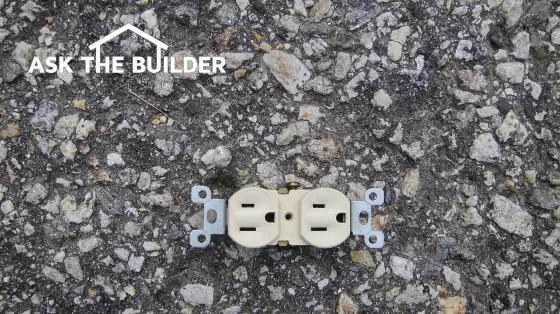
The size of the stones in the actual blacktop is important. Larger stones, up to 3/4-inch in the longest dimension, will make for a very strong surface. Once again, the blacktop or asphalt paving should have a blend of stones that range from large to sand-size. My own blacktop drive that's 20-year-old has these larger stones. Look:

blacktop drive electrical outlet

This blacktop is twenty years old and in very good condition. It’s got larger pieces of stone about the size of large grapes. That’s one reason it’s doing so well. (C) Copyright 2021 Tim Carter

Will Thicker Blacktop Last Longer?

Adding extra blacktop thickness will not significantly extend the life of the surface. The two-inch-thick layer of blacktop should be fine as long as the gravel base is installed correctly. Keep in mind that blacktop is available in many different blends and mixtures. Each mixture has its own recipe of the sand, gravel, and liquid asphalt components. Talk with each contractor and ask which blend is best for your area. If you get conflicting answers, then you better get a third opinion.

Should I Install Conduits Under the Blacktop?

Install several plastic conduits under the driveway in key locations. If any utility trenches cross the driveway, be sure they're filled with gravel or structural fill material. A soil-filled trench that has not been compacted can lead to a catastrophic driveway failure in future years.

Plan ahead for invisible dog fences and light posts. Be sure to put in any number of 1.5-inch or 2-inch blank PVC conduits under the driveway. These empty pipes will come in handy down the road when you find the need to install a cable or wire under the driveway. Finally, do not seal your new blacktop driveway for at least one year. The driveway needs to cure for months before it begins to develop a hard skin or surface.

Cost Overruns

bathroom sink

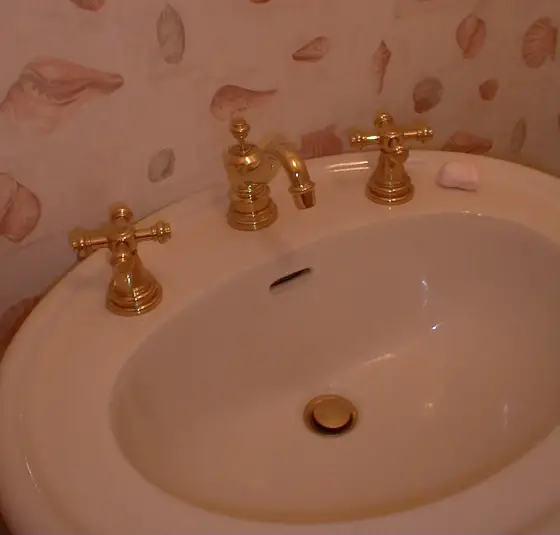
This seemingly innocent pedestal sink faucet could easily create a $900 cost-overrun headache.

DEAR TIM: I have had several new homes built for me. I was determined to stay within budget on my most recent project. I had a solid contract, an extensive cost breakdown provided by the builder, a decent set of blueprints and specifications and I still was surprised with a bill for nearly $57,000.00 worth of cost overruns. Please look at my documents and tell me what went wrong. Jim D., Cincinnati, OH

DEAR JIM: The autopsy report is in. There were multiple causes for the cost overruns. The blame can be traced to mistakes on your part and some on the part of the builder. Unfortunately, I have also discovered some evidence that may lead to an indictment on the part of the builder. It appears that there are several items that are being presented to you as overruns that are simply bidding shortfalls made by the builder. These mistakes should be paid for by the builder or deducted from his final payment.

Your contract appears to be very good. It is a fixed sum contract that locks in the total cost of the home. The wording of the contract clearly states that the builder will construct the home using the plans and specifications. The contract references the itemized cost breakdown sheet showing each phase of construction. Indeed there is a line item cost for many aspects of the job. The contract further states that the builder will receive a profit and overhead sum of 17 percent in addition to these specific costs. I have no trouble with this method of compensation.

The first problem that I see is that the plans and specifications are missing a considerable amount of detail. For example, I can see exterior trim boards and other woodwork, but the plans do not indicate the type of material nor its size. I see countertops drawn but no material type is mentioned. I see bathrooms but wonder if you are going to get shower doors or curtains, towel bars, toilet paper holders, etc. The plans show that you will have a brick exterior but there is no mention of the level of quality of the actual brick material.


How would you like me to build your new home? It's probably impossible for me to fit your job into my schedule, but I will gladly share hundreds of my tricks and building secrets with you and your builder. Check out my New House Specifications.


I see a line item in the cost breakdown for brick, but it is a big number. There is no separate breakdown for brick labor, sand, mortar, structural steel lintels, flashings, etc. This lack of detail allows a dishonest builder to play the classic shell game. When asked, the builder lowers the actual budgeted cost of an item by artificially puffing the costs of one of the other items within the group.

To avoid this problem area, the cost breakdown for a new home must have a line item for labor and many of the different materials for each phase of the project. This method allows you to see if material costs have been exceeded and if so, whose fault it is. For example, there were several areas where you blew the budget because you selected more expensive fixtures. Your lighting fixtures, plumbing faucets and kitchen cabinets all exceeded the allowance as specified by the builder.

This particular nightmare can be avoided by simply eliminating allowances. Clever builders can insert low allowances to make their overall bid number low. Once you sign the contract and start construction, this flaw becomes painfully apparent. In other words, preselect ALL fixtures and items and list them in the written specifications before the job is bid by the different contractors. If your bids come in too high, you can lower costs by choosing a less expensive fixture. The builder is trying to take advantage of you in several areas. He is trying to charge you $15,000.00 more for a retaining wall that is clearly shown on the site plan. You have not requested any changes to the wall and it appears to be a straightforward task. Based upon the line item for the wall in the cost breakdown, I feel the builder simply made a mistake and underbid this aspect of the job. He did the same thing with all of the exterior concrete work. I did a quick calculation and determined that you can barely buy all of the concrete for the amount he has provided for in the cost breakdown.

Finally, I see that you requested several changes during construction but that there are no signed change orders. That was a major mistake on your part. Never allow a change to be made unless you are presented with a written change order that both you and the builder sign. The change order should clearly show any additional charge or credit depending upon the nature of the change.

Special Gray Primer

paint primer

DEAR TIM: I have had all sorts of problems in the past with finished wall paint colors not being what they look like on the color chip. The end result is that I might have to paint the wall surfaces two and possibly three times even though the paint manufacturer claims one coat coverage. What am I doing wrong? Is there a way to get true one coat coverage and a perfect color match at the same time? Carol K., Pepper Pike, OH

DEAR CAROL: You are by no means alone. Your wall painting troubles are experienced by many homeowners and rookie painters alike. The causes of the poor coverage and color rendition problems can be traced to many things, not the least of which might be simple operator error. In other words, it is possible that you are putting too little paint on the wall. But residential paint technology has recently undergone a huge change. Color rendition and coverage problems are being overcome in a most unusual fashion.

Although it may not seem so to the average person, paint is a very complex product. But if I had to define paint in two words, I would simply say that it is colored glue. It can be formulated in many different ways so as to coat many different things. The pigments that produce color in paint are also very complex. The characteristics of both the paint and the pigments need to be finely tuned to produce different qualities such as hiding power, washability, fade resistance, etc. To further complicate the issue the paint needs to be easy to apply, meet Federal EPA guidelines, have exceptional durability, clean up quickly, etc.

Painting tools and application techniques further complicate the issue. You may have a superior paint product but it may not look good once applied if you use poor quality brushes, roller covers and spray equipment. Add to this the human factor. I have seen people paint walls in the most unusual ways. Typically they apply the paint too thin. Keep in mind that the volume of paint that you apply to the wall is not the finished volume once dry. The water or petroleum based solvents that give paint its liquid characteristic when wet evaporate into the atmosphere as paint dries leaving a much thinner coating than what you look at while applying it.

Up until recently paint manufacturers and store clerks have advocated using a white primer/sealer paint to cover new drywall, wood and plaster in homes. It was not uncommon for a store clerk to recommend tinting the primer a similar color as the finished wall paint. But even still paint coverage problems persisted. The use of a primer/sealer on both new and existing wall and ceiling surfaces is a very good thing. These often overlooked paints solve porosity problems where light and dark grains in wood or differences in drywall paper and joint compound soak up paint at different rates. The heavy pigment content of the primer/sealers also help to create a uniform finished texture. But even after using these products people still had trouble getting one coat coverage that yielded perfect color rendition as seen on the paint color chips.

Some very clever paint researchers discovered that tinting the white primer/sealers to various shades of gray solved the one coat color issue. A few colors worked fine over the white primers but a majority of the color palette that you see in the huge displays and color chip fans require a gray tinted primer to reproduce the exact color you see on a particular color chip. The paint manufacturers and retailers in certain stores know exactly what shade of gray to tint the primer/sealers so that the colored finish coat paint covers in one coat.

This technology of using a gray primer instead of a colored one is based in black and white photography. Have you ever watched an old movie? The actors and scenery were absolutely in vibrant color, but they only had black and white film. So what you and I see are different shades of gray except when a true black or white image was captured on camera. Each color, no matter if it's a shade of blue, yellow, green, red, brown, purple, etc. has a corresponding shade of gray! You can prove this by taking a photo with your digital camera in the black and white mode. Use the correct shade of gray that corresponds with your color, and magic happens.

There is a huge advantage in painting with this new system. Without the gray primer/sealer you may get the good coverage and true color rendition. But by not using a primer/sealer you very likely will see shadows on a wall or texture differences that detract from the beauty of the painted surface. Using a tinted paint with the appropriate gray primer will insure that the two coats will result in a perfect paint job. Visit your local paint store or a retail store that sells paint. If the store manager or head clerk is clueless about the special complimentary gray primer/sealers, you better walk out the door and find the right paint retailer!