Water Heater Venting – Serious Business
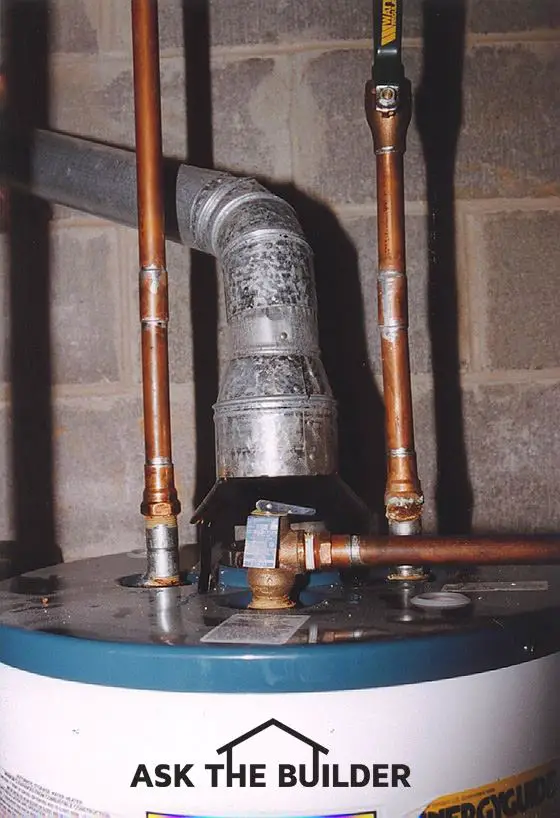
Water Heater Venting | Can you see the mistake in this photo? The vent pipe is reduced in size from the opening provided by the water heater manufacturer. After this discovery, the homeowner immediately installed a 4-inch pipe from the heater to the chimney. © Copyright 2021 Tim Carter
Water Heater Venting TIPS
- Chimney flue size must match water heater
- Old heaters had hotter exhaust gas
- A Large flue is a carbon-monoxide hazard
- Get FREE BIDS from local chimney contractors
- CLICK HERE to Get Tim's FREE & FUNNY Newsletter!
DEAR TIM: I recently had my heating system replaced with a high-efficiency system. The new furnace vents directly through the wall to the exterior. My water heater is now the only thing venting into the masonry chimney. I'm concerned about exhaust gas damage that might be occurring inside my chimney. Do you think it's necessary to have a chimney liner installed? Robert K., Norwich, CT
DEAR ROBERT: Venting of any fuel-burning appliance is serious business.
Should Vent Pipes Meet the Code?
Water heater vent pipes must meet the current building code. They can be death traps.
The vent for your recently orphaned water heater may not have been checked by the furnace installer. Many building codes mandate that once modified or changed, all fuel-burning appliance vents must be sized according to code.
What is an Orphaned Water Heater?
An orphaned water heater is one that vents into a chimney flue liner that used to accept the exhaust gas of the water heater and usually a furnace. A new high-efficiency furnace may now vent through a plastic pipe that exits a sidewall of the home, not the chimney. Thus, the water heater vent is now an orphan in the chimney.
I suggest that you contact your local building or fire department inspector. These two public servants should provide you with the information to ensure your hot water heater and your chimney meets code.
Are Water Heater Drafting Dynamics Complicated?
The dynamics of drafting are complicated. Traditional masonry chimneys and fireplaces have precise design dimensions. They were designed and sized to vent very hot flue gases from old coal, wood burning, or low-efficiency gas furnaces.
The exhaust gas temperature of modern gas furnaces and water heaters is much lower than past appliances because much more heat is harvested so you waste less money up your chimney.
Chimneys are like water pipes, they can only handle so much exhaust at a given pressure. Imagine if the huge boilers of your local power plant tried to exhaust up your house chimney.
There simply wouldn't be enough room to handle all the smoke and ash.
Will Water Heater Exhaust Go Up in a Large Chimney?
On the contrary, if you tried to exhaust your furnace and water heater into a power plant chimney, the exhaust gases very likely wouldn't rise.
The giant chimney of the power plant is filled with a column of cold, dense air.
The small amount of warm, or hot air, from your water heater would have a tough time offsetting this falling air that's trying to enter your home. If that were to happen, it could drag some of the exhaust gas back into your basement. This could cause a carbon monoxide poisoning issue.
Will an Oversized Flue Liner Create Condensation?
An oversized flue liner will create condensation problems. The exhaust gas temperature from the heater may not be sufficient to heat up the dense masonry enough to stop condensation from forming.
Herein lies the problem. Your chimney's existing flue liner may be oversized for the orphaned water heater. This can, in some instances, create condensation problems inside of masonry chimneys.
Water vapor is a byproduct of the combustion of natural gas. If the inside of the chimney cools down too much or there is too much cold air inside the chimney, the water vapor can condense and saturate the masonry inside the chimney before it can escape into the atmosphere.
Sometimes the condensed water contains acids that can chemically attack poor quality mortars.
Should I Use a Stainless Steel Liner?
It's best to use a stainless steel chimney liner if you're high-efficiency water heater or furnace exhausts into a masonry chimney.
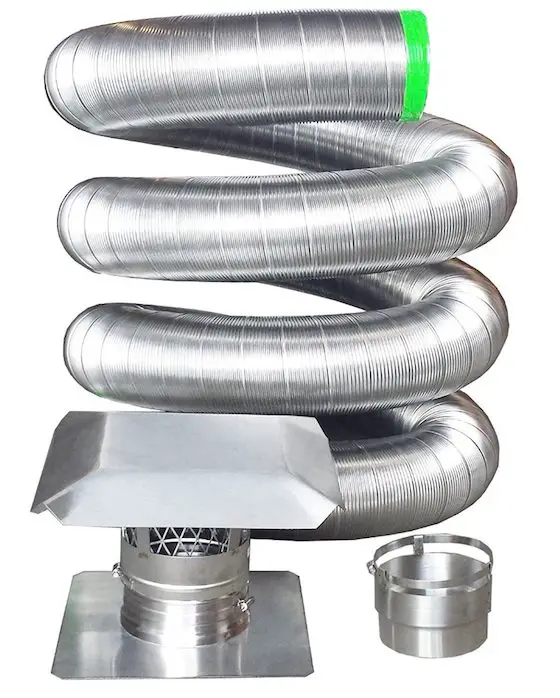
This is a kit that allows you to install a stainless-steel liner inside a larger masonry chimney clay flue. CLICK THIS IMAGE NOW TO BUY THIS KIT.
Does a Furnace Help Keep a Chimney Warm?
Before you installed your new furnace, your old low-efficiency furnace cycled on and off frequently. This process kept the inside of the chimney warm. That heat source has been removed.
Although the water heater does contribute heat to the chimney during its off cycle, it may not be enough to prime the vent so to speak.
Who Produces Building Codes?
Currently, there are many organizations that produce building codes. For many years, the American Gas Association (www.aga.org) and the National Fire Protection Association, Inc. (www.nfpa.org) have authored the National Fuel Gas Code.
This code, as well as other uniform building codes, contains tables and charts that people use to properly size and install chimneys for fuel-burning appliances. Research is currently being conducted by the Gas Research Institute that may create changes used in sizing masonry chimneys.
In other words, code refinements are forthcoming with regards to venting modern fuel-burning appliances.
How Big Can the Chimney Flue Liners Be?
You can do a quick check of your chimney to see if it meets an old rule of thumb and some of the current codes. Measure the diameter of the exhaust pipe leaving your water heater.
If it is a 3-inch-diameter round metal exhaust pipe, the inside cross-sectional area of the clay or masonry chimney flue liner should not exceed 49 square inches. Most flue liners are square or rectangular. Thus if square, the inside measurement should not be more than 7 inches on the sides of the square. If rectangular, the length X width calculation of the inside of the liner once again, should not exceed 49 square inches.
If the metal round metal exhaust pipe is 4 inches in diameter, the flue liner cross-sectional area should not be larger than 88 square inches. Do the math the same way as in the above example for a 3-inch-vent pipe.
Can I Slide a Metal Liner Into a Larger Flue Pipe?
If you find that your chimney does not meet the code or it is too large, you can reduce the size of a chimney lining. There are approved corrugated metal pipes that you can snake down the chimney and connect to the exhaust pipe of your heater.
What is a Slurry Solution for Relining a Chimney?
Some chimney companies can reduce the size of the chimney by pumping a cement slurry around a giant inflatable bladder. Low moisture content cement and vermiculite mortars can also be used to create a new inner lining.
If you decide to reline your chimney, by all means make sure you do it under the guidance of your local building department officials.
Column 205

Tim built custom homes and did ultra-custom remodeling for 20+ years before launching his Ask the Builder media presence. He was selected as one of the Big 50 by Remodeling magazine in 1993. This award gave birth to Ask the Builder in October 1993. Tim also operates https://DrawPlumbingPlans.com. His @askthebuilder YouTube channel was the first home improvement channel on YouTube.
Hello,
I am having a natural gas high efficiency furnace installed in 2 days.
Presently, my natural gas hot water heater vent connects to my old gas furnace vent which connects to the bottom of the galvanized steal chimney.
My new furnace of course will be vented directly, horizontally out a side wall of the house.
Can my got water vent be connected to the new furnace vent?
Hi Tim,
To update this dilemma/situation, which is preferable: route a new water heater through chimney flue (meeting appropriate codes) or install a power vent heater with a PVC pipe through the exterior wall? Does this orphan the regular fireplace chimney or improve it?
Thanks so much in advance!
hi tim..I have a wood burning fireplace that is still operational, and in my basement where the ash clean out is , i have 2 exhausts connected (my hvac heat and h2o heater) venting out into the chimney.... how can i remedy the backdraft? also as for finding out if this work has been done according to fire code, would i just call my local FD to have them inspect? thanks in advance for you help.
Pretty simple. Read this past column of mine:
http://www.askthebuilder.com/fresh-air-intake-vents/
Yes, visit your local fire department and ask to speak with the fire-prevention officer
Do I need a 4" pipe from the WH to the chimney? Or, do I need a chimney flue liner?
Fact: only the water heater exhaust into the chimney.
Fact: HW vent tube is 3", chimney is red clay liner, 7" square with rounded corners, 49 si flue vent area, chimney is 18' 6" to top.
Fact: WH 50 (gal), input: 40,000
Our gas-fired boiler vents into a masonry chimney. At some point in the Spring, we shut off the boiler. At that point, isn't our water heater (connected to the same flue) an "orphan" heater?
good afternoon,
Can a power vented water heater be vented in an existing metal chimney which is vented to the roof?
If not, why not? Thank you!!
I have a new condensing tankless Navien NPE 210A2 water heater. It currently exhausts outside through 2" PVC pipe. I want to vent it through the chimney. A stainless steel liner still exists in the chimney that was used to exhaust fro the previous water tank. I would like to run a2" PVC pipe up through the inside of the existing stainless steel liner. The chimney flue is only used for the water heater. Can this be done?
I had my chimney removed from the side of my house. It was in very poor condition. Once it was removed we then realized the exhaust gas from my hot water heater vented into it. I currently have a cap just above ground level where the chimney was with a 3" hole in it to vent the exhaust for the time being. What is my best solution to get the gas vented properly?
If you need to reduce the size of your chimney, is the cost involved for a 2 storey ,1955 brick home less expensive than having you chimney removed and installing an electric water heater or installing a high efficiency direct vent gas water heater? Which water heater is more efficient/ most cost effective?
Thank you for your assistance. I had no idea that converting to a HE gas direct vent furnace would cause so many brick fractures/ expensive repairs.
Sandra, this requires one of my 15-minute phone calls. There's too much to discuss: https://shop.askthebuilder.com/15-minute-phone-or-video-conversation-with-tim/