Whitewash Recipe
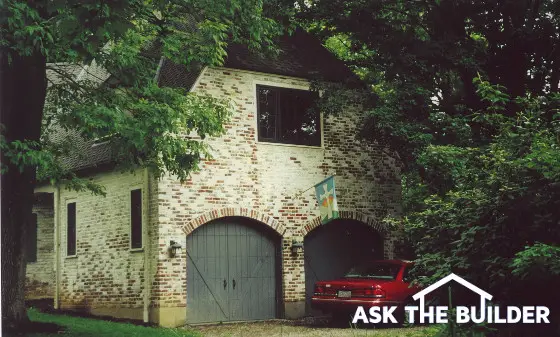
Whitewash Recipe | I took this photo over twenty years AFTER I put on the whitewash. It looks identical to when I applied it. You'd NEVER get paint to last that long. © 2017 Tim Carter
Whitewash Recipe TIPS
- Different recipes exist
- Most have similar ingredients
- Hydrated mason's lime and salt are mandatory
- Whitewash can be tinted any color
- CLICK HERE to Get Tim's FREE & FUNNY Newsletter!
More Than One Whitewash Recipe
I scoured the Internet and some historic building handbooks I own to get as many whitewash recipes as I could find.
It didn't take long to realize most of them are very similar. My secret recipe that I used on a very successful project where I had to match 70-year-old weathered whitewash is just below.
Here's just one part of the project I did. I wish I had taken a wider-angled shot so you could see the original house. Trust me, the whitewash on it looks identical to this addition I built - or vice versa!
The reason some bricks are exposed is that's the look on the existing home. The house resembles a weathered English country home.

CLICK this image and listen to the third call on the podcast. I talk to Sandy about how she can use whitewash on her painted brick home. Copyright 2018 Tim Carter
CLICK HERE to get FREE & FAST BIDS from local painters who can apply whitewash for you.
Links to purchase all of the ingredients you need are below the recipes. I've selected only the top-quality products, so you don't have a failure.
All can be shipped to your doorstep.
Historic Whitewash Recipe
- Alum - Common Potash Aluminum
- Table Salt
- Molasses - Un-sulfured, light brown/clear
- Water
- Hydrated Lime
- Optional: Portland Cement Type I or Type II -preferably white cement
Mixing Instructions:
Part A: Mix 12 pounds salt, 6 ounces of alum and 1 quart molasses dissolved in 1.5 gallons of water.
Part B: Mix 50 pounds of the hydrated lime with 5 gallons of hot water. Let this stand for 12 hours. After 12 hours mix Parts A and B together to a brushable consistency.
Optional Step: You can add white Portland cement for more durability. But substitute only up to 10 percent of the lime you use. In this recipe you would use 5 pounds of white cement and 45 pounds of lime.
Tim Carter's Secret Whitewash Recipe
- 50 pounds of hydrated mason's lime
- 10 pounds of table salt
- Water
- Optional: Dried color pigments used in brick mortar and white Portland cement for extra durability.
- Mixing Instructions:
Blend lime and salt together dry. If using pigment and cement, blend them at this time until the entire mixture is homogeneous.
Add water slowly until mixture resembles pancake batter or a creamy latex paint. Do NOT STOP stirring until all of the lime is dissolved into the water!
CLICK HERE to get FREE & FAST BIDS from local painters who can apply whitewash for you.
Mixing Whitewash Video
Watch this pretty good video about how to mix whitewash. This is how I did it. He talks about using silica sand, but that just adds grit to the finish.
IMPORTANT TIP: Do not add the quartz sand if you want a smooth finish!
Gil Gandenberger's The Ohio Valley Farmer Recipe
Gil, who lived in Cincinnati, OH, emailed me an ancient recipe he discovered in an old copy of The Ohio Valley Farmer dated June, 1860!
WHITEWASH, as used on the President's house, in Washington DC, is made as follows:
- Slake half a bushel of unslaked lime with boiling water; cover it during the process
- Strain it, and add a peck of salt dissolved in warm water
- Add three pounds ground rice, boiled to a thin paste, put in boiling hot to other ingredients
- Add half a pound Spanish white, and one pound clear glue, dissolved in warm water
Mix and let the whole stand a few days. Keep in a kettle, and put on hot with a brush.
What is Slaking?
Slaking is the process of adding water to hydrated lime. The lime is chemically unstable in the bag and when mixed with water it begins an exothermic chemical reaction giving off heat.
It's possible for steam to rise from the mix. It's VERY IMPORTANT to stir the mix constantly so all the lime gets mixed with water.
If unslaked lime ends up in the final work, it can pop, pit or disintegrate at a later date. This is more likely to happen when lime is used as the bonding agent in brick mortar rather than whitewash.
The bottom line is STIR WELL.
High-Quality Whitewash Materials
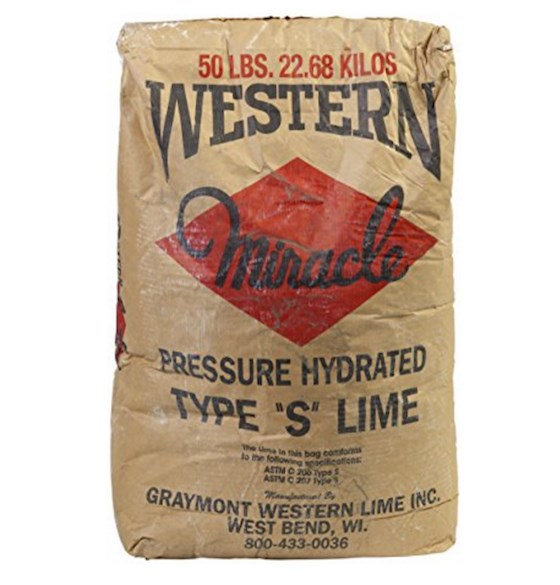
This is excellent hydrated lime. It's a fine white powder and it's going to look great on your home. CLICK THE IMAGE TO ORDER SOME RIGHT NOW.
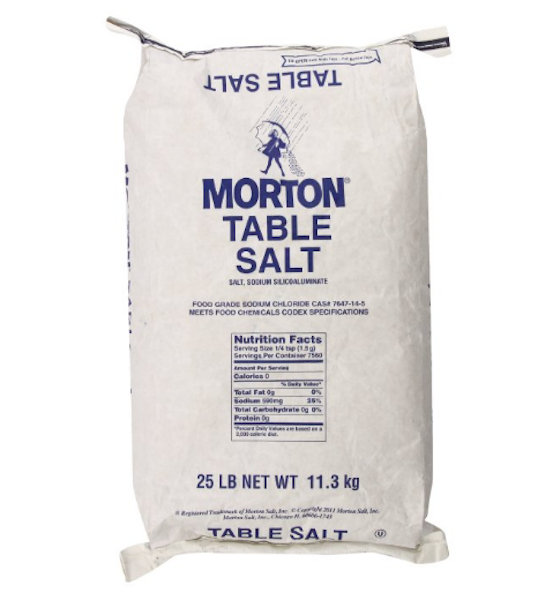
Here's a giant bag of salt. You may need two or three depending on how much whitewash you mix up. CLICK ON THE IMAGE NOW TO ORDER IT.
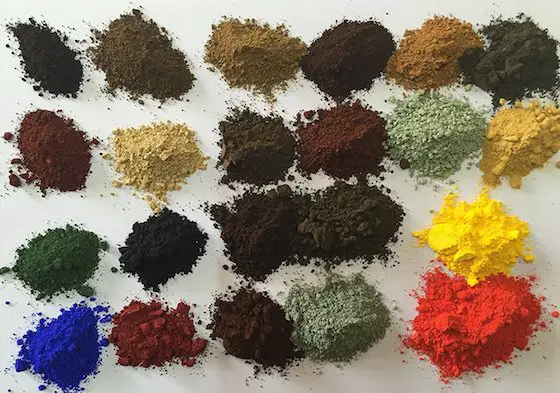
Here are just a few of the many many pigments available. You can blend different pigments to get different shades that you don't see here! CLICK THE IMAGE TO BUY ANY WHITEWASH PIGMENT YOU WANT.
To purchase white Portland cement, just do a search on any search engine. You'll find it. At the time I revised this column, it was not for sale on Amazon.com.
CLICK HERE to get FREE & FAST BIDS from local painters who can apply whitewash for you.
Column B366

Tim built custom homes and did ultra-custom remodeling for 20+ years before launching his Ask the Builder media presence. He was selected as one of the Big 50 by Remodeling magazine in 1993. This award gave birth to Ask the Builder in October 1993. Tim also operates https://DrawPlumbingPlans.com. His @askthebuilder YouTube channel was the first home improvement channel on YouTube.
I am looking for a white wash recipe to use on a wood fence
Thanks
Hi, I read your column on whitewash about 8 years ago, saved it but lost it apparently when we switched computers later.
I recall the lime described as "builders lime" and that the temperature had to be 70 degrees or less for 12 hours for it to set up right.
The whitewash paint has been great for us. The finish is brilliant white in our Augusta, Ga., sun and the overhang on our ranch-style house has protected it very well. We/I did not want the old brick look because our brick is princess style (1 1/2 normal brick length) and has a deep rough finish -- I've heard it liked to hackberry bark. It is the ugliest thing you ever saw. It was the color of Rustoleum metal primer. But the whitewash redeemed it. 🙂
Thank you for the earlier post, and this more recent one.
Best,
Virginia Norton
You're welcome Virginia! Whitewash when done right can look amazing for years and it's so easy to do!
I have posted a thread before but never had a reply, or can't find the reply.
I want to whitewash my zinc plated roof.
Is this a good idea, if not why not. I was going to use a tank spreader with a profile roller.
Where do I find your reply. Can you email me.
Cheers,
Cliffe
Could you please confirm the limewash steps for application? From what I've read you simply brush it on and later remove portions if desired. I am wondering if this is a one coat process and if there is another step involved to seal/protect? I read in another thread of yours that a reader noticed much of the effect washed off after a hard rain. Was this because the house was rained on shortly after the application? Thank so much!
Hello, i have one recipe for traditional english house painting. Except lime and water they add some salt or sugar and vegetable oil. I think it was 5 kg lime, 5 l water 0,5 kg salt and 2 dcl oil.
I want to whitewash previously painted bricks. It's an acrylic latex
Good! Just do it as Nike says. Remove loose paint.
Hi Tim,
I want to do my brick house in whitewash. How much surface area does the 50 lb bag of lime and 10 lb bag of salt cover?
Thanks!
A vast amount. Did you see how cheap the material is??? Just buy a couple of bags and get started....
Hey there, i have a question.. ive got to whitewash a pasturefence, not to make it look good but to make it last... so what do you guys think is the best recipe ?
The one above that I gave you......
Any substitutes for type S hydrated Lime? I have scoured the internet for thus Lime and can't seem to find a local supplier. It is no longer available from your link. any help sourcing so I don't have to pay $10 fr product and $50 for shipping? Thanks!!
Taylor,
I updated the links to the lime with ones that are available and it appears at this time you can get FREE SHIPPING. Look above.
Check with a masonry supply house. A company supplying block masons.
How much lime and salt to do a need to do a roughly 30 square foot fire place? I want to do the lime process versus paint! And I am like Maggie and her daughter a true novice and would rather not have to pay to have the project done.
Thank you!
Perhaps two gallons of the mixture at the most. Less than $20 worth of material. You can do this yourself. So very very easy.
How much hydrated lime and salt to make 2 gallons? Thank you.
I doubt you can buy less than a 50-pound bag of lime. Maybe you can buy a 25-pound bag of salt. CHEAP for both!
Just start blending as I describe using small amounts and see how much it takes to create 1/2 gallon. Then just do what you did tripling the quantities of lime and salt to get to two gallons.
Here is a recipe I developed. It's a modified version of traditional recipes. http://aplasterersblog.blogspot.com/2018/05/white-wash.html
Hi! If I wanted a limewash with a subtle gray instead of bright white, would you recommend adding black pigment or gray pigment? Thanks!
I'd add black. Small amounts until you get what you want. Remember, the color will probably dry lighter than what you see it wet. DO A TEST on a small board or scrap piece of plywood. I'd LOVE to see after photos of the project.
Not an expert with lime but I have had some experience. I think adding salt is to deter insects which is pretty useful. the straight lime will also do that. A little lime can go a long way. It is best to put it on thin and leave it at least to completely dry before assesing the effect but it can still get whiter for some days. When wet it is transparent and you might think you have appled too little. I have tried freshening old painted white walls with it using a cloth. One container has clean water that I replace regularly. I then wash the wall down with plane water and once it has dried off wash with lime wash continuing to squeeze out the cloth. Then once it is dried it can be washed a bit more where needed and touched up with paint. looks pretty much like a new coat of paint and going forward probably will just need a quick wet down now and then. Adding some coconut butter could be a good for making water repellent walls. You can get a processed one not much good for eating that stays solid at a higher temperature although the normal one should be hard anyway when it is raining.
I used your limewash recipe for my backyard brick wall. I was concerned I would apply wrong. But, it's gorgeous and love it. How do I dispose of unused mixed limewash? I mixed a full 50lb bag to do my entire house. I don't want to do anything environmentally harmful.
Fantastic! Please send me a photo of this great wall via my Ask Tim page above! You can just dilute the mix with more water until it resembles very dilute skim milk and cast it out across your lawn. The soil will like the lime!
Tim:
Thank you for sharing your experiences. I have a few questions, if I may...
1. Your (Time Carter's Secret) recipe is so simple, and doesn't use a traditional binder. What do you attribute to its durability? Simply the re-hardening of the lime? Multiple coats? Please elaborate.
2. Is your mix immediately usable, or does it need some time to slake?
3. Does your mix have a shelf life? It would seem the chemical reaction would dissipate over a short amount of time. Thoughts?
Much appreciated.
Greg,
Far too much to type my friend. If you want me to answer all this, it's going to require one of my paid phone consults:
http://shop.askthebuilder.com/products/15-Minute-Phone-Conversation-with-Tim.html
Could tell me the approximate amount of water for your recipe? Also where is the full instructions? Thank you.
Go back up and read again. See the word "pancake"?
The full instructions are in my other whitewash columns as well as this one. If you need me to talk you through it over the phone, I offer that service:
https://shop.askthebuilder.com/products/15-Minute-Phone-Conversation-with-Tim.html
Hi Tim,
I noticed you recommend mixing the lime wash to a consistency of pancake batter or creamy latex paint.... but a lot of places seem to recommend a ratio of water to powder as 1 part powder: to 5 parts water at a consistency of skim milk or whole milk depending who you ask. This was also the ratio recommended by Bob Villa...I believe this makes it too thin for my preference and I would love your opinion on which thickness and pros/cons... we want to have our brick completely white and NOT have to coat it 3 times to get there... I like your recommended thickness because it seems that it would be able to convert the brick to completely white on one pass vs the thin skim milk blend that Bob Villa and others suggest. What are your thoughts? I mixed up a batch of the thinner skim milk version to test last night and today the brick looks decent but will need another coat or two before it looks solid white. I don’t want to do anymore brick until I verify this question because since we DON’T want the “brick color faded thru aged look” wouldn’t your thickness be much preferred? Or will we need to do multiple passes regardless to get the completely solid white appearance? my main preference is to cover in one pass solid white and touch up in the future from time to time as needed and we won’t be spraying it down to get the faded look. Thanks for your input!!
A cost effective and environmentally friendly.
If mixed with Portland will the mix hold up to rain ?
I grew up in Pennsylvania, and after moving out west, I still use white wash on the inside of my barns. It is a stable, sanitizing finish that combats germs (which is why it’s used in dairy barns) and makes your barns look bright and light. It is a tough finish that stands up to frequent sweeping of cobwebs, and I even use it On my fences outside. Sometimes old school is the best school. Plus it’s eco-friendly.
Hi there! Thanks for the recipe! I’ve seen several “trendy” brands selling paint but I really wanted to make it myself.
I currently have OSB plywood walls. Could I apply this recipe directly or do I need to prime it or texture it with joint compound first!
Thanks in advance!
Katie
hi, the salt, would normal sea salt do the trick please?
what would you differently if painting internally or externally, would masonry sealer help ?
thnx for your informative content. I used your Tom Carter's secret recipe, and it worked fine except that the finish was very gritty! So much so that I could brush some of the grit off with my hand. I know that is part of the chemical process. I did soak lime/salt mix overnight. Wonder how to avoid this. Perhaps my surface was too dry, and my brushwork too dry. I'm working on interior walls and trying to be tidy. Any advice?
Greetings, you mentioned hydrated lime as heating when you add water. I always thought that adding water to lime (calcium Oxide) produced hydrated lime. Hydrated lime is also known as calcium hydroxide. When you add water to hydrated lime no heat is produced. Can you clear up my confusion. Thanks
Hey, howdy!
I live in a 16thC house in a medieval village in S France. Lots of different surfaces to deal with, all indoors. I whitewashed the basement about 10 years ago and it survived the test of time well.
This time (and for the first time since I've lived here...about 10 years) I did my first floor. I've used what they call Chaux Blanc here and used sea salt instead of crushed rock salt. I've left the mixture to age for quite a few weeks, stirring occasionally with a spiral paint mixer on a cordless drill.
While the job looks wonderful it's got powdery flaking. Not peeling, mind you. I'm considering another coat but am wondering how to avoid the powder flaking.
One thing I noticed, that you may have missed, is to thoroughly wet the surfaces to be whitewashed before applying.
Another element I may have missed is the addition of something starchy or a water soluble adhesive. I notice they sell bags of a dry 'colle', or glue. Would this be something I should try?
Thanks.
Enjoy seeing your experiences.
Ted Dentay in Caunes-Minervois, France