Brick Water Repellents
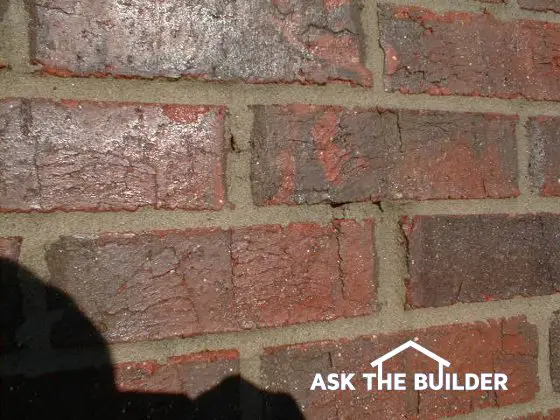
Brick water repellents look like this just after applying. This shine goes away completely once the silane/siloxane water repellent dries.
"These houses and commercial buildings often were constructed using two or three layers of brick or block behind the face brick you'd see on the outside of the wall. The brick in each layer was different."
Brick Water Repellent Checklist
- All brick leaks water
- Old brick buildings have a soft inner brick
- Brick veneer is prone to leaking
- Silane/siloxane water repellent is best
- CLICK HERE to Get Tim's FREE & FUNNY Newsletter!
DEAR TIM: I have a problem with my brick veneer house. It develops leaks during wind-driven rains. I can't seem to locate the source of the leaks. I purchased a brick sealer to solve my problem.
I saw water repellents at the store, but the salesperson said they don't work as well. What do you think? B. N.
DEAR B. N.: Slow down! Do you still have the receipt for the sealer? You may need it.
The sealer you purchased may actually harm your brick house. A water repellent may be a better choice.
Are Brick Leaks Normal?
The leaks you're experiencing are normal. Brick walls leak water and are not waterproof.
Unfortunately, many homeowners think brick walls are waterproof.
Can Brick Absorb Water?
Bricks and mortar have a great capacity to absorb water. Both contain tiny passageways that actually suck water into the wall. Water can also enter through tiny cracks between the bricks and mortar.
You can build a brick wall that does not transfer water to the inside of a home. The way to do this was discovered hundreds of years ago.
CLICK HERE to get FREE & FAST BIDS from local painters that can apply the special water repellents.
Did Old Brick Buildings Leak?
Old brick buildings did leak water, but the builders knew how to construct them so the water didn't damage the interior of the building.
Water leakage into older homes is rarely noticeable. I'm talking about old brick buildings built before 1900.
How Were the Old Brick Buildings Constructed?
These houses and commercial buildings often were constructed using two or three layers of brick or block behind the face brick you'd see on the outside of the wall. The brick in each layer was different.
The outer brick that was exposed to the weather was fired longer and hotter in the brick kiln. This created a hard brick that had a low water absorption rate.
Were the Hidden Inner Brick Softer?
The inner, hidden, courses of brick in the wall were softer. They were not left in the kiln as long and were not as hard. They soaked up water like a sponge.
When it storms and wind blows rain against the brick wall the water drops are driven into the wall by the weight of the water and the wind pressure. Usually the water passes where the vertical mortar touches the brick.
The soft brick could absorb lots of water.
What Happens to the Water After a Storm?
When the sun appears after the storm, the water is released back into the atmosphere the same way it came into the brick. The breeze and sun pull the water out of the brick like a tow truck pulls a car out of a ditch.
What is Brick Veneer?
Brick veneer is a non-structural layer of brick on the outside of a building. It's only one wythe thick which is why it's considered a veneer.
In your case, you only have one layer of brick. Once this layer has been breached, the water finds its way into your house.
How Bad is the Water Leakage on Brick Veneer?
If you could look behind a brick wall that's being lashed by a wind-driven rainstorm, you'd see water flowing down the backside of the wall. It's one of the downsides to having only one layer of brick.
Where Does Most Water Enter Brick Veneer?
Water may enter through cracks or small holes in the mortar. Pay particular attention to the small vertical (head) joints between each brick. This is the most likely place where water is entering.
The method most modern bricklayers use to butter the one edge of a brick is to cut off the mortar from the bed joint of the brick they just laid and use this to butter the end of the same brick.
This does not fill the vertical joint completely and the bond between the mortar and brick is very narrow because the moisture has already been sucked from the mortar after it was cut off the bed joint.
Are the Vertical Head Joints Filled Solid?
Rarely are these vertical joints filled solid with mortar. When the bricklayer spreads mortar over the tops of the course of brick to lay the next course the mortar often bridges the vertical head joint below. There's no guarantee the joint fills solid with mortar.
Are Horizontal Bed Joints in Brick Solid?
The horizontal joints (bed) in your brick wall are usually filled in solid and resist water penetration. If you find small holes or cracks, repair these before applying any coating.
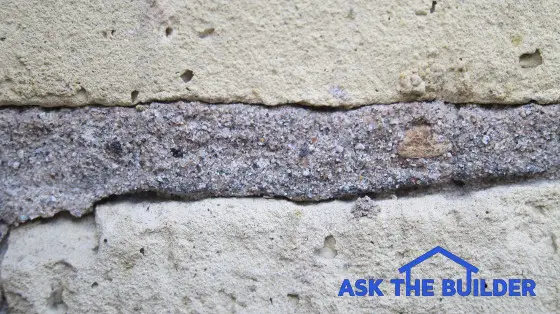
This is a closeup photo of a horizontal mortar joint between two layers of brick. Note the tiny cracks where wind-driven water can seep into the wall. (C) Copyright 2018 Tim Carter
What are the Types of Brick Coatings?
There are two categories of clear brick coatings:
- film-forming sealants
- penetrating water repellents
Film forming sealants create a continuous barrier on the surface of the brick and mortar. They should be avoided if your brick experiences cold weather.
They block the tiny passageways in the brick and mortar. Not only will they stop water from getting into the brick, but they also stop water from getting out. These compounds frequently contain acrylics, mineral waxes (paraffin), urethanes, and silicone resins.
CLICK HERE to get FREE & FAST BIDS from local painters that can apply the special water repellents.
How Do Brick Sealer Water Repellents Work?
Brick sealer water repellents work in a different way. These products are designed to penetrate deeply into the brick and mortar. Some can reach as far as 3/8 inch past the surface of the brick.
They coat the insides of the tiny passageways in the brick and mortar. However, the passageways remain open allowing the brick and mortar to breathe. These water repellent contain silanes, siloxanes, or a blend of these chemicals.
What is the Best Brick Sealer?
You want a silane-siloxane water repellent brick sealer that's soaks into the brick and mortar. CLICK HERE to get a great one.
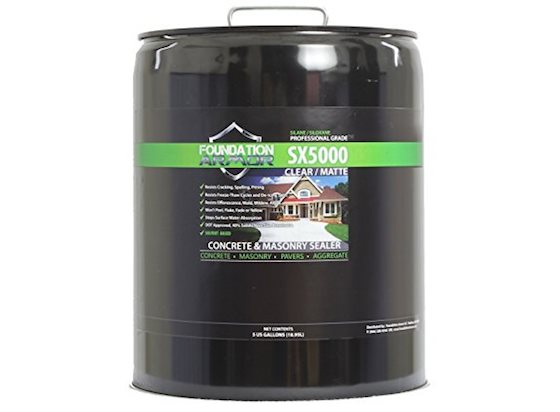
This is a magnificent silane - siloxane water repellent that soaks into concrete. CLICK THIS IMAGE NOW TO ORDER IT.
Film forming sealants can cloud and haze over. They can contribute to brick spalling (flaking) in colder climates. Water repellents rarely discolor brick.
Because they soak into the brick and mortar, sunlight has a tough time breaking them down. Check the label on your product to see what chemicals it contains. If it's a film-forming sealant, think long and hard before applying it to your brick.
What is the Best Way to Apply a Brick Sealer?
The best way to apply a brick sealer is with a helper and a backpack leaf blower.
Read the label on the water repellent as they often say once they cure you can't put on a second coat. Some can cure in as little as 15 or 20 minutes.
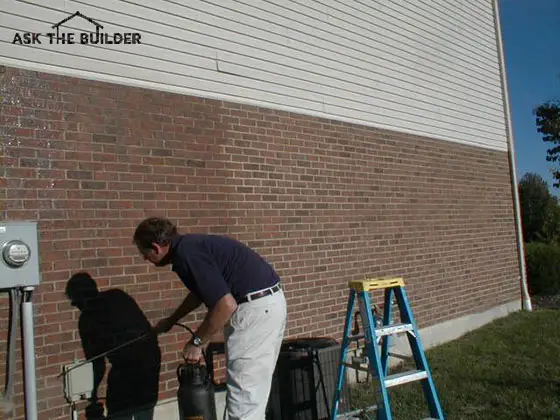
The brick sealer has been applied on the left side of the wall. You can clearly see the wet edge. Once the water repellent is applied and it dries, the brick look just like they did before you started.
How Many Coats of Brick Sealer Should be Applied?
Many of the products recommend two coats of repellent so you can't get too far ahead of yourself. If the first coat dries, or cures, it will not allow the second coat to penetrate into the mortar joint.
Why Should I Use a Backpack Leaf Blower?
You use the backpack leaf blower to simulate what a fierce storm does. The wind pressure forces rain into the brick. Allow the leaf blower to drive the silane-siloxane water repellent deep into the brick wall. As you spray, your helper blows the repellent into the wall right behind you.
CLICK HERE to get FREE & FAST BIDS from local painters that can apply the special water repellents.
Column 095

Tim built custom homes and did ultra-custom remodeling for 20+ years before launching his Ask the Builder media presence. He was selected as one of the Big 50 by Remodeling magazine in 1993. This award gave birth to Ask the Builder in October 1993. Tim also operates https://DrawPlumbingPlans.com. His @askthebuilder YouTube channel was the first home improvement channel on YouTube.

I am planning to use brick for a backsplash in my kitchen and wish to seal it so i can keep it clean and it will not stain from coffee, red wine or other soil.
What should I use to seal this brick?
Thank you.
Pryce,
You don't have to worry about stains when you have my Stain Solver. It gets rid of all the things you mentioned. If you make the mistake and SEAL the brick, the sealer can actually BLOCK cleaners getting to stains that seep past the sealer. Do NOT seal the brick.
can u give me the name of a good brick water repellent
Jarrod,
Yes I can! Tim's 15-Minute Phone Consult so you don't get the wrong one!
Tim,
I need to get my repellent ordered and sprayed on my house before the upcoming hurricane season. Is there a particular brand you recommend?
What kind of repellent?
What brand of brick sealant is the best and last the longest for exterior brick homes? Can I get a professional grade sealant that I can apply myself?
Read my water repellent columns - all of them for the answer.
I have a 1930's semi that is rendered and painted. Do I need a sealant or a repellant?
During recent building work inside the house the bulder removed internal plaster and said the walls were 'soaking' - and suggested I apply sealant externally. But do I want sealant or repellant?
I believe it's pretty clear in all my brick columns what to do, right?
Everytime it rains, water comes n my basement. How do I solve this problem .
Look at my Linear French Drain DVD or read all my past columns about brick veneer water leaks.
Does the brick wall have to be perfectly dry before using a repellent? Thanks
If yes....is there a way to speed up drying.
Jenny,
The answer is on the label of the product you're going to use. What does it say about the condition of the brick BEFORE you start?
I want to coat my brick flooring so that the dust not penetrate. Please help.
I have a 1930s house where the wall is solid wall and is coated with I think its plaster. I have filled in all the cracks I could see and used sandtex exterior white paint which has reduced the problem, but it there is still a patch of damp on the inside of the exterior wall. What do you suggest I do? Perhaps use an exterior water repellant, repoint and replace the bricks in question? then replaster? Or build a conservatory to protect the wall from rain?
Hello,
I have a brick fireplace in our living room that looks faded. I would like to apply some kind of sealant to darken it and bring it back to life. If you have suggestions of what to use I would very much appreciate it. Thank you,
Beth
I live in a large Cond in the Chicago area that is brick and block construction that is 35 years old , we haven't had a lot of leaks , the board is getting a price to do tuck-pointing and using a water repellent called Protectosil Chem-Treat PB110,do you think it is necessary to preform a water absorption on the existing brick work , Thank you, Bob
Bob,
Your Board better get on the phone with me!!!!!! Go up to the SHOP icon above, click it, select Consult Tim.
Hi Tim,
We just had our building sealed today, and now it's pouring rain. The company said that it's not a problem because the sealant dries in about 30 minutes. Do you think that's accurate information? Unfortunately I don't know the brand or type of sealant used. We're paying ~$10,000 to have the building sealed, so I'm hoping that wasn't all for naught! Thanks in advance for your help!
Hi Tim
We've taken some soil out of the floor in the shed to convert into a living room but on the neighbours side there is 2 foot high soil against the wall.
Is there anything we can use to protect the wall from the inside to stop damp coming through ?
Please tell me a good water-repellent paints containing "silanes&s iloxanes"as you recommended.
Thanks for the info. I have been using Chimney Saver. An excellent product for brick with a ten year warranty. I apply it every 5 years and no water anymore
We have a new build home that’s one year old. A few pieces are flaking off the brick veneer on the front of the home. What should I buy or do to keep it from continuing?
Aaron,
You should probably re-read the above column. If that doesn't produce the "Ah-Hah!" moment, then you should invest in one of my phone consults:
https://shop.askthebuilder.com/products/15-Minute-Phone-Conversation-with-Tim.html
How often should a brick sealer be applied to a building? My building is four stories with a brick veneer in Chicago. Thanks!