Cost Overruns
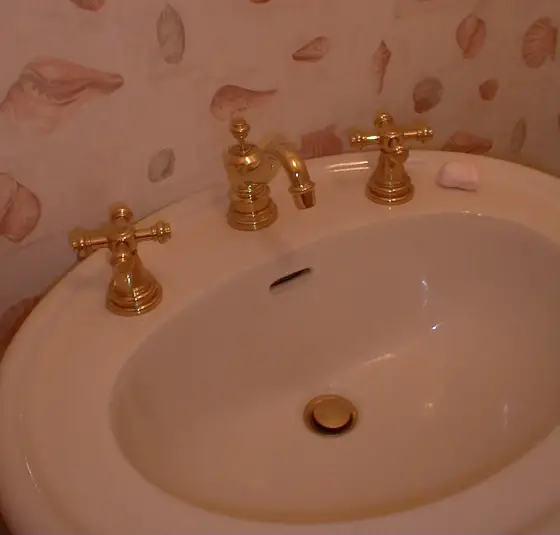
This seemingly innocent pedestal sink faucet could easily create a $900 cost-overrun headache.
DEAR TIM: I have had several new homes built for me. I was determined to stay within budget on my most recent project. I had a solid contract, an extensive cost breakdown provided by the builder, a decent set of blueprints and specifications and I still was surprised with a bill for nearly $57,000.00 worth of cost overruns. Please look at my documents and tell me what went wrong. Jim D., Cincinnati, OH
DEAR JIM: The autopsy report is in. There were multiple causes for the cost overruns. The blame can be traced to mistakes on your part and some on the part of the builder. Unfortunately, I have also discovered some evidence that may lead to an indictment on the part of the builder. It appears that there are several items that are being presented to you as overruns that are simply bidding shortfalls made by the builder. These mistakes should be paid for by the builder or deducted from his final payment.
Your contract appears to be very good. It is a fixed sum contract that locks in the total cost of the home. The wording of the contract clearly states that the builder will construct the home using the plans and specifications. The contract references the itemized cost breakdown sheet showing each phase of construction. Indeed there is a line item cost for many aspects of the job. The contract further states that the builder will receive a profit and overhead sum of 17 percent in addition to these specific costs. I have no trouble with this method of compensation.
The first problem that I see is that the plans and specifications are missing a considerable amount of detail. For example, I can see exterior trim boards and other woodwork, but the plans do not indicate the type of material nor its size. I see countertops drawn but no material type is mentioned. I see bathrooms but wonder if you are going to get shower doors or curtains, towel bars, toilet paper holders, etc. The plans show that you will have a brick exterior but there is no mention of the level of quality of the actual brick material.
How would you like me to build your new home? It's probably impossible for me to fit your job into my schedule, but I will gladly share hundreds of my tricks and building secrets with you and your builder. Check out my New House Specifications.
I see a line item in the cost breakdown for brick, but it is a big number. There is no separate breakdown for brick labor, sand, mortar, structural steel lintels, flashings, etc. This lack of detail allows a dishonest builder to play the classic shell game. When asked, the builder lowers the actual budgeted cost of an item by artificially puffing the costs of one of the other items within the group.
To avoid this problem area, the cost breakdown for a new home must have a line item for labor and many of the different materials for each phase of the project. This method allows you to see if material costs have been exceeded and if so, whose fault it is. For example, there were several areas where you blew the budget because you selected more expensive fixtures. Your lighting fixtures, plumbing faucets and kitchen cabinets all exceeded the allowance as specified by the builder.
This particular nightmare can be avoided by simply eliminating allowances. Clever builders can insert low allowances to make their overall bid number low. Once you sign the contract and start construction, this flaw becomes painfully apparent. In other words, preselect ALL fixtures and items and list them in the written specifications before the job is bid by the different contractors. If your bids come in too high, you can lower costs by choosing a less expensive fixture. The builder is trying to take advantage of you in several areas. He is trying to charge you $15,000.00 more for a retaining wall that is clearly shown on the site plan. You have not requested any changes to the wall and it appears to be a straightforward task. Based upon the line item for the wall in the cost breakdown, I feel the builder simply made a mistake and underbid this aspect of the job. He did the same thing with all of the exterior concrete work. I did a quick calculation and determined that you can barely buy all of the concrete for the amount he has provided for in the cost breakdown.
Finally, I see that you requested several changes during construction but that there are no signed change orders. That was a major mistake on your part. Never allow a change to be made unless you are presented with a written change order that both you and the builder sign. The change order should clearly show any additional charge or credit depending upon the nature of the change.

Tim built custom homes and did ultra-custom remodeling for 20+ years before launching his Ask the Builder media presence. He was selected as one of the Big 50 by Remodeling magazine in 1993. This award gave birth to Ask the Builder in October 1993. Tim also operates https://DrawPlumbingPlans.com. His @askthebuilder YouTube channel was the first home improvement channel on YouTube.