Ducted Bathroom Fan
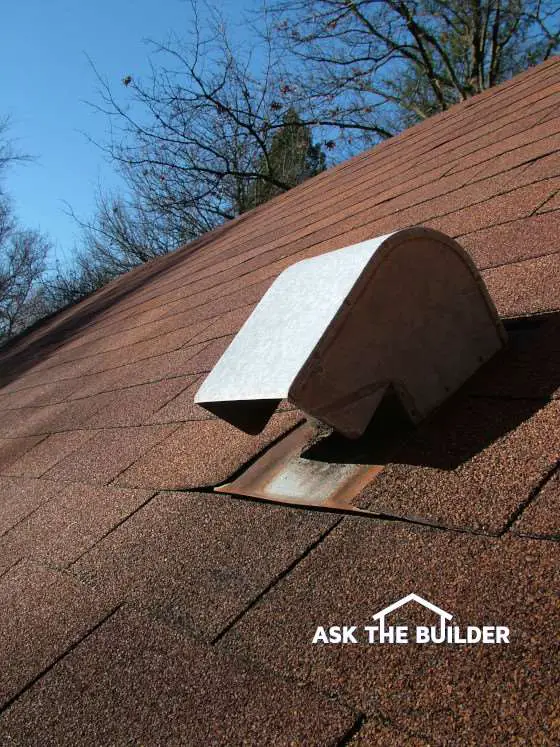
This roof cap is made to duct bath and kitchen fans. When installed correctly, it is bulletproof. PHOTO CREDIT: Tim Carter
DEAR TIM: The master bath ventilation fan in our ten year old home vents directly into the attic space. There are several rooftop stationary vents and a power attic fan. A severe hailstorm one year ago dented all of the vent covers. The insurance inspector said the roofing and vents were leak-free despite the dents. An inspection in the attic reveals white fuzzy mold on the tops of the rafters at the peak of the roof. Do you think the hail is to blame? What is wrong? Mike T., Chicago, IL
DEAR MIKE: Although some people say I have strong mystic powers, I can't say for a fact that the hailstorm is not to blame. But the chances of the mold being caused by leaks produced by hail is remote at best. The master bathroom fan and any other fans that vent directly into the attic space are pumping vast amounts of humid air and mold spores into the attic space. This moisture is one of the necessary ingredients that is required to support the mold growth and allow it to flourish. Each time you operate the fan, the growing mold gets a new lease on life.
Virtually every model building code requires that ventilation fans be ducted to the exterior of a home. Unfortunately, some builders think that extending a plastic flexible hose from the fan that terminates near a stationary roof vent satisfies this requirement. It may in certain locations but it does not pass the smell test in my book. A pipe that terminates within the attic, even if it is immediately adjacent to a roof vent, can still discharge massive quantities of humidity into the attic space. Exhaust from fans needs to be ducted completely outdoors. It is non-negotiable.
The issue is a serious one for any number of reasons. Because you live in a colder climate, rapid and significant wood rot is a possibility. The humid air that discharges from the fan during the winter months can rapidly condense into liquid water on all of the cold roof framing lumber and the underside of the roof sheathing. The fact that you are seeing the mold at the tips of the roof rafters is consistent with this line of reasoning as warm air rises. I would not be surprised if you actually have wood rot in several of the rafters.
I have found that it is often best to vent fans and dryers through the roof. I urge you to watch this video of mine to see how easy it is to install the correct vent-cap flashing on a roof. Have no fear - if done right you will have no leaks.
The first thing you need to do is to stop the introduction of moist air into the attic. Fan manufacturers typically offer termination caps for walls, soffits and roofs. I prefer to ventilate my bathroom fans through the roof. I use a special roof hood that accepts four-inch diameter galvanized metal ventilation pipe. The solid pipe offers the least resistance to the movement of air. Many bath fan manufacturers highly recommend the use of this solid metal piping.
The roof termination cap is typically equipped with a damper that stops cold drafts and snow from blowing back down into the pipe. This damper works hand-in-hand with the small damper that is usually found in the fan itself.
It is vitally important for the metal ducting pipe to be well insulated for its entire length. If you do not do this, you will very likely have water dripping from your fan during the winter months. Uninsulated metal pipe can get very cold when the fan is not in use. As the warm moist air passes through this cold pipe, some of it can turn into liquid water. You may think the roof is leaking when in fact, it is simply condensed water that is running down the inside of the pipe towards the fan cover.
Perhaps the best way to insulate this metal pipe is a spray-foam insulation. These expanding foams can coat the entire pipe and provide the necessary protection to prevent condensation. Wrapping batt insulation around the pipe and taping it may not work. If the tape fails over time because of extremes in temperature, the insulation may fall off or partially expose part of the metal pipe. Be sure to remove any mill oil from the exterior of the pipe before you apply the spray foam insulation. A one inch thick coat of expanded foam over the entire exterior surface of the pipe should be sufficient.
Column 546

Tim built custom homes and did ultra-custom remodeling for 20+ years before launching his Ask the Builder media presence. He was selected as one of the Big 50 by Remodeling magazine in 1993. This award gave birth to Ask the Builder in October 1993. Tim also operates https://DrawPlumbingPlans.com. His @askthebuilder YouTube channel was the first home improvement channel on YouTube.
hello, I live in a 30 year old new York housing development, and would like to know how I can cover the bathroom vents, my husband says It cannot be done cause the air flow through it, the problem is that while my grandchildren are washing up the honeymooners next door are making love in the shower and I can hear it in my room and the kids in the two bathroom. I approached them nicely but it made matters worse. I do understand them but my grandchildren are at that curious age. Is there anything inexpensive I can use, by the way I have used foam ,tape boxes but nothing helps not even the building manager not even a radio in the bathroom. HELP
haydee in NYC
haydee
[email protected]
I can do better than that. I can call you. Look at the new 500-Second Consult for fast solutions. http://shop.askthebuilder.com/categories/Consult-Tim/
Hi Tim
We are installing new bathroom exhaust fans and a question regarding terminating the exhaust ducts through the roof. We purchased roof ducting kits that have a roof cap. Consulting our roofer, he recommended only using pvc pipe through the roof along with boot on the roof. Is there any preferred method?
Mark, Walter, this is what my 500-Second Consult is all about. Click the Shop icon at the top of the page!