Drilling Into Stucco
Drilling Into Stucco TIPS
- Cement stucco is HARD
- Modern stucco, then be careful! Warranty could be VOIDED by drilling!
- For cement stucco, a simple cordless hammer drill with masonry bit CLICK HERE to get one
- Use stainless-steel fasteners to prevent rust
- CLICK HERE to subscribe to Tim's FREE & FUNNY Newsletter!
DEAR TIM: My home is made from stucco and I would really like to hang some decorative art objects on the exterior walls. I am having big problems trying to figure out to drill holes into the stucco so as not to damage it. Is it safe to drill into the stucco? Will it cause leaks that can lead to mold? Kristine N., Victorville, CA
DEAR KRISTINA: I think your idea is a splendid one and often wonder why more people don't hang things on their houses. I can understand why someone would not want to drill a hole into a brick or into a decorative stone, but even these things can be cleverly patched with a moderate amount of skill.
As soon as you get the tool and a few inexpensive pieces of hardware you need, your house is going to be the best looking on the street. You will have those pieces of art securely fastened in no time.
CLICK HERE to get FREE & FAST BIDS from local handymen that can drill your stucco for you.
Hard or Soft Stucco?
The first thing you need to determine is the type of stucco you have on your home. Over the past 20 years, a synthetic stucco has been used that too many homeowners think is traditional cement-based stucco. The synthetic stucco is called Exterior Insulation Finishing System or EIFS for short. Most of these systems consist of factory-made acrylic-based products that are applied out of buckets. They are often applied over a layer of foam insulation.
EIFS is Soft
You can tell if your home is made from EIFS in most cases if it looks like the material you see above shops and stores at outdoor malls. Have you seen the colored stucco at these places? Often it's extended down lower where you can touch and feel it. If you tap on it with your fist, it feels a little hollow. Try that at your own home.
Traditional cement stucco plaster is just that. It is a mixture of sand, Portland cement and sometimes some hydrated lime. Once dry, it is as hard as rock because it is actually man-made rock. Cement stucco is much harder than EIFS and it rarely is applied over insulating foam. Cement stucco is typically applied over regular wall sheathing that is covered with tar paper or some other water barrier which is covered with a wire mesh to give the cement stucco great strength.
Cement Stucco NOT Hollow
If you tap or hit cement stucco with your hand, it will NOT FEEL hollow! In fact, don't hit it too hard or you may injure your hand!
If your home is covered with EIFS, you must contact the manufacturer of the system to get their explicit written instructions as to how to drill and seal the hole. If you do not perform each step as outlined, you can void the warranty on the EIFS system. This is very important as many of the EIFS manufacturers have been involved in mold-related cases that stem from water getting into and behind these exterior skins.
Hammer Drill
Traditional cement stucco is easy to work with and drilling into it is simple if you have the right tool. I have successfully used a hammer drill with a 1/4 inch bit to drill holes into stucco. Hammer drills can be rented at tool rental businesses, but you'll be very smart to invest in a great one now. You'll use it for many future projects. Here's a cordless hammer drill that I own and LOVE:
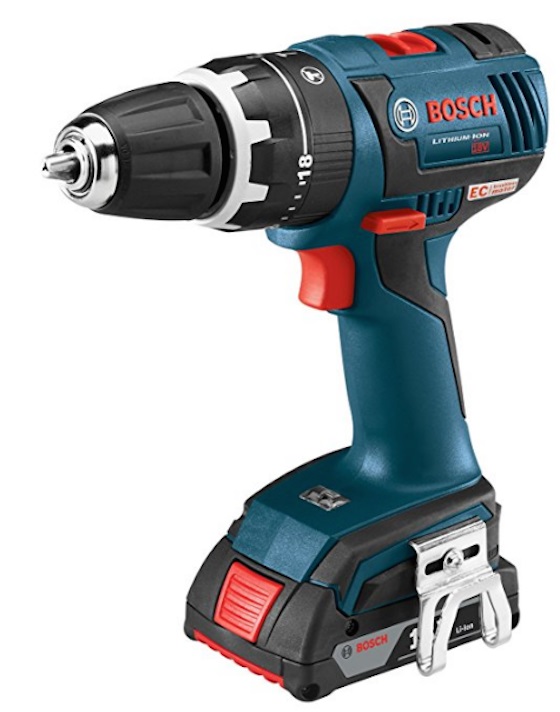
I own this hammer drill and it's a top performer. The lithium-ion batteries provide all sorts of power. CLICK THE IMAGE to BUY IT NOW.
CLICK HERE to get FREE & FAST BIDS from local handymen that can drill your stucco for you.
Remove Dust
Once the hole is drilled, carefully blow out any dust. Use a turkey baster or compressed air to do this, not your mouth as dust may shoot back and get in your eyes. Once the hole is dust-free, squirt a small amount of acrylic caulk into the hole. Then insert a plastic anchor and tap it snugly into the hole.
If you don't own a kit with different anchors, fasteners and masonry drill bits, you should consider getting one. They're fairly inexpensive and they'll save you repeated trips to a hardware store or home center to get one or two small parts. Here's a dandy one:
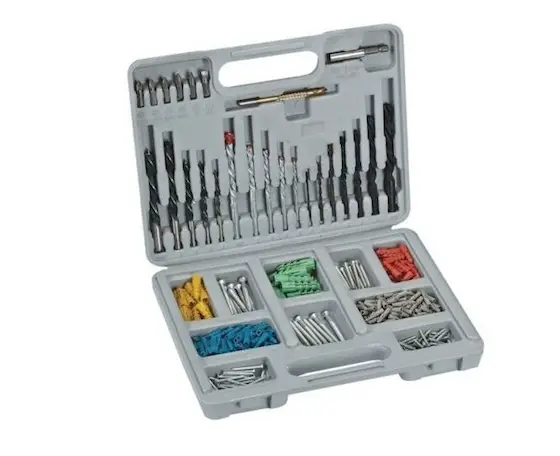
An anchor kit with bits can save you VAST amounts of time driving to a hardware store. CLICK THE IMAGE to BUY THIS ONE NOW.
Stainless Steel = NO RUST
I would then use a stainless steel screw instead of the ones that came with the anchor kit. The hardware store should have stainless steel screws that are the exact same size as the ones in the kit. Stainless steel will not rust over time.
Cement Stucco STRONG
Cement stucco will support a tremendous amount of weight because you are basically drilling into rock. But if you are hanging heavy objects on an EIFS system, you may run into problems. The thin acrylic skin is not structural nor is the foam beneath it. You may think your art work is fine, but over time the anchor holes can enlarge and water may get into the walls. Be very careful hanging any objects on an EIFS system.
Drilling into cement stucco with a hammer drill is like using a regular wood bit and drilling into balsa wood. A hammer drill acts like a miniature jack hammer and pounds the hard surface as the drill bit spins. Even with this seemingly destructive action, the hole that is drilled is extremely precise.
Always make sure you drill only as deep as necessary. Pay attention to the length of the anchor and screw and only drill 1/8 inch deeper than the screw is long. Be very careful around areas where you think electric wires or water lines might be present.
CLICK HERE to get FREE & FAST BIDS from local handymen that can drill your stucco for you.
Column 534

Tim built custom homes and did ultra-custom remodeling for 20+ years before launching his Ask the Builder media presence. He was selected as one of the Big 50 by Remodeling magazine in 1993. This award gave birth to Ask the Builder in October 1993. Tim also operates https://DrawPlumbingPlans.com. His @askthebuilder YouTube channel was the first home improvement channel on YouTube.
Tim
2 things.
1/ Tried to subscribe but my scam protector would not allow me so maybe you can use above info to enter my subscription, many thanks.
2/ How do I know by looking at outside of the house if the stukko is cement based or EIFS type. Would be good to know.
Thanks roy
Roy,
Sorry about the hassle. I'll send you a newsletter invite. Real stucco is usually not as uniform looking as EIFS.
Hi Tim! I had a beautiful old clothesline holder that would retract the line in to its holder when not in use. It's so old, I can't use it anymore but I wanted to replace it with a 2x4 and eyelets and still use the other half of that clothes line (it hooks into a lip that's on the fence). My question: I bought 4 1/4" x 2 7/8" stucco anchor screws with drill bit (my house was built in 53' so i'm pretty sure I got REAL stucco)...my neighbor seems to think that's all I need; but, i'm wondering if I should add the strength of those plastic anchor things? Or at least the best way to hang that 2x4...(oh and should I seal around the board?) thanks!!!
I would like to attach an I-hook to the outside of my stucco house. This house was built in 1937 and I am very certain the stucco is of an older type. The previous owner put I-hooks in the stucco garage and they are very tight. I want to put in a zip line for my dog. My concern is that the stucco wall won't be able to handle the weight of my dog (45lbs) when she pulls against it. The Eye hooks on the garage seem to be holding up just fine but I'm concerned she'll pull out the eye hole and take a bit of the wall with it. Any advice?
Hi Tim,
I want to install security external security cameras and will need to drill through the stucco to run a power supply wire into the garage. The house was constructed in early 1993, so I am not 100% certain which kind of stucco exterior I have. There has been some exterior minor flaking at the base of the house just above the ground in a few areas leaving a gray colored, almost cement like surface. I would have no idea who to contact to tell me whether this is EIFS or cement stucco. Any advise?
Tim--just a word of thanks for your clear and concise explanation. Happy to learn that my 70 year old house would have the traditional "hard as a rock" type stucco. I am ready to drill baby drill.
Hi Tim,
I want to mount a basketball hoop in our backyard above our porch into stucco though! My son wants to play and we can't do it in front bc we have a steep driveway. and I was told if we drill into the stucco it will ruin it. I'm not sure how it will ruin it was wondering if it is possible for us to do that?
Drilling into the stucco will NOT ruin the stucco. If you don't seal the holes correctly, you may get leaks depending on how much rain you get where you live. Read my column above for all the advice you need. If you need over-the-phone help, I offer it:
http://shop.askthebuilder.com/products/15-Minute-Phone-Conversation-with-Tim.html
Hello i want to replace my porch columns with two wood brackets. My porch overhangs 2 ft from the house. My question is can i mount the wood brackets to the stucco or do i need to find the studs behind the stucco and mount them to those?
I am drilling into exterior stucco over a block wall. 3/4 inch in I have hit something I believe to be metal which chews up my masonry bit. Can’t drill any deeper. Other holes same thing but sometimes not. I am using stander not hammer drill.
???
Rebar? Insert a small narrow magnet in the hole to confirm?