Installing Drywall In Wet Locations
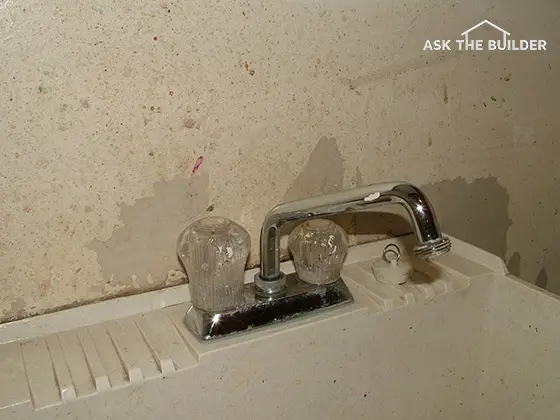
The drywall used around this utility sink should have been the special water-resistant drywall. Instead, the homeowner has had to initiate damage control by sealing the peeling-paint spots on the wall with clear urethane. © 2017 Tim Carter
"Some people think that several coats of high-quality paint will protect the drywall from moisture, but this is not always the best strategy."
Installing Drywall in Wet Locations Checklist
- Green board is *not* waterproof - it's water resistant
- SECRET TIP: Paint it with CLEAR water-based urethane before finishing
- After finishing, apply two coats of CLEAR water-based urethane then paint as desired
- WATCH video below for finishing drywall
- CLICK HERE to Get Tim's FREE & FUNNY Newsletter!
DEAR TIM: My church group is restoring a house and all of the walls and ceilings in the bathroom and laundry area have been stripped down to the wall studs.
How much water-resistant drywall should we install? Is it best to use it just behind the plumbing fixtures and appliances or should all of the walls and ceiling be covered? John G., Detroit, MI
Related Links
Paperless Drywall - Why Use It?
Secret Pro Drywall Finishing Tips - DO NOT SHARE!
DEAR JOHN: There seems to be a significant amount of confusion about drywall, water-resistant drywall, and wallboard that is 100-percent waterproof.
Since you are in the driver's seat at this time and have a choice of what material to use, you can produce a finished result that should last for many years with little or no damage if an occasional splash or drip occur or even if lots of water floods a wall surface.
Free & Fast Bids
CLICK HERE to get FREE & FAST BIDS from local drywall contractors.
What is Regular Drywall?
Regular drywall that most people are familiar with is made with a gypsum-based core that is very strong when it is dry. Typically the drywall panels have a thick-paper wrapping that protects the gypsum core from impact and abrasion damage.
But the paper readily absorbs water and can transmit it to the gypsum inside the panel. When this happens, the panel loses its rigidity and either falls apart or it becomes very mushy.
What is Best Drywall Wet Locations?
With this in mind, I don't like to use regular drywall in areas where I think water might come into contact with the wall surface on a regular or even somewhat-regular basis. Some people think that several coats of high-quality paint will protect the drywall from moisture, but this is not always the best strategy.
If water gets behind the paint where the paint stops and a sink top or cabinet edge begins, you have an Achilles heel and damage to the drywall may start if water finds this entry point from time to time.
What is Green Board Drywall?
Green board drywall is a special drywall that's water resistant. The gypsum core has been treated with a water-repellent similar to silicone and the outer paper is reported to be somewhat moisture resistant.
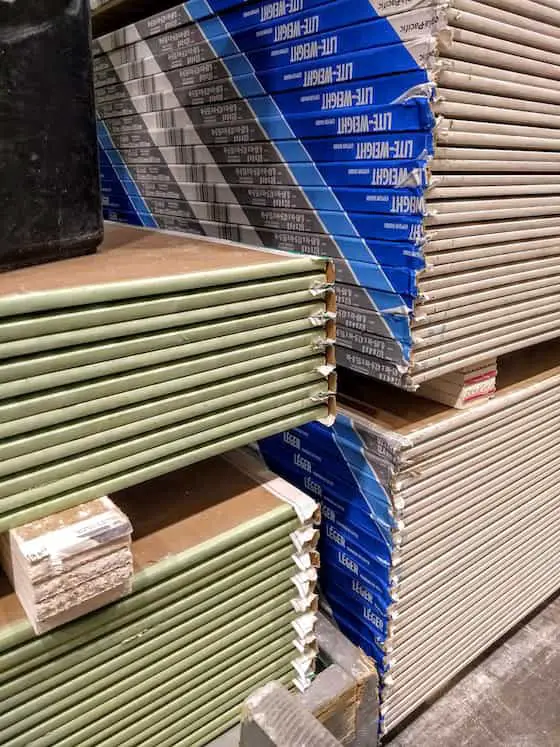
This is a stack of green board MMR drywall on the left. You can see the light-green color compared to the off-white color of the standard drywall to the right. Copyright 2018 Tim Carter
Green board has been in use for decades. I was first introduced to it around 1975 if you can believe that! Many people recognize it from the green-colored paper facing. In fact, it is affectionately called green board by builders and drywall hangers.
It's not a bad product, but I discovered a SECRET TIP (see below) years ago to make it nearly invincible when it gets splashed with water.
Can Green Board Fail?
Yes, the green board can fail if it gets lots of water on it. It can fail faster if it's not allowed to dry out in between periods of getting wet.
What is MMR Drywall?
MMR drywall is mold, mildew, and moisture-resistant drywall. It's the modern name for green board drywall. Look at the features sticker and note what's above the red line:
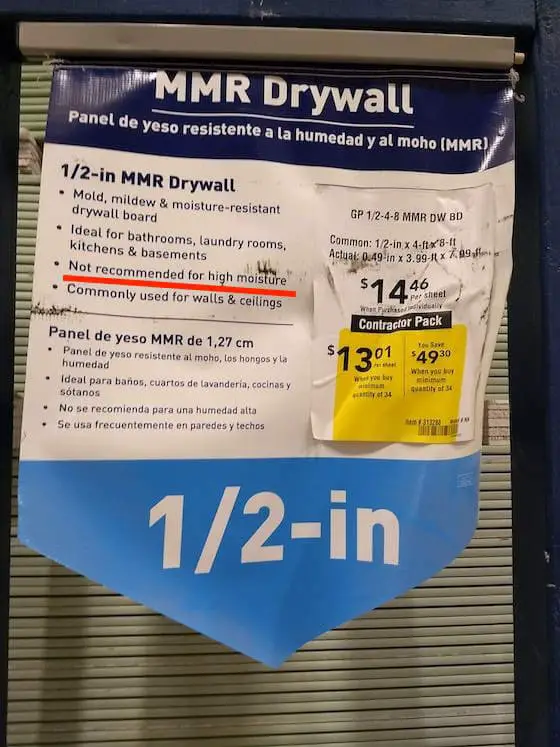
This is the giant label at a home center listing the features of MMR drywall. Note where NOT to use it! That wording means DO NOT use MMR drywall under tile in tub and shower areas. Copyright 2018 Tim Carter
What is the Best Bathroom Drywall?
The best bathroom drywall is green board. I'd install it on all walls and ceilings in a bathroom so long as you follow the manufacturer's installation instructions. On ceilings, be sure to space the fasteners on 9-inch centers.
Use galvanized drywall screws to attach the green board to the wall studs. Coat the green board with water-based urethane before you start to finish the green board.
I've had great success using this green board drywall behind sinks, toilets and on walls with ceramic tile backsplashes. But before I thought about my SECRET METHOD, I had horrific failures when I used it behind ceramic tile in tub and shower areas.
What is the Best Source of Drywall Facts?
The Gypsum Construction Handbook published by USG, Inc. is the bible of drywall and plaster information. It contains all you need to know to pick the best drywall and how it should be installed.
This is the Bible of hanging and finishing drywall. I recommend you buy this and read the section on drywall. CLICK THE IMAGE to have a copy delivered to your home.
Can Water Vapor Ruin Drywall?
Water and water vapor can readily pass through ceramic tile grout and cause the drywall paper facing to disintegrate. Water-resistant drywall is simply not recommended for areas that are subject to constant moisture. Well, that is unless you think about doing what I've been doing for years. Keep reading!
CLICK HERE to get FREE & FAST BIDS from local drywall contractors.
Can Green Board Sag on Ceilings?
The water-resistant green board drywall is sensitive to stud spacing. If you decide to use the green board drywall for a ceiling, the joists must be spaced 12 inches on center for 1/2 inch thick drywall. If you have 16-inch on-center spacing, then you need to increase the thickness of the drywall to 5/8 inch for ceilings.
Do You Need a Vapor Barrier With Green Board?
Yes, you need to use a vapor barrier with green board. In bathrooms or other wet locations, water vapor will try to penetrate into wall cavities. This will cause wood rot in cold climates.
Some drywall manufacturers also state that a vapor retarder should not be used under the water-resistant drywall if the visible face of the drywall is covered by a product such as ceramic tile or other water-vapor impervious finish. I believe they are very afraid that water might get trapped within the drywall and cause damage. I don't know that I'd follow this advice on exterior walls in a cold climate. You MUST STOP water vapor from getting into wall cavities.
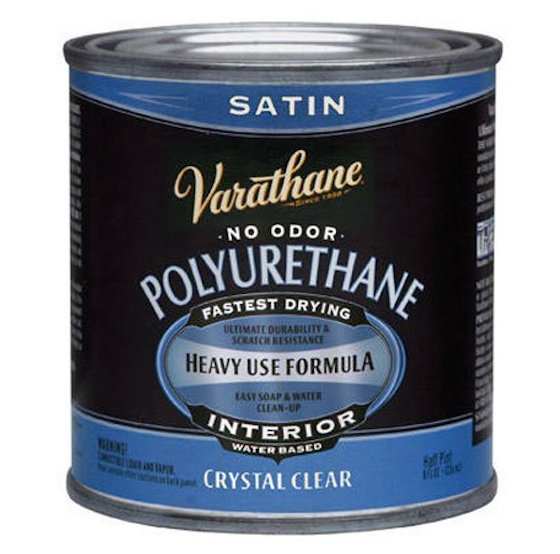
SECRET TIP is to coat the drywall BEFORE finishing with this amazing urethane product. It WILL STOP water from penetrating into the paper of the drywall. CLICK IMAGE TO ORDER IT NOW.
Can You Make Drywall Waterproof?
Yes, you can make drywall pretty much waterproof if you coat it on all sides and edges with water-based urethane before you install it. After it's installed and finished, then coat it two more times.
The secret tip to making the drywall waterproof is to coat the paper surfaces of the drywall, including the edges, with clear water-based urethane BEFORE you finish the drywall.
This coating soaks into the paper on the drywall so water can't get to the gypsum core and cause deterioration or the delamination of the paper from the core. That's what happens over time is the paper rots away causing the failure you see.
How Soon After Applying the Urethane Can You Mud?
To get the best bond between the urethane-coated drywall paper and the joint compound used to finish the drywall, apply the joint compound within thirty minutes of rolling or spraying on the urethane.
You'll get both a chemical and mechanical bond between the urethane and the glue that's in the joint compound. The bond will be nearly as strong as epoxy if you can do the applications back to back!
Is Urethane a Great Waterproof Coating?
Urethane is a great waterproofing coating. This is why it's used on bar tops and hardwood floors that can get wet.
Any part of the moisture-resistant drywall that's coated with urethane and then painted will do super well. Urethane is extremely sticky. If at all possible, apply the urethane over the drywall that's to be painted and paint/prime within an hour for a chemical and mechanical bond.
What Drywall Fasteners Prevent Rust?
Hot-dipped galvanized fasteners or even stainless steel nails and screws prevent rust. Use these to fasten the drywall panels to the wall studs and ceiling joists. If you use raw steel fasteners, they will rust in time and the wall panels can fall off the walls or ceilings.
At the very least, you will find yourself dealing with unsightly rust stains that appear through the painted surfaces should you cut corners and use the wrong fasteners.
The gypsum core of the water-resistant panels is often treated with a silicone chemical or wax-like substance. You can readily see water bead up if you wet the exposed gypsum core. The problem for years was the failure of the green-colored paper, not the actual gypsum inner core.
Is Mold a Concern With Drywall?
Mold is a concern with any wall covering including drywall. Mold can grow on just about any surface except for solid copper or copper-coated
Because mold is in the forefront of the news, wall and ceiling panel manufacturers are constantly rolling out products that are both water-resistant and even inhibit the growth of mold on the surface of the panel. But as with any new product, always be sure to read the technical literature produced by the manufacturer.
Make sure you use the product as it was designed to be used. Always pay attention to the use of the words: water-resistant and waterproof. Waterproof means liquid water or water vapor will not harm the product. Water-resistant means limited amounts of water will not cause harm.
Can You Create a Waterproof Wall?
You can create a waterproof wall by using a wall covering that is waterproof. Cement board is one option and there are other coverings like fiberglass.
In areas of these rooms that will get heavy concentrations of water, you need to use a waterproof wall material. Remember, the green board drywall is water-resistant, not waterproof.
You can purchase interior panels that match the thickness of regular and water-resistant drywall that are made with cement and sand or a combination of cement, sand and other ingredients.
Furthermore, there are other innovative gypsum core products that are 100-percent waterproof. Use the waterproof wall panels behind the tile and in any location where you expect water to be regularly splashed onto a wall surface.
This column was SO GOOD that I shared with the 31,000 subscribers who read my January 8, 2017 AsktheBuilder Newsletter.
Column 560

Tim built custom homes and did ultra-custom remodeling for 20+ years before launching his Ask the Builder media presence. He was selected as one of the Big 50 by Remodeling magazine in 1993. This award gave birth to Ask the Builder in October 1993. Tim also operates https://DrawPlumbingPlans.com. His @askthebuilder YouTube channel was the first home improvement channel on YouTube.

My husband and I were originally going to install a shower kit, but have since changed our minds and want to do a tile shower.
The thing is, we've already installed, mudded and sanded the green board drywall...is there nothing we can do (like cover it with something) or are we going to have to rip it out (where the shower will be) and install a waterproof wall material?
Thanks so much!
Miriam, your question requires lots of typing, plus I have some questions for you so I can give you the correct answer(s). I only do pithy answers here in the comment section. If you want to protect the investment you have in your house and not waste time or money *hoping* you make the right decision, you should talk to me on the phone for just 15 minutes. It'll be the best investment you've ever made in your home!
You people should do some FREE research yourselves. You all sound so incapable. For WET areas such as tubs and showers...USE CEMENT BOARD.
I have the exact same question as her so you could call me as well? Lol. I'm terrified they have me the wrong answer.
Yes, I can call you. Go purchase one of my 15-Minute Phone consults.
Our condo apartment is adjacent to a common laundry room and four times in the last four years it has flooded due to a faulty washing machine. They will not fix the breach in the wall so how and what products can I use to stop the water from penetrating the wall into my unit. I have had to tear up the padding and carpet and am afraid to replace it with anything until I can figure out a way to seal up the concrete.
This is too much to discuss here. You should consider a phone consult with me.
How do i purchase 15 min. Consult.??? Thanks you in advance.
Carrie, You do it by clicking here: 15-Minute Consult
Thanks for the article. Since green board is not suitable, what *would* you use behind a glue-on acrylic tub surround? thanks, -nikita
Cement board or Dens-Shield.
I have to do an inexpensive tube job. What backing would you use in tub area, to go under sheets of FRP and glue
What a great article you have introduced with us. Really inspiring. It is commonly the result of roofing and plumbing leaks. When walls are wet but haven’t been that way for more than a day, your best bet for reducing water damage is to allow air in from outside. Air circulation will help to make your walls dry faster than they would on their own.Thanks for great job .
Since you do not recommend green board for the shower area, what material do you use before you tile this area?
Dina,
Use the search engine on this page and type in:
cement board
Hi Tim,
My husband wants to use the greenboard product in our bedroom. Not because of moisture issues but just because. My question is....is it a safe product to use regarding health wise? What is it treated with to be mold resistant? Would one use it for entire home construction if they wanted to....cost not being an issue?
I have a good question. I have a very big bathroom. Do I have to put the mold resistent drywall in the whole bathroom including ceiling or can I put it only where water might come in contact like the sink toliet and shower area.
I have built a seasonal home on the Sunshine Coast,is green board a good product for my interior wall finishing ,considering the moisture content in the Winter,when there is no heat.
hello!!
we are building a home and the builders would like for us to put tile in ceiling not yo get the dryeall damaged, since we are putting glass walls all the way up. I really dont see why this could be a problem since I have seen a million pictures without the ceiling tile and glass walls all the way to the top! what is yoir opinion on this?
Hi Tim! What is your opinion about using Kerdi Board instead? From the videos and use in TV shows, it seems to be the right product.
This is a *substrate* product meant to be used under some other finished material. The column above is primarily about where a homeowner needs drywall put in a location where water might come into contact. Examples being near toilets, sinks, garage walls that might get hose spray on them, etc.
THANK YOU for this item. I always smile when you arrive in my mailbox because we seem to be attracted to "money pit" properties. Not complaining about the TLC process, just grateful to utilize your expertise to have intelligent conversations with our contractors (who often just want to get the job done without being mindful that we will be living in their creation). Being a female armed with a toolbox of undisputable information often pulls back the reigns of those "professionals"; but I usually end up with satisfying my goals.
QUESTION: have you addressed the importance of overseeing skilled labor? I have found this practice to be paramount to a satisfactory outcome (not hoovering, just pop in once in a while to view the stages of work).
Hi Tim, I understand your urethane-coated "Trick" is for Green-Board, Would there be any benefit to also using it on Cement Board?
Jan,
No. Cement board, by its very nature, is waterproof.
Hey Tim! Should I use cement board above a fiberglass shower enclosure?
No. Water-resistant drywall.
Tim,
Does the final paint adhere to the urethane properly? Any issues?
I go to great lengths to provide accurate and reliable information here that I've tested myself in the field. If it was a bad idea, it wouldn't be on my website. You find bad ideas on hobby blogger websites. You know how to identify a hobby blogger, don't you?
Green board will work just fine if you use a product such as RedGard. It is a waterproofing membrane that is painted or sprayed directly onto the drywall. Look it up on YouTube. It and other similar products are easy to use, not too expensive and work wonderful.
We live in Houston (humid) and are building an outdoor bathroom/shower. It's an enclosed area,walks and ceiling. Can we use dry wall. I worry about mold
Karen,
The power is in the question. I believe you asked the wrong one. My answer to *your* question is: You can use whatever YOU want.
Had you asked: "Tim, would you ever use drywall in an OUTDOOR bathroom / shower you were building for yourself or a client?"
My answer would have been: NO
Tim, you're awesome! Heartfelt and BIG thank-you for sharing info about using urethane to waterproof drywall. Gotta ask: In the photo of the utility sink/peeling paint, was it a house built in the early 1970s? What were builders thinking back then? LOL, I wasn't born yet but I'm assuming that water was wet back then?
Our house was built in 1971, and the kitchen sink has no backsplash. All these years, water has been splashing on the wall behind the sink! The orange Formica countertop is sagging, it's that bad. While "planning" the kitchen remodel, my husband told me to paint the wall behind the sink and everything would be fine. He's lived in this house since he was nine years old, and I think he's got a sentimental attachment to the orange Formica. Anyway, I sent him out this morning to bring me urethane, and thanks to you I'm going to be successfully doing damage control tonight. Want to see pictures? It's pretty scary, but in a can't-look-away sort of way.
Heather,
You're most welcome. You bet I'd like to see photos. These help others get the courage to complete projects around the home.
Be sure to sign up for my FREE newsletter!
Tim, I appreciate you. My husband and I are renovating the house I grew up in. In order to accomplish our goals we must do some of the work ourselves. He inadvertently used regular sheet-rock instead green board in the kitchen before the cabinet maker installed cabinets and counters. My husband is willing to cutout the regular sheet rock behind the kitchen sink and put in the green back. I'm thinking maybe we could get by just putting several coats of the polyurethane before moving on to the back splash. What do you think?
Thank you in advance.
Correct. Just do as I say in this column. Apply three coats of clear water-based urethane and you'll be fine. Please use the links to buy the products in this column.
I need a wall covering that is water resistant, preferably not drywall. Our house floods with heavy rains and we have to remove drywall 4 ft down to the studs. This is the 5th time and I would like something that is easy to remove when it floods again and not as messy as drywall.
If you continue to flood, perhaps you should replace the drywall with cement board and then apply plaster. You could coat the cement board with a product like Red Guard first. Then apply several coats of "plaster" and then apply water-based poly urethane followed by high quality paint. Possibly with a mildewcide added. Seal the the bottom of the walls with a high quality urethane caulk.
The possibility exists of trapping water and then mold/mildew starts to grow if you can not pump it out and dry it quickly enough.
Or you could move. Or you could call Tim!
I'm in a similar situation to Tommie Brown above. We've flooded twice in 10 years, with a close call between. We only received 6 - 8 inches of water in each flood, but it wicked up the drywall to about 12 inches before it could be dried. I removed drywall and fiberglass insulation to 24 inches. I used solid foam blocks for the lower 10 inches of insulation, with new fiberglass above that. I was thinking of using 10 inches of greenboard or other water resistant material for the lower section of repair, and normal drywall above it. The thought was, in the next flood, just remove the bottom 10 inches of wall, and pull out the foam blocks so the wall can dry. The foam blocks could be reused, and I would just need to replace the lower 10 inches of drywall, float, paint, etc... I just want a material in that lower section that won't wick the water up into the permanent drywall above it, and of course hope the next flood isn't over 10 inches.
What's the best sheetrock to use on outside corridor ceilings? I'm located in Houston ,Tx lots of humidity
I'd consult the Gypsum Construction Handbook above published by USG. I have a copy of this invaluable book above. Scroll back up and CLICK or TAP the link to it. Pay CLOSE ATTENTION to what they say about the spacing of the ceiling joists and the spacing of the fasteners. I'd also use galvanized drywall screws.
I'm working with an old ceiling in a basement bathroom; in particular, I am *not* working with new wallboard that I can pre-treat with urethane.
I've removed the loose paint, sanded, removed the dust, and applied Zinsser 123.
Can I apply a coat or two of urethane over the Zinsser, before skim-coating? Or have I missed my window of opportunity? Either way, will I need to sand again before skim-coating, or will I be good to go?
Thank you!
I'm working on existing drywall on the ceiling of a basement bathroom. I've scraped off loose paint, etc, sanded, and primed with Zinsser 123. I'd like to skim coat to smooth things out. At what point can/should I use urethane for waterproofing, or have I blown past any window of opportunity? Thank you!
Hi tim, My exterior walls are closed cell spray-foam insulated. Many sources I've found mention the need for closed-cell insulated walls to be able to dry to the inside. Does this need impact your urethane suggestion for drywall in a house like mine?