How to Grout Tile
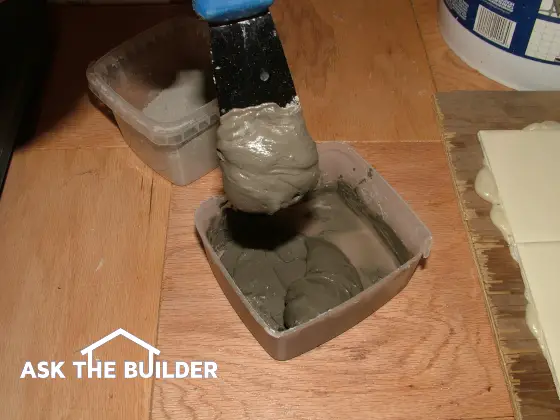
Grout needs to be mixed so it sticks readily to a putty knife and does not droop or fall off. PHOTO CREDIT: Tim Carter
How to Grout Tile
DEAR TIM: The new tile grout in my bathroom is a disaster. The grout is crumbling, and I can scrape it out of the grooves with my fingernail. The installer said the grout was bad.
The grout manufacturer said the grout was fine, and the installer ruined it. Who is telling the truth? I have extra grout. Is it hard to grout tile so it lasts for years? Becky G., Pueblo, CO
DEAR BECKY: Both parties can be telling the truth. It is possible the grout is bad, but the odds of that being true are as long as Interstate Highway 90. The better bet, in my opinion, is the installer made one or more mistakes. Fortunately, you can determine who is telling the truth, since you have leftover powdered grout.
The most common reasons grout crumbles and disintegrates with minimal force are water - too much water. Virtually all powdered wall and sanded floor grouts are made from Portland cement. Some grouts have extra additives such as powdered latex or acrylic modifiers that make them bond even better. You can also purchase liquid acrylic modifiers to mix with grout that makes them more durable, but I have had nothing but problems with these liquids when working with colored grouts.
Portland cement is an unstable chemical compound in the grout bag. It becomes stable once it unites with water molecules. It can get those from water vapor in the air or from liquid water that is mixed with the powder. This is why bags of Portland cement or grout are often placed in special bags with plastic liners. The plastic blocks the movement of water toward the dry unstable powder.
If you inspect the leftover grout in your possession, it should be a fine powder with no lumps or clumps. The presence of small, hard lumps or clumping means the grout may have started to mix with water vapor. Clumps or lumps mean the grout is bad or is going bad. But if the grout appears like a bag of fresh baking flour, then it is my opinion the grout is perfect.
When you mix grout with water, it is important to add just the right amount. This is no different than making cake or pancake batter. Add too much cooking oil and water to cake and pancake mix and you get a runny batter that will not produce the desired foodstuff. The same is true with grout. Add too much water as you mix and the grout will never get as hard as grout mixed properly.
The proper consistency for grout is like that of a thick cake batter. The grout, once mixed, should readily stick to the end of a putty knife. When you grab a glob of grout from the mixing bucket, it should not droop off of the putty knife. If the grout is runny and can be poured like a milkshake, too much water has been added. You can fix the problem by adding more powdered grout and blending the mixture until the grout thickens.
This is why I always only mix part of a bag of grout at one time. I always want to have extra powdered grout in case I add too much water to the original batch. Furthermore, you only want to mix as much grout as you can apply to the tile in 30 minutes.
The installer could have also ruined the grout after it was mixed perfectly. He could have re-tempered the grout by adding water to it as it was getting hard in the bucket. This, in my opinion, should never be done. The added water breaks apart the crystalline chemical bonds that are forming as the grout transforms from a plastic substance to man-made rock.
Finally, the installer could have issued a death sentence to your grout as he was finishing the joints. If he used a sponge that contained too much water, the water could have diluted the grout while it was hardening between the individual pieces of tile. The sponge used to strike and finish the grout joints must have all excess water squeezed from it before it touches the grout between the tile.
It helps to cure grout in places that have low humidity. Parts of the West and Southwest have very low relative humidity, and the water in wet grout can evaporate too quickly. When this happens, the grout can lose strength. The best way to cure grout if the humidity is low, is to cover the freshly-grouted tiles with damp white-paper towels. The paper towels will readily stick to the wall tile. The next step is to mist the paper towels with clean water every hour or so to ensure they stay damp.
It also helps to run a humidifier in the tiled area for 48 hours. This water vapor helps the grout gain every bit of strength possible. It takes days for the grout to achieve its final strength and the first few days of the process are critical. If you keep the grout slightly damp for 48 hours after it is installed, it should last a lifetime.
Column 616

Tim built custom homes and did ultra-custom remodeling for 20+ years before launching his Ask the Builder media presence. He was selected as one of the Big 50 by Remodeling magazine in 1993. This award gave birth to Ask the Builder in October 1993. Tim also operates https://DrawPlumbingPlans.com. His @askthebuilder YouTube channel was the first home improvement channel on YouTube.
we redid our bathroom and put tile on the floor and around the new bathtub. My problem is when we grouted both floor and tub we did not get all the grout off the tiles now we have ruff stops and would like to remove them but don't know how to do it.
Mary,
This is why I have my 15-Minute Phone Call.
The grout I used was way to light what can I do thx
There are grout STAINS, but they're HARD to work with.... Grind it out with a multi-tool and start over? Remember, the color of the grout DRY in the bag is what it's going to look like once cured!