Central Air Conditioning
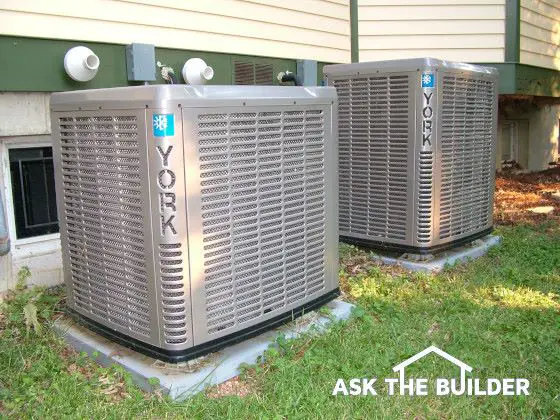
Central air conditioning cost - These are two AC units outside my own home. I have two separate systems in my home, one for the first floor and one for the second floor. Copyright 2018 Tim Carter
"Central air conditioning systems are designed to operate within a given range of temperatures."
Central Air Conditioning Cost - FREE Checklist Below
DEAR TIM: The air conditioning in my home has never seemed to work that well. My recent promotion and transfer have me moving into a new home that is in the very early stages of construction.
What can I do to ensure the new home has a central air conditioning system that keeps all rooms comfortable no matter the outdoor temperature? Is it possible to have all rooms nearly the same temperature, as my existing home's second floor feels like an oven? Julie F., Comstock Park, MI
Related Links
Sizing Air Conditioner - SECRET INFO - Please Don't Share
Air Conditioning Sizing Problems - Does This Sound Like Your Home?
DEAR JULIE: Congratulations on your promotion! It's too bad you've been uncomfortable in your existing home for so long. I can think of many reasons why the central air conditioning in your existing home does not cool properly.
Many of the problems might have been corrected with a simple service call from a professional who is an expert at air-conditioning troubleshooting. But it is entirely possible you have serious chronic air-conditioning system design flaws that would cost thousands of dollars to correct.
Free & Fast Bids
CLICK HERE to get FREE & FAST BIDS from local AC contractors.
How Important is Central Air Conditioning?
The central air-conditioning system in a home, as well as the heating system, is one of the most important parts of a home outside of a sound roof and indoor plumbing. The heating and air conditioning systems create an artificial climate inside a home.
It is a very realistic expectation that this climate can be the same in each room. In my own home, each room, no matter the outdoor temperature or time of day (this is very important), can be within one or two degrees of any other room in my home. That keeps my family and me very comfortable.
Will I Be Cool No Matter the Outdoor Temperature?
No, it's unrealistic for you to expect your home to be a certain temperature no matter what the outdoor temperature is. In other words, if the outdoor temperature rises to 115 F, I would not expect you to be able to cool your home to a chilly 72 F temperature if your normal summer high temperature is 95 F.
How is Central Air Conditioning Designed?
Central air conditioning systems are designed to operate within a given range of temperatures. For example, the design temperatures in your part of the country may be only 20 degrees.
This means that your air conditioner can only produce a 20-degree difference in temperature from the actual outdoor temperature to the lowest possible temperature the system can maintain indoors. It is possible to create a wider temperature spread, but oversizing an air conditioning system can result in short cycling when the air conditioner has little work to do.
Why is AC Short Cycling Bad?
If an oversized air-conditioning system short cycles or only has to drop the temperature a few degrees, it simply does not run long enough to remove humidity from the air. When this happens, the temperature inside your home gets to the desired level, but you feel cold and clammy.
Properly designed central air-conditioning systems will run for ten or fifteen minutes at a time which allows them to extract humidity as the air flows across the cooling coils inside the air handler.
How Can My AC Work Properly?
The key to getting an air conditioning system to work properly is to have a real professional size the equipment properly and install a ducting system that delivers the right quantity of air to each room of the house. Each room must also have a return-air duct inlet that vacuums hot air from the ceiling and returns this air to the central system to be cooled once more.
A professional air conditioning person will take your new-home plans and analyze them using sophisticated computer software. This process will determine both the BTU (British Thermal Units) heat gain and heat loss for EACH room of your new home. This same exercise can be done on existing homes. With this data, the professional can ensure the properly sized equipment is purchased, and the ductwork that provides air to each room is sized correctly. This is of the utmost importance.
What is Heat Gain?
Heat gain is the measurement of heat your house gains each hour during the summer months. This number can range from 20,000 in a smaller home to more than 90,000 in larger homes.
There are many variables including but not limited to:
- amount of wall and ceiling insulation
- number and size of windows facing west and south
- amount of air infiltration
- compass direction each wall of your home faces
- the number of people living in the home
Heat loss is the amount of energy your home loses each hour when it is cold outside and you are trying to heat it.
What is an Average Heat Gain?
Average heat gain is hard to pinpoint, but if I had to guess, I'd say 48,000 BTUs.
My own home has a heat gain of nearly 77,500 BTUS. To offset this, I have two separate central air-conditioning systems. One is 2.5 tons and the other is a 5-ton system. These two central air-conditioning systems are completely separate from each other. The smaller one handles the second floor of my home which has much less square footage of living space than the first floor of my home.
CLICK HERE to get FREE & FAST BIDS from local AC contractors.
What is the Advantage to Dual Air Conditioning Systems?
The advantage of the two systems should be obvious. Each system is controlled by a separate automatic setback thermostat. At night, the thermostat for the first-floor system tells the first-floor system to turn off all night since we are upstairs sleeping.
In the daytime, the second-floor system is set to not work as hard, since we are downstairs. But one hour before bedtime, the automatic thermostat for the second floor resets itself and tells the outdoor compressor to get to work so the bedrooms are cool when we go upstairs.
Free Central Air Conditioning Cost Checklist
Use this checklist to ensure the cost of your central air conditioning is not too much and that all contractors are bidding the same thing.
- What size, in tons, will my new AC unit be?
- What is the brand and model number of my AC unit?
- Did you inspect my ducting?
- Are my ducts sized to maintain acceptable static pressure in the entire system?
- Do I have enough return air vents on all floors/rooms?
- Please put in writing all the work you intend to do.
- Please supply a copy of your Certificate of General Liability insurance and Workman's Comp certificates.
CLICK HERE to get FREE & FAST BIDS from local AC contractors.
Column 682

Tim built custom homes and did ultra-custom remodeling for 20+ years before launching his Ask the Builder media presence. He was selected as one of the Big 50 by Remodeling magazine in 1993. This award gave birth to Ask the Builder in October 1993. Tim also operates https://DrawPlumbingPlans.com. His @askthebuilder YouTube channel was the first home improvement channel on YouTube.
Tim, I had a 8 to 10-12 degree problem summer and winter until I put in new energy windows and ADDED INSULATION TO THE ATTIC AND ABOVE GARAGE from R30 to R50+. I stay within less then 2 degrees when Heating and/or Air are working. I have a 2 story house and full basement which I heat or cool year around.
Thanks, Bill Baur
Houston, TX. 3000 sq ft house, 2 a/c units. Was having some a/c problems on bottom floor. A/C technician that came to service the bottom floor unit, told me that our units are cooling the wrong floors. Our BIG unit had been attached to our smaller upstairs floor, while the SMALL unit is attached to our large, bottom level. The house was built in 2007, but sat vacant until we bought it in 2012. Always wondered why we couldn't keep the bottom floor at a comfortable temp in the summer. Would we be wasting our time to ask the builder to correct this at their expense? Thank you.
In our previous house we had several bids to upgrade to a higher SEER new AC unit, and chose our regular AC contractor who had calculated the correct size. On the day they arrived to install it, they told us they were out of stock, so they provided the next larger unit at no extra charge. Mistake! It didn't save on electric bill the inside air handler was noisy.
Now, in our present house, we have two units, expensive variable speed, and like you, one for the bedroom side, and the other for the daytime half of the house.
Thank you for the input.
To add what you said, zoning - room by room if you can, harder to do with an existing system in an existing home. Good, consistent insulation. A dual stage system that works harder when it's hotter out, less when not so bad. If you can get to the ductwork, they should all be insulated. And today's remotely adjustable and programmable thermostats can help.
My father built a new house in 1978, and did all of the above. None of this is new.