Clothes Dryer Venting
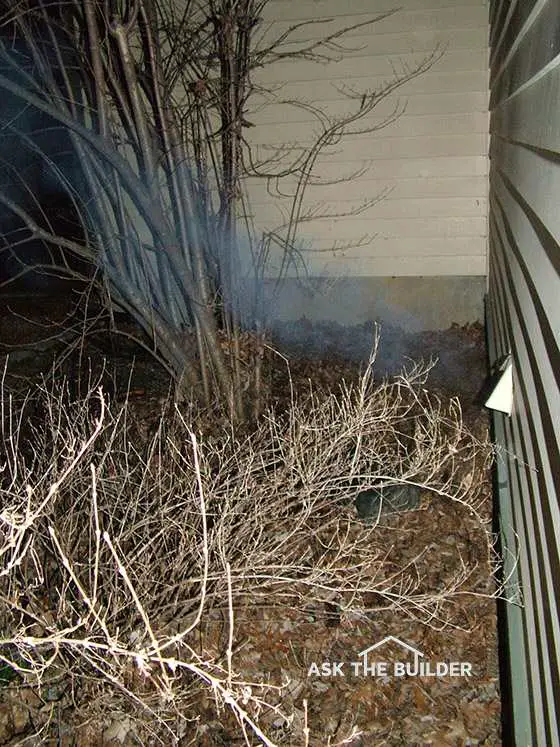
Massive amounts of water vapor are belched into the air each minute a clothes dryer is working. © 2017 Tim Carter
Clothes Dryer Venting TIPS
- Exhaust air must go outdoors
- Use smooth galvanized 4-inch pipe
- NEVER exhaust in attic or roof overhang - SEE BELOW
- Roof vent hoods for no-snow areas
- CLICK HERE for Tim's FREE Newsletter - It's funny!
DEAR TIM: My husband wants to vent our clothes dryer directly into our garage in an attempt to keep our cars warmer in the winter months. I think dryer vents should be directed outdoors. Can you settle this clothes-dryer-vent debate? Where would you vent the dryer and what are the top things you would avoid when installing a clothes-dryer vent? Cindy R., Redondo Beach, CA
DEAR CINDY: I get asked so often to referee these marital debates, I am thinking of buying a white-and-black striped shirt. Your husband should be congratulated for thinking of a way to use the waste heat from the clothes dryer, but his proposed method will cause some secondary effects that could end up costing you time, trouble and money.
This may also be a building-code violation in your area, as it is not a good practice to have penetrations in the wall between a house and the garage.
CLICK HERE to get FREE & FAST BIDS from local dryer vent installers.
Water Vapor Bad
Along with all of the heat that would pour into your garage, you also get scads of water vapor. If you have ever seen a clothes-dryer vent belching out a plume of water vapor on a cold winter day, you know this might be problematic.
All of the liquid water that was in the clothes will get sent into the garage, if your husband implements his idea. This water will undoubtedly condense on all of the cool surfaces in the garage causing rust and corrosion on any unprotected steel tools or parts.
Condensation and Lint
But the water vapor will also condense in places you can't see. You may end up with water and mold issues inside of your garage walls and in an attic space above the garage. Wood rot is a distinct possibility if this water vapor discharges into the garage for any length of time. Lint will be everywhere in the garage as well.
Dryer vents, and the importance of doing it right, are a very misunderstood aspect of home building and remodeling. Many people underestimate the thousands of cubic feet of air that are expelled by a clothes dryer each time it dries just one load of clothes.
Vent Outside
This air must be exhausted outdoors as your intuition told you. But this doesn't mean you can't capture some of the heat before you exhaust the air.
I've found that it is often best to vent fans and dryers through the roof if you live in an area with little, or no, snow.
I urge you to watch this video of mine to see how easy it is to install the correct vent-cap flashing on a roof. Have no fear - if done right you will have no leaks.
Side Wall Best
I always say to vent clothes dryer exhaust outdoors. You can do this sideways through a wall or up through a roof as hot air rises with ease. The most important thing to do is read all of the written instructions that come with a clothes dryer and follow them to the letter. The instructions often describe in great detail the preferred pipe to use and the configuration of the pipe as it makes its way from the back of the dryer to the outdoors.
CLICK HERE to get FREE & FAST BIDS from local dryer vent installers.
Smooth Metal Pipe
Almost every clothes-dryer manufacturer will tell you to use smooth metal pipe as the venting material. This pipe should be 4 inches in diameter and extend some maximum distance. Each manufacturer will state how long the vent pipe can be. You need to do some math, as 90-degree fittings that allow you to turn corners must be accounted for in the calculation. A single 90-degree fitting usually equals 10 feet of straight pipe.
If you live in a cold climate, you may want to think about how to reclaim heat from your dryer. This will save you some money on your heating bills. The way to do this is to use metal pipe inside your home and allow it to act like a radiant heater or a car radiator in reverse.
Harvest Heat!
To extract heat from a simple clothes-dryer vent, try to install the metal vent pipe so it is near or at its maximum length indoors. If you have the luxury of an unfinished basement, you may be able to run the metal vent pipe at a slope from the dryer to a window that is perhaps 20 feet away. The hot pipe radiates the heat directly into your basement along its entire length.
You may be able to fabricate a crude heat exchanger using some scrap sheet metal. But if you do this, be sure it is made with a door that allows you to open it to check for lint buildup. Fires that feed on clothes-dryer lint are a reality, and you must always make sure your clothes-dryer vent is free of lint buildup.
Insulate Pipe in Cold Space
It's very important that the clothes-dryer vent is well insulated if it passes through a cool or cold space like a crawl space or attic on its way to the exterior.
If the pipe is not insulated, water can condense on the inside of the vent causing leaks or poor dryer performance if the pipe becomes filled with water. This water can leak and drip down onto ceilings or soffits.
Best Vent Hood
The best dryer vent hoods in my opinion are the ones with double doors. I have two at my own home, one that's used for a bathroom exhaust fan so it stops cold air from backdrafting into my home. The image below is the one I used. CLICK THE IMAGE or CLICK HERE to order one right now.
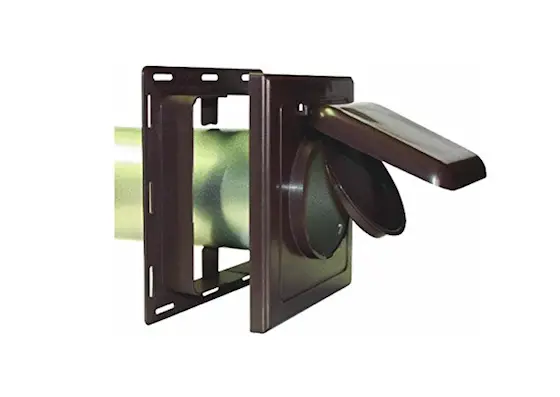
Look at the double doors. This keeps pests out and prevents cold air from backdrafting into your home. CLICK THE IMAGE to order it now.
Beware Soffits & Overhangs!
Avoid installing the dryer-vent termination cap in a soffit overhang under a roof. The clouds of water vapor can easily find their way into the attic through soffit vents, cracks or any other small opening. This water vapor will condense on the cold lumber in the attic. I have seen photos of frost one-half-inch thick that has coated large areas of an attic. Other photos have shown a plume of black mold on the underside of the roof just above the soffit where the dryer vent exits the house.
You can readily purchase dryer-vent roof caps that connect to the 4-inch smooth metal pipe. These caps have a damper that keeps animals out of the pipe. They do require periodic maintenance to ensure lint does not clog the damper leaving it partially open.
No Indoor Vents!
Beware of the dryer-vent kits that say you can exhaust the air inside your home. For them to convert all of the water vapor to liquid water, they would have to be equipped with a very large refrigerated coil as part of the system. Without this coil, vast amounts of water vapor invade your home.
Cleaning Dryer Vents
Lint can build up in a dryer vent pipe. I once had to move a vent pipe for a single mom and the entire pipe was choked with lint.
The dryer will not function properly if the vent gets reduced in size by lint buildup.
Use the following great brush to remove lint from your dryer vent pipe.
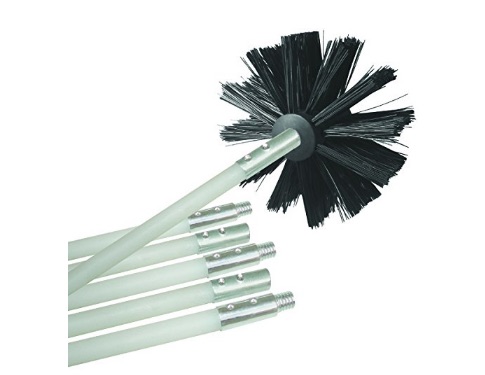
This is a fantastic product to clean out your dryer vent. CLICK the photo to have it delivered to your home in days.
CLICK HERE to get FREE & FAST BIDS from local dryer vent installers.
Related Column: Your Pesky Dryer Vent Pipe
This column was featured in the January 22, 2013 AsktheBuilder Newsletter.
Column 714

Tim built custom homes and did ultra-custom remodeling for 20+ years before launching his Ask the Builder media presence. He was selected as one of the Big 50 by Remodeling magazine in 1993. This award gave birth to Ask the Builder in October 1993. Tim also operates https://DrawPlumbingPlans.com. His @askthebuilder YouTube channel was the first home improvement channel on YouTube.
I just recently discovered that the exhaust vent to the place I purchased was actually going to a bucket in my unit. I live in Hawaii. What would be your best advice on how to deal with this issue?
Solomon, your question require lots of typing and I have some questions for you. You should consider investing in a 15-Minute Consult with me. Look at my cart for that. Lot's to discuss. I just do short pithy answers here.
When it rains our under ground dryer vent pipe is filing with water and our clothes won't dry. We can't really figure out where the leak is, but seems to fill up quickly. Is it possible for the dryer to be vented through the roof as well as under ground? It just seems as though it fills up to quickly for the leak to be in the pipe under ground because it would need time to soak into the dirt.
Read my columns titled: Linear French Drain. Do that. If you need help, I can call you: http://shop.askthebuilder.com/500-second-consult/
Hi Tim,
We have our washer and dryer on our first floor off of the kitchen. I am moving our washer and dryer downstairs to the basement. I want to tie into the original dryer vent that goes from the upstairs to the outside. I want to instal a 4 inch T- piece to connect to that duct work and also put a damper at the T- piece to shut off the air flow to the original of the upstairs line. Is this a good idea? Or could this be a fire hazard? Also, can you purchase 4 inch T pieces that have dampers already installed? Please let me know your thoughts when you have a chance. Thanks!
Kyle Gegorski
This is a bad idea. ABANDON it. Install new metal duct that exits to the exterior as fast as possible from the basement with the fewest 90-degree bends as possible. READ the installation instructions that came with the dryer. Get them online.
Hi Tim,
You were exactly right about avoid installing the dryer-vent termination cap in a soffit overhang under a roof. The builder put the cap like that in my house and some mold has appeared in the attic. My laundry is on the second floor. Is there a easy way to fix this vent cap problem? Is there a specific type of cap that I can use to fit the original design without the moist going back to the attic. Will seal off part of the soffit near the vent solve he problem?
Thanks
Jun
Jun, Nutone / Broan make excellent roof and side wall termination caps for this exact purpose.
Hi Tim,
Do you have a specific model to recommend? Do I need to open a new exit on the wall or I can still use the old hold and put a new vent cap on.
Thanks
Jun
I found that in a home with forced hot air heat which makes the air very dry venting inside worked well. It recovered the heat and added needed moisture. I used a second filter to trap the lint which the dryer filter always lets through. I only did this during winter heating months. I used a simple diverter valve to switch to the outside vent path during non-heating months.
Can a exhaust fan for laundry room be connected to my dryer vent before it goes outside? This is the set up in my condo.It doesnt seem safe to me.
Our one-story home was built in 2000 and the dryer vents to the roof. When we moved into the home, the inspector said we might want to have the vent cleaned, which we did. The vent cleaner said there was hardly anything in there, and our problem was that there are lots of elbows in the venting and it works against gravity to go all the way to the roof. After the cleaning, our dryer still took at least 160 minutes to dry our clothes! We even traded dryers with someone so we could have a timer that went above 30 minutes.
When we lived in an apartment with the vent right outside the wall, it took 60 minutes or less. Tonight, I wanted to know if our dryer was the problem or the vent was the problem, so I disconnected the dryer from the vent hose, opened the door to the garage (which is connected to the laundry room), and ran a load. Everything dried in 60 minutes!
It has been a year-and-a-half since we had our vent cleaned, so we were about to call someone to come out again, but we are wondering if this is a lost cause. Our plumber friend suggested we vent to the outside of our house, but he doesn't do that kind of work. It would need to run briefly through the garage (under the hot water heater) and then through the brick wall. Do you suggest doing this? Who would do this kind of work well? And can we run through the stand that our hot water heater tank is on, or is there important machinery under there? We plan to get a tankless water heater in about 6 years, and I'm hoping to have a laundry solution before then. Thank you for sharing your wisdom!
Our 15 year-old house has its washer and dryer hookups on the 2nd floor. We noticed that there was a ton of heat coming out of the light fixture in the pantry just below it every time the dryer was running. The house had mold problems in the past but it was professionally taken care of and passed a thorough inspection before we purchased it. However, anything involving moisture is going to concern us. Is there a diagnostic test I can do to see if there's a hole in the duct, or if it's a matter of just cleaning it out?
Really Need Advice. I live in a 4 Unit Apartment in Ohio. I have been here 10 years and usually the landlord is pretty good about fixing problems. Even when they include "problem" tenants. It is mostly low income with subsidized rents, including a portion of mine.
There is a common washer and dryer in the basement for tenants and NONE of the units are set up for washer/dryer in the unit. The tenant downstairs from me has a washer and dryer she is running in her apartment. No, I have not seen it but I hear the unmistakable sound of the washer from my bathroom every time it is run. Also I have been getting blasts of hot air coming from under my bathroom sink along with BLUE dryer lint coming into my apartment from every available opening in my bathroom and kitchen (ie: where the pipes enter through the wall and where the heating comes in).
This is not a tenant I can go talk with. Even the Person who works for the landlord cleaning common areas and such is afraid to talk to her. I tried to let the landlord know my suspicions when my bathroom window started collecting condensation between the double panes where I cannot clean. Unfortunately he called her and asked her about it so of course she said no she wasn't. I think he went in once to see but I hear her and her friend moving something (portable washer?) across the floor right before the wash/ dry starts.
My question is this: the condensation has not dried in between the 2 panes of window for months and now there is what I can only describe as blackish mold growing there. My apartment is constantly coated in BLUE dust (dryer lint). I have the only unit with a GAS STOVE. What can I use to plug all the holes the lint is coming through until I can move? And how real is the threat of fire since it appears she is venting the dryer to the inside of the wall?
I already know how much of a health hazard this is as I have been put on two very strong inhalers. My lungs are reacting like I have COPD and Asthma at the same time but I have neither of these. Its an allergic reaction.
I just want to try to prevent a fire until I can get to a safer place(already went through one due to Arson 2 years ago).
Any suggestions on plugging out some of the lint?
We had an outdoor gas line (to our dryer) leak and had to replace some pipe. My husband decided to do the pipe work himself to save the $600 the plumber wanted to charge. I just went outside to look at the work and the gas pipe now runs about 2 inches below the bottom of the dryer vent. We haven't connected the dryer up yet, but when we do, warm, moist air will be flowing all over that gas pipe. Is this safe? Should we insulate the pipe in that area? We live in weather-less coastal southern California, so pretty much never a freezing issue. But don't suppose it would be a good idea to run the dryer first thing in the morning above a really cold pipe, on the coldest day of the year? Any advice appreciated:-)
I know it may sound a little crazy, but do I connect the vent from the dryer to the drain pipe of the washer machine? I do not have a way to exhaust the dryer through the roof or a side wall and hate those water traps/boxes. Any ideas?
Jose',
It's not crazy. The dryer exhaust air MUST BE vented to the outside of your home. Even a cast (poured) concrete wall can be drilled to create the 4.25-inch hole that's required for the exhaust vent hood. The indoor exhaust boxes are no good because they put too much humidity into your home and it can cause mildew and wood rot. CLICK THE FOLLOWING LINK to get the best vent hood cover known to man.
http://amzn.to/2j3lY6E
Why is galvanized pipe better than aluminum or ABS?
Hi Tim,
We live in a sixty three year old brick bungalow, just east of Toronto. When we moved in, I replaced the silly plastic duct with ridgit metal ducts and chose to use only one 90 degree elbow and double 45 degree fittings for the rests of the bends.
Here is my concern now. My basement is unfinished and my waster heater is naturally aspirated, as well, my furnace is a power vented mid-efficiency unit, that uses room air for combustion. Over the years we have sealed up drafts in the house, changed the windows from the old wooden single glazed, etc. ya da, ya da. I know the house is tighter, as if we run the range hood exhaust fan on anything faster than two, we can over power the furnace flue fan and cause it to backdraft. (Both the furnace and HWT are vented into a stainless steel lined chimney flue.)
I figure that when we replace the furnace and HWT soon, they will both be replaced with high efficiency unit, that have their own combustion air. The concern with the dryer, is that it will put the house into negitive pressure and slow the drying time. My idea is to put an air intake vent in the outside wall (far enough from the dryer exhaust that it doesn't suck in the exhausted air.) and terminate the supply air duct at the back of the dryer. I would put a backdraft damper in it and possibly a electrical controlled damper in that would be tied to the dryer.
Do you think that this would make a difference, of using outside air to dry the cloths instead of warn, conditioned air?
Thanks,
Ted
Hello Tim, our new house is being built, initially they had the dryer vent, I think going into the attic, I'm not sure if though the roof or not, but it passed the inspection while framed. Today a week before we move in, it failed the inspection so now my builder has this long pipe going through the garage, a few inches above the floor all the way to the backyard though the wall. The vent is really close to the ground on a grass area. I'm freaking out about pests (snakes or baby snakes) going in there. Should I ask him to move it higher? Have the pipe going under the ceiling? I will die if I see a snake in the house. We are in the Dallas area, not a lot snow around here, some ice storms, some snow every year. Very hot climate.
Ceci,
It's unacceptable how the vent was run. You need to pay attention to the MAXIMUM pipe run allowed by the dryer manufacturer AND it needs to be up where pests can't get in. Get out the dryer installation instructions and READ about how the vent must be installed.
You MUST INSTALL the vent cover I show above. GO BACK UP and click that link and buy one NOW. They're fantastic and NO PESTS WILL GET IN if you make sure it's free of lint all the time.
Thank you for your reply! I did send the picture of that vent hood to my builder. Apparently we had our vent going into the attic and out through the roof (we have concrete tile roof). The inspector said they had 2 fires in our city, caused by dryer pipe going through the attic (I'm not sure about the details of it) therefore he is making builders change them. Our pipe now is through the garage and it is about 15' -18' long (I think). The pipe sits right above the baseboard and the vent outside about a foot from the grass. I rather take a chance of having a fire than a snake in the house.Our house is by a Golf Course. I'm still wondering how the 2 fires they had recently, suddenly became a problem, enough to change safety rules. Many people are complaining about this new inspector. Apparently a big jerk. Our builder has been building houses for over 20 years, never had a problem.
Our dryer was vented into our carport but now we are in the process of closing in our carport and making a den and lage indoor storage closet. I was thinking maybe we could run some type of vent down from the vent which is about two feet off the ground (our slab is high due to a slope in the lot) Anyway, I was thinking we could run a vent froom the existing vent opening, down to the baseboard and over to the side of the now closed in carport. We could create a vent opening there. It would be about 12 feet. What type of material should we use for the vent and is this a safe idea.
Hi Tim,
I am doing research about the really awful dryer vents (6) in my small apartment complex in Sonoma County, CA. They are on the residential side of the laundry room, and all 6 vent directly into three four-plex building---all of whose front doors and windows are between 20 and 60 feet away from those 6 vents.
We have many families here, so the laundry room is in operation between 7 and 12 hours per day. This means that the residents (me included) who live in the dryer vent "path" are literally being poisoned. It is really, really gnarly. Many families use heavy dryer sheets, etc; the toxicity level is really high.
This is an affordable housing property, and the landlords are notorious for their lack of concern with tenant safety. Our resident population is extremely hard-working, and many of us are also disabled. All this to say that solving the problem by moving is unfeasible.
I've been doing research into the codes for our state. Do you have any insight on legalities re. our situation? How close are dryer vents allowed to be to human habitation (and/or doors and windows specifically)?
I would be SO grateful for anything you can tell me, and/or any codes/statutes you can point me to. I want to compel this large company to change configuration of this building. I cannot believe how thoughtless it was put the dryers and their vents on the residential side of the building (the other side is parking lot!). I have been working on this for a long time, to no avail, and am ready to engage in more formal footwork. There are children in this part of the property whose breathing has been significantly impacted.
Thank you very much, Kalia
I can't vent my drye vent through the interior house wall because a support beam is in the way. If I vent it out the north exterior wall, I have overhanging soffitts. There is a deck to the north;running the vent under the deck doesn't seem feasible due to not having an outlet. Perhaps I should become Amish! Any advice???
Katie,
I solve complex problems like this every day using a unique phone consult service.
Consider this - comes with a money-back guarantee:
http://shop.askthebuilder.com/products/15-Minute-Phone-Conversation-with-Tim.html
Can I vent a dryer through an exterior wall that goes to an open porch with a 5 ft roof overhang?
The previous owns of our house vented the dryer into the garage.. we know it’s a bad idea! I want to run it across the garage to outside of house. To run it across the garage, I need about 19ft of duct. I can only seem to find duct in 2 ft sections at our local home stores. Any idea where I could get 5 or 10 ft sections? It seems that would be much more economical and easier to deal with.
Sure. Please use this link to buy what you need.
This one is durable enough that I'd use it in my home:
https://amzn.to/2IF5xIa
My home builder vented our upstairs dryer above our patio door. So if I’m running my dryer the exhaust is blowing in the door fogging it up and if the door is open occasionally some lint coats the floor. I requested the contractor to come back and of course I’m getting the run around about whether anything can be done. Do you know if any products to deflect the exterior exhaust away from the patio door?
There is no silver bullet other than to MOVE the exhaust duct to where it should have been put in the first place.
Thank you for your sound advice.
My dryer vent is coming out of the soffit. I removed the louvers that come with a dryer vent and put a screen that I replaced about every 2 months Is there some other solutions for this because I have to get on a ladder in order to clean it. something would be cool if there was a temperature opening type of device. Any suggestions on making this process any better.