How to Clean a Deck
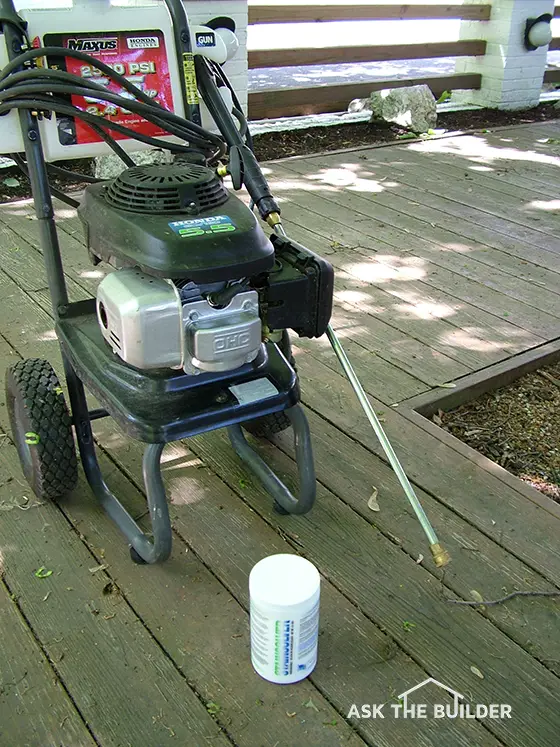
You have at least two choices when you decide to clean a wood deck. Here are two of them - a pressure washer and oxygen bleach. This column was SO GOOD that I shared with the 31,000 subscribers who read my May 31, 2019 AsktheBuilder Newsletter. ©2017 Tim Carter
How to Clean a Deck TIPS
- Pressure washers ruin wood
- Stain Solver cleans organically
- WATCH pressure washer damage video below
- Oxygen bleach bubbles clean like magic
- CLICK HERE to Get Tim's FREE & FUNNY Newsletter!
DEAR TIM: I'm having a spirited debate with my husband about how to clean a deck. Deck cleaning doesn't seem that hard, but my husband wants to use a pressure washer thinking it will save time.
I want to use a green cleaner that's non-toxic and environmentally safe. What's the proper way to clean a deck and keep it looking nice? Lisa T., Burlington, NC
DEAR LISA: Cleaning a backyard deck is not supposed to create marital strife. In this instance, I think you and your husband might be able to reach a compromise that allows each of you to clean the deck in the manner you see fit. I have cleaned countless decks, and there are pros and cons to each of the methods you mention.
Pressure Washing Hazard
Let's talk about pressure washers. These tools are extremely popular that appeal to homeowners.
Pressure washers are like shoes - they come in all different sizes and the end of the spray wand can be equipped with different tips that concentrate the high-pressure stream of water.
The stream of water that is thrust from the tip of the wand mechanically agitates the surface of whatever it strikes. This is what cleans.
Pressure Destroys Wood
A pressure washer can clean a wood deck much faster than you can do it scrubbing by hand. That's a terrific advantage.
But one of the side effects of a pressure washer is that it frequently destroys the surface of the wood. The stream of water can be so powerful the light-colored spring wood fibers are eroded by the water.
Those that are not eroded can be dislodged so that the wood is fuzzy or rough after it dries.
Pressure Washer Damage Video
Watch this corny video to see the damage done by a pressure washer and the alternative organic cleaner. I taped it for the ABC-TV affiliate in Cincinnati, Ohio and they wanted me to have some fun with it.
Half Truths
Professional deck cleaners argue with me that this only happens when an inexperienced user is working with the tool, the pressure was too great, the tip used at the end of the wand produced a stream of water that is too harsh and/or the tip is held too closely to the wood surface.
Because they have a dog in the fight, that's what I'd expect them to say. The truth is any extreme pressure much more than a regular hose nozzle, will harm wood.
Test For Damage
If you decide to use a pressure washer, then you better test it or have the professional prove to you they can use the tool and not damage the wood. Go to some remote part of the deck and clean one half of one board with a pressure washer.
Wash the other half by hand, rinse and compare for wear.
Gasoline & CO2
If you're really interested in making your deck-cleaning project a green-cleaning activity, you should give serious consideration to the secondary effects gasoline or electric-powered machines have on our environment. How much CO2 will you add to the atmosphere that local trees will have to gobble up to make oxygen?
Toxic Cleaners
I'm a big proponent of non-toxic cleaners. The older I get, I have this sneaking suspicion that certain chemicals we encounter in everyday products are responsible for many health issues.
I'm not a doctor, but common sense tells me that harsh chemicals are not processed well by our bodies.
Certified Organic Cleaner
Years ago, I discovered there are different types of bleaches - one of them being oxygen bleach. Many people think bleach is bleach, but the bleach found in most homes is chlorine bleach.
The active ingredient in chlorine bleach is sodium hypochlorite. Check the label of many bleaches or deck cleaners, and you might see this chemical name. Chlorine bleach is toxic. Very few will argue that it's not.
Stain Solver
Stain Solver is MADE in the USA with USA ingredients that are food-grade quality. CLICK THE IMAGE to order some NOW.
Stain Solver is a powerful certified organic oxygen bleach cleaner. I own the company along with my wife. We discovered this magic cleaner back around 1995.
It's a powder you mix with warm tap water. When you mix Stain Solver with water to make a deck-cleaning solution, all you create is more water, oxygen and soda ash.
Oxygen Action
The oxygen bubbles in the solution do most of the work done by the pressure washer. The solution soaks into the dry wood and the oxygen ions deep clean the wood by breaking apart dirt, algae and mildew molecules.
The solution is not toxic. It's safe to use around the plants, bushes or trees around your deck. You can't say that about chlorine bleach. My neighbor systematically murdered her gorgeous maple tree around her deck by cleaning the algae off the concrete patio every spring.
I warned her to stop, but she thought I was an idiot. I'll never forget the day the tree company came and cut down that amazing tree she had poisoned.
Scrub A Dub
When you decide you're going to use a green cleaner, you'll discover you need to spend time and elbow grease to clean the deck.
Here's the simple steps to minimize the work:
- Start early in the morning working in the shade
- Apply the Stain Solver solution to dry wood
- Keep the surface very wet with the solution
- Wait 15-20 minutes then scrub
- Rinse with a garden hose
Column 726

Tim built custom homes and did ultra-custom remodeling for 20+ years before launching his Ask the Builder media presence. He was selected as one of the Big 50 by Remodeling magazine in 1993. This award gave birth to Ask the Builder in October 1993. Tim also operates https://DrawPlumbingPlans.com. His @askthebuilder YouTube channel was the first home improvement channel on YouTube.
Thank you for your professional advice. This is my first deck and I want to do this right. Can you please let me know where I can find your product. (Stain Solver). Thanks again
You find Stain Solver at its website - StainSolver.com.
Can you advise how best to clean between the boards on a deck? Some of the boards are cupping as sand, dirt, and leaves have blocked the gaps between boards and water is not draining away.
I would like to use a pressure washer to blast the build up away but my wife thinks that will damage the timber allowing more water to soak in and causing more cupping. Please help!
Your wife is correct. The pressure washer will harm the wood. Use a hacksaw blade to floss the gaps.
In many places I have read that you should use a "brightener" after using a cleaner to correct the PH before applying a sealer/stain. But you don't mention using a brighten in your ebook, "Cleaning and Sealing Your Deck". Is a brightener needed after using oxygen bleach?
In my opinion, it's all hype. It's been 43 years since I was in my college 5-hour physical chemistry class, but I can tell you this for a fact. The cleaners, like my Stain Solver are alkaline. Water is for the most part neutral. Brighteners are acidic. If you had acid in a beaker in the lab and you rinsed the glass beaker well and even rubbed it, the glass surface would be neutral as you washed away all the acid.
The same is true for wood. Sure, if you leave on the cleaner and don't rinse it, it needs to be neutralized. But rinsing does that for you if you rinse and scrub well making sure all the alkaline cleaner is gone from the surface of the wood.
Can a little remain in the pores of the wood? You bet! But what happens if you use a Brightener? After you rinse it off will some of it remain in the pores of the wood leaving the wood acidic?
Does a sanded deck need to be cleaned with cleaners such as oxygen bleach? I just sanded my deck and have found lots of mention about properly prepping a deck for staining but none seem to mention what to do if you have sanded it right down. I used 36 then 60 grit using a commercial floor sander. I still see some tannin bleeds around some of the nail holes.
Thanks
If you sanded to bare wood, you don't have to clean it. The stains are not going away and will come back because of inferior fasteners.
I have an unfinished deck built last year that I need to wash then stain. this deck has a stainless steel cable system that I am afraid will be damaged by the caustic cleaners on the market. I spoke with Behr and they would not confirm that their all in one cleaner would not harm the cables but said that the wood must be prepped prior to painting. The cable manufacturer had no advice either. I purchased simple green hoping it would not hurt the railing system but it does not recommend you use it on unpainted wood, so I am at a loss as to what to do. Does anyone have any recommendations on what cleaner I should use that will not hurt the railing system but properly prep the wood?
Brian,
My Stain Solver will NOT hurt stainless steel. We have lots and lots of Before and After photos of it being used to clean SS sinks and commercial coffee makers. Plus, I've used it myself for nearly 20 years to clean all the stainless steel around my house.
Go to: Stain Solver It's an amazing wood cleaner too!
Did I read this right? Once unfinished or sanded wood decks get stains...you can't remove them. Any suggestions?
Interesting dialogue.
My mom's Lumberock deck has been cleaned several times, but it never gets white enough. Are there commercial scrubbers out there to make the deck look brand new again?
After using the stain solver on a deck, should the deck be sealed?
Yes, the deck needs to have a pigmented sealer applied.
Are there any cons to using product prior to painting? I.e. - Will the paint seal properly? Will it affect the bond of the paint to the deck? Will the paint peel? I haven't been able to find enough on the subject.
I'm using Behr Dekover.
Thanks.
Any recommendations on dosage? I.e. 8 Oz in 1 gallon H2O should cover how many square feet?
2 pounds of Stain Solver dissolves in FIVE gallons of water. This normally is enough to clean 400-500 square feet of surface area.
http://www.StainSolver.com
My wife raised a batch of puppies early this year on our covered enclosed deck floor. You can imagine the shape it is in. We have swept it up, but there is much more to be done. I am starting out with my electric pressure washer... on wide beam spray small sections at a time. Trying to be careful and not destroy the wood (pressure treated deck boards). I am going to apply some Pine-Sol next to see what that does.
Any suggestions? Thanks
Tom,
I must have done a REALLY BAD JOB above in the column. I thought it was crystal clear that you should use Stain Solver certified oxygen bleach.
It removes PET STAINS and all other types of organic stains.
Go to:
http://www.stainsolver.com