Standby Generator – Lots of Power For Your Home
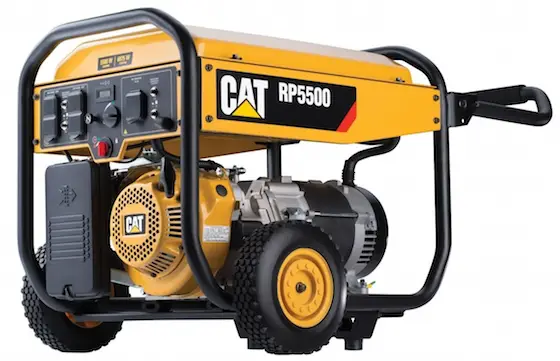
Standby Generator | Here's a beefy portable electric generator that produces 5,500 watts. This is NOT a standby generator, although you may be able to convert it to one. This CAT one is a portable generator that can keep you reasonably comfortable for an extended power outage. CLICK ON THE PHOTO NOW TO HAVE THIS GENERATOR DELIVERED TO YOUR GARAGE.
Standby Generator - It Starts Up Automagically When the Power Goes Out
DEAR TIM: The last major storm knocked out my electric power for days. I'm wondering if I should invest in a portable generator or a standby generator. What's the difference between these home generators? How do you determine what size electric generator to purchase? Do you think I can install a standby generator myself as I'm pretty handy? Bonnie S., Burlington, VT
DEAR BONNIE: Two months ago, Hurricane Ike ravaged Cincinnati, OH. It was a cloudless blue-sky day with fierce sustained winds. My house there lost power, and it wasn't restored for five agonizing days. The loss of electricity shredded the social fabric of the family as if it were tissue paper. Electricity is almost as important as oxygen in some respects. When it's there, you don't even think about it, but when it's gone, you get desperate in a hurry.
Why are Standby Generators Popular?
Home generators are gaining in popularity for many reasons. After this storm event, I was bound and determined to get a standby generator, especially for the winter season when vicious ice storms can create power outages for weeks in some remote areas. Read in the December 14, 2008 AsktheBuilder Special News how my standby generator worked after an ice storm.
What's the Difference Between a Portable and Standby Generator?
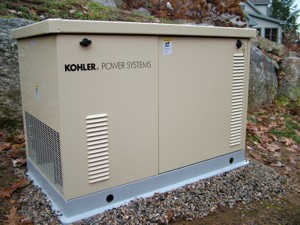
This standby generator is ready to start up on its own as soon as there's a power outage. It's powerful enough to run much of a regular house. PHOTO CREDIT: Tim Carter
There's a huge difference between portable generators and standby generators. A portable generator is one you can move around. The ones most homeowners recognize are those that are the size of a medium picnic cooler and are powered by a small gasoline engine. Contractors often use these on job sites when regular electricity is not yet connected.
Can a Portable Generator Power an Entire House?
These small portable generators are not designed to power an entire house. The intention is for you to run one or several extension cords from the generator directly to the appliance you wish to power. You may connect it to a refrigerator for a few hours, then a window air conditioner, and maybe a few table lamps. Forget about connecting all of your appliances at once to a small portable generator. It simply will not work.
What is a Standby Generator?
A standby generator is a larger fixed device that resembles an outdoor air conditioning compressor. They are capable of generating enough power to keep many essential electrical devices operating at once, or you can invest in a standby generator that can operate every electrical appliance and light in your house all at once.
Can a DIYr Install a Standby Generator?
The standby generators are not meant to be installed by a homeowner. Not only do you have to connect a fuel source to it such as propane or natural gas, but you also have to hardwire the generator into your electrical system. This is fairly complex and best done by professionals. What's more, you need to install a sophisticated transfer switch with a separate electrical panel that contains the electrical circuits that will be powered when the generator turns on.
Will a Standby Generator Start Automatically?
One primary difference between a standby generator and a portable one is the standby generator will turn itself on when the primary electric to your home is knocked out. This is accomplished by the transfer switch, and can have your lights back on in as little as ten seconds. When the utility company finally restores your power, the transfer switch senses this and shuts off your generator.
Do You Need Extension Cords With a Standby Generator?
Extension cords are not used with a standby generator. All of your appliances remain plugged into their wall outlets. The electrician, with your input, decides which circuits in your home to connect to the generator. This allows you to purchase the correct-sized generator. If you decide to power just a part of your home, the other areas will be dark and off the grid. Think about what appliances and rooms of your house you can survive in until the utility company gets power back to your home.
Do Standby Generators Come with Phone Apps?
Some standby generators come with software and smartphone apps that allow you to check the status of your generator if you're not at home. This software can also communicate with you or a service company if it senses something is wrong that might cause the generator to fail in the event of a power outage. This allows you to have it repaired so that it will be working when you need it most.
Are Portable Generators Useful?
Portable generators can get you by in an emergency, but they are not in the same league as a standby generator. In an emergency, you need to drag out the portable generator, and safely string all the extension cords. You then need to add fuel to the engine on a regular basis day and night. It can be a hassle. You also need to be very careful about placing it near the partially open window or door that the cords pass through. The carbon monoxide fumes from the engine exhaust can drift indoors.
How Much Power Can a Standby Generator Produce?
My standby generator produces 17,000 watts of power. You can get these generators in much larger sizes.
The 17,000 watts isn't enough to completely power everything in my home, but it will allow me to keep my boiler in operation as well as all the recirculation pumps. My refrigerator, microwave and countertop oven, and many light circuits will also be powered. I'll even have plenty of power to operate my well pump. This means that as long as my buried 1,000-gallon propane tank doesn't run dry, I'll be able to survive for weeks.
Standby generators require periodic maintenance as they contain engines that spin the actual generator. Often you can do this maintenance yourself. If you want a company to do this, they will gladly take care of it.
Don't Need That Much Power?
Check out my column on smaller portable generators. They may handle your needs.
First mentioned in the December 2, 2008 Newsletter.
Column 752

Tim built custom homes and did ultra-custom remodeling for 20+ years before launching his Ask the Builder media presence. He was selected as one of the Big 50 by Remodeling magazine in 1993. This award gave birth to Ask the Builder in October 1993. Tim also operates https://DrawPlumbingPlans.com. His @askthebuilder YouTube channel was the first home improvement channel on YouTube.
Dear Tim,
We have a standby generator which produces 15,000 watts. Could a second generator be installed next to it outside,so everything will be covered in the house? Just a thought.
Thanks,
Ellen
Ellen, your question requires lots of typing, plus I have some questions for you so I can give you the correct answer(s). I only do pithy answers here in the comment section. If you want to protect the investment you have in your house and not waste time or money *hoping* you make the right decision, you should talk to me on the phone for just 15 minutes. It'll be the best investment you've ever made in your home!
Hello
Please i need help...I am hearing impaired and it is so hard for me to call and ask questions but i do so want to be well informed
I am considering a Kohler 20kw residential standby generator...The area we may install it is near my fresh air vent for my gas furnace and a window...I am very nervous about the possibility of carbon monoxide getting into my house through the vents. I have no basement and this is the closest to the electrical panel and the gas lines...
my other option is to put it on the side of my house with no window etc near my air conditioning unit. Costs more but seems safer to me.
I also am nervous about Kohlers advice to check the oil every 8 hours or 24 hours at the very least while the unit is in constant use ...is this true? How often do i change the oil?...is synthetic oil better?
my final question do i need a service entrance transfer switch or is the one that usually comes with the unit ok...
why would I need a service entrance transfer switch....I have a main panel which feeds two sub panels..
Is it better to have the transfer switch in the house or mount it outside?....
Thank You so much any answers would be greatly appreciated...
Rose
Rose, your question requires lots of typing, plus I have some questions for you so I can give you the correct answer(s). I only do pithy answers here in the comment section. If you want to protect the investment you have in your house and not waste time or money *hoping* you make the right decision, you should talk to me on the phone for just 15 minutes. It'll be the best investment you've ever made in your home!
Hi Tim,
I have the kohler generator pictured above and was wondering how often you recommend getting it serviced? Also, how often do you recommend getting your heating and cooling system serviced? We have baseboard heating and sentral AC. Thanks! Hege
What does it say in your owner's manual? I don't have mine handy next to my keyboard.
What is estemated cost to connect 16kw generator to gas house
With the vulnerabilities of the electric power grid today to sabatoge is it wise to install a fixed home generator?