Water Heater Anode Rods
"Tank corrosion is the #1 cause of water heater failure. Keeping a water heater anode rod in good shape prevents failure."
Water Heater Anode Rod Checklist
- the anode rod is hidden in the tank
- it sacrifices itself to save the tank
- it must be replaced every seven years
- water heater can last forever if you replace the rod regularly
Water Heater Anode Rod - Replace Every Seven Years
The water heater anode rod you can't see is why you have delightful hot water in your home. There's nothing quite like that warm shower in the morning or after a hard day's work.
Do you take hot water for granted? We use it throughout the day for bathing, washing dishes, clothes, etc. It has become a necessary element of our lives.
Related Links
Tough Love Truth About Tankless Water Heaters - DO NOT SHARE! Angry Companies
Venting Water Heaters - Do it the SAFE WAY
Free & Fast Bids
CLICK HERE to get FREE & FAST BIDS from local plumbers who can install a new anode rod.
Where are Anode Rods?
A water heater anode rod is suspended inside the water heater tank. The anode rod protects the water heater from corrosion.
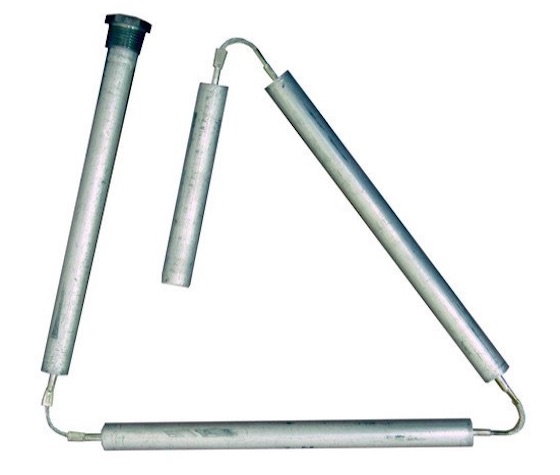
This is a replacement anode rod made from both aluminum and zinc. It prevents the rotten egg smell you get with magnesium anode rods. It's in sections so you can get it into the tank with a low ceiling above the water heater. CLICK THE PHOTO to have a new anode rod at your home in two days.
Water heaters are very simple mechanical items. They have virtually no moving parts. Electric water heaters have very small switches that turn the current on and off automatically to each heating element.
Gas water heaters have small parts within the gas valve that control gas flow when it is necessary for the burner to cycle on or off. Rarely do these moving parts fail.
Why Do Water Heaters Leak?
Tank corrosion is the #1 cause of water heater leakage and failure. Keeping an anode rod in good shape prevents failure.
High-pressure failures are also becoming a problem as well. Both of these problems can be somewhat controlled. You simply need to consider several alternatives before you install your next hot water heater.
What Causes Corrosion in a Water Heater?
Corrosion within hot water heaters can be caused by water acidity, electrical conductivity, dissolved oxygen, and temperature. Water can react chemically with metal parts inside of the water heater.
Acidic water can actually eat away at the metal. This corrosion process is accelerated with temperature. So as we heat the water for our usage, we actually can hurt the tank!
CLICK HERE to get FREE & FAST BIDS from local plumbers who can install a new anode rod.
When Did Water Heaters Get Glass Linings?
Water heater manufacturers began lining the steel tanks with a thin coating of glass in the 1950s. This coating isolated the steel tank from the corrosive water.
Any part of the water heater tank not coated with glass is a place where corrosion can begin.
The inlet and outlet holes of the tank are not glass coated. These areas are subject to corrosion.
Are Gas Heaters Likely to Corrode Faster?
Gas water heaters are likely to corrode faster. Every time the burner turns on it heats the metal at the bottom of the tank. This heat causes the metal to expand.
When the burner shuts off, the metal contracts. This constant expansion and contraction weakens the metal at the bottom of the tank. It can also cause microfractures in the glass lining. Water can then get in contact with the bottom of the tank and begin the corrosion process.
Do Dissolved Minerals in Water Cause Problems?
Yes, dissolved minerals in water allow the water to conduct electricity. The electricity accelerates corrosion of the steel water heater tank.
Distilled water, on the other hand, is virtually pure water. The distillation process removes the dissolved minerals. However, it also loses its taste. Dissolved minerals give water its taste.
Is Pure Water an Insulator?
Pure water (100 percent H2O) is actually an insulator. Electricity will not pass thru it easily.
However, water which contains dissolved minerals is a great conductor. Electricity passes readily thru this type of water. That's why household water (as well as ocean, river, lake, etc. water) poses an electrocution hazard. Almost all water in nature contains dissolved minerals.
Does Mineral Content in Water Vary?
Depending upon the source of the water supply, the dissolved mineral content can be high, medium, or low. Also, there will be different minerals present.
What Causes Electricity in a Water Heater?
The heating of water within a water heater and the motion of the water cause tiny electrical currents to be generated within the water heater. These electrical currents start to eat away at any exposed metal.
That's why water heaters have anode rods as a part of their construction. The anode rods attract the electricity like nectar attracts bees. The anode rods sacrifice themselves so the water tank doesn't corrode.
What Are Water Heater Anode Rods Made With?
These anode rods are made of magnesium. The magnesium attracts the electrical current and corrodes more easily than the steel tank. Some anode rods are made with aluminum and zinc. This type will prevent the rotten egg smell you sometimes get with a magnesium anode rod.
CLICK HERE to have a replacement anode rod at your home in days.
However, if the anode rod completely dissolves, the electricity within the tank will begin to look for some other metal. That's why you need to check your anode rod periodically.
What is the Difference Between Hard and Soft Water?
Many people know the difference between hard and soft water. Hard water is water that has a high amount of dissolved minerals. When hard water is heated, some of these minerals can precipitate out of the water and form a scale on the inside of the water heater.
Can Scale Collect in a Water Heater Tank?
This scale can flake off and begin to collect on the bottom of the tank. This lowers the efficiency of the water heater by acting as a barrier to the flow of heat from the burner to the water.
This scale can also corrode heating elements on electric hot water heaters in a very short period of time. Friends of mine have had to replace electric heating elements every 3 months because of this problem.
Does Electrolysis Damage Water Heaters?
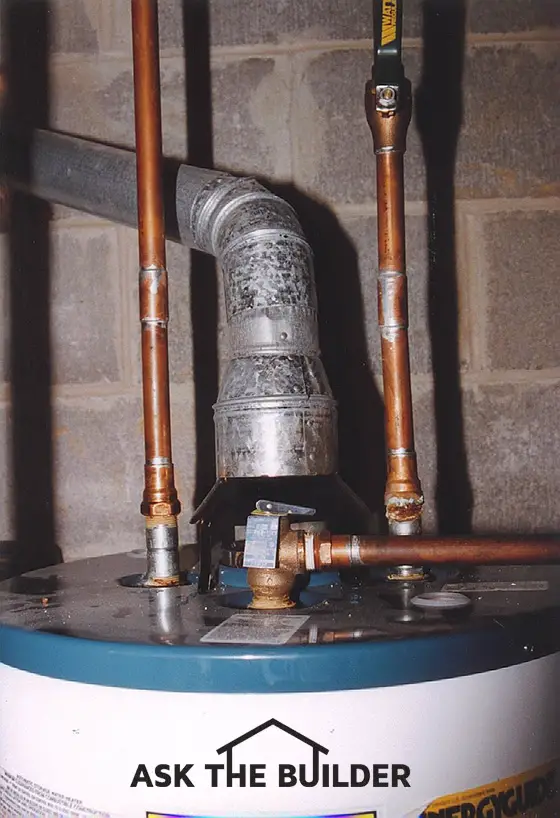
Electrolysis causes damage to your water heater tank. Iron is the primary metal used to construct hot water tanks. You can see this iron at the top of the tank where the hot and cold water pipes attach to your heater.
Often rookie plumbers or homeowners simply install a copper male adapter into the female iron tank fittings. This metal to metal contact of two dissimilar metals can lead to corrosion.
These connection points need to be isolated "electrically" from the water pipes. There are several different connectors made for this purpose. I, personally, choose to use di-electric unions. Good Luck!
CLICK HERE to get FREE & FAST BIDS from local plumbers who can install a new anode rod.
This column was SO GOOD that I shared with the 31,000 subscribers who read my August 7, 2018 AsktheBuilder Newsletter under making your water heater last.
Column B192

Tim built custom homes and did ultra-custom remodeling for 20+ years before launching his Ask the Builder media presence. He was selected as one of the Big 50 by Remodeling magazine in 1993. This award gave birth to Ask the Builder in October 1993. Tim also operates https://DrawPlumbingPlans.com. His @askthebuilder YouTube channel was the first home improvement channel on YouTube.

My plumber told me the same thing when he replaced our water heater 8 years ago. However, he had said to replace the anode rod every 4 years to ensure the water heater lasts. So when he comes to do our furnace tune up this fall, he'll be replacing it for a 2nd time as it's been 4 years since the last time. Is every 4 years too soon?
Well, what do the rods LOOK LIKE after four years? Take Before and After photos so you remember. If there's lots of rod left after four years, then maybe you try six or eight years.
I have a indirect heated water tank. It is made from all stainless construction. It does not have any electrodes in it. Is this a problem here?
What does the manufacturer of the tank have to say about that? When you contacted them, what did they tell you?
Even though it is not causing any problems now, they say there is a permanent warranty and stainless is galvanically neutral meaning no current passing to electronically corrode the surface (the chromium is already "corroded" protecting the iron. the potential problems would be the brass fittings would corrode first much like the zinc rods corroding before the tank does. If it did have an anode rod
Hi Tim. My gas hot water heater which is about 7 years old doesn't leak but in the last 6 months we've noticed a significant decrease in the amount of hot water available to us. I'm presuming that means its filling up with sediment and has less and less capacity to hold hot water. Our municipal water system goes through a phase each spring where the water is quite murky with lots of particulates in it. ... or am I totally in left field here? Looks like a new HW tank is in our future. Will a better anode rod prevent any of this or is it a different issue entirely?
The anode rod has nothing to do with less hot water. It could be a defective dip tube. There was an issue with those a few decades back.
Read my past column about water heater dip tubes.
How long should the replacement anode rod be?
Replacement anode rods for standard heaters - 40, 50 & 80 gallons - all come one size.
I noticed that the film used teflon tape. I thought that the sacrificial rod must be in electrical contact with the iron. Does the thread on the rod cut through the tape to make contact with the iron tank.
If you don't put a sealant on the threads, it's going to leak under the extreme pressure in the tank. The anode rod from the factory has sealant on the threads so you know it's making the necessary metal-to-metal contact.
would it be possible to try an impact driver to get the anode nut off?
Yes, you can try that. But a torque wrench with a long lever handle will do the job for sure.