Flat Roof Materials
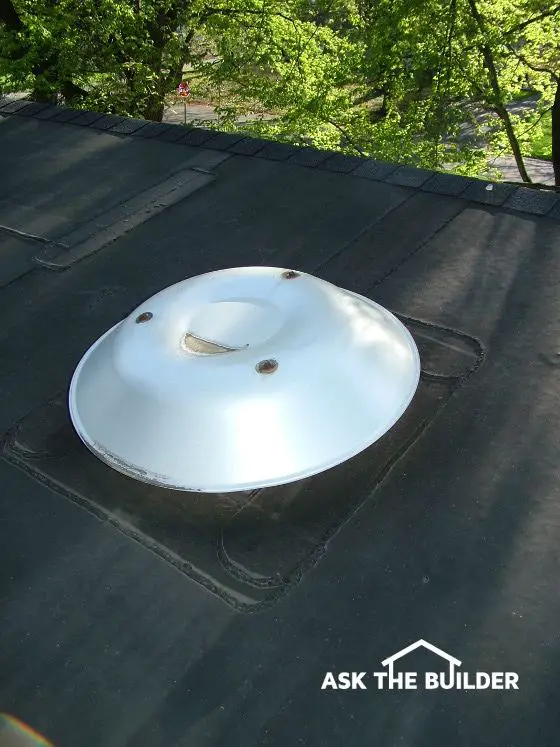
Flat roof materials like this keep rain out of your home. This is a traditional rubber roof material. Note how you can see the solvent welds at the seams where one piece of roofing overlaps another. Copyright 2018 Tim Carter
Flat Roof Materials Checklist
- Hot-mopped asphalt is ancient technology and prone to leaks
- STOP asphalt oxidation with copper on your roof
- Synthetic rubber roof membranes like EPDM are best
- Take photos of seams and flashings of new roof to help diagnose future leaks
- CLICK HERE to Get Tim's FREE & FUNNY Newsletter!
Related Links
Membrane Roofing Manufacturers
What is Rock and Gravel on Flat Roofing Materials?
The gravel is used to hold down the roofing materials in high winds and it also protects the roofing material from ultraviolet (UV) light from the sun. UV rays will destroy any roofing material.
Free & Fast BIDS
CLICK HERE to get FREE & FAST BIDS from local roofers who can put on a EPDM membrane roof.
How Does UV Light Hurt a Roof?
The sun's UV rays break apart the molecules of the roofing material. This happens because about five percent of the sun's UV rays contain active photons.
Watch this video to understand why you need to protect your roofing materials from UV light:
What Happens When Photons Hit a Roof?
The photons break apart the roofing material molecules. The molecules then are unstable.
In the case of asphalt, it wants to get comfortable so it grabs oxygen out of the air.
This is called oxidation. When this happens, the asphalt molecules cross link. If too many molecules cross link, the asphalt gets stiff and hard.
You can significantly SLOW the oxidation of asphalt by introducing copper onto the roof. The copper ions go where the oxygen goes but it doesn't allow the asphalt to cross link.
Are Leaks Hard To Find?
If you have one of these roof systems and a leak(s), forget about locating them. It will be virtually impossible! The gravel does a fantastic job of hiding leak locations.
What are the Best Flat Roof Materials?
The best flat roof materials, in my opinion, are the vulcanized rubber roofing membranes. The rubber contains ingredients that make it quite resistant to UV damage.
Do You Need Gravel on All Flat Roofs?
No, you don't need gravel on all flat roofs. The use of synthetic membranes has just about eliminated the need for gravel on roofs.
Why?
Many of these new roof membranes are glued down to the roof sheathing. Not only that, the new membranes contain materials that resist UV degradation. If you can install a new flat roof without gravel, DO IT! It will make future leak finding much easier.
What Are the Benefits of the Rubber Flat Roof Materials?
The rubber membranes have many other benefits. Imagine being able to cover your house with just one giant piece of roofing material? No seams to worry about! It is possible if you find the right roofer and get the right membrane. Some of the membranes come in widths up to 50 feet!
Free & Fast BIDS
CLICK HERE to get FREE & FAST BIDS from local roofers who can put on a EPDM membrane roof.
How Are Seams Sealed?
Chemicals are used that soften the rubber membrane. When the two pieces are put together and rolled, the molecules weld themselves together as if the rubber were one piece.
Have you ever seen how a flat tire is fixed on a tubeless tire? The rubber patch is actually vulcanized to the tire's inner surface or wall with special solvents.
The patch and the tire basically become one in the same. This is how some of the new membranes work. As a roofer seams pieces together or makes cuts for flashings, they can actually weld pieces of material together.
Is Synthetic Rubber Roofing the Best?
Some of the top performing materials, in my opinion, are the synthetic rubber roofing compounds. These are commonly referred to as EPDM and CSPE materials.
I have installed these materials on many of my jobs where low-slope roofs have caused leak problems using conventional materials. These membranes work very well where old rolled asphalt materials, hot mopped asphalt, or even shingles were used before.
Are the Rubber Roofing Membranes DIY Friendly?
The rubber roofing membranes are not DIY friendly. In other words, you will probably need to locate a professional to install them.
You must remember that this technology is not really used much in residential work. Commercial roofers use these materials most frequently.
There are many residential roofers in large cities and small towns all over the USA that have experience with these materials.
CLICK HERE to get FREE & FAST BIDS from local roofers who can put on a EPDM membrane roof.
Where Can You Use Membranes?
The membranes have many uses in residential work:
- shed roofs
- dormers on Cape Cod style homes
- replace old low-slope tin roofs
- chimney crickets
- old-fashioned tin box gutters
Should I Do Periodic Inspections?
Yes, you should perform an annual inspection on a flat or low-slope roof. Since the roof is flat or nearly so, it will be easy to walk around.
Should I Take Photos BEFORE Leaks Happen?
I urge you to inspect the roof for the first time immediately after it is installed. Take photos of the roof and close up photos of all flashing locations and seams.
Keep these photos in a safe place and make sure they are clear. As you perform your annual inspection, you can refer to the photos to see if an area, seam, or flashing has begun to change. Photos are wonderful tools. As they say, "The lens doesn't lie."
Should I Mop on More Asphalt?
Don't be tempted by the lower price (possibly!) to do a quick mop over of your existing asphalt roof. Asphalt is simply old technology and is prone to failure.
The system is dependent upon expert workmanship for long-term high performance. Excellent workmanship is harder and harder to find these days.
Are There Great Membrane Warranties?
Yes, many of the rubber membrane roofs come with remarkable warranties.
You'll be surprised at the warranties you can get with the membrane materials. When you sit down and analyze the cost versus the benefits, you'll do well by upgrading to the membranes.
So far, every membrane roof I have installed has been leak free. Some have been on for more than twenty years. If I had a low-slope on my own house I can tell you that I would put an EPDM or CSPE membrane on it so fast your head would spin.
Leaks cause anxiety. Don't get cheap when it comes to your roof. Buy the best and relax.
CLICK HERE to get FREE & FAST BIDS from local roofers who can put on a EPDM membrane roof.
Column B200

Tim built custom homes and did ultra-custom remodeling for 20+ years before launching his Ask the Builder media presence. He was selected as one of the Big 50 by Remodeling magazine in 1993. This award gave birth to Ask the Builder in October 1993. Tim also operates https://DrawPlumbingPlans.com. His @askthebuilder YouTube channel was the first home improvement channel on YouTube.

I had a modified bitumen roof installed over my porch this past summer. The roof is large and circular with a slight incline (rather than completely flat) and was quite costly to install. I'm wondering if it's worthy of the federal tax credit (ie. if it has heat cooling granules which are Energy Star compliant). I sent an email to the builder, but he hasn't answered, so I'm assuming it isn't tax worthy or Energy Star compliant.
We have an asphalt floor on our balcony. The balcony is over the main living room below. The house is on the beach-front. Because we are worried about leaks (after renovating the rooms below) our contractor has suggested a rubber roof with a BUILT IN SLOPE to be laid over the asphalt. After that, he will build a wooden deck. I have never heard of a rubber roof that can be ordered with a slope. Does that sound correct?
Great info for consumers! I've been clicking through these pages and referred it to a few people for info. Awesome Site!
Do you need to install drainage on a flat roof with a membrane covering?