Flushable Wipes Testing Video
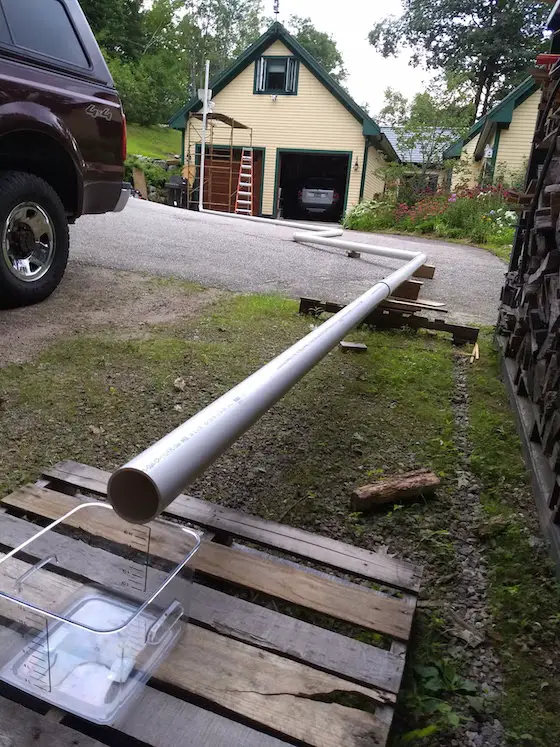
This is the testing setup I used when I accepted the challenge from the Responsible Flushing Alliance to update my May 2019 column about flushable wipes. (C) Copyright 2019 Tim Carter
"It’s important to realize I knew the Responsible Flushing Alliance would challenge my video findings...."
Flushable Wipes Test Video - The Truth is Out There at the End of the Pipe
You may have been one who responded to me three months ago. Remember the column I wrote about how flushable wipes clog sewers? I received hundreds of responses from readers who shared their expensive horror stories about how flushable wipes had caused clogs in their homes.
My favorite response was from a public relations hired gun representing the Responsible Flushing Alliance. They took umbrage with my column and said, “...we want to follow up with you to consider an update to your story...” I responded to them that I would gladly update my original story but would do it with a video, not words. You can read the letter they sent to me with all their counterclaims. Go here:
Responsible Flushing Alliance Letter
I wanted you, and millions of others, to see in real-world conditions what name-brand flushable wipes look like after you flush them down your toilet. I wanted you to see what condition they were in just before they enter your septic tank or drop down into your city sewer system where you pass ownership of the problem to all the other taxpayers of your community.
Here's the flushable wipes test video I did to respond to the letter I received from the manufacturers:
My original flushable wipes column was inspired by a man who lived in South Carolina. His sewage ejection pump was ruined to the tune of over $3,000 by “sewer and septic safe” flushable wipes. I’ve been a master plumber since age 29 and have seen the insides of decades-old building drain pipes under concrete slabs. I know how easy it is for drain lines to get clogged with things other than toilet paper.
It’s important to realize I knew the Responsible Flushing Alliance would challenge my video findings even though I know a thing or two or three about plumbing. I asked for their input on the testing protocol methods so they couldn’t cry foul.
They did provide me with some documents outlining how they test, but at least one thing in their method is against just about every plumbing code I know of. They said to install two 90-degree bends in the drain line. These fittings are the worst plumbing practice for buried lines for a host of reasons. If you need to turn 90 degrees, do it with two 45-degree fittings spaced 6 inches apart. I ignored that part of their protocol and installed my drain pipe as is called for in the Uniform Plumbing Code.
Last week, I spent several days getting ready for the test. Prior to this, I had purchased a special crystal-clear container so you could see what came out of the drainpipe after the toilet flushed. I erected my own pipe scaffolding with a platform 10 feet off the ground simulating a normal toilet height above a basement building drain. I went to the local home center to buy all the plumbing pipe and fittings. A new 1.6-gallons-per-flush toilet was used for the test. Finally, I prepared a script to follow so the video would be as professional as possible.
You can view my flushable wipes test video by going to:
I didn’t want to have any preconceived ideas about what the results might be, but my decades of experience told me that normal toilet paper would start to degrade quickly as the paper is jostled around by the turbulence of the flowing water inside the drain line. Because flushable wipes are made similar to paper towels, I was fairly confident they’d not suffer too much from the flushing experience.
My local grocery store stocked three different brands of flushable wipes. I purchased a package of each one for the test. While there, I also bought a roll of cheap single-ply toilet paper as we use a more expensive and durable two-ply paper in our home.
The results of the video test were remarkable. One of the flushable wipes did start to degrade slightly after tumbling through 70 feet of the drain pipe. This is an average length of piping that you might have at your home before your sewage makes it to your septic tank or the city sewer.
The other two flushable wipes suffered no visible damage in the test. You can see in the video that the water from the toilet was crystal-clear in the container at the end of the pipe. The two flushable wipes appeared to be in the same condition as I dropped them into the toilet bowl.
The single-ply toilet paper turned to mush and broke apart into many small and medium-sized pieces. Surprisingly, the two-ply toilet paper didn’t fall apart too much. A large wad of it survived the journey through the piping.
I decided to flush a high-quality paper towel down the toilet. It survived the experience with no damage and the water in the container at the end of the line was also crystal clear. Trust me, never ever flush a paper towel down your toilet!
I urge you to watch my video of the test. This simple video might save you thousands of dollars. Share it with your friends, neighbors, and co-workers too. This is a rare opportunity to show exactly what happens beneath your concrete basement floor or under your lawn.
Finally, if you must use flushable wipes, please don’t flush them. Dispose of them in your home as you would a soiled baby’s diaper.
Column 1313

Tim built custom homes and did ultra-custom remodeling for 20+ years before launching his Ask the Builder media presence. He was selected as one of the Big 50 by Remodeling magazine in 1993. This award gave birth to Ask the Builder in October 1993. Tim also operates https://DrawPlumbingPlans.com. His @askthebuilder YouTube channel was the first home improvement channel on YouTube.
Tim, My husband and I are cruise ship veterans and know for a fact that someone on your same trunk line putting the wrong stuff including facial wipes in the commode is a plan for a stinky disaster. We have also visited many countries where the infrastucture cannot even handle toilet tissue and it is customary to place used paper in the bin to avoid blockages. I do have a suggestion for folks based on our travels. The recent shortage of toilet paper during the Covid-19 lockdown has resulted in a plethora of adds for retro-fitted bidets of various kinds. My son found a version that installs under the toilet seat and has adjustments for gender and for self-cleaning nozzles. There are versions available with hot water connections or that require electricity, but mine is not one of those. As a resident of East Texas followiing Winter Storm Uri, I can now assure you that a brisk spray directed at one's backside will get you fully awake until you get accustomed. However, I can assure you that the equipment is thorough and efficient. I checked several times with some of your aforementioned flushable wipes to be certain and then promptly put them in a trashcan beside my commode. Prices start somewhere around $35.00+ at the Big Box Stores, but competition has driven down both store and on-line prices. Ours is from Luxe-Bidet, and even now prices are going down. https://luxebidet.com/product/neo-185-clearance/