How to Clean a Wooden Picnic Table
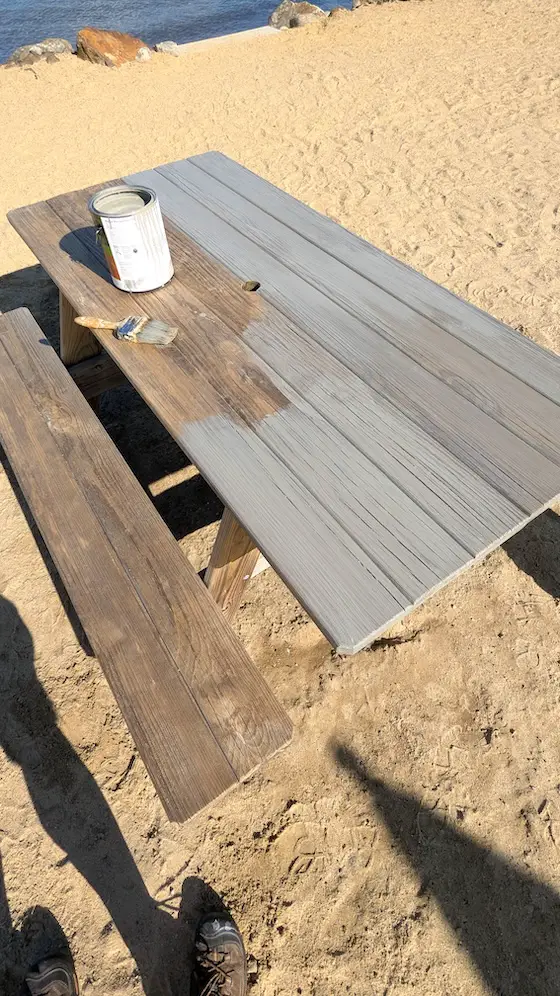
How to Clean a Wooden Picnic Table - I cleaned this weathered picnic table using oxygen bleach. A gray semi-transparent sealer will protect it for maybe three years. Copyright 2026 Tim Carter
How to Clean a Wooden Picnic Table - Oxygen Bleach
Two weeks ago I was cleaning the top and bench seats of one of ten picnic tables that can be found on the beach here in my HOA. I live on the shore of Lake Winnisquam in central New Hampshire, and the tables are exposed to harsh sunshine from sunrise until late afternoon. The ultraviolet (UV) rays from the sun punish the treated-lumber tables.
All of the tables were in sad shape. I had gone to the beach a week before with my granddaughter to swim. One of the HOA board members introduced himself to me, and we began a discussion about many of my observations about the community.
I was sitting on one of the tables and said, “Here’s another example of my frustration. The management company we’re paying to take care of the HOA’s assets is making mistake after mistake in my opinion. They’re either ignoring the tables, or they don’t know how to properly care for them so they last for decades. It seems they just treat many things around here like disposable razor blades instead of trying to preserve things with periodic maintenance.”
I talked about the common misconception that treated lumber requires no care. I looked down at the table, and the wood was battleship gray, cracked, and mildew was present everywhere. “I can assure you that treated lumber requires constant care, or otherwise it will end up looking like a 50-year-old fishing pier,” I replied.
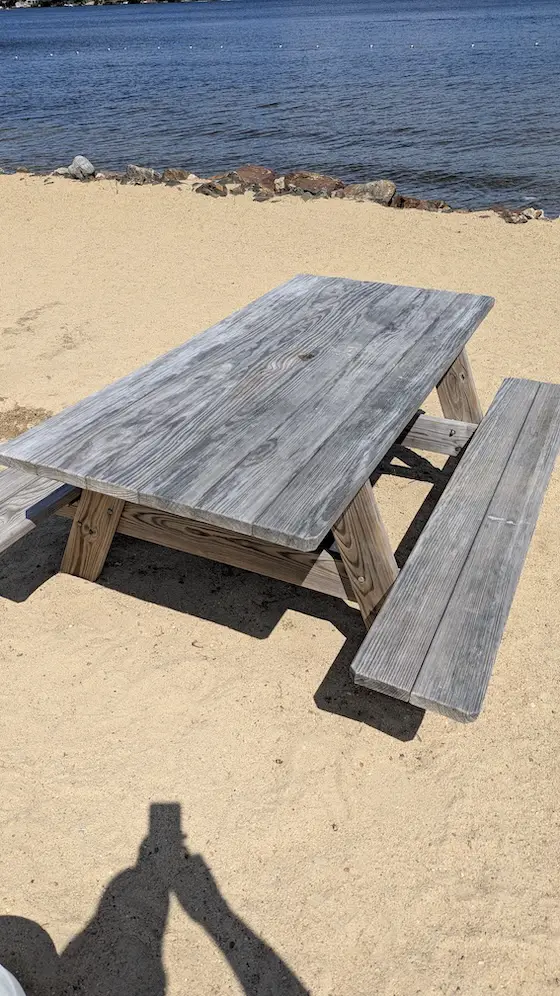
This is what the picnic table looked like before cleaning it with oxygen bleach. Copyright 2026 Tim Carter
I then offered to do an experiment for the board. “How about I clean the top and benches of just one table, and then seal the wood with a gray pigmented sealer? Those horizontal surfaces are in the worst shape. The carriage structure underneath is in great shape. It’s just a lighter shade of gray caused by the sun’s UV rays.”
Oxygen Bleach is Best
The board member shared my offer with the other board members. They thought the idea of free labor couldn't be beat. A week later, the board president dropped off a gallon of wood sealer I had selected. I provided the wood cleaner at my own expense.
I’ve cleaned exterior wood for decades. It’s been my experience that I get the best results working in the shade. This allows the water-based cleaner to work on and in the wood with minimal evaporation. I never pressure wash exterior wood to get rid of old stain and UV-damaged wood fibers.
Pressure Washers are the Worst
Pressure washing is very destructive to wood. The high-pressure stream erodes the lighter-colored soft spring wood that’s found between the dark grain bands of summer-wood. I prefer to use a special oxygen bleach powder that I’ve made for decades. You mix this powder with warm water, and stir it until it’s dissolved. Once dissolved, you can place this solution in a garden hand-pump sprayer to apply to any horizontal or vertical wood with ease.
I allow the oxygen bleach solution to bubble and fizz for about ten or fifteen minutes. I’ll add more solution if the wood is in such bad shape that the initial spray soaks into the wood. You want the solution to puddle on the wood so it deep cleans it.
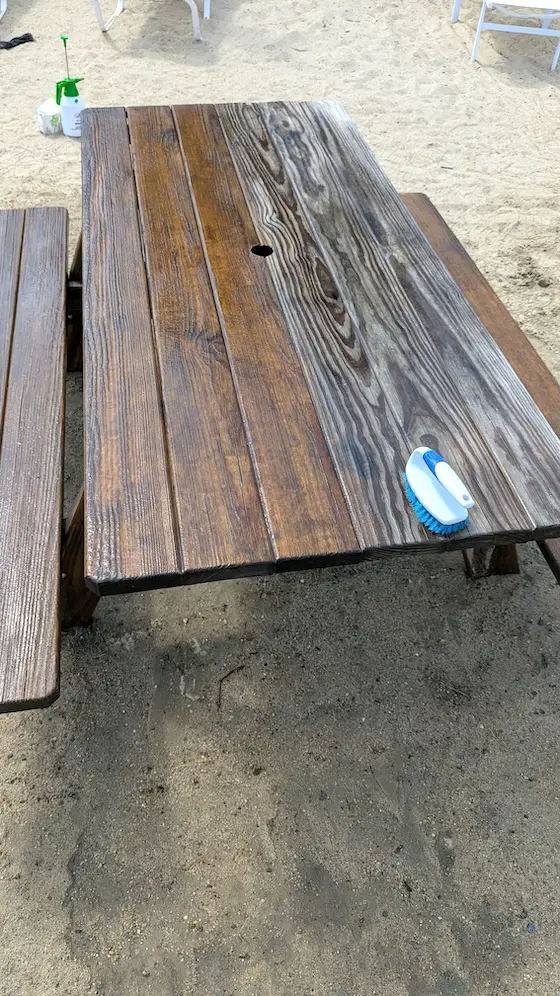
The left side of the table is clean. Note the rich brown wood color. Oxygen bleach is the BEST cleaner. Copyright 2026 Tim Carter
I scrub the wood with a standard nylon scrub brush once the dwell time period is up. I’ve found adding a little bit of clean water while scrubbing produces the best result with minimal labor. Within minutes, the attractive natural brown wood color of the wood reappears. I rinse the wood with a generous amount of clear water to remove all the old sealer, dirt, and sun-damaged wood fibers.
Some people and websites say to use chlorine bleach as the cleaner. This is the worst possible advice. Chlorine bleach, or sodium hypochlorite, is so aggressive it will destroy the natural color of the wood. It also breaks down the lignin that holds the wood fibers together. Chlorine bleach can also kill any nearby vegetation or expensive landscaping.
I picked the perfect day for the experiment. A moderate breeze was blowing off the lake. This dried the clean wood in less than 90 minutes. Normally I’d wait twenty-four hours before I’d seal the wood. I like the wood to be completely dry so the water-based sealer soaks in as deep as possible.
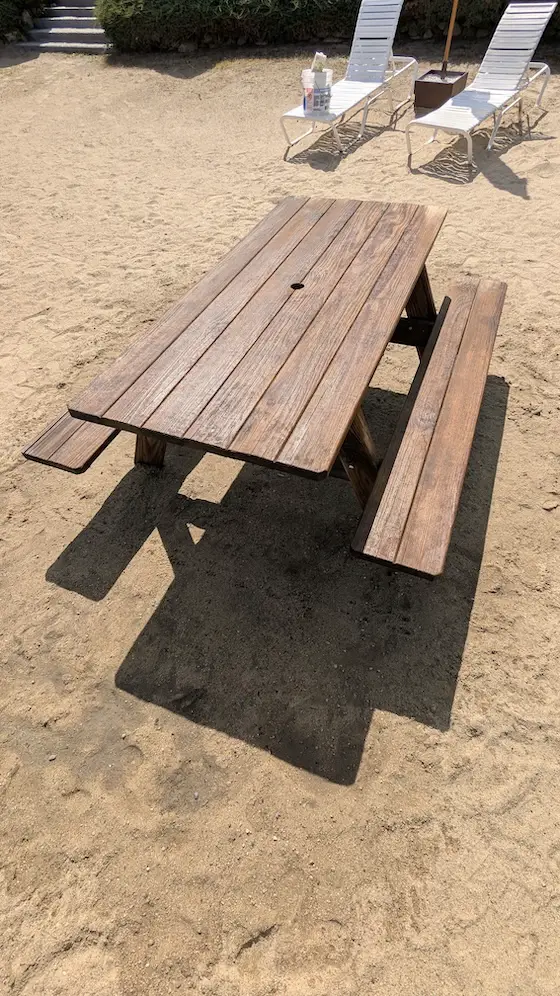
The top and bench seats are clean. The table is just about dry and ready for sealer. Copyright 2026 Tim Carter
I went home to retrieve the sealer and took a break, drinking a large glass of iced lemon-lime water. There was plenty of time before dinner, allowing me to apply the sealer to the table. I also knew no other HOA members would be down at the beach at that late hour.
I used a gray pigmented water-based sealer. The pigments act like sunscreen, blocking the UV rays from reaching the wood. The gray color was a close match to the gray-colored wood of the table undercarriage.
A wide 3-inch brush allowed me to get the sealer into the cracks. The table was in such bad shape that the first coat soaked into the wood immediately. Minutes after finishing one board, I went back and applied a second coat.
The finished product looked great. The HOA board members were very happy with the test result. The week after Labor Day, a handful of volunteers and I will do a blitzkrieg job of cleaning and sealing the other nine tables so they’re ready for next season.
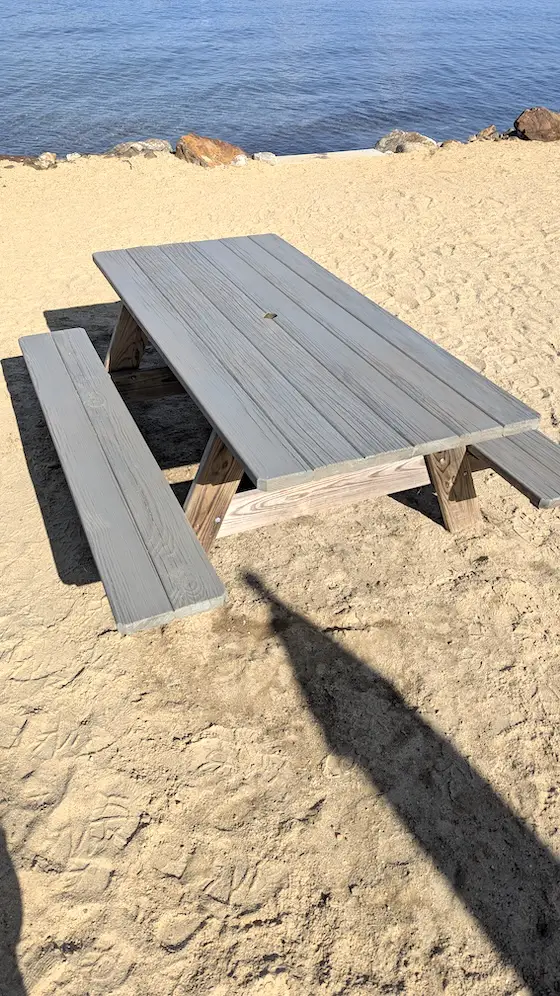
This is the table after the sealer was applied. What a big difference! Copyright 2026 Tim Carter
Column 1677

Tim built custom homes and did ultra-custom remodeling for 20+ years before launching his Ask the Builder media presence. He was selected as one of the Big 50 by Remodeling magazine in 1993. This award gave birth to Ask the Builder in October 1993. Tim also operates https://DrawPlumbingPlans.com. His @askthebuilder YouTube channel was the first home improvement channel on YouTube.
Wow! That looks fantastic! When I have the time and energy, will need to try this on our backyard fence (which looks like the first picture of the table).
I'm not familiar with powdered oxygen bleach. What is the product you use, mentioned in last Sunday's Seattle Times article?