Bathroom and Kitchen Ventilation Fans

DEAR TIM: What appears to be a roof leak has developed in the ceiling of my 5 x 7 foot bathroom. A professional inspection of the roof revealed no problems. I looked into the attic and noticed that the bath ventilation fan pipe simply discharges air near a roof vent. The noisy fan doesn't seem to move that much air. Could this be a problem? How can it be corrected? F.E.

DEAR F. E.: Your bathroom fan is very likely the cause of your wet ceiling. My guess is that this problem became noticeable when the outdoor and attic temperature began to drop. Moist, humid air from bath activities was exhausted into your attic. This water vapor then condensed on the cold surfaces (rafters, roof sheathing, exposed nails) in the attic space. This condensed water dripped onto your ceiling and produced the phantom leak.

Bathroom ventilation is extremely important. Many people think that you need to simply exhaust the steam from hot showers or baths and unpleasant odors. Residual surface moisture on towels, carpeting, wash rags, and shower walls can significantly raise the humidity level in a bathroom after you have dressed and left the house. This moisture can be removed by controlling the bathroom fan with a humidistat rather than a standard on and off switch. The humidistat will automatically turn the fan off when the humidity has dropped to a satisfactory level.

The moist, humid air from bathrooms and kitchens must be ducted to the exterior of a house. This ducting can be achieved through an exterior wall, a soffit or eave, or the roof. Many fan manufacturers make special fittings that allow you to extend ductwork to the exterior of your house.


I have found that it is often best to vent fans and dryers through the roof. I urge you to watch this video of mine to see how easy it is to install the correct vent-cap flashing on a roof. Have no fear - if done right you will have no leaks.

Your existing fan may not be moving enough air for several reasons: it's not sized properly, the exhaust pipe is too long, sized improperly, or is obstructed, or the fan is simply worn out. Many of these things you can check.

Fans are sized depending upon how many cubic feet of air they can move each minute at a given pressure (static pressure). This quantity of air is often expressed as cubic feet per minute (CFM). The Home Ventilating Institute recommends that bathroom air be totally replaced a minimum of 8 times per hour. Kitchens require a minimum of 15 air replacements per hour.

Your bathroom contains 280 cubic feet of air (5x7x8). Using the above recommendation, you need to exhaust 2,240 CF in an hour (280x8). Purchasing a fan with a capacity of 37 CFM will meet this minimum standard (2,240 / 60).

It is vitally important to follow manufacturer's instructions regarding exhaust ducting. If you use the proper size duct pipe, minimize bends, tape all joints, and exhaust your fan to the exterior, you should have a dry ceiling in the future.

Paul had an issue with water dripping from his bathroom fan. Click to read about his issue in the January 10, 2010 Newsletter.

DIY Wood Window Replacement Kits

marvin tilt pak

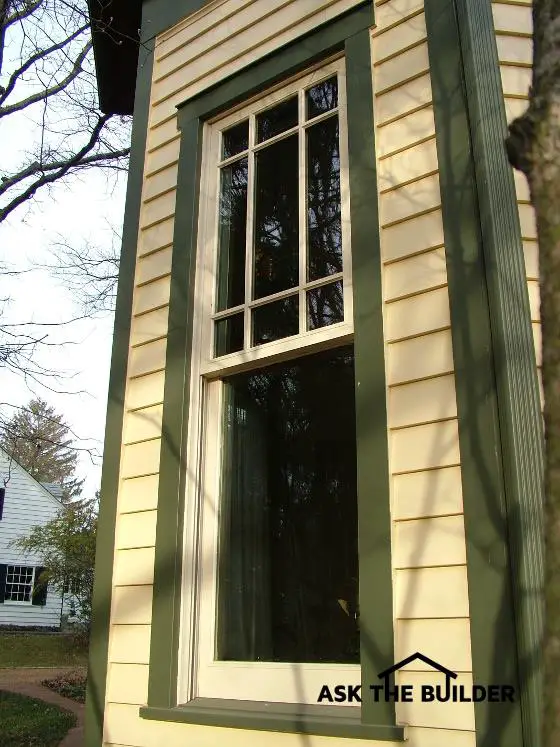
These window sashes have a vintage look and they can replace older double-hung windows. The windows are custom made to fit the opening and two side jamb liners are sent with the kit. These are Marvin and I've installed hundreds of these in older homes not harming the exterior or interior woodwork trim. Copyright 2019 Tim Carter

DEAR TIM: I live in a beautiful old home that has drafty double hung wood windows. I am really interested in the new high performance windows. However, I don't wish to alter the appearance of my grand old home. Is there a window replacement alternative that will work for me? I have changed window ropes before. Do you think I can install these myself? C.T.

DEAR C.T.: This is your lucky day! Not only is there a wide range of high performance wood products from which to choose, but many of them can also be installed by you. You will need a several standard hand tools and a little patience. I have installed hundreds of these products with great success.

The beauty and architectural integrity of your home will not be compromised. All of the interior and exterior trim around your windows will not be harmed. The only things that need to be removed in most cases are the actual windows themselves and the narrow parting strip between each sash.

Several of the major wood window manufacturers offer replacement kits that are custom made for each of your window openings. As long as your measurements are accurate and your openings are square, you can install many of these products in less than 1 hour.

These replacement kits offer, in almost all cases, all of the same options as you would find in a new window. You have your choice of glass options, different species of wood, authentic divided lites, bare or primed wood, aluminum clad, etc. In fact, you can actually order different options for top and bottom sash. For example, many older homes often had a two pane divided lite window for the top sash and a clear window for the lower sash. You can duplicate your existing sashes in almost every instance.


Buy the right replacement windows with the help of my Window Replacement Checklist. I offer a 100% Money Back Guarantee.


Installation of these products is really quite simple. Virtually all work can be done from inside your home. Because you have successfully replaced broken sash cords, this project should be a no brainer. Gently remove the sash stop moldings that hold the bottom sash in its track. Remove the sashes, parting strip, cut the sash cords and remove the metal pulleys. Now for the fun part.

Most kits have metal clips that hold the new side jambs in place. These vinyl jambs replace the old sash cords and metal weights. The are exactly the same product used in the new windows. These jambs insure a snug fit to eliminate the draft you now feel. Once the clips are in place you simply snap in the new jamb liners and install the new windows. Often the kits require the installation of a small piece of weatherstripping near the top sash.

If you want to really make the job go smoothly, consider finishing the windows (painting & staining) before they are installed. Don't discard the old sashes. Many salvage companies will buy them from you. They often sell them to people who need replacement sashes or who need old glass for historic restoration projects.

Vinyl Siding Information

DEAR TIM: The wood siding on our 70-year-old house needs to be painted, again. I have mentioned to my husband that vinyl siding might be a better alternative. He tells me that the siding will not last more than 10 -15 years. He also would like to paint the house in the original period colors. If I prevail in this decision and the vinyl siding performs poorly, I will never hear the end of it. I need your advice. Would you install vinyl siding? A. D.

DEAR A. D.: What is it worth to you to keep your husband's lips tightly sealed for the rest of his life? If you take the time to select a high-quality vinyl siding, you will have peace and quiet for a very long time. Vinyl siding has come a long way in a very short period of time. It is a great product.

Vinyl siding is a better alternative to painting for any number of reasons. Because of the age of your house, there is a 90 percent chance that there is lead in some of the original paint layers. If you decide to paint your house again, scraping and sanding of the old paint could create toxic lead dust. Paint chips containing lead can contaminate the soil around your house.

To keep a wood siding finish looking like new, it may require repainting every four years or so. Depending upon its size, you may spend in excess of $30,000 in the next 20 years repainting your home. High quality vinyl siding, on the other hand, will require simple periodic cleanings.


Installing vinyl siding on your house? Find the best professionals by using my Vinyl Siding Checklist. I offer a 100% Money Back Guarantee.


Vinyl siding, when installed with half-inch insulation board, can actually help insulate your house. This could produce up to an 11 percent savings annually on your heating bills. You will actually recapture part of the installation cost by using foam insulation beneath new vinyl siding.

The magical performance characteristics of vinyl siding are based in its formulation. All vinyl sidings are made from polyvinyl chloride (PVC) resins. Flexible acrylic resins are often added to make sure the siding doesn't become brittle. Vinyl siding exposed to cold weather, hail storms, or baseballs needs this flexibility.

Ultraviolet (UV) light will break down vinyl siding. Without adequate protection, low-quality vinyl sidings will suffer from severe chalking and color fade. Virtually every vinyl siding has UV inhibitors, but some have more than others. At least one manufacturer has gone a step further. They add an additional layer of sun screen UV protection on the surface of the vinyl.

Recreating the period colors of your house should not be too difficult. Several vinyl-siding manufacturers have developed color coordinated product lines. These products allow you to mix and match different colors, many of which may duplicate your period house colors. Vinyl manufacturers have gone to great detail to recreate period accent pieces such as columns, fancy cut shakes, and dentil moldings. With minimal effort, you can make your Victorian style home look like the grand lady that she is.

Author's Notes:

The Vinyl Siding Institute has a voluntary certification program for vinyl siding manufacturers. Those manufacturers who want to prove to you that they indeed make a quality product now have a mechanism to do just that.

If you want to find out more about the certification program and manufacturers who participate, visit the Vinyl Siding Institute's website.

Light Bulbs and Color Temperature

peace app color bulb

Color Temperature and Light Bulbs | A light bulb can be made to look any color, but even when it seems like it's creating just WHITE light, it can create odd colors in your home.

Color Temperature - The Sun Creates Perfect Color

DEAR TIM: I was recently involved in a dispute between a paint store and a carpet store. We attempted to match expensive wallpaper with carpeting. In the showrooms, everything looked fine. In my house, the colors are not right. The colors even change in daylight. What in the world is going on? The problem is not in the dyes. Could the problem be in my eyes? V. E.

DEAR V. E.: I don't think the problem is in your eyes. Believe it or not, the problem most likely has its source in the light bulbs used at the wallpaper and carpet stores as well as your house. Light bulbs, both fluorescent and incandescent, can affect the color rendition of an object. A simple bulb change at your house may solve this complicated problem.

Light Bulbs Produce Different Colors

Different light bulbs actually produce different colored light. This color is often referred to as the bulb's color temperature. It is actually measured in degrees on the Kelvin (K) scale. Heat an object sufficiently and it will give off light. As the object gets hotter its color will change and imitate a rainbow. First, it glows a cherry red. Further heating causes it to glow orange, yellow, white, and eventually blue. You can demonstrate this, to a degree, with an electric stove burner. You absolutely can see this if you heat a piece of steel in a blacksmith's forge. Steel can go from cherry-red to white-hot just before it melts

Cool and Warm Bulbs

Quite possibly you are familiar with traditional cool white and warm white fluorescent light bulbs. The words cool and warm refer to the feeling that the light produces. The warm fluorescent bulb produces a reddish orange warm light (3,000 degrees K). A cool white fluorescent bulb burns with a bluish tint similar to ice. Its color temperature is very nearly 4,100 degrees K. In comparison, a regular incandescent bulb produces light at 2,750 degrees K. It just so happens that human skin looks best at that color temperature.

Color Changes During the Day

To make matters even more confusing, the color temperature of natural sunlight changes through the day. In the morning and at sunset, natural sunlight is in the 2,500 - 3000 degree K range. That is why the Grand Canyon and fall trees look so brilliant in the morning and afternoon sun. Conversely, at high noon, normal sunlight is very near 6,000 degrees K. That is why evergreen trees (green) and water (blue) look so good in brilliant sunlight.

More Confusion - Color Rendering Index

It gets worse. Two bulbs that burn in the same temperature range can produce yet different colors! This is especially true in fluorescent bulbs. Back in the 1930s, lighting experts created a color rendering index (CRI) to compare how a bulb affects the true color of an object. The scale goes from 0 to 100. Bulbs with a high rating on the scale (80 or above) produce excellent color rendition.

Look at the Bulb Label

Legislation that went into effect November 1, 1995 was created to help you with this color issue. Light bulb manufacturers are now required to produce fluorescent and some common residential reflector incandescent bulbs that meet minimum Federal efficiency and/or CRI requirements.  Look at the bulb labels for information that will allow you to easily determine how well a light bulb will perform. Good luck!

Piering Foundations – Lifting and Pushing

DEAR TIM: My old house has started to develop cracks in the foundation and brickwork. The cracks in the brickwork look like steps. Are these settlement cracks? Why would it take so many years for these to suddenly appear? The clay soil in my area seems very stable. Is there a way to stabilize the foundation to stop further damage? R. T.

DEAR R.T.: Your photos clearly indicate that a portion of your foundation has dropped. The reasons for failure are numerous. For example, the ground beneath the foundation could be eroding, the soil could have softened, fill dirt could have finally compressed, or a portion of your foundation could have actually heaved. In your case, however, I believe that your clay soil is to blame.

I consulted the county soil map which I received from your county agricultural agent. The map clearly shows that the clay soil beneath your house has significant shrink / swell capabilities. Certain clay soils respond dramatically to changes in moisture content. For example, have you ever seen huge cracks in a dried mud puddle? That shrinkage not only occurs sideways, but up and down as well.

The cause for this moisture loss may be two fold. I believe that your region suffered from a severe drought during the past two years. In addition, I noticed a large oak tree near the failed portion of your foundation. This tree most probably sucked water from deep within the soil to compensate for the drought. If you would have created some artificial rain with a sprinkler, you possibly could have prevented the cracks.

You may be able to lift the failed portion of your house with some water. You can start to water the ground outside of your house around the failed portion of the foundation. Water the soil as frequently as you can. You may begin to see a change within several weeks or months.

Foundations that suffer from other forms of settlement can be repaired using several methods: underpinning, steel pipe piers with support brackets, or helical piers. Underpinning a foundation usually involves digging beneath a failed portion of foundation until firm soil is reached. Concrete is poured into this excavation to resupport the foundation.

The steel pipe piers employ friction to support foundations. Small (3 - 4 inch) diameter pipes are driven deep into the soil. They encounter increasing resistance as they penetrate the ground. Once in place a bracket is attached that cradles your foundation. Often this cradle is ratcheted up the pipes to lift your foundation to its original position. Helical piers work in almost an identical fashion. They are basically giant screws that are twisted into the soil until they hit firm soil. Once in place a bracket is attached to the pier. This bracket can be used to lift and resupport the failed foundation.

If you decide to use one of these methods, consider consulting a licensed structural engineer. Using piers under one portion of your foundation may cause cracking at other areas in your foundation. The engineer will develop a plan that should stabilize your sagging foundation.

Indoor Humidity – How Much Is Needed

condensation on mirror

Indoor Humidity | This is normal condensation on a mirror. Water vapor in the air has transformed into liquid water on the COOLER mirror surface. The same fog is FORMING on your walls and you DON'T SEE IT because of the paint on the walls. Too much humidity in a house can lead to serious mold and mildew issues.

Indoor Humidity - You Need Just Enough

DEAR TIM: My house seems to require more humidity in the winter than my neighbor's house. Both houses are the same age, size, style, and use identical heating and humidification equipment. I constantly get zotted by static electricity at my house but not at my neighbor's house. Our humidistats and thermostats are set identically. Both have been calibrated and are functioning properly, but my heating bills are higher. The weatherperson on TV reports relative humidity readings in excess of 70 percent daily. What is going on? I. S.

DEAR I. S.: So, those fingertips are a little tender? Well, I may be able to help you and save you some money at the same time. There are several things that may be happening in your situation. More than one thing could be wrong. Let's start with the easy things.

Should I Check My Humidifier?

Let's check your humidifier first. Make sure that the water supply to the humidifier is turned on and that water actually flows into your humidifier. Some humidifiers have a small plastic flow restrictor at the end of the water tube as it enters the humidifier. This restrictor has a very tiny hole through which the water flows. If obstructed, this could be the source of your problem. I have had trouble in the past with this restriction on my own humidifier.

Can You Explain Attic Insulation and Humidity to Me?

Yes, I can explain attic insulation and humidity in this LIVE stream video broadcast I did. Watch it:

Do Humidifiers Get Clogged?

The water transfer pads or media inside the humidifier may be clogged with mineral deposits. If this is the case, cleaning or replacing them should solve the problem. Often these pads can be reused by allowing them to soak in warm vinegar. The acidic vinegar dissolves the mineral deposits. You may need to let it soak overnight and repeat the process to remove heavy mineral buildup.

Can Dry Outside Air Lower Indoor Humidity?

If your humidifier is working properly and you still have lower indoor relative humidity than your neighbor, it is a sign of a more serious problem. Your higher heating bills may be the clue. I feel that your humid air is leaking out of your house and being replaced by drier, outside air.

Can Cold Air Hold More Water Vapor Than Warm Air?

Don't be fooled by the weather reports. As the temperature of the outside air drops, it can hold much less moisture. The relative humidity of cold outside air may well be 70 - 80 percent. Bring this air inside, heat it to 72 degrees, and the relative humidity of that same air drops to 2 percent!

Are Air Leaks Serious?

Houses often have hidden air leaks. You can discover more about air leaks in homes here. Seal any and all areas where you feel cold air entering your house. If you feel cold air entering, it is a sure sign that humid, warm air is escaping. If you can inspect your attic, look for places where pipes and wires penetrate the attic from below. Quite possibly these penetrations are not sealed. Look for these same penetrations in your basement ceiling. Often, electricians and plumbers create open chimneys within exterior and interior walls when they install their wires and pipes.

What is the Best Indoor Humidity Setting?

Once you locate the leaks, adjust your humidifier to a minimal setting of about 45-50% humidity. Remember, humidity is a moving target as it depends on what temperature the air is inside your home. Most normal household activities (bathing, breathing, cooking, etc.) produce adequate indoor humidity. Don't overdo it!

Can Tim Carter Call Me to Help?

Yes, Tim can call you. CLICK or TAP HERE to set up a fast phone call.

Cold Weather Concrete Installation

thermal blanket concrete cold weather

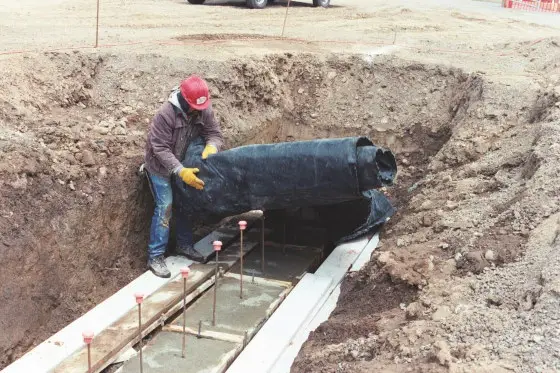
This worker is using a waterproof insulating blanket to cover a freshly poured footer. The heat produced by the chemical reaction of hydration within the concrete will be retained within the concrete by using the blanket.

DEAR TIM: Last winter I had a new concrete driveway and sidewalk installed. Months later the finish began to scale off and spall. The concrete finisher is blaming the concrete supplier. The concrete supplier says the mix was fine. I'm stuck in the middle. What do you think happened? Could my problem have been prevented? Was it a mistake to pour concrete in cold weather? E. G.

DEAR E. G.: If I was a betting man, I'd place my money on the concrete supplier's statement. In all probability, your spalling concrete is a workmanship issue. You need to recreate the events and weather conditions at the time of the pour and ask your concrete finisher some hard questions. Your local branch of the National Weather Service can provide you with excellent weather data for this time period.

First of all, let's define cold weather with respect to concrete. As stated in ACI 306 (American Concrete Institute Code), the definition of cold-weather is “a period when for more than 3 successive days, the average daily air temperature drops below 5°C (40°F) and stays below 10°C (50°F) for more than one-half of any 24 hour period.” Cold weather can have a detrimental affect on concrete for several reasons.

Concrete is an interesting material. It transforms magically from a liquid to a solid material chemically. The speed of the reaction depends upon the temperature of the concrete. When it's hot outside, the reaction proceeds quickly. When it is cold, the reaction slows down. Herein lies the problem. The concrete needs to harden as rapidly as possible to resist pressures caused by water which may freeze within the concrete.


Want perfect concrete work? Find a pro by using my Concrete Work (Sidewalks, Driveways, Patios & Steps) Checklist. I offer a 100% Money Back Guarantee.


In your case several things may have happened. The concrete may not have attained a minimum strength (500 PSI) soon enough to resist the effects of freezing temperatures. Was your concrete protected with insulated blankets after it was poured? If not, it may have cooled too rapidly, slowing the chemical reaction.

Poor finishing techniques may have doomed your slabs. Freshly poured concrete often bleeds. The water in the mix floats to the top, as it is the lightest ingredient. Floating or troweling this water into the concrete weakens the top layer. Troweling the concrete too early can seal this bleed water just below the surface as well. If your slab was then exposed to freezing temperatures several days later, this water could have frozen and fractured the top layer.

Concrete can be successfully poured in cold weather. Several precautions need to be taken. Never pour concrete on frozen ground, snow or ice. Be sure to order air-entrained concrete. Request a heated mix or order 100 lbs of extra cement for each cubic yard of concrete. This extra cement helps develop early strength. Be sure the concrete is ordered with a low slump (drier mix). This minimizes bleed water. After the final finish is completed, cover the concrete with plastic and insulated blankets. The plastic will cure the concrete. Finally after 7 - 10 days, remove the plastic and allow the concrete to air dry before exposing it to freezing temperatures.

Slate Flooring, It’s Great!

slate flooring
DEAR TIM: It's time for new flooring in our entrance hall. I'm considering slate. Do you think slate would make a good floor? Does it stain easily? Are there any special care requirements? Finally, do you feel that this project can be tackled successfully by serious do-it-yourselfers? A. C.

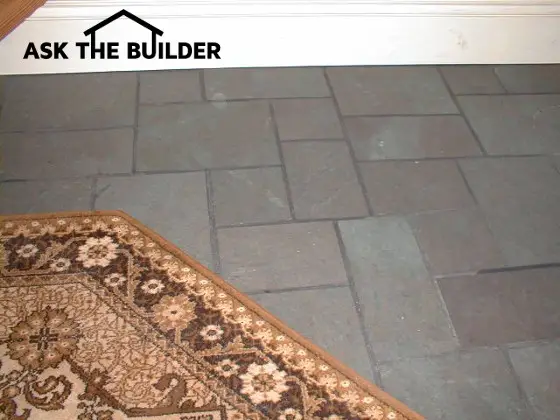
DEAR A.C.: Is this a trick question? I thought everyone knew that slate makes an exceptional flooring material. In fact, my wife selected a magnificent rectangular random ashlar slate flooring for our entrance hall. We receive compliments about it on a regular basis.

Slate is an extremely durable natural stone product. This durability is a byproduct of its origin. Most rocks have a medium or coarse texture. You can see crystals, fossils, or sand grains. Slate is very smooth, somewhat like plastic laminate. Very small silt and clay particles bonded together under high temperature and pressure give slate this monolithic texture. This ultra fine texture makes it tough for liquids (stains) to penetrate slate.

Three unique characteristics set slate apart from other flooring materials: color, texture and available shapes and sizes. Minerals and impurities in the silt and clays create a wide range of colors in natural slate. You can choose from a dark charcoal black, rust red, greens, grays, maroons, and mottled mixtures of these colors.

The most popular texture for flooring is the natural cleft. This surface is moderately rough giving the slate fantastic slip resistance and a unique one-of-a-kind appearance. Slate can be sanded or honed as well. These two finishes are smoother giving the slate a soft sheen look.

I particularly like the different shapes and sizes that are available. You can purchase slate in several thicknesses, one quarter inch being quite popular. This thickness is similar to many ceramic floor tiles. My entrance hall floor is made up of six different size rectangular pieces which interlock into a random looking pattern. You can also purchase square tiles or random irregular pieces that need to be hand trimmed. Large slabs are available for fireplace surrounds, hearths or stair treads.

Slate is very stain resistant. However, some foods can cause stains. You can purchase penetrating sealers that give slate a beautiful 'wet' look but that do not cause a glossy built up finish. Many people make the mistake of applying heavy waxes or floor finishes that rob the slate of its natural beauty and slip resistance.

I feel that slate can be installed by serious do-it-yourselfers. It is installed in a similar fashion as any ceramic flooring material. However, cutting slate must be done with a standard hacksaw or a wet diamond blade saw. You can't score and crack slate like ceramic tile. Also, grouting slate can be very tedious. The natural cleft face can trap the grout. Often professionals coat the slate with special sealers to make grouting an easier task. Take your time, follow directions, and you will have a gorgeous floor.

Column 105

Computer-Aided Blueprints

DEAR TIM: My wife and I are in disagreement concerning plans and blueprints for an upcoming remodeling project. I feel that simple sketches and a strong written contract will be just fine. She wants a full set of blueprints. Can we streamline the planning process? Can we develop our own plans? C. O.

DEAR C.O.: I think you both have made a strong case. In my opinion, you and your wife need to combine your ideas if you desire a successful project. You need a full set of blueprints and a strong written contract. Blueprints or plans reduce your wishes and contractor's promises to a singular graphic document. There is no more effective means of communication than high quality plans.

Many homeowners underestimate the value of the planning process. It is here that project success or failure is determined. If your project is not thoroughly thought out, all sorts of problems may occur during construction. For example, a kitchen cabinet layout may prove to be awkward, room sizes may be too small, building code requirements may be overlooked.

Projects with poor plans almost always come in over budget. Change orders seem to pop up everyday. Developing a full set of blueprints usually exposes these problems. I couldn't agree more concerning a strong written contract. Your contract needs to include all of the language required by your local state or municipality. For example, my city requires specific language in a contract regarding down payment monies and a customer's right to cancel the contract within 3 days after signing. Be sure to include language in your contract that indicates that all work should be performed in accordance with your finished, dated plans. I have coached many homeowners in the early stages of planning.

Often, I suggest that you look through magazines. Cut out pictures that depict design ideas, colors, styles, etc. of what interests you. Paste these pictures on a piece of notebook paper. Make a few quick notes on the pages to remind you of what you like about the photos. Install these pages in a simple 3 ring binder. Use this tool to communicate your thoughts to your builder, architect, or designer.

Five years ago, I would have said that you could probably not develop your own plans. However, the personal computer has changed my thoughts. Many computers that you purchase today will support design software that allows you to create plans, drawings, and sometimes three dimensional views of your project. I have a simple design program that allows me to draw a floorplan, doors, windows, interior walls, fixtures, etc. on my own computer. Many professional builders, architects, and designers have powerful design programs that allow them to create, modify, and view your plan on a large monitor. You can actually walk through your house before it is built. These computer programs are usually too expensive for a homeowner. However, you can purchase affordable design programs that will allow you to experiment on your own.

Use these to develop your own preliminary plans and ideas. Once you feel you have a workable design, have the professional fine tune it.


How would you like me to build your new home? It's probably impossible for me to fit your job into my schedule, but I will gladly share hundreds of my tricks and building secrets with you and your builder. Check out my New House Specifications.


Brick Veneer Leakage

brick veneer leakage

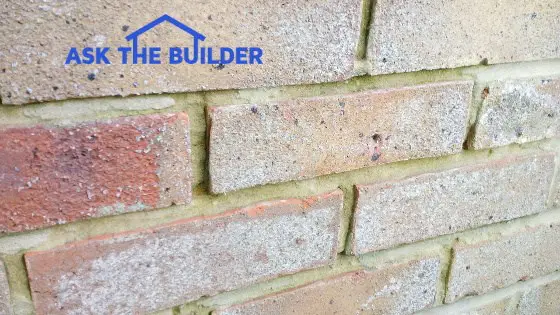
Brick Veneer Leakage | See those vertical mortar joints? Water pours through them in wind-driven rainstorms. A magic sealer can solve the problem. Look BELOW for the one I'd use. (C) Copyright 2020 Tim Carter

Brick Veneer Leakage - The Source: Vertical Head Mortar Joints

DEAR TIM: I'm preparing to have a new home built. I am considering brick veneer. However, I have heard stories about leaks in new brick homes. Is there any truth to these stories? Does it have anything to do with the inexpensive black plastic flashing I see used by many builders? Can you do something to prevent these leaks? N. T.

DEAR N.T.: The horror stories you are hearing are true. Thousands of new homeowners are plagued by leaks in their brick veneer homes. Autopsies performed on these walls usually indicate major deficiencies with the wall flashings. Not only is the material inferior, but also the manner of installation. The flashing material you are talking about is virtually useless.

Related Link:

Brick Leaks - Amazing Clear Sealer Solution Here

Do All Brick Walls Leak?

Brick walls, especially brick veneer (common in residential construction) can and will leak. Water can easily enter a brick wall if the design, construction, materials, and/or maintenance is substandard.

Where Does the Water Leak Through?

Water commonly enters a brick wall between the mortar and the actual brick. When brick mortar is mixed with sand and water, tiny crystals begin to grow. These crystals interlock with the brick. The greater the amount of crystals, the more water-resistant your brick wall will be. If the wet mortar dries too quickly, few crystals will grow. Hot weather conditions, brick which is too dry, or windy weather can cause this to happen.

What is the Best Leak-Proof Mortar?

Modern, premixed mortars can also contribute to water penetration. Some do not have the properties of older mortars. Years ago, brick masons mixed their own mortars on the job site. They used different combinations of Portland cement and lime. Go back to the late 1800s and masons only used hydrated lime and sand for brick mortar. This is the best mortar of all. Lime is a unique ingredient. It reacts over long periods of time with water and carbon dioxide. This process actually can heal tiny cracks through which water tries to enter brickwork.

What Else is Needed to Stop Leaks?

Flashings are required to prevent water from becoming a problem in your new home. These membranes, when properly installed, divert water from the inside of brick walls back to the outside. There are numerous materials that can be used, the more common being plastics, vinyls, copper, and combination flashing. You can also apply a clear solvent-based sealer to help stop leaks after the house is built.

silane siloxane repellant

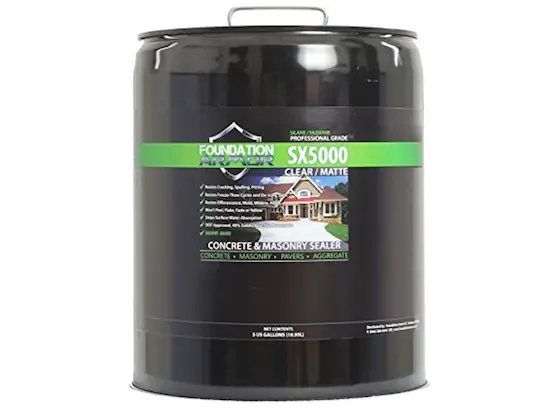
This is a magnificent silane - siloxane water repellent that soaks into the mortar and brick. CLICK on THIS IMAGE NOW TO ORDER IT.

CLICK or TAP HERE to get FREE QUOTES from local painters that can apply the above sealer.

What is the Best Brick Flashing?

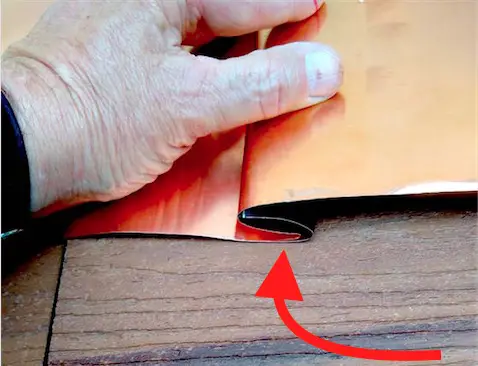
This copper that can be bent with ease and soldered is the best flashing to use with brick. Employ flat-locked seams where two pieces of copper lap over one another. CLICK or TAP HERE to purchase this amazing copper flashing.

flat lock seam

Here are two pieces of copper that are interlocked to make a flat seam. The next step is to hammer them flat and solder them with a fine-tipped butane torch. Copyright 2020 Tim Carter

Where are Flashings Installed?

Flashings must be installed at the base of all walls, beneath window and door sills, and lintels. The flashings must be used in conjunction with weepholes that allow the collected water to exit the brick. Recent studies have shown that vinyl and thin plastic become brittle and fail in as few as 5 to 10 years. Often these same materials are not properly sealed at overlapping joints or at outside and inside corners. Water can pour through these seams and enter your house in as little as 1 month after construction! The combination flashings often made using thin copper or polyethylene and modified asphalts seem to offer a high degree of protection.

Can Mortar Cause Problems?

Mortar must not be allowed to fall behind the wall as it is being built. This can clog the well-placed weep holes. Newer weep hole protection products like Mortar Net WallDefender™ prevent this trouble should you employ a sloppy bricklayer. Consider using them as well.