Concrete Stains
"I think that you should give concrete stains a serious look. These products take advantage of the porous nature of concrete."
Concrete Stains - Change the Color of Concrete or Tile in Minutes
DEAR TIM: I know this sounds crazy but I am bored stiff with my battleship gray concrete drive, concrete block retaining walls, and patio. My father used to paint our basement and garage floors, but peeling paint was a constant problem. Is there some other way to add color to existing concrete and masonry walls? Does it last? Is it easy to install? Beverly G., Fremont, NE
DEAR BEVERLY: I don't think you are crazy at all. I love concrete surfaces but have never been swept off my feet by its gray color. In the past, paint was the weapon of choice for people who simply had to change the color of concrete surfaces. Because paints are for the most part solid films, they are highly susceptible to flaking and peeling. This problem is often caused by water vapor that passes through the concrete slabs and walls and pushes the paint from the surface.
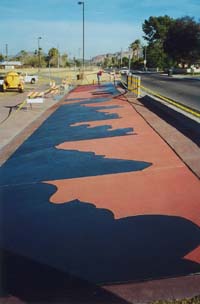
I think that you should give concrete stains a serious look. These products take advantage of the porous nature of concrete. The stains work just like standard wood stains. Suspended pigments are transported by solvents or water into the top one-sixteenth inch of the masonry. These highly colorful pigments attach themselves to the concrete particles and allow you to effectively colorize otherwise dull concrete. Frank Lloyd Wright used this method to decorate the concrete walls of a ski lodge in Sun Valley, Idaho nearly 60 years ago! The technology allows you to create rich browns, reds, greens, black, and a multitude of other earth tones.
Concrete stains can also be used to re-color previously stained concrete products. 14 years ago I installed a medium brown interlocking brick driveway and sidewalk. Wear and tear and sunlight have caused the colored cement paste at the surface to fade considerably. A deep brown concrete stain will restore these concrete bricks to their original beauty in just one day.
There are different types of concrete stains. Some of them are a mixture of muriatic acid and metallic salts. Other solvent based stains can be purchased that are similar to regular wood stains. You can also buy environmentally friendly water based masonry stains. These stains are primarily water based modified acrylic products. High quality stains will resist hot car tires and virtually anything Mother Nature will throw or dump on them.
Concrete stains have some limitations. Don't expect them to hide surface imperfections or existing stains on your concrete. Many of them are semi-transparent in nature. If you want an even colored finished product, you must have a uniform colored concrete surface. Even with a seemingly perfect even colored concrete slab, you might experience minor color or shading variations. In many respects the finished concrete surface resembles the random look of stained wood. The variations of color actually make the concrete and masonry surfaces look attractive.
If you choose to stain your concrete, you will have to periodically apply additional coats of stain. Sunlight, wear and tear, and the elements will cause the colors to fade with time. Depending upon your location and the amount of shade the concrete receives, you might be able to go 5 years between staining sessions.
The acid based stains are probably the most difficult to work with. All of the stains require that the surface of the concrete be as clean as possible. All oil, dirt, and grease must be removed. A soap and water scrubbing followed by a pressure washer rinse will usually yield a superior surface. The surface temperature of the concrete should be between 45 and 95 degrees F in most cases. This means that spring and fall are the best times to work with these materials. Always follow the specific instructions provided by the manufacturer.
Related Articles: Concrete Stain, Concrete Stain Tips, Concrete Stain Manufacturers

Tim built custom homes and did ultra-custom remodeling for 20+ years before launching his Ask the Builder media presence. He was selected as one of the Big 50 by Remodeling magazine in 1993. This award gave birth to Ask the Builder in October 1993. Tim also operates https://DrawPlumbingPlans.com. His @askthebuilder YouTube channel was the first home improvement channel on YouTube.
DEar Tim,
I am seeking information on how to color my new, travertine patio. It was supposed to be amber-colored but it is more of a cream color. The whiteness of it is blinding in the sunshine. I have been reading about using a water based wood stain (semi transparent) followed by a sealer. Can you offer any advice? Thank you.
Beth,
I modified this column after you submitted your question. Go back up to the top and watch that video of me. I'd try this method. Do a SMALL TEST first to make sure the stain works and soaks in.