Kitchen Backsplash
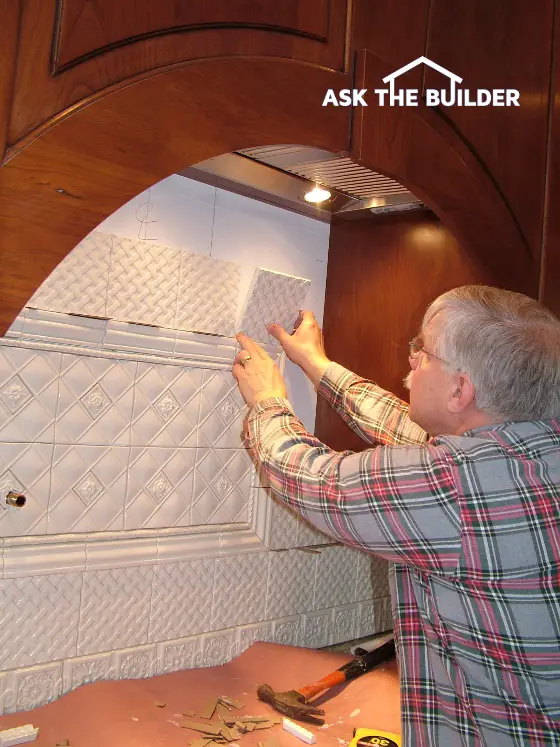
This highly-decorative kitchen tile backsplash was installed in one day. Ceramic tile is relatively easy to install if you have the right tools. PHOTO CREDIT: Kelly Carter
DEAR TIM: My kitchen backsplash is just painted drywall. I am trying to come up with some attractive backsplash ideas, and I keep coming back to a tile backsplash. Do you have to use certain backsplash tiles in a kitchen, or will just about any ceramic tile work? Can you offer any tips and suggestions for kitchen backsplash tile? Dana S., Knoxville, TN
DEAR DANA: It's no surprise to me that you keep gravitating to ceramic tile for your backsplash. A tile backsplash will last for years, and will add beauty to your kitchen. I have installed ceramic tile at backsplash locations between the countertops and the underside of kitchen wall cabinets for years, and each homeowner was dazzled by the final appearance.
Ceramic tile makes sense when you are mulling over backsplash ideas because it is durable, easy to clean, colorful and can add texture to an otherwise dull, flat boring wall space. In recent years, there seems to have been an explosion of new tile colors, patterns, styles and textures, many of which are perfect for areas directly behind a kitchen sink and cooktop areas.
Before you settle on a specific tile for this job, think about cleaning. A frequent mistake made by some homeowners is picking a porous or unglazed tile for the backsplash behind or immediately adjacent to a cooktop. Food and grease can be ejected from pots and pans onto a backsplash. These can permanently stain or discolor some tiles.
To avoid these problems, always install a glazed tile near sinks and cooktops. Glazed tile has a thin coating of glass on the surface allowing food and grease to be easily and completely washed away.

CLICK this image and listen to the second call on the podcast. I talked to Greg about what can be done with porcelain tile, including borders to offset certain spaces. Copyright 2018 Tim Carter
Take your time when looking for your backsplash tile. I highly recommend visiting a specialty store that sells ceramic tile, granite, stones and a complete line of ceramic tile tools. You will be pleasantly surprised when you see the vast selection of tile and custom-made tile that might be the perfect match for your tastes. All too often, I discover people make one visit to a local home center thinking that is all the tile they can pick from.
Before you make your final decision on the tile you want, ask about the type of adhesive that needs to be used with the tile, and if you need special tools to cut the tile. For example, popular glass tile needs to be glued to your wall with cement-based thinset instead of organic mastic. Glass tile and dense porcelain tiles must be cut with diamond wet saws, not the traditional tile scoring tools that allow you to snap a tile in two.
It is also very important to ensure your current drywall is clean and in good shape. If the drywall has any water damage, you should consider removing it and replacing it with a waterproof material that is the same thickness as the drywall you are removing. You can apply the tile directly to the drywall. This method should be problem-free for years if you make sure the grout is always in good shape, and all cracks are caulked so water can't seep in behind the tile backsplash.
Installing the tile backsplash is a two-part job. You first install the tile, then once it is set and stable, you grout the joints between each tile. The tile you choose may not come with self-spacing lugs on the sides of the tile. These lugs allow you to place the tile in contact with one another and a consistent, narrow grout line is automatically created along all sides of each tile.
But in all likelihood, you will probably select a tile that has no spacing lugs. This means you will have to buy small plastic spacers or create your own spacers using small pieces of cardboard. Since you are just tiling your backsplash, you will only have a few rows of tile. Spacing the tiles can be problematic when you do large open areas such as walls and floors.
Think about installing the tile on a diagonal for an interesting look. Some backsplashes look fantastic when the tile is canted at a 45-degree angle. Also pay attention to ceramic tile patterns that offer accent tiles that are placed in a regular pattern among other tiles that are smooth or have a texture.
It is also possible to hand-paint regular glazed tile for a one-of-a-kind look. If you decide to do this, select a tile that has a satin glaze. Paint the tile with a glossy oil-based paint. You can pre-paint the tile before they are installed, but allow the paint to cure for at least two weeks before cutting or grouting the tile. This wait period allows the paint to get sufficiently hard so that cutting and grouting will not ruin the paint.
Grouting a tile backsplash is not too hard. When you are wiping excess grout from the tile, the grout sponge must have every drop of water squeezed out of it. Excess water will weaken the grout and cause it to crack and crumble.
Column 659

Tim built custom homes and did ultra-custom remodeling for 20+ years before launching his Ask the Builder media presence. He was selected as one of the Big 50 by Remodeling magazine in 1993. This award gave birth to Ask the Builder in October 1993. Tim also operates https://DrawPlumbingPlans.com. His @askthebuilder YouTube channel was the first home improvement channel on YouTube.
I would like to know who the company is that sells the tile your showing . I love all of them .
For anyone who fries a lot of food, these intricate metal tiles could be a nightmare to keep clean. They are beautiful, but I would never use them behind or beside a stove top.