DaVinci Roofscapes Color Fade

Davinci Roofscapes Color Fade - Looks More Like Slate

I installed Davinci Roofscapes Single-Width Slate shingles on my home during the summer of 2015. I did this just before I wrote my exposé book Roofing Ripoff.

I created this post at the bequest of one of my newsletter subscribers who is considering purchasing DaVinci Roofscapes for her home. She asked me about color fade, cracks, wear, etc. She also wanted to know if there were any other companies that made shingles like DaVinci.

Fortunately, I ordered extra shingles when I re-roofed my home in 2015. I've stored these shingles in the original packaging and under a cover. The extra shingles have never been exposed to sunlight. I was stunned at the color fade.

house being re-roofed with davinci roofscapes slate

The old wretched green asphalt shingles are on the left. The new DaVinci Roofscapes Slate is on the right. I had to do the roof in manageable sections since I was working alone. Copyright 2024 Tim Carter

Why I Switched to DaVinci Roofscapes

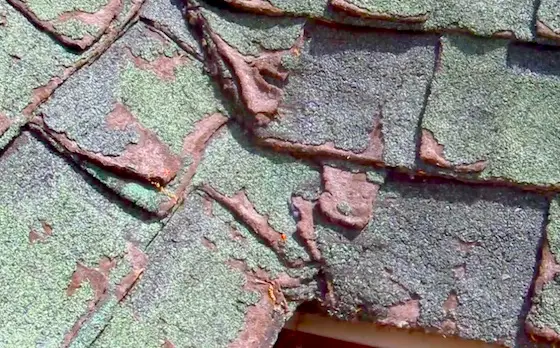
My 30-year warranty IKO asphalt shingle roof started to experience catastrophic failure after just 12 years.
defective IKO on Tim Carter's house

These are the defective IKO shingles on my own home. Copyright 2024 Tim Carter - Founder - AsktheBuilder.com

Never again would I use asphalt shingles. I decided to use a material that I knew would outlast me and perhaps not need replacement for 75 years. High-quality plastic meets this requirement. That's why I decided to use DaVinci Roofscapes single-width slate. You can see my roof in the following video:

Do DaVinci Roofscapes Slate Shingles Fade in Color?

My slate shingles have experienced significant color fade. Active photons in ultraviolet light cause the color change. The photons are tiny invisible missiles that blast apart the molecules of the pigments in the virgin vinyl shingles. Fabrics, house paint, plastics, fiberglass, wood, etc. all suffer from color changes caused by UV light. It's normal.

How Powerful are UV Photons?

The photons are so powerful they can blast atoms from metal. Zinc coatings on metal roofs are destroyed by UV photons. This is why you see rusty metal roofs on barns, warehouses, and other utility buildings that often use zinc-coated metal panels.

Zinc atoms are blasted from the roof surface much like dirt and mud files through the air when an artillery shell explodes after hitting the ground. The zinc atoms are lying dazed and confused on the roofing.  Rainfall washes the dislodged zinc atoms to the ground. After a decade or two of attack, enough zinc has washed off now exposing the steel to the elements.

Copper and lead flashings surrender atoms to the relentless photon attack. You often see a roof very clean beneath these metal flashings. Copper ions that wash across a roof act as a natural biocide to kill the ugly black roof algae you often see on roofs that have no copper on them.

Can Copper Extend the Life of Asphalt Shingles?

Copper can also extend the life of asphalt shingles. I was the first person in the world to make this discovery. I go into great detail about this in my Roofing Ripoff exposé book.
davinci roofscapes slate color fade

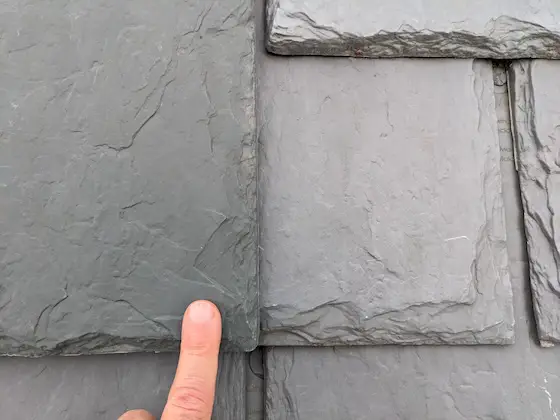
My finger is touching a Davinci Roofscapes slate shingle that has been hidden from the sun since it was manufactured in 2015. I did nothing to enhance or color-correct this photo. I shot the photo on February 7, 2024. The Davinci shingles to the right of my finger were installed in August of 2015. This roof surface gets intense sun after Noon each day. By 4 PM, this roof surface is in the shade created by huge oak trees just 40 feet to the west. Copyright 2024 Tim Carter

My Original Davinci Color Was Gray/Green

My original DaVinci shingles had a darker gray-green color. Now they've changed to a medium gray color like real slate. The roof now has a rich patina; each season it looks more and more like real slate.
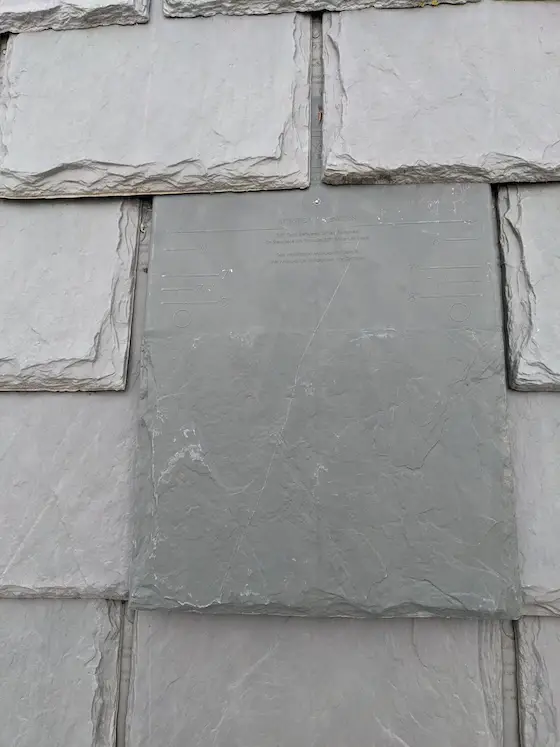
davinci roofscapes slate shingle color fade

Here's the full DaVinci Roofscapes shingle surrounded by others from the same manufacturing batch. I slid the darker shingle up under the row above so it wouldn't slide to the ground. The shingles show no other signs of visible wear. They're not cracked, curled, or brittle. No color correction was done to this photo. The photo was taken on February 7, 2024. Copyright 2024 Tim Carter

Brava vs DaVinci

You may have been considering installing DaVinci Roofscapes on your home. That's why you're here on this page.

After reading this, you may be saying, "Jeesh, with the color fade I don't know. Maybe I'll consider a different synthetic slate." If that's you, your attention may be drawn to Brava. To the best of my knowledge, they're the only real competitor to DaVinci.

The issue is since the Brava product is also made from plastic with pigments like DaVinci, it will undoubtedly fade under the relentless attack of the photons in UV light.

I'll repeat myself once more: My DaVinci roof looks stunning after eight years. I can't see any signs of wear. I'd reinstall it again, no doubt about it. That said, if you're looking at DaVinci, you may want to look at Brava just as you'd compare any other products with a competitor.
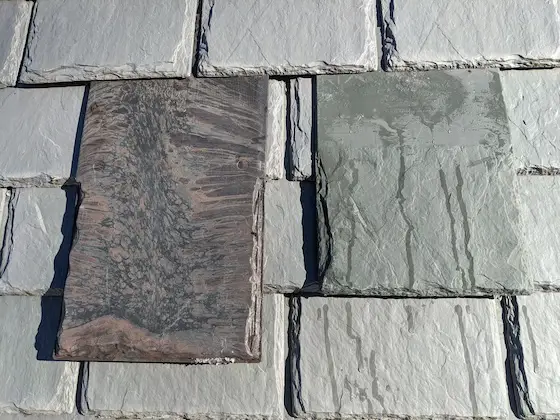
brava slate shingle and davinci roofscapes slate shingle

Here's an interesting photo. The shingle on the left is made by Brava. This company is the primary competitor to DaVinci Roofscapes. The Brava shingle is their Washington model. Keep in mind the Brava shingles will experience color loss, as did my DaVinci shingles. The photons in the UV light are powerful. What we don't know is at what rate it will happen. The dark streaks on the DaVinci shingle were caused by light snow that had gotten on the shingle moments before. The snow rapidly melted in the bright New Hampshire sunshine. Copyright 2024 Tim Carter


Tiny Houses are Big Bad Ideas

tiny house on a trailer

This is a tiny house built on a trailer frame. It’s nearly identical to any common travel camper. Think about that. Copyright 2024 Tim Carter

Why Tiny Houses are Big Bad Ideas

By: Tim Carter

I live in central New Hampshire (NH) on the west shore of Lake Winnisquam. This is the third-largest lake in NH. I kayak on the crystal-clear blue water as often as possible. The state of NH owns the 7.2 square miles of water but citizens own any islands that dot the lake.

Due east of my boat dock is a very small island that is less than 2,000 square feet in size. It’s about 50 feet in diameter. On this island is a tiny house. Several years ago I was kayaking on a glorious summer day and saw the owners outside eating lunch sitting at a picnic table near their dock.

“Hello! I’m Tim Carter. I live just across the lake from you. In the winter I often see a glow coming from your window that faces my house. Do you live here year-round?” The older couple invited me to come sit with them. They were like teenage sweethearts and had a strong glow about them. We chatted about how they do live on the island year-round. I was astonished, to say the least.

Their tiny house measured only 12 feet by 20 feet as best as I could estimate. That’s 240 square feet. It was smaller than a two-story shed I had built the previous year up above my leach field. I built my shed so it could be converted into a tiny house. I sell the Deluxe Two-Story Shed plans to folks on a regular basis. CLICK HERE to order my EXACT SHED plans.

SamplePlan Shed Plans Tim's

This is but one of the MANY PAGES of my Tiny House plans. Look at the winder steps going to the second floor! Copyright 2024 Tim Carter

After sharing a drink with them, I departed and kayaked around the other two larger islands. I couldn’t get my mind off how two people could live 365 days year in a nothing more than a very small cabin. As I paddled back to my dock, I decided to research how big the average log cabin was that settlers constructed in the 1700s.

It turns out the average size of a log cabin built in the Northeast was 16 feet long by 14 feet wide. That’s 224 square feet of living area.

Casting a Spell on You

Are you entranced with the concept of downsizing and moving into a tiny house? Think of how small your heating and cooling bills would be. Imagine how fast you could clean your entire house! Ponder how long it might be before you’d strangle your significant other unless you were constantly bumping beaks like the lovebirds that live across the lake from me.

There are all sorts of advantages to living in a tiny house. We already know it’s possible as our ancestors did it. There are also many disadvantages of compacting your lifestyle into a space not much bigger than a motel room.

The best way, in my opinion, to test your ability to survive in a tiny house is to rent a travel camper for a week. Take it to a local campground and hook it up to the on-site utilities allowing you all the comforts of electricity, running water, and sewer. Keep in mind not all campgrounds have a sewer connection. Without this important convenience, you’ll be stunned by how fast you’ll fill up your onboard sewage holding tank.

The Tiny House Experiment

My guess is you’ll discover the first day is somewhat fun and interesting. You’ll marvel at how the camper designers have made use of every cubic inch of storage space. This is very important to do in tiny houses as well.

If you conduct this test solo, you’ll have a much better chance of survival. If you have a partner, I predict by the late afternoon of the second day thoughts will cross your mind about what excuse you can make to take a hike or make your sixth trip of the day to the campground general store.

Google Search: How to Poison Someone

By midweek a large tear will develop in the social fabric of your relationship. The smallest character flaw will balloon into grounds for a divorce. Your mood will darken like the black clouds that barrel towards you just before a violent severe storm strikes.

My guess is that on the fifth day, you’ll be calling the camper rental office to see if you can get a discount for returning the camper two days early. Your nerves will be as raw as a fresh trout you snagged from the campground lake.

What are you going to do with all your stuff? Do you park your car and pickup truck outside because your garage looks like a hoarder’s Paradise? When you make the decision to live in a tiny house, all your stuff becomes flotsam and jetsam as you hand the keys of your large traditional home to the new owner. Think long and hard about how you can live without all your books, memorabilia, countless clothes, shoes, Christmas decorations, etc.

The Dream Crusher

You now know why my moniker around the Carter home is the Dream Crusher. I didn’t come up with the nickname, my kids did. Every time they’d float some idea at the dinner table, I’d start to ask questions. It was the realist in me.

I’m also old enough to remember the craze about geodesic dome houses, A-frames, and several other housing fads. If you notice, you don’t see many of those around where you live. There’s a reason. I believe the tiny house fad has also floundered on the reef of silly ideas. If I’ve crushed your dream of living in one, trust me, you’ll thank me at some point.

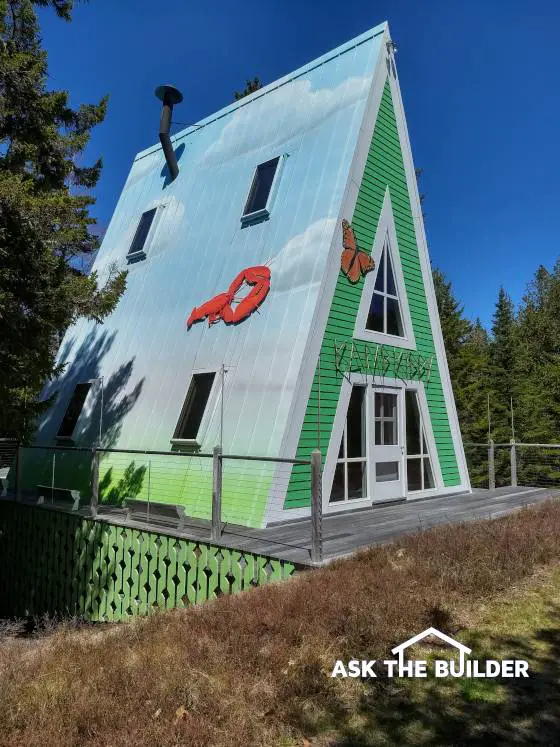
A-frame house

Here’s an eye-catching A-frame house on Mt. Desert Island, Maine. (C) Copyright 2024 Tim Carter

Column 1545

Chimney Might Be Roof Leak Location

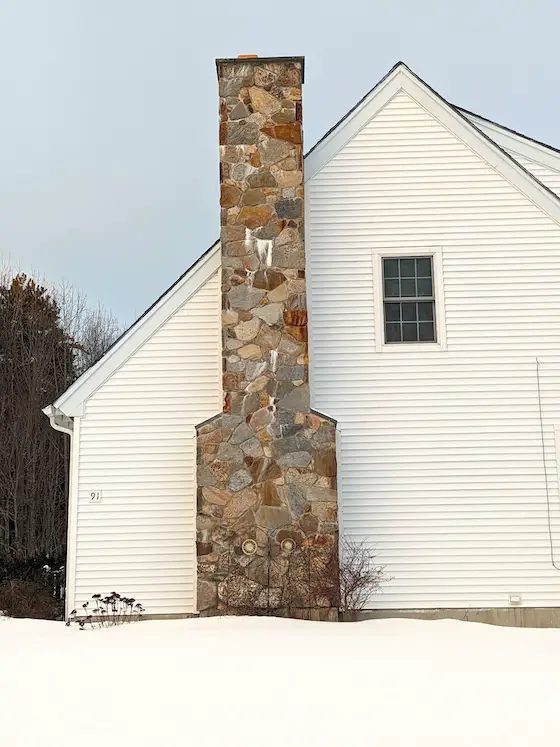
stone chimney with leak and efflorescence salts

This chimney is not watertight. Look at the huge efflorescence stain. Water is entering the chimney higher up and then leaking out just above the white salt deposits. Copyright 2024 Tim Carter

Your Chimney Might Be Your Roof Leak Location

Roof leaks plague countless homeowners each year. Talk to experienced roofers and they’ll be the first to tell you the vast majority of leaks happen at flashings. A roof flashing is a transitional material. It connects your roof to something that’s not your roof.

Plumbing vent pipes, dormers, turbine vents, chimneys, pot vents, powered attic ventilation fans, solar-array-panel brackets, etc. are all examples of things that are not a roof but found on roofs. Experienced roofers know how to flash around all these things. What’s more, they know the best flashing material to use.

Flashings should be made from materials that will last longer than the actual roofing material. Caulk is not in this list. Tin-coated steel used to be the flashing material of choice by roofers for well over 100 years. But restrictive EPA laws have kicked that wonderful material to the curb because it contained lead. Sheet lead and copper are excellent flashing materials and I find it quite curious that sheet lead is readily available while tin is not. Go figure!

Brick Chimney Mortar Joints

Two weeks ago I had a business conversation with a peer. She owns two homes, one on Cape Cod and the other one in Connecticut (CT). At the end of the conversation, she told me her CT home has a roof leak. “Tim, I have this pesky leak seven or eight months out of the year. The ceiling area near my brick chimney gets wet. I never see moisture in the deep winter months. A roofer looked at the chimney and found two small holes in the counter flashing where nails had rusted away. Perhaps that’s the source of the leak.”

Her simple statement of the facts gives all sorts of clues as to what the source of the leak might be. Did you pick up on any of them? My leak radar was immediately set off by the fact it’s a brick chimney.

This smart woman is also a semi-professional photographer. She used a telephoto lens to take close-up photos of the chimney from the ground. I could see she had a very nice metal chimney surround that appeared to be in very good condition. For me, this meant the leak was probably not caused by the chimney crown.

Think of your chimney as a tiny house that sits up on your roof. It needs a roof of its own. Chimney crowns are roofs for a chimney and the vast majority of them are installed incorrectly. The Brick Industry Association (BIA) developed years ago the most authoritative set of instructions that show exactly how to make a chimney crown waterproof. Go here to see the full index of all the BIA Technical Notes. Scroll down to locate any that deal with chimney crowns.

I shared with this woman my thoughts about her roof leak based on the evidence she provided. Keep in mind this is a 200-mile-away diagnosis since I wasn’t about to drive to her home and get up on her steep roof in the middle of winter to do an on-site inspection. A drone with a high-resolution camera could do this inspection and I can assure you if I was still in the home repair business I’d own one.

I told my friend that my money was on her chimney bricks and mortar. Based on the three-little-pigs fable, you may think that brick is the ultimate building material. While a brick home can resist the powerful exhalation of a wolf, it’s no match for wind-driven rain served up by a wicked Nor’easter.

Water Passes Through Brick Mortar

You can view videos on YouTube showing water pouring down the backside of brick veneer. A house just one mile from my own house has a stunning stone chimney. It’s leaking water. Each time I drive past it I see the growing snow-white patch of efflorescence salts. These salts show exactly where water that is entering the stone above is seeping back out to the surface. The water evaporates and leaves behind the salt it dissolved from the mortar used to cement the granite stones together.

Think of wind-driven rain like a hammer and nail. Each time a raindrop slams into the mortar between the brick and stone, it drives the water from the previous raindrop deeper into the chimney. Add to this the force of the wind blowing against the chimney face and you can have pints of water entering a chimney during an extended storm.

The vertical joints in between two bricks are called head joints. This is the primary place water enters brick in modern brick-veneer construction.

The best way to prevent water from entering a chimney from wind-driven rain is to make sure the mortar is in great shape. You may have to tuck-point the chimney first. I suggest you read these two past columns:

Matching Mortar

Secrets to Match Mortar Color and Texture

on my www.AsktheBuilder.com website about tuck-pointing. I share how to ensure the new mortar you use matches the existing mortar.

You should also inspect the chimney crown. Be sure it is in great shape and is constructed per the BIA guidelines. You may discover it makes more sense to purchase a high-quality chimney crown surround.

Finally, apply oil-based silane/siloxane water repellent to your chimney. Read the label instructions. Wait too long in between coats and the first coat may prevent the second coat from seeping into the mortar.

The sealing process works best with two people. One person applies the sealer using a hand-pump garden sprayer. A second person operates a backpack leaf blower aimed at the chimney. The air from the blower drives the sealer deep into the brick and mortar.

Column 1544

How Much Electricity Does an EV Consume When Charging

How Much Electricity Does an EV Consume When Charging?

The following was published in the January 21, 2024 issue of the AsktheBuilder.com newsletter. You can get your free subscription by clicking here.

Future Electric Brown & Blackouts at Your Home or Business

I'll bet you think of electricity like you do oxygen. It's just there. Your lungs go back and forth and you live because there's air all around you.

It's the same with electricity. This magic invisible power source is alive inside the walls and ceilings in your home or business.

Your refrigerator works without you doing a thing. Your electric oven bakes delicious cakes and blueberry, pumpkin, and pecan pies without you hoping it's going to heat up. It just does each and every time.

How would you feel if your utility company took away your electricity?

You know, they make it scarce.

What happens if it is 0 F or 105 F outdoors when they decide they need to give your electricity to someone else?

You couldn't go online to complain as your Wifi would be dead. It needs juice to work in addition to being connected to the cable or phone company.

You could use your cellphone, but do you think the utility company is going to magically restore your power because you complain?

BWAHAHAHAHAHAHAHAHAHAHA

Without electricity, your life GRINDS TO A HALT.

Events swirling around you right now that could make brown and blackouts a real possibility in your life. Not just one, but maybe several a day or many each week.

I want to thank John, Doug, and a handful of other fellow subscribers who have supplied information about this topic.

How Much Juice Does Your Home Consume?

Do you know how much electricity you consume each day? I'm willing to bet you don't.

This past Friday, January 19, 2024, my house gobbled up 54.13 kWh (kilowatt hours) in twenty-four hours. A kWh is a unit of energy. Utility companies sell energy. To determine how much energy you use measured in kWh, multiply kilowatts by hours.

Here is a bar chart of the usage per hour:

bar chart of tim carter electric usage in one day

You can readily see that between 3 and 4 PM we used the most electricity. In those 60 minutes, we were sucking about 3.2 kW per hour from the grid.

A considerable portion of that is being used by the many grow lights my dear sweet wife Kathy has on to keep her hundreds of orchids blooming and growing.

She also has four humidifiers running. What's interesting about the chart is you can clearly see when the grow-light timers turn on and off. Those lights are responsible for half our usage each month!

Happy wife happy life!!

Other than that, the refrigerator and freezer are chugging away and two desktop computers are sending massive amounts of blue light into our eyes. I do have a small oil-filled radiator up in my man cave to keep that tiny room warm.

My guess is you consume about 1.5 kW per hour(kWh) at your home on average.

Keep in mind that kW shouldn't be confused with kW hours (kWh). A kilowatt is 1,000 watts. If you turn on ten 100-watt light bulbs, you're consuming 1,000 watts at that instant of time. Keep those ten bulbs burning for an hour, and you'll get charged for 1 kilowatt hour (kWh) of power usage by your utility company.

How Much Electricity Does an EV Consume When Connected to a Fast Charger?

Do you own a Tesla, Ford Lightning pickup truck, or similar electric vehicle (EV)? Just a few days ago I saw my first EV Rivian pickup truck.

Have you seen any news reports about how much electricity it takes to recharge the massive batteries that are under the seats in these vehicles?

I know I haven't.

To be honest, I never gave it much thought but my gut told me massive amounts of electricity were required to recharge those huge batteries in a short amount of time.

What I'm about to tell you will stun you. I know because it made my eyes open as big as silver dollars. A subscriber sent me a short video of a man charging his EV at a typical charging station.

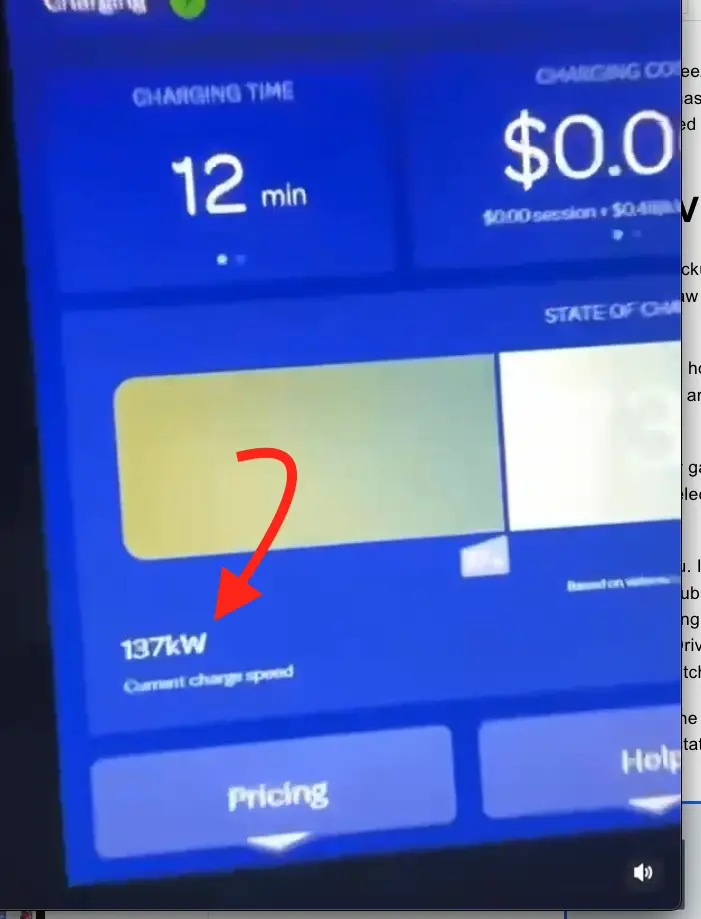
Look at this screenshot taken from the video. The video was created while an EV charging station was injecting electricity into the battery of an EV like a 2.5-inch firehose spews water on a fire:

ev charging station screen showing kW demand

Assume to get a full charge this car will be there for about an hour. If so, it's going to suck 137 kWh from the grid. That same amount of power could have kept the lights on and refrigerators running for one hour in 91 houses.

That SINGLE charging station, not unlike the ones you see in your city or town, is capable of delivering 350 kW PER HOUR.

In this situation, the charging station was dispensing electricity into the man's EV - a vast amount of electricity. If the 137 kW charging rate stays constant and the car stays connected for one hour, 137 kWh worth of electricity will be dumped into the battery.

This is just ONE charging station for ONE EV. There were six stations, I believe, at this charging location.

Has that 137 kW number bounced around in your tiny gray cells like a shiny silver ball in a pinball machine?

The electricity being SUCKED from the grid to charge that ONE EV would power 91 houses like mine if the grow lights weren't on.

If there were six EVs at that location all charging up at the same time, those SIX CARS would take out of the grid the electricity that was destined to go to 546 houses.

One of those houses could be yours.

Do you see where this is headed?

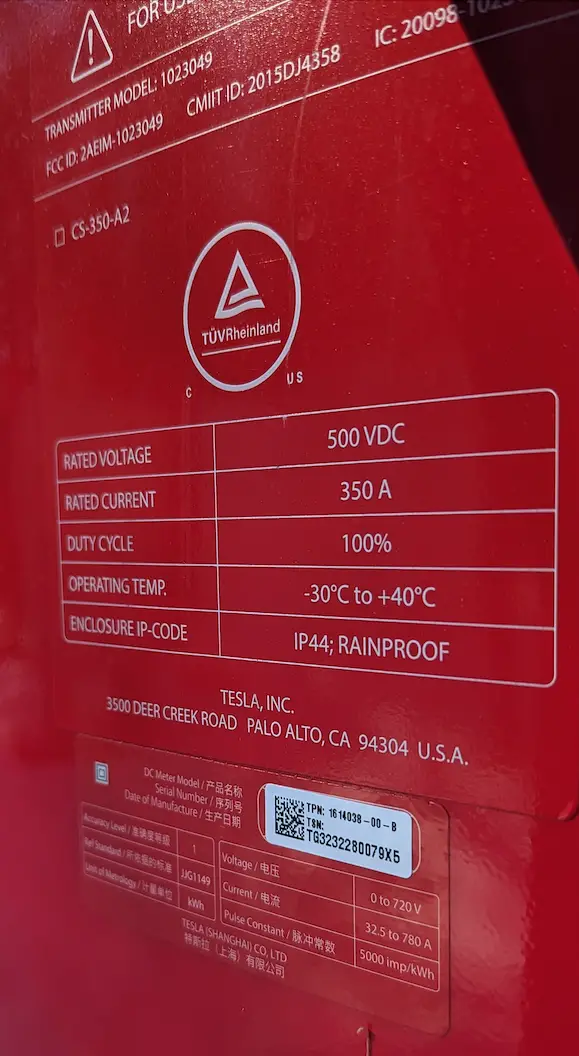
I have five Tesla charging stations in my town of Meredith, NH. Here's the label from one of them:

tesla charging station label

I was taught volts x amps = watts. If that's the case, this charger is capable of delivering 175,000 watts. If it does that for one hour, the amount of energy put into the vehicle would be 175 kWh. Copyright 2024 Tim Carter

A Texas Congressman does. WATCH THIS 60-second video where he exposes how you are being bamboozled.

Watch this video to see Andrew Boyle, an expert, share stories about how planned projects would require more power than an entire city:

What happens if you try to charge 100 EVs at once in your city? How about 1,000 EVs?

How many cars and pickup trucks are in your city or town?

Do you live in a big city? Have you seen how many cars fly down the interstate highway in an hour?

How many millions of cars are in Los Angeles?

How much POWER would it take to charge just 10 percent of them at once?

If you're already awake, fantastic. If not, please

WAKE UP NOW!

How Many New Power Plants are Being Built Across the Fruited Plain?

You don't have to be an Einstein to realize that if this EV unicorn-and-rainbows panacea the government is ramming down your throat comes to fruition there WILL BE brown and blackouts.

Numbers don't lie.

Each small city or town would have to have its OWN power plant! Do the math yourself. Just imagine that 10,000 EVs need to be recharged each day in your city or town.

I'll do the math for you. Without new power plants being built to handle this vast demand, 910,000 houses would NOT GET electricity.

That smart meter out on your exterior wall would remotely SHUT OFF your power.

Too bad so sad.

I can hear some of you now, "Tim, you're a fool. Solar and wind will save the day."

Please don't patronize me. I'm not an idiot.

Solar panels don't work here in New Hampshire 16 hours out of 24 in December. It's pitch black outside!

The wretched windmills in Rumney, NH that ruin the view often are not spinning.

Power plants MUST OPERATE 24/7/365.

Have you had enough?

STOP TRUSTING the government.

STOP TRUSTING your NEWS sources. They are LYING TO YOU about EVs, climate change, Russian collusion, etc.

They have not been telling you the whole truth about EVs.

A half-truth is a whole lie.

START questioning everything.

START USING YOUR GOD-GIVEN GRAY CELLS.


The following was sent to me after this page was published. Judi, one of my subscribers, packed lots of other information about EVs into a very small space:

"Thank you for this article on EV's and the power grid. The current Administration's shortsighted mandate on EV's (among other things!)  is ridiculous and out of touch with the cross-section of America!

We simply don't have the infrastructure in place to support it, not only from the perspective of the power grid but from the very fact that most Americans cannot afford an EV and don't have the luxury of having an in-home charger. Think of the number of apartments, condos, and townhomes that lack personal parking spaces and the ability to just plug in their vehicles!

And think, too, of the cost of installing these charging stations and who will pay for them! Does anyone pay for my gasoline or provide me with a personal gas station? My HOA has looked into this issue and has found that older homes often don't even have the electrical capacity to support these chargers.

And let's not forget the time component needed to charge these vehicles! We live in a fast-paced highly mobile society where time is money! How many times have I looked at my fuel gauge and realized my gas was low? But with a myriad of gas stations in my area, it was no problem. I could stop and be on my way in 10 minutes! Not so with an EV charge!

There's also a ton of other EV considerations that nobody wants to talk about: the weight of the vehicles, which drags down the distance one can go in a charge and makes it difficult to locate a repair shop that can lift it.

Here's a short list of other issues with EVs:

  • The weight of the battery wears down tires (all tires need to be replaced in only 30-40k miles), an issue for Goodyear is currently trying to develop an EV-specific tire
  • There is a lack of space, especially in urban areas, for the necessary number of chargers
  • The cost of replacing an EV battery (several thousand dollars) after a rather limited number of miles
  • The fact that mechanics aren't needed for these cars, results in job loss across the country
  • The fact that our auto industry is built on service, which is where the dealership makes its money;
  • The fact that getting technicians skilled in EV vehicle maintenance will lag behind the mandated demand

I could go on and on but you know the issues...

We can only hope that many souls who are asleep wake up soon!"

Geologic Hazards When Building

topographic map west paris ky quad karst topography

This topographic map should get your attention. The red arrows point to sinkholes that can cause serious structural damage to the average home. Copyright 2024 Tim Carter

Avoid Geologic Hazards When Building or Buying Land

You probably don’t give much thought to the ground under or around your home. What follows are a few true stories that may change your perspective. If you’re in the market to purchase land to build your dream home or are looking to move to purchase an existing home, what I’m about to share could prevent financial ruin. My college degree is in geology and the knowledge I attained allows me to look at building lots through a different lens than you might use.

Less than a week ago a woman hired me to do a one-hour video call. She recently purchased raw land in the heart of the Bluegrass region of Kentucky just east of Lexington. I happen to know this part of Kentucky is one of the top places in the USA for Karst topography. This translates to sinkholes that can cause serious structural damage to homes.

Before the call, I asked for the address. I wanted to locate her land on a US Geological Survey topographic map. You can get high-resolution PDF copies of these for free online for any land in the USA. Sure enough within a half-mile radius of her land there were no less than ten sinkholes. You can clearly see these on a topographic map as circles or ovals that have small lines pointing to the center of the circle or oval.

Does this mean her new home will sink into the ground? Not necessarily. That said, it might be a good idea to chat up the local building inspector or folks at the Kentucky Geological Society. I’d also inspect the land to see if there was evidence that a sinkhole had been filled in to disguise it.

Building on Buried Trees

Topographic maps can shed light on many things. My friend Ed purchased a lot in a new subdivision in Cincinnati, Ohio about twenty years ago. The developer had to do lots of cut and fill. Ed’s lot was land that was fill dirt. The dishonest excavator dumped dirt on fallen trees to bury them. Within a year after Ed’s house was built, it started to crack in half. The basement floor looked like a dough bubble on a pizza. The entire foundation was dropping but the floor was not falling at the same rate. Ed now knows to never again build on fill.

Flash Flood in Amberley Village, Ohio

About thirty years ago neighbors of mine were almost killed in a flash flood. They purchased a home in a nice subdivision nestled on rolling land. Their home was right on top of an old dry creek. Under their driveway was a hidden 5-foot-diameter storm sewer that was installed when the farmland was converted to residential property. My neighbors had no idea this pipe was in the ground.

One day a huge storm caused storm water to completely fill the pipe and then run across the land to a depth of 8 feet in my friend’s driveway. It completely flooded their basement in a matter of minutes. Had they studied a topographic map before buying this home, they could have seen from the contour lines how much land above them collected water and then funneled it to their lot.

New Madrid Earthquake 1811-12

Active geologic faults can be found all over the western USA. The center of the USA is not immune from tremendous earthquakes. In 1811-12 the New Madrid earthquake caused massive damage where western Tennessee touches southeast Missouri and northeast Arkansas. If you live near here or intend to build there, talk to your insurance agent about an earthquake rider on your homeowner’s policy.

usgs earthquake hazard map for usa

This is the 2024 US Geological Survey earthquake hazard map. CLICK it for a bigger version and more information. You can see the risk of huge earthquakes is high in the western Tennessee area. Public Domain Usage - Created with US taxpayer $$$

Landslide Causes a Propane Explosion

Landslides can also cause nightmares and death. Just three years ago two friends of mine died when a propane explosion destroyed their home. CLICK HERE to read one story about the tragic event.

propane explosion jim and audrey landford

A propane explosion leveled this home in less than five seconds killing Jim and Audrey Landford. They were friends of mine. Copyright Boone NC Police Department Fair Use Doctrine Public Property

Heavy rain caused a landslide that dislodged their propane tank resulting in a gas leak in their home. This was preventable to a large degree but the average person would never think about the relationship of a propane tank to a hillside.

Cincinnati Landslides

Humble Cincinnati, Ohio is the epicenter of some of the highest landslide damage in the USA. The media darling for landslides is California where each winter we seem to see houses falling into the ocean during fierce winter storms. But in Cincinnati, the bedrock geology is such that thousands of homes are built on unstable clay soil that can be found on the hillsides all around the Tristate region. Watch this documentary film about Cincinnati Landslides.

Dry Land - No Water

How disappointed would you be if you purchased raw land only to discover there’s no water? Yes, this happened to friends of mine in Washington state. They had to stop drilling after boing a hole 700 feet. This might have been avoided had they talked to well drillers before buying the land. The drillers might have told them land to avoid and the places where water is discovered at a shallow depth.

You may place your trust in government officials in situations like this. That would be a grievous error on your part. There are neighborhoods in many cities in the USA that get flooded in periods of heavy rain. These old creek beds should have never been allowed to be developed by not-so-wise government officials.

You can make the best decision when buying land by hiring a professional geotechnical engineer or a professional geologist. These folks can look at raw or developed land and produce a report indicating any potential issues that could affect your major investment. I wish you the best of luck!

Column 1543

How to Stay Warm in Cold Weather

electric radiant floor mat

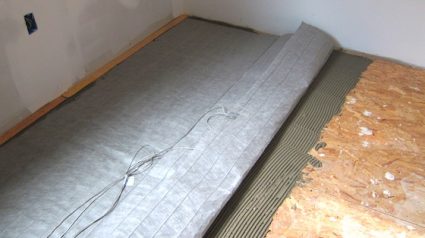
The gray fabric mat contains electric heating cables. Finished flooring is installed on top of the mat after it’s covered with a thin coat of sand and cement. It’s but one way to keep your feet warm. Copyright 2024 Tim Carter
How to Stay Warm in Bitter Cold Weather - It's So Easy

You may be one of the tens of millions of folks like me that live where it gets cold in the winter. If you’re blessed to live in the south or southwest, I do know there can be some cold waves that force you to put on a sweater. With inflation raging out of control, it’s so very important to spend the least amount of money to be comfortable. I can help you do just that.

To be honest, I could write a book about this topic. I know I’ll get emails about leaving this or that idea out of this column. Right now I’m going to serve up to you slices of juicy low-hanging fruit. Let’s get started.

As crazy as this sounds, the easiest way to save money and stay toasty warm inside your home is to wear more clothes and turn down your thermostat. I do this each winter. I’ll wear flannel-lined jeans and sometimes insulated coveralls. It’s not uncommon to find me donning a hoodie sweatshirt. I often put the hood up to keep my head and neck warm. I wear wool socks. You may think this is nuts, but when I’m dressed like this indoors I’m toasty warm with my thermostat set between 62 and 65 F.

Think about how you can compress your lifestyle in the winter. Can you close off rooms and just direct your heating to a few rooms instead of your entire house? If you were lucky enough to have a zoned heating system installed, it’s easy to send heat to the rooms you live and sleep in as well as the rooms that have plumbing water lines that must remain above 35 F to prevent them from bursting.

Several years ago I converted some attic space above my garage to a man cave. I decided to heat it using a fiberglass mat that has electric cables built into it. The mat was custom designed at no extra cost to match the size of the room and the heat loss of my space. It’s vital you do this. If my man cave was in southern Tennessee instead of central New Hampshire, far fewer cables would have been installed in the mat.

Another simple way to take the chill off a room is to use an oil-filled portable electric radiator. I’ve tested several that cost less than $100 and they do a remarkable job of heating an unheated space. Many of these are programmable so you can turn them down when you’re not in the space. Then, have them turn on magically 90 minutes before you come into the room so it’s up to temperature.

The largest source of heat loss in the average home is air infiltration. Check all your doors and windows to make sure they’re locked. Locking them pulls the sash tight against the weatherstripping.

If air is leaking under a door, consider using a felt weatherstrip that attaches to the bottom of the door with small nails, screws, or adhesive tape. You have the skill to install this in minutes. Stopping cold drafts can significantly lower your heating costs and you won’t feel like you’re in a wind tunnel.

Keep in mind that the placement of insulation is vital to ensure all the heat produced by electric coils or radiant heat tubing is directed into the living space. Years ago while I was helping build my daughter’s new home I educated an insulation crew leader. He was the rare person that listened to me and hours later admitted he had been installing insulation wrong in hundreds of houses for over twenty years.

When he arrived at my daughter’s house to install the fiberglass batts under the radiant floor tubing he asked me, “How much air space do you want between my insulation and the tubes? We normally do 1 to 2 inches.” I responded, “I don’t want any air space. Put the insulation in direct contact with the radiant heat tubes and do whatever is necessary to ensure it never falls down.”

This middle-aged man just looked at me and said, “Okay, but we’ve never done it that way before.” I politely said, “Are you the same crew that put the insulation in the walls here? I see that there’s no air space between the warm drywall and your insulation. If an air space is so important, then why did you eliminate it in all the walls?” He just blinked at me and walked away. Hours later he came up to my son-in-law and said, “Your father-in-law taught me something. I’ve been installing insulation under radiant tubes wrong my entire career.”

The reason you want the insulation to be in contact with the tubing or the OSB subflooring under an electric mat is simple. You want to drive all the heat up into the living space. If you have an air gap, some of the heat goes down not up.

If you’re planning on building a room addition or a new home soon, you have a unique opportunity to design a zoned heating system that will allow you to keep your heating bills to a minimum. If you can’t find a pro to talk to about this, I’m happy to consult with you.

Imagine using a simple water heater to create all the heat you need for a simple room addition. I can’t begin to tell you how comfortable a floor is that’s heated by hot water. It’s dreamy heat. If you lay down on the floor, you don’t want to get up.

Column 1542

Cork Flooring is Marvelous

jesup memorial library bar harbor maine

This is the Jesup Memorial Library in Bar Harbor. You can go there next week to see and walk on its cork flooring. The flooring has not been maintained as well as it should have been, but it's still in service. It was installed in 1911. Need I say more? Copyright 2024 Tim Carter
Cork Flooring Should Be on Your Radar - It's Magical

What I’m about to share with you might amaze you. I’ve heard it said before that one doesn’t know what they don’t know. To me, that infers you may be unaware of something that previously had been hidden from you. It’s happened to me numerous times during my life.

One odd example happened to me about twenty years ago. For decades I spent all my time in the USA. A business trip had me travel to Toronto, Canada. It’s a huge city and while being driven to a television station, I looked at the traffic signals at a busy intersection. Much to my surprise there was no separate green light turn arrow. After several seconds, the green light began to flash. Instead of having an extra light, the clever Canadians told their drivers to turn against traffic when the light started to flash!

I’m about to do the same with you right now. I’m willing to bet you two cheese coneys that you’ve never seen cork flooring and what’s more had the pleasure of walking on some. Tell the truth. Did you even know cork flooring existed?

When I saw cork flooring for the first time, it put my head on a swivel. It was the most unique flooring I had ever seen. My father-in-law took me one day to visit Carl, his investing partner. Carl had built a stunning ranch home on a bluff that overlooked the great north bend of the Ohio River.

The cork flooring was in his kitchen of all rooms. It was plank flooring about 8 inches wide. The color was a rich medium brown and the pattern or grain was mesmerizing. I had never seen such material before in my twenty-three years on the planet.

“What in the world is the floor made from?” I asked. “Why, it’s cork.” Carl responded. “Aren’t you worried about the water from the kitchen ruining it?” Carl just chuckled. He knew that cork was waterproof. He also knew that under typical residential use installing cork was like putting sheets of iron on your floor. It’s nearly indestructible.

As time passed, I discovered cork was the flooring material used at the main public library in Cincinnati, Ohio. Its closed-cell structure contains about 100 million air cells in each cubic inch of material. This allows it to absorb shock as well as sound. It’s the perfect flooring material for so many rooms in a home, church, busy office space, or other place where peace, quiet, and comfort are commodities in high demand.

I decided to try cork flooring in my own home. It was the perfect material to use in my basement recreation area and office space. It glued down with ease over the smooth concrete floor. I wanted a waterproof material in case the basement flooded. I also wanted flooring that hold up to rambunctious teenagers and office chairs. It excelled at both challenges.

Visit a home center big-box store and you’ll see them pushing luxury vinyl plank (LVP) flooring. I just had my first hands-on experience with that this past summer. Cork, in my opinion, is a superior material. It’s not as fussy as LVP with respect to humps and bumps in the floor. Cork is quieter and doesn’t expand or contract to the extent of LVP.

If you’re all about the environment, you’ll love cork. Cork is a renewable resource. The material is generated by harvesting the bark from cork trees. The bark grows back after ten years or so and the average cork tree lives for 150 years.

My most recent experience with cork was in Bar Harbor, Maine of all places. Several years ago I was in town to meet my sister. I had some time to kill before meeting her and decided to visit the historic Jesup Memorial Library.

This stunning building was built in the early 1900s. As soon as I walked through the front door I saw it. A magnificent cork floor covered the entire main floor of the library. Master craftsmen were installing it in the late winter or early spring of 1911 as the library was dedicated on August 30, 1911.

I was walking on a floor that was installed 107 years earlier! While it was in need of a little tender loving care, the floor was still in remarkable shape after all that time. Imagine how many people had walked across that flooring in all those years! You can install it in your home knowing that it will outperform any other flooring you can purchase.

If you want a flooring material that is easy to maintain, will get you compliments from your friends and visitors, is easy on your back and legs should you have to stand up on it, cork should be on your radar. When you see the different styles, sizes, patterns, and colors, I’m convinced you’ll then say, “What other building materials don’t I know about?” Well, keep reading me each week and I’ll do my best to share them with you!

Column 1541

Storage Boxes for Hardware and Parts

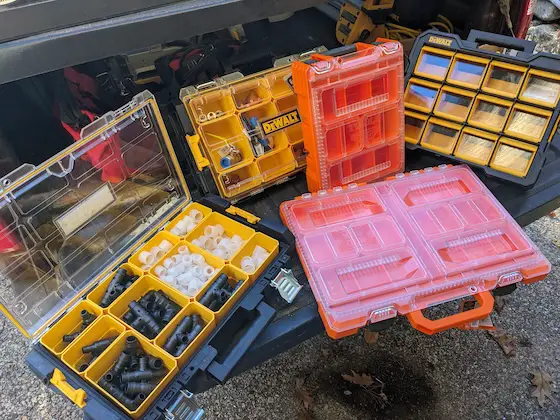
assorted plastic storage boxes for hardware and parts

Storage Boxes with Clear Lids - These are just a few of the innovative parts storage boxes I use to keep everything organized in my workshop and garage. Are you a fisherman/woman? Do you make crafts as a hobby? These boxes are perfect for anyone who has lots of small things they need to have at their fingertips. Copyright 2023 Tim Carter

Storage Boxes for Hardware and Parts - Innovative & Useful

Author's Note: This column appeared in over 60 USA newspapers. If you read it there and are looking for all the photos of the many boxes, CLICK HERE. This opens to a new page. CLICK HERE for DeWALT organizer boxes. CLICK HERE for the orange Klein Tools Organizer Boxes.

I need you to be honest with me. In the past few months, how many hours have you spent looking for some nut, bolt, screw, wire nut, or any other small part that you KNOW you have somewhere in your garage, basement, or workshop?

How angry or frustrated did you get as each moment passed? In the dim light above your cluttered workbench you were opening and closing five, ten, or twenty small cardboard boxes, old plastic 35mm film canisters, or glass baby food jars, weren’t you? I know as I used to do the same thing.

Do you do crafts or partake in a hobby that has lots of small parts? Do you have lots of small beads, spools of thread, or electronic parts stored in poorly marked boxes? How much time have you wasted looking for something you need now?

Clunky 1x6 Pine Storage Boxes

Decades ago when I was a young carpenter/remodeler I discovered that each day I needed an assortment of nails and screws with me each day. Back then, you purchased these at a hardware store or lumber yard. They were often put in paper bags. If you bought 50 pounds at once, they came in a large cardboard box.

I decided to build my own storage containers that had segregated compartments. I used 1x6 pine lumber for the sides and 1/2-inch plywood for the top, bottom, and inner compartments. Empty, these boxes were somewhat heavy. Once you loaded them with assorted screws, nails, nuts, and bolts they were comparable to dumbbells used by bodybuilders.

A few years later, I was building a room addition for an engineer. He saw my boxes and said, “I think there’s a better way. Look at these plastic bins we use where I work.” The open containers were marvelous. They measured about 4 inches wide, 7 inches deep, and about 3 inches high. They were stackable. The best part is they fit perfectly on the inside shelves of my utility-body truck.

Akro Bins - Storage 2.0

I bought 100 of them and one weekend I transferred all my hardware, plumbing fittings, electrical connectors, etc. into the back of my truck. I was a traveling hardware store and always had what I needed, even in an emergency. I rarely had to stop work to go get the perfect part or fastener. The bins increased my productivity and added to my profitability.

But the bins had a drawback. If you knocked one over, the parts would scatter. If you needed multiple fasteners or parts, you’d have to carry into the house multiple bins. Dropping them was always a risk. Going over bumps or hitting deep potholes caused parts to jump out of the containers inside the back of my truck.

Modern Clear-Lid Storage Boxes

The good news is modern parts storage boxes have eliminated all of the above problems. Over the past few years, tool manufacturers have introduced a wide variety of storage boxes that I could have only dreamed of having.

The best design feature, in my opinion, is the tough crystal-clear top lid of these storage boxes. You can immediately see the exact part you’re looking for. Inside these boxes are small plastic bins that allow you to store different fasteners and parts. The inner bins come in all sorts of sizes too.

It gets even better. The lids of the boxes are designed so the things stay in the small bins. You can tumble the boxes around, tip them over when closed, or throw them down a hill and the contents inside each of the plastic bins stay put. The underside of the lids creates a seal encapsulating each of the parts bins.

Oh, did I say that many of these boxes are designed to interlock one on top of another as a system? Did I share that some have the ability to connect to an integral two-wheeled hand truck to transport them to a job site?

What astounds me is that each month or so a manufacturer unveils yet a newer model that fixes tiny bugs that might have been present with an earlier model. In the past two months I’ve outfitted my truck with two boxes that work perfectly to store plastic fittings I use to install PEX water tubing.

Just last week I took ownership of a very unique storage box that’s less than 2 inches thick. It’s about the size of a white-collar worker’s briefcase. It's the Klein Tools Short Component Box Full Width. The link opens in a new window. It’s perfect for tiny screws, fasteners, electronic parts, colorful beads, or any other small part or widget you might use in your hobby or craft.

There are so many of these cool and useful storage boxes it’s impossible to list them all here. I’ve created an exhaustive list of many of them with photos on my website. Just go to www.AsktheBuilder.com and type “storage boxes” into my search engine. You’ll be stunned at the variety. I guarantee you your days of frustration and anger will be over. Your workshop, hobby room, etc. will be so well organized and you’ll find things in seconds, not hours.

Column 1540

Opening a Remodeling Can of Worms

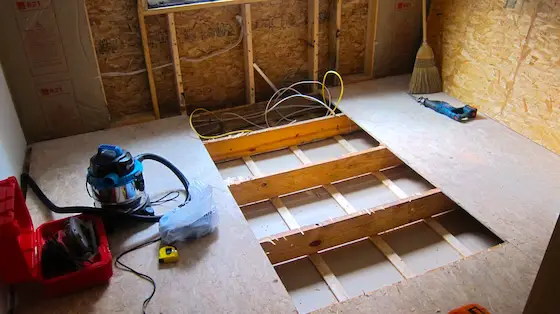
missing piece of osb subflooring in attic trusses

This unfinished space will soon become a man cave. Installing plumbing pipes, electric cables, and other mechanics often requires floors to be opened up like you’d do to a can of beans or worms. Copyright 2023 Tim Carter

Opening a Remodeling Can of Worms - Start with Great Plans

My start in the construction business happened in Cincinnati, Ohio in the early 1970s. The knowledge I obtained in those first few formative years doing remodeling work made me, in my opinion, a better builder.

Early on I deconstructed houses that were 100 years old. I was blessed to see how master craftsmen of old built things. Many were so proud of their work, they signed it. What a shame I didn’t take a photograph of each signature I uncovered on a wall stud or up in an attic!

With a new year on the threshold, one of your resolutions may be to start a remodeling project that’s been on the back burner. High housing prices may have shoved you out of the market and instead of moving to a bigger nicer home, you’re now forced to fulfill your dreams using your existing home.

My goal is to prevent you from suffering emotional and financial pain should you be on the cusp of starting a major remodeling project. The following tips should prevent sleepless nights, arguments with contractors, and anguish caused by cost overruns.

Each week I do consult phone calls with homeowners just like you. Often their remodeling projects have gone off the rails. Each and every time I perform an autopsy, I discover the root cause of the problem is a set of inferior plans. Bad plans open the door to a host of problems not the least of which is a lack of communication between you and the contractor.

You probably know what you want in your head. You’ve dreamed of the perfect new bathroom, kitchen, room addition, or whole-house remodel. You’ve looked at hundreds of stunning inspirational photos on different websites. But your plans are two-dimensional line drawings that communicate only a small part of what you want. Your first, and most important, job is to take the time to create an accessory document that contains the necessary photographs that show the contractor exactly what you want.

The plans and the photographs should be so good that the contractor never has to ask you any questions. It’s possible to achieve this goal. The best part is these two simple documents form the core of the contract between you and the contractor.

Your contract simply states that all the work will be done in accordance with the two documents and that you’ll pay the contractor in stages as the work progresses. Nothing about this is hard. Contracts can be simple one-page documents for the most part.

It’s important to realize remodeling work is messy. You should think about all this in advance. Lead paint should be on your radar if your house was built before or just after 1978. Demolishing, sanding, or scraping painted surfaces that are coated with lead paint can create serious health issues. Don’t rely on lead-paint test kits as you could get a false negative result. Lead paint may be lurking underneath coats of non-lead paint applied in the past forty years!

Are you doing a major kitchen remodeling job? If so, weeks before the job starts, I want you to do your dinner dishes in your bathtub. You’ll quickly discover that you’ll want to ask your contractor to set up a temporary kitchen in your garage or some other place in your home. This can be a bare-bones galley like you see on a commercial jet or in a submarine. The last thing you want is to be on your knees doing dishes in a tub.

What about a bathroom remodel job? I clearly remember one of the first jobs I ever did was a bath remodel for a friend. His wife was quite pregnant and we set up a temporary shower and sink in their basement over the floor drain. Fortunately, the original builder back in the 1920s had installed a toilet in the basement. This makeshift bathroom sufficed until I presented them with their spiffy new bathroom.

A major remodeling job may offer you a rare opportunity to make your home more comfortable. Many older homes had inferior heating systems that lacked sufficient return-air ducting for modern air conditioning. Currently the rage is the mini-split. While these work well with open floor plan homes, they don’t work well for isolated rooms. I know this for a fact because I slept in an ice-cold bedroom in a brand-new apartment building equipped with a mini-split.

A seasoned HVAC mechanic can cut a hole in the wall above bedroom doors and create a return-air pathway that connects to ductwork in a hallway soffit. This return air can often make it back to the air handler via a chase in a corner or in a closet. Talk to several different contractors, or me, if you need help figuring this out.

Good luck with your remodel and remember, you can’t invest too much time in great plans!

Column 1539