Storage Boxes for Hardware and Parts
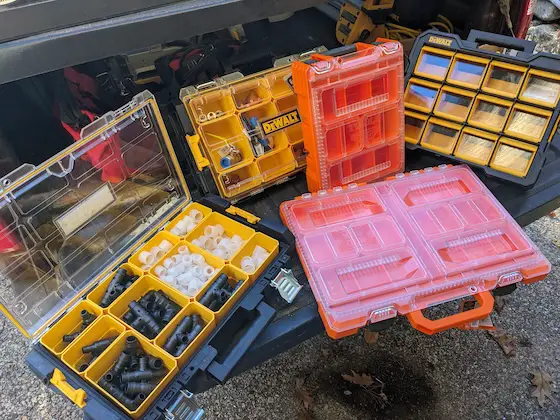
Storage Boxes with Clear Lids - These are just a few of the innovative parts storage boxes I use to keep everything organized in my workshop and garage. Are you a fisherman/woman? Do you make crafts as a hobby? These boxes are perfect for anyone who has lots of small things they need to have at their fingertips. Copyright 2023 Tim Carter
Storage Boxes for Hardware and Parts - Innovative & Useful
Author's Note: This column appeared in over 60 USA newspapers. If you read it there and are looking for all the photos of the many boxes, CLICK HERE. This opens to a new page. CLICK HERE for DeWALT organizer boxes. CLICK HERE for the orange Klein Tools Organizer Boxes.
I need you to be honest with me. In the past few months, how many hours have you spent looking for some nut, bolt, screw, wire nut, or any other small part that you KNOW you have somewhere in your garage, basement, or workshop?
How angry or frustrated did you get as each moment passed? In the dim light above your cluttered workbench you were opening and closing five, ten, or twenty small cardboard boxes, old plastic 35mm film canisters, or glass baby food jars, weren’t you? I know as I used to do the same thing.
Do you do crafts or partake in a hobby that has lots of small parts? Do you have lots of small beads, spools of thread, or electronic parts stored in poorly marked boxes? How much time have you wasted looking for something you need now?
Clunky 1x6 Pine Storage Boxes
Decades ago when I was a young carpenter/remodeler I discovered that each day I needed an assortment of nails and screws with me each day. Back then, you purchased these at a hardware store or lumber yard. They were often put in paper bags. If you bought 50 pounds at once, they came in a large cardboard box.
I decided to build my own storage containers that had segregated compartments. I used 1x6 pine lumber for the sides and 1/2-inch plywood for the top, bottom, and inner compartments. Empty, these boxes were somewhat heavy. Once you loaded them with assorted screws, nails, nuts, and bolts they were comparable to dumbbells used by bodybuilders.
A few years later, I was building a room addition for an engineer. He saw my boxes and said, “I think there’s a better way. Look at these plastic bins we use where I work.” The open containers were marvelous. They measured about 4 inches wide, 7 inches deep, and about 3 inches high. They were stackable. The best part is they fit perfectly on the inside shelves of my utility-body truck.
Akro Bins - Storage 2.0
I bought 100 of them and one weekend I transferred all my hardware, plumbing fittings, electrical connectors, etc. into the back of my truck. I was a traveling hardware store and always had what I needed, even in an emergency. I rarely had to stop work to go get the perfect part or fastener. The bins increased my productivity and added to my profitability.
But the bins had a drawback. If you knocked one over, the parts would scatter. If you needed multiple fasteners or parts, you’d have to carry into the house multiple bins. Dropping them was always a risk. Going over bumps or hitting deep potholes caused parts to jump out of the containers inside the back of my truck.
Modern Clear-Lid Storage Boxes
The good news is modern parts storage boxes have eliminated all of the above problems. Over the past few years, tool manufacturers have introduced a wide variety of storage boxes that I could have only dreamed of having.
The best design feature, in my opinion, is the tough crystal-clear top lid of these storage boxes. You can immediately see the exact part you’re looking for. Inside these boxes are small plastic bins that allow you to store different fasteners and parts. The inner bins come in all sorts of sizes too.
It gets even better. The lids of the boxes are designed so the things stay in the small bins. You can tumble the boxes around, tip them over when closed, or throw them down a hill and the contents inside each of the plastic bins stay put. The underside of the lids creates a seal encapsulating each of the parts bins.
Oh, did I say that many of these boxes are designed to interlock one on top of another as a system? Did I share that some have the ability to connect to an integral two-wheeled hand truck to transport them to a job site?
What astounds me is that each month or so a manufacturer unveils yet a newer model that fixes tiny bugs that might have been present with an earlier model. In the past two months I’ve outfitted my truck with two boxes that work perfectly to store plastic fittings I use to install PEX water tubing.
Just last week I took ownership of a very unique storage box that’s less than 2 inches thick. It’s about the size of a white-collar worker’s briefcase. It's the Klein Tools Short Component Box Full Width. The link opens in a new window. It’s perfect for tiny screws, fasteners, electronic parts, colorful beads, or any other small part or widget you might use in your hobby or craft.
There are so many of these cool and useful storage boxes it’s impossible to list them all here. I’ve created an exhaustive list of many of them with photos on my website. Just go to www.AsktheBuilder.com and type “storage boxes” into my search engine. You’ll be stunned at the variety. I guarantee you your days of frustration and anger will be over. Your workshop, hobby room, etc. will be so well organized and you’ll find things in seconds, not hours.
Column 1540
Opening a Remodeling Can of Worms
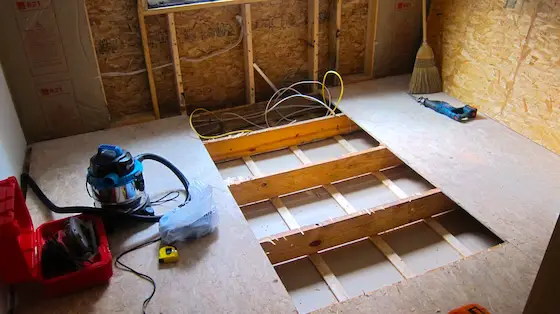
This unfinished space will soon become a man cave. Installing plumbing pipes, electric cables, and other mechanics often requires floors to be opened up like you’d do to a can of beans or worms. Copyright 2023 Tim Carter
Opening a Remodeling Can of Worms - Start with Great Plans
My start in the construction business happened in Cincinnati, Ohio in the early 1970s. The knowledge I obtained in those first few formative years doing remodeling work made me, in my opinion, a better builder.
Early on I deconstructed houses that were 100 years old. I was blessed to see how master craftsmen of old built things. Many were so proud of their work, they signed it. What a shame I didn’t take a photograph of each signature I uncovered on a wall stud or up in an attic!
With a new year on the threshold, one of your resolutions may be to start a remodeling project that’s been on the back burner. High housing prices may have shoved you out of the market and instead of moving to a bigger nicer home, you’re now forced to fulfill your dreams using your existing home.
My goal is to prevent you from suffering emotional and financial pain should you be on the cusp of starting a major remodeling project. The following tips should prevent sleepless nights, arguments with contractors, and anguish caused by cost overruns.
Each week I do consult phone calls with homeowners just like you. Often their remodeling projects have gone off the rails. Each and every time I perform an autopsy, I discover the root cause of the problem is a set of inferior plans. Bad plans open the door to a host of problems not the least of which is a lack of communication between you and the contractor.
You probably know what you want in your head. You’ve dreamed of the perfect new bathroom, kitchen, room addition, or whole-house remodel. You’ve looked at hundreds of stunning inspirational photos on different websites. But your plans are two-dimensional line drawings that communicate only a small part of what you want. Your first, and most important, job is to take the time to create an accessory document that contains the necessary photographs that show the contractor exactly what you want.
The plans and the photographs should be so good that the contractor never has to ask you any questions. It’s possible to achieve this goal. The best part is these two simple documents form the core of the contract between you and the contractor.
Your contract simply states that all the work will be done in accordance with the two documents and that you’ll pay the contractor in stages as the work progresses. Nothing about this is hard. Contracts can be simple one-page documents for the most part.
It’s important to realize remodeling work is messy. You should think about all this in advance. Lead paint should be on your radar if your house was built before or just after 1978. Demolishing, sanding, or scraping painted surfaces that are coated with lead paint can create serious health issues. Don’t rely on lead-paint test kits as you could get a false negative result. Lead paint may be lurking underneath coats of non-lead paint applied in the past forty years!
Are you doing a major kitchen remodeling job? If so, weeks before the job starts, I want you to do your dinner dishes in your bathtub. You’ll quickly discover that you’ll want to ask your contractor to set up a temporary kitchen in your garage or some other place in your home. This can be a bare-bones galley like you see on a commercial jet or in a submarine. The last thing you want is to be on your knees doing dishes in a tub.
What about a bathroom remodel job? I clearly remember one of the first jobs I ever did was a bath remodel for a friend. His wife was quite pregnant and we set up a temporary shower and sink in their basement over the floor drain. Fortunately, the original builder back in the 1920s had installed a toilet in the basement. This makeshift bathroom sufficed until I presented them with their spiffy new bathroom.
A major remodeling job may offer you a rare opportunity to make your home more comfortable. Many older homes had inferior heating systems that lacked sufficient return-air ducting for modern air conditioning. Currently the rage is the mini-split. While these work well with open floor plan homes, they don’t work well for isolated rooms. I know this for a fact because I slept in an ice-cold bedroom in a brand-new apartment building equipped with a mini-split.
A seasoned HVAC mechanic can cut a hole in the wall above bedroom doors and create a return-air pathway that connects to ductwork in a hallway soffit. This return air can often make it back to the air handler via a chase in a corner or in a closet. Talk to several different contractors, or me, if you need help figuring this out.
Good luck with your remodel and remember, you can’t invest too much time in great plans!
Column 1539
Electrical Hacks for Your Home
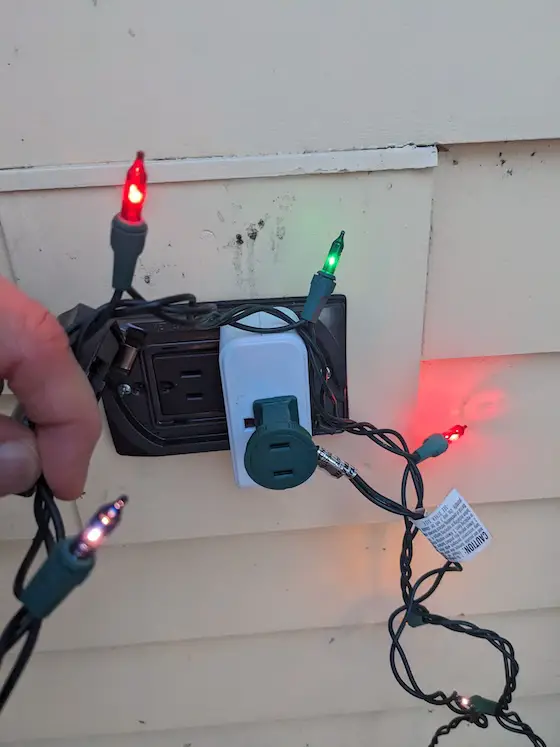
The odd white rectangle is a smart outlet. It is able to turn on and off via the WiFi in your home allowing you to control when power flows through a cable to lights, a fountain, or any other object powered by electricity. Copyright 2023 Tim Carter
Electrical Hacks for Your Home
Eight months ago a woman hired me to be her virtual general contractor. She was about to start to rebuild a home in remote northern Maine at the south end of Moosehead Lake. She’s the boots-on-the-ground person and we communicate via email, video calls, and texting.
Last week we started to discuss the rough-in electrical work on the large home. She intends to help the rough carpenter install all the boxes and cables. I knew she had never done this work before and I was unsure of the skill level of the carpenter. I’ve come to understand that many tradesmen in that part of Maine are cross-trained in several disciplines. It’s not easy to find skilled labor in a place where the closest road east of the main road leading into town is over 100 miles away!
I decided to share much of my conversation with you in case you plan to build a home soon, build a room addition, or do some remodeling. What you’re about to discover might make your life easier and safer.
It’s important to realize you can wire a house according to all the tenets found in the most recent edition of the National Electrical Code but the wiring job may not be perfect. This code is a standard published by the National Fire Protection Association. It’s all about your safety and reducing insurance losses. Keep in mind that this code, like all building codes, is a set of minimum standards. You can always exceed the requirements of a code.
Early in the discussion with the homeowner, I shared how I had incorporated a simple trick when wiring my daughter’s home four years ago. She lives in Downeast Maine where wicked Nor’easters cause frequent power outages. Having been through quite a few of these myself in central New Hampshire, I know that one of the most miserable aspects is the lack of lighting in an outage.
Did you know you can safely wire the light fixtures in your home on a few separate dedicated circuits? When the power goes out and your generator starts up, you can have light in all or many rooms. Lights don’t draw that much power and you’ll stop using flashlights or dangerous candles.
The woman and I next discussed the gauge of the wire in her new home. I suggested she consider using nothing but 12-gauge wire for all the normal circuits. In her case, it would cost less than $400 for this invaluable upgrade. Twelve-gauge wire is rated for 20 amps giving you an abundance of power on circuits that normally would be strained or pop the breaker when you plug in a tool such as a table saw.
I then shared all sorts of stories about how electricians and homeowners don’t think through the placement of switches and outlets. For example, my lovely wife is left-handed. She holds her hair dryer with her right hand and brushes her hair with her left hand. Placing the outlet on the right side of the sink prevents the dryer cord from crossing over the sink.
Next up I told her about my son-in-law’s command-center closet in the entrance hall of his home. This turned out to be a perfect place to hide his WiFi router, Internet modem and the controls for his interior sound speakers spread throughout the house. We placed outlets up high in strategic locations where we knew the electrical equipment would be on shelves.
I also installed three blank 1-inch-diameter conduits from the basement up into the closet terminating in blank 4-inch-square boxes. This allowed the cable TV technician to run his cables with ease. It also allows for fiber optic cables to be installed in minutes when it becomes available.
My son-in-law and I also installed two extra circuits in his attic and two down in his basement. The junction boxes were out in the open as required by code. Can you imagine how happy a future homeowner will be to discover they already have power installed for some future purpose? It took less than one hour to install all four of these circuits.
You may love to do holiday lighting but dread having to deal with the extension cords that might snake all across your lawn and the front of your home. I’ll bet you grumble each autumn wondering why an electrician didn’t install boxes at key locations. Imagine having a few switches inside your home that allow you to turn on and off outdoor lights without having to go outdoors on a cold night to plug in an extension cord.
The switching problem was solved several years ago with smart outlets. These very handy devices allow you to control outdoor and indoor power without having to use the old-fashioned timers. Smart outlets work via your WiFi and an app on your smartphone. You can program each outlet to follow different on-and-off schedules. Smart light bulbs are also available that do the same thing.
Think about all the things in your home you wish the electrician had done differently. I’d love to hear back from you. I can share your complaints in my latest book all about things your builder and subcontractors forgot to do. Just visit my Ask Tim page at www.AsktheBuilder.com to share your story.
Column 1538
Open Web Floor Trusses
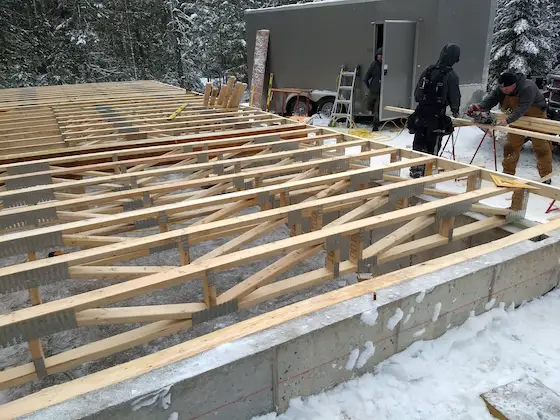
These are open web floor trusses. Can you see how advantageous it is to use them? Do you see how they save time and money when installing ducts, pipes, and electric cables? Copyright 2023 Tim Carter
Open Web Floor Trusses - They're Superb
I’m sure you’ve driven across or seen large steel truss bridges that are made by combining any number of huge steel beams into right triangles that interconnect. When viewed from the side they look like open boxes with a diagonal piece of steel extending from one corner of each box to the opposite corner. Imagine how strong this design is to be able to hold countless tons of concrete roadways, cars, trucks, and even giant train locomotives!
Did you know this same technology can be used in your home, room addition, light-commercial building, etc? You can have these same trusses built using wood. I had my first experience with open web floor trusses made from standard 2x4s about forty years ago. Ever since that day when we installed these in a room addition, I was sold on the many benefits.
These magnificent trusses spanned almost 24 feet with no bearing walls beneath them. The homeowner wanted a giant basement recreation room with no silly support posts in the middle of the room.
The homeowner got involved in the design early in the planning stage. He was a giant of a man. He insisted that there be no bounce in the floor as he didn’t want to feel like he was walking on a spongy trampoline. The room above the basement recreation room was his master bedroom. He told me he wanted that floor to feel like he was walking on a thick concrete floor.
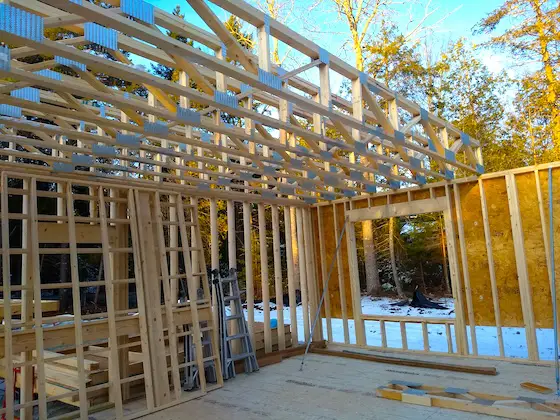
These trusses are almost identical to the first ones I used back in the mid-1980s. These trusses form the second floor of my daughter's home in Downeast Maine. Copyright 2023 Tim Carter
The software used by the engineers at the truss manufacturing plant allowed the designer to make the trusses stiffer than an old-fashioned starched shirt collar. To achieve the desired strength with virtually no deflection, the trusses ended up being about 26 inches tall. The homeowner had a huge grin on his face when he walked across the plywood subfloor and there was no bounce whatsoever.
Another advantage floor trusses bring to the table is their flatness. Each one is a clone of the other. Normal dimensional floor joists are not always the exact same dimensions and often they have crowns in them. A crown is a hump in a floor joist. Problems arise when you install one floor joist that is flat next to a floor joist that has a 1/2-inch-tall crown. All of a sudden the floor is not flat once you apply the sub subflooring.
All of the mechanical trades love open-web floor trusses. You never have to drill any holes. HVAC installers and plumbers are able to install pipes and ducts just about anywhere in the trusses since the vast majority of the cross-section of each one is wide open space.
You don’t have this flexibility with other engineered floor joists. I draw plumbing riser diagrams each week for homeowners, architects, builders, and plumbers. Several times in the past year I’ve had to call the customer and tell them that it’s virtually impossible to pipe a bathroom as drawn by the architect. The plan calls for wooden truss joists and these products don’t allow holes to be drilled in specific locations close to where they rest on a bearing wall. You never ever have this problem with floor trusses.
To put some of this in perspective, allow me to share a more recent story. Months ago a woman hired me to be her virtual general contractor for a house that’s being rebuilt in the northern forests of Maine. I was able to get involved in the early stages of planning and recommended using floor trusses for the lower level of the house.
These trusses were very long and rested on the foundation walls and two huge steel i-beams. Because she couldn’t find a plumber she trusted, she talked me into installing all the plumbing in this house. The vast majority of the plumbing is on the first floor and the required pipes are nestled within the trusses.
I can tell you that the trusses have saved many days of labor since I didn’t have to drill through any joists. The open design allows for faster installation of the pipes. What’s more, without the tall trusses, many of the pipes would have had to hang below the ceiling in the garage. Normal dimensional lumber or i-joists wouldn’t have provided enough room to accommodate the pipes and the required pitch to get them to drain.
Using trusses saved this woman thousands of dollars and she gets to have a nice smooth drywall ceiling in the garage with no exposed pipes. The alternative would have been clumsy soffits built at an extra cost to hide the pipes that hung below traditional floor joists or engineered floor joists. The radiant heat installer and electrician are extremely happy. The trusses will allow them to work much faster.
Fire Fighters, Trusses, and Engineered Lumber
Firefighters dislike floor trusses, roof trusses, and just about all engineered lumber. Houses built with any engineered lumber product are frowned upon by firefighters because they fail and collapse much sooner in a fire than traditional dimensional lumber. When these products fail in a fire, firefighters can become one with the fire. The Internet is littered with sad stories of those who have died when floors and roofs have collapsed.
My suggestion to them is to stay outdoors and do their best to fight the fire. Everyone knows just about all firefighters would go into a burning home to save a person still alive even if the house had engineered lumber products. That said, sound judgment needs to be used to risk more loss of life if the fire is roaring and the chance of survival from heat or smoke is minimal or non-existent.
Fire departments can have the building department notify them each time a new house has these products. If it takes longer to extinguish the fire using a defensive posture, it just becomes a greater loss for the insurance company.
Firefighters know they have a moral obligation to rescue someone who is alive and trapped inside a burning building built with engineered lumber products. Should they do this, they do it at great personal risk.
Building departments are aware of all engineered lumber in new houses. They should notify fire departments of what is in each new home. This information can be logged and as a fire crew is in transit to a fire, they can check the database to decide how they're going to fight the fire to ensure the firefighters are as safe as possible.
Column 1537
Mutant Attack Guard Frogs
Mutant Attack Guard Frogs - From Deep in the African Jungle
Everyone should have four or five of these. After you watch this video, be sure to watch this one to admire the creativity of the frog videographer:
Hold Down Anchors and Through Bolts
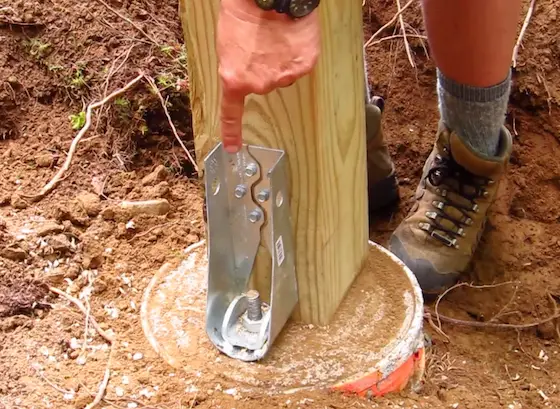
Hold-Down Anchor and Through Bolts - This is a hold-down anchor. You can use one to make a secure connection between a deck post and a concrete pier. After the photo was taken, the curved washer under the bolt was removed and turned upside down and sideways. These anchors work well to secure a garden shed preventing it from blowing away. Copyright 2023 Tim Carter
Hold Down Anchors and Through Bolts - Strong Connections
I live in rural New Hampshire. When I drive to town, I pass by a house that has a very tall outdoor shed. Every now and then impressive Nor’easters lash us with high winds and rain. We also get our fair share of powerful gales.
After one of these storms hit, I always wonder if the shed is going to be on its side or maybe in the neighbor’s side yard. I say this because I’ve been blown over before carrying a piece of plywood on a windy day.
Have you ever thought about the best way to secure a deck to a concrete pier? What about securing a large barn to a foundation? Tall barns present a huge face to wind and can blow over in a windstorm.
Vertical Hold-Down Anchors
There are all sorts of metal connectors you can use to ensure things you build don’t blow away. I happen to prefer vertical hold-down anchors that are bolted to a substantial concrete pier with a 5/8-inch diameter anchor bolt. Long galvanized lag bolts pass through the metal anchor and are tightened securely to the wood post leg.
It’s really important to use approved galvanized bolts that are rated for direct contact to treated lumber if you’re using these bolts outdoors. When these bolts get wet and the metal is in contact with treated lumber that contains copper as a preservative, a chemical brew is created that can corrode steel and iron that’s not protected. You studied this in high school chemistry class when galvanic reactions were discussed.
Roofing Nails are Not Structural Fasteners
I see mistakes made all the time when I view photographs sent to me by homeowners like you. One big one is using roofing nails to attach joist hangers on decks or inside a home. Roofing nails are not structural fasteners. They work well to secure shingles to roofs or tar paper to wall and roof sheathing but that’s about the extent of their usefulness.
It’s far better to use approved galvanized small structural screws to attach joist hangers to beams and ledger boards. A drill/driver can be used to drive these rapidly. If you’re going to use nails on the joist hangers, be sure to use approved heavy-duty structural nails that have the proper coating to prevent corrosion. You don’t want the nails to rust years from now and have the joist fail.
Structural Screws
Three-inch-long coated screws are easy to find at home centers and hardware stores. These are excellent fasteners to attach two pieces of wood that you never want to come apart. Over time, some nails can lose their holding power as lumber shrinks. A screw that’s not overdriven will hold the two pieces of wood together for many decades.

This is a structural timber screw. Note the bugle-shaped head. It also sports special knerels above the threads that drill a pilot hole for the screw shaft that doesn't have threads. Copyright 2023 Tim Carter
Large-diameter timber screws with large bugle-shaped heads are now mainstream. These can be used much like the lag bolts of old. Some have very aggressive coarse threads and are perfect for securing larger dimensional lumber together.
Lag Bolts
Lag bolts are heavy-duty screws. The usually have a hex head. I feel they're inferior because it's easy to overdrive them. When this happens, they lose a considerable amount of holding power.

This is a standard lag bolt. You'd use a flat washer up against the hex head. These come in a wide variety of diameters and lengths. In a marine environment outdoors, use stainless steel ones! Copyright 2023 Tim Carter
Through Bolts are Best
Through bolts are, in my opinion, the gold standard. A through bolt is different from a lag bolt or large timber screw. The through bolt requires that you drill a hole completely through the two pieces of lumber you want to secure to one another. Lag bolts only require a small-diameter pilot hole. Some timber screws require no pilot hole.
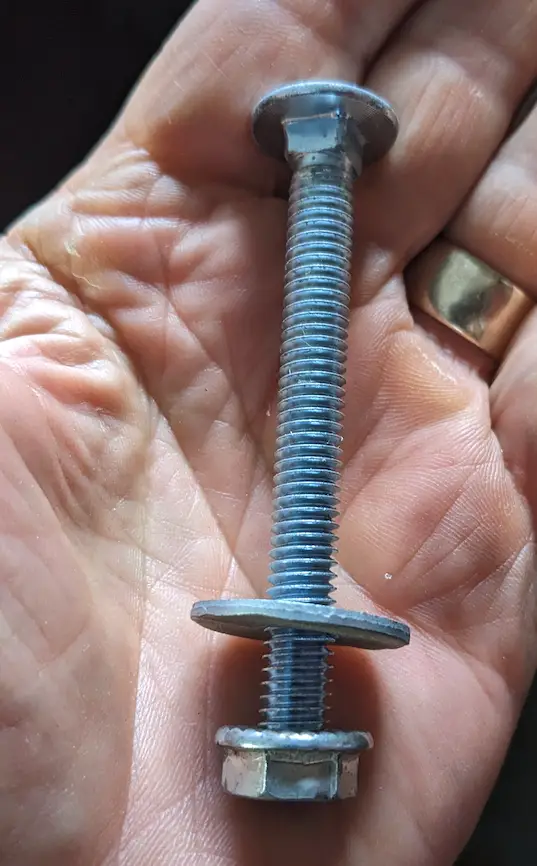
This is an example of a through bolt. They come in a wide variety of diameters and lengths. You must use a washer at the nut end! Copyright 2023 Tim Carter
This method of connecting two things together is so good it's what's been used for well over 100 years. Ships, bridges, structural-steel building skeletons are all held together with through bolts. Years ago they were called rivets. Rivets were used to connect massive plates together for the hulls of ships like the Titanic and Lusitania. But for decades now actual high-strength steel bolts and nuts have been used to connect steel beams together.
The hole diameter should match the diameter of the bolt shaft. This requires you to hammer the bolt through the lumber. Once the bolt passes through the pieces of wood, you slide a flat washer over the threads then rotate a nut onto the threads. A wrench or socket on a ratchet is used to tighten the nut and pull the pieces of wood together.
This makes for a stronger connection than you’d achieve using a lag bolt. Lag bolts can be over-tightened by an inexperienced person. When this happens, they lose a significant amount of holding power. For a through bolt to fail, the entire bolt, washer, nut, or bolt head has to be pulled through the lumber. It’s either that or the bolt has to shear off. Through bolts offer great peace of mind and many structural engineers specify them.
Structural Engineer Inspection
I once had to use 1-inch-diameter through bolts to secure rafter ties at the bottom of rafters on a steep 17/12 pitch roof. The architect had specified these. Little did I know that he had arranged for an inspection by a local structural engineer once I had framed the roof.
One day the engineer showed up at the job site unannounced. I knew him and we were friends. He said, “Tim, do you mind if I borrow two of your adjustable wrenches?” I obliged and he proceeded to back off the nuts on a few random connections. He was testing to see if I had taken a shortcut by drilling a larger hole through the lumber. Trust me, it’s no easy chore to install long 1-inch bolts through a 1-inch hole in southern yellow-pine 2x12s!
I had drilled 1-inch holes and after inspecting about four bolts, he gave me an A+ grade on my framing. Make sure you do the same as I did each time you install through bolts. Don’t be tempted to take a shortcut. If you want to talk to me about structural problems or any other conundrum you face, just go to: https://go.askthebuilder.com/coaching
Column 1536
How to Stop Water Flooding Into Your Home
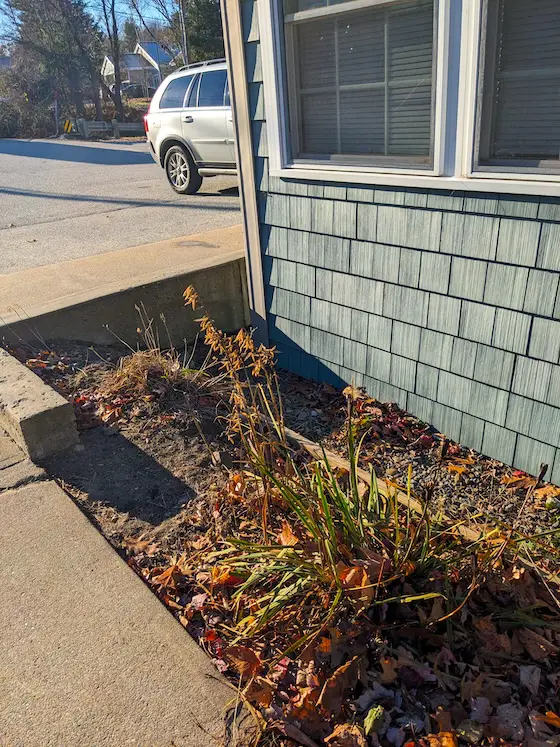
How to Stop Water Flooding - This veterinarian office foundation was built so low into the ground they had to build a retaining wall to keep the fill dirt off the siding. It should have never passed inspection. Copyright 2023 Tim Carter
How to Stop Water Flooding Into Your Home - Set Your Foundation High
Water is both your friend and your foe. You need it to live, your plants and landscaping need a sip, and if your pets are like my stunning American Dirus dog that looks like a dire wolf, they need lots of water. Water is also used to build your home. But once your home is built, you don’t want water coming through your roof, your siding, your windows, or overtopping your foundation or slab. Homeowner insurance agents will tell you water is involved in a vast majority of claims.
Days ago I had to stop by my veterinarian’s office. I’ve been there before several times but I never really thought about how low the building was built into the ground. It’s so low that on the south side of the building, the builder had to erect a 2-foot high retaining wall one foot away from the building. If this wall had not been built, the wood-frame wall would be covered in dirt 20 inches below ground! That’s insanity. What’s more, it’s a distinct building code violation. How this building passed inspection years ago is a mystery.
The problem also exists to a smaller degree on the east wall of the building. the soil is just below the lowest course of cedar-shake siding. Once again, this is a disaster waiting to happen and a code violation. At the bare minimum, six inches of foundation should be visible between the bottom of the siding and the top of the soil against the foundation.
Propane Tank Explosion
This past spring a neighbor on my street had to make an expensive repair that cost over five figures. It was a new house that I saw built over the past eighteen months. When they set the foundation forms, I knew there might be a big problem on the back wall. A large hill extends up behind the house and the soil is very shallow. Rainwater or snowmelt rides across the top of the granite bedrock like an amusement park roller coaster goes down the first big hill.
Sure enough, we had a huge storm one night. Overland water cascaded down the hill aimed straight at the back wall of the house. The builder had the ground sloped ever so slightly towards the house believe it or not. Water from the roof poured onto the ground as gutters are often not used here in New Hampshire.
The water created a river that started to erode the ground as it ran around the house heading towards the nearby lake. It didn’t take long for it to cut a 4-foot-deep channel that was 5-feet wide. It almost exposed the house’s propane tank and it did expose the propane pipe that extended to the house. If a rock had pierced this pipe during the flood event, it might have caused a massive explosion. Three years ago a husband/wife couple I know were killed instantly in a propane explosion caused by a landslide at their home.
I could tell you no less than ten other stories about houses I know of that are built too deep into the ground. I could share tales of how errors like this have caused untold emotional and financial suffering. Instead, I think it’s best to share how to avoid problems like this.
Purchase a Great Lot
The first piece of advice is to think long and hard about purchasing a lot or land where a steep hillside is close to the location of the house. Ideally, you’d like to purchase a lot where the house can be built on a very small rise or high spot on the land where all of the ground around the house slopes away. Get my checklist that helps you buy the best lot.
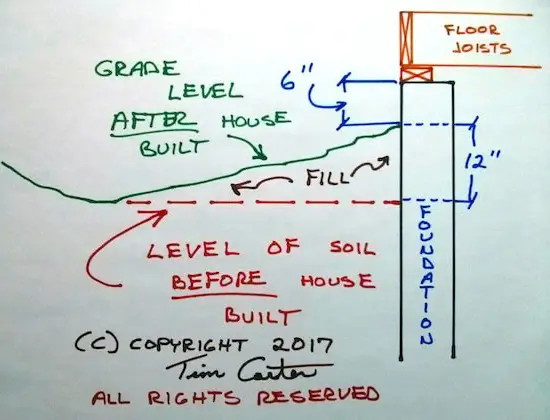
The model building code used across the USA stipulates that the ground on all sides of your home should slope down at least six inches in the first ten horizontal feet away from the house. More slope is better and more foundation exposed is better. The first two houses I owned were built in the early 1900s and had 30 inches of foundation exposed above grade!
If your foundation is too low, you can sometimes adjust the grade to meet the code’s minimum standard. This assumes your lot has enough natural slope to your property lines. Swales or shallow ditches with a slight amount of slope are created that transport overland water to the lowest spot on your lot.
You have the best chance of success when building a new home. I urge you to get involved early in the process. Create a simple illustration showing how the top of your foundation or slab should be at least 18 inches higher than the highest point of land within ten feet of the foundation. Doing this you’ll discover if you have 8 inches of foundation exposed after the house is built that the fill dirt around the foundation will drop 10 inches when it is feathered out to that high spot.
I’m also available by phone or video call to assist you with water problems or any other conundrum you face. The link opens in a new window.
Column 1535
How to Unclog Drains in Minutes
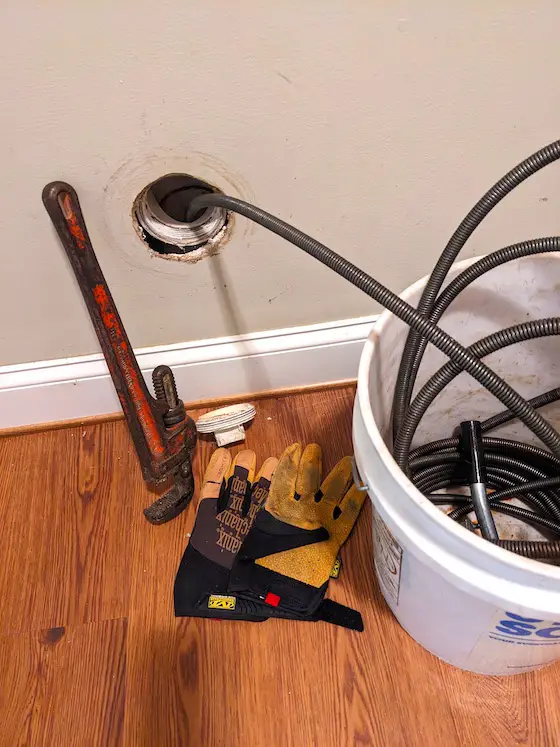
A pipe wrench, an inexpensive 50-foot metal drain-cleaning snake, and some gloves might save your bacon and $500.00. Copyright 2023 Tim Carter
How to Unclog Drains in Minutes - Save Hundreds of Dollars
I’ve been a master plumber for over four decades in addition to building and remodeling homes. I was attracted to plumbing because it’s a fascinating three-dimensional puzzle of interconnected drain, waste, and vent pipes. Most are invisible behind the walls and ceilings in your home. I also love drawing riser diagrams that show all these pipes. You need one of these to obtain a plumbing permit. Go here - opens in a new window - if you need me to draw your riser diagram.
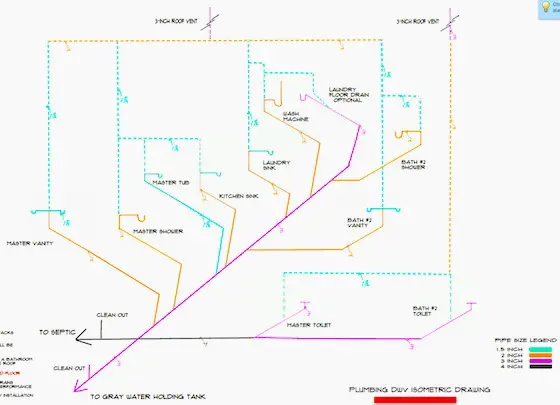
Here's a riser isometric drawing showing the separation of gray water from black water in a home. CLICK or TAP HERE to have me draw your riser diagram.
Poor Pipe Layout Creates Clogs
Drain pipes of all sizes in your home can clog for many reasons. It’s vital the layout of the pipes have as few changes of direction as possible so the wastewater gets out of your home with minimal friction loss. One hopes your plumber installed the pipes with sufficient slope so the water and solids make it to the city sewer or your septic tank with no issues.
If the pipes are not at fault for clogs, then it’s often human error or oversight that creates a clog. For example, your kitchen drain and even the primary building drain may be clogged with grease. I’ve seen grease clogs that run for twenty feet. The pipe is choked off with a disgusting semi-solid mass that resembles a shortening you might use for baking.
Grease is a Major Clog Cause
You can prevent grease clogs with just a small amount of effort. Start saving paper towels that you might use to dry your hands or use to clean a countertop. Once dry, store them in a box under your sink. Use these towels to sop up grease from plates, pans, skillets, bowls, etc. Toss these grease-soaked towels in the garbage.
After you wash grease-covered items, run hot water in your sink for one minute. Better yet, fill your sink with hot water and then pull out the stopper. This massive amount of hot water fills the entire horizontal branch arm pipe that drains your sink. As the water cascades down the vertical stack it creates a turbulent whirlpool that rinses any liquid grease off the sides of the pipes. Just as the sink drains out, flush a nearby toilet to try to force all the water into the city sewer or your septic tank.
Cosmetics & Hair in Bathroom Sinks
Bathroom sinks commonly get clogged with hair and cosmetic ingredients. Quite often the clog is located in the short pipe between the bottom of the sink and the p-trap below in the cabinet. The sink stopper and the control rod that makes the stopper go up and down are choke points within the tailpiece pipe just under the sink.
It’s easy to remove the control rod by turning a nut on the tailpiece pipe. Once you have the rod pulled out, you can pull the stopper up. Be prepared to be grossed out. The black biofilm goop needs to be cleaned off the stopper mechanism as well as the inside of the pipe between the sink and the p-trap. Use a long bottle brush that’s just slightly larger in diameter than the drain pipe.
Put a piece of duct tape over the hole where the control rod entered the tailpiece. This will prevent water from entering your cabinet as you run water in the sink while you make the bottle brush go up and down. Check your progress with a flashlight until the drain pipe is nice and clean.
High-Quality Toilet Paper & Low-Flush Toilets Create Clogs
High-quality toilet paper mixed with low-flush toilets is another common source of clogs. Drain pipes in older homes were designed decades ago knowing that toilets of old would send 3.5 gallons of water into the system to transport the waste. Now you have less than 50 percent of that. Remember your high school physics? Force equals mass time acceleration. The water mass has been reduced by half so the force of the water moving down the pipes has, by default, been reduced as well.
Low-flush toilets, in my opinion, should have never been thrust upon all of us. A vast majority of the USA doesn’t have a water shortage. Cities with municipal sewage treatment plants put back into the river the same amount of water each day as is being taken out upstream for drinking water. If you choose to live in a place where it rarely rains, then you can use a low-flush toilet. As for me, I’d give my eye teeth to have back my old toilets.
DIY Drain Cleaning
Should you have a substantial clog in the 4-inch primary building drain in your crawlspace or under a concrete slab, you can often remove the blockage in the pipe. You just need a pipe wrench, a 50 or 100-foot drain-cleaning snake, and a great pair of gloves. There are plenty of videos on YouTube that show you how to use a manual drain-cleaning snake. If you have no luck, then call in the pros who have power drain augers.
If tree roots are causing your clogs, read my past columns that show you how to stop the tree roots from entering your pipes. It’s a DIY trick that I’ve used for years that works every time. Here are the columns. They all open in new windows:
Tree Root Removal in Sewer Lines
Magic Small Pipes Kill Tree Roots
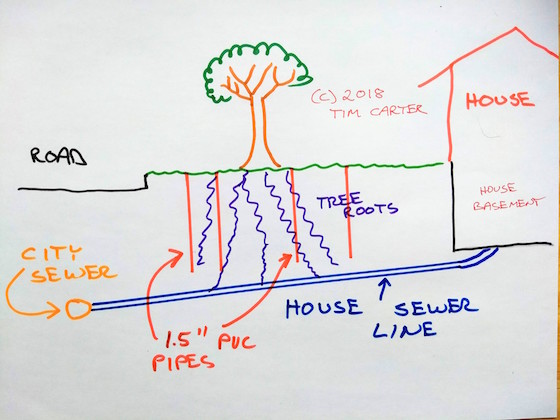
The red vertical lines are small 1.5-inch PVC pipes. Fill them with copper sulfate crystals and hot water and no more tree roots sewer line problems! Copyright 2018 Tim Carter
Column 1534
All Wars are Bankers Wars
All Wars are Bankers Wars
Publisher Note: All that follows was copied and pasted from a PDF file I received from Ric, one of my newsletter subscribers. I do NOT own the copyright and hope the original author is pleased that I'm sharing far and wide what he wrote.
The above is an old video from 2013, but it contains some excellent information. History is not what we have been told.
Important truths have been withheld from you and millions of others. Half-truths are WHOLE LIES.
The video above features a 2013 documentary, "All Wars Are Bankers Wars," written and narrated by Michael Rivero.
As explained by Rivero, all wars can be traced back to the private central bankers.
"The more you study this, the more you’ll realize that ALL wars are wars for the private central bankers," he says. American soldiers have fought and died in wars initiated for no other purpose than to force private central banking on nations that didn’t want them."
Usury — The Birth of Money from Money
The philosopher Aristotle (384-322 BC) once said:
"The most hated sort of moneymaking, and with the greatest reason, is usury, which makes a gain out of money itself, and not from the natural use of it. For money was intended to be used in exchange, but not to increase at interest.
And this term ‘usury,’ which means the birth of money from money, is applied to the breeding of money, because the offspring resembles the parent. Wherefore of all modes of making money, this is the most unnatural."
What Aristotle described, is the business model of all central banks. They make money out of thin air by lending money at interest, and in the process, they drain a nation of its wealth. The first bankers war example illustrated in the film is that of the American Revolution, fought between 1775 and 1783.
Thirteen of Great Britain’s North American colonies revolted against British rule and established the sovereign United States of America, founded with the Declaration of Independence in 1776.
The American Revolution was fought to prevent Central Banking
However, as explained by Rivero, the American Revolution was instigated by the King George III Currency Act, which forced the North American colonists to conduct business using Bank of England banknotes borrowed at interest:
"If you go back to the writings of Ben Franklin ... here’s a direct quote: ‘The refusal of King George III to allow the colonies to operate an honest money system, which freed the ordinary man from the clutches of the money manipulators, was probably the prime cause of the revolution.’
That's Ben Franklin. Our public schools don't teach that because you're not supposed to know that the bankers were really behind the American Revolution.
After the revolution, the United States adopted a revolutionary radically different economic system in which the government issued its own value-based currency, so that private banks couldn't skim the wealth of the people through interest-bearing banknotes. So the American Revolution was fought primarily to free the American people from King George the 3rd's Currency Act ..."
When Corruption Fails, Threats are Made
Unfortunately, it’s easy to corrupt people, and the central bankers know that better than most. Just 1 year after Mayer Amschel Rothschild uttered the now-infamous quote, "Let me issue and control the nation's money and I care not who makes the laws," private bankers succeeded in setting up a private central bank, called The First Bank of the United States.
This bank was founded in 1791, and within 20 years, it had gutted the U.S. economy while enriching the bank owners. As a result of its obvious failures, Congress refused to renew the bank’s charter. The intention was to return to a state-issued, value-based currency, for which Americans would not have to pay any interest. In response, Nathan Mayer Rothschild issued the following threat:
"Either the application for renewal of the charter is granted, or the United States will find itself involved in a most disastrous war."
Despite that threat, Congress held firm and refused to renew the bank’s charter. Nathan Mayer Rothschild railed against the decision, stating:
"Teach those impudent Americans a lesson! Bring them back to colonial status!"
And that’s exactly what Great Britain did — or tried to do. The Rothschild-controlled Bank of England financed Britain’s War of 1812, the aim of which was to either a) recolonize the United States and force Americans to use Bank of England banknotes, or b) plunge the nation into so much debt, they’d have no choice but to accept a new private central bank.
"And the plan worked," Rivero says. "Even though the United States won the war of 1812, Congress was forced to grant a new charter for yet another private bank, issuing the public currency as loans at interest.
Once again, private bankers were in control of the nation's money supply and cared not who made the laws or how many British or American soldiers had to die for it. And once again, the nation was plunged into debt, unemployment and poverty by the predations of the private central bank.
In 1832, Andrew Jackson successfully campaigned for his 2nd term as President under the slogan, ‘Jackson and No Bank.’ True to his word, Jackson succeeded in blocking the renewal of the charter for the Second Bank of the United States of America ...
Shortly after the charter for the Second Bank of the United States expired, there was an assassination attempt on Andrew Jackson. It failed when both pistols used by the assassin, Richard Lawrence, failed to fire.
Later on, Lawrence explained the motive for the assassination by saying that, with President Jackson dead, money would be more plenty. So, it was an assassination motivated by the interests of the bankers."
Debt Is an Enslavement System
The reason you never learned this in school is because the public school system is subservient to the bankers, who want certain history to remain hidden. When the
Confederacy seceded from the United States, the bankers offered to fund Lincoln's efforts to bring them back into the union — at 30% interest.
Lincoln replied that he would "not free the black man by enslaving the white man to the bankers," and instead issued a new government currency, the greenback. The following quote from the London Times is a telling one:
"If this mischievous financial policy, which has its origin in North America, shall become endurated down to a fixture, then that government will furnish its own money without cost.
It will pay off debts and be without debt. It will have all the money necessary to carry on its commerce. It will become prosperous without precedent in the history of the world. The brains and wealth of all countries will go to North America. That country must be destroyed, or it will destroy every monarchy on the globe."
France and Britain considered invading the United States in support of the Confederacy, but were held at bay by Russia, which came to the aid of Lincoln’s Union. 4 The Union won the war, but Lincoln was assassinated in 1865. The interest-free greenbacks were pulled from circulation, and America was again forced into banknotes borrowed at interest from private central bankers.
In 1913, the private central bankers of Europe met with their American collaborators on Jekyll Island, Georgia, where they formed a new American banking cartel. Rivero explains:
"Owing to hostility over the previous banks of the United States, the name of this 3rd bank was changed to the Federal Reserve, in order to grant the new bank a quasi governmental image. But in fact, it is a privately owned bank. It's no more federal than Federal Express ...
So 1913 proved to be a transformative year for the nation's economy. First with Congress’ passage of the 16th income tax amendment, and the false claim it had been ratified. Here's another direct quote [from U.S. District Court Judge James C. Fox, in Sullivan v. United States 2003]:
‘I think if you were to go back and try and find and review the ratification for the 16th amendment, which was the Internal Revenue, the income tax ... you would find that a sufficient number of states never ratified that amendment.’"
Later that year (1913), President Woodrow Wilson signed the Federal Reserve Act, in exchange for campaign contributions — a decision he later regretted.
In 1919, Wilson wrote:
"I am a most unhappy man. I have unwittingly ruined my country, a great industrial nation is now controlled by a system of credit. We are no longer a government by free opinion, no longer a government by conviction and the vote of the majority, but a government by the opinion and duress of a small group of dominant men."
World War I and II were Bankers' Wars
According to Rivero, the real reason behind World War I — which began as a squabble between Austria, Hungary and Serbia and only later shifted to focus on Germany — was Germany’s industrial capacity, which posed an economic threat to Great Britain, the currency of which was in decline due to its lack of focus on industrial development.
After Germany’s defeat, the private bankers seized control of Germany’s economy, which resulted in hyperinflation. After the collapse of the Weimar Republic, the National Socialist party came into power and issued a new state currency not borrowed from central banks.
"It was based on a unit of value, not a unit of debt. Freed from having to pay interest on the money in circulation, Germany blossomed and quickly began to rebuild its industry. It was an amazing transformation to see. The media called it the German Miracle.
Time Magazine lionized Hitler for the amazing improvement of life for the German people and the explosion of German industry. They even named him Time Magazine's Man of the Year in 1938.
And then, once again, Germany's prosperity and freedom from a private Central Bank loaning the public currency at interest became a threat to other nations and other powers.
Germany's state-issued value-based currency was also a direct threat to the wealth and power of the private central banks around the world, and as early as 1933, they started to organize a global boycott against Germany to strangle this upstart ruler who thought he could run his nation without a private central bank."
World War II was a repeat of World War I, in that quashing Germany’s economic and industrial power was the chief goal. In a March 1946 note from Winston Churchill to Harry Truman, the reason for World War II was made clear:
"The war wasn't only about abolishing fascism, but to conquer sales markets. We could have, if we had intended so, prevented this war from breaking out without doing one shot, but we didn't want to."
According to Rivero, Churchill also made the following statement in his book series "The Second World War":
"Germany's unforgivable crime before World War II was its attempt to loosen its economy out of the world trade system and to build up an independent exchange system from which the world finance couldn't profit anymore.
We butchered the wrong pig."
Our Military is the ‘Muscle’ for the Bankers
Rivero goes on to tell the story of how, in 1933, Wall Street bankers recruited Marine Corps Major General Smedley Butler to lead a coup against the U.S. government, with the intent of installing a a fascist dictatorship. At the time, President Roosevelt’s "New Deal" threatened to redistribute wealth to the working middle class, which they were intent on preventing.
The idea was to get rid of the U.S. government in its entirety, and install a Secretary of General Affairs who would answer to Wall Street alone, and not the people. Butler pretended to go along with the plot and then exposed it to Congress before it could be carried out.
Roosevelt tried to have the plotters arrested but was told that if any of the central bankers were sent to prison, their remaining Wall Street buddies would deliberately collapse the economy and blame Roosevelt for it.
Butler, in his 1935 book "War Is a Racket" also confessed the following:
"I spent 33 years and 4 months in active military service as a member of our country's most agile military force, the Marine Corps. I served in all commissioned ranks from Second Lieutenant to Major General, and during that period, I spent more of my time being a high-class muscle man for big business, for Wall Street, and for the bankers.
In short, I was a racketeer, a gangster for capitalism. I suspected I was just part of a racket at the time. Now I'm sure of it. Like all members of the military profession, I never had an original thought until after I left the service. My mental faculties remained in suspended animation while I obeyed the orders of the higher-ups.
This is typical with everyone in the military service. Thus, I helped make Mexico and especially Tampico safe for American oil interests in 1914. I helped make Haiti and Cuba a decent place for the National City Bank boys to collect revenues in.
I helped in the raping of half a dozen Central American republics for the benefit of Wall Street. The record of racketeering is long. I helped purify Nicaragua for the international banking house of Brown Brothers in 1909 through 1912.
I brought light to the Dominican Republic for American sugar interests in 1916. In China in 1927, I helped see to it that Standard Oil wound its way unmolested.
During those years I had, as the boys in the back room would say, a swell racket. I was rewarded with honors, medals and promotions. Looking back on it, I feel I might have given Al Capone a few hints. The best he could do was operate his racket in 3 city districts. I operated on 3 continents."
The Why Behind the Kennedy Assassination
In 1963, President John Fitzgerald Kennedy, who understood the predatory nature of private central banking, signed Executive Order 11110, which ordered the U.S. Treasury to issue a new public currency called the United States note. These banknotes would not be borrowed from the Federal Reserve but rather created by the U.S. government and backed by silver.
This represented a return to the system of economics the United States had been founded on. "All told, some $4.5 billion went into the public circulation, which eroded interest payments to the Federal Reserve and loosened their control over the nation," Rivero says. 5 months later, Kennedy was assassinated in Dallas, Texas, and the United States notes were pulled from circulation and destroyed. Rivero continues:
"Following Kennedy's assassination, John J. McCloy, president of the Chase Manhattan Bank and president of the World Bank, was named to the Warren Commission. Now, I don't care how good a banker he is, he's not qualified to be investigating a murder, which is what we were told the Warren Commission was all about ...
We all know that the Warren Commission was there to cover up what was going on. And we can safely presume that John J. McCloy's presence on the Warren Commission was to make sure the American public never got even a hint of the financial dimensions behind the assassination."
The Rise and Fall of Bretton Woods
In July 1944, at the end of World War II, once it became obvious that the Allied forces were winning and would be able to dictate the post-war political environment, the world economic powers met at Bretton Woods in New Hampshire to hammer out what became known as the Bretton Woods agreement for international finance, which was ratified the following year.
Under this new agreement, the U.S. dollar replaced the British pound as the global trade and reserve currency, and signatory nations were obligated to tie their national currencies to the dollar. As explained by Rivero:
"The nations that ratified Bretton Woods did so on 2 conditions. The 1st was that the Federal Reserve would refrain from over-printing the dollar as a means to loot real products ... from other nations, in exchange for ink and paper.
It was an imperial tax imposed by the U.S. economic system on the rest of the world. That assurance of no over-printing was supposedly backed up by the 2nd requirement, which was that the U.S. dollar would always be convertible back to gold by the U.S. government at $35 an ounce.
Now, of course, the Federal Reserve, being a private bank and not answerable to the U.S. government did start over-printing paper dollars, which were sent to other nations around the world, and under Bretton Woods, they had to send back products and produce and raw materials at full value.
Much of the perceived American prosperity in the 1950s and ‘60s was the result of these foreign nations having to send real raw materials, goods, and produce back to the United States in exchange for these little pieces of paper ... because they were forced to accept these paper notes as being worth $35 per ounce of gold.
Then, in 1970, France started looking at this huge pile of printed paper notes sitting in their bank vaults, for which real French products like wine and cheese had been traded, and it notified the United States government that they would exercise their option under Bretton Woods to return all those paper notes for gold at the agreed upon $35 per ounce exchange rate.
The problem was that the United States had nowhere near the gold to redeem all those paper notes. So, on August 15, 1971, Richard Nixon temporarily — nudge, nudge, wink, wink — suspended gold convertibility of the U.S. Federal Reserve notes. This ... effectively ended Bretton Woods and many global currencies started to delink from the U.S. dollar."
Land Grabs and the Birth of the Petro Dollar
Nixon’s suspension of Bretton Woods also created another problem. Rivero explains :
"The United States had been collateralizing their loans — money borrowed from other governments and foreign investors — with the American nation's gold reserves, and with the awareness that there wasn't enough gold to redeem all the Federal Reserve notes, lenders to the U.S. were starting to wonder: Did the U.S. government have enough gold to cover ... their outstanding debts?
Foreign nations began to get very nervous about the loans to the United States and they were understandably reluctant to loan any additional money without some form of collateral.
So what Richard Nixon did, is he founded the environmental movement, with the EPA and its various programs, like wilderness zones and roadless areas, inherited rivers, wetlands, and all these other programs, which all took vast areas of public lands and made them off limits to the American people who are technically the owners of all those lands.
But Nixon had no concern for the environment. The real purpose of this land grab under the guise of the environment was to pledge those pristine lands and their vast mineral resources as collateral on the outstanding national debt.
The multitude of all these different programs was simply to conceal the scale of the land grabbing, the collateralization of the American people's heritage ... Almost 25% of the entire nation is now locked up by these EPA programs and pledged as collateral on government borrowing.
Now, with available lands for collateralization already in short supply, the U.S. government embarked on a new program to shore up sagging international demand for the dollar. The United States approached the world's oil-producing nations, mostly in the Middle East, and offered them a deal in exchange for only selling their oil for dollars.
The United States would guarantee the military safety of those oil-rich nations, and the oil-rich nations would agree to spend and invest their U.S. paper dollars inside the United States, particularly in U.S. Treasury bonds, which would be redeemable through future generations of US taxpayers.
The concept was labeled the Petro Dollar. In effect, the United States, no longer able to back the dollar with gold, was now backing it with other people's oil, and that necessity to keep control over those oil nations to prop up the dollar has dominated America's foreign policy in the region ever since."
Wars and Murders to Prop up the Petro Dollar
Over time, America’s focus on finance over manufacturing led to a situation in which oil-producing countries were flush with U.S. cash, but the U.S. wasn’t manufacturing or selling anything that these nations wanted to buy. Europe made better cars and aircraft and didn’t allow genetically engineered foods.
In 2000, Iraq demanded the right to sell its oil for euros, and in 2002, the United Nations agreed they could do so under the oil-for-food program. A year later, the United States re-invaded Iraq, Saddam Hussein was publicly lynched and Iraq's oil could once again only be sold for U.S. dollars.
A similar scenario took place in Libya. In 2000, Muammar Gadhafi proposed the adoption of a new gold-backed currency, the gold dinar. He then announced that Libya’s oil would only be sold for gold dinars. As noted by Rivero:
"This move had the potential to seriously undermine the global hegemony of the dollar. French President Nicolas Sarkozy reportedly went so far as to call Libya a threat to the financial security of the world. So, the United States invaded Libya under the guise of supporting a popular rebellion.
They brutally murdered Gadhafi — apparently, because the object lesson of Saddam's lynching had not been enough of a message — imposed a private central bank and returned Libya's oil output to dollars.
According to General Wesley Clark, the master plan for the dollarization of the world's oil nations included 7 targets: Iraq, Syria, Lebanon, Libya, Somalia, Sudan, Iran, and Venezuela ...
What is notable about those original 7 nations targeted by the U.S. is that none of them are members of the Bank of International Settlements. This is the private central bankers' private central bank located in Switzerland.
That meant that those 7 targeted nations were deciding for themselves how to run their nation's economies, rather than submitting to the international private central bankers.
Now ... the bankers' gunsights are on Iran, which dares to have a government central bank and sell its oil for whatever currency they choose. The war agenda for Iran is ... to force Iran's oil to be sold only for dollars and to force them to accept a privately owned central bank.
You have been raised by a public school system and a media that constantly assures you that the reasons for all these wars and assassinations are many and varied. ‘We're bringing democracy to the conquered lands.’ We hear that a lot when actually the U.S. hasn't. The usual result of a U.S. overthrow is the imposition of a pro-business, pro-Wall Street, pro-U.S.-dictatorship."
The Real Agenda of the Bankers
In closing, the real agenda of the central bankers is a simple one. It’s to rob people of their wealth and enslave them to this predatory system by creating a false sense of obligation.
"That obligation is false because the private central banking system, by design, creates more debt than money with which to pay the debt," Rivero explains. "There is no way out, the way it's set up. It's impossible to escape as long as you're playing by their rules. And you need to understand that private central banking is not science. It is a religion."
It's a set of arbitrary rules created to benefit the priesthood, meaning the bankers, and is supported only because people believe this is the way it's supposed to be. The fraud persists with often lethal results only because the people are brainwashed into believing that this is the way life is supposed to be and no alternative exists or should even be dreamt of."
The Path to Freedom — Abolish Central Banks
The reality is, we do not "need" central banks. Not in the slightest. A country, or even individual states, can create their own currency and run their own banks, either without usury, or with very low interest rates. That’s the path to freedom, and all that is required is the decision to do so, and the guts to carry it through.
Ideally, captured nations around the world would break free all at once, as this would best guarantee everyone’s safety. As noted by Rivero:
"Private central banks do not exist to serve the people, the community, or the nation. Private central banks exist to serve their owners to make them rich beyond the dreams of Midas, and all for the cost of ink, paper, the right bribe to the right official, and the occasional assassination.
Behind all these wars and all these assassinations ... lies a single policy of financial dictatorship. The private central bankers only allow rulers to rule on the promise that the people of a nation be enslaved to the private central banks.
Rulers who do not go along with that will be killed and their nation invaded by those other nations still enslaved to the private central banks. The bankers themselves don't fight these wars. Their children are not in these wars.
This so-called ‘clash of civilizations’ you are being told about by the corporate media, is really a war between banking systems, with the private central bankers forcing themselves on to the rest of the world, no matter how many millions must die for it ...
Now we're going into the third world war in the nuclear, bioweapon age. That is very dangerous. We have to ask ourselves. Are the private central bankers willing to risk incinerating the whole planet to feed their greed? Apparently.
So, you, as parents, as siblings, as spouses, need to ask yourself, ‘Do you really want to see your loved ones in uniform killed and crippled, all for a bank balance sheet? ...
As long as private central banks are allowed to exist ... there will be poverty, hopelessness, and millions of deaths in endless world wars ... The path to true world peace lies in the abolition of all private central banking everywhere, and to return to state-issued, value-based currencies that allow nations and people to become prosperous through their own labor and development and efforts."