What is Green Building?

DEAR TIM: I'm really confused about the whole green building movement. There seems to be conflicting messaging, especially when it comes to products that advertise they are green. They seem to me to be the same products I saw ten years ago. If it's so important to be environmentally friendly, why didn't companies push this agenda decades ago? After all, we've been concerned about the Earth since the 1970's, right? I want to be a responsible person, but don't want to get hoodwinked. Sally P., Lawrenceburg, IN

DEAR SALLY: First let me say that it's absolutely impossible to discuss this green building movement in this tiny column. The subject is too broad and deep. As much as I hate to say it, thousands of trees have given their lives to publish hundreds of books on the topic. I've always thought that was very ironic. One would think that every book or magazine that covers the topic would use 100 percent recycled paper.
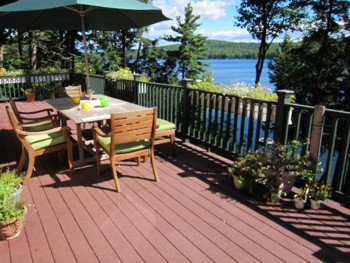
This decking can probably be considered green because it contains 100 percent recycled materials. But is it really green? PHOTO CREDIT:  Tim Carter

This decking can probably be considered green because it contains 100 percent recycled materials. But is it really green? PHOTO CREDIT: Tim Carter

Many who I see that attach themselves to the green building initiative try to cast their participation in an emerald shade of green. Many should use packaging that's more a murky color of olive green. I can see why you could be confused, as some products say they are green when, in fact, they may be impostors.

I'm all for being a great steward of the planet. It's our job to try to minimize our impact on the planet. But greed and personal gain are swirling in the vortex of this popular movement. I can see why consumers like you are struggling to make wise investments. That, by the way, is one of the real challenges when trying to make green choices.

One of the biggest things I see happening in the rush to purchase green products is the lack of doing one's homework. When you're comparing two products, the product that may not seem too green is actually the winner.

Let's examine a product that's been on the market for well over a decade, the tankless water heater. I've written extensively about these products, and have received lots of feedback from consumers who have purchased them. One of the selling points of these devices is the manufacturers saying you have an endless quantity of hot water when you install one.

Many of these heaters are touted as being very green and earth friendly. But what happens when you get one and you become part of the group whose fuel bill goes up because you, or members of your family, end up using MORE hot water than you did with your traditional tank storage heater? How green is that? Some would argue that you're causing more pollution and you're hogging more of the finite energy that powers the heater.

You may be tempted to purchase products that contain lots of recycled materials. Some of these could absolutely be a headache down the road. Just ask the hundreds and thousands of homeowners whose homes contain recycled fly ash from Chinese power plants. This fly ash was used as a filler in drywall.

The trouble is, the fly ash is a byproduct of burning high-sulfur Chinese coal. The fly ash inside the drywall is producing an invisible off gas that's corroding wiring, plumbing and causing health issues for some of the occupants of the homes that used this drywall. It's a green nightmare, if there is such a thing.

Trying to use earth-friendly materials can backfire in other ways. Who would ever think that using limestone dust would cause problems? After all, limestone is a very common rock and it's been around for millions of years. But when you mix limestone dust and asphalt together to help add weight to roofing shingles, you create an environment that the algae Gloeocapsa magma loves. Perhaps you have an ugly black-stained roof that has some of this earth-friendly limestone on it.

As you can see, there can be some unintended consequences when you try to be green. One other aspect is the financial angle. It could cost you more money to be green, lots more.

If you're independently wealthy, you may be one who can afford to subsidize the green building movement. But the average person, in these trying economic times, may not be able to afford the green product or the extra cost that may be involved to install it.

Add to this the return on investment (ROI) factor. It's really important for you to calculate the real ROI for the green products you purchase if you're on a tight budget. You may discover that it takes a decade or more to break even. What happens if you decide to sell your home in just five years? The potential buyer of your home may not care that it contains earth-friendly products.

I'm sorry to add to your confusion, but just be aware that there's lots of dangerous water out there as you navigate through the Sea of Green. Just make sure that you don't waste any of the green in your wallet as you try to be a good steward of our planet.

Column 897
Concrete Pier Construction Tips

DEAR TIM: My upcoming deck project requires concrete support piers. I've never done this before and have many questions. Do I have several options? How do I make sure the piers are in the correct locations? What type of concrete pier foundation would you install if you were me? Can you share some best practices so I don't have a failure down the road? Nancy W., Greenville, SC

DEAR NANCY: I can see why you've got questions if you've never worked with concrete piers before. You do have options galore, and what you end up doing is primarily a function of the tools at your disposal and the amount of cash you have.

concrete pier

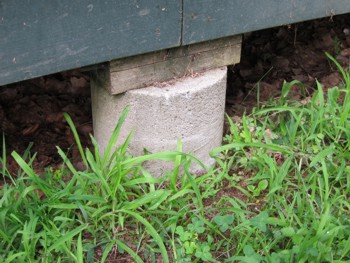
This concrete pier is supporting several tons of weight. PHOTO CREDIT: Tim Carter

You can discover the frost depth in your area by contacting your local building department. You'll be going there anyway to get a permit for this project as decks need to be inspected so they are safe. The local building inspector will probably want to check the soil to ensure it's strong enough. This means that you have to dig the hole for the pier to the required depth, and then have the inspector come out and look at it before you proceed with any more work.

As for your options, you can use any number of plastic or dense cardboard forms or tubes that will allow you to pour your own concrete pier. You can also purchase precast concrete deck piers that would be delivered to your home. The only trouble with these piers is that you need a backhoe to move them and lift them into place. The precast piers are very competitively priced when you consider how much it will cost you to buy the forms and possibly bring in a truck with all the concrete you'll need for all the piers.

You can also use concrete block to build your own piers, but this requires you to pour a concrete footing at the bottom of the hole for the block to rest on. You then have to fill the cores of the concrete block with steel rods and a concrete mix to make them solid. It's a lot of work, but it is a viable option. You also need to be somewhat skilled to lay concrete block level and plumb.

EB015 Cleaning & Sealing Deck eBoo Cover

If the deck you're building is a simple square or rectangle and it's not too far off the ground, I've found that it's best to construct the actual outline of the deck. I would then use simple wood posts to temporarily support this box in the air.

Once you ensure it's the right size, it's level, and it's square, you install temporary diagonal braces at the corners to keep the box square. You can now drop plumb bobs or use a laser tool that project to the ground the exact position of where your deck posts will be. This allows you to precisely position each pier so the deck posts are centered on the exposed pier.

I would probably install concrete piers that I pour myself. I've used the traditional round dense cardboard tube forms with great success. There are new plastic forms that also work well, and I especially like the ones that have the funnel-shaped base that creates its own footer when you pour the wet concrete into the form. This special base has the shape of a bell.

As for best practices, I feel you need to make sure the bottom of the pier is wider than the top. This shape really helps prevent any frost heave from lifting the pier. If you use the traditional round tube that has the same shape top and bottom, it's possible for the frozen ground to grab onto the pier at the top and actually lift it from the ground as the frozen soil moves up. This is not common, but it can happen.

To prevent lift, I'll typically pour a concrete footer that's at least a foot wider in diameter than the pier. I place bent concrete steel rods in this footer that extend up into the tube. This way, once the pier is poured, it's connected to the large disc of concrete that makes up the footer. If the frost tries to lift the pier, it has to bring the footer with it. Because of its large shape, it provides lots of resistance.

Be sure you install steel reinforcing in all poured concrete piers. The steel vastly increases the tensile strength of the concrete. Place the vertical steel bars so they will not be in the way should you have to drill into the concrete pier to install anchors for a metal post base.

I would caution you to not put in anchor bolts in the concrete pier unless you have a foolproof method to ensure they are in the exact spot and the height of the pier is perfect. You typically don't have much wiggle room with anchor bolts once the concrete is hard.

Be sure the forms you use for concrete piers are braced well. The last thing you want to happen is for them to move as you shovel concrete into them. Triple check all your locations and the height to which you'll pour to make sure all is right. Once the concrete hardens, you can't move it easily.

Column 896

Wood Rot Prevention and Repair

DEAR TIM: I was getting ready to paint my home and noticed several pieces of wood trim that is rotting. What can I do to prevent this from happening in the future and what can I do to repair the wood that is now defective? Are there safe chemicals to use to prevent wood rot? What have you done in the past to combat this problem? Marty B., Redlands, CA

DEAR MARTY: Wood rot has been on the rise for quite some time when it comes to wood trim on homes. There are several reasons for this, some of them poor building practices, but another one, in my opinion, has to do with the wood itself.

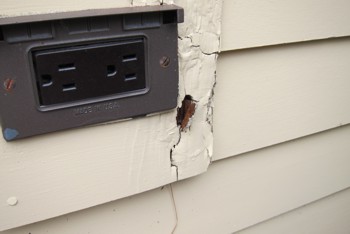
Rot is attacking this piece of wood. Keeping wood dry is the number one way to prevent rot. PHOTO CREDIT:  Tim Carter

Rot is attacking this piece of wood. Keeping wood dry is the number one way to prevent rot. PHOTO CREDIT: Tim Carter

First, much of the wood used today for trim on homes comes from hybridized trees that grow fast. The wood that’s added to a tree in the spring has a much less dense structure than the wood added in late summer as growth slows. This spring wood is the light band of color you see at the cut end of a long board or a log. The dark band is called summer wood. The two bands add up to a year’s worth of growth.

Cut into a piece of trim wood on an older home that’s not succumbed to rot and look at the end grain. I’m pretty sure you’ll often see that the dark grain accounts for nearly 50 percent of the wood mass. In today's lumber, it can be less that 25 percent. The fungi that eat wood feast on the easier-to-eat light-colored spring wood. That means the hybridized trees simply can be consumed faster and easier by rot. That's why many owners of newer homes are seeing an explosion of wood rot.

Keeping wood dry is the number one way to prevent rot. PHOTO CREDIT:  Tim Carter

Keeping wood dry is the number one way to prevent rot. PHOTO CREDIT: Tim Carter

The easiest way to prevent wood rot is to keep wood dry. Wood rot is like mold growth and fire. It's a triangle. With fire, you need fuel, oxygen and heat. With mold, you need mold spores, food and water. Wood rot is the same, all you need is wood, water and fungi spores. Fungus and fungi spores are just about everywhere. Build a house in the Atacama Desert and you'll not have to worry about rot. It rarely rains there.

But rain is a problem in most areas of the USA. Since you can't stop the rain, you have to resort to making the wood think it's dry. One way, and this is where poor building practices come in, is to paint the wood on all surfaces and edges. This effectively puts a defense shield up so that water can't touch the wood. It takes more time and effort to paint wood in this way, and most builders and carpenters will scoff at you, but it does help.

You can also pretreat raw wood that's dry with water-soluble borate chemicals. Boron is a very effective wood-rot prevention chemical. It's safe for humans and mammals, but the fungi that cause wood rot find it distasteful and poisonous.

These borate powders readily dissolve in water. You can spray the solution onto lumber, but it's best to soak each piece in a trough of heated solution for a minute or so allowing the borate chemicals to soak into the end grain like a milk shake going up a straw.

Once the lumber is treated with the borates, allow it to dry. It's best to do this in the shade and be sure to separate the pieces of lumber with thin strips of wood so air gets to all the surfaces.

After it's dry, then you can prime it on all surfaces and edges. Then you paint all surfaces with the finish paint. If you cut the lumber to fit, the cut edge needs to be painted before it's installed. You can see this is very time consuming, but it absolutely works.

If the wood rot has not progressed too far, it can often be repaired with long-lasting epoxies. There are some wood repair products that act something like the borate chemicals. Rotted wood that you might cut away can sometimes be saved with a stabilizer that's brushed or poured onto the wood. These chemicals soak into the wood giving it new life.

Great building practices also can help prevent wood rot. There are many things that could be on the following list. Here are some that are time tested:

  • Generous roof overhangs
  • Keeping at least 12 inches of separation between wood and the soil at grade
  • Use of gutters and downspouts to prevent splashing of water onto the sides of a house
  • Use felt paper or an approved equivalent to make sure water never touches wood framing or sheathing
  • Don't allow masonry to come into direct contact with wood. Leave a separation of at least a half inch to allow for air to dry the wood
  • Use flashings to direct water away from wood and to get water outside where it belongs

Column 895

August 4, 2011 AsktheBuilder Tips And Newsletter

What's in This Newsletter?

Latest News
Meghan in California
New Milwaukee Flush Cut Saw Blade
Painting Floors
Mixers for Sale

Summer is here in all its glory. I know certain parts of the nation are simmering. Two weeks ago, I was at the Milwaukee Tools Conference in Milwaukee and it was blistering hot.

I also had the opportunity to get a new homeowner's insurance policy over the past two weeks. It's very possible you've been overcharged for years like I was and deserve a refund check. Wait till you read that story.

I finally checked off one item on my bucket list. I visited the summit of Mt. Washington last Friday. Three weeks ago, I got really close, just 250 feet or so below the summit when I was working my ham radio helping in a bicycle race. But that day the conditions were so bad and there were so many people up there tending to the bicyclists, I decided to go back to the base instead of grope through the fog bumping into people.


Meghan in California

Do you live in or near these California cities? :

  • La Mesa
  • Bakersfield
  • Redlands
  • Chatsworth
  • Huntington Beach

If so, starting today, you can go see my daughter Meghan as she talks about her new The Meghan Method book. She'll gladly sign your copy.

At each location, Meghan gives a presentation on the secrets of how you extract from yourself what your true style is. You don't have to hire an expensive interior decorator. Seriously, you can do it yourself and get perfect results.

Here are the times and locations for the events. If you go and have a question about your home, be sure to bring photos of the spots you're having trouble with. Please tell her I said Hello and hope all is going well.


New Milwaukee Flush Cut Saw Blade

Milwaukee Flush Cut Saw Blade

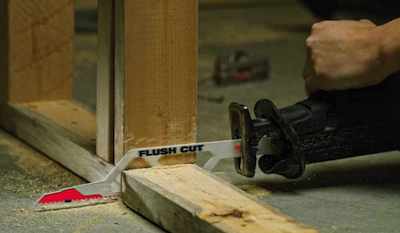
While at the Milwaukee Tool Conference two weeks ago, they demonstrated a fancy new saw blade made for reciprocating saws. It's called the Flush Cut blade.

This blade is unique because it has a large truss design that helps keep the blade cutting in the same plane. That's handy when cutting out a bottom plate at a door opening.

It also has a new fang tip that allows for quicker plunge cutting.

Better yet, it has new blade geometry that prevents the cutting teeth of the blade from coming into contact with a floor surface as the blade finishes a cut.

You'll love this blade for sure.

The link above is an affiliate link to Amazon. If you purchase the saw blade from that link, I will receive a tiny commission.


Painting Floors

Becky from El Paso, TX wrote to me:

"We just bought our 1st house. It is a mess! The previous owners left us with cigarettes burns all over the master bath old ugly laminate floor. We also had to pull out all the carpeting in all the other rooms, so we are limited on funds. My question is: Can I paint laminate flooring?"

Becky, you can absolutely paint laminate floors, or many other floors for that matter. I've got a boatload of tips about the entire process at my website.

Some of my past advice talks about oil-based primers and paints. Laws regarding volatile organic compounds (VOCs) have made it pretty tough to find these paints. But if you still can locate them, they're the ones to use.

Here's a past column on Painting Floors.

Here's a column that's full of Secret Ninja Floor-Painting Tips.


Mixers FOR SALE

Do you live in greater Cincinnati or Chicago? I have two electric-powered drum-type concrete or mortar mixers for sale.

The one in Cincinnati is only three years old and NEVER been in the daylight. It's always been in a warehouse and only used once or twice a week to mix powder, not gross concrete or mortar. It looks brand new and has a 4 cubic-foot capacity.

The one in Chicago has NEVER been used. It's brand new and has a bigger capacity.

Contact me if you're interested in either machine.
Mixer for Sale

Remember, if you're on Facebook, PLEASE leave a comment at the bottom of the column telling others what you discovered when reading my column. You'll see the Facebook comment widget at the bottom of the column. Thanks in advance!

Brick Paver Repair Tips

DEAR TIM: I have a 15-year-old colored brick paver sidewalk that’s in need of repair. I’ve got several cracked brick, and a few that are humped up and collapsed. Luckily I saved some of the original brick and have them stored in my garage. It doesn’t seem like it would be too hard to make these repairs, but I’m stumped at how to get the cracked brick out of the sidewalk without chipping adjacent brick. What’s the secret? What other tips do you have when you have to replace several and want the final surface to be perfectly smooth? Anna K., Memphis, TN

DEAR ANNA: You’re correct. The repairs to this brick sidewalk are pretty simple. The best part is that you don't need too many tools to get professional results. If you don't have the exact tools, you can rent them affordably.

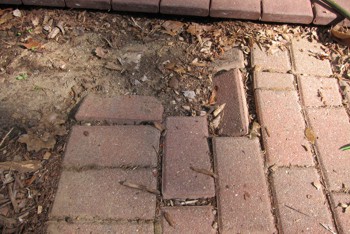
This corner of a brick paver sidewalk has collapsed. The repair is not as hard as you might think. PHOTO CREDIT:  Tim Carter

This corner of a brick paver sidewalk has collapsed. The repair is not as hard as you might think. PHOTO CREDIT: Tim Carter

Let's start with the crack paver brick as they are the easiest ones to deal with. It's important to note that there's more than one right way to deal with all of these repairs. I'll just describe the methods I'd use.

I want you to first be aware of one unintended consequence before you get started. You may think you're being a good steward by making your sidewalk look like the day it was installed, but you could create a secondary problem that may leave you distressed.

Your paver sidewalk is middle aged. You may not believe this, but it probably looks much different today than it did the day it was installed. To prove this, take one of those original brick that's been in the cozy confines of your garage the past 15 years. You'll see that the color of the paver brick is undoubtedly much deeper and richer than the others that have been out in the weather.

When the brick pavers are made, pigments are added to the cement paste. This fine paste coats all the aggregate and sand used to make the brick. The top surface is usually monochromatic as everything has a fine coating of the colored cement paste.

Over time, Mother Nature wears away this paste and you start to see the actual color of the small sand and rock particles. If you had left outdoors all your extra brick so they would also weather, you'd not have a problem. But now, if you replace the cracked brick with a brand-new brick, the difference in color may be so striking as to look worse than the tiny crack. Just keep this in mind.

If you do have brick that will match, then you're good to go. To replace one brick that's in the center of many others, one method is to use a hammer drill with a 3/8-inch bit. You start at the center of the brick and drill many holes next to one another until you can take a chisel and hammer to remove the brick material working your way to the edges.

Never angle the chisel towards the edges. Try to always chip the brick towards the center of the brick. This directs all pressure towards the brick you're trying to remove.

Once all of the brick is removed, smooth the sand under the brick. Tamp it with a small piece of 2x4 wood so that the sand is compacted and is at the same level as the bottom of the adjacent brick.

Place the new brick in position and start to tap it in place with a rubber mallet. You only get one chance to do this correctly. If you have too much sand in the space, the brick will sit high. If you have too little, the new brick may sit lower or will crack again if there is a hollow spot.

The areas of the sidewalk that are high need to have sand removed to make them flush again with the rest of the sidewalk. Once the high bricks are lifted out of place, the trick is to use a flat board that smooths the sand so that it's in the same plane as the rest of the sidewalk. But the uncompacted sand needs to be about 1/4 or 3/8 inch higher than the bottom of the adjacent brick that are at the right height.

You can test to see if you can tap the brick down to the correct height with the rubber mallet. Be careful so you don't beat the brick and cause it to crack. Use a straight piece of wood or a level to constantly check to make sure the brick are not too high or low by sliding it across the existing brick that are perfect and then onto the brick on which you're working.

For the areas of the sidewalk that are low, you just have to carefully salvage the brick and then add more sand. Usually the sand is a medium grade. You have to make sure the sand is smooth, and you carefully set the brick back into position.

After they are set, you can tap them with the rubber mallet. Test this to make sure you can get the brick into position so they are flush with surrounding brick. The original installer used a heavy machine plate compacter to drive the brick into the uncompacted sand. If you don't use this machine, you must experiment with the amount of sand needed to be able to get the brick flush with those next to it.

It's not hard to do, it just takes time and some trial and error.

Column 894

Local Results

How to Repair Drywall Like a Pro

DEAR TIM: I’ve got several drywall defects in my home that must be repaired. A doorknob punched a hole in one spot, rough housing children created another hole, and my husband stepped through the ceiling while in the attic. What are some tips you can share about repairing these holes. Is this really a do-it-yourself task or should I call in a pro? Surely you have some secrets. Susie P., Orlando, FL

DEAR SUSIE: You and tens of thousands of others have drywall defects. Drywall is a great building material, but it’s not a durable substitute for plaster as plaster is basically a thin coating of rock on your walls. This is why drywall was affectionately given the name sheetrock years ago. Too bad it’s an impostor as drywall is more like stiff clay in hardness.

This hole had to be cut to repair a water leak. It’s easy to patch the hole since the piece of cut drywall was saved. PHOTO CREDIT:  Tim Carter

This hole had to be cut to repair a water leak. It’s easy to patch the hole since the piece of cut drywall was saved. PHOTO CREDIT: Tim Carter

There are countless right ways to make these repairs to your walls and ceilings. I’ve seen many inventions over the years at trade shows. All were created to aid in the repair of drywall. Some are ingenious, like the thin piece of aluminum that had holes in it and self-adhesive on one side. This would work perfectly for your doorknob hole.

You simply put the metal patch on the wall and then coat it with premixed drywall compound out of a bucket. The patching compound passes through the small holes and locks the repair material to the metal.

One method that’s worked great for me over the years is to just take a few minutes and cut a square or rectangular hole using a plunge saw removing the jagged drywall at the hole locations. Be sure you look behind and around the hole for any wires, pipes or cables. You don’t want to cut these with your saw causing more problems.

Once you have the square hole cut, cut a slightly smaller piece of drywall. I suggest you make the repair piece one-quarter inch less in width and height. This will give you a manageable gap of just an eighth inch between the repair piece and the existing wallboard.

The trick is to fasten this repair piece as there is rarely a wall stud where the hole was created. I like to take a piece of wood no thicker than 3/4-inch to use for the next step. I cut the piece of wood so it’s 1 inch less in width of the hole and 6 inches longer than the height of the hole. Let’s say the hole to be repaired is 3 inches square. This means I'd cut a piece of wood 2 inches wide by 9 inches long. Plywood works great for this job as it's not prone to splitting.

You'll need a screw gun or a drill with a Phillips bit in it. You'll also need about ten 1 and 1/4-inch coarse-thread drywall screws assuming the drywall is 1/2-inch thick. The first thing is to screw one screw into the exact center of the piece of wood so that about 7/8-inch of the screw is still sticking out. You'll use this as a finger hold.

The trick is to slide the piece of wood into the wall cavity through the hole making sure you don't drop it in the cavity. You can tie a string to the screw as a safety device in case you do drop it. Step on the string until such time as you have the wood secured.

Once the wood is in the cavity, center it in the hole using the screw as your guide. Pull on the screw so the wood it tight against the back of the drywall at the hole. Use the screw gun or drill to drive drywall screws through the drywall and into the strip of wood as if it were a wall stud. Pull tight against the screw as you do this so the wood pulls tight against the drywall. Use at least two screws top and bottom of the hole to secure the wood strip.

Remove the center screw you were using to hold the wood in place and then screw the small repair piece to the wood. For a small piece of drywall similar to our example of 3 x 3 inches, you'll only need two screws.

Now all you have to do is tape and finish the patch. The best way to get proficient at this is to practice on a piece of drywall out in your garage. Once you get the hang of it, move indoors.

The biggest mistakes rookies make when taping and finishing drywall is putting on too much or too little of the joint compound. They also tend to use it straight from the container without adding a slight amount of water to make it creamy like warm cake icing.

You want about one sixteenth of an inch of joint compound under and over the tape to make a lasting repair. If you drag too much mud from under the tape, there will be no compound to bond the tape to the drywall.

Too much mud makes a giant hump. The key is to practice taping on a scrap piece of drywall. When the mud is the right consistency, it's easy to draw the taping knife across the tape and pull out the correct amount of mud.

Column 893

Do It Yourself Building Challenges

DEAR TIM: My husband and I are determined to build our new home. Because the economy is so bad and money is tight, we plan to do this job ourselves. We're convinced we can do this as we've done lots of tough DIY jobs in our past homes. Is it realistic to assume we can complete this project? What are the challenges? What are the pitfalls? Can you help us achieve our dream? Sandi H., Kennewick, WA

DEAR SANDI: My oldest daughter has a nickname for me: dream crusher. I have a habit of being far too pragmatic when she passes an idea by me. I tend to tell the truth and point out all the obstacles so that she can decide if she wants to move forward. So far she has made me proud charging ahead climbing over the barriers and bursting through any obstructions.

This unfinished house has sat for over three years with no activity. The owners ran into any number of difficulties. PHOTO CREDIT:  Tim Carter

This unfinished house has sat for over three years with no activity. The owners ran into any number of difficulties. PHOTO CREDIT: Tim Carter

The reality of building a new home from scratch with you doing much of the work or even subcontracting out some aspects is one filled with hourly challenges. You can't imagine how complex it is to build a new home making sure you follow all the best practices much less the minimum standards represented by the building code.

I don't have any statistics as to how many DIY home-building projects end up a total success, but my gut tells me it's in the single digits. To get an idea of what you're up against, break down the entire job into modules and start to add up the total hours required. This is just one way to get a dose of reality. You'll quickly discover the total time required in man/woman hours to build a home will approach ten thousand hours, if not more.

In all my years of watching do-it-yourselfers attempt to build a home, what I've discovered is they want to get to the glory work as fast as possible. They throw up the shell of the house and make it somewhat waterproof so they can get to work inside. If you happen to be plagued with attention deficit disorder, you'll pay dearly for jumping ahead and not finishing critical weatherproofing details outside.

There are countless challenges. Some of the most significant ones that come to mind are: financing issues, incomplete plans and specifications, poor budgeting, lack of needed tools, poor grasp of scheduling, subcontractors that don't show up, price inflation issues because of the extended building schedule, and delays in obtaining materials because of shortages and just-in-time manufacturing issues.

To help you achieve your dream, I suggest that you spend lots of time up front long before you do one thing at the lot. You need to break the job down into each separate task, there are hundreds of them, and get accurate pricing information for each thing you need. Far too many DIYr's just put in an allowance or guess only to discover the real materials cost far more.

You can use a detailed checklist that helps you determine what you need. There are some incomplete free ones you may discover online, but there are highly detailed ones that are priced below $20. You can make sure you get the right pricing by doing the actual selection of everything you want in the home before you start. Price out things like towel bars, mirrors, shower doors, window treatments, etc. Think of everything you have in your existing home that you'll need to have when you move in.

Once you have the pricing information for everything that's required, get multiple bids for things where you'll need a subcontractor. Be sure to write out exactly what you want the sub to do and what materials he needs to supply. Include a section in the bid where the sub spells out what he'll not be doing. That's very important. Be sure to add a cost for what he'll not be doing.

Finally, try to estimate the hours it will take you to do the tasks you'll attempt. Whatever number you come up with for each task, multiply it by 1.5 or 2, especially for all the finish work. At the end of the project you'll be tired and not as productive, unless you employ artificial stimulation.

I believe you'll discover the number of hours of work will be staggering. At this point, you need to plug those hours into your calendar to see when you can work. Keep in mind that building a new home is a full-time occupation for actual builders and subcontractors.

If you think you'll get the same results doing the work on weekends, after your day job responsibilities and accrued vacation time, you need to pinch yourself. It will take you years to complete the house doing it this way. Also, don't forget about weather considerations and the diminished daylight in winter months. Bad weather can put regular builders weeks behind. It may cause you to lose months of time.

Running out of money and energy are the two biggest issues the average DIY'r will face when trying to build their own home. Many construction loans have expiration dates where they have to be converted to permanent financing. If borrowing rates increase and you pass the expiration date, you could be faced with overpowering monthly payments.

As the project end approaches, it can take many hours to finish the last 15 percent of the job. Finish work, done properly, takes lots of time. Interior painting is a great example. On existing houses, you may repaint a bedroom in one day. In new work, that same room could take three days with all the needed spackling, caulking, sanding and priming. Typically you don't need to do all those things in an existing room.

Column 892

July 12, 2011 AsktheBuilder Tips And Newsletter

What's in This Newsletter?

Latest News
Update on Liens and Affidavits
Another Chinese Product Problem
Please Use the AsktheBuilder Search Engine
PR, Ad or Building Products Person
Installing Ceramic Tile Trim
Checklist Sale
Stain Solver Shipping

This past Saturday I was once again up on Mt. Washington. But this time it was different. I was stationed just above the 6,000 foot elevation marker and just below the oil tanks if you know where that is. The mountain is only 6,288 feet tall.

The wind was howling with sustained speeds above 35 mph, and occasional gusts that had to be close to 50 mph. The visibility was never more than 150 feet, and most of the time, it was 30 feet. Air temp was in the upper 40's F.

I was there with my ham radio monitoring the progress of bicycle riders in the Newton's Revenge race. Riders with those thin spandex colorful pants and shirts were pedaling up that mountain. They had to be freezing. Yes, I know that they were sweating and working, but still it had to be cold for them.

No riders were hurt or crashed, but of all the ham operators, I did have the most action of the day. Two hikers came towards me like ghosts out of the mist. They told me about two other hikers in severe distress down farther on the Huntington Ravine Trail. It has the steepest and highest headwall.

Mary at net control - fancy term for the lady running the communications for the race - at the base of the mountain connected me with the Park Service that dispatched a rescue team. It's a great feeling to be able to use that small handheld radio to help people!


Update on Liens and Affidavits

I got several replies last week about my consult where I suggested that you request affidavits when paying a contractor.

First, a few thought that no contractor would ever give out affidavits. CORRECT! The Loser contractors and slime bags won't. You don't want to deal with them. The pros out there will not hesitate to provide you with affidavits. That's a fact.

Secondly, I got a great email from Justin Giles III Esq. He went into fantastic detail in a follow up email with me, but here is what his first email said:

"In Tennessee, and many other states, subs and suppliers do not have lien rights on residential projects absent direct contractual privity with the homeowner. If someone asks you this question in the future, make sure you refer them to a construction lawyer in their jurisdiction. You do not want homeowners paying subs and suppliers when they are not obligated to do so."

The bottom line is that you should absolutely contact a real estate attorney in your state and get up to speed on your stat's lien laws and what you can do to protect yourself in this complicated area. A simple one-hour consult can absolutely get you the information you need. You may also find it online, but even then I'd check with a real attorney.


Another Chinese Product Problem

Let's see here's my list so far: lead paint in kids toys, tainted dog food, toxic drywall, what else did I miss? Now we can add log splitters to the list.

My buddy Steve from Southern California sent me an alert from the Consumer Product Safety Commission about a log splitter that can malfunction causing laceration or amputation hazards.


Please Use the AsktheBuilder Search Engine

You may be one of the folks that hits the Reply button after you get this newsletter. I know, you have a burning question.

Last week about ten subscribers did that instead of just going back to my AsktheBuilder.com website. In each case, the answer they needed was right there.

Do me a HUGE favor. Please don't hit the Reply button. Just go to the website and spend some time there reading past columns and watching videos about your problem. The best part is that you'll often have your answer in minutes. You don't have to hope your email makes it to me and I'm able to answer it.


PR, Ad or Building Products Person?

Do you work in the public relations or advertising business? Or, do you work for a manufacturer that produces building products or tools?

If so, I need you click the Reply button! But do this. Change the Subject Line to: Tim's White Paper and in the body tell me you want a copy of my latest project.

I'm planning on completing, in the next few days, a white paper that gives you a look at the rapidly changing publishing industry with respect to websites and blogs. You'll be amazed at some of the data and case studies that will be shown in the treatise.

If you're trying to reach consumers with your message, I suggest you read this white paper.

Also, if you have any contacts with organizers of PR or Ad Conferences, I'd love to talk with them about creating a panel discussion about this topic at the next gathering.


Installing Ceramic Tile Trim

Merrilyn Mattson from Loveland, CO wrote to me:

"I just laid ceramic tile in a bathroom and I want to put ceramic trim around the edges on the wall. Do I line the trim with the floor tiles, or do I stagger them?"

Great question! If you have the luxury of seeing tile jobs installed by master tile setters about 70 or even 100 years ago, you'd see that they don't stagger them.

Now, that assumes the tile was laid parallel with the walls and the base or trim tile is the exact same dimension as the floor tile. If you lay the floor tile at a diagonal, you can't line up the grout joints.


Checklist Sale

It's summer! Your AC unit may give up the ghost. Do you want to make sure you get the right one? You want a pro to install it?

Are you going to build a room addition because you can't get financing on a home purchase?

I'm having a monster sale on these two checklists for you. Usually they're $17 each. For the next five days they are only $7 bucks each. That's nearly a 60% discount. It's an Instant Download product. You get it minutes from now.

Wait till you see the Secret Videos in each one that shows you how easy it is to discover the professional contractor in your city or town.

This sale ENDS on Sunday July 17, 2011 at midnight. Don't procrastinate. Order them now to save sweet moola.

Here's the AC Checklist link

Here's the Room Addition link


Stain Solver Shipping

The Stain Solver Summer Sale that just ended was a huge success. It doesn't surprise me. Jaki emailed me about how the product SAVED her a boatload of money because it cleaned some old curtains that would have been expensive to replace. But I digress.

I got several comments about the Shipping Costs.

Perhaps this can help you understand why they are so high. Fuel costs, increasing government regulations and all sorts of other stuff are causing ALL shipping rates to bump up higher.

I already do whatever I can to negotiate the best rate with UPS. I'm as frustrated as you are about it. We have options you know. If you want lower shipping rates for all your online purchases, all you have to do is get involved to get energy prices down and fewer regulations. It's that easy.

P2000 Insulation Customer Story

Do a little research online and you'll discover there are both pros and cons about the foam-board insulation product P2000.

Most of those that are saying great things about it, have a dog in the fight. They are selling the product or somehow stand to make a financial gain.

If you investigate those that detract from it, you'll probably discover they sell a competing product. 

But here's a story sent to me from Ken Harman, a Canadian homeowner, to tell you how he came to discover it, and how he used it in his new home in Altona, Manitoba, Canada.

Before you jump out of your chair to go buy some P2000, note that there are missing facts in Ken's story. If I was able to interview him, here are a few questions I would ask?

  1. How much extra money did you spend to buy the P2000 over conventional insulation?
  2. How much extra money did it cost you to build in the manner you did using all the extra lumber?
  3. How big is the house? How many square feet are you heating?
  4. Are there similar sized houses in your area built the conventional way, and if so, what are they spending per heating season to heat?

What I'm trying to get to is what is the payback period for the P2000? Is it 3, 5 or 15 years?

I'm not against saving energy, but you have to make sure it really does save money. Never ever forget this axiom about Energy Savings:

You don't start to save your first penny of energy savings until such time as every extra dollar, plus interest, you spent on the energy improvement has been paid back by the lower fuel bills.

Once you get to that point, then you start to save. The magical question is: How long does it take to get there, and how long will you live in the house AFTER that point in time?

Here's Ken's story:

"Hi there!

I was looking at one of Tim's articles concerning various insulations, and I was in total agreement with several of the writers in regards Fibreglass insulation, and how the industry has been put into a box, as it were. Thinking it is the best and only way to go. If it is all you have in the attic, without anything else on top, like cellulose, the wind going through the attic will suck the heat right out of it. 

I just built a new house 4 years ago, but before I even started, I went to a Home Builders show in Winnipeg, and looked at all the new things out there to see if there might be something better on the market than "the same old, same old". One thing I saw demonstrated was something called P2000 rigid insulation,  in 4x8 sheets x either 5/8" or 1" thickness. Also, it is available in rolls 3 ft. wide by 3/8". It is polystyrene with a reflective coating on both sides, or you can get it with a white sort of fibre glass mesh on one side and an aluminum reflective coating on the other. It can be installed either on the inside of the house, or the outside, depending on the application. The 1" has an R rating of 27.5 per inch, and the 5/8" has an R factor of 19.5. The 3/8" has a rating of 11. I understand this insulation is used by NASA in their Space programs.

Now I know this sounds impossible when compared to how the Industry rates insulation, but rigid insulation should not be rated the same way loose insulation is, according to what I have read. Nor has the Industry given much recognition to the importance of a reflective insulation, especially when it is sandwiching a polystyrene insulator between it.

So after I saw the demo, and read up on it quite a bit, with all the testimonials, I decided to give it a try. My builder also decided to take on the distributorship in this area. I built 4" 2x4 walls to start with, and put R12 Pink insulation in. Then I put 5/8" P2000 across the 2x4's on the inside. Next I cut 2x6s in half lengthwise, giving me 2-5/8" boards which we screwed horizontally across the P2000 every 16" from floor to ceiling. I needed no vapor barrier because the P 2000 is it's own vapor barrier. I then put all my wiring of the outer walls into that 2-5/8" space, without having to put a vapor barrier around each box. This is a real "plus" for the electrician! Then we put on the wallboard. This gave a 2-5/8" air space on my outside walls.

We also put 1" P2000 over the whole ceiling before the partitions went in. All the joints of the P2000 were taped with self-sticking aluminum tape. Each sheet of P2000 has tape already on one side. You just pull off the protective covering from the tape and press the self-sticking tape down onto the next sheet. All corners and open edges of the P2000 were taped with the aluminum tape, so in the end, everything was perfectly air tight. I put no more insulation of any kind in the attic. All I have for ceiling insulation is the 1" P2000. The ceiling was then strapped with 1x4s every 16", and Gyproc sheets installed. (Actually, the ceiling was done first before the walls.)

I used interlocking Styrofoam forms for the poured cement basement walls, and underneath the basement floor I laid the 3/8" rolls of P2000 before laying down the rebar. I then put in piping for my underfloor heating, which later got tied in with my Geothermal ground loops. My total heating is with Geothermal.

I have gone through 4 winters now this way, with only 1" of P2000 in my ceiling. My attic remains totally dry throughout the winter, with no signs of hoar frost at all. An engineer from P2000 came out and took pictures with an infra-red camera, and was totally amazed at the results. The most heat loss he could find between inside and outside readings was 1 degree. The temperature outside at the time was -18 with a wind-chill of over -30. On a conventional house, even with 6" walls, an Infra red camera will pick out every stud, and every outlet box on the outside wall. Mine showed nothing ! He offered to buy my house!

I have a separate old Hydro watt meter that I put my Geothermal heating through, and the most I was spending per month throughout the winter was between $80 and $90 . I pay more now that I have my basement floor heat hooked up.  But for a Manitoba winter, where the temperature can go down to -40, this house is so warm and comfortable that everybody comments on it whenever they visit. I also installed a whole house air exchanger, which really helps.

My local building inspector thought I was crazy in the head when he came to inspect, and the Manitoba Hydro people wouldn't give me any more than a 3.5 R value for my 1" of P2000, even though it has passed numerous approval tests by well-recognized Laboratories. My feeling is that if this insulation was to be approved by the Canadian Housing Standards people, and begun to be used, the present method of insulation would be in jeopardy. So there are a lot of "politics" involved. 

I calculate that my outside walls have an R value of roughly 32. Theoretically, my ceiling is only about 28, but again, what really does the R factor mean? It was only a standard devised by the Fibre glass people for the use of the Housing industry, and it was based on the use of their type of insulation. (Also, this insulation, with the reflective surface on both sides, is also more fire-retardant than fibreglass.)

So that's my story. I would like to see it become an Industry standard, for I am totally satisfied with how it has performed for me.  If you want anymore information, you have my e-mail address.

Thank you."
Ken Harman