House Foundations & Footings

Footing & House Foundation Systems

Foundations are one of the most important aspects of construction. This is the part of the structure which interacts with the earth. At first blush, this "interaction" may not appear to be significant. However, one must realize that the surface of the earth is covered by many different materials (soils). These materials (soils) have vastly different properties and react quite differently when loads are placed upon them. The problem is further complicated when we disturb these soils and move them from one location to another. This practice is generally referred to as "cutting and filling." Read this article for more information on cutting and filling.

Footing and foundation systems, when properly designed and constructed, allow us to construct buildings which will withstand the powerful forces of nature. Some of these forces are quite impressive. Gravity, soil swelling, frost heaving, hydrostatic pressure, etc. are just a few of the subtle hidden forces that can affect your house or building. These forces are powerful and should not be underestimated. For example, I have witnessed firsthand the ability of a 2' x 2' area of soil to raise 1,200 lbs of steel and concrete 1/2". This occurred after the soil underneath a column footing had been saturated with water after a moderate rainfall. I was quite impressed. You must respect these forces.

What Are Footings?

Let's start with the basics. Footings are the structural members which transmit the concentrated loads of the structure to the soil. These members come in various shapes and sizes and are generally constructed of steel-reinforced concrete. The footings are generally a minimum of two to three times wider than the width of the foundation wall. The thickness of the footer is a function of the weight of the structure above and the strength of the soil below the footer. A thicker footer (10 -12") will be stronger than a thinner (6 - 8") footer. The footer is usually installed immediately after excavation. The foundation is then constructed on top of the footer. Generally speaking, the footer is constructed independently of the foundation.

Foundations are also structural members. They basically are nothing more than giant beams. They carry loads, similar to structural steel I-beams. Foundations can be constructed from a variety of materials. They can be made from concrete, stone, concrete block, wood, steel, etc. Since they are difficult to replace, it is a wise idea to construct foundations using strong, durable, water resistant materials. The design criteria concerning foundations is very technical. You should consider consulting a structural engineer prior to building a foundation. This person will properly size the foundation and specify the materials from which it should be constructed.

Additional Reading

The following books offer a wealth of information concerning footings and foundations. In the event you cannot locate these books, your local library will probably have many similar books on the same topic. Good Luck!

  • Residential Foundations
    Jim Carr

    Home Builder Press, 2000
  • Simplified Design of Building Foundations, 2nd ed.
    James Ambrose
    John Wiley & Sons, Inc. 1988
  • Foundations and Concrete Work
    Fine Homebuilding Magazine

    Taunton Press, 2002

Column B10
Shower Membrane Installation

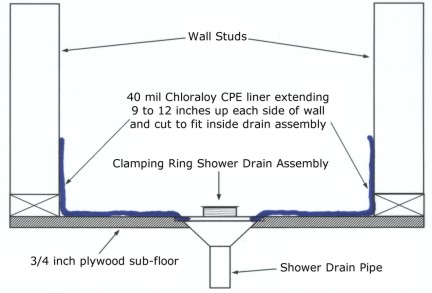
Cross Section of Typical Shower Membrane Installation

If you have ever gone swimming inside an above ground pool, you will easily understand the concept of a membrane shower pan liner. The vinyl swimming pool liner does a great job of keeping water inside the pool. You want your shower pan liner to act in the same manner and keep water within the confines of the liner and subsequently direct it to the shower drain.

The drawing below shows an interesting detail that many plumbers and tile setters fail to do.

Note how the top of the clamping ring drain assembly is flush with the top of the sub-floor plywood. In order to achieve this, the plumber (or jobsite carpenter) needs to rout out a recessed area in the actual sub-floor. Most plumbers don't carry routers in their truck, unfortunately! I used to go to this detail since I had all of the tools. This is an important step. If you don't do this, about 3/16 inch of standing water will always be present in the pan.

shower membrane sketch

Note the top of the adjustable shower drain inlet that rises above the subfloor. This part of the drain assembly screws up and down in order to compensate for the thickness of the cement mud base and the thickness of the finished tile. It is critical to have this drain part in place when you pour the cement mud base. For sake of illustration, I have not shown the cement base or the pea gravel that sits on top of the CPE liner.

Before the mud hardens, you screw it up and down to cut threads into the soft cement mixture. I always make sure that the cement mud mixture is poured below the top of the finished drain an amount equal to the finished thickness of the ceramic tile. You really don't want to crank the drain up and down once the cement mud has dried. Don't forget to install the washed pea gravel above the drain holes in the drain assembly. If you forget this, you may develop a leak.

Related Articles:  Shower Pan CPE Membranes, Waterproof Ceramic Tile Floors

Column B253

Shower Pan CPE Membranes

CPE Membranes

When you purchase your shower pan membrane you will need to be careful. The different liner products on the market all appear to be somewhat similar. You will find the CPE membranes at top quality plumbing wholesale houses that sell to plumbers and often at ceramic tile specialty stores.

The brand name CPE membrane I have had the best luck with is called Chloraloy. Visit a plumbing supply house or a real ceramic tile store and ask for a small sample. Note how supple and soft it is. The real McCoy - if you locate it - will have the words CHLORALOY 240 CPE written on it in numerous places. It will also state that it is 40 mils thick.

Once you get your hands on some Chloraloy, note how easy it is to bend the material. This will be important when you start to form inside corners. You will appreciate this flexibility as the material needs to fold back over on itself at each inside corner.

Certain situations require you to cut the membrane. For example, you will want to extend the CPE over your shower curb. When you cut the material you often will have to cut a patch or a small piece to wrap over/around the cut area. Be sure to purchase the special welding solvent made by the folks that make the Chloraloy. Don't try to use some other glue or adhesive. It won't work! The special solvent actually welds the pieces or patches together into one solid piece of CPE.

Pay attention when cutting out the round hole that allows the membrane to fit into the clamping drain assembly. If you cut the hole too big, you will have problems. Remember, you can always trim a little more off! Be conservative on your first attempt. Once you are sure of the fit, use an adhesive caulk on both sides of the membrane where it contacts the drain assembly. This acts sort of like pipe dope. Do NOT apply so much that it clogs the drain/weep holes around the top of the clamping ring. Pay attention to this detail - to be sure!

Related Articles:  Shower Membrane Installation, Waterproof Ceramic Tile Floors

Column B253

Bathroom Mildew Removal

Bathroom Mildew Removal

Ceramic tile is very attractive. Its glass-like surface makes it easy to keep clean, and you can do many decorative things with the material. It is the grout that causes people to become disenchanted with this building material. The porous grout is simply cement that looks like a sponge under a microscope.

All sorts of bacteria, organisms, etc. can soak into and hang out within the grout. The grout can also absorb and hold moisture. These qualities make it the perfect breeding ground for mildew. Well, it can run but it can't hide!

Siege Tactics

If you are a military historian, you know that it is a common practice to try to starve out an enemy. Cut off their food or water supply and it is only a matter of time before they surrender or become too weak to fight effectively. Mildew is no different. If you want to stop or minimize mildew, then you need to cut off its water and food supply.

Once you have an outbreak of mildew in your home, it is tough to totally eliminate it. Why? The mildew sends out airborne spores or seeds to start a new colony within your house. These spores can be just hanging out waiting for enough water and food to show up before they start to grow aggressively.

A common source of mildew spores is actually in the tub or shower drain. There is often a horrible black buildup of mildew and other bacteria on the side walls of the drainpipe that is between the chrome drain strainer and the trap where the standing water is. You can remove all of this buildup by cleaning it periodically with chlorine bleach.

Be a Doer!

I have found that there are talkers out there and there are doers. Doers get things done. Talkers talk about it and frequently make excuses. It requires more discipline and work to be a doer. If you don't want mildew in your shower or tub area, you need to spend an extra 30 seconds each time you take a shower. You need to rinse off the wall and floor surfaces and then squeegee them to send as much water down the drain as possible.


stain solver logo Cleaning grout is easy with Stain Solver. Click to discover how to clean grout - quick and easy.


You can buy decorative shower squeegees at better hardware stores. They even come with a handy holder that attaches in the shower area.

Regular Cleanings

Mildew also needs food to eat. It doesn't take much to satisfy them, but unfortunately we offer them more than they need. Body oils, soaps, etc. all contain food for mildew and other bacteria. If you clean your ceramic shower or tub area on a regular basis, you cut off the food supply.

Regular Cleaners

In a few moments you will read about regular cleaners you can buy at any grocery store. Most of these do a swell job of removing dirt, soap film, etc from ceramic tile and grout surfaces. I didn't list every cleaner as there were simply too many. The next time you buy one, look at the ingredients. Keep in mind that the chemical name for chlorine bleach is sodium hypochlorite.

Read Ceramic Tile Cleaner Products for these cleaners.

Hard Water Stains

Friends of mine have complained that they can't get tough stains out of their shower. When they describe them to me, I realize they are not mildew but light colored hard water stains. These are some of the easiest things to deal with. Common white vinegar will dissolve hard water stains and deposits. It may take repeated soakings and scrubbings, but faucets, sinks, toilets, tile, etc. will look brand new.

Abrasive Cleaners

Cleaners that contain mild abrasives can harm just about any surface, even ceramic tile. Use them often enough and they will de-gloss shiny glass surfaces. The abrasives are work savers. They help you to cut through dirt. If you clean on a regular basis, you usually don't need the help of the abrasives.

Never use abrasive cleaners on plastic, fiberglass, acrylic, etc. type surfaces. They will remove the gloss from these surfaces. Refer to the care instructions that usually come with products for safe cleaners.

Companion Articles:   Oxygen Bleach Tile CleanerCeramic Tile Cleaner ProductsRemoving Mildew from Grout

Column B284

Oxygen Bleach Tile Cleaner

Oxygen Bleach Cleaner - a Non-Toxic Alternative

Some people are sensitive to chlorine bleach or simply don't like its strong odor. They also are afraid of using it around any colored carpet, fabrics, etc. Just one drop that goes undetected can ruin a beautiful carpet, pair of pants or a shirt. There is a safer bleach - oxygen bleach!

Oxygen bleach can be used to kill and remove mildew. It doesn't work as fast as pure chlorine bleach, but it does work. It is non-toxic. When you mix the powdered oxygen bleach with water, it creates millions of oxygen ions, more water and soda ash. That is about as safe as you can get. The oxygen ion is the component that attacks the mildew.

Often ceramic tile grout becomes stained from hair dyes and other body care products. Oxygen bleach can soak into grout and remove many of these stains. The trick is to make a concentrated solution or even a paste and let it sit on the grout for hours or even overnight.

If you have mildewed camping gear, tarps, clothing, basically any fabric, oxygen bleach will remove the mildew without hurting the fabric. It is also virtually color safe as well. The only dyes that are harmed by oxygen bleach are natural dyes like blueberry, grape or coffee. The vast majority of fabrics are dyed with synthetic dyes that are not affected by oxygen bleach.

So, where can you find oxygen bleach? It is not readily available in stores. I discovered it several years ago, while doing research on - of all things - deck cleaners! It turns out that oxygen bleach is also the absolute best cleaner for wood decks.

Some powdered deck cleaners contain oxygen bleach. I happen to sell it as well! My oxygen bleach product is called Stain Solver. It is 100 percent pure oxygen bleach. There are no additives, fillers, extenders, etc. in my product.

You can order oxygen bleach by Clicking Here or call us at 513-407-8727.

"WOW, that's all I can say! I purchased your product last week to clean the grout on my 800 sq. ft. of tile, and it looks as clean as the day we moved in eight years ago. I must admit, I was a little skeptical when I ordered the Stain Solver, but after having used it, I know I will always have some on hand and look forward to cleaning my wood deck this spring. This is by far one of the best products I have purchased in many, many years. Thanks Tim!" - Ed, Macomb, Michigan

Message from Tim:

Years ago while researching a column about cleaning decks, I discovered the wonders of Oxygen Bleach. It is perhaps the 'greenest' cleaner I know of as it uses oxygen ions to break apart stains, dirt and odor molecules. There are no harsh chemicals, and it works on just about anything that is water washable.

I decided to create my own special blend using ingredients made in the USA. In fact, the raw materials in the active ingredient are food-grade quality registered with the FDA. I call my product Stain Solver. I urge you to use it to help clean your ceramic tile and grout. You will be amazed at the results!

Companion Articles:   Bathroom Mildew Removal, Ceramic Tile Cleaner ProductsRemoving Mildew from Grout

Column B284

Ceramic Tile Cleaner Products

Bathroom Tile Cleaners

The following list was compiled by a simple visit to a grocery store. These are all common off-the shelf cleaners that you have access to. I tried to go one step beyond just getting a name. I wanted to be able to tell you what the active ingredient was in each product. As you might imagine, some products list the ingredients and others keep it pretty much a secret.

There is little worry when using these products on ceramic tile. Virtually all hard fired tile has a shiny glaze on it that is basically a very thin layer of glass. The cleaners will not harm this kind of tile. If you have a soft tile with a dull glaze or no glaze at all, then you need to test a cleaner to make sure it will not harm the tile.

The biggest danger that these cleaners pose is the threat of harming things that are near the tile. Some shower door finishes, faucet finishes and metal trim in fine bathrooms can be harmed by highly reactive cleaners. If you are buying a new home, it is really important for the builder to save all of the product care manuals that outline safe cleaners to clean shower doors, faucets and the like.


Restore the "clean" to your grout. Just go to STAIN-SOLVER to see the beautiful, quick results.


  • Mildew Remover with Bleach
    A Lysol Product
    800-228-4722
    Non-abrasive formula; power of bleach.
  • Scrubbing Bubbles - Bathroom Cleaner with Bleach
    A S.C. Johnson & Sons, Inc. product
    800-494-4855
    This product contains chlorine bleach (sodium hypochlorite) and surfacants.
  • Comet - Bathroom Cleaner with Disinfectant
    A Prestige Brands, Inc. product
    800-926-9441
    It states non-abrasive, bleach-free disinfectant. Active ingredient is Citric Acid.
  • Dow Disinfectant Bathroom Cleaner
    A DowBrands product
    800-447-4369
    It has some strange ingredients and detergents, but no phosphates.
  • Tilex - Fresh Shower
    A Clorox Company product
    800-227-1860
    It contains weird chemicals as well and no phosphates.
  • Arm & Hammer Clean Shower
    Church & Dwight Co., Inc.
    800-617-4220
    no ingredients listed
"WOW, that's all I can say! I purchased your product last week to clean the grout on my 800 sq. ft. of tile, and it looks as clean as the day we moved in eight years ago. I must admit, I was a little skeptical when I ordered the Stain Solver, but after having used it, I know I will always have some on hand and look forward to cleaning my wood deck this spring. This is by far one of the best products I have purchased in many, many years. Thanks Tim!" - Ed, Macomb, Michigan

Message from Tim:

Years ago while researching a column about cleaning decks, I discovered the wonders of Oxygen Bleach. It is perhaps the 'greenest' cleaner I know of as it uses oxygen ions to break apart stains, dirt and odor molecules. There are no harsh chemicals, and it works on just about anything that is water washable.

I decided to create my own special blend using ingredients made in the USA. In fact, the raw materials in the active ingredient are food-grade quality registered with the FDA. I call my product Stain Solver. I urge you to use it to help clean your ceramic tile and grout. You will be amazed at the results!

Companion Articles:   Bathroom Mildew Removal, Oxygen Bleach Tile CleanerRemoving Mildew from Grout

Column B284

Shower Membrane Tips

Ceramic tile showers simply leak. Lots of people think that a ceramic tile shower that is in fantastic structural shape - meaning no cracks in the grout - are virtually waterproof. Nothing could be further from the truth. Beneath the tile is a bed of cement mortar that sits inside a waterproof membrane. Years ago the membranes were thin sheets of lead. Plumbers with great skills would seam the lead using a soldering iron and stick lead. Talk about craftsmanship! In fact, they would test for leaks by filling the pans with water.

Times Change

The days of making lead pans is all but gone. You still might be able to find an older plumber who can do it. It is actually OK that we don't use lead. The lead shower pans would fail over time. Chemicals in the water would set up a low voltage battery that would actually corrode the pan.

The plastics industry saved us from this problem with the introduction of chlorinated polyethylene (CPE). This flexible rubber like material is impervious to water and resists virtually any chemicals you can find within a typical residential home. It is also easy to work with!

Let's Get To Work

If you plan to install a shower pan liner yourself, it isn't too hard. It can be made infinitely easier if you can adjust the rough framing slightly. A trick I learned long ago is NOT to frame the shower wall corners tightly. I used to leave a 1/4 inch space at each corner. This means the total wall length is 1/2 inch shorter than the opening. This gap is a perfect place to store the extra CPE membrane material that bunches up as you round the corner. I would fold this material back on itself and nail it to the backside of one of the corner studs. If you don't do this, you end up with a hump of CPE liner in each corner. This excess material WILL cause your cement board wall material to angle out at the bottom.


Before you read much more, you may find a better guide in my Shower Pan Liner eBook. I must sell 50 of these bad boys a week and I seriously can't remember the last time anyone wanted a refund. You will not find better photos and instructions anywhere.


Lap it Up!

The CPE membrane needs to lap up the sides of the shower basin walls at least 9 inches. A 12 inch lap is not unreasonable if you can afford to do it. The CPE material I would use comes in 4 and 5 foot widths. This allows you to accomplish a lap height fairly easily in standard sized showers.

Nail Heads

All nail heads in the subfloor need to be recessed. A nail head sticking above the floor might - over time - punch a hole in the membrane! Check for large splinters at the same time. I actually vacuum the area before installing the liner to remove any grit that could cause a problem.

Rout a Channel

The plastic plumbing drain you will invariably use has a 1/8 to 3/16ths inch thick flange lip on it. If you simply cut a hole for the drain assembly the flange will project above the top of the subfloor. This is bad news in my opinion. This means that water captured by the liner needs to climb over this lip to enter the weep holes. We all know water doesn't travel uphill (I know all about capillary attraction...doesn't work here!)

The solution is to rout a mortise or channel that allows the top of the drain flange to be flush with the subfloor. If you have a router handy it takes longer to get it out of the case than it does to actually use it to cut the mortise. This often overlooked detail, if forgotten, can cause a problem in some cases.

The Weep Holes

The plastic clamping ring drain has small weep holes. Look at it closely and you will see them. These holes are vitally important. If they get clogged with cement from the mud base, you are toast. Small washed gravel placed over the holes prevents clogs. When you cut the CPE membrane, make sure it does not interfere with the weep holes in any way. After the membrane and drain are tied together you should be able to see clearly through the holes down into the drain basin.

The Cement Base

The first cement mud bases I poured were goofed up. I made the cement/sand mixture too thin. You want your cement mud to be stiff, just like sand you use at the beach to make sand castles. The mixture will have plenty of moisture so that the cement will harden, trust me!

You must install the cement wall board in the shower area over the top of the CPE membrane. Hold the cement board up about 1 inch from the bottom of the membrane. With the cement board in place you can trace a level line on the cement board. This will help you place the cement mud perfectly. You only need about 1/8 inch per foot fall in the cement mud base. Be sure the cement base has no humps or dips or else laying the floor tile will be a nightmare!


Now that the shower pan liner is installed, it is time for the cement mud floor. Make a mistake here and your tile job will suffer. Get my Shower Pan Cement Mud Floor Installation eBook. It downloads instantly and comes with a no risk, 100 percent money back guarantee.

Column B342

Floor Leveling Compound Manufacturers

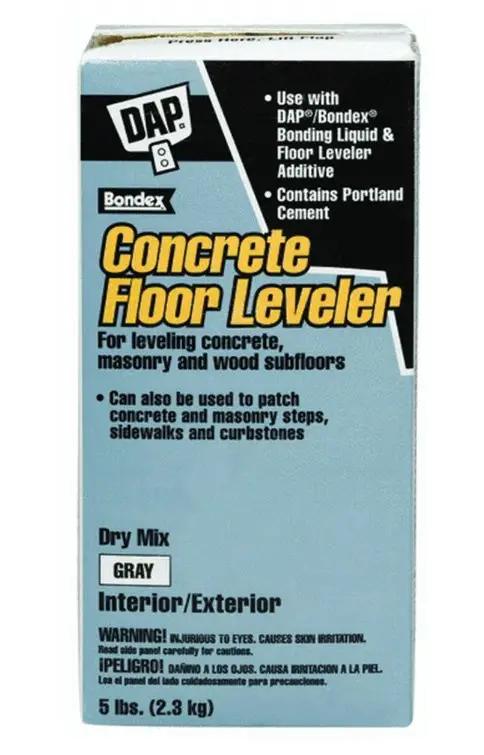
concrete floor leveler package

This is a powder you mix with water. It ends up like thin pancake batter. CLICK THE PHOTO to have it DELIVERED TO YOUR HOME.

Floor Leveling Compound

Visit any home center, hardware store or place that sells and installs carpet, vinyl tile or ceramic tile and you will find floor leveling compounds. They are easy to obtain, that's for sure.

All of them are rapid setting. They contain fast setting cements or plaster of Paris type powders that quickly crystallize when you add water. In fact, the hardest thing to get used to is their rapid setting characteristics. Some of them set up within five minutes! This means you must be ready to install them and mix them right where you intend to use them.

I have used many different brands of floor leveling compounds. All have given me great results. I don't think it makes any difference which one you buy. I happen to prefer one made by the Armstrong Company. It is called S-184 Fast-Setting Patch. It is cement-based and is gray once mixed.

One of the things I like about it is that it can be finished as smooth as glass. In about three to five minutes of mixing, it begins to set up and is fairly hard. If you wait an additional five minutes, you can sprinkle a little water on the patch and glide the broad knife across it several times to get it slick as a baby's butt. It takes a little practice but you will master it in no time. The key is to use as little water as possible.

You should be able to get similar results with just about all leveling compounds. Simply read the instructions and follow what they say.

Other leveling compounds:

  • DAP
  • USG
  • Bonsal American makes a leveling compound - Self Leveling Underlayment Series 156.Laticrete International has LatiLevel Self Leveling Underlayment.


Column B365

Floor Leveling Compound / Ceramic Tile

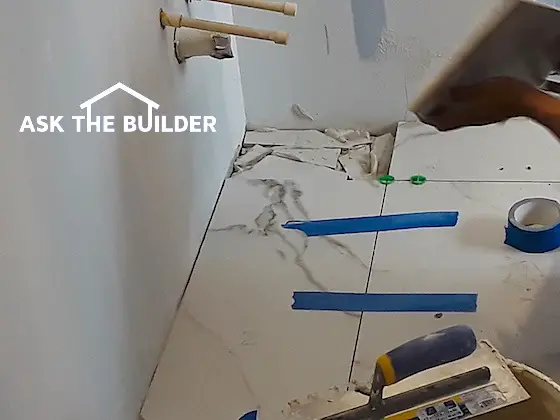
marble floor tile install broken

Floor leveling compound should have been used on this job instead of broken pieces of marble. Can you believe the installer is doing this?? Copyright 2018 Tim Carter

"Before you mix up any compound always use the tools to see how deep the low spots are or how high the humps are."

Floor Leveling Compound Creates Perfect Flooring Jobs

Floor tiles - especially large ones - are very unforgiving if the floor beneath them has humps and dips. The same is true for just about any flooring material. It's best if the floor is in the same plane as is a piece of flat steel or glass laid on a table.

But wood floor systems and poured concrete are rarely in the same plane. Floor joists can have crowns in them that make the floor go up and down in both directions. Concrete is very hard to make perfectly smooth. Professional concrete masons struggle with this on a daily basis!

Related Links

How to Get Hardwood Floors Level

Floor Leveling Compound Brands - Get a Great One

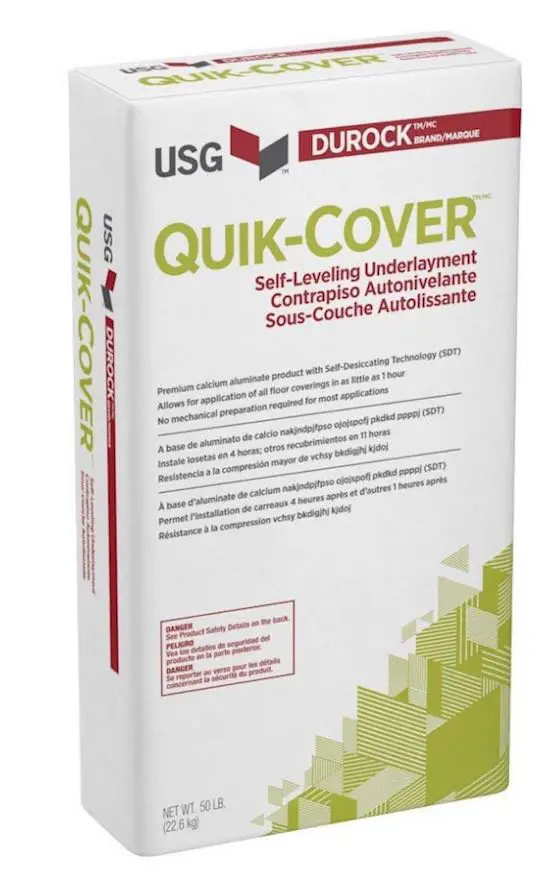
floor leveling compound

This is a great easy-to-use floor leveling compound. You just add water and spread it around. CLICK THE IMAGE to have this delivered to your home.

Free & Fast Bids

CLICK HERE to get FREE & FAST BIDS from local flooring contractors that can install floor leveling compounds.

How Do You Fill in Low Spots?

You can fill in dips and hollow spots in floors and reduce high spots by using cement-based floor leveling compounds. These will bond to both wood and concrete. They mix with water and are easy to apply. The key is practice and making sure you have the right tools.


What Tools Do You Use?

I install floor leveling compounds with my drywall broad knives and my framing square. The body of the framing square is 24 inches long and makes a superb straightedge when you hold it upright.

The drywall knives are perfect tools as well. Applying floor leveling compound is not much different than applying drywall compound over recessed seams. In fact, the challenge is identical. You want the floor leveling compound to just fill the recessed area and not be higher. If it ends up higher you now have created a hump!

Before you mix up any compound always use the tools to see how deep the low spots are or how high the humps are. Use a pencil to outline the areas to be filled. Pay attention to the airspace between the edge of the tools and the floor. This tells you the finished thickness of the material to be added.

Should the Floor Be Dust Free and Damp?

The area to be patched needs to be dust free and slightly damp. Taking the time to do this will yield huge results as the compound will really stick to the floor. Leveling compound failures can almost always be traced to dust or to dry subfloor conditions.

Use a vacuum cleaner to remove dust and a sponge mop to wet the floor. A regular sponge will do just fine to wet the floor. You will need a sponge and bucket of water handy as you install the floor leveling compound so you might as well get it ready now.

CLICK HERE to get FREE & FAST BIDS from local flooring contractors that can install floor leveling compounds.

Should I Mix Small Amounts?

Mix small amounts until you have a feel for how the floor leveling compound works. There is a technique you must use to get professional results.

The floor leveling compounds set quickly! I mean quickly! Use cold water to try to slow it down. This does not always work. I can assure you that using hot water will make them set up even more rapidly if you need instant results.

Can I Add Water After Mixing?

NEVER re-temper or add water to floor leveling compound that has started to set up. This will weaken the final mix as you are tearing apart crystals in the mix that are growing and making it hard. These crystals - once broken - will not grow back. For this reason, it is always better to mix small, one gallon or fewer batches. Mixing up 2 or 3 gallons at once is suicide.

Mix the material so it has the consistency of thin pancake batter. It needs to be able to flow ever so slightly. You don't want it too thick or do you want it like water. If it is too thick it is nearly impossible to work with the tools.

How Do You Clean Up?

Clean everything with warm water and soap. All tools need to be cleaned as soon as you are done. If you use a cement based compound and you don't clean them, they will be almost impossible to clean the next day.

Author's Note: We've received other questions with similar problems or questions. Here's one from Krystina G. of San Sebastian, PR, dealing with floor levelness.

"My husband and I have a homemade completely out of cement and we want to put ceramic tiles throughout our home. The floor is not level and we wanted to know the best way to go on with leveling floors."

CLICK HERE to get FREE & FAST BIDS from local flooring contractors that can install floor leveling compounds.

Column B365

Cutting Ceramic Tile

Cutting Ceramic Tile

Ceramic tile work is really not too hard. I would absolutely say that if you have a standard tub job or a shower to do, a journeyman DIY'r can accomplish it with minimal effort. You don't need expensive tools for the most part and the job can often be finished in one or two days. To get great results you must be able to measure accurately AND have decent hand-eye coordination. If you are sloppy, you better hire a pro.

Tight Tolerances

Standard tile is usually manufactured to very tight specs. One piece is basically an identical match to the previous one. This is necessary so that the grout lines are uniform. This is also why you must be able to measure and cut tile accurately. Grout lines that are not consistent look very bad. They stick out like a sore thumb. When you cut tiles, you have to be within a 1/16th of an inch or you will have problems.

The typical width of a finished grout joint for wall tile is often no larger than 1/8th inch. In fact, it can be slightly smaller. This means that when you cut a tile to butt against another the gap must be no smaller than 1/16th inch - this allows just enough room for caulk or grout. The finished gap should be no larger than 1/8th inch or it will look like the Grand Canyon next to the uniform grout lines between standard tiles within the field.

Cutting Tools

There are several tools to use when cutting or shaping ceramic tile. Tile is much like glass. When you score the glazed surface cleanly and then apply pressure to each side of the tile, it will almost always break quite cleanly on the score mark.

Tile cutters have a carbide wheel just like standard glass cutters. The simple tile cutters have a fence that holds the tile square to the cutting blade. You slide the handle while applying pressure and you get a clean, straight line. Press down on the back of the handle and the tile pops.

Tile cutters will generally only cut down to 5/8 inch wide pieces. If you need a thinner piece you need to cut these with a carbide blade that fits in a hacksaw or use an abrasive saw blade or a diamond wet saw.

Diamond wet saws are the best. They are not really dangerous as they don't have teeth like a wood blade. The tiny pieces of diamond are actually on the sides and edge of the blade. You can cut quickly and accurately with one of these. Don't think of buying one. A decent one costs nearly $1,000.

Making L Cuts

How do you make an L cut that allows you to take a corner out of a tile? You can't score the tile, as if you do try to break just a part of the tile, the rest will break out unevenly.

The trick is to cut one side of the L cut with a saw of your choice. Once you do this, you can then use the regular cutter to make the short score cut and then snap it to complete the cutout.

Circles and Curves

How do you cut circles? You have two choices. You can buy nice - although pricey for onetime use - carbide circle hole saws. You can also buy an inexpensive carbide rod saw that will do the job. The rod saw blade fits into a regular hacksaw frame.

To make the rod saw work, you have to drill a large enough hole in the tile that will allow you to insert the actual blade. Once in the hole, you then attach the rod saw blade to the hacksaw frame.

You need to support the tile firmly as you saw. If you don't, as you near the end of your cut, you will crack the tile. Always slow down the cutting process and use less force as you near the end of your cuts.

The Nippers

There is a coarse tool that will actually bite off pieces of tile. It is called a nippers. The tool has carbide jaws and you simply bite the tile removing jagged chunks. It is a tool that can cut gentle curves in a tile. The final cut surface will not be smooth so this tool is used for cuts that might fit around a toilet flange or other object that will then be covered with a decorative trim. A shower faucet handle is a good example as well. Plumbing faucet handles often have a 1/2 inch trim overhang so you have plenty of room to disguise the jagged tile edge.

Your First Job

If you want your first tile job to be a success and you have $50 to spare, I want you to apply tile to a single 3' x 5' piece of cement board that you set up in your garage. Experiment with the different cutting tools and get a feel for how long the open time of the glue is. Let the tile dry and try to grout it the next day. You will be surprised at how easy it is!

Related Articles:   Ceramic Wall Tile TipsHow To Install Ceramic Tile

Column B226