Cultured Marble Installation

Cultured marble is an interesting material. It is an ancestor to the more modern "solid surfacing" materials that you see in bath and kitchen showrooms. The products are related because both are "cast" much like concrete. They begin as a liquid and end up solid.

Primarily Regional

The cultured marble business is primarily a regional one. There are a few large national companies, but they are by far the minority of manufactures as a whole. It doesn't take a fancy high-tech factory to produce cultured marble. In fact, one operation in Cincinnati, is in an old, run down warehouse. Even in these surroundings, the company can produce a decent product.

Because it is doesn't take too much to enter the business, all sorts of entrepreneurs decide they can make "marble." They simply purchase the molds, materials, and labor and they are off to the races. The problem is that it does take considerable skill to produce a product with consistent high quality. This is where the problem lies.

Bottom Line

The companies that decide to squeeze profits do so by purchasing lower quality raw materials and hiring poorly trained employees. The result is a low quality cultured marble. The sad thing is that it doesn't take too much extra money to make a high quality, long-lasting cultured marble product. Those companies that decide that quality is a primary goal usually have been in business for some time. The losers fall by the wayside.

Installation

Installing cultured marble products is really fairly simple. It is not much different than a postage stamp. You simply glue the sink tops to the base cabinets or the flat wall panels to the shower and bath walls.

Often you need to trim the countertops because a wall may be wavy or a corner is slightly out of square. Cultured marble sands very easily. If you scribe the area that needs to be trimmed off, you can remove the offending marble with a belt sander.

For out of square applications, scribing is simple. Slide the countertop in place without any glue. Try to get the back splash area to fit tightly against the back wall. If the corner is out of square you will see a gap on the side of the top where it meets the wall. Let's say there is a one quarter inch gap at the back corner of the top and the front corner is just kissing the wall. To make the adjustment, you would measure in one quarter inch at the front corner and draw a line to nothing at the rear corner. As you can imagine, if you remove the triangular wedge of material, the top will now slide tightly against the side wall! Nothing to it.

When I say glue the material in place, I mean use an adhesive. I prefer to use 100 percent clear silicone caulk. It is very sticky and will not cause a discoloration on light colored cultured marble products. If you choose to use a dark colored adhesive, you run a grave risk of seeing the adhesive through the cultured marble once the adhesive dries. Don't forget to remove the dust from the back of the marble with rubbing alcohol.

For tub and shower wall panels, be sure to leave a 1/8 inch gap where the marble meets in a corner and where it rests on the tub edge or shower pan edge. This gap is then filled with a color coordinated 100 percent silicone caulk.

Shower wall panels need to be wedged in place with flexible pieces of wood for 24 hours until the adhesive dries. Always place a clean rag between the marble and the sticks to avoid scratches.

After Care

Caring for cultured marble is simple. No abrasive cleaning products can be used. Get in the habit of wiping sink tops off with a hand towel after each use. If hard water stains develop, just spray them with white vinegar. Wait 15 minutes and rub with a soft, damp sponge. To polish the tops, follow the manufacturer's suggestions and use the products they recommend. It is easy if you stay up with it.

Column B218

Cultured Marble Manufacturers

Certified Cultured Marble Manufacturers

The following manufacturers make some cultured marble products that are certified by the International Cast Polymer Alliance (800-414-4272 - www.icpa-hq.org). This list was accurate as of June 2007. It is possible that there are other companies out there that are certified, however, this was all I could find. If a company says they are certified, they should be able to produce a copy of a letter from an independent testing laboratory. If they can't produce the letter, then - in my opinion - they are bluffing.

Not all products from a company may be certified. You have to ask. However, if a company goes to a lot of trouble to have certain products certified, you might expect the same care and pride to go into their other work.

Also, there are other fine cultured marble manufacturers who make high quality stuff that is NOT certified. This happened because of a rift that developed within the International Cast Polymer Alliance years ago. It is a long story. If the company you are buying from has been under the same ownership for 10 years or longer, they most likely have withstood the test of time. Companies that make bad cultured marble simply go out of business.


Are you one of the manufacturers listed on this page? Do you want your company name linked to your website? Click here.


Alabama

  • Birmingham: American Marble Co. 205-328-0384
  • Birmingham: Dixie Cultured Marble Co. 205-942-3004
  • Birmingham: Imperial Marble & Tile 205-252-8982
  • Mobile: Mobile Marble Co. 251-344-6272
  • Montgomery: Cherry Marble Group 334-281-0048

Arizona

  • Flagstaff: American Marble & Stone 928-214-0400
  • Prescott Valley: Mountain Marble Mfg. 928-772-7200
  • Tucson: Advanced Construction Products 520-747-7244
  • Tucson: Tucson Outstanding Products 520-889-5743

California

  • Buena Park: Olympic Marble 714-224-5200 (not certified but in business since 1989)
  • Manteca: Elegant Surfaces 209-823-9388
  • Newark: Tri-City Marble 510-745-9692
  • Pittsburg: Marble Shop, Inc. 925-439-6910
  • Sacramento: Cultured Marble Products 916-929-0266 x104
  • San Diego: Marble Works Of San Diego 619-595-1800
  • San Francisco: Syn-Mar Cultured Marble Inc. 415-285-5995
  • San Leandro: Cultured Marble Products 510-483-1202
  • Santa Clara: Marbled Elegance 408-970-8991

Colorado

  • Denver: Monarch Marble Inc. 303-355-2100

Connecticut

  • Wellington: Syn-Mar Products Inc. 860-872-8505

Florida

  • Boynton Beach: American Marble, Inc. 561-737-4322
  • Clearwater: Magnum Venus Plastech 727-573-2955 x213
  • Ft. Myers: Tropix Marble Co. 239-334-2371
  • Jacksonville: Florida Custom Marble 904-737-4513
  • North Port: The Marble Works 941-429-8500
  • Ocala: Southern Marble Mfg. 352-867-5000
  • Orlando: Southern Marble & Design 407-245-2882
  • South Daytona: Supreme Marble 386-760-3035
  • Titusville: Apollo Marble Products 321-268-0713
  • West Palm Beach: Classic Cultured Marble, Inc. 561-848-4635

Georgia

  • Decatur: Atlanta Marble Mfg, Inc. 404-378-3132 x1101
  • Douglasville: Custom Bath Products 770-920-2424
  • Eatonton: Marble Works Inc. 706-485-3337
  • Gainsville: Mincey Marble Mfg. 770-532-0451
  • Jonesboro: Synmar Inc. 770-478-0770
  • Lawrenceville: Mr. Marble 770-963-8677
  • Norcross: AGCO, Inc. 770-447-6990
  • Savannah: Savannah Marble Co. 912-234-1611
  • Sugar Hill: MTI Whirlpools 770-271-8228
  • Tucker: Bathroom Designs 678-534-0900
  • Warner Robins: Marble Masters Of Middle Georgia 478-929-2766 x301
  • Woodstock: International Marble Industries 770-928-2252 x227

Illinois

  • Arthur: Carotin Brands 217-543-3331
  • Champaign: Creative Marble, Inc. 217-359-7271
  • Fulton: Gateway Marble Products 815-589-4080
  • Millstadt: Custom Marble, Inc. 618-476-1345
  • South Elgin: Marble Works Inc. 847-742-9222

Indiana

  • Elkhart: Gemstone Solid Surfaces 574-294-8899
  • Elwood: Marble House Inc. 765-552-6646 x231
  • Fairland: Marston Products Ltd. 317-835-9000
  • New Albany: Cameo Marble 812-944-5055

Kansas

  • Olathe: Marble Creations Inc. 913-782-6272

Kentucky

  • London: Accent Marble 606-878-6003
  • Murray: Thorton Tile & Marble 270-753-5719

Louisiana

  • Harahan: Plantation Marble 504-733-0536
  • Lake Charles: Southern Marble Specialties 337-478-3430
  • Mandeville: Marble Quarry 985-626-9786
  • Metairie: Barto Marble 504-733-6199
  • Slidell: Gulf States Marble Inc. 985-641-0925

Maryland

  • Baltimore: Marble Designs Ltd. 410-358-7878
  • Mechanicsville: Artistic Marble, LLC 240-925-1698

Massachusetts

  • Ludlow: Roma Marble Inc. 413-583-5017

Michigan

  • Jackson: Zimmer Marble Co. 517-787-1500
  • Mount Pleasant: Americas 989-773-7856
  • Remus: US Marble Inc. 989-561-2293
  • Schoolcraft: Kal-Marble & Granite 269-679-5035

Minnesota

  • Burnsville: Princess Marble 952-746-5700
  • Sauk Rapids: Stone Products Of St. Cloud 320-240-0804
  • Shakopee: Basset Cultured Marble & Granite 952-215-8359

Mississippi

  • Jackson: Builders Marble, Inc. 601-922-5420

Missouri

  • Doniphan: Castle Products & Services 573-996-4110
  • Fenton: Delta Marble 636-677-8029
  • Holden: Master Marble Inc. (MMI) 816-850-4167
  • Jefferson City: Cultured Marble Products 573-893-6601
  • Jefferson City: Mid Mo Surfaces 573-659-8180
  • Lee’s Summit: Tiffany Marble Inc. 816-524-0023
  • North Kansas City: Complete Home Concepts
  • Springfield: Ozarks Cultured Marble 417-831-6330
  • Wentzville: Superior Home Products 636-332-9040 x161

Nebraska

  • Omaha: Roman Marble 402-453-1196

Nevada

  • Las Vegas: Las Vegas Cultured Marble 702-240-0355

New York

  • Avon: Monroe Industries Inc. 585-226-8230
  • Penn Yan: Remee Casting 315-536-3742
  • Sayville: United Marble 631-567-7711

North Carolina

  • Arden: Nova Cultured Marble 828-687-8770
  • Farmville: Carolina Marble Products 252-753-3020
  • Greensboro: Carolina Custom Surfaces 910-299-3030
  • Lillington: Capital Marble Creations, Inc. 910-893-2462
  • Midland: Carolina Counters, Inc. 704-888-4010
  • Midland: Tarheel Marble Co. 704-888-6003
  • Swansboro: National Marble Products 910-326-3005
  • Wallburg: Elite Marble, LLC 336-769-3560
  • Wilmington: Custom Marble Products 910-762-2225

Ohio

  • Cincinnati: Agean Marble Mfg. 513-874-3331
  • Cincinnati: Regency Marble 513-733-3700
  • Columbus: Heritage Marble Of Ohio 614-436-1464
  • Latty: AL-CO Products 419-399-3867
  • Massillon: Tower Industries 330-837-2216

Oregon

  • Grants Pass: Rogue Valley Marble 541-474-4319

Pennsylvania

  • Boyertown: Luicana Industries Inc. 610-367-7923
  • Erie: North Coast Cultured Products 814-833-3857
  • Leola: Marbleon Inc. 717-656-9700
  • Macungie: Lehigh Surfaces 610-966-3484
  • Middleton: Elegant Marble Products 717-939-0373
  • Selinsgrove: Kerrico Corp. 570-374-9831

South Carolina

  • Beauford: Athena Corp. 843-784-2220
  • Cacce: CoMar Products Inc. 803-794-4229
  • Myrtle Beach: Easton Industries 843-448-2354
  • Ware Shoals: Southern Cultured Marble 864-456-2319

South Dakota

  • Sioux Falls: Formatop Co. 605-332-3151
  • Sioux Falls: Sioux Marble 605-582-6464

Tennessee

  • Cordova: Marble Products Inc. 901-386-6167
  • Franklin: American Marble, Inc. 615-790-8944
  • Memphis: Lawrence Tile & Marble 901-345-1975

Texas

  • Alvin: Mainland Custom Marble 281-824-9696
  • Austin: Austin Counter Tops, Inc. 512-835-5100
  • Austin: Custom Quality Marble & Stone 512-282-5680
  • Beaumont: Quality Sales Co. 409-892-8937
  • Georgetown: Austin Marble Co. Inc. 512-930-2116
  • Helotes: Kamal Inc. dba Venetian Marble 210-695-3505
  • Houston: Accent Marble Company 281-448-3696
  • Houston: West U Marble Co. 713-433-2240
  • Lubbock: Venetian Of Lubbock Inc. 806-763-5777
  • Lufkin: Angelina Bath & Custom Marble 936-632-7065
  • Seguin: Marble Masters Of Texas 830-303-7744
  • Willis: R & D Marble Inc. 936-856-6342

Virginia

  • Kenbridge: Virginia Marble 434-676-3204
  • Richmond: Venetian Marble 804-233-6961
  • Virginia Beach: Virginia Beach Marble Co. 757-340-0686

Wisconsin

  • Eau Claire: Surface Designs Inc. 715-834-2628
  • Menomonee Falls: Brandt Molded Marble 262-373-1163
  • Portage: Sta-Care Inc. 608-742-8512

Column B218

Waterproofing Tile Installations

Tubs

Standard bathtubs have a lip on three sides of the tub to capture water. The fourth side is of course the long side that you pass over getting into and out of the tub. Porcelain coated steel tubs have a much higher lip than cast iron tubs. Cast iron tubs have a very slight rise that will capture and divert water back into the tub, however, you must make sure the tub is installed level in both directions.

Capillary Attraction

Have you ever noticed that water can travel up a paper towel or rag that you suspend into a bowl of water? This is caused by capillary attraction. The same thing can happen with cement board or water resistant drywall that is allowed to 'sit' in a puddle of water along a tub edge.

When you install ceramic tile board around a tub you do NOT want it to contact the surface of the tub. I recommend a 1/4 to 3/8 inch space between the bottom of the board and the tub or shower surface. You can caulk this crack if you like with pure silicone caulk.

Tar Paper or Vapor Barriers

What happens if water somehow gets past your cement backer board? You can stop it cold in its tracks and divert it back to the tub or shower basin if you install tar paper or a plastic vapor barrier on the wall studs before you install your ceramic tile backer board. You must make sure that the vapor barrier or tar paper laps into the tub. If you use tar paper make sure that different layers overlap one another like roofing shingles. You don't want water running behind a sheet of tar paper. Don't trim off the excess material until after you have installed the ceramic backer board. Then carefully cut it back so that it is flush with the outer surface of the ceramic backer board. When the tile is installed, the vapor barrier or tar paper will be recessed 1/4 inch from the finished edge.

Caulk ALL Seams BEFORE Tilework

As you install each sheet of ceramic tile backer board, leave a 3/16 or 1/4 inch space between sheets. These cracks will be caulked with 100 percent pure silicone caulk BEFORE you begin to install ceramic tile. I have had great success doing this. If you then decide to tape the joints with thinset and fiberglass tape, you can do so AFTER you have caulked.

If you do tape with thinset, you must be careful NOT to create a hump at the taped seam. Ceramic tile is very unforgiving. The tile will not sit evenly as it crosses the humped area. Add to this the high gloss surface of most ceramic tile and you have a recipe for disaster. The high gloss surface will visually transmit the defect.

Grout is NOT Waterproof

Contrary to popular belief, grout is not waterproof. Water can travel through grout and especially past the contact point between the grout and the ceramic tile.

The joint between the tub and shower must never be filled with grout. This joint should be filled with silicone caulk only. I always grout the tub or shower areas and dig the grout out of this crack while it is still soft. It is very hard to try not to grout it. Caulking the crack before grouting is a huge mistake.

After grout has cured for approximately one week it is a great idea to seal it with a silicone sealant or better yet a silane-siloxane water repellent. Silicone is a film forming sealant that cannot breathe. You can get a great silane-siloxane water repellent from Saver Systems.

Column B199

Vapor Barrier Manufacturers

High Performance Vapor Barriers

The clear plastic poly vapor barriers you see everywhere are not high performance products. Why? They are almost always made from recycled materials. They are almost always a single ply. It is not uncommon for them to have pinholes from the manufacturing process.

High performance vapor barriers are made using two layers of virgin polyethylene. The layers are laminated at right angles to one another to make an incredible barrier. Cost? Often these products cost just 20 to 30 dollars more per roll than regular low performance products.

You find these high performance products at specialty building products stores that sell products to concrete contractors. Look in your Yellow Pages under "Concrete - Supplies / Tools."

  • Raven Industries
    605-336-2750
    VaporBlock® high performance underslab vapor retarder.
  • Sto-Cote Products, Inc.
    800-435-2621

    They make Tu-Tuf.
  • Armtec
    800-265-7622

    Makes Platon, a permanent underslab dampproofing membrane.
  • Cosella-Dorken Products, Inc.
    888-4DELTA4
    Makes DELTA MS Underslab.

In my Shower Pan Liner eBook, I give you all the secrets for a waterproof shower. I must sell 50 of these bad boys a week and I seriously can't remember the last time anyone wanted a refund. You will not find better photos and instructions anywhere.


Author's Notes:

I received this email from Michael P, Cincinnati, OH. Here's how he helped with his crawl space problem.

"I live in Turpin Hills and wanted to thank you for your advice for sealing a crawl space. This is our third winter in our home and the basement is always much colder than previous basements from other homes. I did as you suggested and put heavy duty, thick plastic on the gravel and put doors on the opening of the crawl space. It's been a few weeks and I can see water droplets forming under the plastic. I may put a second layer of plastic for good measure. The basement is warmer and so is the room above the crawl space. I don't smell the mustiness either. Thanks again for the tip."


Column B199

Backer Board Installation

Cement board products are simply wonderful. They are such a simple idea when you stop and think about it. What's more, because of its thickness, you can easily attach these products to wood framing with rust resistant roofing nails or galvanized screws. You don't need fancy drills, anchors and such to work with cement board!

Installing the Cement Board

Probably the hardest part of installing cement board is carrying it from the truck to the room where you will use it. It is somewhat heavy. It is also an abrasive material. If you have good flooring in the vicinity of your workplace you will need to tarp them or cover them well with two layers of red rosin paper. Little pieces of sand and cement paste fall off the edges of the cement board creating a scratch hazard.

Cutting the Backer Board

There are two ways to cut cement board. You can score it with a carbide tipped tool and then snap it like drywall. This always leaves a fairly ragged edge.

If you want a clean edge, you will have to saw it like a piece of plywood. Sawing creates massive quantities of cement dust. You will have to do all sawing outside and use an old circular saw equipped with a masonry blade. Never use a new or good saw. The concrete dust will enter the electrical workings of the saw and ruin them in no time flat. I also urge that you use an approved NIOSH/OSHA dust mask!

Holes for faucets and pipes can be made with a cold chisel. If you score both sides of the material where you intend the hole to be you can end up with a fairly clean hole. Use moderate hammer strokes when hitting the chisel. You can always increase the pounding force if necessary.

Nailing/Screwing The Board

Before you install cement board, it is really important to make sure that the framing lumber is dry. New construction lumber can become saturated if the roof is not put on quickly. The framing lumber can actually have a high moisture content on its own. You need to let the lumber dry out before you cover it with cement board and vapor barriers. If you don't do this, you can trap moisture in the wall cavity. Remodel jobs usually do not have this problem, especially if you are putting cement board on old framing lumber.

Most cement board manufacturers will permit you to use nails or screws to attach the material to framing. If you decide to use screws, make sure you keep the screw heads flush with the cement board surface. If not, they may cause a tile to seat unevenly.

You will find that it is very hard to nail close to the edge of cement boards. As such, try to keep corner studs 3/4 inch out from the corners. If you install them tightly, you will have problems attaching the second sheet into a corner, trust me.

Nail or screw fastenings should be every eight inches on center. Most installers fail to follow this important step. Usually I see nails on 12 inch centers or more!

How High Should it Be?

Ceramic tile is often installed to a height of six feet off the finished floor in many bathrooms. Often the cement board is installed just three feet up from the surface of the tub or shower. I suggest that you take it to within four inches of where the tile will end on all top edges. It should extend to within one inch of all vertical edges of the ceramic tile.

Seams

The manufacturers of the cement boards really want you to tape the joints in similar fashion to taping drywall. You have to use thinset compounds and special fiberglass tape. Standard joint compound and paper tape will not do behind ceramic tile! It will rot and fail. Remember, premixed joint compounds sold in those five gallon buckets are nothing more than water soluble glue and dust. Why do you think they dissolve so easily when wet?

If you do tape the joints as recommended, you may have to really take your time and feather the edges with additional thinset. I'll never forget the first time I did it! As hard as I tried, I ended up with a hump in the wall. Like an idiot, I installed the tile without dealing with the hump. I thought the tile adhesive would smooth it out. Wrong!

Installation Literature

Every manufacturer has great installation literature. I URGE you to ask for it when you purchase the product. Odds are they will not have it handy. I have often found that to be the case in supply houses I deal with.

Most manufacturers will gladly send the installation literature to you. USG happens to have a very comprehensive brochure with excellent illustrations. I believe the James Hardie company has one as well!

Column B199

Ceramic Tile Shower Seat

Ceramic Tile Shower Seat Design

Every customer of mine that has requested a shower seat has not been disappointed. The reason is simple. Shower seats allow you to really enjoy a relaxing aquatic episode.

When I am really tired after working all day, it is a delight to turn on the warm water and sit down. It is totally different than sitting in a tub.

Shower seats also make a great place to store kids' toys, shampoo bottles and hair care enhancement fluids. Seats also make a great place to plant your foot when shaving your legs. How would I know? Well, uhhh.... my wife tells me so! Yeah, that's it!

Design and Construction

When building a traditional ceramic shower, the incorporation of a seat is simple. All that is required is additional floor space.

CLICK HERE to get FREE & FAST BIDS from local ceramic tile contractors.

You can get by with a simple 12 inch deep seat if necessary. This means that a four foot by three foot shower space will work.

The seat is simply framed with regular lumber. The sub-seat is just a piece of 3/4 inch plywood. It is nailed to a mini-wall that creates the front of the seat face. A simple wall cleat on the backwall beneath the plywood supports it from falling.

shower seat


You can also create a very fancy seat by installing a thick piece of marble or granite between the two shower walls. A decorative bracket may have to be incorporated under the seat in case you use a thin piece of stone.

This method will require professional assistance. You will need to make sure the seat is supported properly by the cement board or other hidden stainless steel clips.

Seat Options / Materials

You can build the seat out of any material that is unaffected by water. I happen to prefer marble. Many marble supply houses have scrap pieces that will do just fine for an average seat. All they have to do is make sure it fits and has its front edge polished.

Try to select a marble that compliments or blends with your tile color. If you take your time, you will find a beautiful marble that will become the focal point of the shower.

Be sure to consider small corner shelves or a long narrow shelf five feet off the floor behind/above the seat as well. These small pieces of marble are excellent accents.

If you can afford granite, give it a serious look. A black granite seat in a white tile shower is breathtaking. I know, I have installed several.

Tile Tools

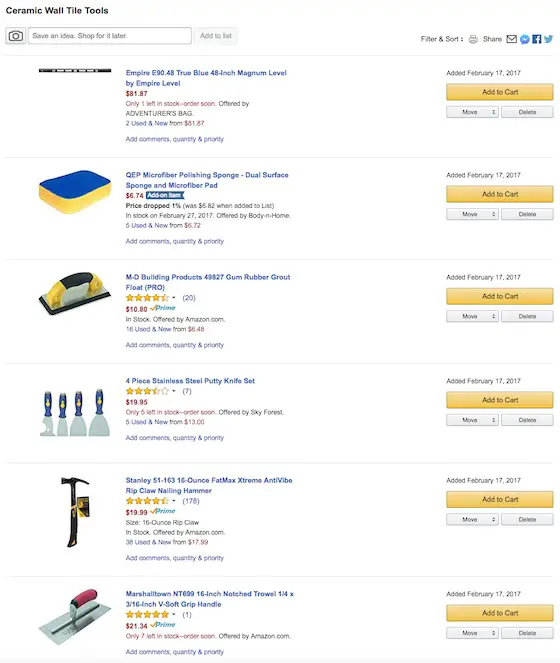
What tools do you need to complete a simple ceramic tile job? Here's a list:

  • tape measure
  • pencil
  • tile cutter
  • nippers
  • a 1/4 by 1/4 inch v-notched trowel
  • a hammer
  • some 6d finish nails
  • 8 lineal feet of straight 1/4 inch wood lattice strip
  • putty knife
  • 3-inch wide-bladed scraper
  • grout sponge
  • rubber grout float
  • several buckets
  • accurate 4 foot level

Click the image below to BUY all, or some, of the tools in the above list.

ceramic tile tools list

CLICK THIS IMAGE NOW TO ORDER ALL THE TOOLS YOU NEED TO DO CERAMIC TILE.

Waterproofing a Seat

If you decide to install a bench seat, you will need to make sure that water does not get behind the seat.

It is easy to waterproof this arrangement. You frame the seat first. Always be sure to calculate the correct height and width for comfort reasons. Use a bucket or standard chair to derive measurements.

CLICK HERE to get FREE & FAST BIDS from local ceramic tile contractors.

Waterproofing is accomplished by using the vinyl membranes that are used beneath ceramic tile floors. Simply purchase and install a continuous sheet from the floor, up the front of the bench over the seat and up the back of the seat wall about six inches.

The membrane is only nailed at the top edges. You will have to penetrate the front bench wall surface with nails when you install the vertical piece of cement board. This is not a problem, as I have yet to develop a leak in my shower after 15 years.

The marble or granite seat simply lays in a thin bed of cement mortar on the vinyl membrane. If you choose to install ceramic tile on the seat, just cut a piece of cement board first and install it as you would the granite or marble. Never nail through the cement board into the wood sub-seat!

Shelves...The Extra Touch

The perfect compliment to a ceramic tile shower or tub area is a set of corner shelves or a long shelf in a U-shaped shower.

These marble trim pieces are usually very inexpensive. For example, I can purchase a four inch wide by 36 inch long piece of white marble for about $15. It makes a great place to store shampoo bottles or a soap dish.

Triangular corner shelves are also attractive. Cut out a template from cardboard and take it to the marble shop. The shelf must fit tightly against the cement board. It is only supported by the 1/4 inch tile. This is plenty of support once all the tile is installed and grouted.

Always try to bargain for the shelves. Often they can be cut from a scrap piece of marble or granite. Check your size before ordering. You want to make sure that it is not too small.

Visit your local ceramic tile store. Look through brochures. You may spy a photo of a shelf, seat or other trim piece that will add function and beauty to your ceramic shower. Don't be too conservative, take a chance!

CLICK HERE to get FREE & FAST BIDS from local ceramic tile contractors.

Related Column: Ceramic Shower Seat

Column B168

Copper Plumbing Alternative – CPVC Manufacturers

Manufacturers of CPVC Piping

The key to making quality CPVC piping lies in the plastic resin. This is the foundation or glue that holds all of the other pipe making materials together. It just so happens that Noveon Inc. has a specialty chemicals division that makes one of the best CPVC resins. In fact, they sell this resin to other CPVC pipe manufacturers.

If you want some excellent information concerning the facts about CPVC piping, read their TempRite CPVC Fact Sheet. As for the other manufacturers, check out their web sites as well. Read their product literature and search their sites for locations of your nearest CPVC distributor.

  • Bow Industrial Corporation

  • Charlotte Pipe & Foundry Co.
  • Cresline Plastic Pipe Co.
  • Nibco
  • Noveon Inc.
  • Thompson Plastics, Inc.

Column B84

Copper Plumbing – Aggressive Water Damage

Copper pipes and plumbing have traditionally projected a feeling of durability and strength when shopping for a house. This is especially true where I live, here in Cincinnati, Ohio. Perhaps it is based on the strong German heritage for which Cincinnati is famous.

However, new copper plumbing can deteriorate and develop leaks in certain instances. Often the cause is aggressive water.

Grrrrrrrrrrrrrrrrrr!

No, the water doesn't growl when it comes out of your faucets. Aggressive water does its work silently. Believe it or not, the actual mechanisms that cause the pitting and corroding of copper water pipes is not totally understood. The water scientists and chemists continue to debate this issue.

One thing is for sure though. Water, itself - that stuff you and I drink, is a chemical compound.That is scary. What's more, the actual chemistry of water can be varied and complex. Water you see has a tremendous ability to dissolve things. So there can be lots of different dissolved chemicals and chemical elements in the water in your plumbing pipes.

Even though the water may be safe to drink, it can still cause corrosion problems! Here is why.

Your drinking water, whether it is from your own private well or from a municipal water works, can have a slightly low pH (that is, be slightly acid); it may contain dissolved carbon dioxide (that is, be slightly carbonated like a flat soft drink); it may have dissolved sulfates, oxygen, or chloride. The presence of these things in your water may make it aggressive.

What Can Happen....

Thousands of homeowners have experienced the effects of aggressive water. It may express itself as an abnormally high water bill (your water line leaks outside underground), part of your foundation may settle due to erosion of soil by an underground leak, a pipe may spring a pinhole leak behind a wall or ceiling. It can happen any time of day or night, usually without warning.

Who's Responsible?

Depending upon how good your insurance coverage is, your insurance company may pick up the tab for cleanup and repair of your house. But, who really caused the problem? Is it really anyone's fault? Maybe more than one person is to blame?

Let's go back to the chemistry of water. Most people think that municipal water works plants just treat water to remove bacteria. Well, guess what, many water works plants do much more than that.

Most water works plants employ highly qualified chemists. These individuals monitor water for all sorts of things: bacteria, natural organic matter, hardness, organic chemicals, and so on.

These chemists are charged with a responsibility to not only make the water safe to drink, but also to make it safe for the water distribution system (pipes). They need to make sure that the pipes under our roads don't corrode. Well, the same is true for the water pipes under your yard and in your house. Your water company has an obligation, I believe, to make sure that your pipes don't fail.

Scale

The chemists at the water works have the ability to adjust the chemistry of the water in many cases. By adding basic chemicals, aerating the water (spraying it in the air to expose the water to the air), etc. they can, in many instances, make the water safe. Many people are aware that certain chemical elements (calcium and magnesium in particular) can make water hard. In fact, too much of these elements can cause a scale to form on the inside of pipes and clog them. But, if you adjust the hardness of water to just the right mineral content, only a very thin scale will coat the inside of pipes, fittings and valves.

This thin coating of scale is good for your copper pipes. It insulates the copper from actually touching the water. For this reason, older homes that contain copper pipe can often survive in the event that a water supply suddenly becomes aggressive.

Chameleon Water

Can water suddenly become aggressive? Well, I don't know about suddenly, but the character of water surely can change. Some water sources are more aggressive than others. For example, water works that derive their water from lakes, rivers, glacial runoff, or any other surface water source rarely produce aggressive water. The reason is simple: this type of water usually runs off very quickly into these bodies of water or is the result of snowfall or ice melt. This water simply doesn't have time to dissolve much of anything.

However, water that is taken from wells or aquifers is a different story. This water may have passed through countless rock formations. It may have been in the ground for months, years, maybe hundreds of years! It has had plenty of time to dissolve minerals that can make this water aggressive.

What happens if a water works system drills a new well, or drills an existing well deeper and runs into this type of water? If it does this, and then doesn't treat the water to make it less aggressive, you may suddenly have aggressive water in your home.

Is Your Water Aggressive?

Good question! How do you find out? First, do you know where your water comes from? The answer may not be simple. For example, here in the Cincinnati area there are many different communities all with different water supplies. To make matters worse, the major water producer, the Cincinnati Water Works, gets their water from two different sources. One source, the Ohio River, is a surface water source. The other, however, is a massive bank of underground wells in an aquifer.

So, here in Cincinnati there is a possibility that if the water from the aquifer is aggressive and if it is not treated to reduce its aggressiveness, I might start getting aggressive water into my house. It's complicated.

You can start your investigative process by calling your water works (if you have one.) Ask to speak to the head chemist - go right to the top! Don't waste your time speaking with someone in customer service, as they probably know very little about water chemistry.

Ask this person where the water comes from (surface, well, or aquifer.) Ask a few questions about quality. Is the water aggressive? Do they treat it? If so, how?

This is very important information for you to get, especially if you are planning to build a new home or replumb your existing house. The reason is simple. If the water is aggressive, or has the potential of becoming aggressive, maybe you should think of using a different piping material other than copper!

Copper Alternatives

If you want to eliminate corrosion problems associated with aggressive water, you need to abandon any metallic pipes. Metals and aggressive water simply don't mix. You are now limited to two primary piping alternatives: CPVC piping and polybutylene. CPVC is rated as an accepted piping material in all major model plumbing codes. Polybutylene is not. There have also been some major problems associated with polybutylene installations that would take me three more Bulletins to tell you about. So, let's stick with CPVC for now.

CPVC is simply plastic piping. It is very easy to work with and is an excellent DIY material. You don't need to be an expert with a soldering torch, as you simply use glue to attach pipes to fittings.

CPVC has lots of advantages other than being unaffected by aggressive water. It is not as noisy as copper pipe, it holds heat better, and it resists condensation.

CPVC piping made by reputable manufacturers is also approved by the National Sanitation Foundation (NSF). This organization develops very strict health guidelines that reach into just about everything having to do with food and drink preparation, distribution, etc.

The bottom line is simple. You need to do what is necessary to protect you and your home. A pipe which develops a leak during the night, or while you are on vacation, can cause thousands of dollars of damage. It can destroy items of sentimental value. You have the facts, now it's your turn to act on them.

Column B84
Ceramic Tile Shower Seat Tips

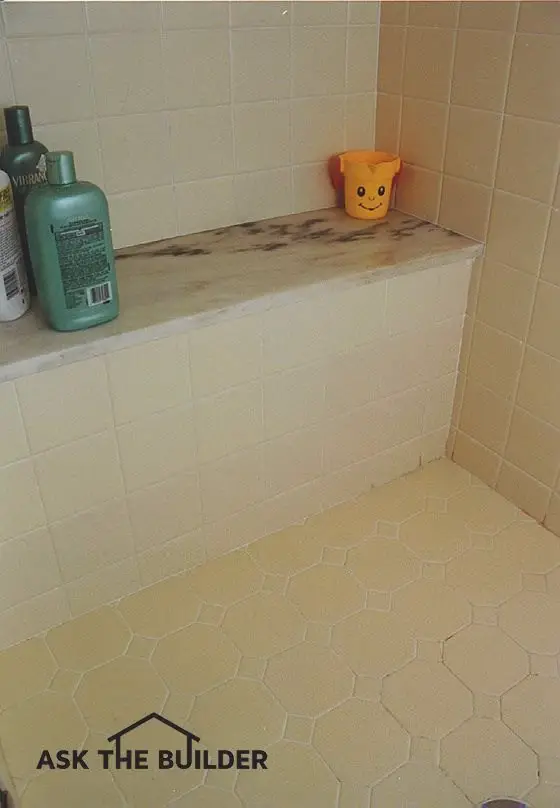
shower seatShower Seat Permanent Installations

If you have ever had the pleasure (misfortune!) of demolishing an old ceramic tile job, you will understand why the tiles rarely, if ever, fell off the walls. The tiles were placed in a cement matrix - basically set in stone. Years ago, the tile setters mixed up a fine grained concrete mix and floated this mixture over wire lath. The tiles were then set soon after using a cement paste. The tile and concrete became one and the same.

You can achieve similar long-lasting results by using cement board. This product is 1/2 inch thick and is nailed directly to the wall studs surrounding the tub or shower area. If you use thinset adhesive(Portland cement, silica sand and often acrylic bonding agents), you will have the same long-term success that you see in those 100 year old houses. You can also get excellent results using the spread-on organic adhesives sold in cans or buckets.

Installing ceramic tile over regular drywall or the moisture resistant drywall is not a permanent solution. Water readily penetrates the grout seams in ceramic tile. This water then begins to degrade the paper covering of the drywall. Once this happens, the tile falls from the wall.

Plumb Walls and a Level Tub

Ceramic tile is very uniform in size and shape. The vertical and horizontal lines will readily telegraph a wall that is out of plumb. Tilting tubs will also be obvious. It is vitally important for you to take your time when framing walls and installing tubs or showers. Make sure they are plumb and level. If you are remodeling, you may have to cut long, thin shims to add to wall studs. You can also scab a straight 2x4 along side an existing out of plumb stud to create a plumb surface. The choice is yours. Plumb corners make cutting tiles easy. The dimensions are always the same!

Vapor Barriers

If your tub or shower is on an exterior wall, I would definitely install a vapor barrier on the studs before installing the cement board. This vapor barrier should extend over the up-turned flashing lip of the tub or shower. This way, if condensation develops on the vapor barrier, it will drain back into the tub. Use a heavy six mil vapor barrier.

Centerlines and the First Row

I always start laying tile with the wall that you look at when you face the tub or shower. This allows you to mask any cutting errors when installing the final corner tiles on the side walls. Draw a plumb, vertical center line that splits the back wall into two sections. Without using adhesive, see how the tiles work towards one corner. If you end with a thin sliver, you should lay your first tile centered on top of drawn center line. This will require you to shift the starting line over one-half a tile, but that is OK. The result is that you will end with larger pieces going into each corner. Try this and you will see what I mean.

Never lay your first row of tile on top of the tub or shower surface. These surfaces are almost never perfectly level. They often have a twist from the manufacturing process. I like to start approximately two inches up from the edge. I draw a perfectly level line and then tack a thin piece of wood lattice trim on the line. This little shelf supports the tile during installation.

Side walls do not use a center line. You determine where your trim tile goes first. Draw a vertical line that represents the grout line between the trim tile and the first column of tile. Begin laying tile from this line towards the inside corner of the back wall you just completed. Trim tiles are installed after all full and cut tiles are in place.

Installing Tile

I prefer to install as many full tiles as possible at once. I then do all my cutting at the same time. The job seems to proceed much faster. If you do this, do not allow mastic or glue to sit exposed where the cut tiles will go. The glue will "skin" over and not hold the tiles. Use a putty knife to remove excess glue from these areas. When installing the cut tiles, simply apply glue to the back of the tile and press into place.

Applying the Right Amount of Mastic

Mastic application is critical. Too little and the tile will fall off the wall. Too much and the surface of your job will look like a storm tossed ocean. You control the amount of glue by using the correct notched trowel. Correct pressure and angle is also critical. You must press hard against the cement board and keep the trowel at a 45 degree angle. When the coverage is correct, you will be able to see through to the cement board in each furrow left by the trowel. Be sure that you use the correct trowel size. Most 4x4 wall tiles require a 1/4 by 1/4 inch V-notched trowel. The tile manufacturer will have instructions concerning trowel size. Read them.

Grouting

Grouting is simple. Water is both your friend and enemy. You need to use water to rinse excess grout, but a sponge that is too wet will dilute the remaining grout, making it weak and prone to failure. Always squeeze as much water as possible from the sponge when striking the joints.

You will need to rinse the sponge numerous times. I would guess that I rinse a sponge no less than 100 times for an average tub grout job. Use a grout sponge. These sponges have very small holes and rounded corners. Sharp edge sponges will dig grout from the grout lines. If the tile looks clean while wet you are OK. The slight haze that remains will be removed in eight hours with a cloth.

Column B168

Regrouting

Grouting Ceramic Tile - It is REALLY Easy!

So, you survived the grout removal ordeal. Do you want to take a break or can you run with the big dogs and just keep going? Great, I knew you could do it. Let's get the few tools we need and get right to it.

Tools - The Bare Minimum

Installing ceramic tile grout requires only one sophisticated tool and a good sponge. You need a hard rubber float that has a crisp edge. These floats can be found at virtually any tile specialty shop. Don't get a rubber float that looks like it has a sponge pad! I want a float that has smooth rubber.

The sponge is very important. Grout sponges are synthetic and have rounded edges, NO sharp 90 degree angles anywhere. I like to use a sponge that measures approximately 5 by 7 inches and is 1.5 inches thick. You will need two clean five gallon buckets and a three inch wide mixing knife of some sort.

Wall Grout and Sanded Grout

Wall grout generally doesn't have sand particles in it. Sanded grout contains fine grain silica sand. It is used to grout joints 1/8 inch and bigger. Standard wall tile in most bathrooms will not accept sanded grout. It is used for larger tiles such as 8 x 8 and up where the grout joint is often 3/8 inch or so.

Mixing the Grout

I like to use clean water. I have tried the fancy additives. However, if you use colored grout, you may have problems with color uniformity. Only mix enough grout that you can use in one hour or so. That translates to about 32 volumetric ounces for an average job. Remember, it only takes four to five minutes to mix a batch. If you go slower and the grout hardens, you have to throw it away.

Mix the grout by hand until it resembles the consistency of cake icing. It should be able to stick onto a knife without any trouble. I don't want it as thick as peanut butter. Think you can handle that? As you begin to mix, the grout will seem lumpy. Mix it for about two minutes and just let it sit for three minutes. Spend this time getting warm water into the other clean bucket. When you get back with the water you will notice that the lumps disappear with a little additional mixing.

Start High - Work Down

I want you to only grout about five to six square feet at a time. Use the mixing knife to apply a wad of grout to the tile. Then wet the rubber float. Using back and forth strokes, bulldoze the grout across the tile. Always cross over the grout joints between tiles at a 45 degree angle while holding the rubber float at a 45 degree angle. Grout will get all over the tile and it will look a mess! That's OK. The grout lines will look fat and messy at this time. Remove as much excess from the tile as possible with the rubber float. Pull the float across the tile at a 45 degree angle to remove the excess grout.

Striking the Joints

Now for the fun part! Take the sponge and immerse it in the water. Squeeze the sponge to remove ALL water. Then gently rub the sponge across the face of the tile in a circular motion. The sponge will quickly fill up with grout. Rinse it out and squeeze the sponge dry again. Do this over the area you grouted until the tile looks fairly clean. The joints will still look fairly rough.

Rinse the sponge again. Now, turn the sponge on its edge. Run the sponge lightly up and down a grout line. You will notice that you can control the amount of grout in a joint by the amount of pressure you apply. More pressure, less grout in the joint. I like my joints about 1/8 inch or slightly less. Do this process on all grout lines and it will look first class. Rinse the sponge frequently.

If you did everything correctly, the joints will look perfect. However, there is still a haze on the tile. Wait about one hour or so until the grout firms up, and you can remove the haze with a clean and practically dry sponge.

Water - The Enemy

You need water, lots of it, to do a grout job. But the water is also your worst enemy. If you have too much water in the sponge as you strike the joints, you can dissolve some of the cement out of the grout. This will make it weak. It will crumble over time and/or powder and dust. Just squeeze the sponge hard every time you rinse and you should be fine.

Also, don't grout between the tub and the first row of tile. This joint should be caulked. Grout will get into this joint as you do the rest. No problem. Just use a tooth pick to remove it as soon as you finish striking the joints above it. The soft grout will readily come out with the tooth pick. Let the new grout dry 24 hours before using the shower. Any grout haze on the tile will come off with a soft towel.

Column B150