"...Best start putting first things first. 'Cause when the hourglass runs out of sand, you can't flip it over and start again. Take every breath God gives you for what it's worth."
You may have been one who responded, "That's great, Tim. But I want to see you on MY LOCAL NEWS not WGN in Chicago. How can that happen?"
It's so easy! All you have to do is go to your LOCAL TV news station's website and use the CONTACT US form or NEWS TIP form and let them know about me. You know my email address as it's in the FROM field in this email to you.
Just let the station know why you feel you, and others in your city, would benefit from me sharing both winter-weather tips as well as ANY home improvement information. Who knows, I may become a regular on your news station!
You may not realize this but I was the LIVE TV home improvement expert for the ABC and NBC-TV affiliates in Cincinnati, OH for about six years.
Live TV is a hoot to do. You really don't know what's going to happen and you need to be on top of your game to say the least!
Let me know what your local TV station says if you reach out to them.
Today - Tuesday - February 16, 2021 - I'm going to be on LIVE TV on WGN-TV in Chicago.
I'll be on approximately at 12:15 PM Eastern Time.
Below is the WGN LIVE segment.
You can watch the LIVE stream on your computer, tablet, or phone. CLICK or TAP HERE to be able to watch the LIVE feed.
The news anchors are going to be asking me about the FRIGIDweather and how to best cope with it. You may be suffering at your home now so you don't want to miss this segment.
I plan to have some tips that you rarely hear. You already know what to do to prevent pipes from freezing, so let's hope the anchors stay away from that worn-out question!
You want to know WHY your house is so darned cold and what you can do RIGHT NOW to stay warm, right?
The segment is only 5 minutes so tune in around 12:10 PM and just hang out until they patch me in using ZOOM technology.
I hope to see you in a little over three hours from now.
Greetings and salutations! This might be your first newsletter! Getting something new is always exciting, isn’t it? This top part of my newsletter is reserved seating for you and every other subscriber who's signed up in the past seven days. By the way, this is an unusual whimsical issue, so give me a week or two before passing judgment.
You, though, might be a valued crusty subscriber who is flummoxed as to why I go out of my way to greet new subscribers. You could be so creaky that you clearly remember when I shared the video about how to drill a hole in 1/4-inch steel plate! Drilling wood is for sissies, right?
Do You Do Pottery?
My youngest daughter’s hobby is pottery. She’s self-taught and is really starting to gain confidence. You may remember when we tried to build a wood-fired kiln last spring. It didn't work and I discovered later the firebox was simply too small. I couldn't get enough fire burning to raise the temperature much above 1,200 F. CLICK or TAP HERE to watch a short video of the kiln really cooking. Yes, the flue liner is cracked and I wired it together to prevent it from collapsing.
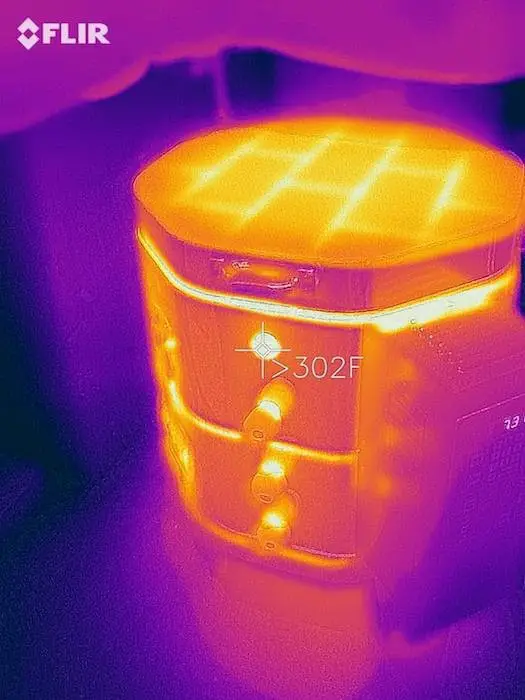
After the wood-kiln #Experiment, she bought herself a fancy electric kiln. It gets hotter than Hades! 2,100+ F!! Here’s a photo of it about two hours into a 24-hour firing. The temperature rises slowly to minimize stressing the clay pieces. It's all computer controlled and fires pottery quite well.
Do you create your own glazes?
If so, my daughter would LOVE to know the best online sources where you purchase the ingredients to make your own custom glazes. TNX in advance for this help. You can just reply to this newsletter and give me the URL you buy from.
My goal is to occasionally share some of her work with you, Yep, I’m a proud Papa.
Nancy in Toledo
About two weeks ago, Nancy was having a low water-pressure issue in her home. I suggested she read these columns:
You may be one who asked how in the world last week’s fun Ask the Builder Clue Mystery game came to be and where in the world I found the woman who did the sultry voice recording on the last page? It all starts with Johnson Hardware and the great folks at Walt Denny, Inc.
Johnson Hardware is the biggest sponsor of this newsletter. One of my jobs is to make sure you see stunning photos demonstrating how you can benefit from using their marvelous door hardware.
I got a huge assist from two wonderful and talented women. Karen-Eileen Gordon, Mary Gene, and I teamed up to create a new mystery game where you see these stunning Johnson Hardware photos.
It was my idea to create a virtual game of Clue. I came up with a list of 30 possible words that could be used in a mystery story.
I shared the list with Mary Gene, she’s the editor of this newsletter, and said, “I know you enjoy creative challenges. Please take fifteen of these random words and see if you can create a fun and interesting mystery story.”
Three hours later, it was done. I modified Mary Gene’s story just a bit and I knew I needed the voice of a professional actress to help you solve the mystery.
I hired her to read the script I’d written, allowing you to SOLVE the mystery and decode a fun message. Karen is a professional Hollywood actress. There’s a very good chance you’ve seen her work.
I want to thank Karen and Mary Gene for all they did to make this fun diversion possible.
What? Wait a minute! You might not have solved the fun mystery yet!
I believe you’ll want to do it after reading what Wayne sent me:
“Dear Tim:
My wife and I just finished doing your mystery puzzle. It was a fun and interesting diversion for a Sunday morning. The story-line was great and it was fun to decrypt the coded message. We laughed when we read it! The clip of Ralphie decoding his secret message was the icing on the cake.
I am glad that I signed up for your newsletter and just like Ralphie waiting for his secret decoder badge to arrive, I look forward to receiving the Ask The Builder newsletter each week. Usually, I hate reading advertisements, but you always present your tips in a manner that is interesting and entices me to read about products I would otherwise not have known about. Keep those newsletters coming.
I’m blessed to know quite a few friends, all virtual, who live in other countries. I’ve come to know Phil and Patricia in Australia, Johan in Belgium, Jonathan in the UK, and lots more.
Jonathan sent me a photo of the tiny island! CLICK or TAP HERE to see that photo as well as a few from his own yard. Wait until you read the story about his chestnut tree!
Japanese Chocolate
Do you enjoy dark chocolate? I confess it’s one of my sins of pleasure. I try to lead a pure and simple life, but dark chocolate can cause me to go off the rails.
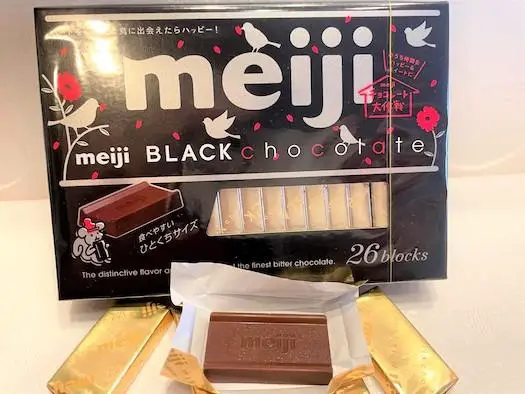
Would you look at a few labels of Japanese chocolate and tell me which ones you find to be the most attractive? CLICK or TAP HERE to see these distinctive candy wrappers! Can you guess which one I can’t wait to taste?
Thanks for your help.
That’s quite enough for a Sunday.
Next week I’ll have a boatload of home improvement stuff for you including a review of two new Bosch heated jackets, one’s a hoodie. You’ll see INFRARED PHOTOS of the heating elements hidden inside the jackets!!
Until then, stay warm.
Oh, one more thing. Happy Valentine’s Day!
Be sure to give your sweetheart a twirl in a romantic kitchen dance and maybe go out for dinner. I’d order halibut and a Japanese sweet potato in case you’re wondering. If they had a wedge salad, I’d get that too.
Jonathan is one of my friends from the UK. I would so love to go there and visit and have a meet up with him and all other nearby Ask the Builder newsletter subscribers.
Here are a few photos he sent me and some context of where he lives:
"I'm in the countryside near the seaside resort town of Blackpool in the North West, about an hour from Manchester, Liverpool and to the north, the Lake District. Most Americans that visit the UK love it."
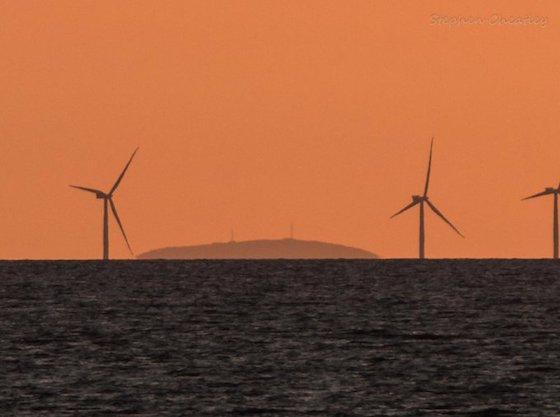
"I don't need to look where the Isle of Man is...... I'm a 15-minute drive from the coast at Blackpool from where, on a clear day, it can be seen. Here's a picture taken with a telephoto lens by a chap I know, Stephen Cheatley who's a professional photographer. I've been there a few times with my parents when I was growing up and once as an adult about 25 years ago. I remember that visit well, it rained just about all day every day."
This is just the view of Snae Fell, not the entire Isle of Man. The photo was shot by professional photographer Stephen Cheatley and republished with his permission. You absolutely should see some of his nighttime photos. WOW!
And Jonathan is really proud of a tree he planted. It's a fantastic specimen. Here's what he had to say:
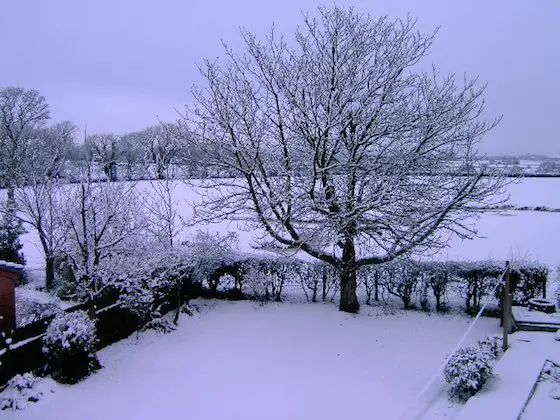
"Randomly, here's a couple of pics of my Horse Chestnut (Conker) tree I planted when I was about 10, I'm now 62."
Gas Furnace Costs 2021 (Installation, Replacement, Pricing)
Are you looking for accurate cost information for a gas furnace?
If so, you're in the right spot. In this guide, you'll learn:
How a gas furnace works: Master the ins and outs of how your gas furnace actually operates.
The average cost of a gas furnace: Learn how much a gas furnace costs as well as how to tell when it needs to be repaired or replaced.
Size and annual fuel utilization efficiency (AFUE) rating information: Learn what specifications your gas furnace must meet in order to work at optimum efficiency.
How to maintain and save money on your gas furnace: Acquire the skills you need to get the most out of your gas furnace.
Whether you're a first-time owner or a homeowner trying to cut down on the heating costs associated with your gas furnace, this guide is for you. Keep reading to learn more about your gas furnace, how much it costs to operate, and how you can reduce those costs while still keeping your home warm and cozy.
How Does A Gas Furnace Work?
If you're a homeowner with a gas furnace, chances are you usually just turn it on and forget about it. But, do you know how it actually works?
A furnace heats the air around it and then distributes that air throughout your home.
The furnace kicks on when the thermostat in your home recognizes that heat is needed. At that point, the gas inside the furnace (which is typically propane or natural gas) ignites in the area known as the burner.
The flame that’s produced then heats up the heat exchanger, which is made of metal. Next, the heat exchanger moves the hot air throughout your cold home.
As the exhaust is shunted out of the flue, the hot air (by a mechanism called the blower) fills the ducts inside your house, keeping you nice and warm, while pushing any remaining cold air back into — you guessed it, the furnace. That cold air gets heated up inside the furnace, and the process begins again.
Because your gas furnace consumes air, it's a smart — and safe — idea to add a fresh air supply vent to your home. Buy this product today and install your very own fresh air supply vent to keep your old or new furnace operating at its best.
Check out this video below for more information:
What Is The Average Cost Of A Gas Furnace?
The upfront costs of gas furnaces vary widely, especially now that energy-efficient gas furnaces are becoming the norm. In general, depending on the model you want to install, you can expect to pay anywhere between $2,000 and $7,000 for a gas furnace. On average, many homeowners pay around $3,000 for a natural gas furnace.
However, there are additional costs to watch out for. If your ductwork needs to be repaired, there’s a problem with your gas line, or other installations are needed, you may be looking at anywhere from $1,000 to $6,000 in labor costs (i.e. for hiring a HVAC contractor).
Although the expense seems high, don't despair. Gas furnaces are much less expensive than oil furnaces. They also typically come with a good warranty, and their high energy efficiency ratings make them ideal for use over a long period.
Gas Furnace Replacement vs. Repair?
It can be difficult to determine when to repair or replace your gas furnace. However, there are some helpful measures to guide you in making an informed decision.
First, if your gas furnace is more than 15 years old, it's probably worth replacing. Additionally, if you're noticing excessive dust in your home, humidity issues, rattling noises caused by faulty ductwork, or cold rooms, it's likely that your gas furnace needs to be replaced.
Still not sure if it's better to repair or replace? Try this trick: use the Energy Star Home Energy Yardstick to determine your home’s energy efficiency rating. Is your score less than five? You may be able to cut down on your furnace costs and improve your HVAC system by installing a new gas furnace.
What Size Gas Furnace Do You Need?
Ideally, the size of your gas furnace should bedetermined by its ability to heat your entire home. The heating capacity of a gas furnace is expressed as British thermal units per hour (Btu/h); residences are required to have furnaces with heating capacities of less than 225,000 Btu/h.
In general, a good HVAC professional should be able to help you find the right-size furnace for your home.
A furnace that’s too big will heat up spaces too quickly, thus kicking on and off too frequently and increasing your energy costs. Meanwhile, a furnace that’s too small will run continuously, driving up your energy bills and damaging your heating system.
Finally, another consideration is determining what type of furnace to get. A single-stage furnace (which can only be turned on or off) may be perfect for heating a small house. However, larger homes may need a two-stage furnace (which can run in high- and low-power modes). All of these factors can influence the size of the gas furnace that’s optimal for your home.
What AFUE Rating Do You Need For A Gas Furnace?
Theannual fuel utilization efficiency (AFUE) rating measures the efficiency of a central furnace. More specifically, an AFUE rating reflects the percentage of fuel that’s converted to heat by a furnace.
For example, a furnace with an AFUE rating of 90% reflects the fact that 90% of the energy inside a gas furnace will be converted to heat, while the remaining 10% will be lost elsewhere in the ductwork.
While oil furnaces must have an AFUE rating of 85% or more, gas furnaces must have higher AFUE ratings of 90% or 95%, depending on the state in which you live.
Some furnaces available now have AFUE ratings of up to 98%. Although these gas furnaces may be more expensive, they can save you thousands of dollars in average heating costs over their lifetimes.
What Is The Average Cost Of A Gas Furnace By Brand?
Furnace prices vary widely due to factors such as the size of your house, the current condition of your ductwork, and installation costs. However, it's possible to get a sense of how much different brands of furnaces can cost. Read on to learn more about the average costs of different gas furnaces by brand.
American Standard Furnaces
American Standard Furnaces tend to range in price from $1,600 to $6,000, and they are known for their durability. Some of the high-efficiency models qualify for local rebates, which can lead to a lower total cost for consumers, and many of the furnaces boast a higher efficiency rating than required, with AFUE ratings of 97% or more.
Bryant Furnaces
Bryant Furnaces offer variable-speed gas furnaces (which use variable-speed blowers to more precisely control airflow). You can choose between single-stage and two-stage furnaces to help control your home's energy costs. In general, the average cost of a Bryant furnace is roughly $2,300, although rebates are available on many models.
Carrier Furnaces
If you're looking for a high-efficiency furnace,Carrier Furnaces offers deluxe models with up to 98.5% AFUE that range in price from $2,000 to $5,000. Although the upfront costs aren't cheap, the high efficiency rating can help reduce heating costs over time, thus making the brand a potentially cost-effective option.
Lennox Furnaces
If you're swapping out an old furnace for a new one, the pricing for aLennox furnace typically ranges from $1,000 to $2,500. Add the cost of installers and your final price will be closer to $2,500 to $4,000. Since Lennox is closer in price to less expensive brands such as Amana and Goodman, it’s an ideal choice for keeping your replacement costs low.
Rheem Furnaces
Rheem Furnaces offer home-heating capabilities with a low square-foot commitment, making them ideal for homes of all sizes. Similar to its competitor Ruud, Rheem Furnaces generally range in price between $1,200 and $2,000, not including labor costs.
Trane Furnaces
Trane Furnaces offer standard gas and electric furnaces as well as varieties of the classic heat pump, which acts like an air conditioner in the summer and a heater in the winter. These gas furnaces range in cost from between $2,000 to $8,000.
How Can You Maintain Your Gas Furnace?
Maintaining your gas furnace is a great way to prolong its life and keep your home heated to your liking.
Simple maintenance tests, such as checking the heat exchanger, cleaning the blower, removing soot that has built up in the furnace, and testing for carbon monoxide (which can potentially be lethal) are crucial for keeping your furnace working smoothly for years to come.
As much as you may want to, you can't do it all on your own. Occasionally, you should bring in a professional technician to assess the combustion efficiency of your furnace and ensure that the ductwork in your home is in good condition.
Keep an eye on your furnace all year round and note anything that may be cause for concern. If your gas furnace is showing changes in its condition or becoming louder over time, it may be a problem that you need to identify with the help of a technician.
Finally, if your house is still cold with the heat on and you've been keeping up with maintenance requirements, you may have a furnace that's not properly sized for your home.
Consider replacing your furnace or bringing in a HVAC contractor to help optimize your HVAC system. It's crucial to know when to repair or replace your furnace before it starts to drive up your heating bills.
How To Save Money On Your Gas Furnace
It's easy to save money on your gas furnace with some effort. First, to cut down on upfront costs, check for rebates. You can likely save up to hundreds of dollars on your gas furnace that you can use to help cover labor costs during the installation.
Second, try to save money during the coldest seasons: fall and winter. Turn your thermostat down while you sleep or are out of the house — this can save you up to 10% a year on your heating bills.
Open your drapes to let in sunlight to warm your home, but seal your windows to prevent warm air from escaping and cold air from entering. Finally, keep your gas furnace in good condition. A well-maintained furnace can help you save money over time and keep your home warm without driving up your energy bills.
How Much Is A New Furnace (Costs, Installation, Replacement)
No matter who you are, where you live, or what type of house you own, at some point, you will have to address your heating and cooling needs. Unfortunately, many people do not realize that a furnace is a significant and costly investment.
That is why if you are looking for accurate price information or additional details, you have come to the right place. In this guide, you will learn:
All about new furnaces, including their average installation costs and the different types of furnaces you can choose from
The additional expenses that you need to watch out for that can drive up the total cost of your furnace
How large of a furnace do you need to purchase for your home, and what factors can affect this size
How much does a furnace cost to replace, and how does the price change based on the type of furnace you want
How to save money during this furnace shopping process and find the ideal furnace for your home
What Is The Average Cost To Install A New Furnace?
Typically, the average cost to install a new furnace will depend on the location of the furnace, the type of furnace you need, and the size of your home. That is why the average cost usually ranges from $2,000 to $8,000, with the national average for a full furnace installation being $6,000.
This full furnace installation includes the furnace cost, the labor fees, ductwork, and other installation costs and upgrades.
What Is The Average Cost Of A New Furnace Based On Type?
Even though gas-powered furnaces are the most popular type of furnace, other available options include electric furnaces and oil furnaces.
Gas Furnace
Gas furnaces are often the most commonly found furnace unit in homes. With these furnaces, gas is piped into the municipal line, which causes the gas burner and the hot combustion gas to ignite, and as a result, the temperature of the air rises.
Natural gas furnaces often have the lowest yearly costs and are also the least harmful to the environment. However, the home needs a gas line in place to be able to purchase a gas furnace. For these reasons, they may not be an option in more rural areas.
Average Cost: New gas furnaces usually range in price from $650 to $3,000, with installation costs averaging about $6,000.
Oil Furnace
These oil furnaces are also known as pressure burners, with oil being sprayed into a combustion chamber at a high pressure, which is then ignited by an electric spark. As the oil mist is sprayed, the oil continues to burn, producing heat.
Average Cost: Oil furnaces usually cost between $500 and $2,500, with installation costs averaging about $6,000.
Electric Furnace
Electric furnaces are the most efficient method of heating because they only use electricity. Even though they are easier to install than a gas furnace, they often result in higher energy bills. Also, with electric furnaces, it is incredibly vital to pick a furnace that best fits the size of your house. Otherwise, the unit will be either running too frequently, or it will always be turning on or off.
Average Cost: Electric furnaces often range in price from $700 to $1,100, with most homeowners paying around $2,400 for installation.
What Are The Additional Costs To Install A New Furnace?
Even though the type of furnace and size will often dictate your new furnace installation costs, there are additional factors that can affect the overall price.
Labor Costs
Labor costs will usually range anywhere from $75 to $100 per hour depending on the area you are located in, the company doing the work, and the complexity of the installation job. However, these labor costs can also increase if assistant installers are present or an inspection of the furnace is required.
Ductwork
Duct system installation will often affect furnace installation costs. This is because if you do not have ducts installed, a new duct system will need to be designed for your home.
Additionally, if your existing duct system is outdated, it may require air sealing to eliminate air loss and help your new heating system operate more efficiently.
Permits and Inspections
Generally, a permit is required for all types of furnaces, including electric furnaces, oil furnaces, and gas furnaces. There are two different ways inspections and permits can affect the overall furnace price:
The cost of the actual permit, which averages between $75 and $200.
The cost of updating certain equipment such as mechanical or electrical parts that no longer meet building codes. Due to these complexities involved with updating equipment, the price of installation costs can be significantly high.
During this inspection, the inspector will review the unit's overall installation and verify that it meets manufacturer and locality requirements. They will also review the electrical connections and conditions and make sure they are up to current codes. Finally, they will check out the plenum and duct connections to your home's existing ductwork and make sure they are efficient.
What Size Furnace Should You Get?
Even though furnaces can all appear similar when you first start looking for a system, in truth, each unit is very different, especially when it comes to capacity. That is why finding the right furnace size for your house is significant for overall energy efficiency and reducing energy costs.
If you are considering furnace sizes, it is important to get a system that will provide you 40 to 45 BTUs of heat per square footage. That means if your home is 3,000 square feet, you will want a furnace that can provide between 120,000 BTUs and 135,000 BTUs. However, this sizing can also depend on whether you live in a cooler or warmer area.
What Is The Average Cost To Replace A Furnace?
The average cost of replacing an old furnace is usually around $5,000. However, these costs can range anywhere from $2,000 to $9,000 and include the cost of materials, labor, and equipment. However, furnace replacement pricing usually depends on several factors, including the type of furnace you are replacing, the complexity of the work, and whether you need someone to get rid of your old furnace for you.
What Is The Average Cost To Replace A Furnace Based On Type?
It is essential to understand that when you are replacing a furnace, the type of furnace you want may not be the best furnace for your house. That is why it is essential to do your research before you decide on a replacement furnace and find one that works both for your needs and your replacement cost budget.
Gas Furnace
The average cost to replace a gas furnace usually varies between $2,000 and $9,000. However, the total cost will vary depending on the brand you want, how complicated the installation process is, and the overall efficiency of the replacement unit.
For instance, if you decide to replace your gas furnace with a high-efficiency model, you can be looking at a price that is 50% to 100% higher than a standard model. However, these high-efficiency furnaces are often best for areas that have to endure brutal winters.
Common gas furnace brands include Goodman, American Standard, and Payne.
Oil Furnace
Oil furnace replacement costs range anywhere from $5,000 to $8,000. Even though these furnaces have been around longer than electric furnaces and gas furnaces, due to the price of oil, they are relatively non-existent. They are typically only used where specific resources such as gas or electricity are not available.
The more common oil furnace brands include Lennox, Armstrong, Rheem, and Ducane.
Electric Furnace
A replacement electric furnace can run you upwards of $2,000 or more. Even though these furnaces are less popular than gas models, they are typically seen in areas where the winters are milder, in the form of geothermal systems or heat pumps.
While the electric furnace is considered a higher efficiency furnace, they are not as cost-effective as gas models since they use a lot of electricity to heat a home.
How To Save Money On A New Furnace Or A Replacement?
Your furnace plays an essential role in your home, especially in the winter. However, because of the steep pricing involved, buying a new furnace or a replacement is considered a substantial investment that requires careful thought and significant research.
Fortunately, there are actions you can take that can help you save money and ensure you are getting the right piece of equipment that works best for you and your home.
Consider the following tips:
The best time to search for a new HVAC system is during the off-season (usually spring or fall time). This is usually when prices are the lowest.
Look for rebates from energy companies, HVAC companies, or government agencies that can help you get the best deal.
Obtain quotes from different service providers to compare offerings and ensure you are getting the most bang for your buck.
Select models that are not only energy-efficient but that have a long lifespan as well. Not only will these models help you save money in the long run, but they can often provide you with incentives and rebates when you have a particular energy score.
Consider zoning systems that allow you to divide your home into areas with separate thermostats. This way, you can set the perfect temperature based on how often your family uses the rooms. Automatic dampers installed into your ductwork will allow heat or air conditioning to flow through as needed.
Be proactive and make sure you schedule proper furnace maintenance appointments. This is the best way to avoid costly emergency issues and prolong the life of your furnace.
Make sure you clean out your furnace filters. This can help improve your furnace's efficiency and lifespan. Check out this video for how to tell when it is time to change your furnace or AC air filter:
Learn about AFUE or Annual Fuel Utilization Efficiency, which is a measure of how efficiently your furnace can utilize its fuel. The more efficient the furnace, the more heat it will give you per unit of fuel. Understanding this terminology and the AFUE rating system will be critical when buying a new furnace.
Choose Energy Star products, which means these products meet stricter energy efficiency guidelines set up by the U.S. Environmental Protection Agency. By choosing these certified products, you can optimize airflow, enhance comfort, and save energy and money in the process.
Looking for accurate cost information for heat pumps?
Perfect, you're in the right spot. In this guide, you'll learn:
What a heat pump is and the various types available
How to find the right heat pump for your property
The benefits of having a heat pump
The cost and how you can save on a heat pump
Heat pumps can be an energy-efficient way to heat your home. Thanks to their innovative design, they can also act as an air conditioner. The cost of a heat pump varies, ranging from a single-room pump for around $2,000 to whole-home systems that can exceed $25,000. The cost will depend on the size of your home and the type of heat pump you buy. There are ways to reduce the cost of installing a heat pump in your home, so you can enjoy the benefits of energy-efficient temperature control year-round.
What Is A Heat Pump?
Heat pumps work differently from a traditional furnace by moving heat from one place to another. Because the heat pump is only moving the warm air around, it requires significantly less energy than other heating systems and central air conditioner units.
The pump uses the natural movement of heat, called thermal equilibrium, to warm and cool your home. Warm air naturally wants to move towards colder areas, and the heat pump helps the heat move more efficiently. Heat pump systems have an indoor and outdoor unit, both of which use refrigerants to capture heat in the surrounding air. The warm air is then transferred inside during the cooler months or outside during warmer months. This helps regulate the temperature inside all year long. You may choose to pair the heat pump with an air handler for even better temperature regulation.
Heat pumps have been in use since the 1940s, but it's only been in the last few decades that Americans have begun to embrace this alternative to a central air system. Homeowners are now embracing these new systems thanks in large part to their SEER rating, which is a measure of efficiency.
What Are The Different Types Of Heat Pumps?
Air Source Heat Pump
Air source heat pumps are 300% energy efficient, meaning for every 1kW of energy they consume they produce 3kW of heat. That's a big improvement over your standard furnace system, which achieves only about 80% energy efficiency. That's a big difference in the energy efficiency ratio. These systems use fans and compressors housed in indoor and outdoor units to move warm air through ductwork, to either raise or lower the temperature. That high efficiency translates into big cost savings, as you'll use significantly less energy to warm and cool your home. That means big energy savings, with some people seeing reductions of 50% or more in their energy costs.
Ductless Mini Split Heat Pump
Ductless mini-split heat pumps are ideal for homes or spaces that don't have existing ductwork. This could be an older home or even a garage. Ductless mini-split systems operate a lot like the air source heat pumps, in that they have an indoor and outdoor unit with a condenser and evaporator that uses a refrigerant to warm and cool the air. Instead of using ductwork, though, the necessary components such as power cords, refrigerant lines, and drains go through a single tube that links the two units. Ductless mini-split heat pumps should last about 10 years with the right maintenance.
Geothermal Heat Pump
Geothermal heat pumps use ground-source heat to warm and cool the home. While the temperature above ground will vary, the temperature a few feet below the surface of the earth stays relatively constant. Heat pumps can bring this consistent temperature into the home, by using the ground for warmth in the winter and as a place to put warm air in the summer. They are the most efficient heat pump option available, reducing the cost of regulating the temperature in your home by up to 50% compared to air source heat pumps. That makes them very inexpensive to run, but their initial cost can be quite high.
What Factors Should You Consider Before Buying A Heat Pump?
Should you install a heat pump in your home? The answer to that will depend on where you live, the infrastructure of your home, and what energy resources you have available. Here are three things to keep in mind when you consider whether a heat pump is a right choice for your home.
Climate
If you are using a mini-split or air-source heat pump, then the energy efficiency of the unit will depend on the outside temperature. The heat pump is less efficient at lower temperatures. That's because it will need to work harder to collect heat from the outside air. Some heat pumps won't work at all when the temperatures reach freezing. Newer systems, however, will work down to 0 degrees Fahrenheit. That makes them suitable for cold climates. You'll get the maximum efficiency from a heat pump in temperate climates, though, where the outdoor temperature doesn't vary quite as much.
Ductwork
If you don't have a duct system in your home, mini-split ductless heat pumps can be an ideal solution. They allow you to regulate the temperature of your home using electricity as opposed to hot-water heat, propane heat, or wood-burning fireplaces. That electricity can even come from renewable resources, giving you an eco-friendly way to regulate the temperature. You can avoid the expense of remodeling to create ductwork, too. If you already have a ducted system, you can still use a heat pump in your home. In colder climates, though, a baseboard heating system can be the more efficient option.
Natural Gas Lines
If you have natural gas lines and already benefit from a furnace, then a dual-fuel system may be the answer. This option uses both a heat pump as well as a gas furnace. The heat pump works when temperatures are relatively mild, while the gas furnace kicks on when the heat pump is no longer the most energy-efficient option. It all happens automatically, too, so you don't have to worry about remembering to switch between the two depending on the weather.
What Are The Benefits Of Having A Heat Pump?
Lower monthly energy bills. You'll end up paying a lot less to heat and cool your home, which can offset the installation costs. Homeowners who install a heat pump can register a big drop of up to 50% on their monthly energy bills. You can compare their efficiency rating to see for yourself.
They are very low maintenance. Like your home's HVAC systems, heat pumps should receive regular maintenance to make sure they are working as well as possible. With minimal upkeep, though, they should last for a decade or more.
Eco-friendly heating for your home. Columbia University reports that about 42% of New York City's total greenhouse gas emissions come from residential heating. Changing to heat pumps can significantly reduce those emissions and their impact on the environment.
Can help stabilize the humidity in your home. Because of the way heat pumps work, they don't end up drying out the air in your home as much in the winter. They can add moisture to the indoor air in the summer, too.
They both heat and cool your home. Instead of paying out for a system to heat your home and another one to cool it, a heat pump can do both. If you are replacing both a heating and air conditioning system, then installing a heat pump instead could be the less expensive option.
What Size Heat Pump Do You Need?
Choosing the right size is key to getting a heat pump you'll love. A unit that is too small will struggle to regulate the temperature of your space. One that's too big will be a waste of energy, resources, and your money.
The best way to determine what size heat pump you need is to speak to a heat pump installation expert such as a local HVAC company. They'll use specific industry guidelines to determine which unit is right for you. They'll also take into account things like how many live in the home, your personal temperature preferences, and the insulation used in your house.
However, if you want a rough estimate for what size heat pump to buy, you can start by measuring your space. Then, for every 500 square feet, you'll want one ton of air conditioning capacity or 12,000 BTU. You'll find the system's BTUs listed in the specs from manufacturers such as Trane or Goodman. For example, if you have a 1500 square foot space, you'll want a heat pump that has a three-ton air conditioning capacity, or 36,000 BTUs.
What Is The Average Cost To Install A Heat Pump?
The cost to have an HVAC professional install a heat pump will vary depending on many factors, including the size of your space, who does the installation, and the existing ductwork. Because of these variables, you'll see a range of prices for heat pumps and installation costs. Get quotes from several different installers so you can make sure you are getting the best deal. In general, though, you can expect the following costs on heat pump installation for your home:
Air source heat pumps: Between $3,000 and $5,000
Ductless mini-split heat pumps: Anywhere from $1,200 for a single-room unit to $12,000 or more for a whole-home system
Geothermal systems: At least $10,000 for a geothermal system, and up to as much as $50,000
Of course, these costs may be offset by the money you save on heating your home, as the operating costs can be significantly lower than with other heating systems. You can learn more about heating costs here:
How To Save Money On Heat Pumps?
If you want to have a heat pump installed in your home but the upfront expense of the system is a concern, there are ways you can save money on a new heat pump. Put these tips into practice to bring the cost of a heat pump down and make it a more affordable option for your home:
Do the installation work yourself. If you are relatively handy and love a DIY project, you may be able to do the installation work yourself. This can save you thousands on installation costs and you'll only need to pay for the parts.
Shop around. Installation costs will vary widely even within the same town, so make sure you shop around with different HVAC companies. Companies that do a lot of heat pump installations are likely to be less expensive than a company that hasn't done very many of them. Get quotes from several local companies on their pricing and labor costs and see who offers you the best deal.
Make sure you buy a unit that's the right size. Buying a unit that's too small will end up costing you more to operate over the long term. Buying one that's too big will be a lot of unnecessary expense upfront. Talk to a professional to make sure you are getting a heat pump that's the right size.
Maintain your heat pump regularly. Make sure the filters are clean and get a professional to service the system once a year. Good maintenance like this can extend the life of your heat pump and prevent you from paying out for a new one too soon.
Pair it with a programmable thermostat. A programmable thermostat will make sure the heat pump isn't working too hard when it doesn't need to. You'll be able to automatically raise and lower the temperature throughout the day to maximize the efficiency of the unit.
Look for rebates. There are several state and federal government programs available to help lower the cost of installing a heat pump. Check with your local government to see if they are offering rebates on heat pump installation. You should also see if there are any tax credits available from the Federal Government.
Heat pumps can be a great energy-saving way to heat and cool your home. Finding the right system at a great installation price can deliver inexpensive heating and cooling that's easier on the environment and your wallet.
If you have a home without existing ductwork or a part of your home that’s colder or warmer than you’d like, a ductless heat pump may be an excellent solution for you.
Sometimes referred to as a ductless air conditioner or ductless mini-split air conditioner, these resilient systems are some of the most energy-efficient, cost-effective options on the market. Read on to learn more about:
What a ductless heat pump is and how it works to heat and cool your home
How ductless HVAC can save you money
How to decide if a ductless air conditioning system is right for you
Proper sizes for ductless heat pump systems
Ductless heat pump installation, components, and costs
Costs for ductless heating & cooling from popular brands
Ways to save on ductless system installations
What Is a Ductless Heat Pump?
A heat pump is, at its most basic level, a system that moves heat from cooler areas to warmer areas. This keeps cool areas cooler and warm areas warmer.
A ductless system, also called a mini split heat pump, is designed to work in an environment that lacks ductwork.
Ductless mini split systems can be designed to make a single space comfortable or to operate in multiple zones, and usually include remote controls for easy temperature selection.
How Does Ductless Heating and Cooling Work?
The basic job of a heat pump is to move warm air into a space with colder air. For air conditioning purposes, warm indoor air is absorbed inside your home and transferred outdoors, resulting in cooler, more comfortable rooms.
In the winter, this reverses. So, heat is absorbed from outside (yes, even when it's cold out) and brought into your home.
A major cost savings with heat pumps is that instead of generating hot or cold air, which can require a tremendous amount of electricity, a heat pump shifts the warm air to where it's wanted.
Without heating elements, heat pump electrical costs can beup to 50% lower than with traditional heating equipment like furnaces. Additional savings come from eliminating the need for ductwork, sinceup to 40% of your heat can be lost as it leaks from ducts.
Is Ductless Heating Right for You?
Now that you've learned how wonderful and efficient a heat pump system can be, you may be wondering whether a ductless system is right for you.
Ductless Heat Pumps Work Best When:
There's no existing ductwork.
You want to improve your energy efficiency.
The current central air and/or central heating systems, including ducted systems, can't circulate heat or cool air properly, such as to an addition at one end of a house or an upper floor bedroom.
Temperatures are above 25°F.
Flexible installation is desired — ductless systems can be installed on ceilings, walls, or as floor-mounted units.
Security is a concern — unlike a window unit, a ductless system requires only a small hole in the wall as a conduit to the outdoor unit.
Ductless Heat Pumps Can Struggle When:
Temperatures drop below freezing — supplementary systems can be designed to help when heat pumps can't keep up.
They are poorly installed or inadequately sized.
Proper maintenance is ignored — while heat pumps require little maintenance overall, unit filters should be cleaned monthly to maintain peak performance and to prevent early system failure.
What Size Ductless Heat Pump Do You Need?
Size does matter — especially with heating and cooling systems. Undersized units will cycle on and off too frequently as they struggle to maintain the desired temperature, risking system failures.
Check out the video below for a breakdown on heating and cooling system sizes:
Too-small units can also cause uncomfortable temperature fluctuations in your rooms and uneven humidity levels. An oversized system will cost you more in upfront expenses and in daily operations. This means you'll save little by installing such an otherwise energy-efficient heating and cooling system.
Of course, you'll want to work with a professional HVAC contractor to choose a split unit system that's best suited for your environment, space, and preferences. Professionals use load calculations to determine the best system for your needs, taking into account such details as:
Your home's size and layout — Do you have an open floor plan? Do you need to control the temperature in separate zones?
Your local climate — How many days of heating and cooling do you need through the year? How extreme are the temperatures?
Air Infiltration — Is your home well-sealed or is it an older, possibly drafty home?
Windows and doors — How many are there and where are they located? For example, west-facing windows will heat a room much more quickly.
Insulation — How well insulated is your home?
Appliances, people, and more — People and appliances generate heat and this adds up to a need for more cooling power.
You — What are your preferences? Do members of your family prefer different temperatures? Do you like it really warm in the winter or only on the coldest days? Do you want to cool the whole house or specific areas such as bedrooms or a home office?
A rule of thumb is that every 500-600 square feet of living area (that you want to heat or cool) requires one ton of heating/air conditioning capacity and each ton requires about 12,000 BTU (British Thermal Units, used to measure the power of most heating and cooling systems).
Based on theaverage new U.S. home, at about 2,500 square feet, you'll need a 5-ton system.
What Is the Average Cost to Install a Ductless Heat Pump?
Depending on the system and site specifics, ductless heat pump installation (labor) costs can run anywhere from $300 for the simplest, single-zone setup, to rather extensive, multi-zone systems at around $3,000.
However, the average is about $600 for most home installations. Depending on your installation needs, additional professionals may be needed such as a carpenter or electrician.
What Is the Average Cost of Heat Pump Split Systems?
Ductless heat pumps cost, on average, $1,500 to $2,000 per ton of capacity to cool, depending primarily on brand and efficiency. Given what we've just covered about the average, a newer home may need a 5-ton system.
This means average heat pump costs ranging from $7,500 to $10,000. As with many home improvements, a more efficient option that will save you money down the road will almost always cost a little more upfront.
While these average costs apply to whole systems, pricing individual components can give you a better picture of what you’ll need to pay.
Outdoor Condenser
The outdoor condenser is the workhorse of your ductless AC system and is the main contributor to its cost. You’ll need to pay between $1,500 to $2,500 for one.
Evaporative Wall Mount
The most common type of ductless system, wall-mounted evaporative units generally cost $300 to $1,000 and are most suitable for rooms with at least seven-foot ceilings.
Evaporative Ceiling Mount
Ceiling mounted evaporator units which can be less intrusive range from a low average of $700 to a high of $1,800.
Indoor Ceiling Cassette
Recessed ceiling cassettes allow only the vent surface to be displayed on the ceiling. They can send heated or cooled air in four directions at once and offer more power than wall-mounted units. These cassettes cost anywhere from $500 to $1,700.
Installation Kit
Containing line sets, wiring, hoses, fittings, and connectors needed to install a ductless heat pump system, installation kits usually make up $300 to $500 of total costs.
Refrigerant Lines
These lines, which run between the outdoor condenser unit and the indoor air handlers, vary widely in cost, depending on the specifics of your installation. However, they average about $5 per foot.
What Are the Average Costs of Heating and Cooling Systems By Brand?
As you may expect, prices for ductless systems vary even among top brands. Each of these companies offer high-quality, ductless heat pump systems with a variety of capacities, efficiency levels, and options.
Choosing the most efficient system you can afford is well worth the upfront costs, which you can recoup in utility savings. We also recommend selecting a brand with local technicians available for installation and maintenance.
Mitsubishi
Among the more efficient systems, Mitsubishi kits cost from about $1,500 to $12,500.
Daikin
Perhaps a less familiar name in North America, Daikin's kits can be had for around $1,000 to $8,600, with the reduced cost reflected in the lower efficiency ratings.
LG
LG offers systems ranging from small, inexpensive units with average efficiency at $850 to setups with excellent efficiency for prices up to about $7,300.
Fujitsu
With ductless systems from about $1,200 to $9,300, Fujitsu's kits offer mid-range efficiency.
Trane
Trane's decades of experience are shown in its full range of ductless systems with prices generally from $4,000 to $14,000. Though the brand tends to have higher prices than its competitors, Trane’s solid reliability and superior efficiency can make up for those costs.
Toshiba/Carrier
With an HVAC history as long as any in the business, Toshiba/Carrier offers high efficiency ductless systems from around $2,000 for the least expensive model to $10,500 for high-end, multi-zone systems.
What Are the Additional Costs for Installing Ductless Heating Systems?
The cost of a ductless heat pump system will generally be based on its efficiency rating, its compatibility to the size and shape of your home, and your environment. Additional details that can affect installation costs include:
Zones — A single zone system will require less equipment and labor than a multiple zone system
Location — More complicated installations, both for the outdoor compressor unit and the indoor units, will tend to require additional labor and materials. The expense increases with additional setups like ceiling cassette units, longer refrigerant lines, conduits, and wiring to upper floors or more distant outdoor units.
How to Save on Ductless Heat Pumps?
Every homeowner wants to save a little money, especially when investing in a large home improvement project such as an HVAC system.
Less efficient ductless units will be less expensive upfront, but you'll see reduced energy savings (perhaps only 15-20% lower than your current costs) in the long run.
Meanwhile, more expensive (and efficient) systems can provide ongoing, future savings up to 40%. Some national, state, and local programs offer rebates and tax incentives for installing more efficient units, such as those which have earned Energy Star ratings.
If you're considering a DIY job, note that while you can self-install a few systems which come pre-charged with refrigerant, most require it to be added after the fact. This means that professional HVAC help will be needed to charge your unit.
Self-installation will also almost always void your manufacturer's warranty, leaving you in the lurch if you encounter problems. Your best bet is to hire professional installers to ensure that your system is properly sized and safely installed.
Expert Advice For Your Home
Subscribe to the FREE Ask the Builder newsletter to receive professional advice for your home. Complete the form below and each week you'll get:
DIY Tips
Tool Reviews
Project Guides
Product Discounts, Giveaways & more.
Unsubscribe at any time. We respect your email privacy.