Dimmer Switch
Dimmer Switch TIPS
- Fire hazards are REAL with dimmer switches
- Can only handle so many watts before they overheat
- NM-B cable and wire must be used in modern houses
- Some LED bulbs will flicker causing headaches
- CLICK HERE to Get Tim's FREE & FUNNY Newsletter!
DEAR TIM: I would like to install several dimmer switches to control light output. Do I need special wiring to accomplish this?
Older dimmers I have used scared me because the switch is very warm to the touch when they operate. Are these things a fire hazard?
Are there specialty dimmers for individual lamps or fixtures?
Are there some lights that do NOT WORK with dimmers? Jo Anne C., Edison, NJ
DEAR JO ANNE: Light dimming switches are not only very safe, but the variety of sleek and efficient dimmers you can purchase today is outstanding.
Fire Hazard Is Real
In my opinion, the only fire hazard you might introduce to your home while installing one would be failure, on your part, of reading and following any enclosed instructions. I have installed dimmer switches for years and not one has ever caused an electrical fire.
The most common fire caused by dimmer switches is putting too much power through them. CLICK HERE to read about a dimmer switch fire. A friend of mine almost burned down his home because of an overheated and overtaxed dimmer switch.
Transform Electricity To Heat
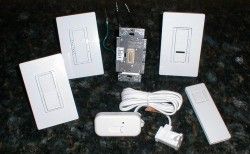 The reason dimmer switches get hot is fairly simple. Some dimmers get hotter than others because of their design.
Old dimmer switches typically were rheostats that varied the amount of voltage going to the light bulbs. As the rheostat was turn down to lower the voltage, the electricity was changed into heat. These old dimmers wasted lots of energy.
Free & Fast Bids
Modern Dimmers Somewhat Safer
Modern dimmer switches use slick internal electronics to dim the lights. These components can turn the light on and off 120 times per second. This is too fast for you to see.
By altering the amount of time the switch is off rather than on, you see a lower amount of light out of the bulb. This method of dimming is highly efficient. Well over 90 percent of the electricity that does flow into the switch gets used in the light bulb.
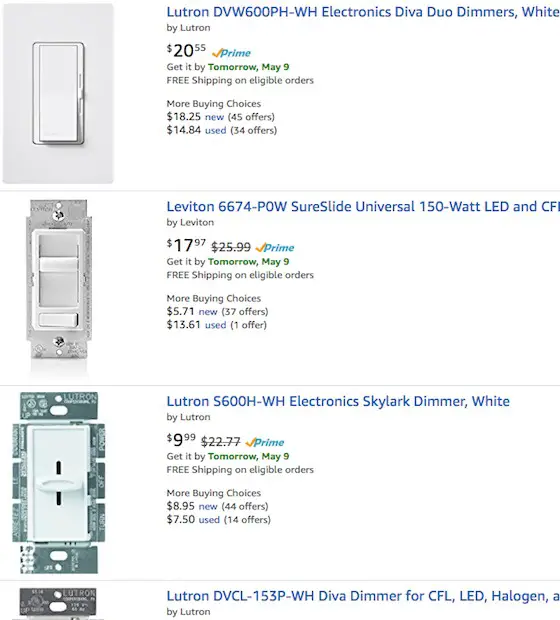
CLICK THE IMAGE ABOVE to see a vast assortment of modern and older dimmer switches.
Too Much Friction Is A Problem
The heat that you feel in modern dimmers simply is a result of the ordinary friction of the electricity flowing through the device. If you try to push lots of electricity through a modern electronic dimmer, you can overtax the electronic components and cause a fire.
Internal Heat Sinks
Modern electronic dimmers have a heat sink or metal plate that directs this heat towards the room. This is why you feel the heat on the cover plate.
This is done intentionally. Over time, excessive heat could damage the house wiring or the internal components of the dimmer switch.
Use Modern NMB Cable / Wire
You don't need any special wiring to connect a typical residential dimmer switch. The National Electric Code for quite some years has required the cable in your home be stamped NM-B. This acronym stands primarily for non-metallic covering. The wires in the cable are protected by a plastic PVC coating.
NM-B cable may be used for both exposed and concealed work in normally dry locations. The temperature of the spaces where the wire is used should not to exceed 90°C. The National Electric Code limits ampacity to that for 60°C conductors.
CONFUSED and AFRAID?
3-Way Dimmers
If you have a standard toggle switch in place now that operates the light, a dimmer can replace this switch. You can even get three way dimmer switches that allow you to operate a light from two different switches.
Watts Allowed
Be aware that dimmer switches can only handle a specific amount of light load. You can typically purchase dimmers that are rated for 600 or up to 1,000 watts of lighting.
Light bulbs are usually clearly marked as to their wattage. Determine the total wattage of the bulbs that are being controlled by any one dimmer. Just add up the number of bulbs and multiply it by the wattage of the bulbs. Example:
- 5 bulbs controlled by the dimmer
- Each bulb is 75 watts
- 5 x 75 = 375 watts total
Altering Heat Sinks Means Less Wattage
Purchase the correct size dimmer switch to suit your needs. But keep in mind that the metal heat sink plate on the front of many dimmers can be altered so that you can place multiple dimmer switches next to one another.
If you break off the side tabs of the heat sink, as allowed in the instructions, you need to derate the capacity of the dimmer. If you snap off the tabs on both sides of the heat sink a 600 watt dimmer becomes a 400 watt dimmer.
Lots Of Choices
Be prepared for tough decisions when you buy your dimmer switches. There are so many cool ones out there. You can buy one that has all of its controls in the tiny space that is used by a standard on and off toggle switch.
Dimmer switches are made with tiny LED light level indicators, softly glowing night lights, and tap-on and tap-off capabilities. Perhaps my favorite dimmer switch is the one that has a hand held remote control. You sit on a couch or in a chair, point the remote towards the switch and you can dim the lights while still seated. It is the ultimate couch potato gift!
LED Light Issues
Some modern LED light bulbs can't be controlled by a dimmer switch. They start to become strobe lights causing discomfort and seizures in some people.
Be sure to read the label of the LED bulb to see if it's approved for use with a dimmer switch.
Point Of Use Dimmers
Point of use dimmer switches are also available. You can purchase a dimmer switch for a table lamp.
This device allows you to stop buying three way light bulbs. You can buy a standard higher wattage bulb and use the dimmer to create an infinite amount of different light levels to suit the task. These dimmers are very handy.
Consumer Dimmer Switch Story
Tim,
While the older light dimmers had a potentiometer (variable resistor - rotating or slide type) as the method of controlling the semiconductors within them, they never were truly a 'rheostat' as you explain. The power to the light was not directly handled by the potentiometer, but by a semiconductor switch called a triac, which had a control signal provided by the potentiometer.
A true rheostat to work the common load of 600 watts handled by the standard light dimmer would be about half the size of a toaster (which is a 1200 watt resistance load typically) and generate as much heat ... really think that would have worked well in a wall box?
It is possible that the writer to the column experiencing the warm dimmers had several dimmers ganged in the same enclosure, and that the proper derating (typically a 600 watt max load for the first dimmer in a box, derated to 500 if there are two, 400 watts each if there are three) was not followed during installation OR someone installed larger or more lamps than the original installation intended ... seen both of these happen in my career.
While some newer dimmers have eliminated the potentiometer in favor of touch plates, and the working components are about the same, the efficiency of the semiconductor devices have improved tremendously, and improved efficiency leads to less loss on the switching which results in lower heat dissipation.
I hope this helps you for future reference. As a former electrician and now engineer, I am alarmed sometimes at what I read from everyone who is an expert on electricity, and am alarmed at what I see on TV in some of these home improvement shows, etc. EVERYONE is an expert when it comes to electrical work it seems. I hope you take this constructively. If I can be of any help in the future, let me know ... I love teaching.
Sincerely,
Walt Flasinski, PE
West Chester

Tim built custom homes and did ultra-custom remodeling for 20+ years before launching his Ask the Builder media presence. He was selected as one of the Big 50 by Remodeling magazine in 1993. This award gave birth to Ask the Builder in October 1993. Tim also operates https://DrawPlumbingPlans.com. His @askthebuilder YouTube channel was the first home improvement channel on YouTube.
I was curious about my dimmer problem and it led me here. While very insightful, I am now wondering if my dimmer switch problem is due to its age. It's an old dimmer attached to a chandelier with around 6 lights. It dims really dim, but suddenly it went bright on its own, like regular brightness. I went to turn it down and the switch was dimmed all the way. I tried increasing it and the lights got abnormally bright. The switch is old but not sure how old. There's a good chance it's 20 years old. Can an old dimmer switch act this way?
Yes.
Hello. I just replaced six hi-hat bulbs with LED inserts that provide more light. Then I also replaced the light switch/dimmer switch combo (for incandescents lights) with a similar LED switch. The problem was the new switch had an extra terminal. I placed the 2 blacks onto the 2 terminals which were side by side and grounded the green wire.
The switch had to be inverted to be in the down position to be off; and the dimmer slide is opposite the switch. so the slide is in a down position for full power.What did I do wrong? Or did I replace a single with the wrong switch?
Tim. I'm a new mom and just paid a lot for ceiling dimmer light. so it could be a night light too. Mine is new and doing that too bright thing on its own. Should we call electrician back? He was so messy I'm dreading it. What's involved when he comes and how should I describe the issue? Thank you!
I'm not sure I understand your problem. You have a dimmer installed. You think the bulb's too bright? How about putting in a lower-wattage bulb in the light fixture?
Hi Tim - Can you use a rheostat (dimmer) when the overhead light has two light switches at opposite sides of the room? My boyfriend says "no" but I think it is because he is lazy and doesn't want to figure it out. Please solve this dispute. Thanks. Mona
The envelope is handed to Tim Carter, founder of AsktheBuilder.com, at the podium. The audience goes quiet. (Sound of paper being torn.) "And the winner of the 3-Way Switch Dimmer Debate is Mona B.! She needs to get her lazy good-for-nothing boyfriend off the couch and in front of a computer monitor to watch my 3 Way Switch video. Then he needs to get his butt to an electrical supply house to purchase two 3-way dimmers.! (Standing ovation. Tim Carter waves to audience and hugs Mona B.)
I have a double light switch next to my bed that controls the main ceiling light and a wall light, the ceiling light also has a switch at the bedroom door. My question is can I replace the double switch at my bed with a double dimmer switch without replacing the main light switch at the bedroom door?
Maybe. I'd have to see it and then decide.
I currently have a double rocker switch. One side controls a set of 4 lights, the other a ceiling fan. Can I have a dimmer switch with remote put on just the light side of the switch?
Possibly. Depends on if you can find a dimmer that will play well with the other switch.
I installed a dimmer light and appears it's only got two settings: as bright as it goes (when dimmer is in the highest position) and as low as it goes (when dimmer is in any position other than the highest). Please help. I've read and re-read the instructions and watched multiple DIY videos. Please help!
HI! To be honest I dont know anything about electricity but would like to turn my regular night lamp into one that can be dimmed. I bought a dimmer cord set from Omni. The wire is different from the old cord because the new one has thick thread of copper. SORRY. Dont really know how to call It or what are the terms to be used. I just want to know if it would be fine if I just put the new cord with dimmer switch the way the old cord with regular on and off switch used to be attached with "that little thing where you put the bulb"?
question, getting hum from LED while dimming. switch says only 150 w for leds .have 6 recessed lights LED 65W rating. is there a dimmer made to take 6 lights . ridiculous to install 3 switches for 6 lights in small office. or do i have to remove the LED bulbs and go with halogen?
Way late to the reply, but in case someone else has the same issue. Your led blubs that are 65w equivalent bulbs (provide the same amount of light as an incandescent 65w bulb), but likely only draw 9-11w, to provide that light. So at the high end that switch should do ~13 LED bulbs@11w/ea.
The switch is likely de-rated with LED's in case a future owner replaces your 11w LEDs (143w total) with 65w incandescent bulbs (845w total) it will still be within operating range of the switch.
I have 12 can lights on one dimmer and all have 65watt bulbs in them. The dimmer is rated for 1000 watts so should be no issue. I also have changed the light bulb to a 45watt and it still gets hot.
do certain light fixtures NOT work at all with a dimmer switch?
Correct. Read the last part of the above column about certain LED bulbs.
I have dimmable led bulbs (br30 style) in my living room can lights. I also have the proper Lutron led/cfl compatible dimmer installed. I have adjusted it according to their instructions multiple times, but they still flicker from time to time. They also did this when I had cfl bulbs installed previously. Any recommendations?
Does anyone know if they make a dual LED dimmer switch with one side being a 3 way dimmer for LED lights and the other side being a regular dimmer for LED lights. If so where can I find one?
What percentage for any dimmer old or new would I leave running for an extended period of time.
I have one single switch that controls both a shower exhaust fan and a light in the shower....Ive read that normal light switch dimmers are a danger to motors or a fire hazard. What kind of dimmer can I install, if any, that is compatible to use that won't damage the exhaust fan?
Dave,
Who do you think would have the BEST answer you seek? I maintain only one person - especially if you don't want to burn down your home.
The manufacturer of the exhaust fan. Don't trust anyone else. Report back what you discover.
I'm making a switchable power tool safety on/off lead with a dimmer as speed control. Can the dimmer be after the on/off switch? (else the switch will be 'live' when the power tool is off...)