Exterior Paint Peeling

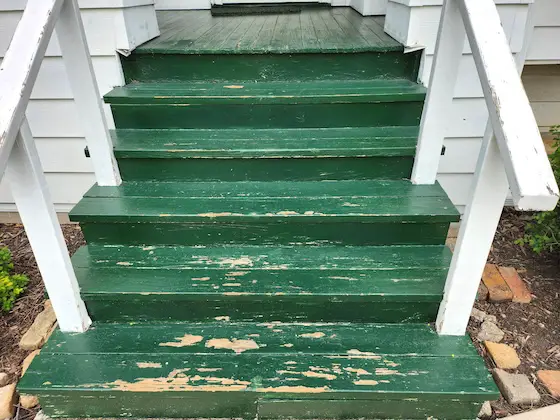
exterior wood steps paint peeling

The paint on these steps and the wood porch above it lasts for only two years. I believe I know why it fails. Copyright 2024 Tim Carter

Exterior Paint Peeling - Water, Water Vapor, Dust, Dirt, and Oil

Are you frustrated with peeling exterior paint peeling? Maybe it’s a fence, a picnic table, a bench, your house siding, a shed, outdoor furniture, or a pergola. You might also share Jan’s misfortune. She visited the Ask Tim page of my AsktheBuilder website requesting help.

Here’s what Jan sent to me:

“Our problem now is our front porch that is subject to the elements here in Des Plaines, Illinois. I am SO tired of repainting every other year or at a minimum, touching up worn spots every Spring. The paint flakes off the railings, stairs, and even floorboards. We have gone as far as stripping it down to bare wood, using primer and then two coats of oil base porch paint. Unfortunately, it lasted no longer than the water-based paints, which were easier to work with. The snow and rain hits the stairs and railings but not usually the decking. Although, a few times the snow has blown up the five stairs to our door. Any idea what we can do to save our backs and knees?”

Jan sent me a set of photos that allowed me to diagnose her exterior paint peeling problem in just seconds. She lives in an older home. The porch is raised above the soil as are her wood steps.

covered front porch exterior wood steps

This is Jan's front porch. It's no wonder paint won't adhere to the wood. Copyright 2024 Tim Carter

The underside of the porch has little or no ventilation. Walls, covered with the same wood shingles as the house, extend from the porch down to the soil. Illinois is east of the Mississippi River and gets quite a bit of rainfall each year. Invisible water vapor wafts up from the soil and enters the wood. The paint doesn’t stand a chance. Here’s why.

John Pendrey the Chemist

I started a summer business with a good friend after I graduated from high school. We painted houses in the summer. John went on to get a PhD in chemistry. He spent his entire career working in a lab for one of the largest paint companies in the USA.

When John was in graduate school, he started gravitating towards a career in the paint industry. One day we were eating lunch together and he handed me a scrap of paper with a chemical formula on it. He asked, “Do you have any clue what this common item is?” I was a geology major not a chemist, “I’m clueless. What is it?”

John responded, “It’s the formula for common yellow carpenter’s glue you use all the time. Now look at this other formula.” He handed me a second scrap of paper with a long formula.

I looked and it was nearly identical to the glue one. I said, “Well, this must be the white glue kids use in school.” John said, “No. It’s the chemical formula for a very standard water-base exterior house paint.”

At that instant of time, a light bulb went off in my head. Why of course, paint does stick to things like glue. It’s hard to get out my clothes, it’s hard to get off my paint brush ferrules as well as ladders. Paint is just colored glue.

Paint Expands and Contracts

Paint expands and contracts. So does metal, plastic, and wood. But different materials have different expansion and contraction rates. Of all the common things you have in and outside your home, wood and plastic move the most. Heat causes plastic vinyl siding to expand. Water, or water vapor, causes wood to grow in size.

Water Vapor and Vapor Pressure

It gets worse. Water can travel with ease through wood. If you recall some of your high school physics, you might remember a class on vapor pressure.

In Jan’s case, water vapor from the soil is entering the underside of all the wood that makes up her porch and steps. The odds of the original carpenter painting and sealing all the sides of each piece of wood before he built the porch are as high as you guessing the Mega Millions lottery numbers.

Water seeps into Jan’s porch wood and works its way to the underside of the paint. When the sun hits the painted wood and warms it, it creates a difference in vapor pressure. The vapor must get out so it pushes the paint off the wood.

If your wood gets wet from rainfall or lawn sprinklers, it can swell. The swelling may be greater than what the paint can expand. If so, the adhesive bond between the paint and the wood fails. This is but one reason paint peels.

Read Paint Can Labels

Other common reasons for peeling paint are on the paint can label. Can you recall the last time you read the label on a paint can? Most say, “Apply to a clean, dry, dust-free, and oil-free surface.”

Adhesive tape doesn’t stick well to dusty or dirty surfaces. I’m sure you’ve had tape fail. It’s no wonder paint will fail if a thin coating of dust or dirt is on the surface you’re trying to paint.

Always clean things you’re about to paint as you would your car. Get a bucket of soapy water and rub the surface with a sponge or brush and then rinse and dry. Good luck!

Column 1558
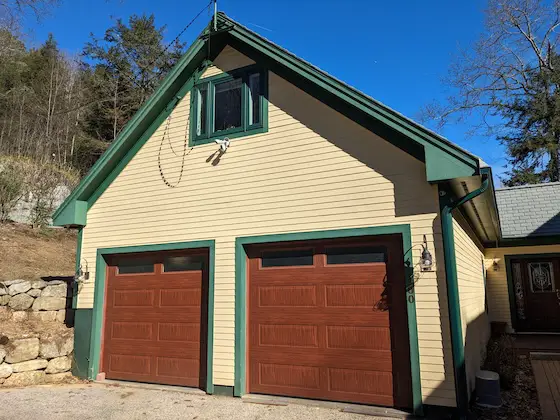
Architects Design Flawed Garages

two car garage wood-grained doors

Architects Design Flawed Garages - You might think this is a spacious garage allowing you to store many things and get in and out of cars and trucks with ease. You’d be wrong. Copyright 2024 Tim Carter

Architects Design Flawed Garages Time and Time Again

Two weeks ago, on a whim, I recorded a 60-second video that I uploaded instantly to YouTube.com. I wanted to share one of the biggest mistakes I’ve ever seen in the common garage. I’m willing to bet you’re a homeowner who suffers from this oversight by architects and those who draw house plans. I stand by this claim based on the hundreds of thousands of garages I’ve driven by that sport this design flaw.

In less than 24 hours, this short unscripted video was watched over 8,400 times. There were quite a few comments from folks who lamented about having a garage with this same defect. A United Kingdom homeowner said, “Same in the UK. No way you can get the car in and open the car door, even without stuff stored there. Glad architectural mistakes are universal.”

What’s the common flaw? The vast majority of garages are not nearly wide enough. One would think that architects would have eliminated this error long ago, but every new garage I drive by is too narrow. I look at house plans each week for my DrawPlumbingPlans.com business and I see the exact same mistake duplicated time and time again all over the USA.

The 2-Foot Space

For whatever reason, architects continue to create plans where the distance from the corner of the foundation to the beginning of the garage-door opening is just 24 inches. If the garage is framed with standard 2x4s, the distance from the interior drywall covering the wall to the door opening is less than 20 inches.

When you park a full or mid-size car in the garage you might have about 30 inches from the side of the car to the drywall. That’s not enough room to fully open the average car door. My wife’s Volvo XC-90 requires 36 inches of space to fully open the driver’s door.

Garbage Cans, Recycle Bins, and Bicycles

Think about all the normal things you might store on the side walls of your garage. A standard round garbage can is 22 inches in diameter. My stackable recycling bins project 16 inches out from the wall. There’s only 14 inches of space in my garage between the gleaming paint of my wife’s car and the reclining bins. To prevent scratching the paint on her car, I only transfer cans and bottles into the bins when she takes the car out on errands.

I knew all about these issues when I helped my daughter design her home. She followed most of my advice and thanks me each time I see her. Her garage has two separate doors, both of them 9 feet wide and 8 feet high. I begged her to make one of the doors 10 feet wide but she resisted this as she wanted the doors to be balanced. You need a 10-foot-wide door to accommodate a standard full-sized heavy-duty pickup truck.

My daughter’s garage is 28 feet in total width. The distance from each outside corner to where the garage door opening begins is 4 feet. I had suggested she make it 5 feet but the zoning setback lines prevented this.

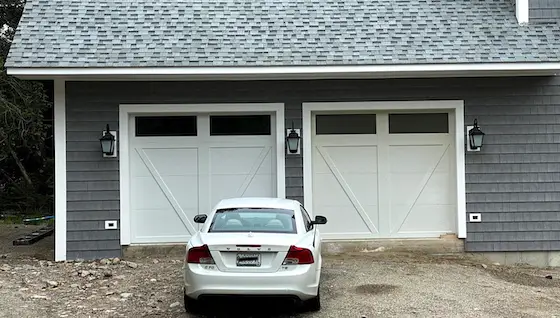
two car garage with custom doors

This is my daughter's garage. It would have been perfect had the garage been just 4 or 5 feet wider. Copyright Tim Carter 2024

The distance between the two garage door openings is just 2 feet. I had recommended 3 feet. Her home was shoehorned onto the allowable area within all four setback lines. Had more room been available, a 32 or 34-foot width would have created a garage with plenty of room for a big workbench, lawn tractor, snow blower, etc.

Do you own a full-sized pickup truck like I do? If not, perhaps a neighbor has one. My guess is you see it parked outdoors most of the time. I have to fold back one of my big mirrors to squeeze my Ford F-250 into my garage. It’s important to realize I didn’t build the house I live in.

When architects specify garage doors, the final finished opening is never what you see on the door-size callout. For example, let’s say your architect has specified a 9-foot-wide by 8-foot-tall door. The foundation contractor creates a notch in the cast concrete that’s 9 feet wide. Once the slab is poured, the carpenters place the bottom of the beam that passes over the slab at 8 feet off the concrete.

When the finished trim and door weatherstripping is added on the side wall jambs, you lose about 2 and 1/4 inches in width. This means the clear distance between the weatherstripping face is 105 and 3/4 inches. A Ford F-150 will squeeze into this door as the outer distance from mirror to mirror is 96 inches. But my F-250 will not fit. The current width of a new F-250 with the mirrors extended is 106 inches.

Don’t skimp on the depth of your garage. Think about how long cars and trucks are. My wife’s Volvo is 16 feet long. My F-250 is almost 20 feet long. You might want 2 feet of space between the vehicles and the garage door. At the far end of the garage, you would probably want at least 8 feet of space so you can store things on the wall and have plenty of space to walk next to the vehicles. This means the depth of your garage should be at least 30 feet deep.

Column 1557

Room Addition Foundation

room addition roof framing

This room addition is bigger than the original house. Sometimes it makes sense to go to all the effort. Copyright 2024 Tim Carter

Room Addition Foundation - Get it Square and Level

Are you feeling pinched by the current economy? I know I am. I shop for materials each week at the grocery store giving my lovely wife a break. She did it for the previous 45 years. Gasoline, food, insurance costs, interest rates, etc. are all way up with no end in sight. Your plans to move to a larger home may now be on a cool back burner.

The good news is you might be able to create the space you so desperately need by building a room addition. It’s important to realize room additions are small houses and in many ways much harder to build than a new stand-alone home. You need special skills or you need a seasoned remodeling contractor who has deep experience. Allow me to share a few true stories of what happens when you don’t have the right person.

Fixing Out-of-Square Foundations

When I first started in the construction business back in the mid-1970s, I got a job as a fix-it expert for a small local remodeler. Each day I was tasked with righting all the wrongs created by the unsupervised subcontractors. Most of what I did centered around disguising out-of-square and out-of-level foundations. I can’t stress enough how important it is to have strict supervision of the foundation process. It must be square and level.

Carpenters don’t tolerate these conditions and will build a square shell on top of an out-of-square foundation. When this happens, some of the wood framing will overhang part of the foundation and you’ll discover the foundation sits proud of the framing on the other side of the room addition.

My job was to cut long tapered wood shims on one side and add a cement-stucco finish on the other side of the foundation. All this was to disguise the mistake. Some homeowners never said a word, others knew the fix was in and complained to me. I just shrugged it off and did my job telling them to call Dan, the owner of the company.

Foundations must be square and level. It’s not hard to do. I used an optical builder’s level back when I was building my own room additions and homes. These are accurate to within a 1/16th of an inch in 50 feet. You can now download a simple app on your smart phone to give you the necessary diagonal measurements to square a foundation. I used to do those using algebra, a pencil, and a piece of paper.

Stop trusting your contractor. Before you even sign the contract for your room addition, you can already have the diagonal squaring measurement. Some great architects automatically generate it for you on the foundation plan. Here’s an example.

Let’s say your room addition foundation projects out from your home 14 feet and the foundation is 22 feet long. That rectangle is square when the diagonal measurement from two opposite corners is 26 feet and just under 1 inch. You can go online and use any number of websites to generate diagonal measurements in seconds.

You can also rent a laser level if need be for a few hours. If your room addition foundation is made from concrete block, check it for level as soon as half of the block are laid. If four or five courses of block are still to be laid, it’s going to be very hard to correct an out-of-level mistake of just an inch or so.

An optical or laser level can be used to check the pour line inside concrete forms. I know you think I’m crazy to ask you to do this. If you don’t want to do it on your own, then put it in your contract that your builder has to help you with all of this.

It’s imperative the contractor gets the height of the foundation correct. This math needs to be done by making sure the finished flooring height matches where you will walk from your current house into the room addition. Your calculations may show that the room addition foundation needs to be higher or lower than the existing foundation. Don’t guess for goodness sake hoping all will work out.

Room Addition Cost Estimator

I recommend you demand a detailed cost estimate for each phase of your room addition. You want to ensure enough money has been allocated for each task to complete the job. With inflation raging, you can’t afford to run out of money before the job concludes.

Years ago I developed a spreadsheet that helps you do this. It lists every major task and most of the minor things that need to be done from start to finish. This magic spreadsheet can provide you with a rough estimate of the final cost of your room addition if you just know the actual cost of a few of the aspects of the job.

This room addition cost estimator works for room additions just as it does for a new home. It takes into account regional cost differences too.

You can get a copy of this spreadsheet here.

Column 1556

Algae and Lichens on Composite Deck

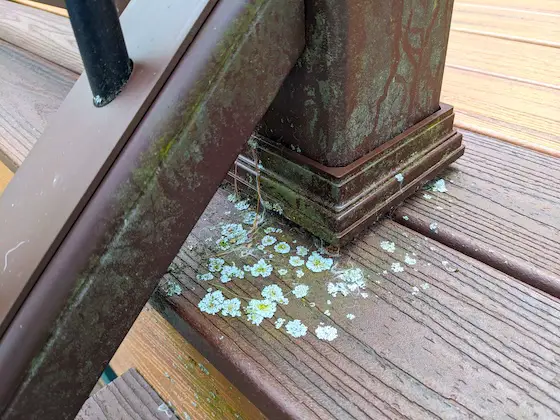
algae and lichens growing on composite decking

No deck is maintenance-free. You can see algae and lichens that thrive in the shadows on this composite deck and rail system. Copyright 2024 Tim Carter

Algae and Lichens Grow on Composite Decks and Rails - Easy to Clean

You might be one of the countless homeowners frustrated with the annual, or every-other-year, task of cleaning and sealing your wood deck. I’m right there with you as I have to deal with my wood dock and the stairs leading to it. It’s a wretched job that can span days. It’s no wonder you might be drawn to the composite decking displays at local home and garden shows like a sailor to a siren’s song.

Over the past three decades I’ve been lucky enough to obtain inside information about exterior wood sealers. Add to this the knowledge I discovered while researching my Roofing Ripoff exposé book. You probably know that the sun’s ultraviolet (UV) rays are harmful, but you might not know the actual mechanism. Once you do, you grasp why deck sealers are doomed from the start.

UV Rays Contain Destructive Photons

The UV rays can contain active photons. Think of these tiny things as miniature cruise missiles. When the photon crashes into your outdoor flag, wood deck, house paint, metal roof or flashing, etc. it splits molecules apart and rips atoms off objects. These photons have so much energy they can blast atoms of copper or zinc from your roof. It’s child’s play for them to destroy thin deck sealer films that sit up on top of the wood.

To make matters worse, your deck is horizontal and gets a point-blank blast from the UV rays in the middle of the day. The rays have to pass through the least amount of protective atmosphere at midday. Have you ever wondered why your deck railing balusters don’t look so bad? They receive a harmless glancing blow from the UV rays at noon. In the morning they receive a direct hit from the UV rays, but the photons have to pass through so much atmosphere their energy is dissipated. This is why you struggle to get sunburned at sunrise and sunset.

As if this isn’t enough torment, the wood you’re using outdoors is hygroscopic. This means it expands and contracts in response to moisture content. Sealers prevent this movement because they don’t allow water to enter the wood. If you stop sealing wood, within a few years it looks like a neglected fishing pier with cracks large enough to swallow a handful of BBs.

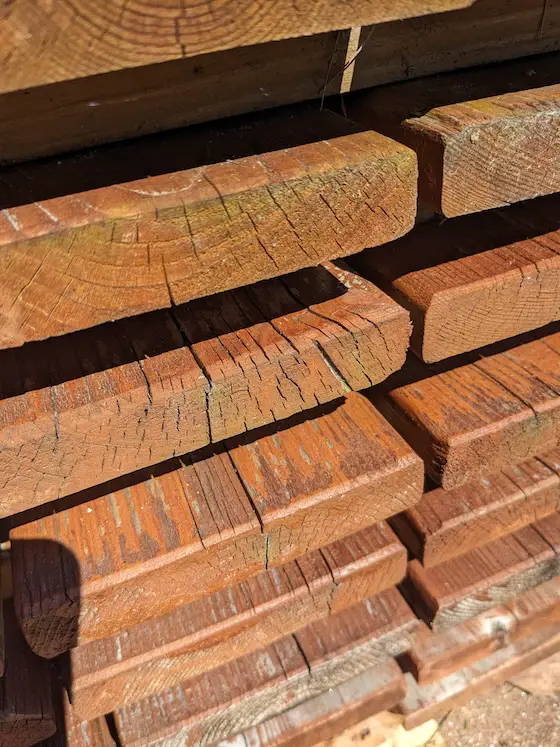
These cracks start off small. They’re very tiny checking cracks. The cracks allow water to penetrate deeper into the wood. As the cracks get wider and deeper, the swelling and shrinking forces become stronger. This is why it’s imperative you keep outdoor wood sealed so water doesn’t rip your lumber apart.

cedar decking with checking cracks

This is 1-inch-thick cedar. They make up my dock panels. You can clearly see how the wood starts to crack and water can enter with ease. Copyright 2024 Tim Carter

I think you can see why a new industry was born four decades ago. That’s when the first composite deck products hit the market. As time marched on, improvements were made and more exterior products were made from plastics so you wouldn’t have the constant job of painting or sealing them.

I have 1,700 square feet of composite decking here at my own home. I didn’t build the house I live in now. The homeowner had the original Trex decking installed. I remember when it was introduced to the marketplace. It had an antiseptic appearance and only resembled wood by its shape. Seven years ago, I ripped it all up and installed Trex Transcend for the decking and railing system.

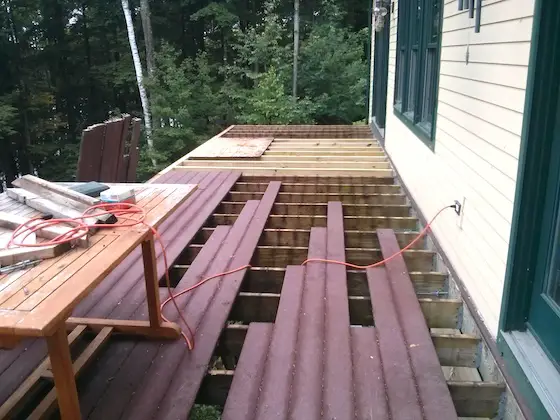
old trex decking being removed

This is generation one Trex decking. It had no wood grain, was 1-inch thick, and mushrooms could grow from it in moist conditions. Copyright 2024 Tim Carter

My wife, who dislikes all wood-imitation products, was amazed at how realistic the product looks. I’ve never cleaned the decking and it looks as good as the day I installed it. Algae, pollen, and lichens do accumulate in shady areas. The good news is all of these things are easily washed off using a soft brush that you might use to clean your RV.

trex transcend decking

This was my deck just months after it was installed. All the decking that's in the sun looks this good seven years later. The shady areas do have algae and lichen growth. Copyright 2024 Tim Carter

If you decide to free yourself from the chore of cleaning and sealing your wood deck, be aware that composite decking requires great attention to detail when installing it. Add to this the price. The top-line composite deck products are expensive.

Composite decking products, while not hygroscopic, expand and contract. The movement can be substantial. You must take this into consideration when installing the decking or you’ll have a huge mess on your hands. Read the installation instructions and follow them to the letter.

If you decide to install composite decking on a treated-lumber undercarriage, read the installation instructions. The composite decking products can sag if you space the floor joists too far apart. By default this happens if you decide to install the decking at a diagonal on your deck.

You’ll also want to protect your investment by using the newer joist tape products. This tape is applied to the top of the joists before the decking is installed. It prevents water from entering the wood. Without this protection, water can enter tiny cracks created by the decking fasteners. As you already know, these cracks can get bigger over time. When this happens, the fasteners holding down your expensive composite decking lose their gripping power.

Column 1555

Secret Hiding Places

kitchen pantry secret door

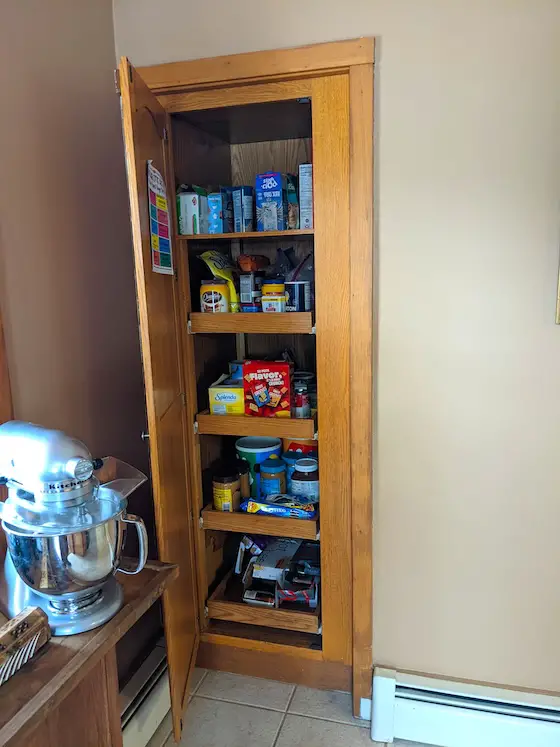
Secret Hiding Places - Is this just a small pantry or do all the shelves roll out and rotate to the right giving you access to a tiny room behind the wall? Use your imagination. Copyright 2024 Tim Carter

Secret Hiding Places in Your Home are Everywhere

I’m in the final stages of writing a book that contains hundreds of hacks that you might want to incorporate into your existing home or a new one you’re building. I got lots of help from many of my newsletter subscribers, who shared some of their best ideas. It’s been a fun project.

The two categories that received the most response were electrical and secret storage. Thousands of homeowners need help with electrical outlets and switches they feel are in the wrong place. The original electrician didn't consider the best locations for outlets and switches. You, or a more clever electrician, can rectify some mistakes.

Hidden Staircases and Secret Passages

You may be a homeowner who desires to hide small and large things in your home. You may even take it to another level altogether and be like me. I dream of having at least one secret staircase and any number of hidden passages in the next home I build. Think of the game of Clue™. If you’re in the kitchen, you can magically be across the board in the study. Yes, it’s possible to incorporate secret passages in houses, but that’s a column for another day.

clue game board

Here's a real-life secret passage in a kitchen.

kitchen countertop

There's a better way to disguise the seam on the countertop. This, done by an expert, would fool 999 people out of 1,000.

I’ll share with you a few of the ideas that my subscribers sent to me. The best ideas, of course, will be in the pages of my book. I think you’ll enjoy what I’m about to reveal. It’s important to note that you need to get in the mindset of a magician to conjure up the most creative secret places.

Void Space Between Walls

One of the easiest ways to create a small hidden space is to create a void between two walls. This needs to be done so that when you’re in each room, you think the wall you’re looking at is a common wall with the room next door. I have this situation in my own home now, where two large metal chimneys pass through the second floor up to the roof.

One of the walls is the back wall of the second-floor bathroom. The other wall is inside a closet in the bedroom next to the bathroom. You automatically think the two rooms share a wall. You’d be wrong. There’s a space about 24 inches wide between the two walls! The builder could have created a cutout in the hallway to this space. You could cover this opening with a large wall hanging or picture. A French cleat is best for holding the artwork against the wall.

False Bottom in a Window Seat

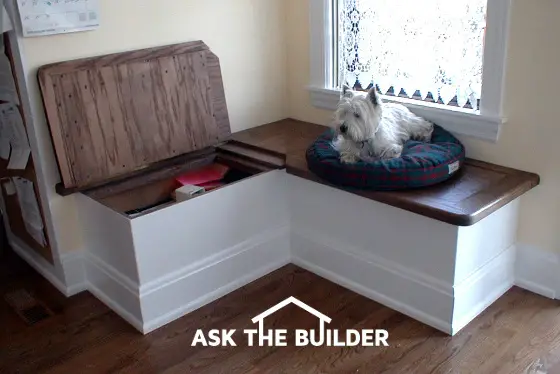
Window seats are an ingenious way to conceal long items that might only be 3 inches tall lying on their side. You can create a false bottom in the seat. Imagine flipping up the hinged window seat and seeing the bottom. Who’s to say there’s not another six or eight inches of space under this bottom? There are many ways to hinge the false bottom so it flips up when you need access.

small corner window seat dog

Mayonnaise Safe

Do you need to hide some cash, jewelry, or other bibelots that have sentimental value? You can store them in your refrigerator. Did you know you can get a small can of latex paint the same color as mayonnaise? Carefully clean an empty jar. Be sure you don’t ruin the label. Let it dry, and then pour some paint into the jar. Roll it around to coat the inside. Let it dry well, and alakazam, you can store valuables in the last place someone might look.

WorkBench Drawer

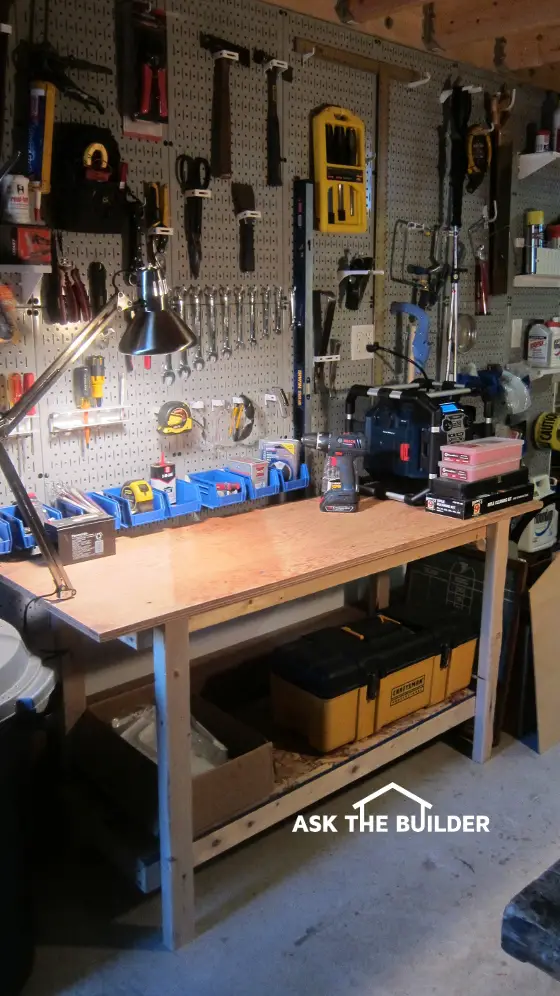
Do you have a workbench in your garage or basement? Is the top supported by a ring of 2x6s? If so, transform the front or side piece of lumber into a drawer front. Think of how the drawers work in the metal tool cabinets mechanics use. That same heavy-duty hardware can support the weight of a vast amount of thin, heavy items.

build a workbench

This simple, yet sturdy workbench was cut and assembled in less than 30 minutes! Photo Credit: Tim Carter

Paint Roller Safe

Here’s one of my favorite ways to hide small items of value in plain sight. Purchase a cheap paint roller with a 3/8-inch nap. Get a crappy roller frame and paint pan while you’re at it. Pour some paint into the pan and roll it around as if you had painted a room. Get paint on the roller frame handle. Create the illusion that you used the tools.

Brush out any paint from the pan as you would if you were going to clean it. Remove the roller cover from the frame. Stand it up on end and allow everything to dry for days or a week or two. Start to slide the roller cover back on the frame and look at how you have a tube to hide rings, small jewelry, cash, etc. Just be sure no one throws away the roller and cover that you now place on a shelf and throw other crap on it to hide it.

The Old Book Trick

Go to library book sales. You can often get thick hardback books for a dollar or less. Do what you’ve seen in the movies. Glue the pages together and cut out the book's center to create a void space. Complete the illusion by stacking this book with 30 or 40 others you purchased at the sale. I have a stack like this out in my garage on a shelf.

I challenge you to come up with some creative ideas. If you want to share them to help others, I can include your idea in my book and give you credit. Just share it via the Ask Tim page on my website. Happy Hiding to you!

Column 1554

Wood Shrinks and Expands

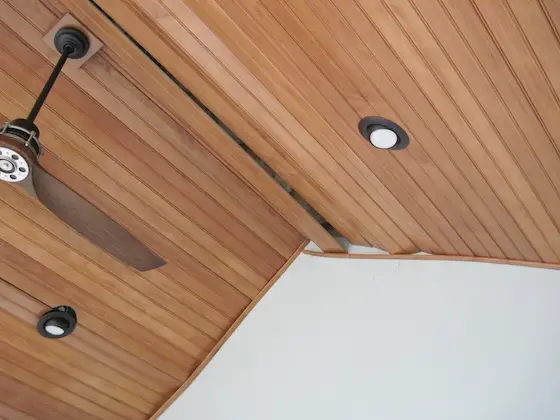
buckled wood top of vaulted ceiling

Wood shrinks and swells - This sunroom ceiling is suffering from expansion issues. Copyright 2024 Tim Carter

Wood Shrinks and Swells Unequally - Not Like Fine Leather Gloves

Wood is a true gift from God. It’s not much different than tomatoes, wheat, or corn in that wood is really a crop. Any farmer that’s lucky enough to have a stand, or bush, of maple trees on his farm will tell you that his first crop of the year is maple syrup. Trees are routinely harvested here in my great state of New Hampshire, but the growing season is not 120 days like most fruits and vegetables, it’s decades.

We are lucky enough here in the USA to have countless trees. The lumber harvested from them allows us to build durable homes, outdoor decks, pergolas, play sets, forts, furniture, and countless other indoor and outdoor projects.

While wood has many positive attributes, it also has one negative quality that causes homeowners like you enormous frustration, pain, and money. Wood happens to be hygroscopic. This means it can absorb liquid water or water vapor. It can also release both much like you squeeze water from a sponge.

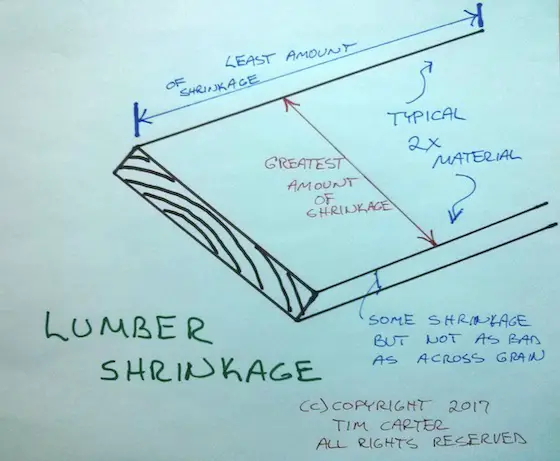
The issue with wood is that when it absorbs or releases water in either state, it can swell or shrink. As if this movement is not bad enough, the swelling or shrinkage is not at all equal across the length, thickness, and width of any given piece of lumber.

Lumber Shrinkage Illustration

Imagine this is a 2x4 or a 2x12. It's a crude 3D drawing I made, but I think you can make sense of it. (C) Copyright 2024 Tim Carter

I’ll share two stories to drive home this point. Almost forty years ago I built a stunning three-story Queen Anne Victorian replica home for my family. The joists used for the first and second-story floors were 2x12s cut from Southern Yellow Pine trees. The third-story floor was framed with 2x10s.

I also had two very tall chimneys that extended all the way from the basement up through the roof. When we roofed the house, I had to install tin-coated steel flashing to prevent leaks. Some of this metal was embedded into the mortar joints of the chimney and the rest of the flashing was attached to the wooden roof sheathing.

The metal counter flashings attached to the chimney were cut so a 1/4-inch gap remained above the step flashings on the roof. Ten years later I was up on the roof installing a solar-powered attic fan that ended up being a waste of time and effort. I happened to look at the chimney flashing and was stunned.

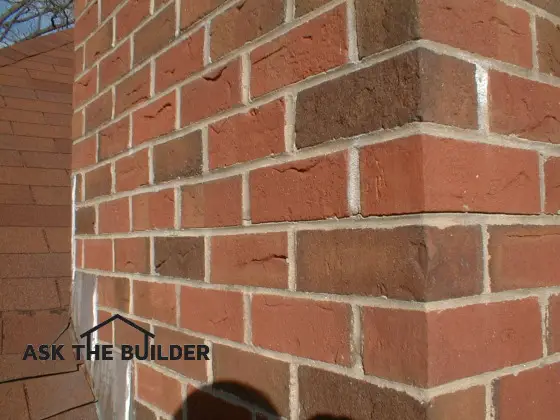
Horizontal Crack in a New Chimney

Metal counter-flashing can be seen in the far corner of my chimney.

The gap between the two flashings was now 2 inches! This meant that the chimney grew taller or the house dropped. Builders and remodelers blame cracks in houses all the time on settlement making you think your entire house is sinking into the soil.

If this were the case at my home, there would have been no gap as the chimney footing and the house footing would have both dropped into the soil. Yes, I know as a college-trained geologist, some houses can sink into the soil, but that’s not the cause of most cracks and it most certainly was not the cause of the huge gap between my roof flashing!

The cause was lumber shrinkage. My 2x12 and 2x10 floor joists from the lumber mill were no longer as wide as they were when I nailed them all together. It turns out lumber shrinks or swells the most across the width, or face, of a board. It shrinks the least along its length.

Just days ago I employed this knowledge to help a woman in Ohio. She purchased one of my phone coaching calls. It turns out her new beautiful room sun room addition had a serious issue with the ceiling made from real wood. It was tongue-in-groove maple beadboard. It’s important to realize this room had a steep vaulted ceiling.

She sent me photos of the buckled wood up near the peak of the vaulted ceiling. It was a huge mess. I requested a photo of the floor of the room. I suspected this woman was like my wife. My hunch was right as the room was filled with many large plants.

I asked about the roof ventilation and the insulation used in the ceiling. It turns out the builder made two huge mistakes. First, he used closed-cell spray insulation. This product does not allow water vapor to pass through it. Second, he didn’t create a pathway at the peak of the roof for air to escape out to the roof ridge vent.

The house plants in the room were belching water vapor into the air. This water was concentrated in a layer of very warm air at the top of the vaulted ceiling. I’m sure you remember from your high school physics class that warm air can hold more moisture.

The wood at the top of the ceiling was absorbing all of this water and expanding. It’s easy to solve the problem. She just has to remove the last row of beadboard on each side of the vaulted ceiling. To hide this gap, she can nail the same stained beadboard to a piece of plywood that will form a flat surface up at the peak of the ceiling.

This flat piece will have beveled edges and it will be secured to the roof ridge board. It’s vital this flat board not be secured to the beadboard. The beadboard ceiling will now have a generous 3-inch space on each side of the ceiling to expand and contract as the seasons change.

Column 1553

Install Exterior Ceramic Tile

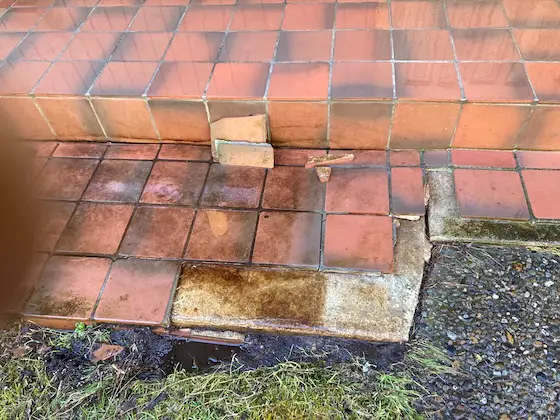
exterior ceramic tile popping off concrete step

Exterior Ceramic Tile - Freezing water under the tile caused the tile to lift off the concrete. The tile setter made one, or more, mistakes. Copyright 2024 Tim Carter

Exterior Ceramic Tile - Best Way to Install It

A fellow amateur radio operator reached out to me several days ago. My vanity call sign was coined after my Ask the Builder business. It’s W3ATB. The W3 stands for www for my AsktheBuilder.com website. This operator knew I’d be able to answer his question.

He lives in Coeur d’Alene, Idaho. Thirty years ago a tile contractor installed ceramic tile outside this man’s house. Some of the tile is protected by a generous roof overhang, but some of it is exposed to every drop of falling rain. Many pieces of this tile are no longer attached to the concrete. This man needed to know how to re-attach them so they will not pop off again.

Northern Idaho experiences bitter cold weather in the winter months. It’s not uncommon for the outside temperature to drop below zero for days at a time. My radio friend told me that he guesstimates they have at least ninety days a year when the temperature drops to 27 F.

You may or may not know that water expands by about nine percent when it freezes. This expansion is so powerful it can split apart metal water pipes. Ice can lift entire buildings. This is why foundation footings must be placed deep in the soil where the local frost doesn’t penetrate. Knowing this, I think you can see how it’s child’s play for ice to pop tile off a concrete slab.

I had a few back-and-forth emails with the homeowner as I wanted to get as much background information as I could about the original installation. It turns out the tile contractor had great intentions, but he very likely made a few critical mistakes.

The Tile Council of America (TCA) publishes an in-depth handbook that shares exactly how tile should be installed. If you intend to invest lots of money in ceramic tile in your home, it would be very prudent to purchase this handbook and discover exactly what questions to ask your tile contractor before you sign a contract. You want to probe the depths of his ignorance as my historical geology professor would exclaim before handing out test papers.

Cement Paint - The Magic Adhesive

Allow me to share what I would have done had I been the tile contractor in Idaho all those years ago. I happen to have a very unfair advantage because I had the good fortune back fifty years ago to talk with an old retired concrete mason. He decided to share a secret tip and not take it to his grave. Cement paint. I’ll bet you’ve never heard of that.

Exterior tile is installed on concrete using Portland cement. Modern tile setters and manufacturers call it thinset mortar. In its most basic form, it’s just Portland cement and fine silica sand. Some thinset manufacturers add dry boding agents to their products to enhance adhesion.

Fortunately, I’m old enough to have seen exterior tile installations on the door stoops of old buildings in Cincinnati, Ohio. All of this tile had experienced many decades of exposure to harsh winter weather. I remember the tile looking as good as the day it was installed. The tile setters back then didn’t have access to fancy modern thinset. So how did they prevent their tile from popping off the concrete below?

It’s simple. They used cement paint and lots of cement in their mortars. When you add water to Portland cement, you start an irreversible chemical reaction. Countless tiny microscopic crystals start to grow. These crystals lock onto anything the cement paste touches. It's why the stones and sand in concrete are transformed into a solid artificial rock.

Think of the worst burr you’ve ever gotten on your pants when hiking. Think of brand new Velcro™ and how hard it is to pull the two pieces of fabric apart. This is how strong a bond cement can make to things if you do everything right.

Installing Exterior Tile

The first step is to make sure the concrete substrate is clean and dust-free. This is just common sense, but often it’s in short supply around job sites. Older concrete should be pressure washed to ensure it’s free of all debris. It’s important to realize the tile you use must be rated for your climate. Refer to the TCA handbook for guidance.

If you’re going to use a modern thinset, consider adding an additional amount of pure Portland cement to the mix. I’d blend three parts of the bagged thinset into one part of Portland cement. You want as many crystals to grow as possible.

The tile needs to be set in a solid bed of mortar. You can’t have any air spaces between the tile and the mortar. Liquid water passes through the grout in between tiles. This water can collect in any void spaces. When it freezes, it will act like a giant hydraulic ram and either lift the tile or crack it.

The secret cement paint is made by mixing clean water with Portland cement. Apply this to the concrete and immediately cover it with the thinset mortar. Never allow the cement paint to air dry. Brush it on and cover it within seconds with the bedding mortar the tile will rest on. For extra holding power, have a helper brush on a thin coat of cement paint on the underside of the tile before you set it in the mortar.

Once the grout has cured after 30 days, apply a silane-siloxane water repellant to minimize water getting down into the thinset. Do all of this and your exterior tile should never come up except when the building is demolished.

Column 1552

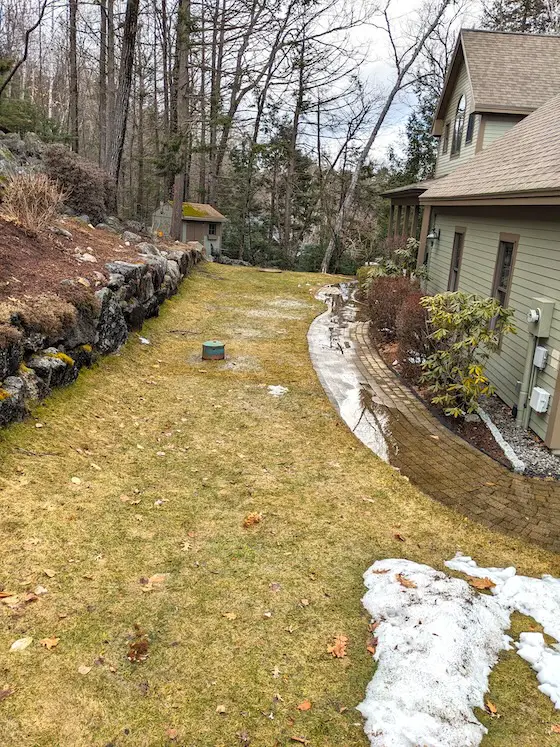
Water Ponding Against Foundation

water ponding next to house foundation

This ponding water in front of the house foundation can cause many problems. There’s an easy way to prevent it. Copyright 2024 Tim Carter

Water Ponding Against Foundation - It Doesn't Always Cause Wood Rot

Two days before writing this column I saved an Ohio homeowner $30,000.00. Fortunately, he stumbled across my website and found out that he could talk to me on the phone. He was suffering from water ponding against his foundation and was considering signing a contract with a waterproofing company for the above amount.

Once I studied the photographs he sent me, I said, “Are you sitting down? That ponding water is NOT causing the problem you’re having. If you would have signed that contract, you would have wasted all that money.”

There was stunned silence at the other end of the phone. I discovered moments later I was hearing the sound of relief! This man had been suffering angst about the huge cost for over a year! A wave of gratefulness was washing over him knowing I had helped bolster his retirement income.

It’s important to realize that ponding water is not a good thing. I’ll deal with that in a moment sharing how to prevent it or deal with it should you have the same problem. For now, let’s talk about the problem he had.

The man shared he had discovered, quite by accident, the bandboard that caps the ends of his floor joists was rotting. I could see from his photographs the bandboard was at least 16 inches above the soil around his foundation. The ponding water was not able to leak into his house and contact these boards.

I asked if he had any signs of water leaking into his basement. His answer was “No.” After asking a few other questions I said, “The wood rot you’re experiencing is caused by condensation that’s forming in the winter months on the cold wood. The moisture can’t easily evaporate because of the 6-inch-thick pieces of fiberglass insulation that are placed in contact with the wood.”

My advice was to remove all the fiberglass allowing the wood to dry. I then shared a few ways to repair any severe rot. Once the wood was dry and all repairs were complete, I instructed him to install 4 10inches of closed-cell foam insulation. This rigid material must be custom cut and fit tight between the floor joists, subfloor, and sill plate. Once in place, a spray can of expanding foam should be used to fill any small cracks between the wood and the foam. The closed-cell foam will prevent water vapor from contacting the band board in the future.

We then discussed why the water was ponding against his house. He admitted he caused part of the problem at the front by installing raised landscape beds. I told him this was not a good idea. Unfortunately, many landscapers don’t understand the minimum requirements set forth in the uniform building code.

The minimum grading standards in the code state that the ground must slope down and away from each foundation wall at least six inches in the first ten horizontal feet of distance away from the foundation wall. What’s more, the code states that a minimum of 6 inches of foundation must extend above the ground that touches the foundation.

Do the math. This means the top of a foundation wall should be a minimum of 12 inches higher than the ground that’s 10 feet away from the foundation. Houses built on hillsides have a difficult time meeting this requirement on the uphill side of the house.

More fall is better. Try for nine or twelve inches of fall instead of six. Remember, the building code is a set of MINIMUM standards of building. When you build your home to code, it’s like getting a 70 percent on a test. You just barely pass. You can always build better than the building code.

My suggestion to him was to install one of the linear french drains I’ve talked about for over thirty years. My college degree was in geology with a focus on hydrogeology. That’s the study of groundwater.

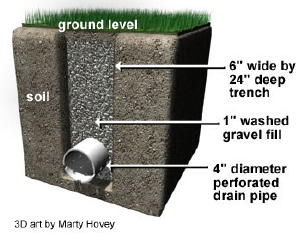
french drain pipe cross section

Cross-section of a Linear French Drain including the all-important perforated french drain pipe. Copyright 2017 Tim Carter ALL RIGHTS RESERVED - Do NOT COPY this graphic.

This man’s house is located in a region where the subsoil is a dense clay. Rainwater enters the top soil and then only goes down about four inches before it encounters this clay. The water then starts to move along sideways across the top of the clay.

A linear french drain is like a gutter in the ground. It’s a narrow 6-inch-wide trench that only needs to be 24 inches deep. In some cases, it can be less, and in other cases more. Most of the time 24 inches is plenty.

You install two inches of clean gravel the size of white grapes in the bottom of the trench. Then you install a perforated pipe on top of this gravel. The pipe acts like a high-speed highway transporting the water to the lowest part of the lot. Once the pipe is installed, you fill the trench to the top with the same grape-sized gravel. Never use gravel with sand in it. Do not line the trench with filter fabric. Do not install a filter sock on the pipe.

I have videos and in-depth columns on my www.AsktheBuilder.com website all about linear french drains, downspout drain lines, and getting foundation heights correct. I suggest you immerse yourself in all of them.

Column 1551

Bad DIY Videos on YouTube

new house framing 2x6s engineered lumber beam

Bad DIY Videos - This new home in central New Hampshire has 2x6 exterior walls. Minimize air leakage and your heating bills will be very reasonable. Copyright 2024 Tim Carter

Bad DIY Videos on YouTube Can Cost You Thousands of Dollars

You may think that YouTube is an oasis of helpful home improvement videos. After all, anyone with a smartphone can upload a video in seconds. Each week I scour YouTube for videos I feel may help you save time and money. With each passing day, I’m convinced that YouTube is a cesspool of bad advice. For every decent video that contains good information, I see twenty or thirty bad DIY videos that are created by fools.

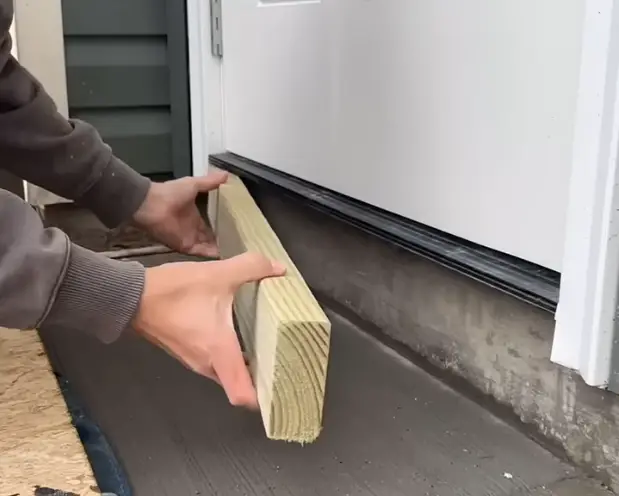
Here's a screenshot from a YouTube Short. This worker is applying a treated 2x4 under the metal threshold of an exterior door.

youtube short treated lumber under door threshold

CLICK HERE to watch this 15-second video. Note there is no flashing under the door as it sits on a slab. Rain will come off the door, travel down the threshold, travel back across the 2x4 and very likely flow UNDER the door. This is wrong on so many levels.

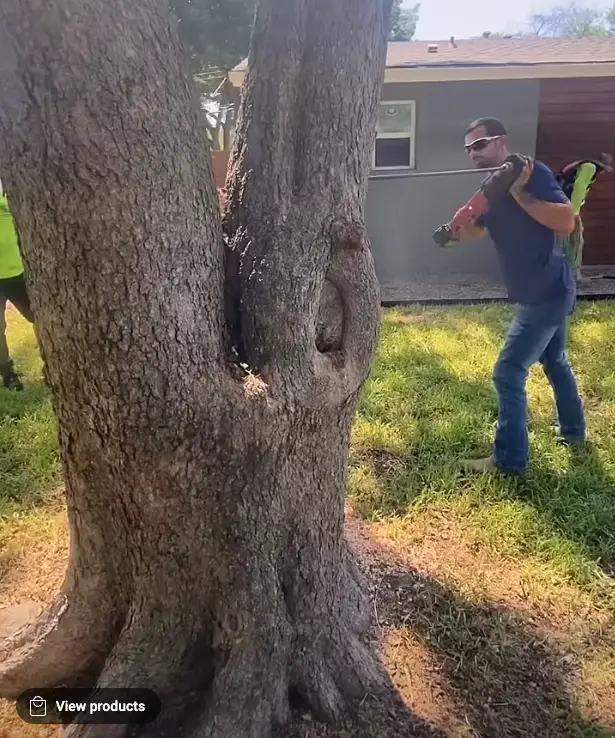
1/2-Inch Threaded Rod vs Huge Tree

Here's a second example of what NOT TO DO. Look at these two screenshots from this YouTube Short:

man drilling through tree

Here's a man boring a hole between the two massive trunks of a tree.

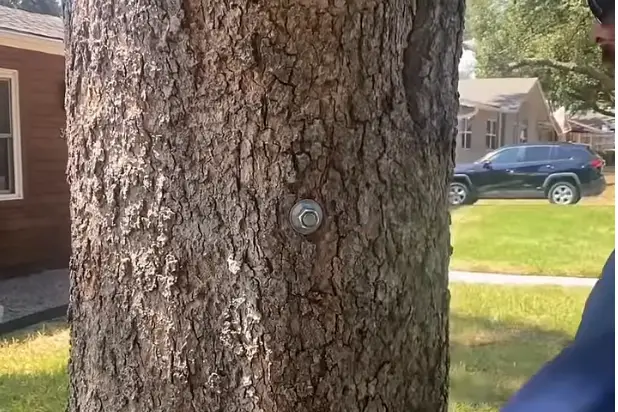
1/2 inch threaded rod in tree

This is the finished installation. Do you really think those tiny washers and the small amount of metal on the rod threads can resist the tens of thousands of pounds of leverage the tree can exert?

You may not be old enough to remember the Kansas City Skywalk Collapse that killed 114 people. An inferior design just like what you see above caused the collapse.

Talk to any seasoned arborist and she/he will tell you the BEST way to prevent the tree from cracking is to cable it up about 15 or 20 feet in the air.

More Examples of Bad Videos

Allow me to share a few examples. There are a disturbing number of videos showing an easy way to create concrete walkways, sidewalks, and door stoops. The uninformed folks on the video purchase bags of dry concrete mix from a local hardware store, lumber yard, or big box store.

Do NOT Do Dry Mix Concrete

They pour this dry concrete mix into forms and drag a board across the forms to make the top surface smooth. Some folks do fancy imprints or designs in the dry powder. They then lightly mist the surface of the powder to start the chemical hydration reaction. This reaction causes microscopic crystals to form that act like Velcro™. These crystals, when allowed to completely coat each individual piece of sand and stone, are the glue that holds the aggregate in concrete.

After an hour or so, the uninformed video hosts start to flood the top surface with water. It begins to soak into the dry powder just below the surface. My guess is the video hosts never took a geology course. The heavy water grabs onto the ultra-fine cement powder and starts to transport it down into the mix.

Have you ever seen what happens in a rainstorm that falls on dry dusty soil? The heavy rainwater captures the ultra-fine silt and begins to move it down and through the soil. This is why creek water turns muddy just after the storm. Go to the creek hours after the storm and the water is magically clear.

Think about it. How do you know if you’ve added enough water to the concrete mix? How do you know if you added too much? How strong is the concrete just under the surface where most/all of the cement powder has been carried away by the water?

I’m currently working with the Portland Cement Association and the National Ready Mix Concrete Association and their scientists to prove that this method of pouring concrete is perhaps the worst way to do it. Mixing concrete the traditional way with the proper amount of water coats the sand and stone with the cement paste. This is the best way to pour concrete hands down.

2x6 vs Double 2x4 Exterior Walls

Perhaps the worst videos are those I see that tell you how to create thicker wood-framed walls when building a home or room addition. Many pooh-pooh 2x6 walls and urge you to build two separate 2x4 walls separated by an inch or so. These super-insulated walls are supposed to save you big money on your heating bills. Not one of the videos I’ve watched bothers to do the math for you.

If you follow the advice in these videos without doing the math, you’ll be in for a huge surprise. It’s all about payback. Whenever you spend money on something that claims will lower your utility bills, you must determine how many months/years it will take to claw back in fuel costs what you spent up front on the improvement. Only after you get back all this money do you then start to finally save money.

I decided to do the math on this double-wall method of construction. My imaginary two-story house was 50 feet wide and 26 feet deep. It had standard 8-foot ceilings on both floors.

My calculations showed you would need 228 extra 2x4 studs, 40 2x4x16s for the top and bottom plates for the extra walls, clear pine for the window and door extension jambs, and 50 rolls of 6-inch fiberglass. The total cost of these materials in 2024 here in New Hampshire, with no sales tax, was $6,125.00.

It’s safe to say the extra labor, overhead, and profit to install all of these things might be around $10,000.00. The total upcharge for the super-insulated exterior walls would be about $16,000.00.

Look online and you’ll discover the 2023 average heating cost in the USA for homeowners was the following: $931 for natural gas, $2,354 for heating oil, and $1,359 for electricity.

The heat loss through the windows, doors, attic, and floor will be the same. You’ll reduce your heat loss only through the walls. A twenty-percent savings projection would be generous. This means you might save $186 per year if you heat with natural gas, $420 if you heat with oil, and $271 if you heat with electricity. If you use air-conditioning, you’ll save maybe an extra $150 per year.

It’s your turn to do the rest of the math. Tell me how many years it would take you to break even. If you heat with natural gas, it would only take you 86 years to break even. The break-even calculation is much more complex because of interest and investment income you could have achieved had you not spent the money. The bottom line is BEWARE of what you see on YouTube.

Column 1550

Egotistical and Closed-Minded Contractors

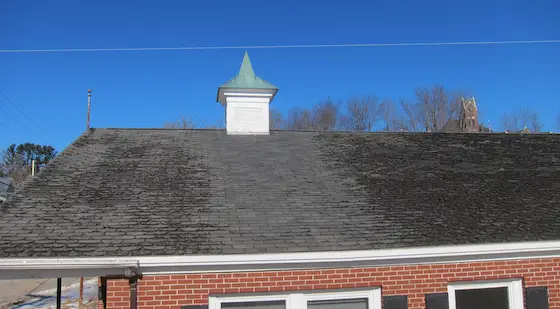
copper preserves asphalt shingles

Egotistical and Closed-Minded Contractors - What would you say about a roofer who looked at this photo and denied that copper ions washing off the cupola roof extend the life of asphalt shingles? Would you trust or hire him? Just below is a close-up photo of the worn shingles on the right. CLICK HERE for a high-resolution copy of the above photo. Copyright 2024 Tim Carter

Beware Egotistical and Closed-Minded Contractors -Nothing But Bad Happens

Just three weeks ago, I shared a true story with you about my failed asphalt shingle roof. If you remember, it had a thirty-year warranty and after just twelve years, it began to experience catastrophic failure. Looking back now, I shared the wrong photograph with you. I showed you a picture of my daughter’s new roof with copper strips on it. I should have shown you the photo of the Tilton, NH, post office roof. That photo should be just above.

Just two days ago, I received an email from a man who runs a roofing company in a suburb of a large Midwestern city. He was quick to point out his credentials. “Tim, I run a roofing company in (fill in the blank) and have been in this industry for over twenty-eight years. I was reading through the local paper and noticed an interesting segment on ‘Copper Strips Help Keep Asphalt Shingles Young’.” This man said, “Please keep in mind this is from pure hands-on experience, and I’m not looking to start anything. I don’t agree to say the least.”

It’s important to realize I returned a lengthy reply to the roofer. I shared with him an online file folder filled with photos proving that copper ions react with asphalt molecules.

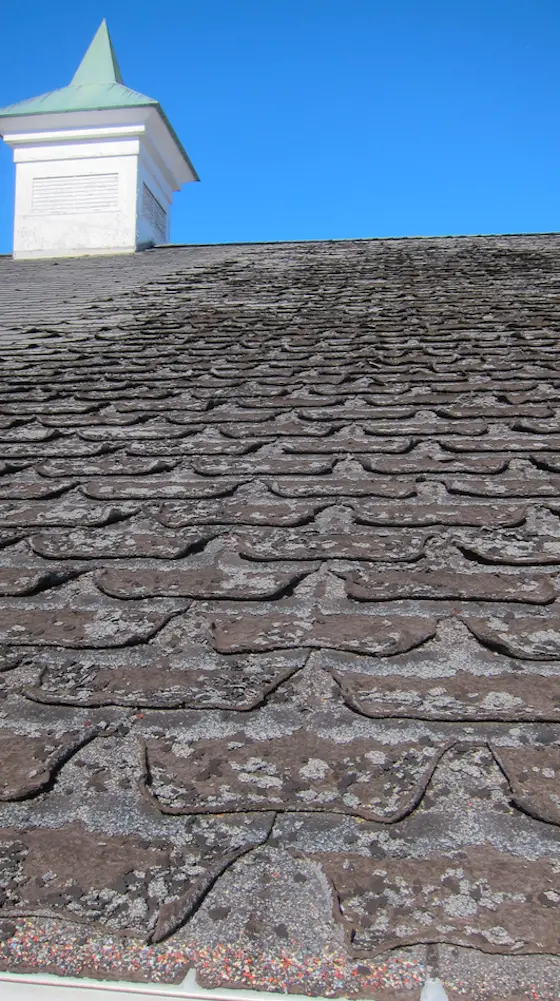
worn asphalt shingles

Look at how most of the colored granules are missing on the shingles. They are now unprotected from the photons in the ultraviolet light. How can one deny that copper ions extend the life of asphalt shingles after seeing this photo? This is but one of the photos the roofer was able to view. Even still, his ego prohibited him from accepting new facts. You may be like the roofer when it comes to other issues in your own life. Copyright 2024 Tim Carter ALL RIGHTS RESERVED

The copper washing over the shingles with each rainfall acted like the Fountain of Youth. I also shared that three intelligent physical chemists confirmed my theory. The roofer rejected all of this evidence. I go into detail about all of this and more in my Roofing Ripoff exposé book. I recommend you read it.

roofing ripoff book cover

This is the cover of my Roofing Ripoff book. CLICK THE IMAGE NOW TO ORDER IT.

The roofer painted himself into an ego corner that only Spiderman might escape. Think back on all your interactions in the past with contractors. How would you rate their egos? These individuals tend to reject new ideas and data contradicting all they have been exposed to. In fact, how would you rate yourself on this scale when presented with new facts that challenge your core beliefs?

Jordan Peterson has sage advice should you be in the same situation as the chest-pounding roofer. Jordan says, "Always assume the person you're talking with knows more about the topic than you do."

A Humble and Open-Minded Contractor

Five years ago, I was lucky enough to meet a rare insulation contractor with a generous amount of humility and reasoning power. I shared his story in a past column you may have missed. My interaction with this man was so remarkable and life-changing for him, that I devoted an entire column to it. You can dip yourself in the magic waters of this fantastic story by clicking here.

One day, while working at my daughter’s new home, the insulation contractor showed up with his crew. He was about the same age as the roofer that emailed me a few days ago. It turns out, the insulation contractor had been installing insulation wrong his entire career. That morning, I taught him the correct way to install it beneath radiant heating tubes.

At first, he didn’t say anything. Realize he was in shock. I’m sure you would be, too, after discovering something you thought was true for thirty years was false. Several hours later, the insulation contractor told my son-in-law he was eternally grateful for meeting me that day. I had enlightened him about his craft, and now his work would be perfect.

If I had to guess what you’re thinking at this point, it would be, “Tim, those are two fascinating stories, but what do they have to do with me getting my new concrete sidewalk installed or my house painted? I’m not quite sure what your message is.”

STOP Trusting Contractors

My message is you need to stop trusting contractors. Stop thinking they know the right way to do things. Often they don’t. Unfortunately, many contractors have egos bigger than the Empire State Building. These contractors will almost always reject your input when you challenge their myopic work experience.

Years ago I saw an older concrete mason adding gallons of water to ready-mixed concrete. He did this to make it easier to install. When I shared the added water dilutes the amount of cement paste in the mix, making the concrete weaker, he replied, “Well, I’ve been doing it this way for over thirty years.” His ignorance created untold suffering and unnecessary financial loss for hundreds of homeowners like you.

I know you don’t want to hear this, but the onus is all on you regarding getting things done right at your home. You must invest the time reading the installation instructions provided by the manufacturers of products used at your home. Think about it. When was the last time you read the label on a paint can? Do you, or your painter, do all the things it says to do?

Do You Really Know What Clean Means?

For example, do you know what clean means? Have you ever taken your filthy car to a self-car wash where you spray it with a high-pressure wand? You get the wand as close to the paint as possible, applying the soapy water. Moments later, you rinse it with clear water and pull out of the bay. If you just let your car air dry for a few moments, you’ll discover it’s not clean. There is still a thin, stubborn film of dirt bonding to the paint. Yet, thousands of painters feel pressure washing your home gets it clean.

I could go on and on and on. It’s your job to discover precisely how things should be installed the right way. You then treat each conversation with a bidding contractor like a job interview. You own the frame, not them. You tell them exactly what needs to be done. I know it’s not going to be easy. At the end of the day, it’s only about money. Perhaps you have an unlimited supply.

Column 1549