Removing Mildew from Grout

tile mold

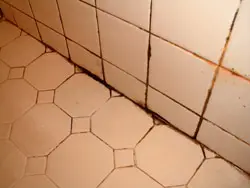
Remove Mildew from Grout | This is gross mold growing on shower tile. It's pretty easy to stop this from happening.

Remove Mildew From Grout TIPS


DEAR TIM: It is a long, long story but the bottom line is that my ceramic tile shower is a mess. There is mildew everywhere and other really tough stains that are nearly impossible to remove. Is there a way to make the white grout look like new?

It seems that the mildew has penetrated deeply into the grout. What can I remove mildew from grout and restore the shower to its original condition? What can I do to prevent this from happening again? Molly S., Orangeburg, SC

CLICK HERE to get FREE & FAST BIDS from local cleaning companies that can remove mildew from your grout.

DEAR MOLLY: Six weeks ago a friend of mine had the same problem. One day while we were with our kids at the community swimming pool he said he tried many off-the-shelf cleaners and products at grocery stores to clean his tile shower. He was not satisfied with the results and was ready to tear out the tile and grout and start over.

Does Oxygen Bleach Remove Mildew?
Oxygen Bleach

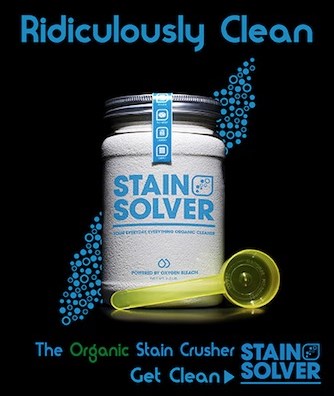
Stain Solver is MADE in the USA with USA ingredients that are food-grade quality. CLICK THE IMAGE to order some NOW.

Oxygen bleach is one of the best things to use to remove mildew and mold. It's non-toxic, it has no odor, and some are certified organic like STAIN SOLVER.

When I told him how to solve his problem, he couldn't believe it. I gave him some magic powder that I happened to have in my car and he used it. Two weeks ago when I next saw him at the pool, he said his shower looked like new. Ah, another satisfied customer!

While he had some products at his house that would work, most of them, like chlorine bleach, produce toxic odors and can ruin clothes and carpets in bathrooms if you're not careful.

My friend got amazing results because he used a miracle product called Stain Solver that I had discovered while doing research on how to clean and seal a deck of all things!

Non-Toxic & Certified Organic Oxygen Bleach

Stain Solver a certified organic oxygen bleach that has no odor and does an amazing job of safely cleaning mildew, mold and soap scum from tubs and showers.

It also cleans anything that's water washable, including ceramic tile, grout, acrylic tubs, whirlpool tubs, vinyl siding, tough stains from clothes, etc. If it's water washable, Stain Solver will clean it. But that's a story for a different day. Let's worry now about cleaning your shower!

If you want to see all the things that Stain Solver can clean, assuming you have time, go look at all of the Before and After photos sent in by customers. CLICK HERE to see them.

My favorite before and after photo set is one about a baseball cap of all things. You'll not believe your eyes! CLICK HERE to see the cap and read the short story about it.

To restore your ceramic tile shower to near perfect condition, you're going to need several things. Get a new scrub brush that has stiff nylon or plastic bristles, a roll of paper towels, a gallon of white vinegar, some certified organic Stain Solver, some liquid dish soap, and some old clothes.

How Hard is it to Remove Mildew?

It can be hard work to remove mildew from grout if you've allowed it to grow for weeks and months.

There's a very good chance the stains and dirt have taken months to accumulate. It's very likely mold and mildew can be locked into layer after layer of paper-thin hard water deposits.

Don't think you are going to complete this job in 30 minutes or less. The entire process is going to take place over a period of hours and possibly several days if the mildew and mold is out of control. If you do have complete success in just 30 minutes, you're very lucky!

What is the First Step to Remove Mildew?

The first thing to do is to use the scrub brush to remove as much mildew, dirt, soap film etc. as possible from the tile and grout. Mix up a simple solution of Stain Solver using hot tap water.

Mix two tablespoons of Stain Solver powder to one quart of hot tap water. Stir continuously until dissolved. Be sure you stir until all the small powder balls have dissolved, then put the solution into an old spray bottle.

CLICK HERE to get FREE & FAST BIDS from local cleaning companies that can remove mildew from your grout.

What is the Second Step?

Spritz the dry tub, shower, and wall surfaces with the Stain Solver solution. Apply so it runs down the walls. Let the solution sit for about fifteen minutes allowing the powerful oxygen ions to work. The longer you let it soak and work, the less scrubbing you have to do.

Spray on more Stain Solver solution after ten minutes. Grab a stiff scrub brush and squirt a small amount of liquid dish soap on the brush and get it wet. After the fifteen-minute wait period scrub the walls and floor and rinse.

Use enough extra water to get the soap to really foam up as you scrub. This removes dirt, soap scum and mildew at the surface. Rinse all surfaces with clear water.

How Do You Remove Hard Water Deposits?

After this cleaning process, you will probably have some dull stains that won't budge both on the tile and in the grout. These are very likely locked in place by hard water deposits. You'll remove those using some paper towels and white vinegar.

White vinegar is best and you can see dramatic before and after photos of how well vinegar removes hard-water deposits by clicking or tapping here. Scroll to the bottom of the page.

Saturate some paper towels with the vinegar and place them over the hard water stains. Do this on the floor and any vertical surfaces. The wet paper towels will readily cling to vertical surfaces. Vinegar is a very mild acid and it works slowly but efficiently to dissolve the alkaline hard-water deposits.

The vinegar will need to work for hours. Stop back every hour to make sure the towels are still wet with vinegar. Pull away a towel and scrub the deposits.

They may completely wash away. If they do not, pour fresh vinegar on the towels and allow the chemical reaction to continue. Heavy deposits can take up to eight or twelve hours or so to completely melt away. The trick is to keep fresh vinegar on the towels.

Once you have all of the hard water deposits removed, clean the shower again with Stain Solver to remove all traces of vinegar.

How Do You Remove Residual Mildew?

It is now time to attack any residual mildew that has stained the grout. To get the BEST RESULTS, you need to make sure any tile grout is dry. Use a fan to dry the grout in a few hours. The reason you want the grout to be dry is simple.

If it's wet, the fresh Stain Solver solution you'll be applying can't soak into the grout because water is filling up the micro-pores of the grout. It's mission-critical the grout is dry so the micro-cleaning oxygen bubbles from Stain Solver can soak deep into the grout.

Mix up fresh Stain Solver and apply it to the stained grout. You may have to use paper towels just like you did with the vinegar. Saturate as many towels as necessary and put these in contact with the mildew-stained grout.

It can take hours and possibly a few days to bleach out all of the mildew in the grout. Come back every hour or so and pour on more fresh Stain Solver solution to ensure it never evaporates.

Be aware that once you mix the Stain Solver powder with water, it only works for six hours. If you need to clean over a few days, you'll need to mix new solution every cleaning session. That's why you should not mix more than a quart each time.

How Do You STOP Mildew Forever?

To prevent the mildew and mold once you have it clean, it helps to understand mildew. It's an organism that requires food and water to live. Showers and bath areas provide the moisture and you provide the food every time you use soap, shampoo, cream rinse, etc.

The dirt and oils you wash from your skin and hair are food for mildew. Dust that can be floating around your bathroom is food for mildew. If you minimize or eliminate the food and water, you can eliminate the mildew.

The first step in mildew prevention is to squeegee your shower and tub after each use. Wipe down all walls and the floor with the squeegee to get as much water as possible into the drain.

If you have a shower curtain, shake it well before using the squeegee to get water off of it. Leave the shower curtain pulled back or a glass shower door open so the shower area air dries as fast as possible. Leave the bathroom door open as well so the humidity in the room drops as fast as possible.

It's important to clean the shower every two weeks. You need to remove invisible body oils, soap film, etc. from the surfaces so there's no food for the mildew to munch on. Believe me, if you do the above things, your shower will be mildew-free for years to come.

Message from Tim:

Years ago while researching a column about cleaning decks, I discovered the wonders of Oxygen Bleach. It is perhaps the 'greenest' cleaner I know of as it uses oxygen ions to break apart stains, dirt and odor molecules. There are no harsh chemicals, and it works on just about anything that is water washable.

I decided to create my own special blend using ingredients made in the USA. In fact, the raw materials in the active ingredient are food-grade quality registered with the FDA. I call my product Stain Solver. I urge you to use it to help clean your ceramic tile and grout. You will be amazed at the results!

Companion Articles:   Bathroom Mildew Removal, Oxygen Bleach Tile CleanerCeramic Tile Cleaner Products

Column 284
How To Caulk Baseboards

How to Caulk Baseboard TIPS


DEAR TIM: Can you tell me how to caulk baseboards? I thought my new paint job was looking great until all sorts of black lines showed up where there were gaps between the baseboard woodwork and the walls. I don't remember seeing that in other houses, so I must be doing something wrong.

What caulk should I use? How do you get a smooth line, as my caulking always looks smeared? When is the best time to caulk if you are installing new baseboard and trim? Kirsten P., White Plains, NY

DEAR KIRSTEN: You aren't the first person to ask how to caulk. Caulk is one of those under-appreciated building products that people tend to forget about when they do interior-painting projects. But caulk is one of the most-valuable products used by professional painters and those seasoned do-it-yourselfers who know the secrets of the pros.

CLICK HERE to get FREE & FAST BIDS from local painters who can caulk for you.

Applying caulk is a skill that is fairly easy to master. There are many different ways to do it, but I will share with you the method I have used for years that has worked well. The first thing to do is get a caulk that is easy to use and cleans up with water.

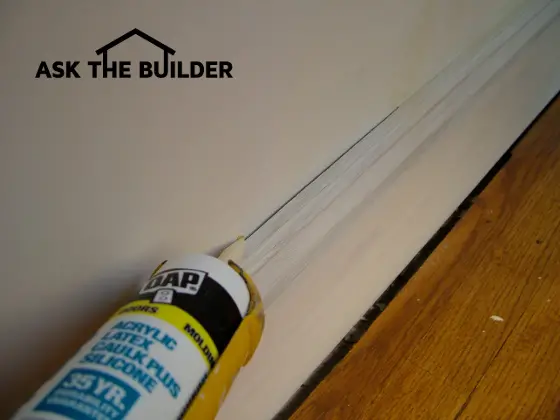
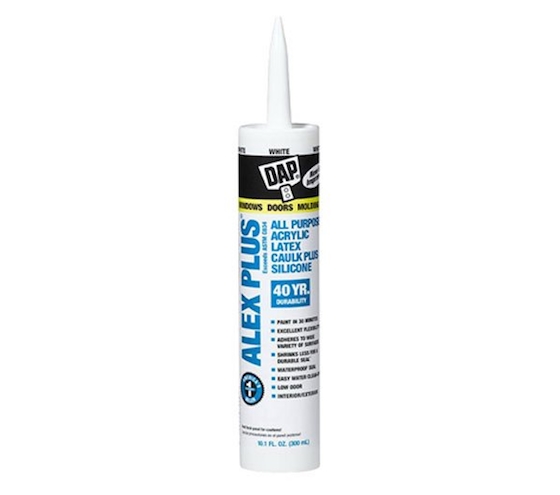
Acrylic Caulk tube DAP

I've used DAP caulk for years. It's great. The more expensive a caulk it, generally it performs better. CLICK THE IMAGE TO ORDER IT NOW.

The Best Caulk

I prefer to use caulk that is blend of acrylic and silicone. These are very common caulks you can find at a paint store, hardware store or a home center. Look for a caulk that costs more. These caulks tend to have better ingredients, and they will last longer. Read the labels on the tubes of caulk, and try to find one that says it has the least amount of shrinkage.

Note that the caulks come in different colors. You may want to pick a color that is close to the color you will paint your baseboard. This is a moot point though if your baseboard and walls are radically different colors. In cases like this, white caulk will do fine.

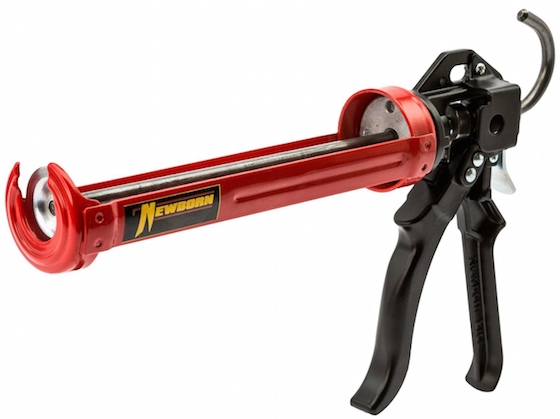
The tools you will need are simple. You need a caulk gun, a putty knife, a razor knife, a tile-grout sponge and a bucket. There are huge differences in caulk guns. My favorite is one that cost about three times what the cheap ones cost.

CLICK HERE to get FREE & FAST BIDS from local painters who can caulk for you.

The Best Caulk Gun

The cheap caulk guns have notches in the ram-rod plunger. The ram rod on mine is smooth. You have to squeeze the handle on my gun about three times to get it to travel the distance you get with one squeeze of a cheap caulk gun. My caulk gun has an 18:1 ratio giving me incredible control.

You may think this is extra work, but the effort gives you amazing control over the amount of caulk that flows from the tube.

Newborn caulk gun only

My caulk gun is just like this one. Once you use a gun like this, you'll throw away the one you have that has the click notches. They're pieces of crap. CLICK THE IMAGE NOW TO ORDER THIS GUN.

Prime the Wood

I prefer to caulk baseboards and trim after they have a coat of primer on them. Caulking bare wood can be problematic as it can be difficult to remove caulk from the wood grain.

It's also easier to see the areas that need caulk if the wood is painted a light color. The gaps show up as the unsightly lines you currently see in your woodwork.

Cut the Perfect Hole

The size and angle of the hole at the end of the caulk tube is mission-critical. If you make it too big, far too much caulk flows from the tube. If the hole is too small, then you work too hard to fill the gaps. I have found that a hole size just over 1/16th inch seems to be perfect.

The angle of the cut should be about 45 degrees. Always cut small amounts off the end of the tube at first. If you think you know where the 1/16-th-inch spot is and feel lucky, go for it. Most rookies make a mistake and the hole ends up too big.

Work Small Amounts

I usually caulk about 24 inches of gap or crack at a time. The trick in to hold the caulk gun at about a 30-degree angle to the crack and squeeze the handle so an even amount of caulk flows from the tube.

caulk gun

This is how you need to hold the caulk gun. Only do a short distance so you can tool the caulk. © 2017 Tim Carter

You want the caulk to be slightly higher than the top of the gap or crack. As the caulk exits the tube, you slide the caulk gun along the gap. If you move too quickly, the gap will not get filled. If you move too slowly, lots of caulk will build up above the cracks.

Release the Pressure

Set the caulk gun down making sure you release the pressure so the caulk stops flowing from the tube.

Use your finger to smooth the caulk. You know you put the perfect amount of caulk on the gap if there is a very small amount of caulk on the tip of your finger as you complete the wiping stroke.

Sponge for Pro Look

Use warm water to finish the caulk joint. Add a little bit of liquid dish soap to the water to help make the water slippery.

Grab the sponge and squeeze all of the water out of it. Immediately wipe it across the caulk joint to feather the edges of the caulk and remove any excess you left behind. Rinse the sponge and repeat. Glide the sponge softly across the caulk so you do not remove any from the gap.

Shrinkage

Large gaps or cracks can be very problematic. You will fill them with caulk and they look superb. But the next day when you go to paint, there is a huge valley where the caulk has shrunk. This happens because the water leaves the caulk and the solid materials are left behind to fill the gap. You can use foam caulking cord to fill the gaps before you caulk to minimize shrinkage.

Allow the caulk to cure and harden before you paint. If you try to paint minutes after caulking, the paint-brush bristles will remove the caulk from the gap.

Use the putty knife to remove excess caulk from places in the woodwork that get filled with excess caulk. You want to do this just after you wipe the caulk with the sponge.

Watch these caulk videos:


CLICK HERE to get FREE & FAST BIDS from local painters who can caulk for you.

Column 716

Solving Pocket Door Problems

"A high-quality pocket door frame and hardware kit will operate flawlessly for many years if installed properly."

Pocket Door Problem Checklist

When Did Pocket Doors Become Popular?

Pocket doors became very popular a few decades after the US Civil War. The popularity peaked between the late 1890s and the 1920s.

Who hasn't been inside one of those magnificent Victorian homes built 100 years ago that has dual-acting pocket doors between the living room and dining room? Those disappearing doors can instantly create privacy. If you want to watch a video about pocket door privacy, it would do you well to click or tap here.

The beauty of the pocket door system was known by our grandparents and their parents. They saw how the doors saved space. The pocket door concept freed up both floor and wall space. I don't know about you but I'd sure like to shake the hand of the inventor of pocket doors!

Can I Install Heavy Items on a Pocket Door Wall?

Yes, you can install heavy pictures and items on the pocket wall if you use pocket door plywood clips. These simple and affordable clips allow you to put pieces of 5/8-inch plywood in between the narrow pocket-door studs.

CLICK HERE to get FREE & FAST BIDS from local finish carpenters that specialize in pocket doors.

Related Links

Quick Start Guide to Installing Pocket Doors

How to Attach Shelves to a Pocket Door Wall - Interesting Challenge!

Why Do Some People Dislike Pocket Doors?

A certain number of people complain how the pocket doors rub going into and out of the pocket. The doors jump off the track.

CLICK or TAP HERE if you need me to HELP YOU over the phone to solve your pocket door problems.

It's tough or impossible to adjust the doors once they are trimmed out. Old pocket doors may be hard to operate or don't work at all.

All of these pocket door problems can cause a person or a friend to avoid using pocket doors. This distrust can often be blamed on poor hardware quality or poor installation practices.

Are There Problem-Free Pocket Doors?

Yes, a high-quality pocket door frame and hardware kit will be problem-free for many years if installed properly. I know. I've installed countless ones over the decades, even in my own home.

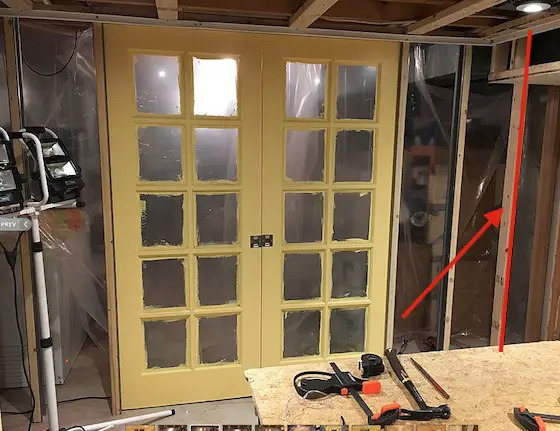
pocket door frame

This is a unique photo showing two converging pockets doors being installed. The frames are in and for some reason, the homeowner put in the doors at this stage. It's not necessary to do this. Look to the right and the vertical red line is on the edge of the first full wall stud at the end of the pocket on the right. The bottom and the middle of the red arrow cross over the two thin studs capped with steel. These create the pocket and you use short drywall screws to attach the drywall. Copyright 2017 LE Johnson Hardware, Inc.

What are the Best Pocket Doors?

The best pocket doors start with the best frames, track and trolleys. You don't see any of this once the pocket door is installed and the walls are finished.

Here's the only brand I'd ever install. They're simply that good. I've had LE Johnson pocket door frames/hardware on all my jobs and in my own home for years.

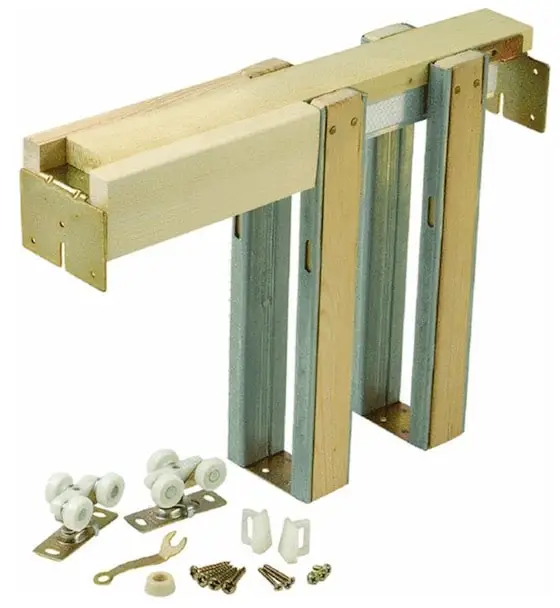
Note below in the photo how the trolleys have three wheels. This type of trolley ensures they never jump off the track.

pocket door frame

This is a miniature version of a LE Johnson pocket door. The vertical legs create the pocket. The track is hidden in the horizontal top member. The three-wheel trolleys are in the lower left. Copyright 2018 Tim Carter

Is it Hard to Get Old Pocket Doors to Work?

It can be very hard to get old pocket doors to operate smoothly. The design of the hardware is flawed and it's almost impossible to get parts.

Do you have an old set of pocket doors that you wish to revive? It may be tough to do it if you are looking for used parts.

If you're a purist and must stay with old parts, you can try to find them online. Many small independent hardware stores ply their wares on Amazon.com. CLICK HERE and start hunting!

Can I Install New Pocket Door Track and Trolleys with Old Doors?

Yes, you can restore old pocket doors and install new trouble-free hardware and trolleys.

If you can't find parts, don't get discouraged. The heart and soul of a pocket door system are actually the track above the doors and the rollers, or trolleys, that attach the door to this track. There is absolutely no reason whatsoever why you can't put a new track system in an old door pocket.

How Do You Install the New Track and Trolleys?

You have to remove the old track and trolleys to install the new ones. It's somewhat painful to tear into the wall, but it's worth it.

Getting it in will be a challenge and may require surgery on the wall, but this can be easily repaired. I urge you tackle this project with a positive attitude. It will be tough at first, but the outcome will be dramatic.

CLICK HERE to get FREE & FAST BIDS from local finish carpenters that specialize in pocket doors.

How Do I Solve Common Pocket Door Problems?

There are a few things you can try to solve common pocket door problems.

Problem: Does your door jump off the track and get stuck in the pocket?

Solution: Look at the wheels or rollers. If they're single-wheeled rollers, you have an inferior system. The best pocket door hardware has 3 or 4 wheel hangers that fit into a box-shaped track. It is impossible for this type of roller to jump off the track.

Problem: Can you easily remove the door after one side of the top split jamb is removed? If not, you can have big problems.

Solution: You can buy a pocket door hardware system that allows you to easily disconnect the door from the 3 or 4 wheeled hangers. Within moments the door will be in your hands, not in the pocket!

Problem: What happens if the track gets damaged? Can you easily remove it?

Solution: If your track does not have keyhole shaped slotted screw holes, you will be in for a treat. I guarantee you will be tearing into the wall to get at the track screws deep in the pocket. A track with keyhole-shaped screw holes eliminates this problem.

Problem: Does your door rub the split jamb when it is pulled in and out of the pocket?

Solution: Check to see if there is 3/16th-inch clearance between each side of the door and each jamb.

If you have this clearance and the door still rubs, the door may be warped and/or the entire pocket door assembly may be twisted. If this is the case, it will require major reconstructive surgery to solve the problem.

The problem with rubbing doors can sometimes be traced to the bottom door guides. An inexperienced carpenter may install these on the wrong side of the split jambs! They are supposed to be on the face of the jamb. This allows you to adjust them easily.

Do Pocket Doors Need to be Painted Before Installation?

Yes, you need to paint the pocket door on all sides, top, bottom, and edges before it's hung on the track.

Pocket doors require some tender loving care from the painter as they are being installed. Once installed you can't get to the top, bottom, or back vertical edge. These surfaces MUST be sealed to prevent warping. This can only be accomplished as the door is being worked on by the carpenter.

If you paint the door, it is simple. Just apply a primer coat to the entire door as soon as it arrives at the job site. Then have the painter apply a finish coat to the edges of the door before he hands it over to the carpenter.

If the door is to be stained, it will be a little more difficult. The painter will have to carefully apply a sealer to the top, bottom, and hidden vertical edge. If you get sealer on the face of the door, the stain will not penetrate properly. It will really look horrible. Coordinate this carefully!

CLICK HERE to get FREE & FAST BIDS from local finish carpenters that specialize in pocket doors.

Column B190

Deicing Salts And Concrete

deicing salts

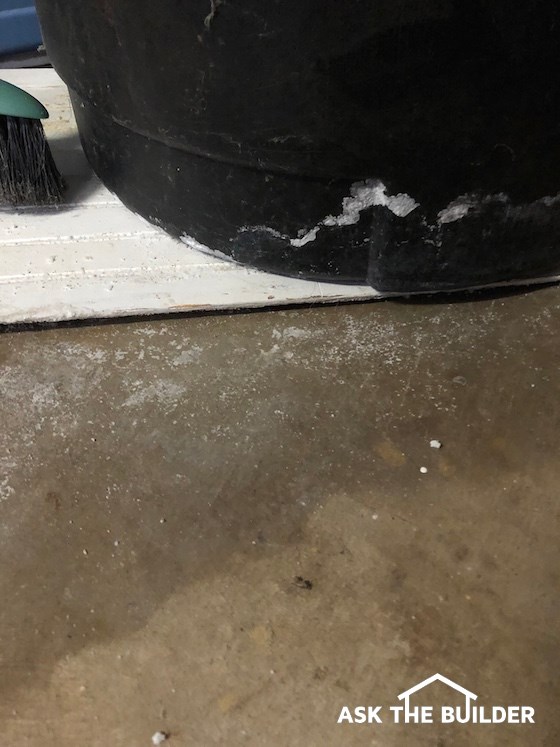
Deicing salts has been spilled on concrete. See the dark stain? The stain is caused by water vapor from the air being attracted to the salt. The vapor is absorbed by the concrete. Do NOT use water to clean it. READ BELOW what to do. Copyright 2018 Tim Carter

Deicing Salts and Concrete Checklist

Deicing Salts - Does It Really Harm Concrete?

DEAR TIM: We just moved into our new house. Our builder has advised us not to use rock salt on our concrete sidewalks and driveway for snow and ice removal.

He told us that it will damage the concrete. I don't believe him, because our city uses it on our streets every winter. Does my builder know what he is talking about? S. D.

DEAR S. D.: Your builder's advice is somewhat accurate. Rock salt can be one of concrete's worst enemies if the concrete was not mixed, finished and cured properly. Avoid using it on your concrete sidewalks, driveways, and patios if they have not been installed correctly.

Related Links

Installing Concrete in Cold Weather

Efflorescence Salts and Concrete

Free & Fast Bids

CLICK HERE to get FREE & FAST BIDS from local concrete contractors who can seal your concrete.

deicing salts

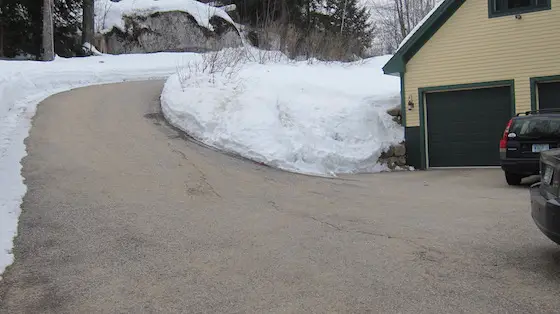
Deicing salt can be used on asphalt or blacktop with no worries. If you shovel first and get off most the snow before spreading the salt, your driveway will look this great in just 24 hours. Copyright 2018 Tim Carter

Is All Concrete Harmed By Deicing Salt?

No. Lots of old concrete was installed correctly and deicing salt does not harm it.

I grew up in the Midwest in Cincinnati, Ohio. Cincinnati can get brutal below-zero temperatures in the winter. I can take you to places in downtown Cincinnati that have concrete sidewalks that have been in use for fifty or more years and the top surface never spalled or was damaged by years of rock salt used to melt snow and ice.

How Strong Is the Old Concrete?

I've never had the opportunity to core drill one of these old concrete surfaces, but if we could I'm willing to bet you that the concrete would test out at least 5,000 pounds per square inch (PSI) of compressive strength. You just need to add an extra bag of Portland cement per cubic yard to get this strength or greater.

Watch this video by a top chemist who explains what salt can do to concrete. Pay CLOSE ATTENTION to what he says starting at 3:00 into the video. You'll note that he mentions if the concrete is mixed and placed properly, it can withstand the pressure from the freezing and thawing cycles.

Why is New Concrete Damaged By Salt?

I can also take you to new homes where concrete driveways and sidewalks look horrible after two years of winter weather because the concrete was not mixed, installed, finished or cured properly.

Concrete is a magnificent material. As a paving material, it can be one of the longest lasting surfaces that you can use. However, its useful life can be significantly reduced if you do not recognize its weaknesses.

How is Concrete Weak When Stretched?

Concrete has high strength when it is compressed, or 'squeezed'. However, it is extremely weak when it is subjected to tension, or 'pulled'. Rock salt can take advantage of this weakness.

Stop - Purchase Deicing Salt eGuide NowGet a 24-page guide right now that answers all your questions about Deicing Salts. Will it RUIN your concrete? Did you know that salt can SERIOUSLY harm you? What about your expensive landscaping? You can have all these answers and more in less than a minute. Buy it NOW.

Does Concrete Absorb Water?

Believe it or not, while concrete appears to be a very dense material, it is in fact quite like a blotter. It can and does absorb water. You can actually see this happen on a hot summer day. Sprinkle some water on your sidewalk or driveway and look very closely. You can actually see the water penetrate the surface of the concrete.

deicing salts

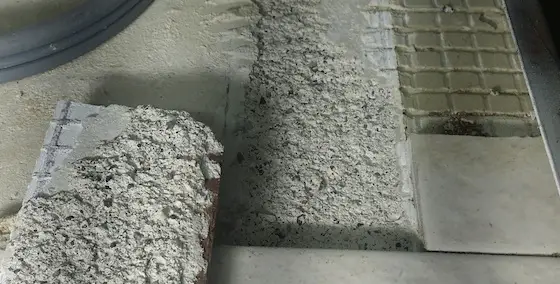
This is what spalled concrete looks like. Note how rough it is and the top finish is gone. Copyright 2018 Tim Carter

When you spread rock salt on your concrete to melt snow and ice, the salt dissolves the snow and makes a salt water mush. The melting action of the salt allows water to enter the concrete. If the temperature then drops and the water freezes, the growing ice crystals can blast apart the concrete.

Does Salt Attract Water?

Salt is also hygroscopic. It attracts water. It can cause concrete to become more saturated with water than it would otherwise. The presence of this extra water in freezing conditions can spell trouble.

The volume of water increases by 9 percent when it freezes within the concrete matrix. The pressure of the growing ice crystals can cause the surface of the concrete to fail. It usually spalls off.

New Concrete = DANGER

Freshly poured concrete is most susceptible to damage. Concrete placed in the late fall needs at least 30 days of drying time. This young concrete is still highly saturated with water. The water within the concrete can freeze and cause the surface to pop off.

However, if enough cement was in the initial mixture and this cement was not diluted by the addition of water, the concrete will be able to resist the damaging forces of the freezing water.

CLICK HERE to get FREE & FAST BIDS from local concrete contractors who can seal your concrete.

What is the Best Concrete Strength Mix Recipe?

Always order concrete that will attain a minimum compressive strength of 4,000 pounds per square inch (PSI). Some parts of the USA call this a six-bag mix. In order to achieve a 4,000 PSI rating, a cubic yard of concrete would have six bags, or 564 pounds of Portland cement in it. A typical bag of Portland cement weights 94 pounds.

IMPORTANT TIP: Remember, this is a MINIMUM requirement. If you're pouring an outdoor slab, driveway, patio, sidewalk, etc. and you want it to look great for thirty, forty or fifty years, then order it with seven or eight bags of cement per cubic yard of concrete.

Portland cement is CHEAP. A bag of it retail at a big box store in 2017 only cost about $10.00. Ready-mix concrete plants pay much less than that for 94 pounds. In other words, would you pay $200 more for your concrete if you knew it would be extremely strong?

Should I Add Air To Concrete?

Be sure that is air entrained as well. These two things are a good defense against salt attack. Concrete which is ordered, placed, finished, and cured properly can resist decades of contact with rock salt. Concrete surface failures such as spalling can almost always be traced to workmanship errors.

Can Finishers Ruin The Concrete?

Yes, it's my belief that most concrete that is harmed by deicing salts happens because of workmanship errors.

The placement and finishing of the concrete is critical as well. The upper surface of concrete can be severely weakened by poor workmanship. Sometimes workers add water to concrete at the job site or use it as a finishing aid.

These practices dilute the amount of cement at the surface of the concrete. The cement is the ingredient in concrete that holds everything together. To resist the freeze/thaw action of water, you need to have strong concrete at or near the surface.

IMPORTANT TIP: This means water should NOT be added to the concrete at the job site. It means that the workers should NOT trowel in the bleed water that comes to the surface after the concrete has been bull floated.

Is Sand Best To Use on Snow and Ice?

There is an alternative to using rock salt. You can use sand. The sand will not melt the snow and ice, but it will provide you with traction.

Should I Seal Concrete With Siloxane?

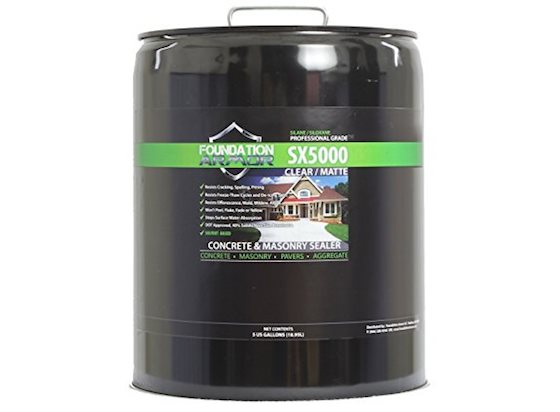
Yes, you should seal your concrete in the early fall with a silane/siloxane clear penetrating sealer. You can also treat your concrete with clear coatings that minimize or eliminate the possibility of water being absorbed by your concrete. CLICK HERE to BUY a great silane siloxane water repellent.

deicing salts

This is a magnificent silane - siloxane water repellent that soaks into concrete. CLICK HERE TO ORDER IT.

These ingredients allow the clear coatings to breathe. Avoid using products that contain silicone or paraffin.

Should I BEWARE of Film Formers?

Some sealers can produce a surface film. A surface film may not allow the concrete to breathe.

I've walked on some film-forming sealers that are very slippery when wet. Only buy a sealer like the one above that SOAKS into the concrete.

Concrete soaks up water from the soil. This water passes through the concrete and eventually evaporates. However, if you trap this water at the surface with film forming sealants, you may cause spalling. Be careful!

CLICK HERE to get FREE & FAST BIDS from local concrete contractors who can seal your concrete.

Column 008


January 25, 2017 AsktheBuilder Newsletter

Can you believe we're almost finished with January 2017?

Holy potato!

Small Engine Reminder!!

Just after sending this to you, I'm going to go up to my shed and start my lawn mower and my walk-behind string trimmer.

I'll also briefly start my gas-powered pressure washer. You need water passing through it to cool it if you run it for more than 30 seconds.

Two weeks ago while cleaning out the garage, I started and ran my small generator and log splitter.

It's been three months since I've used the three engines sitting up in my shed and I want to get some fresh gasoline up into the carburetor. I've got fuel stabilizer in the gas tanks, but it's a great idea to run small engines every few months.

The engineers at Briggs & Stratton told me so.

Here's a column I wrote after meeting with them about 20 months ago. CLICK HERE to read it.

Magic Soft Close

In just eleven days, you're going to have some fun.

Early on the morning of the day the NFL has a Super game, (I'm not allowed to say the real name here because they punish people who use it to promote anything), there's going to be an email waiting for you in your Inbox.

Please open it and have some fun. I GUARANTEE you that you'll discover something you didn't know and you'll see photos that will bring you lots of happiness.

Email Training

I want to thank you for responding to my request to help train your email provider to not mark this newsletter as SPAM.

I got many responses. One that brought me lots of happiness was from Donna who lives in northern Iowa.

Here's what Donna sent:

"Hi Tim,

The first thing I do in the morning is check my e-mail to see if “ASK THE BUILDER” is waiting to greet me for the day.

Keep up the good work.

You are by far the BEST internet friend I have ever had.

I am 89 years young and I “get it”."

I'm so very lucky to have Donna, and you, as my virtual friends.

This is why I always try to do an in-person meet up when I travel. I've had the great pleasure to meet many subscribers for an eyeball conversation and they're always a fantastic time.

Let's hope I can swing through Iowa and meet you Donna!

And Another One

Hours after getting the message from Donna, I got one from Kathryn.

She said,

"Tim,

I don't always respond to "Ask the Builder" emails, but when I do, it's to say THANKS for the hard work and info!!!"

That brought a HUGE smile to my face because I immediately created an image in my head of those words put on one of "The World's Most Interesting Man" memes.

I immediately went to a website where you can create one and sent this back to Kathryn asking her if she could see it:

What happened next surprised me.

After I heard back from Kathryn, I told Kathy (my wife if you're a new subscriber) that I'm so blessed to have subscribers that truly treat me as a friend they can trust, gritch at, share a joke, or who-knows-what.

Kathryn didn't disappoint. Her follow-up response to the meme above followed within a short time:

"I can, and it did make me smile. I lost my 103-year-old, active, and in-charge grandmother on Saturday and just finished writing her obituary. I needed that!"

Gulp.

I, of course, sent my condolences and told her I was never able to get to know my two grandmothers.

My maternal grandmother passed away long before I was born, and my paternal grandmother was sent back to Heaven when I was a very small boy. I just have one faint memory of her lying in her sick bed.

Bottom Line: Thanks so much for being my friend - even if we can't see each other face-to-face.

Oh, I wanted to add that the meet ups go two ways. If you're passing near central New Hampshire on a journey, well then let's have a meet up!!!! We can go out for coffee, go on a hike and do outdoor radio or sit by the lake!

More and More Revised Columns

I was busy over the past two days. I know it sounds nuts, but it's lots of fun going back and revising all my columns.

There are some really good ones below. Here's a photo I shot about thirty years ago that's in one of the columns. WOW, it's been that long!!!

Once again, I URGE YOU to open each column and if nothing else, read the small list of bullet points at the top.

You'll discover something new for sure.

When you do have a problem in the future, you'll hopefully remember I have a solution.

The most recent revisions cover a variety of topics.

There are some AMAZING PRODUCT LINKS in most of the columns.

I share with you the EXACT PRODUCTS I'd use or have used with great success.

TIM REQUEST: If, after reading a column, you have something to add, a story, a tip, etc., PLEASE add it as a comment at the bottom of the column.

It doesn't do any good to just write your story / tip and email it back to me. Please share it with the world so many benefit.

Many of the below columns now have GREAT VIDEOS in them too. It's like one-stop shopping.

Have fun:

Water Heater Expansion Tanks

Solving Pocket Door Problems

How to Caulk Baseboards - Like a Pro!

Downspout Drain Line Secrets

Rain-Soaked Framing Lumber

Replace Vinyl Siding With Brick

Turbine Vents - The King of Ventilation

How to Remove and STOP Algae!

Understanding House Settling Cracks

Drywall Facing Paper Repair Secrets

P.S. Are you having any fun at all with these strange tips I'm sharing in different languages???? It's supposed to get you to think!

A pecande naponta frissíti a lelket és édesszájú.

Tim Carter
Founder - www.AsktheBuilder.com

Do It Right, Not Over!

Replace Vinyl Siding With Brick

brick veneer

You can install a veneer of brick, stone or other masonry on a house like this, but it's very labor intensive. Buy lottery tickets, lots of them. © 2017 Tim Carter

Replace Vinyl Siding With Brick TIPS

DEAR TIM: My husband and I purchased a house with a crawlspace in the country on 20 acres. I do not like the vinyl siding on the home and would love to replace it with brick. Is it possible to do this? Can I get a solid brick home instead of brick veneer? What is the difference between the two? Debbie F., Swansea, SC

DEAR DEBBIE: You and a boatload of other people may not believe this, but it may be very possible to strip off the vinyl siding and install brick on this house. In fact, I can't think of one obstacle in accomplishing what you want to do other than money.

Depending upon how this home was built, it may be easy or somewhat difficult to modify the foundation so the brick can be installed.

CLICK HERE to get FREE & FAST BIDS from local bricklayers who can install brick veneer.

Solid vs Veneer

Let's first discuss the difference between solid brick and brick veneer. Solid brick or masonry structures use the brick or masonry to support the loads within the walls and any roof loads that bear down on the brick walls. A solid brick or masonry wall in a residential house is often eight-inches thick and sometimes 12-inches thick. The inner layers of the masonry may be brick or they can be concrete masonry units typically called block.

Veneer Non-Structural

A brick veneer home uses one layer of brick that is non-structural. The brick are the first barrier to stop weather from getting inside the home. The roof load doesn't bear down on the brick nor does any weight of the walls just behind the brick transfer itself to the brick. The veneer is almost always just one brick thick.

Tons Of Weight

But just because the brick is only a thin skin, this doesn't mean it is not heavy. What's more, to keep the brick and mortar crack-free for many years, it needs to have a superb foundation underneath it.

Create New Foundation

If this home was built with a typical spread concrete footing that is 16 to 24-inches wide and has a concrete block or poured concrete foundation, the job will be relatively easy. To lay the brick, a four-inch wide concrete block wall needs to be laid next to the existing foundation.

This new foundation will transfer the load of the brick down to the footer.

Angle Iron Solution

It may be possible to thru-bolt a heavy-duty angle iron to the existing foundation to support the brick. This decision can only be made after a residential structural engineer visits your home.

CLICK HERE to get FREE & FAST BIDS from local bricklayers who can install brick veneer.

Slab Homes - UGH!

The job is a little more difficult if your home is built upon a concrete slab. If this is the case, a new spread footing will have to be poured below the frost level in your area and then a foundation wall that supports the brick must be built upon this new footer.

You may have a unique turn-down slab that will allow you to bolt an angle iron onto the vertical side of the slab, but once again, this should only be done under the direction of a structural engineer.

Brick LEAKS!

Be aware that the new brick veneer wall will leak all sorts of water when a driving rain beats against it. For this reason, the builder and mason must install a water barrier on the side wall of the house after you strip the vinyl siding away. This membrane must be installed so that no water can get behind any windows or doors.

Be sure to consult with your local building department before you start any work. There are many building code provisions with respect to installing brick veneer. In addition, there are extra steps a masonry craftsman will take to ensure your home stays bone dry.

Mold Issues

Tens of thousands of homes built with brick veneer have become victims of both mold and wood rot due to improperly installed brickwork. The industry has known for years that brick walls leak water and that water must be collected and re-channeled to the exterior of the house.

Flashings Mission Critical

The way this is accomplished is simple, but requires attention to detail by both the builder and the bricklayers. Special base flashings need to be installed on top of the foundation that lap up behind the water membrane on the walls. This base flashing must be sealed at all overlap joints, inside and outside corners. Weep holes or slots in between the brick on the first row of brick that rest upon the foundation allow water that streams down the back of the wall to escape to the outdoors. This same weep hole detail must be used above all doors and windows.

Flashings must also be placed under brick sills that are found under windows and doors. The vertical joints between these brick often allow vast amounts of water into the brickwork. The flashings collect the water and redirect it immediately to the exterior of the wall just under the sill brick.

CLICK HERE to get FREE & FAST BIDS from local bricklayers who can install brick veneer.

Editor's Note: CLICK HERE to read about Ralph's story on covering his house with brick veneer.

Column 595

Drywall Paper Repair Tips

drywall paper repair

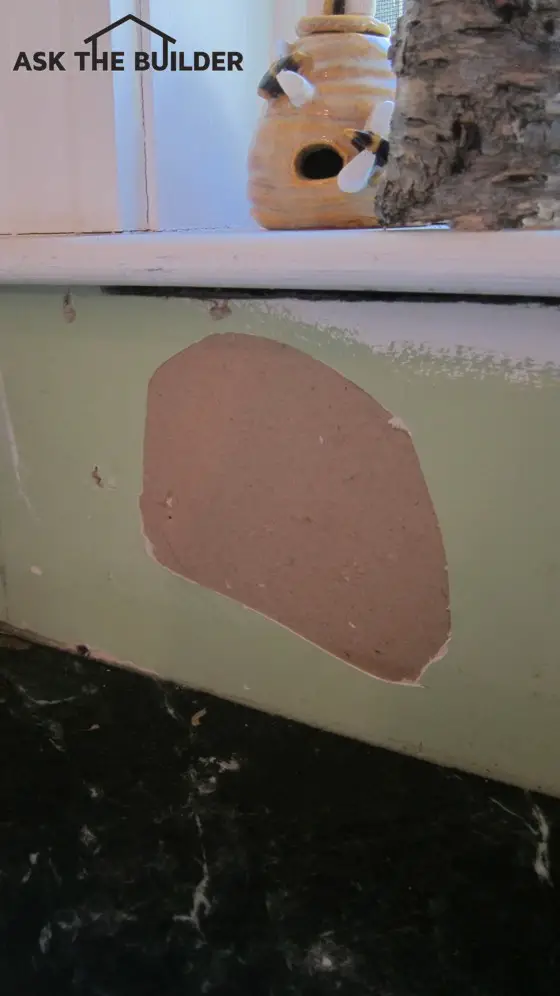
The brown paper is the inner core of the layered paper that surrounds the gypsum core of common drywall. If you coat this paper now with joint compound you WILL GET BLISTERS. The torn paper area of the drywall has been trimmed and it's ready to be coated with a sealer (see below) and then repaired. © 2017 Tim Carter

Drywall Paper Repair TIPS

DEAR TIM: I was removing an ugly ceramic tile backsplash in my kitchen. Some of the drywall paper came off with the old glue. It looks horrible. A home center employee told me I have to put in new drywall. This can't be true. Is there a way to repair this so the wall is once again perfectly smooth? Surely you know secret ninja tricks that will save me! Shelly B., Siesta Key, FL

DEAR SHELLY: I'll never forget the first time that happened to me. I was removing large sheets of thin wood paneling that had been nailed and glued over unpainted drywall. Oh my goodness, what a mess I had. The second time it happened to me, I was stripping off wallpaper in a bathroom. The paper hanger didn't prime the drywall with the proper sealant to prevent the wallpaper glue from bonding to the drywall paper.

Home Center Advice  🙁

First, the advice you received from the home center employee is completely wrong. You don't have to replace the drywall.

I'm going to describe to you how to repair it. It's a shame that so much bad advice is dispensed each day inside those big box stores.

CLICK HERE to get FREE & FAST BIDS from local drywall repair contractors.

High-Tech Paper

The common drywall that's found in many homes is made with high-technology paper. You'd be surprised how thick the actual paper is.

You can see it if you look closely at a cross section of drywall after it's been cut or at the end of a piece before it's installed.

The side of the paper that faces into your room and the other side that touches the wet gypsum at the factory are made to resist the water that's in the finishing compounds and the wet gypsum.

But the center part of the paper will misbehave if water reaches it.

Inner Paper Swells

If you've ever tried to patch drywall where the facing paper is torn off exposing the core of the paper, you'll quickly discover that the water in the patching compound almost always causes bubbles and blisters to form. The more you pop them and recoat them, the faster they return.

Trim Rough Edges

The first step in making a blister-free repair is a razor knife. You use this tool to trim any partially peeled up paper around the edges of the damaged area. You must have crisp cut lines all around the damaged area with no peeling paper.

Seal the Paper

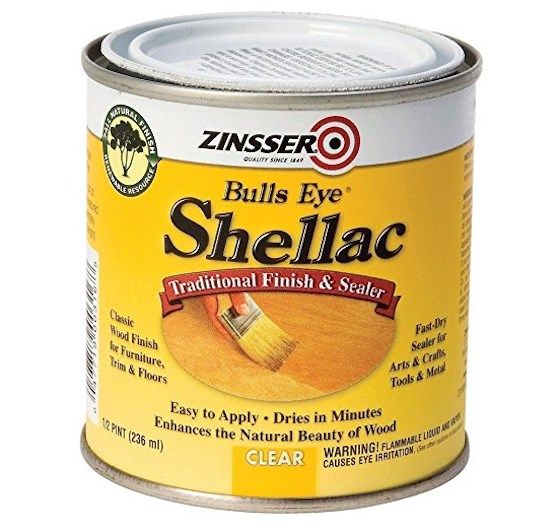
Once you've done this simple step, you should then coat the brown inner-core paper with an oil-based sealer that dries quickly. You can purchase spray cans of these primers, or you can brush on clear or white shellac. Just be sure that whatever sealer you use, it doesn't contain any water. You can even use left-over oil-based paints.

Shellac Clear

This is a time-tested sealer. Shellac is fantastic. It's great to hide water stains too. CLICK THE IMAGE TO ORDER THIS NOW.

Be sure when you apply this sealer, that you paint or spray over the edges of the damaged area onto the undamaged drywall paper. You want to seal the thin edges of the drywall paper too.

CLICK HERE to get FREE & FAST BIDS from local drywall repair contractors.

Repair Compound

Once the sealer has dried, you can then skim coat the area with regular drywall compound. The area that needs to be coated is probably less than one thirty-second of an inch, so it's not very thick.

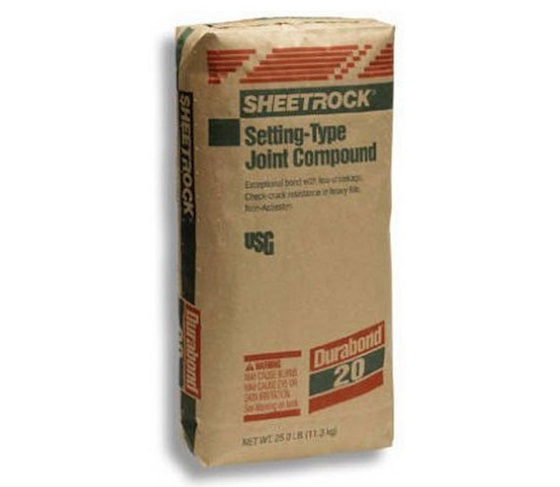
To speed up the repair process, you might consider using the setting type joint compounds. These are powdered products that you mix with water.

Sheetrock setting type joint compound

This is a fast-setting joint compound you mix with water. I've used this brand for decades. It's an EXCELLENT material. CLICK THE IMAGE TO ORDER THIS NOW.

They come in various setting times. The shortest time is 20 minutes. Mix with COLD water if you want to slow down the set-up time a little bit.

WATCH THIS VIDEO about this amazing product:

Mix with hot water if you want to speed it up. NEVER add water (re-temper) this type of material if it starts to get hard in your mud pan or a bucket. It will lose strength if you do this.

This is why I try to only mix small amounts so it won't go to waste.

Drywall Repair Videos

Watch these two videos. The one shows you the consistency of the repair mud. You can mix the dry-setting compounds just like you see in the video making it like warm cake icing.


Paint In One Hour

If you use a fast-setting one, you can apply two coats of the compound in less than 30 minutes.

To get a silky smooth finish, be sure to use the topping compounds that come in the buckets. These products really do finish smoother.

Primer/Sealer Paint

The biggest mistake homeowners make after a repair like this is not applying the right paints after the repaired area is dry and sanded. If you don't paint it properly, even though the area is perfectly smooth, you'll still see the repaired area in certain light.

One ninja trick I've used for years is to use a special sealer primer paint over the freshly sanded area. Remove all dust before painting.

drywall primer 2 gallon bucket

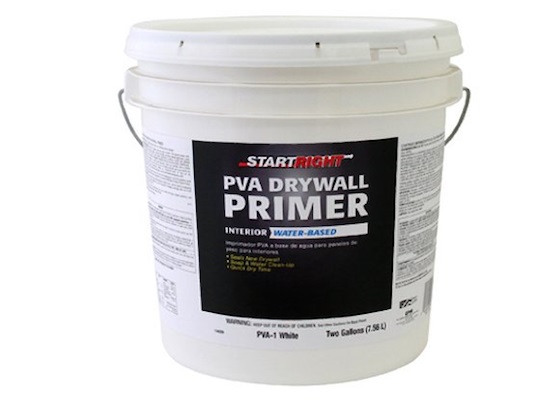
This is an excellent drywall primer. It must say it on the label for it to be the right primer/sealer. CLICK THE IMAGE NOW TO BUY THIS GREAT PRIMER/SEALER.

The primer/sealer does two very important things. The sealer component of the paint actually seals the very porous repair compound preventing the next coat of paint from soaking in.

The primer aspect of the paint contains coarser pigment particles that help homogenize the texture, on a micro level, so the texture of the repaired area and the other drywall surrounding it match. Doing this makes the patched area disappear once the final coat of paint is applied.

CLICK HERE to get FREE & FAST BIDS from local drywall repair contractors.

Column 969

Rain Soaked Framing Lumber

Rain Soaked Framing Lumber

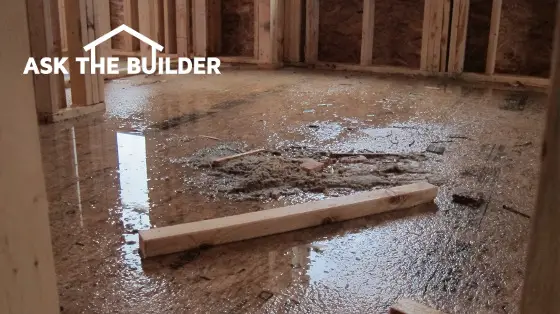
The carpenters building this new home are slobs. All sawdust, lumber scraps, etc. should be cleaned up each day in case it rains. © 2017 Tim Carter

Rain-Soaked Framing Lumber TIPS

DEAR TIM: My new home is under construction and the roof is not complete. Our area has received record rainfall for days and days. More rain is in the forecast. Is my house ruined? Will the wood rot? Should I be concerned about mold or any other problems? Is there anything a builder can do to minimize damage to lumber caused by rain and standing puddles on wood floors? Sara G., Trenton, NJ

DEAR SARA: I doubt that your house is ruined by the heavy and persistent rainfall. You'd be shocked how much abuse framing lumber and engineered lumber can take when Mother Nature turns on her faucet.

CLICK HERE to get FREE & FAST BIDS from local framing carpenters that will sweep up each day. Ask them.

Waterproof Glue

The glues used to bond layers of wood in exterior-grade plywood and the strands of wood in exterior-grade oriented strand board (OSB) are made to resist water. In fact, most are waterproof.

The actual solid lumber used by many builders for walls, floor joists and roof trusses is naturally resistant to rapid decay by water. It would take many months of being wet for the framing lumber to start to rot.

But these facts do not give you or your builder an unlimited license to allow water to saturate the lumber or stand in puddles on the flat floor surfaces for weeks or months on end. As soon as the moisture content in wood reaches in excess of 20%, decay and staining can begin.

Mold Before Rot

The greater likelihood is that you'll begin to see mold growth long before the wood starts to decay. Often there's an abundance of mold spores in the air at just about every construction site. These spores just need water to start their growth process and some molds can form in as little as 48 hours after getting wet.

My own home was rained upon several times as I built it. I distinctly remember the house getting soaked for several days before the sun came out. As soon as the rain stopped I used a large squeegee to get the standing water off the floor surfaces.

Clean Up Each Day

Because I kept the job site clean on a regular basis, there were no wood scraps or piles of absorbent sawdust that would trap moisture. Once the standing water was off the floors and the sun came out, the wood would dry rapidly with no mold growth, decay or warping.

CLICK HERE to get FREE & FAST BIDS from local framing carpenters that will sweep up each day. Ask them.

Stacked Lumber

The lumber on the job site that is at the greatest risk of mold growth or decay is that lumber which is stacked closely together. Often delivery trucks dump piles of lumber on the ground with just a thin 2x4 under the pile.

It's best to put stacks of lumber up on pallets to get air circulating under the lumber.

In many instances the pile of lumber is in direct contact with the soil. If water gets between pieces of lumber or sheets of plywood and/or OSB, it will not easily evaporate. For this reason, it is very important that lumber deliveries be scheduled so that the lumber is used by the carpenters within days, not weeks.

Rain Soaked Framing Lumber

It's winter, it rains and there's uncovered stacked wood all over the job site. This is a house-building train wreck. © 2017 Tim Carter

Air Circulation

Lumber that does sit on the job site should be off the ground at least four inches and be covered by a tarp that protects it from rainfall. The tarp should not be wrapped tightly around the stacked lumber. Water vapor from the ground can build up under the tarp and condense into liquid water.

Install the tarp much like a rain fly on a camping tent.

Waterproof Floor Sheathing

Builders can also take extra precautions to protect framing lumber. Water repellents can be applied to flat expanses of plywood or OSB subflooring. These liquid water-repellent products are easy to apply when no walls are erected on the flat subfloors.

Plywood and OSB that are treated in this manner will rarely swell and delaminate. Modern OSB can be purchased that has a waterproof coating or sealant. I'd get that if you can.

Borate Protection

Borax Powder

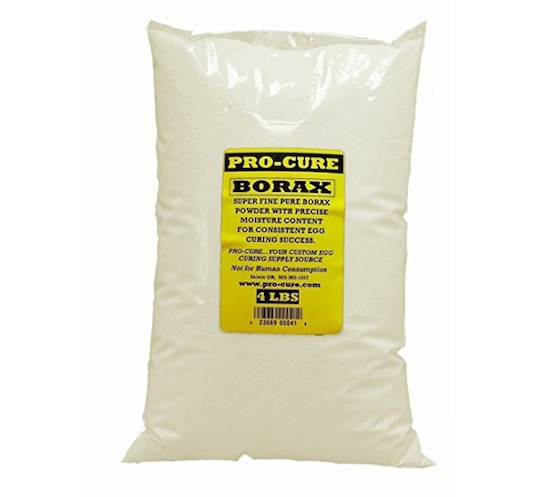
This is borax powder. You dissolve this in water and spray it onto framing lumber. It helps prevent rot and insect infestation! It's easy to use. CLICK THIS IMAGE TO ORDER IT NOW. IGNORE THE PART ABOUT EGGS. There are many many uses for borax.

Framing lumber such as 2x4s, 2x6s and floor joists can be sprayed with borate solutions.

The borate chemicals are not toxic to humans or other mammals, but they are highly toxic to many species of wood fungi that cause wood rot.

Termites and carpenter ants also dislike lumber treated with borates.

It's best to soak the lumber in borate solutions to get the full treatment, but spraying the borate on lumber that is in place will offer a fairly high level of protection until such time as the house can be roofed.

Clean With Stain Solver

Oxygen Bleach

Stain Solver is MADE in the USA with USA ingredients that are food-grade quality. CLICK THE IMAGE to order some NOW.

Mold growth on framing lumber is a common occurrence. The mold can be cleaned using non-toxic Stain Solver.

Stain Solver is a certified organic oxygen bleach made in the USA with USA ingredients.

You mix the pure powder with water, stir until dissolved and spray it on the mold-covered wood. I prefer to use a garden hand-pump sprayer.

Be sure you stir the Stain Solver so all the powder grit is dissolved before placing in the sprayer. Undissolved powder will clog the spray tip.

Serious Damage

Serious damage can happen to houses under construction that are exposed to long periods of wet weather. Light, dry snow and ice are not nearly as bad as standing water.

Cold weather slows the growth process of most organisms including wood fungi and most molds. But snow can be easily removed from the flat surfaces of homes under construction and this should be done as soon as possible after the storm has concluded. Once temperatures rise, the snow will melt and turn into liquid water.

CLICK HERE to get FREE & FAST BIDS from local framing carpenters that will sweep up each day. Ask them.

Column 593

Roof Turbine Vents

roof vent

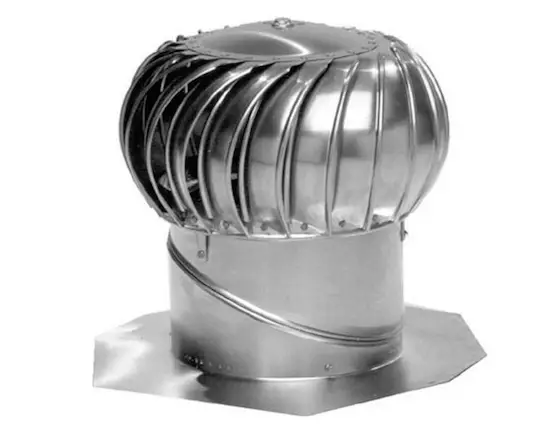
This is my favorite roof vent and my FAVORITE brand. It's Made in the USA! These are cave-man simple to install. Watch my video below. SAME procedure for this vent as the bath fan flashing. CLICK THE IMAGE NOW TO BUY THIS TURBINE VENT.

Roof Turbine Vent TIPS

DEAR TIM: My home has two spinning turbine vents. I have been told by several people that it is a good idea to stuff insulation in these during the winter months so that warm air is not sucked out of my attic space. Is this good advice? Are these turbine vents really effective? I don't see many of them on my neighbors' roofs so I wonder if I should remove them. Kevin M., Canal Winchester, OH

DEAR KEVIN: Don't touch those vents! They are splendid ventilation devices. In fact, I installed these same vents over 25 years ago on the second home I owned. They were hardworking devices that Mother Nature paid to operate. In fact, the same vents are still in place on the home and each time the slightest breeze blows, they do a great job of pulling air from the attic space.

Turbines Work For FREE

A turbine vent is a passive ventilation device. The popular ridge and soffit ventilation systems and the traditional metal pot vents are also passive ventilation systems.

A turbine vent spins with the slightest breeze. As soon as it starts to spin, it vacuums air out of your attic. The faster it spins, the more air it exhausts.


I'd put three or four on a roof to really have a good chance at cooling an attic on a hot summer day.

In contrast, an active ventilation device might be an electric-powered whole-house fan or a powered roof ventilator. Passive vents work for free and in almost all instances are silent.

Never Block Vent Holes

The last thing you want to do is stuff insulation in the vents. Ventilating attic spaces in winter months is often more important than venting them in summer.

Water vapor from the inside of a home drifts up and into an attic space. It does this 365/7/24. #HassleIfNotVented

Condensation HAZARD

If this water vapor is not quickly exhausted to the exterior atmosphere, it can often condense upon the cold roof framing members and the underside of the roof sheathing. It can get so bad that water can drip from the underside of the roof and when the temperature gets low enough, frost can actually form up inside the attic. Moisture conditions such as this can lead to wood rot and mold growth.

Thousands of CFM per Hour

Depending upon the diameter of the vents and the wind speed outdoors, the turbines can expel vast quantities of humid air before it becomes a problem. A small 12-inch-diameter turbine vent with a constant wind speed of 5 miles per hour (mph) can remove 347 cubic feet of air per minute (cfm) from the attic space.

A single 14-inch-diameter turbine vent that is subjected to 15 mph winds can expel up to 1,342 cfm of air! If the winds are still, the vents still allow air to drift up and out of the attic space, although not nearly as much.

Easy DIY Install

Watch my video below. The video shows a bathroom exhaust fan hood, not a turbine vent. But the method of installing a turbine vent is IDENTICAL.

If your roof is low slope and you can get up on it with ease, you can do the installation and save HUNDREDS of dollars.

Don't Steal Heat

It is also a myth that turbine vents remove warm air from attic spaces in winter months. If the air temperature in your attic space is very warm while it is cold outdoors, I maintain that you might have inadequate insulation and/or you are up in your attic on a bright sunny day where the radiant energy of the sun is heating the attic space.

It's best to check attic temperatures at night after the sun has gone down.  If your attic is well insulated, the actual temperature of the air inside your attic should be very close to the actual outdoor temperature.

AC Leaks

However, it's possible for turbine vents to pull conditioned air from the inside of your home. Modern building principles and most model building codes mandate that you have soffit ventilation vents that act as intake air locations.

As air is pulled from the attic space by the turbine vent, ridge vent, or even an electric-powered fan, the same amount of air must be allowed to flow into the attic space where the roof passes over the exterior walls of the home.

If there is not enough soffit air coming in, then the vents may create a partial vacuum in the attic space. To relieve this pressure, the vacuum may pull air from the inside of your home. This is not a good idea.

Aluminum = No Rust

If you decide to add more turbine vents to your roof, be sure to buy ones that are aluminum. These will not rust. In addition, pay attention to the maximum roof pitch that will work with the turbines.

The turbines are adjustable so that the spinning part is level even though the roof is slanted. Not all turbines will fit all roof pitches. The maximum roof pitch is almost always printed on the box label.

Lubricate the Bearings

Finally, be sure the ball bearings are permanently lubricated and sealed. Nothing is more bothersome in the middle of a windy night than a squeaky roof turbine!

Column 442

Installing Downspout Drain Lines

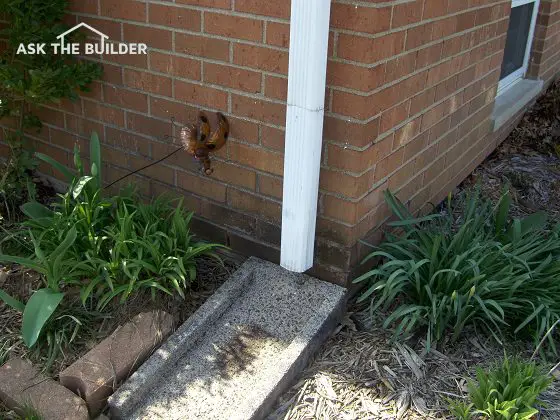
Install Downspout Drain Lines | Splash blocks don't do much to channel water away from the foundation. © 2022 Tim Carter

Install Downspout Drain Line TIPS

Ethel had a flooding disaster similar to Rich's issues. Check out the May 21, 2020 Newsletter to read her story.

DEAR TIM: I need to bury downspout drainage pipes in my yard before the yard is seeded. Where is the best place to put them and how deep should they be buried? What type of pipe do you like? How far away from the house should the pipes extend? A friend suggested using pop-up valves to help water the lawn and plants. Are those a good idea? Rich T., Jackson, MS

DEAR RICH: Stormwater drainage from roofs is a topic sometimes ignored by builders and homeowners alike. I can't tell you how many houses I see where the downspouts empty onto a splash block at the base of the foundation.

CLICK HERE to get FREE & FAST BIDS from local landscapers who can install downspout drain lines.

Often these homeowners are plagued with water seepage into basements or crawlspaces and it's no wonder. Heavy rainfall on an average-sized roof can produce hundreds and thousands of gallons of water that spew from the different downspouts located around the house.

Read another column of mine about downspout drain lines that shows you how much water can come off a roof in as moderate rainfall. You'll be AMAZED!

Harvest Rainwater

I regularly visit the Southwestern part of our great nation and am somewhat astonished that stormwater is not collected and stored by homeowners that live in this arid area. Laws passed decades ago often prevent homeowners from harvesting and storing water that falls on their land. River systems that feed into the Colorado River are affected by this because the water in this drainage basin eventually flows to and through the Hoover Dam.

The water held back by this dam is used to irrigate crops grown for many people in the USA. The water also makes electricity that's sent to tens of millions in southern California and other parts of the Southwest. It's a complex situation.

If you're permitted to collect and store rainwater, this water can be easily collected and piped to above or below ground plastic barrels or tanks. If the storage is above-ground and placed at the highest part of the lot, drip irrigation piping can be extended from the water storage.

The stored rainwater can then be used to help irrigate plants that otherwise would have enjoyed the drink before the house was built.

A simple phone call to your local town office will allow you to discover if you're permitted to harvest rainwater.

Why No Harvesting

The issue with harvesting rainwater is that it lowers the cubic-feet-per-minute of flow in the major rivers. If you collect the rainwater and then use it to water plants, drink and then put back into the earth via your septic system, that water never makes it into the river and then down to the large dams.

Contracts negotiated decades ago count on the water making it to the dams. The entire water-rights issue on private land in the Western USA is very complex. It's far beyond the scope of this column.

Urban Storm Sewers

Before you proceed with any work, you should check with your local government to see if they have special stormwater rules and regulations. Sometimes you have to pipe this water to special underground storm sewers or above-ground channels. Some local governments or agencies have no rules or regulations.

Trenching Tools

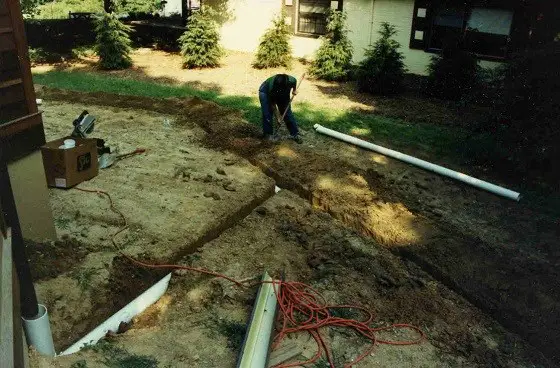
I usually dig a trench about 12 to 14 inches deep for downspout drain lines. The fastest way is to rent a trenching machine from a local tool rental.

If you have hard clay soil, or rocky soil, you can use an electric hand-held demolition hammer tool to dig a trench.

This is a great demolition hammer tool to chip out rotten concrete. If you've got a bigger job that's going to last a few days, you should BUY one, keep it in good shape and then SELL it on Craigslist once done. This will be cheaper than renting one. BUY THIS GREAT POWER TOOL right here. I own one just like it.

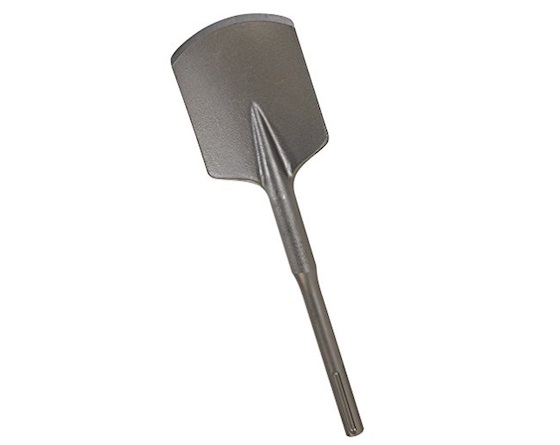
These electric demolition tools can be outfitted with chisel tips to crack larger rocks or clay spade shovel tips to carve through dry or damp clay soil.

This is a miniature shovel that fits on the end of the Bosch demolition hammer. It carves through clay soil like a hot knife through cold butter. BUY THIS FANTASTIC ACCESSORY right here.

If the lot is fairly flat, the pipes will get deeper the farther they extend as you should create 1/8 inch of fall for every foot the pipes run. The pipes should never be buried running parallel in the non-compacted fill dirt that is placed against the foundation.

CLICK HERE to get FREE & FAST BIDS from local landscapers who can install downspout drain lines.

Over time this dirt or soil settles and it can cause piping to break, kink or develop reverse, or backwards, slope.

Downspout piping can cross the un-compacted fill at a 90-degree angle so that it is placed in undisturbed soil. But as the soil adjacent to the house settles over time, this small length of piping needs to be checked and lifted to ensure it drains.

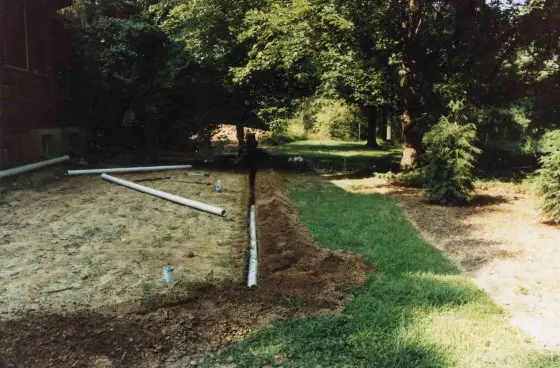
The pipe in the lower left of the photo is crossing an un-compacted fill around the basement of my house. I allowed the fill to settle for months and watered it before installing the downspout drain lines. The pipe is 4-inch SDR-35 and it intersects the other pipe farther in the yard using a standard wye fitting. (C) Copyright 2017 Tim Carter

SDR-35 Pipe And Fittings

A smooth 4-inch-diameter plastic SDR-35 sewer pipe is the material I prefer to use. This pipe has a smooth interior and closely resembles the thick-walled plastic piping used for interior house drain and vent piping.

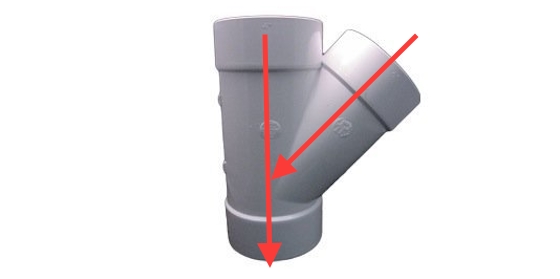
Fittings can be permanently welded to the pipe with PVC cement. These fittings come in all types including the all-important Wye fitting where one pipe connects to another.

standard wye fitting

This is a standard Wye fitting. Note the red arrows that show you the direction of water flow through the fitting. BUY THIS WYE FITTING HERE NOW.

If you don't want to use glue, you can buy rubber-gasketed fittings. These fittings have a rubber o-ring incorporated into each end of the fitting.

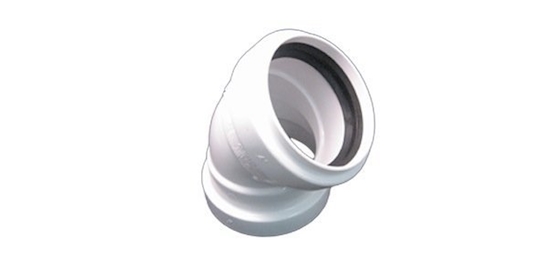
gasketed 45-degree SDR-35 fitting

This is a gasketed 45-degree SDR-35 fitting. Note the black gasket. You use lots of these. All underground bends need to be 45 degrees. If you need to make a 90-degree bend underground, you should use two 45 bends and put a 1-foot piece of pipe in between them. You do this so it's easier to get a drain-cleaning snake through the pipe if it ever gets clogged. BUY THIS FITTING HERE now.

You need to keep the pipe clean of all sand and dirt when you work with gasketed fittings. You also need to use a coarse file to taper the cut ends of any pipe. If you don't file the ends, you'll never slide the pipe into the rubber gasket. You also lubricate the pipe and gasket with liquid dish soap.

If you install either type as directed, tree roots that create clog nightmares will never be able to enter the piping system. I am not a huge fan of the corrugated flexible black piping for downspouts. It can crush easily and it is nearly impossible to clean with professional drain cleaning equipment.

All underground bends in downspout piping should be made with 45 degree or smaller angle fittings. Ninety-degree angles underground become obstacles in the event the piping has to be cleared by a professional drain cleaning company.

The downspout drain line had to make a bend. In the lower part of the photo, the pipe you see connects to a 45-degree fitting. - © 2017 Tim Carter

You can use a 90-degree angle at the base of the downspout where the underground piping begins, as a drain cleaner can usually insert his metal snake here with no difficulty.

Pipe Away From House

If you are allowed to drain your stormwater on your own lot, do so as far away from your home as possible. Try to pipe all water to a low point away from your home.

Don't drain more water to a point on your lot than would have ended up there naturally before your home was built. Simply keep in mind where the water is falling on the roof and where that water would drain if your house had never been built. If you pipe the water where it used to go, you should not harm any of your surrounding neighbors.

Pile Up Rocks

Where the downspout drain line terminates above ground, it's going to cause erosion because you're concentrating lots of water from your roof at this point. Create a large area of softball-sized rocks that the water will flow onto. This absorbs some of the energy and spreads out the water.

Inline popup valves do a good job of allowing rainwater to discharge onto your property, so long as you are allowed to drain the stormwater on your property. Try to strategically place them where they will do the most good for your vegetation.

Photographs & Videos

An invaluable tool that will come in handy in future years is a collection of photos and videos that are shot as the downspout piping is being installed. Videos are best because you can talk and describe what the camera is seeing. Upload these to cloud storage and pass them onto the future buyer of your home.

If you stand back and include parts of the house in the photos and place shovels or other objects in the photos for scale, these prints will help you locate the pipes in the future. Over time it is very easy to forget where hidden pipes pass in the ground.

My own photos saved me lots of work in the past. I had to install a small field drain in a side yard. The photos I had taken years before allowed me to locate within five minutes the drainpipe to which the new drain was to be connected. I could have dug for an hour and missed the pipe by inches without the aid of the photographs.

CLICK HERE to get FREE & FAST BIDS from local landscapers who can install downspout drain lines.

Column 517