How to Prevent Contractor Mistakes

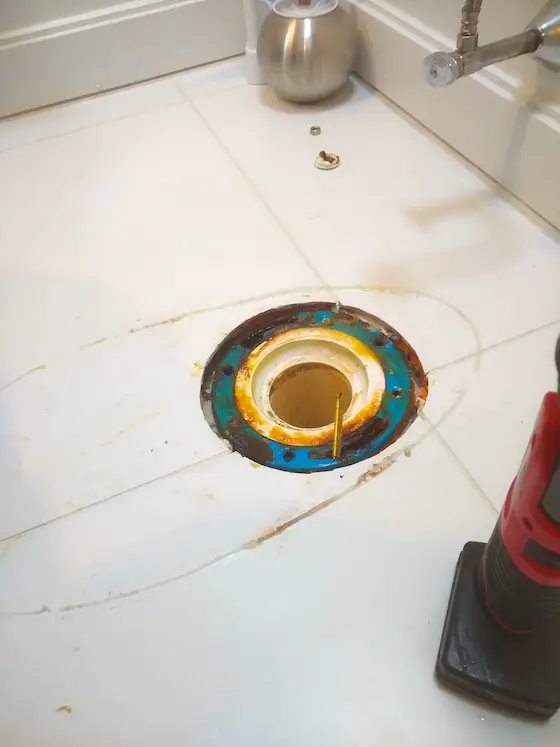
toilet flange buried under new tile floor

How to Prevent Contractor Mistakes - Would you know that this new floor installed over an existing floor would cause extreme illness resulting in thousands of dollars of unnecessary medical bills? Copyright 2023 Tim Carter

How to Prevent Contractor Mistakes - Phone Call Help and Due Diligence

I feel it’s my job to save you as much money and time as possible on every project you plan to do at your home. While it’s a noble quest, I’m thwarted each day by two or three things. First and foremost, if my incoming email from homeowners like you is a statistically relevant cross-section of the population, there are thousands of contractors who produce less than acceptable workmanship.

The next problem is you. It’s tough-love time. Each autopsy I do for homeowners that are victims of poor workmanship contains a toxic mix of trust and hope. It’s natural for you to trust that the person you hire will do a good job. But hope is an emotion that should only be reserved for things you can’t control like the weather and winning lottery numbers. Don’t ever hope the job goes well. Do your due diligence to ensure a happy ending.

Allow me to share with you two true stories. The first one happened just last week. Several days ago a young woman my wife and I know from church reached out to me. She's our cantor and was desperate for plumbing help. All of a sudden a leak occurred in a lower-level ceiling of her condo.

Knowing how to prioritize leaks, I asked, "Is water dripping constantly?” She replied, “No. It's just a water spot that appeared that wasn't there a few days ago.” I knew it was not an emergency as a pinhole leak in a water supply pipe would cause a stream of water or a constant drip. I texted her, "I'll be there tomorrow at 11:29 AM."

Once I arrived at the woman's condo and looked at the stain, it was time for questions. I asked, "What happened here in the past few days that was unusual? Have you had strangers in the house or contractors?” She responded, "Oh yes, just a few days ago a flooring contractor finished installing a new laminate floor upstairs."

We climbed the flight of steps and I walked over to the spot just above the water-stained ceiling below. I was standing inside a half bathroom. The young woman added, "The flooring contractor took off the toilet and put it back down after he installed the flooring. He said everything would be fine."

While the flooring contractor’s intentions may have been good, he broke the all-important toilet gasket seal and buried the toilet flange with the new laminate flooring. Now, each time the toilet is flushed, water splashes around under the toilet, and some leaks out around the toilet flange. It then passes through the hole cut in the sub-flooring for the drain pipe. Gravity then deposits the water on the drywall fastened, for the time being, to the bottom of the floor joists.

This young woman only reached out to me because she couldn’t get local plumbers to return her calls. How many hundreds of dollars of extra expense were caused by the flooring contractor’s lack of understanding of how to properly re-seat a toilet? So you know, I’m going to fix the flooring contractor’s mistake for free.

Two years ago a different homeowner hired me to diagnose why his wife was seriously ill. Three different doctors couldn’t figure out the cause of her sickness. After talking with the husband on the phone for just 15 minutes, I told him I was positive she was being poisoned by methane gas.

I simply asked questions that the doctors might not have posed. As the phone call ended, I told the homeowner to open the windows in the house and keep them open until the repairs could be made. His wife started to feel better within hours.

A different flooring contractor made the same mistake. He installed a new marble floor on top of a ceramic tile floor inside a half bathroom. Once again, this contractor broke the all-important seal between the toilet and the flange. The homeowner paid me to specify how the repair was to be done and to be present when a plumber came out to reseat two toilets in the house. It ended up being an eight-hour consult as his home was 80 miles away.

A remodeling contractor based in Texas subscribes to my weekly newsletter. In my most recent newsletter, I shared the story about the young woman. He reached out to me recounting several similar horror stories about water leaks caused by flooring contractors. He finished by saying, “I caution my customers not to let the flooring guys mess with the plumbing. Really smart tile/flooring guys know better and state up front they do not remove/reinstall plumbing fixtures.”

You can prevent bad workmanship, to a large degree, by investing the time to discover how jobs should be done. Yes, it takes work to do this. It’s not easy. By doing it, you remove hope from the equation. Don’t forget that I offer phone coaching to let you know all the things that can go wrong on one of your upcoming jobs. The husband of the sick wife wrote me a heartfelt note thanking me for putting an end to his wife’s misery. Save a stamp and let’s talk before you start your job!

Column 1495
Painting Rusty Metal and Steel

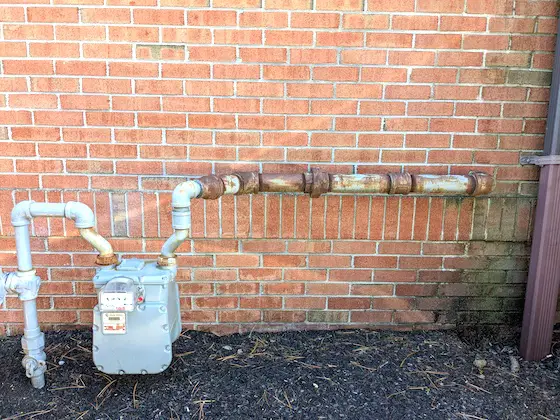
rusty metal gas pipe rust paint

The rust on this large natural gas line could eventually eat through the pipe and cause a catastrophic gas leak and explosion. Copyright 2022 Tim Carter

Painting Rusty Metal and Steel - Prevent Explosions!

Did you see in the recent news the catastrophic gas explosion that killed nine people on the island of Jersey in the English Channel? It’s early in the investigation and the experts may not ever be able to pinpoint the cause, but I have my own idea based on something that happened to me two years ago.

I was hired by a small condominium association to do a thorough inspection of some outdoor covered decks that had leak issues and wood rot problems. This building was located just a mile or so from the Atlantic Ocean in New Hampshire. The flats on Jersey island were subject to the same marine environment.

My inspection started at the uppermost deck and I worked my way down to the ground-floor deck. When I was underneath the deck in a passageway that led to a basement door, I saw black iron gas lines that extended from the outdoor meters into the basement. These are connected to the water heaters and furnaces.

The iron pipes weren’t black. They were a crusty brown as they were completely coated in rust. I immediately informed the president of the condo association that these pipes must be painted with a special rust primer and then two coats of finish paint. I instructed her to make sure she read the instructions on the label of the special metal rust primer to prepare the pipes so the primer adhered well.

I was reminded of a quote from the captain of the Norwegian Dawn cruise ship. I had attended a talk of his five years ago while on a short cruise and he said, “The sea EATS iron and men.” If you remember some of your high school chemistry you know this to be true. Saltwater is extremely corrosive to unprotected steel and iron.

Author's Note: Ed Nemec sent me this after I mentioned this column in my Ask the Builder newsletter: "I had a gas meter stubbed into a cabin but never used for decades. When I went to use it, the thin thread snapped off with no pressure as it was only stubbed - no stress at all. The meter was still turned off but it amazed me at the time. So I experienced what you're talking about in Illinois with no salt conditions."

You may or may not know this but I’ve been a master plumber since 1981. I’ve installed miles of black iron gas lines in my lifetime. I’ve hand-threaded each and every pipe with cutting dies. You may have never thought about the threaded pipe, but where the grooves are the pipe wall thickness has been cut away and reduced to create the threads.

This means that the strength of the pipe is much less in these grooves. If rust has been working on the pipe eating away at the iron, then if something bumps the pipe or it becomes stressed or bent by accident, the metal at the base of the grooves can crack just like you bending a thin pop-top tab on a soft drink can. Gas now starts flowing from the pipe like air from a blown-up balloon.

You don’t need to live near the ocean for this to happen. Normal rain or humidity in the air will cause rust to form and grow on unprotected iron or steel. Your house has all sorts of structural steel elements that are rusting. Many ignore this rust at their peril.

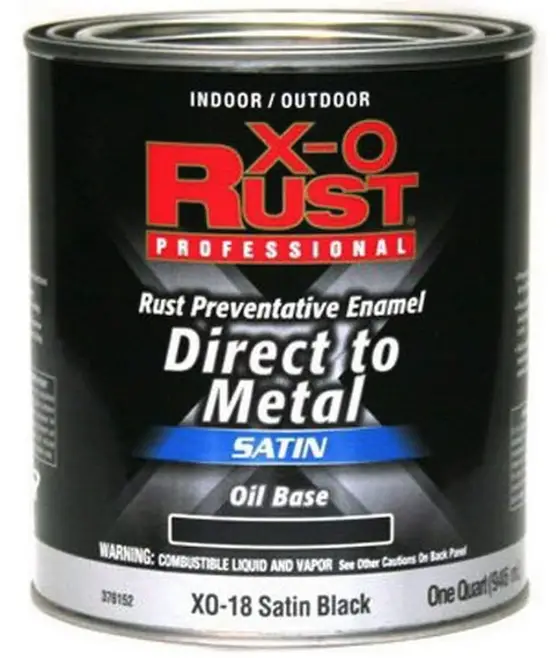
x o rust paint can

This is FANTASTIC paint to use on black iron pipe or any steel. Be sure to use their primer and coat the primer with finish paint within hours of the primer drying. CLICK HERE to have it delivered to your home.

What about your deck joist hangers? I know they were galvanized when they were installed, but has that zinc coating worn off and do you see rust?

What about the nails that attach the deck joist hangers and other structural connectors to the wood? Is the copper in the treated lumber leaching out with each rain event causing rust and corrosion?

What about those cheap electroplated roofing nails the roofer used to install your shingles? I’ve seen new roofing nails transform to rusty fasteners in as little as five to seven years. The best roofing nails are ones that are double-dipped hot galvanized. Period.

What about any steel support posts in your basement or crawlspace? Do you see rust on these? What happens if the rust eats through the post and someone bumps into it?

What about rust on any horizontal steel I-beams in your basement or crawlspace? Are you ignoring it? If so, you’re making a sad mistake.

The good news for you is that painting rusty black iron pipe or all the things I listed above is absolutely a simple DIY job. Most of the high-quality rust primers and special rust finish paints are available in spray cans should you not like to use a brush.

I recorded a video about five years ago showing the difference between two top rust-paint brands. The test panels in the ASTM scratch test were like night and day. I urge you to watch this video so you purchasea paint that will last for many years, even in a marine environment.

Column 1487

How to Build A Masonry Fireplace

masonry fireplace cast iron damper smoke shelf fire brick

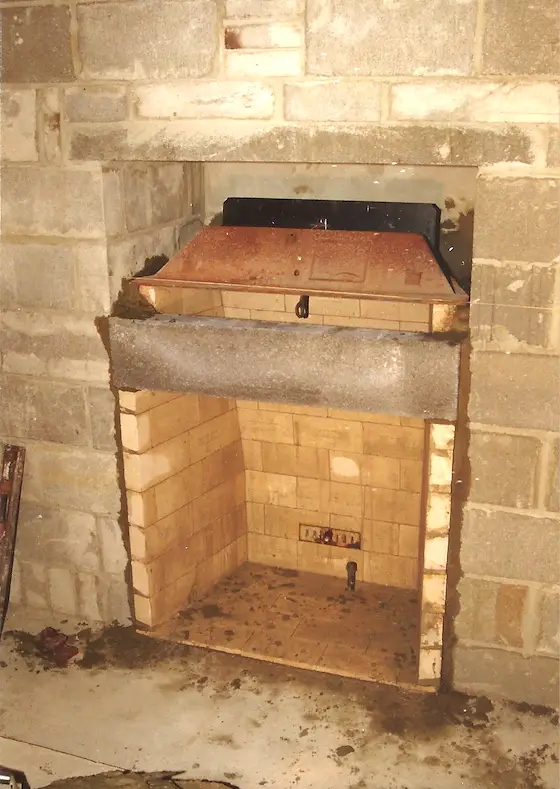
Odds are you’ve never seen what’s above and behind the mantle of your masonry fireplace. Behold the magic of why the fireplaces in the houses I built never smoked.  Note how high the bottom of the cast-iron damper is in relationship to the bottom of the concrete lintel that forms the top of the opening of the firebox. This separation is very critical. Copyright 2022 Tim Carter

How to Build a Masonry Fireplace - It's Very Complex

The two main reasons for smoke in his home were the lack of a combustion air intake and his chimney was not the correct height. A few of his photos also showed a very dangerous situation where his flue liners were not surrounded by solid masonry, rubble, and mortar. A hot ember could make contact with wood framing with little difficulty.

Over the years I’ve visited homes that have fireplaces built by amateurs or paid masons that have no clue how to build them. You may not think it’s that hard to build a fireplace but it’s actually very technical. The width of the fireplace opening controls all the other dimensions.

The Brick Industry Association (BIA) should be your go-to source for all the information you need if a traditional masonry fireplace is in your future. I’ve used their specifications for over 40 years to construct smoke-free fireplaces in all of the homes I’ve ever built.

I urge you to go to their website and download the free technical notes publications about masonry fireplaces. They are:

  • #19 Residential Fireplace Design
  • #19A Residential Fireplaces, Details and Construction
  • #19B Residential Chimneys - Design and Construction

These publications are written so a layperson can understand them with ease. The illustrations and tables allow you to easily visualize exactly how a masonry fireplace should be constructed. If you have a smoking fireplace, you’ll no doubt discover the cause of why you’re coughing by using the three publications. I guarantee they’ll help you do an autopsy on your fireplace.

When you dive into the documents, you’ll discover that the shape of the firebox is mission-critical. The sides have to be angled and tapered to the rear of the firebox. The rear wall needs to be vertical rising up from the floor, but then at a certain height, it needs to start to gently slope towards the front of the fireplace.

The position of the damper is extremely important. Not only does it need to be at least 8 inches above the opening of your fireplace, but it also needs to be forward and close to the room. By default, this creates the smoke shelf behind it. It’s far more complex than you probably ever realized.

One of the biggest mistakes I routinely see when homeowners send me photos is the use of regular mortar to set the actual high-temperature firebrick. That’s a huge mistake. The firebrick are supposed to be set using fire clay. Regular mortar will crumble in short order. If you see sand in the mortar joints in between your firebrick and the joints are about 3/8-inch tall, you’ve got the wrong mortar.

Fire clay is a powdered clay that’s mixed with water. It’s rich in both aluminum and silica and can withstand decades of high temperatures inside the firebox. The fire clay joints are very thin, normally less than 1/8-inch in height. A mason that knows what she/he is doing carefully dips the side of the brick that will touch another one into the soupy batter.

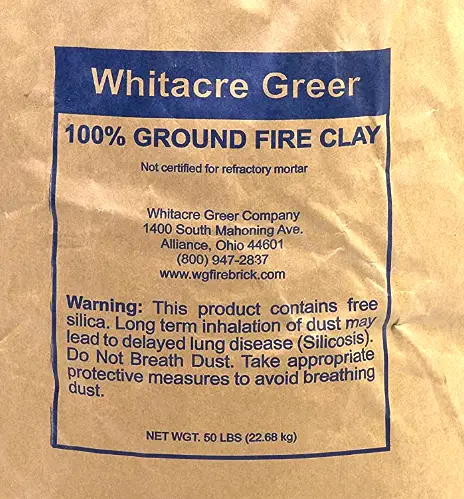
bag of fire clay

Fire clay comes in bags like this. CLICK HERE or the image to have it delivered to your home.

Your mason may build the firebox correctly and yet your fireplace still smokes. If that’s the case, you then need to see what went wrong with the chimney. The size of the flue is directly related to the size of the firebox. All of these specifications can be found in the BIA Technical Notes.

Don’t overlook the height of the chimney. It’s very important because of downdrafts created by nearby trees or parts of your roof. All of this is covered in the documents.

Last but no least, be sure that the mason builds the chimney crown properly. Based on my lifetime experience I’d say that less than one percent of all chimney crowns are constructed properly. To see how to do it, pay close attention to the diagrams in the #19B document. Don’t forget the all-important drip kerf under the crown overhang!

Column 1489

Cold Weather Myths and Your Home

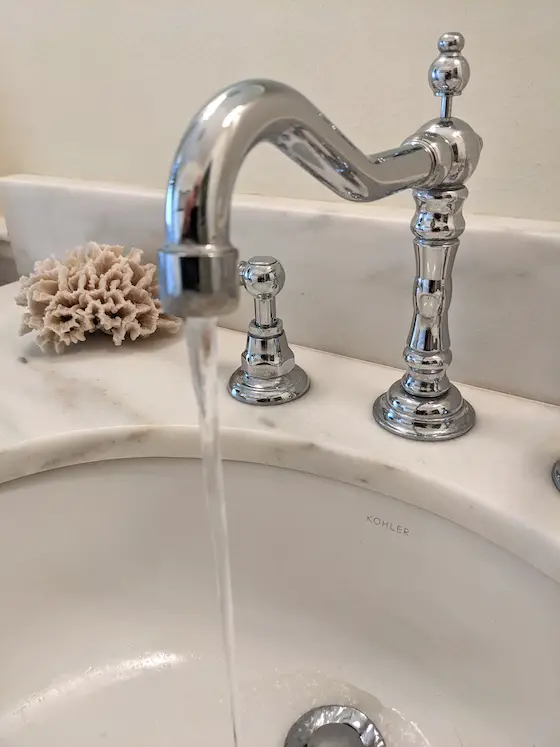
water running from vanity faucet

If this water runs all night, will it cost 1/20th of what it will cost to repair a burst water line? Copyright 2023 Tim Carter

Cold Weather Myths and Your Home - Easy Ways to Save $$$

When I woke up just before writing this column, it was a balmy -15F here at my house in central New Hampshire. A gale was blowing and the wind chill was -41F. You may be reading this column in sunny Florida or southern California where it never gets bitter cold but you may have family or friends up in the frozen north that may benefit from what I’m about to share. There are several cold-weather myths to dispel.

How Much Water Should Drip From a Faucet?

As you might suspect, when a cold blast of Arctic air washes over those of us that choose to live where the air hurts our faces, the requests for help at my Ask Tim page on my www.AsktheBuilder.com website go through the roof. Just minutes ago Autumn, who hales from Newport News, VA, asked me to debunk an old wive’s tale. She asked about how much water needs to drip from a faucet to prevent water pipes from freezing.

If you really paid attention in your high school chemistry and physics classes, you know that motion interferes with water wanting to go from the liquid to solid state. This is why a pond freezes but the stream feeding the pond still contains liquid water. That said, if the temperature drops low enough, there’s the possibility the stream might freeze.

If you could see inside the copper pipe that is feeding your kitchen or bathroom sink while you have the faucet dripping or even a tiny stream flowing from the faucet, you’d see virtually no motion in the water within the pipe. Visualize a huge crowd of people on one side of a single turnstile. While you perceive movement at the choke point, farther back in the crowd the people are pretty much standing still.

To prevent an expensive service call from a plumber, you need to have lots of water running through the water lines. As the temperature gets colder and colder, more water needs to be tumbling around in the pipe. While your local water works may not like this, if you use $10 worth of water and $3 worth of natural gas or electricity during a cold night, it’s so much cheaper than a $300-$500 repair bill.

There are numerous ways to prevent frozen water lines. First, you need to do whatever you can to keep the temperature of the pipe above 32F. I’m not a fan of heat tape because it can cause fires if installed incorrectly. I’m a huge fan of adding more insulation, relocating the pipes so they touch the actual warm wall or floor surface, and/or replacing the section of pipe with PEX tubing. Water that freezes in PEX tubing will cause the tubing to expand but it won’t burst the tubing.

How Can I Lower My Heating Bill?

One of the top questions I receive is, “How can I save money on my heating bills in bitterly cold weather?” The honest answer, and most don’t like it, is to turn down your thermostat. You want to use far less fuel. Installing a programmable thermostat is the best way to control how much natural gas, propane, or electricity you’ll use. Allow the temperature to drop to 50F while you sleep. Sleep under a puffy insulated blanket.

Forget about caulking air leaks, adding more insulation, etc. in periods of frigid weather. The caulk might freeze, you may not get a fast return on investment on added insulation. A column I shared with you just two weeks ago showed how it can take decades to recapture the cost of foam insulation.

The better thing, and you may recoil at this, is to just wear more clothes when you’re inside. My wise father-in-law grew up on a rural farm during the Depression. He recounted stories of going to bed as a child with frost coating the covers. He survived to tell the tale.

Think about this for a moment. How many nights have you been eating outdoors at a restaurant, perhaps at a football game and the air temperature was 60F? You might have had on a light jacket and been comfortable.

I routinely keep my thermostat low at my home saving lots of money. I wear long underwear, a knit hat, wool socks, and often a hoodie with the hood pulled up to keep my neck warm. Yes, I may look like a nut inside my home, but I’m as snug as a bug in a rug.

Do I Need Replacement Windows?

What about those drafty windows? Guess what? The air leakage around the windows may be so little as it wouldn’t even cause the smoke from a burning stick of incense to waver. Put away your credit card! Don’t sign a contract for new replacement windows!

I know you’re feeling air moving when you sit next to the glass but it’s not air leaking in from outside. The air in your room makes contact with the cold glass surface. The air cools and as you know cold air is heavier than warm air. The cold air starts to move toward the floor. This conveyor belt of air doesn’t stop until the glass surface warms up.

Pull the curtains closed or drop the window shade to corral the cold air next to the window. You’ll be amazed at how within minutes the draft seems to have disappeared.

Column 1494

Loan Prepayment Benefits

table showing interest savings by prepaying a loan

Loan Prepayment Benefits - You Can Save Thousands of Dollars

My youngest daughter moved out West thousands of miles away from me in 2022.  Once in her new city, she had to purchase her first car. She bought a used car from Carvana.

At the time of the purchase, she had a job prospect but was not employed. She had an excellent credit score very close to 800 and a hefty rainy-day fund. Within a month of purchasing the car, she obtained a very high-paying job as a private flight attendant for a multi-billionaire. Making her car-loan payments as well as her apartment rent was not an issue.

Her lack of a job at the time of buying the car caused her to get raked over the coals with a 10 percent rate. The term of the loan was six years.

Big Christmas Bonus

My daughter informed me that she was given a sizeable Christmas bonus from her employer. She wanted to take part of the bonus, $5,000.00, and invest it. She had gone to a local bank and discovered she could get a one-year certificate of deposit for 3.5%. She also knew she could send the money to the professional investment firm that handled her rainy-day fund.

I told her that the best thing to do would be to apply the $5,000 to pay down her car loan. I decided to poll my newsletter list because I knew that any number of my subscribers were financial experts. As you might suspect, I was flooded with a plethora of excellent advice. I decided to share it with you.

Let's get started.

"Does She Have a Rainy-Day Fund?"

A vast majority of the responses that poured in wanted to make sure she had a rainy-day fund that would cover all of her living expenses for a minimum of six months. I had NOT SHARED with my newsletter list that she had one of these funds.

This was, perhaps, the best piece of advice offered up by my newsletter subscribers. If you don't have a rainy-day fund, you should. My next-door neighbor who is a retired CPA is far more conservative. He feels you should have five years' worth of living expenses saved up. Very few people can achieve this goal, although it's a very noble goal to aim for.

The bottom line is you SHOULD HAVE a rainy-day fund.

Prepayment Penalty?

One of the things I told my daughter before polling my newsletter experts was, "Be sure you read the loan agreement. Discover if there is some hidden prepayment penalty. If there is, the penalty may negate all the benefits of paying off part of the principal early."

That same advice was offered up by quite a few of my subscribers. When you are negotiating for a loan, be SURE THERE IS NO PREPAYMENT PENALTY. Make the loan officer show you in the loan agreement the language that says you can PREPAY the loan early with NO PENALTY.

Get a NEW Loan ASAP!

You may have been one of my subscribers that suggested my daughter re-negotiate her loan ASAP. With ten months of on-time loan payments PLUS a great job, she'd be able to get a much more favorable interest rate. She can apply the $5,000 to the new loan principal right away to get lower monthly payments. Then she can do an extra trick you'll see below to pay off the new loan in HALF THE TIME.

Guaranteed 13 to 15% Interest?

Several financial experts pointed out that if you wanted to get a HIGHER return on investment rather than apply the $5,000 to prepay down the loan, you need to find some investment that GUARANTEES you an annual interest rate of better than 13%. By paying down the loan you effectively are getting a 10%, roughly, return on your investment for the $5,000. You'll see this detail shortly. Hang in there.

The reason you'd need to get at least 13% is that you have to pay Federal taxes on interest income. You may even get DOUBLE TAXED on this as your state may have a tax on interest income.

I used a fantastic savings calculator that shows what happens if you invest $5,000 for 4.5 years at 13% interest rate. You use 4.5 years because that's the amount of time left to pay down the loan should you make a one-time payment of $5,000.00 on the principal. You'd get $3,386.65 in interest at 13% for 4.5 years. But remember, you need to pay taxes on that income.

table showing interest income on savings


Calculating Interest Savings

When I reached out to my newsletter subscribers, I shared that I thought the projected savings in interest on my daughter's car loan by making a one-time $5,000 principal payment would be $6,430.83. I used an inferior online template that didn't calculate the savings the correct way.

I was WRONG. I wasn't even close. Not only that, I didn't use critical-thinking skills - SHAME ON ME - to think about what the total interest might be. You'll see that just below. I also goofed up by thinking that the $5,000.00 would be a savings when in fact it's just re-paying principal owed.

Ken, one of my subscribers, sent me this fabulous page where you can download and use all sorts of loan calculators. I used the first one at the top - Loan Amortization - to calculate the TRUE interest savings.

Using the template suggested by Ken and NOT making an extra principal payment you can see rapidly what the total interest would be on my daughter's car loan. Look:
table showing loan interest

The table above shows the original car loan of $23,000 for six years at the 10% interest. If you make the 72 payments of $426.09, you'll end up paying $7,678.96 in interest over the life of the loan.

You can see that my original calculation was so far off as to be laughable.

Look what happens if you make a one-time $5,000 principal payment ten months into the life of the loan.

table showing interest savings by prepaying a loan

One simple payment of the $5,000 after just ten months into the loan saves almost $3,000.00 in interest! The actual amount is $2,778.46 in interest. What's more, the loan is paid off in 54 months, not 72 months. Look at these two giant tables to see how that one payment of $5,000 CHANGES the amount of interest and principal in the subsequent payments starting in month 11. I'm sorry but I could only grab a screenshot of 52 months on my monitor.

loan amortization table

This table above shows NO extra principal payment. Look at the principal and interest payment on payment #11.

loan amortization table

Look at how the interest payment in month 11 is DRASTICALLY LOWER than the previous month. This is because the interest is calculated EACH MONTH ON THE UNPAID PRINCIPAL. Since the principal dropped by $5,000, the interest MUST BE LOWER.

But It Gets BETTER

A few days after polling my subscribers, Rob reached out to me. He had stellar advice. It's important to realize a few others offered up similar advice, but didn't outline exactly what they had done to achieve paying off their loans early.

Rob noted up front that his suggestion deviated from my proposed one-time principal payment of $5,000.00. His method is more complex and it becomes a multi-variable calculation because you only use part of the $5,000 each month and whatever is NOT used to pay down the loan is invested. The issue is what kind of interest can you get that PROTECTS the remaining $5,000.00 so it's not at risk as might happen should you invest in stocks or some other risk-based investment?

Rob's method is simple. You create an amortization table as you see above - I'm talking about the table just above that does NOT have the green arrow in it. You can see the interest and principal you'd be paying each month with your regular payments of $426.09. This is very powerful with long-term loans such as a 15 or 30-year home mortgage. With my daughter's car loan, it's different.

Rod said, "Look at the table your loan officer will give you. When it's time to make payment #1, look at how much principal would be paid in your SECOND payment. Add that to your first payment and repeat this each month." In the case above you'd be paying the scheduled $426.09 PLUS $236.38 for a total payment of $662.47.

What you see below is Rob's method but I STOPPED when I exhausted the $5,000.00 at payment #20. But remember, over those 20 months you would be earning some interest on the money you had not paid out yet. It's very interesting to note that the amount of interest saved is nearly identical to what you'd save had you made the lump-sum $5,000 principal payment in month ten of the loan.

Doing it Rob's way the loan is paid off in 54 months if you make NO OTHER principal payments. But if you continue to add more principal with each payment you might pay off the loan in as little as 36 months.

loan amortization table

The Bottom Line

I think it's obvious that you can save vast amounts of interest if you prepay off a loan. In my daughter's case, should she make a lump-sum payment this month she'll save almost $3,000.00.

You tell me what SAFE investment opportunity offers you a GUARANTEED payment of $2,778.46 over 4.5 years if you invest $5,000.00. I know I can't think of one!

How to Use an Old Drywall Lath Hatchet

How to Use an Old Drywall Lath Hatchet - Keep it Razor Sharp

This video was probably recorded in the 1950s. The installer is putting up 3/8-inch-thick drywall lath panels. These lath panels were often 16 inches wide and normally 4 feet long. They were introduced in the early 1900s. Some call it rock lath. The use of the word rock stuck with it as gypsum board transitioned to the dryall you see today in the year 2023.

A 1/4-inch to 3/8-inch-thick scratch coat of plaster would be installed over this followed by a thin coat of silky-smooth white veneer plaster.

The reason he uses so many nails is because of the combined weight of the plaster lath and the actual plaster.

The hatchets were used originally to cut the actual wood lath strips to length. Back in the 1800s 1.5-inch-wide by 1/4-inch-thick wood strips were nailed to the wall studs. There was about a 3/8-inch-wide gap between each one. The scratch coat of plaster would ooze through the gap and hook itself onto the wood in this manner. The hatchets were used to cut the wood strips to length.

Below the video is a photograph of my own hatchets. The one with the wood handle is about 45 years old!

Spray Foam Pros and Cons

closed cell spray foam in 2x6 wall

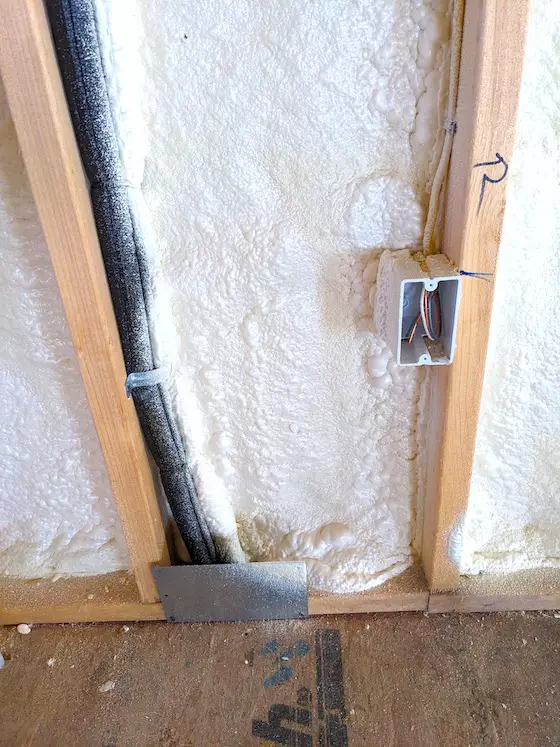
This is closed-cell foam insulation. The entire wall cavity is not filled because it may be step one of a hybrid combination of foam plus fiberglass. If they just leave this alone and cover the studs with drywall, the R-value of the foam is about an R-19 or the same as if they had put in a 5.5-inch-thick batt of normal fiberglass. NOTE that the thickness of the sprayed foam in this installation is NOT CONSISTENT. If this happens on your job, you'll not get the benefit you're paying for. Copyright 2023 Tim Carter

Spray Foam Pros and Cons - You Better Do the Math!

A new home is being built on my street. I have to drive past it anytime I leave the community. I’ve visited the job site countless times to check on the progress and to weigh in on the quality of the workmanship. So far I’ve recorded nearly 40 videos showing mistakes and shortfalls.

Thirty-seven years ago I was the first person to install foam insulation in a residential large room addition project in Cincinnati, Ohio. The homeowner owned a poultry slaughterhouse business that sold succulent chickens to the five-star restaurants and all the butcher shops in the greater Cincinnati area. He had deep experience with foam insulation because it was used to insulate all his refrigeration equipment and cold rooms at the factory.

This forward-thinking customer of mine insisted it be used in his job. Who was I to challenge him? It turned out excellent. The foam sealed all air leaks that plagued normal fiberglass insulation methods. Air infiltration is a silent energy thief. Even my own current home suffers from this wretched disease. It’s important for you to realize I didn’t built the home I currently occupy.

heat loss photo

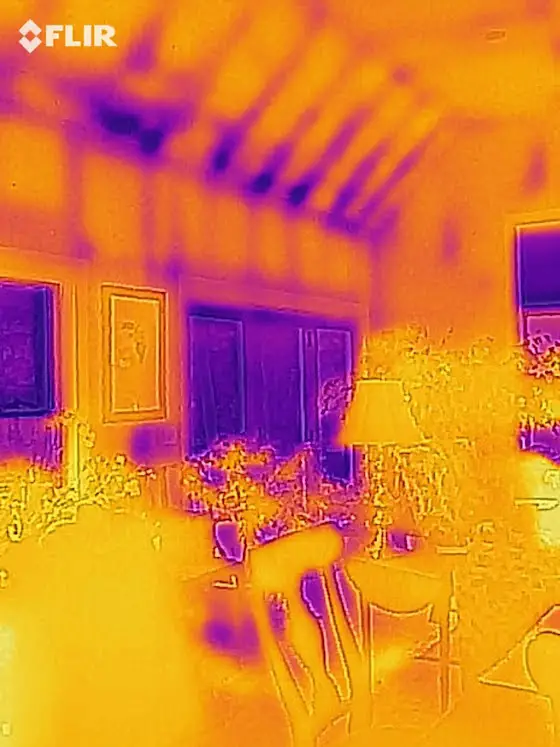
This is a thermal image taken of my own home. Look at the blue and magenta spot under the framed art on the wall. That's a box with light switches. There's a VAST AMOUNT of air leaking because of poor workmanship. It's the same on all light switches on all outside walls. The insulation contractors did a bad job. I didn't build this house, so it's not my fault. Copyright 2023 Tim Carter

The walls of my customer’s room addition were all 2x6s and my customer insisted the foam be sprayed to fill the entire cavity. Once the foam hardened, it was shaved smooth to the face of the studs. These fully-filled foam walls also helped make the walls stiff. There was no way the walls would rack out of square with the rigid foam in between the wall studs. Decades later our industry would see similar wall characteristics once structural insulated wall panels (SIPs) became mainstream. SIPs were invented, believe it or not, in the 1930s by the Forest Products Laboratory.

The most important thing to realize when comparing any insulation material against another is the R-factor per inch. Most closed-cell foams have an R-factor of 6 or 6.5 per inch of thickness. The pink fiberglass that might be in your walls is between 2 and 3 R-factor per inch. If you put in the same R-factor in a wall no matter the material, the thermal performance will be the same as all insulation does is slow the movement of heat. Heat travels to cold. Never forget these things as you evaluate what insulation to use.

The Cons of Spray Foam

What are the negative aspects of foam insulations? I visited the Spray Polyurethane Foam Alliance (SPFA) website. On their FAQ page you’ll great information. The SPFA readily admits that foams emit chemical compounds and odors into the air. Some studies show that the release of volatile organic compounds are minimal after the foam has cured. As we all know from what’s happened over the past few years, different studies can produce polar opposite results. If you’re chemically sensitive, you best be very careful.

The next biggest negative in my opinion is the cost. Keep in mind that trying to calculate a return on investment (ROI) is harder than trying to roll a boulder up Mt. Washington. It’s a complex multi-variable problem. But using a small amount of common sense, you can determine if you’ll ever break even using foam insulation over the baseline fiberglass batts.

I decided to price out the insulation cost of the house that’s being built just down the street from me. The house has two stories with a total of 2,560 square feet of living area. It’s got 2482 square feet of wall area that requires insulation.

Keep in mind these prices are from January 2023 and the annual inflation rate at this time is north of 5%. The current price to install traditional fiberglass batts and a plastic vapor barrier is $3,917.00. The price for closed-cell foam that’s the exact same R-value as the fiberglass is $12,410.00. This means they only partially fill the 2x6 wall cavity with about 3 inches of foam as you see in the photo above that I took at the new house job site. The price for a hybrid system of foam plus fiberglass to fill the 2x6 wall cavity is $9,679.00.

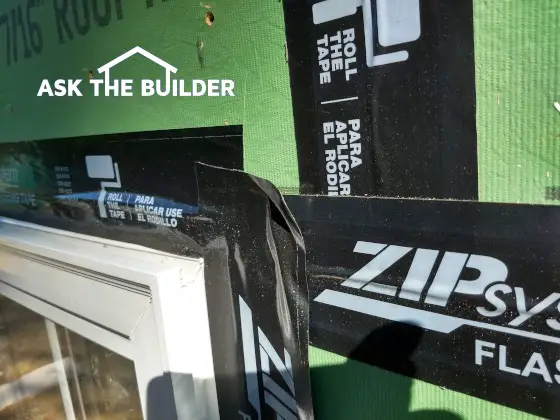
All three systems would have the same R-value and heat loss or heat gain. The only difference is any heat loss attributed to air infiltration. Air infiltration can vary wildly but modern construction methods where a tape is applied over the seams of the exterior sheathing as well as around all windows and doors keeps it to a bare minimum.

black tape window leaking

This is a typical tape that does a superb job of eliminating air infiltration. Copyright 2023 Tim Carter

Let’s assume you pay $4,000 a year to heat your home and that air infiltration with a fiberglass system costs you an extra 5 percent. At $200 per year it would only take my new neighbors 40 years to break even using spray foam in their house! It really pays to think these decisions through! Here’s the URL for the video playlist:

New House Build Video Playlist

Column 1492

Dark Side of EVs Rumble Video

Dark Side of EV Batteries - Child Labor in the Congo

Build a Magic Playhouse or Clubhouse

Build a Magic Playhouse or Clubhouse - Create Memories

Many decades ago I was a small lad. You may have had a childhood similar to mine. I was right in the middle of the baby boom created by lonely soldiers and sailors who came back from the great World War II to make up for lost time with their sweethearts.

There were no less than ten kids on my street that were within two years of me in age. Two were brothers that lived just 200 feet from my house. Woods surrounded all the houses on our street. Behind their house, the previous homeowner had constructed a magnificent tiny cabin for his kids. We immediately made this our clubhouse and meeting place for all outdoor adventures.

Thinking back, this one-room cabin measured only 8 feet deep by 12 feet long. It had a small covered front porch. I can’t begin to share with you how much fun all of us had in this tiny building that looked not much different from POW bunkhouses that my own father slept in. The inside walls were not covered, you could see the wood wall studs and the roof rafters. We didn’t care because we didn’t know any better being 8, 9, and 10 years old. We just wanted our own private little space away from our parents.

victorian child playhouse clubhouse

The playhouse you build for your grandchild, daughter, or son doesn’t have to be this elaborate. Simple works well too. Copyright 2023 Tim Carter

Mid-winter is a good time as any to start to plan to build a similar playhouse or clubhouse for that special young person in your life. It’s not that hard to do when you consider the job to be not much different than eating a pachyderm. Those are best eaten one bite at a time.

You can have extra fun if you include your little ones in this planning stage. Look at photos online about playhouses and clubhouses. Ask your junior architects what they want in their playhouse. Try to accommodate as many requests as possible that make sense. Talk to them about helping build it so they’ll have rich memories of the project as they grow older.

You can get inspiration to build one of these by just spending ten minutes looking inside the pre-built sheds that are no doubt sitting on the edge of the parking lot of the big box stores in your city or town. These sheds are carbon copies, for the most part, of the clubhouse I spent time in. They have simple wood floors, plain-vanilla 2x4 walls, and the roof rafters can be 2x6s. Nothing about this is hard.

The first step in the process is to check with your local building and zoning department. You need to see what the stipulations might be for outdoor structures like a garden shed or storage shed. That’s what you’ll call this tiny building that you intend to build. You may discover that a structure like this can’t exceed a certain size and that it must be placed a certain distance from your property line.

In my opinion, the next biggest concern is wind. It’s not uncommon for windstorms and violent thunderstorms to blow outdoor sheds over. This happens if the tiny building is not secured to the ground. Buried concrete piers that extend below the frost level of your area do a great job of preventing your new clubhouse from tumbling. Inexpensive metal connectors connect to steel anchor bolts that are placed in these concrete piers. I have a series of videos on my www.AsktheBuilder.com website that show you how to build these piers and place the anchor bolts.

Building the floor and walls for this tiny building is also simple. I’d recommend you use treated floor joists as well as treated plywood. You can purchase this plywood at just about any traditional lumber yard that sells treated dimensional lumber. If you use untreated plywood or oriented strand board (OSB), within a few years it will start to rot and become spongy. You’ll discover more videos on my website showing you how to build the floor and the walls.

Framing the roof of your playhouse/clubhouse might be the most challenging thing for you. I have videos about this too and you’ll discover that there are many helpful videos on the Internet showing you how to cut simple rafters for a project like this. It’s very easy and all you need is a simple framing square and a circular saw.

In my opinion, it’s best to plan ahead. The little urchins that will use this will grow out of it. Think about how you can use the tiny building once they get interested in other activities. Maybe you’ll use it to store your garden tractor, snow blower, or other yard-care tools. If so, think about how you can add a ramp at a later date to get these things in and out of the shed.

Make use of natural light. The clubhouse I played in didn’t have a skylight. It had one small window. When the door was closed, it was pretty dark inside. With very little effort you can install a simple skylight in the roof that will make all the difference in the world. As crazy as this sounds, a simple piece of plexiglass plastic laced into the roof shingles will suffice. Be sure to cover the wood roof sheathing with 30# tar paper to prevent wood rot should you not be an expert roofer! This inexpensive material is installed before you nail on the asphalt shingles.

Column 1491