Basement Slab Cracking

Basement Slab Cracking

Valerie and her husband are building a new home in Grand Rapids, MI. She went to the site and discovered cracking in the basement slab. Here's her report:

"We are in the process of having our home built, using a local builder.

The basement has a hairline crack on the floor of the basement. We understand that small cracks are normal due to settling.

We asked that the builder fill in the crack for us, however, they will not.  They tell us that "there is nothing to be concerned about."

Should we be concerned?  Can this cause future problems?"

Here's my answer for Valerie:

Valerie, concrete is supposed to crack. Year ago I wrote a column about basement slab cracks that you should read. It has additional information you need to know about.

If your builder has clean washed gravel under the slab and the soil under the house is firm and strong, then you'll not have any issues. Often people call these cracks settling cracks, but their not. They're shrinkage cracks.

The good news is once the concrete has shrunk, you need to read that column above!, then you can repair the crack and make the floor look like new.

This shrinkage can take up to eighteen months, so I'd not do anything about it now. If you pay attention, you'll also notice that gaps will start to form where the basement slab contacts the foundation walls. You can fill those cracks at the same time if you want.

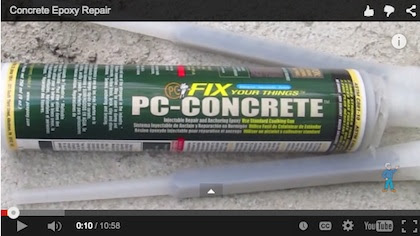
You can use regular gray sanded floor tile grout or you can go with a more expensive, but stronger concrete epoxy. The epoxy is easy to apply as you just need a regular caulk gun.

Watch the video below I made about this!

2×6 Window Header

Tommy Cummings is perplexed in Fife Lake, MI.

Here's one of the shortest questions I've ever received.

"I'm using 2x6 studs.

How is the correct way to build my window headers?"

Well here's my answer:

Two Or More Methods

Tommy, there's two parts to this answer, the method and the engineering solution.

Different carpenters will do this job differently. Your challenge is to create a flush header on each side of the wall.

Free & Fast BIDS

CLICK HERE to get FREE & FAST BIDS from carpenters who can show you how to do this if you're confused.

Sandwich A Flat 2x3

As for method, what you do is take two pieces of framing lumber and stand them up on end. These might be 2x6's, 2x10's or even 2x12's.

You then take a 2x3 and it goes flat in between the two larger pieces. If you add up the thickness you get to the 5.5 inches which is exactly what you need as a 2x6 is 5.5 inches wide.

Closed Cell Foam Filler

This u-shaped framing member has a hollow spot in it for 2.5 inches of closed cell foam insulation. Believe me, you want to put this in.

You need to put the insulation in the header as you build it. If you try to put it in later, the jack studs that support the header will make your life miserable.

The biggest issue you're facing is the size lumber to use. That depends on the load over the window. I can't help you there as I don't have your plans.

Realize that for any rough opening 6 feet or less, you can get away with 1.5 inches of bearing at each end of the header.

For openings wider than 6 feet, you need 3 inches of bearing.

CLICK HERE to get FREE & FAST BIDS from carpenters who can show you how to do this if you're confused.

New Lead Paint Law

I get press releases sent to me on a regular basis. On some days as many as ten.

Yesterday, I received a very important one about a fantastic change in the Federal law about lead paint removal regulations.

Read the press release below from the Window and Door Manufacturers Association and you should take pause. The Federal EPA overstepped their bounds years ago and it's costing you HUGE MONEY. What's more, they called for a test kit that doesn't yet exist.

When I first saw the new lead paint removal law back about five or so years ago, I shook my head. I've written all about the dangers of lead paint here at this website. Use my search engine to read them. This important press release was mentioned in my May 17, 2015 AsktheBuilder Antigua Edition Newsletter.

But the new law was simply too harsh and caused you to spend lots of unnecessary money in most cases.

Here's the press release:

The Window and Door Manufacturers Association (WDMA) applauds the introduction of legislation today in the U.S. House of Representatives that would reform the Environmental Protection Agency's (EPA) Lead: Renovation, Repair and Painting (LRRP) Rule to reduce the burden the rule has placed on the home retrofit market while protecting pregnant women and small children from lead hazards. The "Lead Exposure Reduction Amendments Act of 2015" (H.R. 2328) was introduced by Rep. Kevin Cramer (R-ND) and nine original cosponsors. Cramer is a member of the House Energy & Commerce Committee which has jurisdiction over this issue.

"Since the inception of the EPA Lead Rule five years ago, EPA has expanded the rule beyond its original goal of protecting pregnant women and small children while mismanaging the implementation of the rule and failing to meet its own requirements to produce an accurate test kit," said WDMA President and CEO Michael O'Brien. "This legislation is a common-sense fix which will refocus efforts on protecting the targeted demographic and was one of the key issues WDMA members lobbied on during our recent Legislative Conference.  We applaud Congressman Cramer for his leadership on this issue."

The LRRP rule requires renovation work that disturbs more than six square feet on the interior of a pre-1978 home and all window and door replacement to follow rigorous and costly work practices supervised by an EPA-certified renovator and requires that it be performed by an EPA-certified renovation firm. In July 2010, EPA removed the "opt-out provision" from the rule which allowed homeowners without children under six or pregnant women residing in the home to allow their contractor to forego the use of lead-safe work practices. By removing the opt-out provision, EPA more than doubled the number of homes subject to the LRRP Rule, and EPA has estimated that this amendment will add more than $336 million per year in compliance costs to the regulated community.

In addition, despite EPA stating a commercially available test kit producing no more than 10 percent false positives would be on the market when the rule took effect in 2010, no test kit on the market meets this standard. The lack of compliant test kits approved by the EPA has added millions in compliance costs with consumers paying for unnecessary work because of false positive test results.

Among the key provisions, this bill would restore the "opt-out" clause, suspend the rule if EPA cannot approve a commercially-available test kit meeting the regulation's requirements, prohibit expansion of the rule to commercial buildings until EPA conducts a study demonstrating the need for such action and provide a de minimis exemption for first-time paperwork violations.

In addition to Cramer, the nine original cosponsors of H.R.2328 are:  Reps. Lynn Westmoreland (R-GA), Pete Sessions (R-TX), Charles Fleischmann (R-TN), Rod Blum (R-IA), Steve Stivers (R-OH), Tim Murphy (R-PA), Collin Peterson (D-MN), and Chris Collins (R-NY).

WDMA has made this issue a top legislative priority and has set up a grassroots action center where industry professionals can send a message to their House member urging them to cosponsor the legislation. To send a message, click here

Fairy Garden Ideas

Donna Hirsch is about to build a fairy garden at her home in Worth, IL. She needs some creative ideas about how to make a patio. Let her tell you:

Hi Tim,

This is a much smaller scale than you're used to, but I know you'll know the answer.

I want to make a fairy garden patio using little tiles. Is there some kind of cement or joint filler (preferably powder) that I can use to fill in between the tiles after I get my pattern laid out and just spray water on it to get it to set?

I thought I read about something but - well, mental pause strikes again.

Thanks!!

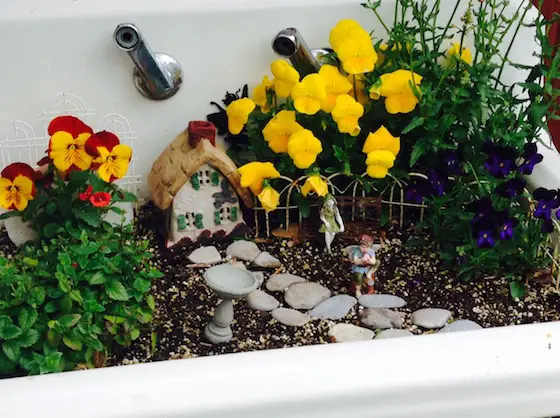
Here's a photo of a fairy garden that Donna sent me after I asked her what she was trying to do.

Here's a photo of a fairy garden that Donna sent me after I asked her what she was trying to do.

Here's my answer for Donna:
Donna, if this is going to be outdoors in the IL climate where it gets darn cold, you're going to have to take into consideration frost heaving.
If you just make your fairy garden on soil as in the photo you sent me, Mother Nature will ravage the tiny tiles and filler that you put in between them.
If you want this work of art you're about to create to last, you need to do the same thing I'd do if I was building a big patio for you at your home in IL.
For the fairy garden, I'd like to see you pour a small concrete slab under the areas where you will have buildings and the patio. It can be 2.5 inches thick. Put some cut up metal coat hangers in the concrete to make it strong.
Use ceramic tile thinset to bond your patio tiles to the slab and fill in between the tiles with sanded grout. Make the joints about 1/8-inch.

May 12, 2015 AsktheBuilder Newsletter

I'm not a huge football fan, however when I was in high school and college I played LOTS of football.

When the DeflateGate scandal broke in the news back in January, within moments I said to Kathy, "This is absurd. After each play, the ball it touched by NO LESS than two NFL officials. If the balls were spongy, they'd notice it and blow them up."

Did you see the news announced yesterday afternoon about the massive fines for Tom Brady and the Patriots?

If you're a sports fan, you should probably read my VERY SHORT blog post with my rhetorical questions posed to the NFL.

Then you might want to read this fascinating column by John Teti about how the NFL seems to turn a blind eye to other rules infractions about ball air pressure and texture.

Here's the answer: Always, always, always follow the money trail in situations like this.

It's always about money.

Speaking of MONEY, if you want to SAVE MONEY on small engine repairs, you MUST READ the column below!!!! It's in the New Q & A section.


.
CLICK HERE NOW to Get Answers to LIFE!
.


Amazing Concrete Repair Epoxy

With my daughter Kelly's help, I taped a video on Sunday. The black flies were eating us up.

If you have a crack in concrete, a hole, some spalling, etc., this wonderful epoxy material is going to fix your problems.

It's EASY to work with!

It even works on damp or wet concrete!!!!!

You can use it on vertical walls, even OVERHEAD!

If you just want to go BUY the products NOW, CLICK HERE.

If you want to watch the video of me showing how to use the products before you buy, and I SUGGEST YOU DO, then CLICK HERE.

Treated Lumber Woes

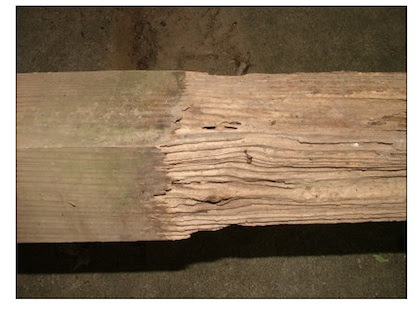
I just received a comment to a column I wrote years ago. Look just below at the photo that is in that column.

That photo should REALLY get your attention.

The comment came from a BUILDER of all people. It's pretty scary.

I'm bringing this to your attention because you may decide to HIRE a builder that thinks like this man.

Go read this column about Treated Wood Foundations and then scroll down to the LAST comment from Mark.

Feel free to ADD your comment from the standpoint of a consumer.

New Q & As for You!

Are you a new subscriber? Each issue I try to have two or three new real questions from people just like you!

These are pretty good and I love the one from Helen in the UK!

TRUTH About Small Engine Gas

New Door in Exterior Wall

Noise in Water Pipes

Well, I'm getting ready to leave for Antigua. I fly out of JFK on Thursday at 7 am.

I'm going to take lots of photos for you and create a webpage with all the photos so you can see what I saw. I'm also going to try to shoot some good video for you too.

I'll have a quick issue for you Sunday if all goes well!

Tim Carter
Founder - www.AsktheBuilder.com

Do It Right, Not Over!

Concrete Epoxy Repair Video

Concrete Epoxy Repair

Tim Carter demonstrates how to use epoxy to repair concrete cracks and holes. He shares a secret tip on how to disguise the epoxy patch. Watch the video.

You can also read a very cool column on how to use the same epoxy to fill driveway holes - shallow ones.

CLICK HERE NOW to purchase the epoxy Tim uses in this video.

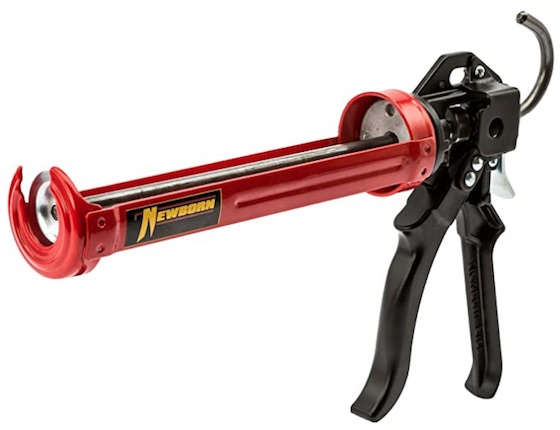
Click the photo of the caulk gun below to get the high-performance caulk gun Tim is using. You get MORE CONTROL with it than a crap caulk gun.

CLICK HERE to BUY the great epoxy Tim used in the video.

great caulk gun

CLICK on the photo to have this caulk gun delivered to your home. It's the one I use.


New Door In Exterior Wall

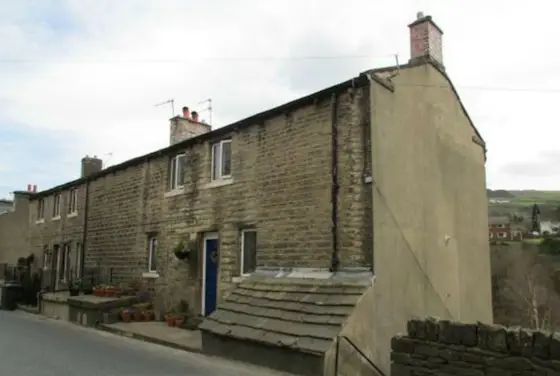
Helen Jennings wants to create a new door in the exterior wall of an ancient stone home in Holmbridge, West Yorkshire England!

Here's what she sent me:

"Do you think it would be possible to knock a doorway through this side external wall on the same level as the front door?

I'd also want to add a balcony and steps into the side garden.

Please tell me the correct way to do this."

Here's the house Helen wants to remodel. I'd rate the job a 5 out of 10 for total difficulty. Photo credit: Helen Jennings

Here's the house Helen wants to remodel. I'd rate the job a 5 out of 10 for total difficulty. Photo credit: Helen Jennings

Here's my answer to Helen:

You bet you can do this! I say that not knowing if there are any restrictions on altering an historic structure over there in England, but structurally it's very simple.

On top of any of your existing doors or windows on the exterior walls of this building the original builders installed lintels or beams that support a triangle of masonry over the opening.

Your new builder just has to do the same.

Adding the balcony and steps to the ground below is not an issue.

I'd recommend you get a good structural engineer and an architect involved that can help you preserve the look and character of this wonderful structure that's stood the test of time.

Small Engine Gas

DEAR TIM: I've got a lawn mower, a snowblower and a garden tiller with small gasoline engines. I'm about to purchase a log splitter with one. I don't want any issues and want to avoid any damage to the new engine and the existing ones. I've heard that the current gasoline with ethanol in it is really bad for small engines. Are the stabilizer products really good? What is wrong with the ethanol? Are there alternative fuels that are small-engine friendly? What would you do to preserve and protect your small gasoline engines? Steve G., Monument, CO

DEAR STEVE: If we were playing small engine poker, I'd call your small engine machines and raise you a power washer! Yes, I've got a wide assortment of gasoline-powered equipment too. Small engines used to be the bane of my existence with hard-starting issues, but those days are long gone now that I know the truth about ethanol-based gasoline. Recent survey results have shown that most consumers place a very high value on ease of starting and ease of maintenance with small engines.

The fuel you put in the engines is one of the most important things that controls ease of starting. What you've heard about ethanol in gasoline is true. Small engine repair shops love ethanol because it provides them with a steady stream of business. But if you get one of these shop owners to open up with you, they'll tell you they probably don't use that gasoline in their own small engines.

Ethanol attracts water. Water enters your fuel system in the air that enters the fuel tank as the gasoline is burned by the engine. The water is drawn into the gasoline making for a chemical mix that accelerates corrosion of metal parts in the engine.

When the fuel level is low in the tank, the water can condense on the cool surfaces of the tank. This water then runs down and gets into the gasoline. If enough water collects in the tank, it can get drawn into the engine where it can cause the engine to run poorly.

Ethanol acts as a solvent in older engines and can dissolve old gum and varnish deposits from the gas tank and fuel lines. These deposits can then clog the very small orifices in the carburetor. If this happens, your good day goes bad very fast as your small engine will not start no matter how many curse words you hurl at it.

Gasoline can also oxidize or rust just like iron or steel. When gasoline oxidizes, you don't get orange flakes of rust, you instead get gum and varnish in the gasoline that causes clogs.

The reason you don't have trouble with ethanol in most cars is because you tend to get new gasoline on a regular basis as you drive your car each day or every other day. Ethanol-containing gasoline can deteriorate in just 30 days.

Most of the fuel stabilizer products do a great job of protecting small engines. These additives are primarily anti-oxidants. They grab oxygen that's in the gasoline preventing it from turning into gum and varnish.
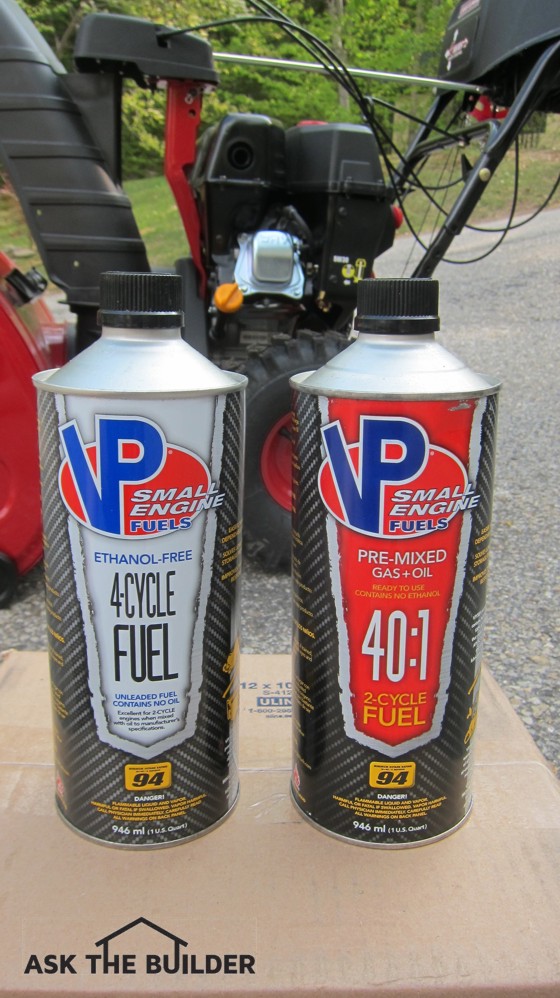
This is but one ethanol-free product that helps small engines run much better and avoid problems. Photo credit: Tim Carter

This is but one ethanol-free product that helps small engines run much better and avoid problems. Photo credit: Tim Carter

Really good stabilizers work not only in the liquid gasoline but in the air or vapor that's on top of the gasoline in the partially filled gas tank that most people have. Look for stabilizer products that say they offer vapor technology to treat the air and vapor that's floating above the gasoline in the tank. Remember, this air contains water.

Very few people take the time to fill a small engine gas tank after each use. Doing this minimizes the amount of available oxygen that can cause issues. When you decide to fill your small engine tank, always fill it to about 95 percent of the way so the gasoline won't expand and leak out if the garage, shed or patio gets hot from the sun.

If you have a can of older gasoline in your garage from the winter, summer or fall, just put it into whatever car or truck that's driven the most. It will mix with the fresh gasoline and will not hurt your car if you get it filled up once the tank is near empty.

If you're using a fuel stabilizer for the first time and have untreated gas in your small engine, start up the engine and allow it to run for about three minutes. This allows treated fuel to be drawn up into the fuel lines and carburetor. You want stabilized gasoline to extend from the gas tank all the way up to the intake valve so you get no corrosion happening while the engine is in storage.

The good news is you can purchase gasoline for your small engines that doesn't contain ethanol. Most people are unaware of this resource. Many businesses that sell machines with small gasoline engines stock cans of ethanol-free gasoline that already has the stabilizer chemicals in it. You can even get these fuels for two-cycle engines with the two-cycle oil already added as well as the stabilizer.

Another resource, and it costs FAR LESS than the ethanol-free gasoline in the small cans, is your local airport that has small aircraft that fly in and out on a regular basis. You'll almost always find a FBO, or fixed-base operator, at these small to medium-sized airports.

Airplanes that use gasoline have 4-cycle engines that will not tolerate ethanol, so the aviation gasoline sold at these airports is free of the problem-causing ingredient. The cost for this aviation gasoline is probably only $2 more per gallon than what you pay at the pump for the poison-filled ethanol gas you put into your car.

The best aviation gas to get for your small engine would be a low-lead one with an octane rating of 100 or slightly less. This works great with small engines with carburetors. It's not a good idea to use this high-octane aviation fuel on any small engine that might be equipped with fuel injectors.

At this price, you may only spend an extra ten or fifteen cents to cut your grass with a fuel that's perfect for small engines.  I say this assuming you have a smaller typical residential lot with 1/4 acre of grass or less.

If you take an approved fuel can, these businesses will almost always sell you the sweet nectar your small engine will devour. The octane of this gasoline is higher and your small engine will think it's eating a piece of double chocolate cake with mocha icing. You know how that puts a smile on your face, so imagine how happy your small engine will be!

You should add the stabilizer to this ethanol-free aviation gasoline should you decide to use it.

You may also locate other places that happen to sell gasoline that doesn't contain ethanol. There is one small gas station about 30 miles from my house that sells this gasoline. There is a web site called pure-gas.org that has a list of over 10,000 locations, broken down by states or provinces, that sell pure, ethanol-free gas.

Author's NOTE: I want to thank the great folks at Briggs & Stratton and Tom Bingham, senior director of marketing at Gold Eagle for technical information that's contained in the above column.

Column 1092
How to Work With Carpenter’s Glue

You've probably needed to glue two pieces of wood together or repair a stripped screw hole in a door jamb using glue and wood match sticks. If you reached for a bottle of yellow glue, you did the right thing.

Carpenter's glue is far more robust than the white glue you see small children use in kindergarten to create artwork using colored construction paper. White glue is great for paper and cardboard, but it just doesn't have the claws to hold wood together considering the abuse wood's expected to endure.

Over the past few years yellow carpenter's glue has gotten better with advancements in glue chemistry. Not only are they affordable, but you can also easily find one that can withstand exterior service allowing you to glue together wood that can resist getting wet.

Degree of Difficulty: Two Hammers out of Five.

Step One: Stop and think what job you're trying to accomplish. Will the wood be always indoors, will it be outdoors, or will the wood you're glueing have the occasional exposure to water? You need to read the label of what you're buying to make sure the glue is suitable for what you're doing.

Step Two: When you read the labels on the glue bottles, don't confuse water resistant with waterproof. Water resistant means that the glue should hold the wood together if it gets wet occasionally or if the exposure to water is minor and the wood dries fast. Waterproof usually means that the wood pieces you glue will stay together if the wood stays wet, but sometimes the instructions will warn about continuous submersion.

Step Three: Just like any glue or adhesive, the surfaces you're gluing need to be clean and dry. Common sense should tell you that dust and dirt will interfere with the ability of the glue to get in contact with the wood. As for the water, that's a subtle requirement you might not understand until you think about it.

The reason the glue holds wood together is because on a microscopic level the glue soaks into the wood fibers. Once it does this and dries, the glue interlocks with the wood fibers holding the two pieces of wood together. It's similar to a burr getting stuck in your sock or on your pants. If water molecules are filling up the space where the glue wants to go, the glue can't interlock with the wood fibers.

Step Four: Realize the common yellow glues at hardware stores and home centers are generally not suitable for structural applications. Major lumber mills that make laminated beams and other engineered lumber use special glues that are formulated for high-tension structural jobs. Once again, get the right product for what you're attempting to do.

Step Five: You get the best results when the pieces of wood your gluing together fit tightly. Don't expect the glue to be filler between gaps and have great holding power. That's not how it works. Shape, sand, plane the wood until the pieces fit with no visible gap.

Step Six: Apply a generous amount of glue to the two pieces of wood. You can use a small brush and apply the glue as you might paint. The glue should have the consistency of fresh latex paint.

Step Seven: High quality yellow carpenter's glue have a strong initial tack. This means the glue will grab pretty tightly right away. You'll have a few moments to adjust your pieces of wood, but probably not more than 30 seconds. If the wood is highly porous, the adjustment time is just a few seconds so practice with scrap wood if you're not sure.

Step Eight: To get professional results, you need to clamp the pieces of wood together. Squeeze clamps work great for this task. Don't hope you know how to use them. Practice first with the wood pieces before you have glue on them. Once the glue is applied, you should not be fidgeting with the clamps.

Step Nine: Excess glue will almost always squeeze out between the pieces of wood. If you intend to stain the wood, don't wipe this glue off. Let it harden and sand it off. If you wipe it with a sponge, the glue will fill the pores of the wood blocking stain from penetrating the wood fibers. If you're going to paint the wood, use a damp sponge to remove the excess glue.

Summary: In all honesty, it's caveman simple to use yellow carpenter's glue. As with just about anything, if you've never done it before, practice on some scrap wood before you attempt to do the real project. Don't purchase cheap glue. The more expensive glue almost always contains better ingredients and will perform better over time.

Column HT043

Noise in Water Pipes

Burt Jackson has a problem with a groaning noise in his water pipes after some work was done at his house in LeRoy, OH.

Here's what he sent me:

"I had a tankless water heater installed. Now I have a low pitched growl in the water pipes.

The sound occurs in relationship to running water in the house but not at exactly the same time.

The sound is loud and lasts for 10-20 seconds.

The plumber that did the work wants to replace the pressure valve for $250.

He is SURE that is the issue but not sure enough to pay for it if it not the correct issue.

Any ideas?"

Here's my answer:

Burt, you need to take the time to try to hone in on where the sound is the strongest. 

Normally noise in water pipes is related to high-frequency vibrations or fluttering in a valve. It's common to have it happen in a toilet fill valve.

In your case, I'm suspecting that a piece of sediment was dislodged by the action of turning off your water and then turning it back on when the new heater was installed.

This piece of sediment could be stuck in the pressure valve.

Put on your Columbo trench coat and see if the sound happens no mater what fixture you use to draw water. Start at the CLOSEST fixture that gets water in your system. If you get the sound when you draw water there, that tells you the issue is in that fixture or between the fixture and where the water enters your house.