Toilet problems are frustrating. To make matters worse, when the average person peers inside a toilet tank, they recoil in fright. Not from the water, but from the jumbled assortment of parts and such.
While seemingly complex, the working parts of a toilet are somewhat simple. There are really only three main components:
The Fill Valve or Ball Cock
The Flapper Valve
The Overflow Tube
The Fill Valve is the automatic device that allows water to rush into the tank each time the toilet is flushed. A float triggers this action. As soon as the water level in the tanks drops, the float drops and the fill valve opens. Old fashioned fill valves had a cumbersome float ball on an arm. They are still made! They can be tough to adjust and over time the float can become waterlogged. Newer fill valves have sleek designs that disguise the float. The good news is that these fill valves are inexpensive and simple to install.
The fill valve also supplies water to the bowl as the tank refills. It does this via a small flexible water tube that runs from the base of the valve to the top of the overflow tube.
The flapper device controls the flow of water from the tank into the toilet bowl. When operating perfectly, the flapper rises up when you turn the flush handle. It actually stays in the open position for 5 to 10 seconds and then drops back down stopping the flushing action and allowing the water level in the tank to rise again.
Flappers that stick open cause the water to run and run. A flapper may stick because of sand or grit on its hinge. The chain that lifts the flapper may be old and worn out. In any case, they are easy to replace.
The overflow tube is a fixed device in the center of the tank. It serves two functions. After each flush, water flows into this tube to fill the bowl with water as the tank refills. The tube also acts as an emergency water escape route in case the fill valve does not shut off. Water can flow into the tube and down into the bowl until such time as you shut off the water.
Emergency Shutoff!
This has happened to everyone: You flush the toilet and water doesn't leave the bowl. Water starts to creep up the toilet bowl rim! A huge, gross mess is going to happen if you don't stop the flow of the water into the bowl! You can do this if you react quickly. Remove the tank lid and immediately place your hand into the tank and force the flapper valve back down onto the seat. This will stop tank water from entering the bowl. Water may still flow into the bowl from the water supply tubing that feeds into the overflow tube. This is a minor amount of water in most cases, but if you feel the bowl is about to overflow, then pull the little water pipe out of the overflow tube and redirect its flow into the tank. Don't worry about sticking your hand in the tank water. It is pure and fresh! It is the same water you drink each day or use to brush your teeth! The sidewalls of the tank often get stained over time from dissolved minerals in the water. This is why the water appears yucky even though it is fresh.
In fact, if you wake up one day and your local water main has broken leaving you high and dry, you actually do have water! Dip some water from the tank to wash your face or brush your teeth. I know this sounds crazy, but the water is perfectly fine.
Give it a Try
Take the lid off your toilet tank and putter around. See how things work. Try to force the flapper down. Be prepared!
Toilets need regular maintenance. They are probably one of the most frequently used mechanical objects found in the residential home. They rank right up there with the refrigerator door hinges, kitchen faucet and television channel control knob with respect to number of uses each day. If your toilet is making you crazy, here are some things you can do that will make it work like new.
1. The Night Moaner
As people retire for the night to sleep, water pressure in municipal water systems begins to rise. This increase in pressure can be transferred to a worn ball cock valve and cause it to vibrate ever so slightly. This is the moaning you are hearing. Get a new valve.
2. Ghost Flushing
Does your toilet tank start to fill on its own? In other words, run for 5 or 10 seconds and then stop? This can almost always be traced to one of two problems: poorly fitting/leaking flapper and/or a refill tube that is too long. A worn flapper or corroded flapper seat will cause water to slowly drain from the tank into the toilet bowl. After an hour or two the water level drops enough and the fill valve kicks on. This same thing can happen if the flexible water line that runs from the base of the fill valve to the inside of the overflow tube is too long. This will siphon water from the tank. New fill valves come with a special clip that holds the end of the water line up and ensures that water will stay in the tank where it belongs.
3. Multiple Flushes
Do you flush your toilet and get two for the price of one? If so, the water level in the tank may be too high. Adjust the float control on the fill valve and try to drop the water level in the toilet tank one inch or so. Do a trial and error test to get the water level just right.
4. Partial Flushes
You flush the toilet and get cheated. The flapper valve can get waterlogged over time and flop down too quickly. The chain that connects between the flapper valve and the flush handle may be too tight. Adjust it one link at a time. The water level in the toilet tank may be too low. Adjust the fill valve so that more water enters the tank. You may have a first generation low flush toilet. If so, you are toast! These toilets have basic design flaws. They simply don't have enough energy to flush the toilet bowl correctly. If you have one of these 1.6 gallon flush nightmares, hold on, help might be on the way. It appears that the 1992 law requiring these bad boys might be repealed. If this happens, 3.5 gallon toilets may come back.
5. Whistle While it Works
As the toilet tank fills and is almost done, it makes all sorts of high pitched noise, right? You probably have an old fashioned ball cock fill valve with a float ball on an arm. These valves close slowly as the water level rises and the valve starts to vibrate as this happens. The solution is a new fill valve. These new valves stay open completely until the toilet tank is filled. The shut off is instantaneous.
6. Tough Toilet Bowl Stains
Do you have stains in your toilet bowl that just won't budge? If so, DON'T use abrasive cleaners! Use white vinegar or muriatic acid to clean the bowl. White vinegar is safer, but takes longer. Muriatic acid can clean a toilet bowl within minutes. Be careful!
7. Toilet Bowl Water Level Drops
After you walk away from the toilet and the tank has filled, does the water level mysteriously drop? If so, two things can be wrong. The toilet may be partially clogged. The clog can actually cause a siphon and pull water from the bowl. The other possibility is more severe. There can actually be a crack or small defect in the colon of the toilet. This is the channel that water passes through to get to the drain pipe. A colon crack or defect means it is time for a new toilet.
8. Low Energy Flushes
If you have hard water, the water release holes in the lip of the bowl my be clogged with hard water deposits. Pour a quart of muriatic acid down the overflow tube in the tank to clean these holes. You should hear a sizzling sound if the deposits are heavy. The acid will not harm the toilet. You can also try to open these holes with a toothpick if you do not have acid.
9. Shaking Toilet
Does your toilet rock when you sit on it? If so, the grout between the toilet and the floor needs to be replaced. Grout should be used instead of caulk. Caulk is flexible and will allow toilet movement.
10. Water Leaks at Base of Toilet
If you see water leaking around the base of the toilet or in the room below when it is flushed, the wax gasket between the toilet and the drain pipe flange has to be changed. This is not a DIY friendly task although the TV shows make it seem so! If you tackle this, make sure you have access to another toilet as you may be opening a can of worms!
11. Shut Off Valve Leaks After You Service the Toilet
After you have turned the water on to the toilet, the pesky little valve develops a leak around the handle. To solve this problem, use an adjustable wrench to tighten the outer packing nut that surrounds the valve stem. Just turn it clockwise a little bit to stop the leak.
12. Water Supply Tube Leaks
The supply tube between the toilet tank and the floor or wall leaks at one or both ends. You need to use a flexible tube and make sure that it is entering the valve at a 90 degree angle. If not, the compression ring will leak for sure! Tighten the nut at the toilet first and then make sure the supply tube enters the valve at a 90 degree angle. Then, tighten the compression nut at the valve.
13. Save Water With Brick?
Installing brick in a toilet tank to displace water may help save a little water, but it often causes greater problems. Drop one while installing it, and you will crack the tank. The brick can also interfere with the operation of the moving parts in the tank.
14. Loose Toilet Seats
Inexpensive toilets seats often have inferior tightening bolts. Buy a quality toilet seat and follow the instructions to get a tight fit.
15. Slow or Noisy Refill Water Flow
If the water entering the toilet enters slowly, the shut off valve may be only partially open. Check to make sure this valve is open all the way. If water rushes into a toilet tank and you think it is going to explode, try to adjust the shut off valve so that the water flow is more controlled.
Magnets seem to be the rage lately. Some people claim they can promote rapid healing of injured tissue. Other people claim they can make hard water soft. There are believers and non-believers of both statements. The Water Quality Association has formed a special task force to come to some sort of conclusion with regard to magnets and water. Their report is due by mid to end of 2001. I can't wait to see the results.
An engineer friend of mine tested a unit one year ago. His water was very hard - nearly 13 grains. After installing the unit according to manufacturers directions, he could not tell a difference in water quality. On the other hand, a friend of mine in Colorado recently installed one. Here is what she had to say after the device was working for about three weeks: "...It's been installed a few weeks now. The reaction from my friend who hated our un-softened water was that it was better. I'm seeing essentially no salt residue from water spots on top of the coffee pot, faucet handles and humidity tray for orchids."
These two bits of data are consistent with what many say. A system may work one place but not another. Water chemistry, water flow rates through the piping, water hardness and temperature all affect the performance of a certain device.
The U. S. Department of Energy publishes periodic Technology Alerts. They happen to have one about magnetic and electronic water softeners on the Internet. It is an extremely well written and detailed report on this topic. IF you don't have Internet access, then you MUST go to a friend's house or to the library to get this report. It is definitely worth the trouble. Pay particular attention to the text in the Abstract. Read it twice! Then read the 7th paragraph in the first section "About the Technology".
In 2001 the U.S. Army Corps of Engineers published Public Works Technical Bulletin 420-49-34 titled Magnetic Water Treatment. It's available on the web in PDF format. The purpose of this bulletin is "to transmit information on a demonstration of magnetic and electronic devices marketed as effective alternatives for scale prevention in water systems."
Certified Water Softener Manufacturers
The Water Quality Association (WQA) has a Gold Seal program where manufacturers submit products for independent testing. Those that pass deliver top performance. Be sure to buy a softener that has the WQA Gold Seal! To find a list of these manufacturers, go to the WQA website and click on Product Certification.
Hard water can really be a nuisance. If you have exceptionally hard water, scale buildup can cause premature failure of water heaters, water supply lines and significant water spotting problems around the house wherever water dries and leaves the water soluble minerals behind.
Certain parts of the United States have naturally occurring soft water, but they are by far in the minority. Many, many folks in the USA have hard water to one degree or another.
Traditional Timers
A vast majority of water softeners rely on electricity to operate. The primary mechanism that consumes electricity is the timer that starts the periodic regeneration process. Water softeners operate by ion exchange. They pull the hard water chemicals out of the water and replace them with salt ions. After so many gallons of water flow through the softener, the resin bed fills with hard water minerals. The timer kicks on at a predetermined time and the water softener back flushes all of the hard water chemicals out and fills the resin bed with new salt ions.
A Waste Potential
Traditional timers can cause problems. What happens if the resin bed is only 60 percent filled with hard water chemicals? If the system regenerates when the timer turns on, then you waste electricity and salt. A better option might be a softener that does not use electricity and only regenerates when the resin bed needs to be back flushed. The Kinetico Company makes a water softener that does just this. It is water powered. This technology makes it an on-demand system. It creates soft water as you need it and for how long you need it. It has the capability to make soft water indefinitely as long as you supply the unit with the necessary salt.
Freedom From Timers
Traditional softeners require you to guess your water usage. You may be lucky and guess right. What happens if you need to use more water than usual? Well, if you don't re-calibrate the softener, then you will not have soft water.
The Kinetico unit solves this problem with a dual tank design. As one tank fills with hard water deposits, the second tank takes over as the first one regenerates. This allows you to use as much water as you want with little or no worry of ever running out of soft water.
Magnetic Units
Are you interested in buying a magnetic water softening unit? If so, keep several things in mind. These devices do not remove anything from the water. High energy electrical fields that surround water lines after the magnets have treated the water may reverse the effects of the magnets. This portion of the water treatment field is currently in the midst of a heated controversy. Personally I don't know who to believe. I tend to think that there is some truth on both sides. This is based upon actual user feedback I have received. Some devices work for some people and other devices seem to do nothing.
The Water Quality Association (WQA) should have a good answer by the end of 2001. Expect a fair report to be issued on the performance of residential magnetic and electronic water softening devices.
We already know that industrial and commercial magnetic devices work. But, the same can't be said for all household devices. It is my hope that the WQA's report uncovers just what is required to make a magnetic system work on just about any residential system. There is no doubt that many people would be interested as long as they could count on 24/7 performance.
The toilet is quite possibly the most frequently used mechanical device in most homes. If you have a spouse and children I can say this for a fact. Think about it. How many times a day is a toilet flushed in your home? The only other device that gets as much use might be a lavatory faucet or a kitchen faucet. This heavy use means that the odds of breakdown or problems are great. Fortunately the mechanical devices in most toilets are simple, time tested and very reliable.
When Problems Happen
When a toilet problem does happen, it can be minor or major. Flushing problems are often more irritating than catastrophic, although a clog can have catastrophic results IF the toilet continues to run while the clog occurs! For this reason, it is always a good idea to watch the flushing action to make sure water and waste is moving on its way down through the drainage system.
Click here to watch a video on how a toilet works.
Don't Panic
To avoid problems before they happen and panic sets in, it is a good idea to learn how a toilet works. When you get a chance, remove the lid from your toilet tank and lay it flat on the floor. Lids tilted against walls have a tendency to slide and then break.
Note how the toilet works. The decorative handle on the outside of the tank is attached to a lever. At the end of the lever is a chain that connects to a rubber flapper valve. When you activate the handle, the lever lifts the chain and the flapper valve magically begins to float. With the flapper valve open the water within the tank can flood down into the toilet bowl. This rushing water is what flushes the toilet. Once about 80 percent of the water has left the tank, the flapper valve drops on its own to stop the flow of water into the tank. But as you watch, note that water is still running into the bowl. This water is coming from the fill valve that is now refilling the tank. As it fills the tank, it also sends water via a small tube down the overflow tube that leads to the bowl. This water flowing into the overflow tube is necessary, as it is the water that brings the toilet bowl water up to the filled level. Once the tank water reaches the fill line the fill valve should stop the flow of water into the tank and the bowl. It sounds complicated, but in reality it is very simple.
By observing a working toilet, you will now be mentally equipped to handle problems as they occur.
Parts are Cheap
You can replace all of the moving and mechanical parts inside a toilet tank for under $15 in most cases. What's more, you can get high quality parts for this small investment. The biggest challenge in removing the old parts is shutting off the water to the tank. If the valve under the toilet does not work, you need to shut off all the water to the house. If you have an opportunity to replace valves anywhere in the house, be sure to install ball valves. Ball valves cost maybe $2 more than a regular valve with a washer but they are far more reliable and rarely do they not work.
Backup Plan
Don't start working on a toilet at 9:00 pm. Don't do it if you are a rookie and don't have a second toilet in the house. What happens if something goes wrong? If you need to call a professional to bail you out, will they be available? Keep all of these things in mind before you start!
The Five Gallon Bucket
Do you need to flush the toilet without using toilet tank water? It can be done! Simply fill a 5 gallon bucket with water and pour it into the bowl. You get the same results as if you had tripped the handle. It is a nice trick to know.
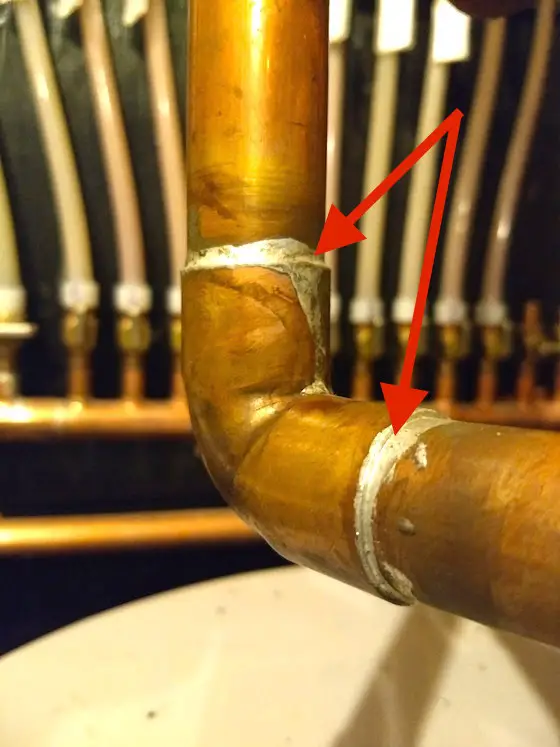
How to solder copper pipe - You do this when you melt the solid solder and allow it to flow into the tiny gap between the tubing and the fitting. The red arrows point to the silver-colored solder. Copyright 2018 Tim Carter
"The biggest mistake a rookie makes soldering copper is they allow the heat of the torch to melt the solder. Do NOT do that."
How to Solder Copper Pipe Checklist
The copper tubing and fittings must be clean
Stir up the flux paste
Use lead-free solder
Copper must be heated so it melts the solder NOT the torch flame
Watch the following video:
How To Solder Copper Pipe - MOST IMPORTANT TIP OF ALL
The biggest mistake a rookie makes soldering copper is they allow the heat of the torch to melt the solder. Do NOT do that. You must heat the copper tubing and fitting for about ten or fifteen seconds before touching the solder wire to the hot copper.
The HOT copper will melt the solder, not the torch.
To solder copper pipe you must heat the copper pipe and the fitting to be soldered to a sufficient temperature. When the copper is hot enough, it will actually draw the solder into the joint by capillary attraction. Believe it or not, the solder will actually flow uphill.
What is the Best Torch to Use?
A simple propane torch that uses screw-on bottles will adequately solder pipe up to 3/4 inch in diameter.
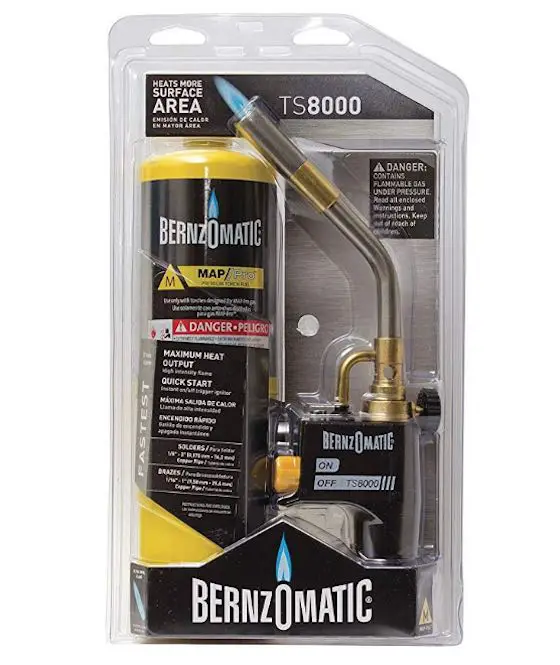
This is a great torch kit. This one is MAP gas which burns hotter than propane. A regular propane tank will fit the torch. CLICK on the photo to have this delivered to your home in days. WATCH the video of it below.
Plumbers generally use acetylene torches for two reasons. The acetylene burns hotter than propane allowing for faster solder times. The acetylene is available in larger tanks which attach to handy hoses and lightweight torches. If you want acetylene, you just need to go to a large plumbing supply house or a place that services welders.
What Types of Solder Can I Buy?
Solder, which is available in leaded and no-lead versions, attaches to the pipe on a molecular level.
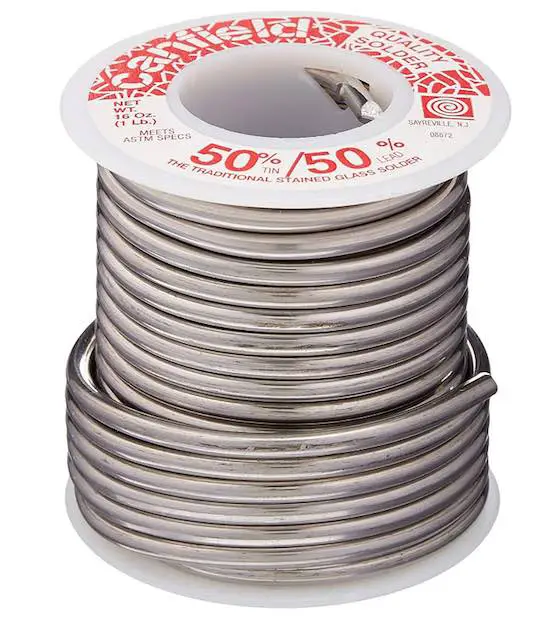
This is solder that has a 50 percent lead content. Look at the numbers on the end of the spool. Do NOT use this solder for water pipes for drinking water. CLICK THIS PHOTO to buy the solder for use in leaded glass, soldering wires, and other projects.
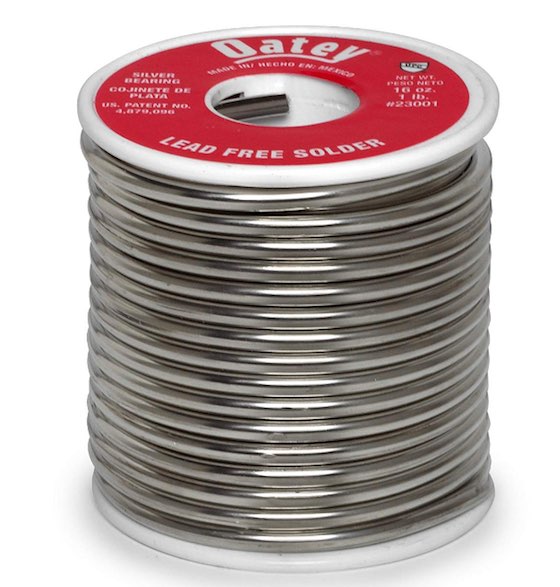
This is lead-free solder. Use THIS SOLDER for a copper pipe that drinking water passes through. CLICK THE PHOTO NOW to have it delivered to your home in days.
How Does Solder Work?
Solder works by bonding to the copper pipe when it's heated. It's very similar to how two pieces of steel get welded together.
The surface of the soldered joint actually becomes an alloy where the copper and solder intermix.
Why Does the Copper Need to Be Clean?
The copper pipe needs to be clean so the atoms of copper can easily bond with the atoms of molten solder. The solder WILL NOT BOND if the copper is oxidized or dirty.
For this to happen, the copper must be very clean and free of oxidation. You can clean copper pipe in any number of ways. You can use coarse steel wool, sandpaper and/or a wire brush. Special round wire brushes come in a variety of sizes to clean the inside of copper fittings and valves. Simply twist the brushes or pipe to clean them. Even if you purchase a new copper pipe, it should also be cleaned. You only need to brighten the area which is to receive solder.
Why Do I Need to Use Flux?
Flux is a chemical which helps you solder. Flux prevents the copper from oxidizing as you heat the copper with the torch.
It actually finishes up the cleaning job you started with the sandpaper and brushes. In addition, it prevents the pipe from oxidizing as you heat it. You can solder without flux, but it is really difficult! Flux is applied to both the pipe and the fitting with a handy miniature paint brush. You do not need massive amounts to be effective. Besides, once you start to heat the pipe, 90 percent of it boils off and evaporates.
What are the Different Types of Solder?
Solder is available in generally three types: 50 percent lead/50 percent tin; 95 percent tin-antimony/5 percent lead; and lead-free solder.
Any water supply pipe should be soldered with solder that contains no more than 5 percent lead. If possible, use the lead-free solder. The 50 percent lead solder is used for copper drain lines. It melts at a lower temperature and is able to bridge larger gaps as it cools. This is handy when working with large diameter (up to 4 inches!) copper pipe and fittings. You MUST pay attention when you buy solder. The 1 pound rolls look very much alike. Carefully look at the label as you might purchase the wrong one.
How Do You Light a Torch?
Plumbing torches can be lit with matches, lighters or preferably a flint striker. Some torches have built-in igniters. Watch this video:
Matches and lighters can be dangerous, as you might not put them out. A flint striker makes sparks which ignite the flame. Plus, a single flint in a striker can last a homeowner 10 years or more! Flame temperature is important. You need to set the flame on medium or high to generate enough heat to melt solder. If your flame is adjusted correctly, it will burn different shades of blue. You will notice at the center of the flame a darker blue section that comes to a point. This is the hottest part of the flame. You apply this part of the flame to the copper pipe.
How Do I Heat the Copper Pipe?
Don't be afraid to heat both sides of the pipe. Rotate the torch around the joint for even heat distribution. When I use my acetylene torch and I am soldering 1/2 inch pipe, I can usually heat the pipe to the correct temperature in 10 seconds or less. A propane torch may take 15 to 20 seconds.
How Do I Prevent a Fire When Using the Torch?
You prevent a fire by using a thin piece of sheet metal as a heat shield. Place the shield in between the copper tubing and anything flammable.
Always look beyond the pipe. Extremely hot temperatures extend out beyond the visible portions of the flame.
You can easily scorch lumber or wires. If you are soldering near old lumber or in joist spaces near vertical walls, you can start your house on fire easily. Be careful and use flame shields. These are flame resistant fabrics or simple pieces of sheet metal which absorb and/or deflect the heat.
Always have a 5-gallon bucket of water handy in case you do start a fire. If you have water still on in the house and can have a charged garden hose right next to you, that's the best thing.
As you heat the pipe and fitting you will see the flux begin to boil and evaporate. Once the flux stops boiling the pipe is generally hot enough to solder. Move the torch away and touch the solder to the pipe.
It may take 2 to 3 seconds for the solder to melt. If the pipe is horizontal, apply the solder to the top of the pipe. The solder will roll around in an instant.
If you have done the job right, a droplet of solder will be at the bottom of the joint. You can flick this molten solder away with an old rag.
Blowing on the joint will allow it to cool. It will be hot, but rub the joint quickly with an old rag to remove flux residue. This will also polish the solder. Check the joint closely to see if you see a silver colored band around the entire joint. If so, your first solder joint may be perfect. As I would say on a job, "Another quality installation!"
Here are some photos that may help you visualize the way you hook an icemaker up. Visit a REAL plumbing supply house or an old hardware store to get really good parts and advice. They will show you how all of the parts fit together. You don't always get this service at the big box home improvement stores!
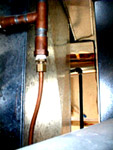
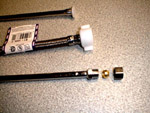
This photo shows the 1/4 inch soft copper line coming down from a 1/2 inch copper tube. In between is a brass adapter that screws into a 1/2 inch female copper adapter - you can see the white Teflon tape at this joint. The 1/4 inch tube connects to the brass adapter using a nut and a brass ferrule. The soft copper tube fits perfectly inside the ferrule - it resembles a ring on your finger. You can see those two parts just to the right of this line in the photo to the right. As you tighten the nut on the adapter, it compresses the brass ferrule to make a tight joint.
In this photo, there is a flare fitting coupling. This allows you to connect two pieces of soft copper to one another. The top of the fitting accepts a flared piece of copper. See the nut on the other end? As you tighten it, it makes a tight joint on the rounded machined face you see at the top of the fitting.
Assorted compression type fittings. The top & middle ones are toilet tubes. Bottom one is a Delta tube.
Connecting an icemaker is really not a tough job. You need some basic plumbing tools and supplies and a little bit of patience. It also helps to have an ample amount of coiled soft copper tubing behind or under the refrigerator. It is not uncommon for a good intentioned appliance repair person or a mover to create a minor flood when a refrigerator is moved and a short supply line pulls out of its fitting!
The Best of the Best
When connecting water supply lines, you have two options. You can make a permanent connection by using solder or you can create leak proof connections that can be taken apart at a later date. You can't easily take apart a soldered joint. The two most common connection methods that allow you to take them apart are compression and flare. The flare fitting is considered by the industry to be a more leakproof connection. But flare fittings are a little harder to create if you are the average homeowner. Why? Because to create a flared joint, you need a flaring tool that shapes the end of a soft copper tube so that it works inside a flare fitting.
Compression fittings are different. You do not need to flare the end of a pipe or tube. You simply cut it to length and slide it into the compression fitting. This is pretty simple. But, pull hard enough on the supply tube or copper line and it will pull out of the compression fitting. As you might expect, a leak will happen.
Which One?
I have installed many icemakers using compression fittings. They are safe as long as there is no pulling pressure or tension on the copper supply line. Compression fittings and connections are used every day to connect toilets and sink faucets to valves and water supply lines. They are great as long as you understand how to install them properly.
So How Do You Do it?
The trick to a leak proof compression connection is simple. First, make sure the tube or pipe is long enough to extend to the bottom of the compression fitting. Second, make sure that when you start to tighten the compression nut that the pipe or tube coming out of the fitting is straight. The brass ferrule that tightens around the pipe or tube must be seated perfectly around the pipe and it must be seated snuggly in the compression fitting. If it is at an angle, I guarantee you that you will have a leak. No matter how much you tighten the nut, the leak will not go away.
Flush the Line First
Anytime you are getting ready to connect an icemaker or even a faucet or toilet, always flush out the water supply line first. All sorts of debris like solder beads, flux, wood chips, pipe burrs, etc. can be in the line. They can really mess up the valves and faucet cartridges. It often takes two people to flush the line as you might have the valve in a remote location from the end of the pipe or tubing. I would let at least 3 or 4 gallons of water run.
Slow Leaks
Compression fittings are notorious slow leakers. You may think you have a tight joint but a drop of water can develop every 4 to 8 hours! I always place a paper towel or a newspaper under the connection and check it on an hourly or daily basis to make sure the joint is perfect.
If you have a slow leaker and are frustrated, you can place a large jelly pan under the leak with paper towels in it. The paper towels distribute the drip and it evaporates before the next drip. Be careful about this low quality solution! It can cause a potential mold problem! Trust me, I have found these Rube Goldberg devices on more than one occasion!
A couple hired me to look at some problems in their year old home. They had numerous complaints. The main reason I was there was to determine the source of water which was pouring through their brick walls.
At one point in our discussion, the homeowner indicated how frustrated he was with the whole house. He even mentioned his dislike of the toilets! Evidently the toilets required more than one flush to rid themselves of waste products. The homeowner was dissatisfied. His problem is shared by many homeowners.
Interesting Facts
Once I started doing my research, I found out some very interesting things. Older toilets used up to five gallons of water to flush. Not only that, they used additional water as the tank filled. Engineering requirements were at a minimum since there was so much water to do the job. Further research found that the siphon and swirl action of toilets was an engineering innovation that helped to clean the bowl. Toilets made prior to WW II didn't have this feature. The water would rush straight down from the bowl rim. As a plumber, I have serviced many of these straight flush toilets.
Furthermore, the more water that sits in the bowl prior to a flush, the more energy is required to replace this water and get it moving towards your sewer or septic line.
Water Shortages
Water shortages in the mid 1980's in various parts of the country caused local officials to institute water conservation measures. It had long been known that toilets consumed the greatest amount of water each day in the average home. The pressure was on to reduce this water usage. Regional changes in the plumbing codes caused plumbing fixture companies to create low flush toilets. These dudes only were to use 1.6 gallons of water per flush. The manufacturers weren't prepared.
Big Changes
Two things immediately changed in the toilets. The quantity of the water in the bowl and the size of the trapway in the bowl were reduced. This led to two problems: the water "spot" or surface area of water in the bowl shrank, and solid matter was more prone to clogging in the bowl. The manufacturers had to play catch-up baseball. Their engineers started putting in some long nights.
Click here to watch a video on how a toilet works.
The reduced amount of water per flush also brought another problem: less energy. 1.6 gallons of water dropped from the same height as 5 gallons of water can only perform about 1/3rd the work. Yikes!!!!!
Using Available Resources
Every plumbing system I'm aware of uses pressurized water lines to get the water to your faucets and toilets. A few engineers thought to use this available resource. They designed a simple tank which begins to fill with water. Soon the pressure of the waterline can force no additional water into the tank. The tank now holds a certain volume of water (never more than 1.6 gallons) and pressurized air. As soon as the tank lever is pressed, the water is rapidly forced from the tank into the bowl. It has lots of energy. You have seen this happen at most commercial bathrooms. The result is dramatic. Water and waste are jettisoned into the sewage system.
Function vs. Form
The toilet company engineers have been working hard to match the performance of these pressure assist devices. They are making progress. We are now in the third generation of low flush, gravity 1.6 gallon toilets.
Both toilets have their pluses and minuses. The gravity flush toilets are quiet. They often have a sleek profile. The pressure assist toilets make a brief loud rush of noise. They get the job done. They are available in a wide range of designs, both one and two piece. The good news is this. If you have a poorly performing first generation toilet, you can possibly retrofit a pressure tank to make it work properly.
Water conservation is important. Take your time to acquaint yourself with the two types. See which one will work best for you. Time will continue to supply us with better models.
HELLO TIM: I consider myself very handy around the house with everything from electrical to plumbing. However I feel like this problem is getting the best of me. The problem is we often (not everyday) have a very strong sewer odor that comes from the sink drain in our Master bath. It only occurs during the first use in the morning and seems to be emanating from the overflow hole entrance of the sink.
I have cleaned the drains (P-Traps) and do find residue from toothpaste and stuff but nothing that explains this. We do ever so often get the same smell from our walk-in shower too! I have heard that if the problem is a clogged vent pipe on the roof it will make a gurgling sound and also it would smell other than first time we use the sink of a morning. We never hear these gurgling sounds. If you have any suggestions I would appreciate it. We have black plastic pipes and the house is 4 years old, this started about 1 year ago. Thanks, Jim
DEAR JIM: I know exactly what the problem is. The odor is caused by bacteria that is breeding and multiplying in the bio-film that is coating the vertical drain pipe / tailpiece between the fixture trap and the actual drain outlet in the fixture. It is not the vent pipe unless you know for a fact the trap is being siphoned. The gurgling / suction noise is unmistakable and you have indicated you never hear it.
The reason you smell this when you first use a fixture is simple. The motion of the water first hitting the bio-film releases some of the bacteria molecules into the air.
Remove the drain strainer in the shower and I guarantee you will see a layer of slimy goo on the side of the pipe leading down to the trap. Clean off this goo. Do the same in the sink. You will have to remove the sink stopper to gain access to the vertical tailpiece.
The overflow tube that leads from the top of the sink to the tailpiece can also be a contributor to the problem. It is tougher to clean. I have had success using a turkey baster filled with a solution of Oxygen Bleach to kill the bacteria. You have to squirt the solution into the overflow tube vigorously several times and let it sit to try to coat the entire lining of the tube.
Message from Tim:
Years ago while researching a column about cleaning decks, I discovered the wonders of Oxygen Bleach. It is perhaps the 'greenest' cleaner I know of as it uses oxygen ions to break apart stains, dirt and odor molecules. There are no harsh chemicals, and it works on just about anything that is water washable.
I decided to create my own special blend using ingredients made in the USA. In fact, the raw materials in the active ingredient are food-grade quality registered with the FDA. I call my product Stain Solver. I urge you to use it to help with cleaning projects. You will be amazed at the results!
Column QA
Expert Advice For Your Home
Subscribe to the FREE Ask the Builder newsletter to receive professional advice for your home. Complete the form below and each week you'll get:
DIY Tips
Tool Reviews
Project Guides
Product Discounts, Giveaways & more.
Unsubscribe at any time. We respect your email privacy.