Drywall Decorating Tips

Drywall Decorating Tips

Always, always use a specialized primer/sealer for new drywall work. As long as you have finished and sanded the drywall properly, these paints will ensure that you achieve the highest quality finish in direct or downlighting situations.

If you are going to wallpaper your drywall, be sure to apply a second coat of a semi-gloss acrylic enamel paint. Tint this paint the exact color of the background of the wallpaper. In the event a seam opens between two pieces of paper, it will probably not show.

The extra coat of paint will also help you in the event you decide to remove the wallpaper. Some wallpaper adhesives are so strong that when removing the wallpaper, they take the paper face off of the drywall as well! If this occurs, it is virtually impossible to repair. Take the time to apply the second coat of paint.

Column B49

Affidavit, Mechanic’s Lien, & Materialman’s Certificate

Affidavits & Materialman's Certificates

Affidavits are simply sworn statements almost always made in the presence of a notary public or other officer of the court. They have serious implications. Affidavits are used in construction and remodeling to protect the individuals who are paying for the work.

When executed properly, they are 'legal' receipts which will stand up in a court of law. Affidavits, when used in building and remodeling, are sworn statements concerning who worked at a certain location, what they did, who they contracted with, how much money is owed as of a specific date, and what material was used.

Frequently, each state has a specific form which is used to compile all of this information.The individual who is presenting this affidavit almost always has to sign it in the presence of a notary public.

CLICK HERE to get FREE & FAST BIDS from local builders who can complete your addition or remodeling project.

Materialman's certificates are similar to affidavits. However, they often are not witnessed by a notary public. The supply houses, from which you or your contractor purchase materials, can easily prepare this document.

The certificate is somewhat similar to a monthly statement. The certificate states the dollar amount of material which has been shipped to your house up to and including a specific date. Should you pay that amount in full, the supply house usually cannot make a future claim for unpaid debt up to the date on the certificate. They are very precise 'receipts'. Insist on obtaining them every time you hire a contractor.

The importance of affidavits and materialman's certificates should not be overlooked. Often, homeowners feel that their canceled check is good enough. This isn't always the case. Affidavits are the documents which can protect you from mechanic's liens.

Contractors' & Homeowners' Guide to Mechanics' Liens

Stressed because of liens? CLICK THE IMAGE to get a book that will help you find relief.

If you have legitimate affidavits and materialman's certificates from all workers and suppliers, it will be virtually impossible for those individuals to file a valid lien against your property. You should obtain affidavits and materialman's certificates on all work performed at your house.

Professional contractors will not hesitate to supply you with these forms. They do it on a regular basis with all of their other clients. If a contractor raises an objection concerning these forms, BEWARE!

Mechanic's Liens

Mechanic's liens are specific legal instruments meant to protect the interests of individuals who work for or supply goods to an owner of a piece of real estate. A lien can be attached to a piece of real estate by a contractor, a subcontractor, an employee of a contractor or sub, and/or a material supply company.

This lien, in many states, actually becomes public record and becomes a 'cloud' on the title of the real estate. In many states, if you have a lien on your property, refinancing, or selling (title transfer) the property cannot proceed until the lien is paid off or bonded. Liens have extremely serious implications. They should never be treated lightly.

Lien law is basically a good law. Dishonest homeowners, years ago, led to this law. They would contract work to be done on their houses with no intention of paying the contractor. Liens enable a contractor to announce publicly that a debt is unsatisfied.

Because liens can be filed against your property by so many different individuals, you must be aware of how they work and just how they are filed. Once again, I strongly recommend that you consult with a competent real estate attorney in your state to find out what you must do to protect your interests. Do this prior to starting your next project. Do not wait until it is too late!!!!

The problem that many homeowners experience with liens is often the same. In many cases, the homeowner pays a builder or contractor money. The builder or contractor then is supposed to pay all of the workers, subcontractors and material suppliers.

All too often the builder or contractor decides that it is time for a change of address and he or she leaves the area without paying the people who are rightfully owed money. These unpaid people then become your worst nightmare!!!! I have heard this story time and time again from hundreds of homeowners. This is exactly why you need affidavits and material man's certificates! DON'T LET THIS HAPPEN TO YOU!!!!!!!

CLICK HERE to get FREE & FAST BIDS from local builders who can complete your addition or remodeling project.

Column B32

Drywall Primers vs. Drywall Sealers

drywall primer sealer

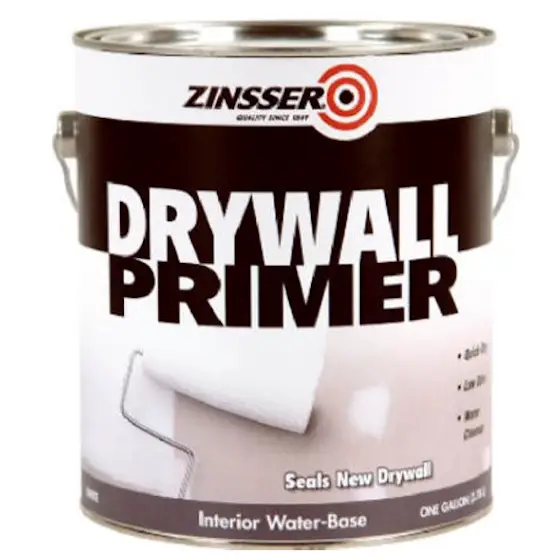
This is a special drywall primer that will make your new drywall look perfect. Don't skip this step. CLICK THE IMAGE to have this paint delivered to your home.

"Primers are specially formulated paints that are used to smooth out the surface you're painting. They have great filling capabilities."

Drywall Primer Checklist

  • Unprimed drywall will look bad under artificial light
  • Primer evens out texture and porosity
  • Drywall primer is low cost and easy to apply
  • Name-brand drywall primer makes new drywall look like real plaster

This column was the Mystery Link in the February 5, 2016 AsktheBuilder Weekend Warrior Update.

What Causes Drywall Imperfections?

Frequently, the cause may be poor or unskilled workmanship. Often the imperfections can be traced to lumber shrinkage. High humidity and large temperature swings during installation and finishing can cause problems.

Poor carpentry techniques also can be to blame. However, did you ever think that a problem could arise in the paint that you use?

Related Links

Secret Drywall Paper Repair Tips - DO NOT SHARE!

Special Gray Primers - Old Master Painter Trick

Free & Fast Bids

CLICK HERE to get FREE & FAST BIDS from local painters who can apply drywall primer.

What Ingredients are In Primer Paints?

Paints are a combination of ingredients. No two paints are exactly alike. Chemically speaking, paints are almost identical to adhesives. Paints primarily have three ingredients:

  • resin (glue)
  • vehicle (liquids that evaporate as the paint dries)
  • pigment (finely ground colorants and powdered fillers)

What is Paint Primer Resin?

The resin in a paint is the glue that allows it to stick to a surface. The resins are usually clear and almost always encapsulate or surround each pigment particle.

What is Paint Vehicle?

The vehicle is the ingredient which allows paint to be a liquid in the can. I often refer to it as a temporary ingredient, for once you apply the paint to a surface, the vehicle evaporates into the air.

That is why you must ventilate a room when using a paint that contains hydrocarbons or flammable solvents. These liquids turn into a vapor and can either make you sick or, if ignited, explode.

What Are Paint Primer Pigments?

Pigments are the ingredients which impart color. They're solid particles comprised of many ingredients. The pigments adhere to the surface you paint because of the resin. Pigments will wash off an exterior wall surface if the sun damages the resin.

This happens with exterior paints that chalk. The resin which is exposed to the weather breaks down and releases the pigment particles. The pigment then washes down onto your brick, foundation or driveway.

CLICK HERE to get FREE & FAST BIDS from local painters who can apply drywall primer.

Are Drywall Primers Also Sealers?

Not all drywall primers are sealers. A primer has one job to do and a sealer has a different one to do on the new drywall surface.

Just about everyone who has painted something has heard of primers. Some of us have also heard of sealers. Did you know that there is a big difference? These two foundation paints have entirely different qualities.

What Is a Drywall Primer?

Primers are specially formulated paints that are used to smooth out the surface you are painting. They have great filling capabilities. Because they have a high solid (pigment) content, these solids can fill in any microscopic valleys, depressions, etc.

Primers are usually somewhat low in resin so that when they dry, the surface of the primer film is coarse. This coarse, or rough, surface provides the finish paint an excellent surface to grab onto.

What is a Drywall Sealer?

Drywall sealers, on the other hand, are exactly the opposite of primers. They have a high resin content and a low solid (pigment) content.

Sealers are formulated to even out the rate of absorption of the finish paint. This quality is achieved by the high resin content. The resin, when dry, creates a barrier. Finish paints cannot easily soak through sealers.

Why Do You Need a Sealer On New Drywall?

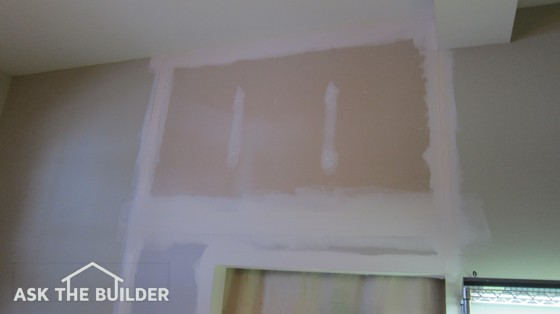
You need a sealer on new drywall because the white joint compound on the seams and in the corners absorbs paint faster than the paper surfaces of the drywall that don't have joint compound on them.

drwall finishing

The white areas have joint compound on them. You can see the off-white area that's the drywall paper from the factory. A drywall primer/sealer will even out the texture and porosity in minutes once it dries. Copyright 2018 Tim Carter

Different materials absorb liquids at different rates. Materials such as these are said to have different porosities. Finish paint which is applied to a surface that has several different porosities will not dry at equal rates.

Those areas of the surface which absorb the paint quickly will pull the paint (and paint particles) deeper into the surface. The sheen of the paint will appear uneven, even though the surface which was painted is smooth!

CLICK HERE to get FREE & FAST BIDS from local painters who can apply drywall primer.

Column B49

Affidavits and Liens

Affidavits, Mechanic's Liens, & Materialman's Certificates

Building or remodeling on a piece of real estate has legal implications. Etched deep into our legal system is a set of laws designed to protect homeowners, workers and companies that supply material to job sites.

These laws were enacted to create a formal procedure by which a homeowner could receive a 'legal' receipt for work done (affidavit & materialman's certificate.)

CLICK HERE to get FREE & FAST BIDS from local builders who can complete your addition or remodeling project.

The laws also enable workers and businesses to attach a formal debt against a piece of real estate in the event they do not receive payment for goods and services provided to the owner of the real estate (mechanic's lien.)

These laws vary from state to state. They can be extremely complicated. Sometimes these laws are powerful and sometimes they are not. The laws are often dynamic; they change from time to time. It depends upon your state.

Contractors' & Homeowners' Guide to Mechanics' Liens

Stressed because of liens? CLICK THE IMAGE to get a book that will help you find relief.

Often there are very specific time limitations with respect to taking action. The forms which are used can be very complicated to fill out. I recommend that you always consult a competent real estate attorney concerning these matters. The money you spend on the services of an attorney before a problem occurs will afford you great peace of mind.


For even more information on this topic CLICK HERE.


CLICK HERE to get FREE & FAST BIDS from local builders who can complete your addition or remodeling project.

Column B32

Repairing Plaster Walls

Restoring Plaster Walls - Setting Type Joint Compounds

If you have ever owned an older home, you must surely be aware of the pluses and minuses of plaster walls. Their durability, smoothness, sound deadening qualities and sheer mass make them very attractive. Plasters only negative, as I see it, is that it tends to react like glass when subjected to stress. In other words, plaster cracks.

Random or Systematic?

Cracks in plaster happen for a variety of reasons. Lumber shrinkage, seasonal moisture changes, wind forces, foundation movement, expansive clay soil movement, excessive loading, etc. all can cause cracks in plaster. Some cracks can be traced directly to a certain cause while some are tougher to diagnose.

It is important to try to determine the cause of cracking prior to repair. The reason being that if your house, wall or ceiling is mobile or in a state of motion, the crack will undoubtedly reappear. Certain cracks are very interesting. These are the ones that plague many houses in climates that experience wide humidity changes from summer to winter.

Wood - Like a Sponge...

Wood expands and contracts in response to changes in the humidity of the air that surrounds it. In other words, wood is a hygroscopic material. Plaster, on the other hand, is very stable. It is very strong if you try to squeeze it, however it is very weak if you try to bend or stretch it.

Thus, if the wood framing members of your house begin to stretch or expand, the plaster can and will pop. There is very little you can do to prevent this, other than trying to maintain a constant indoor humidity level.

Plaster and Old Age

Remember your body and skin when you were 10 years old? I'll bet it was smooth and virtually blemish free. What do you think your skin will look like when you are 70 or 80 years old? Well, a house is not much different.

Houses develop joints just like your elbows and knees where they bend to relieve stresses. Walls and ceilings also react to the force of gravity over time, just as our skin. Thus, it is not unreasonable for an older house to exhibit wrinkles, cracks, and other blemishes.

Fixing the Cracks

OK, so now that the plaster is cracked it is time to fix it. Time after time I have seen homeowners struggle to fix a crack using spackling compound. They are told to chisel the crack into a V shape and fill away! Well the patch looks fine until the house or wall moves the next time. The crack reappears.

The most long lasting repairs are made when you bridge the crack with a material that can absorb the periodic movement that most cracks experience. This is achieved by using either a standard drywall paper tape or a fiberglass mesh tape. The crack is coated with a compound that adheres to the plaster and coats the tape at the same time.

In all but the worst cases, cracks repaired with tape remain smooth for a long period of time.

The Gop

One of the first jobs I did after I got married was the rehabilitation of an old farm house. I was helping some friends. Marcy was helping me apply some premixed drywall joint compounds onto new drywall. She used to call the material Gop. I feel it is a very fitting name as it sounds much like the product appears and reacts when dropped. Premixed joint compounds are wonderful products. For all intents and purposes, they are simply water soluble glues mixed with fillers. These premixed compounds work fine for drywall. However, for serious plaster repair you need to use either real plaster or a product that has the properties of both plaster and premixed joint compounds.

The Stuff

You can purchase some wonderful plaster patching compounds that come in 25 pound bags. They are powdered setting type joint compounds. These products actually grow tiny crystals as they dry. These crystals lock into the coarse texture of the plaster base and/or the smooth white or top coat plaster. You can even add sand to these mixtures if you wish to create a textured look.

These compounds come dry because when they are mixed with water they begin to harden. Some of these products contain higher amounts of gypsum. These tend to set up or get hard within 30 minutes of mixing. You can buy mixes that take up to two hours to harden.

An additional advantage of using these products is that in one day repairs are possible. Premixed joint compounds can take a day or more to dry. Repairs can stretch out. I have used the setting type joint compounds and repaired a plaster hole from start to finish in as little as two hours!

Where Do You Get Them?

That is one of the most frequently asked questions. Homeowners miss out on tons of great products. These special dry setting joint compounds are found at drywall supply houses or building supply houses that sell plaster supplies. Only on one occasion have I seen them in a giant home center store.

If you want to get some of these great compounds, you will have to find out where your local builder or remodeler buys drywall.

This column was shared with my readers in the April 4, 2013 AsktheBuilder Newsletter.

Column B133

Setting Joint Compounds Avoid Dust

Setting Joint Compounds Avoid Dust

Real plaster work involves minimal dust. The plasterer trowels the wet, white plaster until it is as smooth as glass. There is no sanding.

You can do the same with setting type joint compounds. As they get hard, you can work with them and trowel them just like real plaster. A rubber ceramic tile grout float works best. The joint compound needs to be very hard to achieve the best results.

Wet the compound slightly. Glide the rubber float across the patch with just the trailing edge of the trowel touching the compound. You do not want the entire bottom surface touching the plaster. If you make successive strokes much like you would squeegee glass, it will work. Trust me, it takes practice.

If you can't get the hang of it, you will have to sand. You may be able to rent some new wonderful sanding vacuum tools at your local tool rental shop. These tools have a sanding pad attached to a shop vac. They really eliminate 95 percent of the dust in most situations. The key is keeping the filter clean.

Makers of Joint Compound

Want to know more about these powdered setting plaster repair products? Just check out the websites of these manufacturers.

All of these products perform well. The key is to mix only the amount you can comfortably use in 15 - 20 minutes. If they start to get hard in your bucket or mud pan, do not add additional water. It will weaken the mix and fall from the wall or ceiling. Clean your tools well, as the compounds can stick like concrete!

  • CTS Cement RapidSet
  • DAP
  • National Gypsum
  • USG Corporation

Column B133

Time and Material Job Bid

Tips on Obtaining Bids

Many homeowners have expressed difficulties in obtaining bids for work. Often, they have trouble comparing bids. This process alone creates vast amounts of anxiety for some people.

This anxiety is frequently based upon a lack of confidence. Homeowners feel they are operating at a disadvantage when talking about home remodeling or repair. There is no need for this anxiety.

I suggest that you try to take a few hours and read up a little bit on the project about which you are ready to tackle. Visit a local bookstore or library.

There are hundreds of recent books talking about virtually every aspect of home remodeling and repair. Become informed! You will be able to ask better questions of each contractor.

CLICK HERE to get FREE & FAST BIDS from local contractors who can finish your new remodeling project.

Develop a plan, if possible. There is no substitute for written plans. They act as an excellent tool for you to be able to communicate your wants to each contractor. With plans, each contractor should bid the same thing. Modifications or suggestions from each contractor should be kept to a minimum.

If you can't have a plan drawn, write down a simple verbal description of what you want done. Try to be as specific as possible. List product selections, if possible. Have this document copied and distribute one to each bidding contractor.

You will only be able to compare bids or quotes if the contractors are bidding the same thing. Widely spaced bids or quotations usually result from contractors who have no guidance from the homeowner. They are bidding the job the way they want it, not how you always want it! Avoid falling into this trap.

Time & Material Job Suggestions

Many homeowners have been approached by contractors who wish to work 'by the hour' or what is often called "time and material". Some homeowners take this approach hoping that they will maximize their remodeling or repair dollars.

This reasoning is often based on the belief that building and remodeling contractors frequently make huge profits on each and every job. Nothing could be farther from the truth. Contracting is a tough business and very few contractors that I know of drive fancy cars and live in big homes.

Thousands of homeowners who have, in fact, traveled this path will gladly tell you of their misfortunes. Time and material jobs can easily turn into financial time bombs. People often base their construction decisions on hope and trust and become disillusioned when they become victims of dishonesty.

Fixed price quotations have many advantages over time and material jobs. Homeowners have excellent cost control. They know exactly what the work is going to cost.

The contractor, on the other hand, has a goal or objective. Productivity will be constantly in the minds of the project managers or company owners. The contractor will make attempts to minimize material waste.

Professional contractors frequently try to avoid time and material jobs. These require vast amounts of paperwork. Relationships between the homeowner and contractor often become strained.

Speaking from personal experience, I never enjoyed working under these conditions. I felt that I could never take a break or stop and tell a joke with workers and sub-contractors. It always seemed (and rightfully so!) as if the customer was counting minutes. After all, it was their money. They had every right to expect 100 percent value for their money.

CLICK HERE to get FREE & FAST BIDS from local contractors who can finish your new remodeling project.

Determine the Need

If a contractor suggests working 'time and material', stop and ask some questions. Determine just why he or she feels that 'time and material' is advantageous for you, the homeowner.

Ask why the job cannot be approached as a fixed price job. What hidden or unknown conditions are prohibiting the contractor from giving you a fixed price?

If you have any doubt whatsoever about the necessity of the 'time and material' approach, obtain three to four other opinions. Talk with other building or remodeling contractors. Ask them for fixed price quotations.

Do not even bring up the subject of 'time and material'. Only discuss this alternative if the second, third or fourth contractor injects it into the conversation.

Taking the Plunge

Assuming that your job, or certain aspects of your job, require a 'time and material' approach, let's talk about some ways you should approach the subject. First, determine just what aspects need to be done on a time and material basis.

Often, only those parts of a job which have hidden or concealed conditions qualify for the 'time and material' approach. Experienced professionals know how long it takes to perform tasks.

Based upon past experiences, they can accurately quote how long it takes to do certain things. However, sometimes certain conditions, new materials, untried techniques, etc. require the 'time and material' approach. Do whatever is necessary to limit these conditions.

Obtain from the contractor a "not-to-exceed" figure. This is the worst case scenario. This is the maximum amount of money you will have to spend in the event everything goes wrong. If a contractor is hesitant to give you this number, beware. A professional will not hesitate to give you a not-to-exceed number.

Before the job starts, ask who will be working on the job and how much per hour each specific person will be paid. Make every attempt possible to get a fixed price quotation on the materials required.

Often, it is very simple to estimate material quantities. At the very least, a maximum quantity of material can be determined. Square footages, volumes, etc. can be quickly calculated. This way, when you eventually begin to pay for materials, you can check the quantities to ensure that they were not exceeded.

The opportunity for fraud is extremely high. Materials have a strange way of ending up on different jobs! You must protect yourself from dishonesty.

Agree with your contractor on weekly itemized reports showing who worked when and on what. Have the contractor produce a separate, specific, detailed report on materials used. By doing this on a weekly basis, you should be able to monitor the accuracy of the reports.

Don't wait until the end of the job for your bill. You may need to call 911 in the event you go into cardiac arrest!!!

Finally, ask the contractor you choose to work with for a minimum of three references of customers who have also had 'time and material' work performed. Call these individuals and ask them if they were satisfied with the 'time and material' arrangement.

Ask if they encountered any problems. Were they treated fairly? Is there anything they would do differently? These questions are important. Don't try to reinvent the wheel. Use these customers as a resource to save you money. Don't feel embarrassed to call them.

CLICK HERE to get FREE & FAST BIDS from local contractors who can finish your new remodeling project.

Column B42

Drywall Finishing Techniques

drywall finishing

This small section of wall has just about every drywall finish challenge in it: flat and tapered seams, inside and outside corners and an archway! Photo credit: Tim Carter

Surely you have seen a miserable drywall finishing job. One of the first places to look is in a corner. Typically, you will see holes and lift marks where the finishing blade was pulled away from the wall. For some reason, finishers seem to get tired as they sand in or near the corners!

I have seen home improvement television shows that tell people how easy it is to finish drywall. Well, it is easy if you know all of the tricks and have had considerable practice. If you don't, you struggle. Drywall finishing is not as simple as driving a nail or cutting a piece of wood. It takes lots of skill to get professional results.

Wipe It Off

One of the neat things about finishing drywall is that if you goof up applying the mud you can immediately erase your mistake and start over. All you do is wipe off the mud from the seam. The only aspect of the process that is critical is the actual taping. Too much or too little mud under the tape can cause all sorts of finishing problems later in the job.

Think Snowplow

Have you ever seen how a bulldozer or a snow plow works? The blade is angled to throw the dirt or snow to one side. This is an efficient way to work. Removing the excess mud from beneath drywall tape uses the same technique. The trick is to make several repeated passes with the taping knife instead of trying to do it all at once.


Learn the secrets to a great drywall finishing job in this Drywall / Plaster Installation Checklist. I offer a 100% Money Back Guarantee.


Professionals tape drywall in any number of ways. They can use a device called a banjo that applies mud to the underside of the tape as it is pulled from the simple hand held machine. Even more complex machines can apply tape and a coat of mud to a wall in one operation. But if a pro is doing it like you will be, they apply the mud smoothly and at a thickness of approximately 1/4 inch. The tape is then pressed lightly to the wet mud. When you glide your knife over this relatively smooth assembly, the excess mud flows easily out from beneath the tape.

Drying Time

The joint compound or mud you use to finish drywall is water based. It dries fairly quickly if the humidity is low and the temperature is high. Keep in mind that this compound is simply a glue with lots of filler. The color of the compound tells you, to some degree, if it is dry. When wet, the compound is a light gray. As it dries it turns white. You can see this transformation very clearly halfway through the drying process as the edges of the joint will be snow white while the center of the seam is still gray. Do not attempt to sand if you see any gray coloration.

Patching a Hole

Let's say you have a hole in a piece of drywall that is about the size of a golf ball. It is too small to cut a patch yet too big just to fill with joint compound. There is a cool trick that really works well. All you do is take a piece of paper drywall tape and coat the underside of it with a 1/8th inch coating of wet compound. You then flip the tape over and center it over the hole. Gently scrape a little of the mud out from the tape. Once the mud dries in a day, the area over the hole is very stiff. If you want to make it even better, apply a second layer of tape over the first one. Align the second piece of tape at a 90 degree angle to the first one.

Nails and Screws

Professionals do not apply a little dab of mud to each and every screw or nail. They coat three or four at a time with one quick motion. The end result is a stripe of mud on the surface of the drywall. If you see dried polka dots of white on a sheet of drywall, you know a rookie is finishing it!

Column B387

Hanging Drywall Direction on Steel Studs

Drywall Hanging Direction on Steel Studs

Reader email:

Tim,

How do you lay out drywall on steel studs? Should it be vertical across the studs or horizontal across the studs, and should I stagger the drywall?

This is for a basement that is studded with steel and I'm very confuuuuuused!!! Thanks,

Holley


My Reply:

Holley,

The best way to install drywall is horizontally. You should also stagger the seams. Installing it vertically requires that the spacing of the studs must be perfect and they are perfectly plumb. This is much harder to achieve that you might think.

Then wait until you are bending down to tape all of those vertical seams every 4 feet. With 12 foot drywall, you only have to do it every 12 feet. Since you rarely have wall runs longer than twelve feet without an inside or outside corner interrupting it, you might never have that flat seam in a wall run.

Tim

Column B387